Suffering Defeat, Gongsun Yuan Meets His Death;
Pretending Illness, Sima Yi Deceives Cao Shuang.
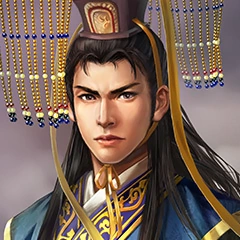
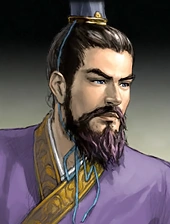
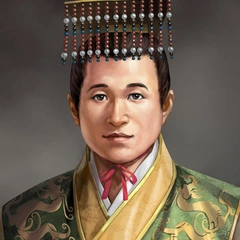
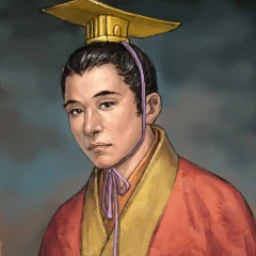
This Gongsun Yuan was a grandson of Gongsun Du the Warlike, and a son of Gongsun Kang in Liaodong. In the twelfth year of Rebuilt Tranquillity, when Cao Cao was pursuing Yuan Xi and Yuan Shang, who had fled eastward, Gongsun Kang had captured them, beheaded them, and sent their heads to Cao Cao. For this service Gongsun Kang received the title of Lord of Xiangping. After Gongsun Kang's death, as his two sons---Gongsun Huang and Gongsun Yuan---were young, his brother Gongsun Gong took the chiefship; and Cao Pi, beside confirming the lordship, gave him the rank of General of the Flying Cavalry.
In the second year of Calm Peace (AD 228), the second son, Gongsun Yuan, being now grown up, well-educated and trained in military exercises, obstinate and fond of fighting, took away his uncle's power and ruled the heritage of his father. Cao Rui conferred upon him the title of General Who Wields Ferocity, and made him Governor of Liaodong.
Then the Ruler of Wu, Sun Quan, anxious to secure Gongsun Yuan's support, sent two envoys, Zhang Mi and Xu Yan, with gifts of gold and gems and pearls and offered Gongsun Yuan the title of Prince of Yan. Fearing that the Middle Land would resent any dallying with Wu, Gongsun Yuan slew the Wu envoys and sent the heads to the Ruler of Wei. For this proof of fealty, Cao Rui gave him the title of Grand General and the Dukedom of Yuelang.
However, Gongsun Yuan was dissatisfied, and his thoughts turned toward independence. He took council with his officers and proposed to style himself Prince of Yan and to adopt a reign-title of Extending Han, the first year.
One general, Jia Fan, opposed this and said, "My lord, the central authorities have treated you well and honored you. I fear that Sima Yi is too skillful a leader for rebellion to succeed. You see even Zhuge Liang cannot defeat him. How much less can you?"
Gongsun Yuan's reply was to condemn Jia Fan to death. However, Adviser Lun Zhi ventured upon further remonstrance.
"Jia Fan spoke well. The Sacred One says that extraordinary phenomena presage the destruction of a state. Now this time portents are not wanting, and wonders have been seen. A dog, dressed in red and wearing a turban, went up to the roof and walking like a man. Moreover, while a certain person living in a village south of the city was cooking his food, he saw a child in the pan, boiled to death. A great cave opened near the market place and threw out a large, fleshy body completely human save that it lacked limbs. Swords could not cut it; arrows could not penetrate it. No one knew what to call it; and when they consulted the soothsayers, they obtained the reply, 'Incomplete shape, silent mouth: A state is near destruction.' These prodigies are all inauspicious. Flee from evil and strive to walk in fair fortune's way. Make no move without most careful thought."
This second remonstrance enraged Gongsun Yuan still more, and he sent Lun Zhi to death with Jia Fan. Both were executed in the public place.
Gongsun Yuan then prepared to make a bid for empire. He raised an army of one hundred fifty thousand, appointed Bei Yan as Commander, and Yang Zuo as Leader of the Van. This army set out for the Middle Land.
Ruler of Wei was alarmed at the report of this rising, and sent for Sima Yi.
Sima Yi was not greatly perturbed, and said, "My forty thousand troops will be equal to the task."
The Ruler of Wei replied, "The task is heavy, for your troops are few and the road is long."
"The strength of an army is not in numbers, but in strategy. Aided by Your Majesty's good fortune, I shall certainly be able to bring this fellow Gongsun Yuan a captive to your feet."
"What do you think will be the rebel's plan?" asked the Ruler of Wei.
"His high plan would be flight before our army can arrive; his middle plan would be defending his position in Liaodong; his low plan would be to try to hold Xiangping. In the last case I shall certainly capture him."
"How long will the expedition take?"
"We have to cover one thousand five hundred miles which will take a hundred days. Attack will consume another hundred. The return will need a hundred, and with sixty days to rest we shall take a year."
"Suppose during that year we are attacked by Wu or Shu."
"My plans provide for that. Your Majesty need have no anxiety."
The Ruler of Wei being thus reassured, formally ordered Sima Yi to undertake the expedition.
Hu Zun was appointed to lead the van. Hu Zun went and camped in Liaodong. The scouts hastened to tell Gongsun Yuan, who sent Bei Yan and Yang Zuo to camp at Liaosui with eighty thousand troops. They surrounded their camp with a wall seven miles in circumference and placed thorny barriers outside the rampart. It seemed very secure.
Hu Zun saw these preparations and sent to tell his chief. Sima Yi smiled.
"So the rebel does not want to fight, but thinks to weary my soldiers," said Sima Yi. "Now I am disposed to think that most of his army is within that wall, so that his stronghold is empty and undefended. I will make a dash at Xiangping. He will have to go to its rescue, and I will smite him on the way. I should score a great success."
So Sima Yi hastened to Xiangping along unfrequented ways.
Meanwhile Bei Yan and Yang Zuo, the two generals within the walled camp, discussed their plans.
Yang Zuo said, "When the Wei army comes near, we will not fight. They will have come a long march and their supplies will be short, so that they cannot hold out long. When they retreat, we shall find our opportunity. These were the tactics Sima Yi used against Zhuge Liang on River Wei, and Zhuge Liang died before the end of the expedition. We will try similar means."
Presently the scouts reported that the Wei army had marched south.
Bei Yan at once saw the danger and said, "They are going to attack Xiangping, which they know has few troops. If that base be lost, this position is useless."
So they broke up their camp and followed the enemy.
When Sima Yi heard it, he rejoiced, saying, "Now they will fall into the snare I have laid for them."
Sima Yi sent Xiahou Ba and Xiahou Wei to take up position on the River Ji. They were to attack if the army of Liaodong came near them. They had not long to wait. As soon as Bei Yan and his army approached, Xiahou Ba and Xiahou Wei exploded a bomb, beat the drums, waved their flags, and came out, one force on each side. Bei Yan and Yang Zuo made a fight but soon fled to Shoushan Mountain, where they fell in with Gongsun Yuan and joined the main army. Then they turned to give battle to the Wei army.
Bei Yan rode to the front and reviled the enemy, shouting, "You rebels! Do not try trickery, but dare you fight in the open?"
Xiahou Ba rode out to accept the challenge, and after a few bouts Bei Yan fell. In the confusion caused by the death of their leader, Xiahou Ba urged on his troops and drove Gongsun Yuan back to Xiangping, and Gongsun Yuan took refuge in the city.
The city was surrounded. It was autumn, and the rain fell day after day without ceasing. At the end of the month, the plain was under three feet of water, so that the grain boats sailed straight from River Ji to the city walls. The besiegers suffered much from the floods.
Pei Jing, Commander of the Left, went to Sima Yi and asked, "The rain keeps pouring down, and tents cannot be pitched on mud. May the army be moved to camp on the higher ground?"
But Sima Yi flouted the suggestion.
"How can the army move away just when success is in sight? The rebels will be conquered now any day. If any other speaks about drawing off, he will be put to death."
Pei Jing agreed and went away.
Soon after, Chou Lian, Commander of the Right, came to see his chief and repeated the suggestion, saying, "The soldiers are suffering from the rains. O Commander, let them camp on the hills."
Sima Yi got angry and said, "I have sent the command, and you are against it!"
And he ordered Chou Lian to be executed. His head was suspended at the camp gate as a warning to others. The soldiers dared to complain any more.
Then Sima Yi ordered the south camp to be abandoned, and the army marched seven miles south, thus allowing the soldiers and people in the city to come out to gather fuel and pasture their cattle.
The attacking army could not understand this move, and General Chen Qun spoke about it.
"When you besieged Shangyong, O Commander, you attacked all round at eight points, and the city fell in eight days. Meng Da was taken, and you won a great success. Now your forty thousand troops have borne their armors many days over long marches and you do not press the attack, but keep them in the mud and mire and let the enemy gather supplies and feed their cattle. I do not know what your intention may be."
"Sir," replied the Commander-in-Chief, "I see you are ignorant of war after all. You do not understand the different conditions. Meng Da then had ample supplies and few troops, while we were under exactly opposite conditions. So we had to attack vigorously and at once. The suddenness of the attack defeated the enemy. But look at present conditions. The Liaodong troops are many and we few; they are on the verge of starvation, and we are full fed. Why should we force the attack? Our line is to let the soldiers desert and capture the city. Therefore I leave a gate open and the road free that they may run away."
Chen Qun then understood and acknowledged the correctness of the strategy. Sima Yi sent to Luoyang to hasten supplies, that there should be no shortage.
However, the war was not supported in the capital, for when the messenger arrived and the Ruler of Wei summoned his courtiers, they said, "In Liaodong the rain has been continuous for a month, and the soldiers are in misery. Sima Yi ought to be recalled, and the war renewed at a more convenient season."
The Ruler of Wei replied, "The leader of our army is most capable and best able to decide upon what should be done. He understands the conditions and is teeming with magnificent plans. He will certainly succeed. Wherefore, Noble Sirs, wait a few days and let us not be anxious about the result."
So Cao Rui heeded not the voice of the dissentients, but took care that provisions were sent.
After a few days the rain ceased, and fine, clear weather followed. That night Sima Yi went out of his tent that he might study the sky. Suddenly he saw a very large and bright star start from a point over Shoushan Mountain and travel over toward Xiangping, where it fell. The soldiers were rather frightened at this apparition, but the leader rejoiced.
"Five days from now Gongsun Yuan will be slain where that star fell," said he. "Therefore attack with vigor."
They opened the attack the next morning at dawn, throwing up banks and sapping the walls, setting up stone-throwing machines and rearing ladders. When night came the attack did not cease. Arrows fell in the city like pelting rain.
Within the city, grain began to run short, and soon there was none. They slaughtered bullocks and horses for food. The soldiers began to be mutinous and no longer fought with any spirit. There was talk of slaying Gongsun Yuan and yielding the city.
Gongsun Yuan was disheartened and frightened, and decided to sue for peace. He sent his Prime Minister Wang Jian and Imperial Censor Liu Fei out of the city to beg Sima Yi to allow him to submit. These two had to be let down from the walls by ropes, as no other means of exit were possible.
Wang Jian and Liu Fei found their way to Sima Yi and said, "We pray you, O Commander, retire seven miles and allow the officers to come forth and surrender."
"Why did not Gongsun Yuan himself come?" said Sima Yi. "He is rude."
He put the two envoys to death and sent their heads back into the city.
Gongsun Yuan was still more alarmed, but he resolved to make one more attempt. This time he sent High Counselor Wei Yin as his envoy. Sima Yi received this messenger sitting in state in his tent with his officers standing right and left. Wei Yin approached on his knees, and when he reached the door of the tent recited his petition.
"I pray you, O Commander, turn your thunderous wrath from us. We will send the son of our leader, Gongsun Xiu, the Heir Apparent, as hostage and all the officers shall appear before you bound with cords."
Sima Yi replied, "There are five possible operations for any army. If you can fight, fight; if you cannot fight, defend; if you cannot defend, flee; if you cannot flee, surrender; if you cannot surrender, die. These five courses are open to you, and a hostage would be useless. Now return and tell your master."
Wei Yin put his hands over his head and fled like a rat. He went into the city and related what had happened to him.
The Gongsuns, father and son, resolved to flee. They chose a thousand of mounted troops, and in the dead of night opened the south gate and got out. They took the road to the east and were rejoiced to find it clear.
All went well for a distance of three miles, when a bomb exploded. This was followed by a roll of drums and the blare of trumpets; and a cohort stood in the way. The leader was Sima Yi, supported by his two sons---Sima Shi and Sima Zhao.
"Stop, O rebel!" cried the sons.
But Gongsun Yuan lashed his steed to a gallop. Then Hu Zun, Xiahou Ba, Xiahou Wei, Zhang Hu, and Yue Chen, with their troops, came up and quickly surrounded them so that they were helpless. Gongsun Yuan saw that escape was impossible, so he came with his son, dismounted, and offered surrender.
Sima Yi hardly looked at the two men, but he turned to his officers and said, "That night the star fell to this land, and today, five days later, the omen becomes true."
They all felicitated him, saying, "The Commander is superhuman!"
Gongsun Yuan and Gongsun Xiu were slain where they stood. Then Sima Yi turned to resume the siege of Xiangping; but before he had reached the walls, Hu Zun's army had entered. Sima Yi went in and was received with great respect, the people burning incense as he passed. He went to the residence, and then the whole of the Gongsun Yuan's clan, and all who had assisted in his rising, were beheaded. They counted heads to the number of seventy.
The city taken and the rebels destroyed, Sima Yi issued a proclamation in order to restore confidence among the people.
Certain persons told him, "Jia Fan and Lun Zhi had been against the revolt and had therefore suffered death."
So Sima Yi honored their tombs and conferred ranks upon their children. The contents of the treasury were distributed among the soldiers as rewards, and then the army marched back to Luoyang.
One night the Ruler of Wei was suddenly awakened by a chill blast that extinguished all the lights, but he saw the form of the late Empress Mao, with a score or two of other Palace attendants, coming toward the bed whereon he lay, and as they approached they demanded his life. He was very frightened and fell ill so that he was like to die.
So the two officers, Liu Fang and Sun Zu, were set over the privy council, and he summoned his brother Cao Yu, the Prince of Yan, to the capital to make him Regent Marshal to assist the Heir Apparent, Cao Fang. However, Cao Yu being modest and retiring by nature, declined these high offices and their responsibilities.
The Ruler of Wei then turned to his two confidants, Liu Fang and Sun Zu, inquired of them, saying, "Who of the family is a suitable person to support the Heir Apparent?"
As Liu Fang and Sun Zu had both received many favors from Cao Zhen, they replied, "None is so fit as Cao Shuang, the son of Cao Zhen."
The Ruler of Wei approved their choice, and thus Cao Shuang became a great person.
Then Liu Fang and Sun Zu memorialized, saying, "As Cao Shuang has been chosen, Cao Yu, the Prince of Yan, should be ordered to leave the capital and return to Yan, his own place."
The Ruler of Wei consented and issued an edict, which these two bore to Cao Yu, saying, "The edict in the Emperor's own hand bids you return to your own domain at once, and you are not to return to court without a special command."
Cao Yu wept, but he left forthwith.
Thereupon Cao Shuang was created Regent Marshal and Court Administrator.
But the Ruler of Wei's illness advanced rapidly, and he sent messenger with authority ensign to call Sima Yi into the Palace. As soon as he arrived, he was led to the Emperor's chamber.
"I feared lest I should not see you again," said the Ruler of Wei. "But now I can die content."
The general bowed and said, "On the road they told me the sacred person was not perfectly well. I grieved that I had not wings to hasten hither. But I am happy in that I now behold the dragon countenance."
The heir, Cao Fang, was summoned to the Emperor's bedside and also Cao Shuang, Liu Fang, Sun Zu, and certain others.
Taking Sima Yi by the hand, the dying Emperor said, "When Liu Bei lay dying at Baidicheng, he confided his son, so soon to be an orphan, to the care of Zhuge Liang, who labored in this task to the very end and whose devotion only ceased with death. If such conduct is possible in the mere remnant of a dying dynasty continued in a small state, how much more may I hope for it in a great country! My son is only eight years of age, and incapable of sustaining the burden of rulership. Happily for him he has ample merit and experience around him in the persons of yourself and his relatives. He will never lack friends for my sake."
Turning to the young prince, he continued, "My friend Sima Yi is as myself, and you are to treat him with the same respect and deference."
Cao Rui bade Sima Yi lead the young prince forward. The boy threw his arms around Sima Yi's neck and clung to him.
"Never forget the affection he has just shown," said Cao Rui, weeping. And Sima Yi wept also.
The dying man swooned; although he could not speak, his hand still pointed to his son, and soon after he died. Cao Rui had reigned thirteen years and was thirty-six years of age. His death took place in the first month of the third year of Spectacular Beginning (AD 239).
No time was lost in enthroning the new Emperor, the supporters being Sima Yi and Cao Shuang. The new ruler's name was Cao Fang. However, he was Cao Rui's son only by adoption. He had been brought up in the Palace secretly, and no one knew his real origin.
The posthumous title of Emperor Rui the Knowledgeable was conferred upon the late ruler, and he was buried in the Gaoping Tombs. Empress Guo was given the title of Empress Dowager.
The new reign was styled Right Beginning Era, the first year (AD 239). Sima Yi and Cao Shuang conducted the government, and in all matters Cao Shuang treated Sima Yi with deference and took no steps without his knowledge.
Cao Shuang was no stranger at court. Cao Rui had respected him for his diligence and care and had been very fond of him, He had had the freedom of the Palace all his life. He had a host of five hundred clients and retainers. Among them were five wholly light and foppish. Their names were He Yan, Deng Yang, Li Sheng, Ding Mi, and Bi Gui. Deng Yang was a descendant of Commander Deng Yu of Han. Beside these five there was another named Huan Fan, Minister of Agriculture, a man of good parts, who had the sobriquet of "Bag of Wisdom". These six were Cao Shuang's most trusted companions and confidants.
One day He Yan said, "My lord, you should not let your great powers slip into the hands of any other, or you will repent it."
Cao Shuang replied, "Sima Yi as well as I received the late Emperor's sacred trust, and I mean to be true."
He Yan said, "When your father and this Sima Yi were winning their victories in the west, your father suffered much from this man's temper, which ultimately brought about his death. Why do you not look into that?"
Cao Shuang seemed suddenly to wake up.
Having entered into an intrigue with the majority of the officers about the court, then one day he presented to the Ruler of Wei a memorial, saying, "Sima Yi should be promoted to the rank of Imperial Guardian for his great merits and services."
The promotion was made, and consequently Sima Yi, now a civil officer, let the whole military authority fall into the hands of Cao Shuang.
Having thus far succeeded, Cao Shuang next appointed his brothers to high military posts: Cao Xi as Commander of the Center Army; Cao Xun, Commander of the Imperial Guards; Cao Yan, Commander of the Cavalry. Each commanded three thousand of the Palace guards, with right to go in and out of the Palace at will. Moreover, three of his friends---He Yan, Deng Yang, and Ding Mi---were created Chairs of three boards; Bi Gui, Commander of Capital District; and Li Sheng, Governor of Henan. These five and their patron were close associates in all concerns of state.
Cao Shuang gathered about him larger and still larger numbers of supporters, till Sima Yi gave out that he was ill and remained in seclusion. His two sons also resigned their offices.
Cao Shuang and his friends now gave themselves up to dissipation, spending days and nights in drinking and music. In their dress and the furniture of their table they copied the Palace patterns. Tribute in the shape of jewels and curios went to the residence of Cao Shuang before it entered the Emperor's palace, and his complex swarmed with beautiful damsels. Minister Zhang Dang of the Inner Bureau toadied to Cao Shuang so far as to select eighteen of the late Emperor's handmaids and send them to the now powerful minister. Cao Shuang also chose for him a chorus of two score well-born ladies who were skilled in music and dancing. Cao Shuang also built for himself beautiful towers and pavilions and made to himself vessels of gold and silver, the work of the most expert craftspeople, whom he kept constantly employed.
Now He Yan heard of Guan Lu's great skill in divination and sent to Pingyuan to invite him to discuss about the Book of Changes.
When the soothsayer arrived, Deng Yang was of the company to meet him, and he said to Guan Lu, "You call yourself a skillful diviner, but your speech does not resemble the language of the Book of Changes. How is that?"
Guan Lu replied, "An interpreter does not use the language of the original."
He Yan laughed, saying, "Certainly good words are not wearisome. But cast a lot for me, and tell me whether I shall ever arrive at the highest office or not, for I have dreamed repeatedly that many blue flies settled on my nose."
Guan Lu replied, "Gao Kai and Gao Yuan aided King Shun; Duke Zhou assisted the young Emperor Cheng of Zhou Dynasty; all these were kindly and modest and enjoyed great happiness. You, Sir, have come to high honors and wield great powers, but those who esteem you are few and those who fear you, many. You are not careful to walk in the way of good fortune. Now the nose is an eminence. If an eminence retains its characteristic, thereby it remains in honor. But is it not that blue flies gather to foul objects and the lofty fears a fall? I would wish you to give of your abundance for the good of the poor and avoid walking in the wrong road. Then indeed may you reach the highest dignity, and the blue flies will disperse."
"This is mere senile gossip," said Deng Yang.
"The gift of age is to see that which is yet to come; the gift of gossip is to perceive what is not said," replied Guan Lu. Thereupon he shook out his sleeves and went away.
"He is very mad, really," said his two hosts.
Guan Lu went home. When he saw his uncle, Guan Lu gave him an account of the interview.
His uncle was alarmed at the probable consequences, and said, "Why did you anger them? They are too powerful for you to offend."
"What is there to fear? I have been talking to two dead men."
"What do you mean?"
"Deng Yang's gait is that of one whose sinews are loosed from his bones, and his pulse is unsteady. When he would stand, he totters as a man without limbs. This is the aspect of a disembodied soul. He Yan looks as if his soul was about to quit its habitation. He is bloodless, and what should be solid in him is mere vapor. He looks like rotten wood. This is the aspect of a soul even now in the dark valley. Both these men will certainly soon die a violent death, and none need fear them."
His uncle left, cursing him for a madman.
Cao Shuang and his five friends were devoted to hunting and were often out of the city. Cao Xi, a brother of Cao Shuang, remonstrated with him about this and pointed out the dangers of such frequent absence on these excursions.
"You are in an exalted position and yet you are constantly being out hunting. If anyone took advantage of this to work you evil, you might have to be exceedingly regretful."
Cao Shuang only showed anger and replied, "The whole military authority is in my hands, and what is there to fear?"
Huan Fan, Minister of Agriculture, also reasoned with him, but Cao Shuang would not listen.
About this time the style of the reign was changed from Right Beginning, the tenth year, to Domestic Calm, the first year (AD 249).
Now ever since Cao Shuang had enjoyed the monopoly of military authority, he had never heard the truth about the state of health of the man he had maneuvered out of power. But when the Ruler of Wei appointed Li Sheng to the Imperial Protectorship of Qingzhou, Cao Shuang bade Li Sheng go to take leave of Sima Yi, at the same time to find out the true state of his health.
So Li Sheng proceeded to the residence of the High Minister and was announced.
Sima Yi saw through the device at once and told his sons, saying, "This is Cao Shuang's wish to find out my real condition."
And he bade them play their parts in the scene he arranged, before the visitor was admitted.
Sima Yi threw aside his headdress, so letting his hair fall in disorder, stretched himself upon his couch, tumbled the bed ding into confusion, got a couple of servant girls to support him, and then told his servants to lead in the visitor.
Li Sheng came in and went up to the sick man, saying, "It is a long time since I have seen you, and I did not know you were so seriously ill. His Majesty is sending me to Qingzhou, and I have come to pay my respects to you and bid you farewell."
"Ah, Bingzhou is in the north; you will have to be very careful there," said Sima Yi feigning that he had not heard.
"I am going as Imperial Protector of Qingzhou, not Bingzhou," said Li Sheng.
"Oh, you have just come from Bingzhou."
"Qingzhou, in Huashan Mountains."
"Just back from Qingzhou, eh?" said Sima Yi, smiling.
"How very ill the Imperial Guardian is!" said Li Sheng to the servants.
"The Minister is deaf," said they.
"Give me paper and a pen," said Li Sheng.
Writing materials were brought, when Li Sheng wrote what he wished to say and put it before his host.
"My illness has made me very deaf. Take care of yourself on the way," said Sima Yi.
Looking up, he pointed to his mouth. One of the girls brought some broth and held the cup for him to drink. He put his lips to the cup, but spilled the broth all over his dress.
"I am very weak and ill," said he, "and may die at any moment. My sons are but poor things, but you will instruct them. When you see the Regent Marshal, you will ask him to take care of them for me, will you not?"
At this point Sima Yi fell back on the couch, panting, and Li Sheng took his leave.
Li Sheng told Cao Shuang what he had seen, and Cao Shuang rejoiced, thinking his rival could not last long.
"If the old man died, I should not be the one to grieve," said Cao Shuang.
But no sooner had Li Sheng gone than Sima Yi rose from his couch and said to his sons, "Li Sheng will take a full account of this to Cao Shuang, who will not fear me any more. But wait till Cao Shuang goes on his next hunting trip, and we will see what can be done."
Soon after this, Cao Shuang proposed to the Ruler of Wei, Cao Fang, to visit the Gaoping Tombs where his father lay and perform the filial sacrifices in person. So they went, a goodly company of officers in the train of the imperial chariot, and Cao Shuang with all his brothers and his friends went with the guards.
Huan Fan, Minister of Agriculture, entreated him to remain in the city for fear of plots and risings.
"Your Lordship are in charge of the capital security, and you and your brothers should not leave the city together. Suppose there were a revolt, what then?"
But Cao Shuang asked angrily and rudely, "Who would dare make trouble? Hold your wild tongue!"
And he went with the Emperor.
His departure rejoiced the heart of Sima Yi, who at once began quietly to muster his trusty friends and henchmen and put the finishing touches to the plot for the overthrow of his rival.
Now terminates his forced inaction,
He must destroy the hostile faction.
Cao Shuang's fate will appear in the next chapter.
-
Kongming entry Bio
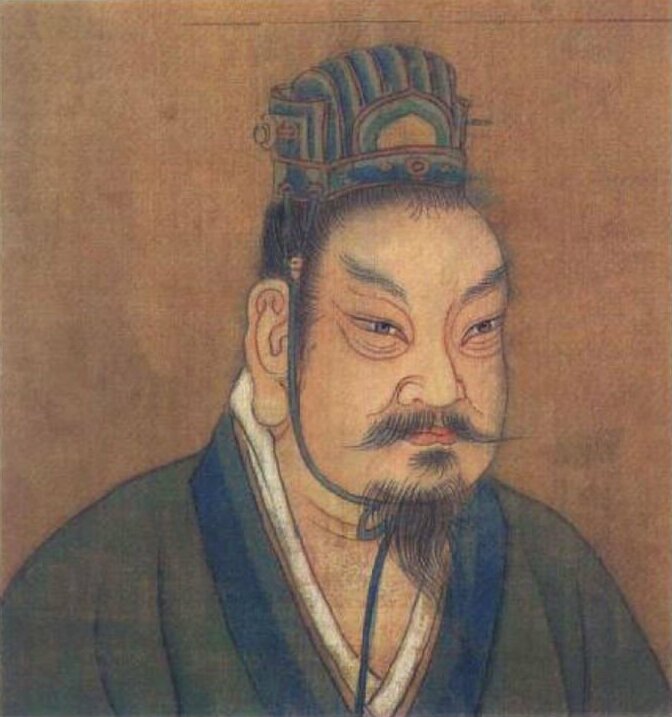
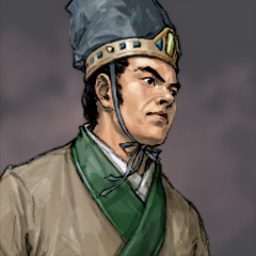
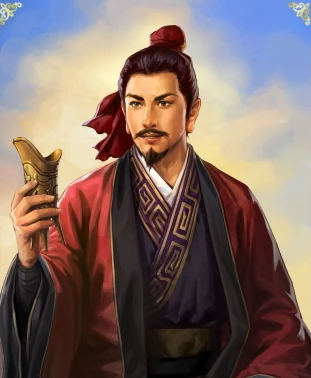
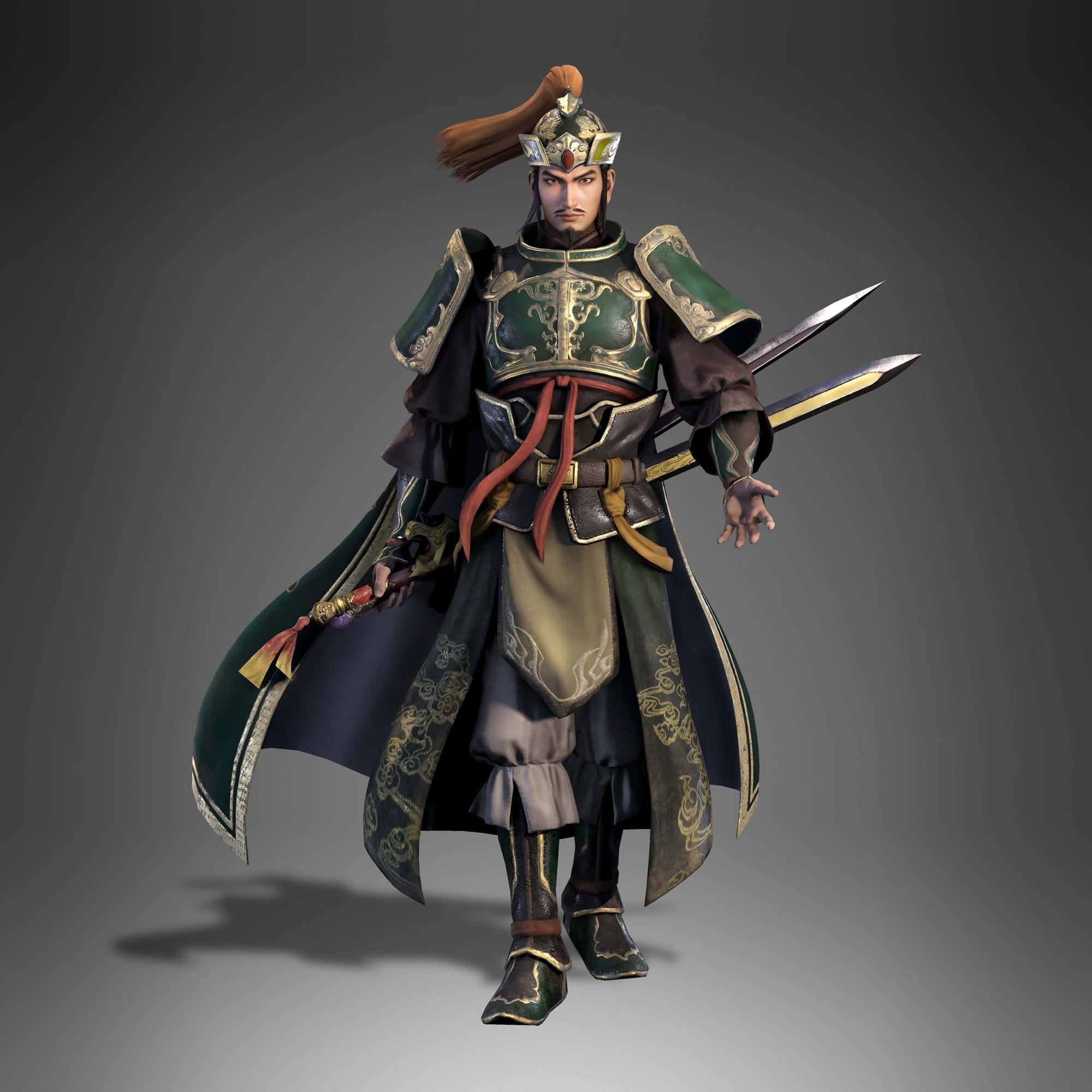
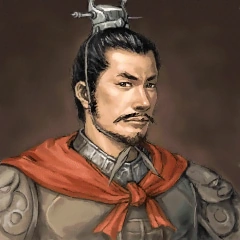
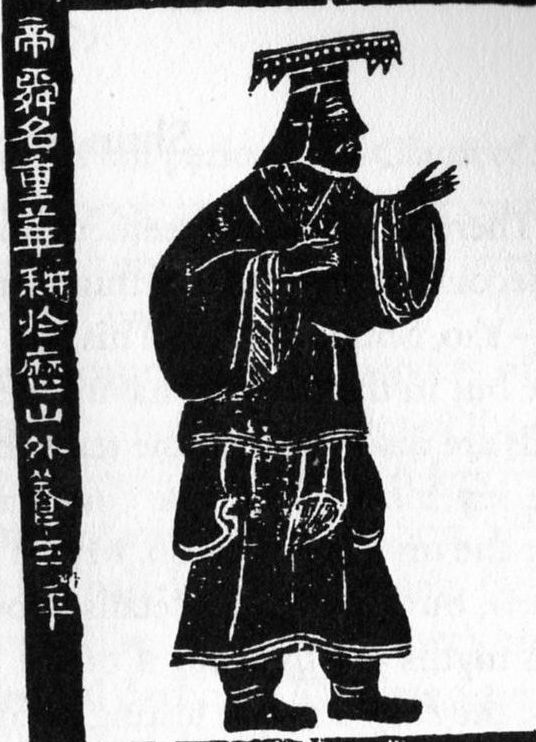
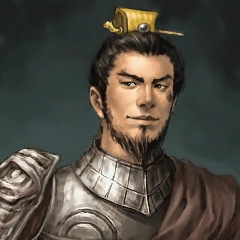
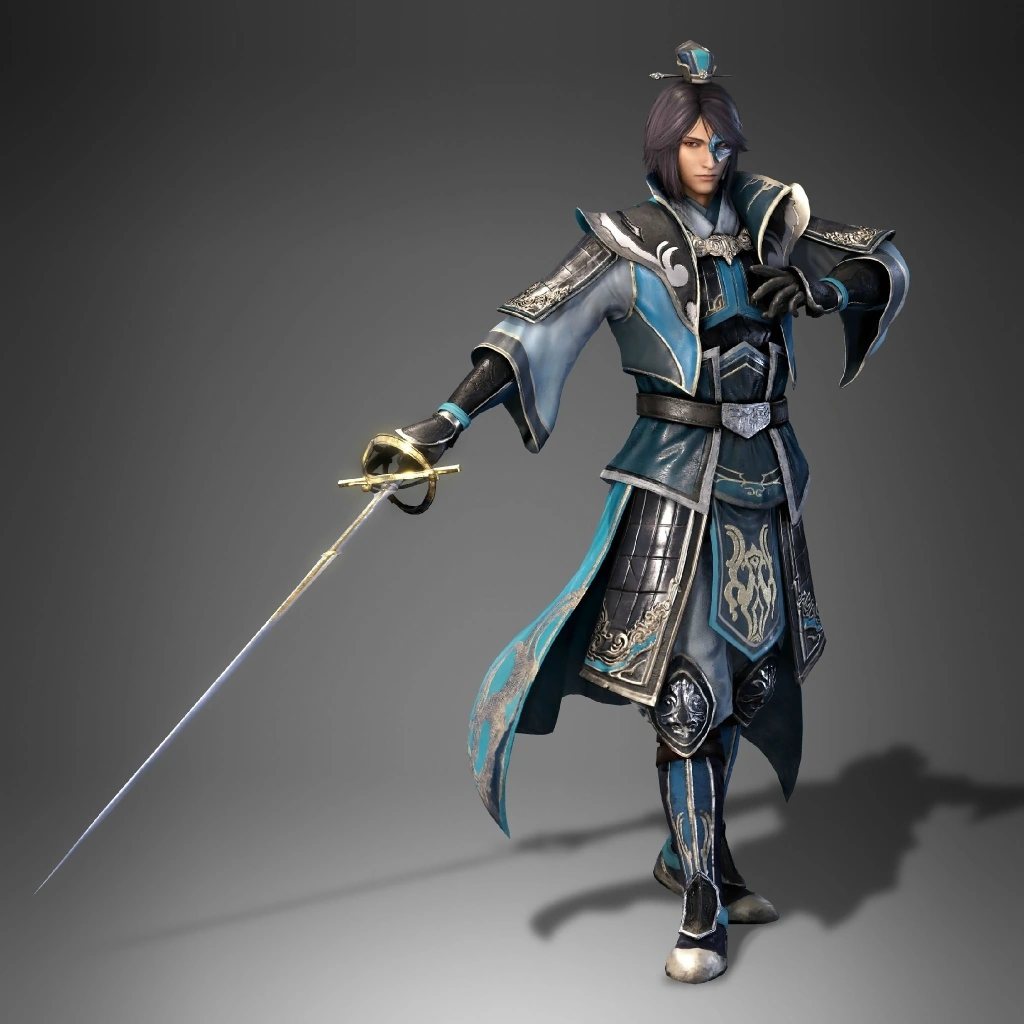
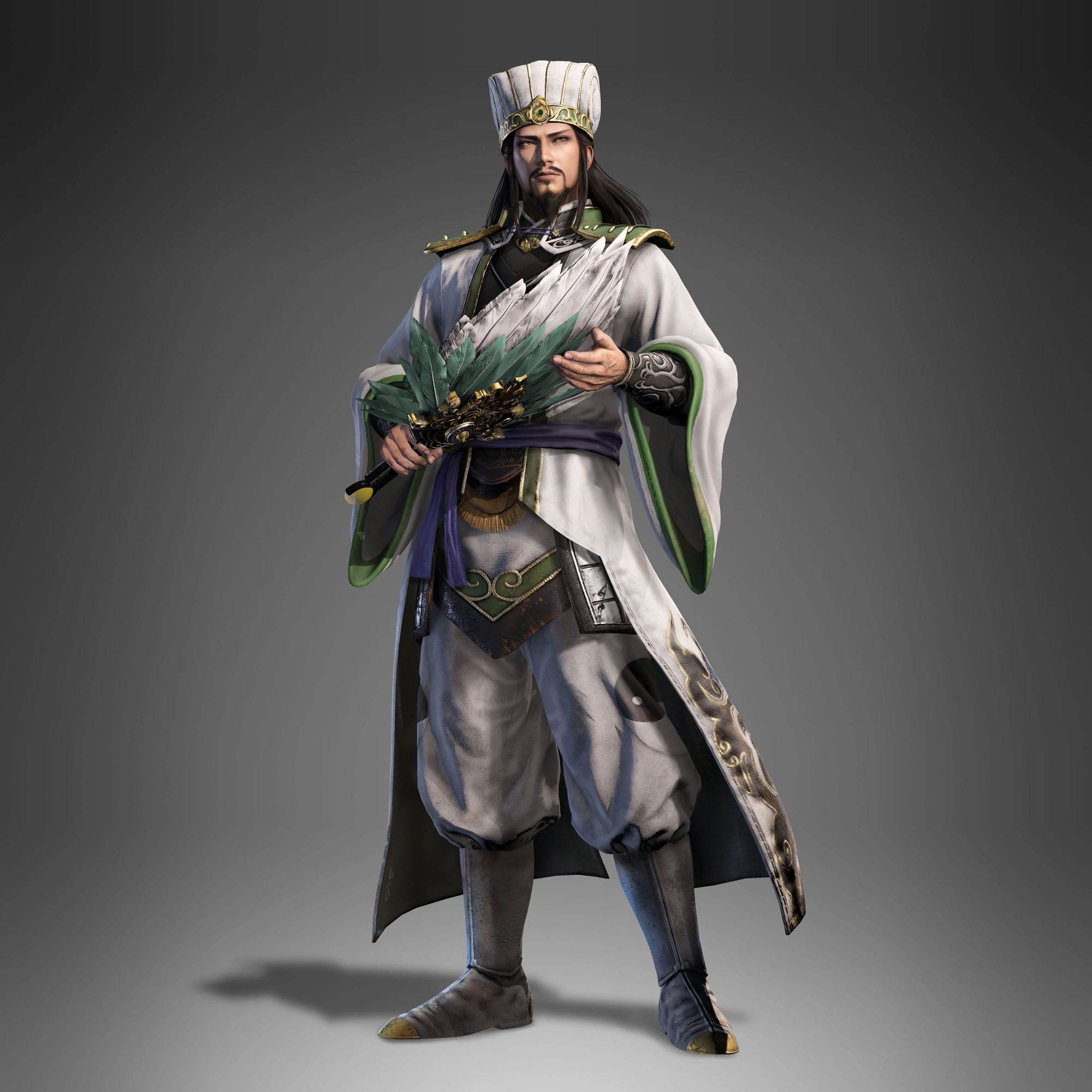
|
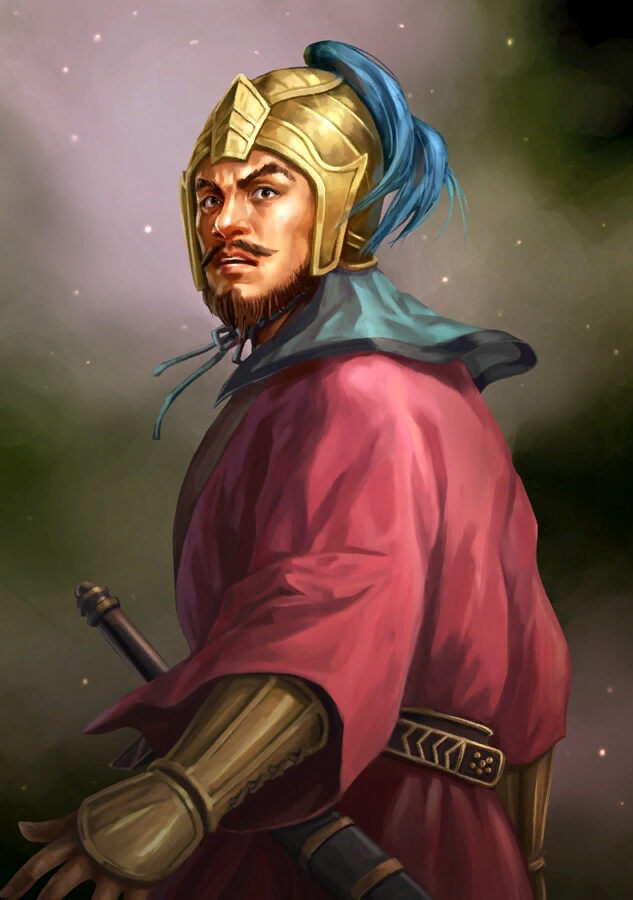
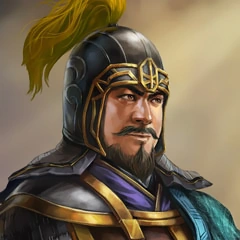
Bei Yan
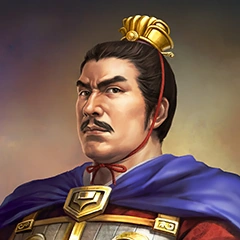
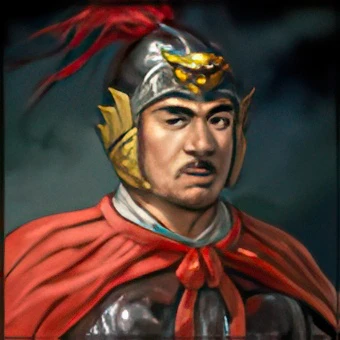
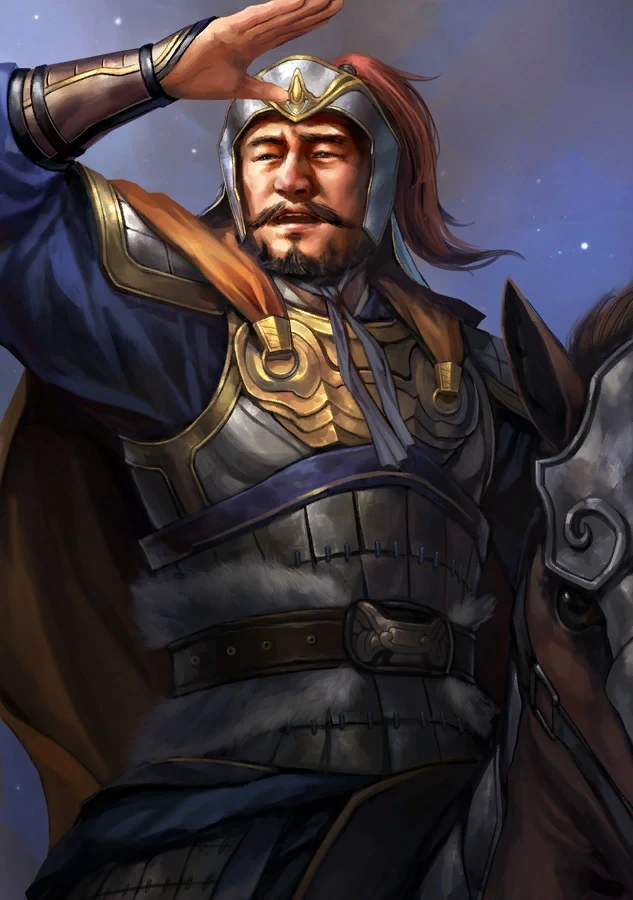
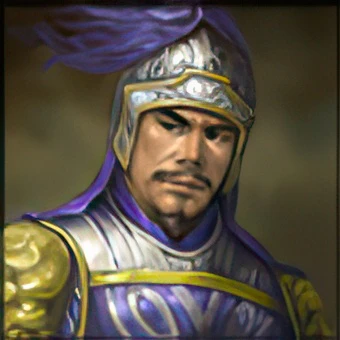
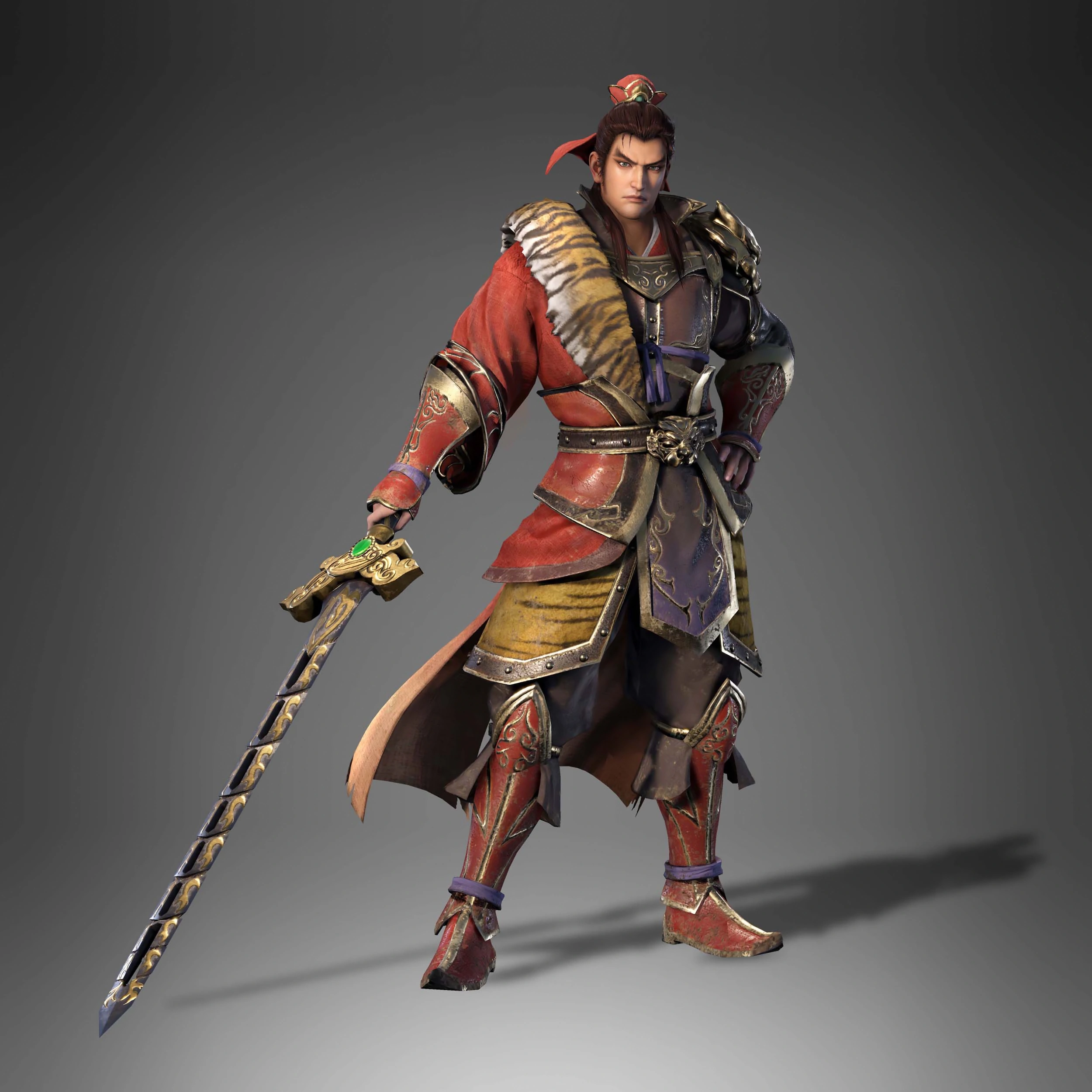
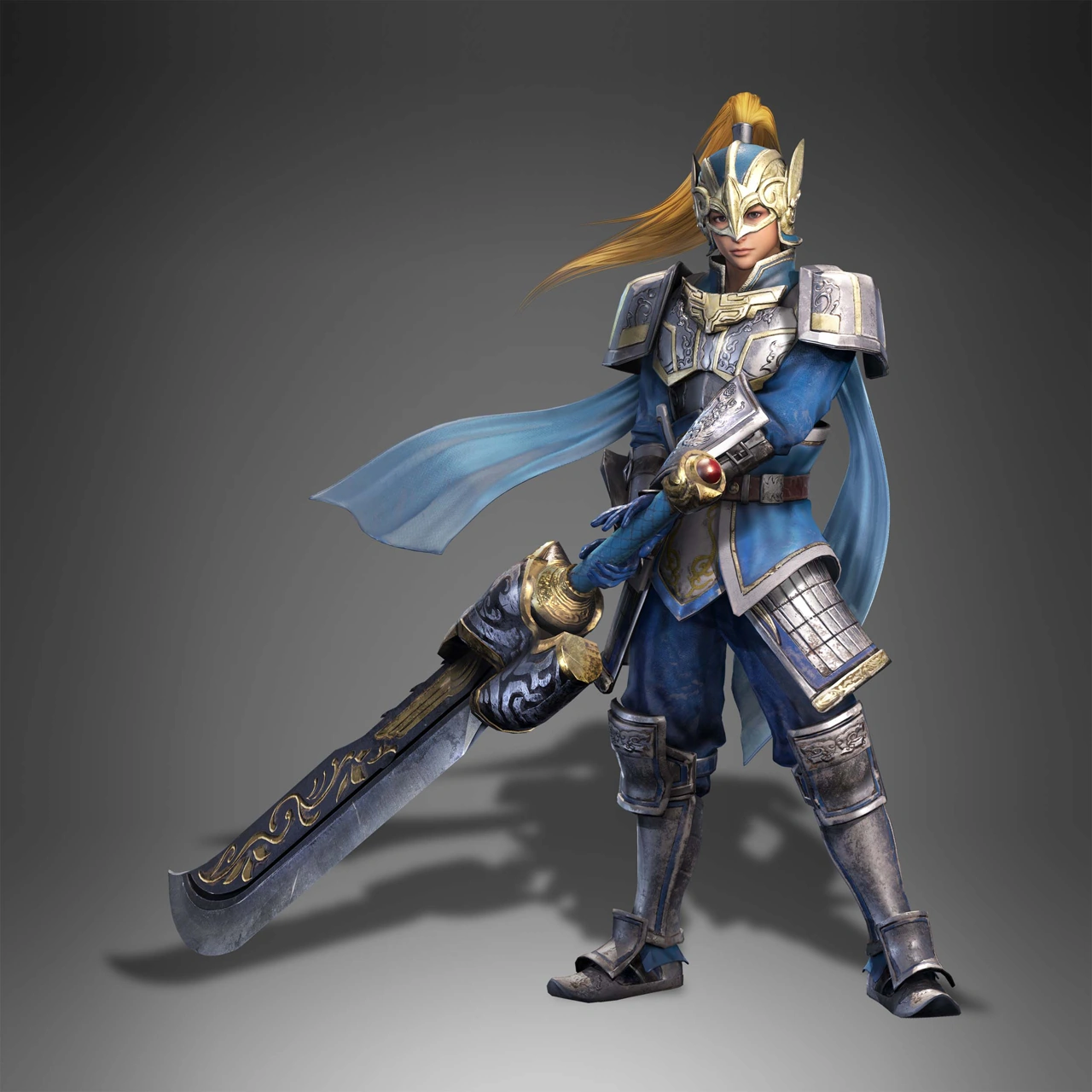
Gongsun Yuan's Commander-in-Chief and one of the two men the Liaodong war turns on. Holds Liaosui with eighty thousand behind a seven-mile wall and thorn barriers. He is also the one who reads Sima Yi's feint correctly — 'They are going to attack Xiangping, which they know has few troops. If that base be lost, this position is useless' — which is exactly what pulls him out of the fortifications and into the ambush on the River Ji. Rides out to challenge the Wei army — 'You rebels! Do not try trickery, but dare you fight in the open?' — and falls to Xiahou Ba after a few bouts, and his army breaks on the news.
8 mentions in this chapter
8 mentions in the book
|
|
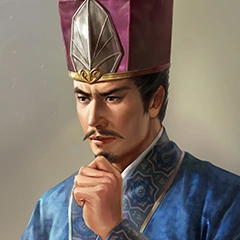
Bi Gui
One of the five favourites, made Commander of the Capital District in the same distribution of offices that gives the boards to He Yan, Deng Yang and Ding Mi and Henan to Li Sheng.
2 mentions in this chapter
4 mentions in the book
|
|
Cao Cao
Named in passing only, in the opening genealogy, as the pursuer whose quarry Gongsun Kang beheaded to buy the family's standing in the north.
2 mentions in this chapter
2543 mentions in the book
|
|
Cao Fang
Enthroned at eight years old, and the chapter is careful about what he is: 'he was Cao Rui's son only by adoption. He had been brought up in the Palace secretly, and no one knew his real origin.' At the deathbed Cao Rui makes him lead Sima Yi forward and the boy throws his arms round Sima Yi's neck and clings to him — 'Never forget the affection he has just shown,' says the dying Emperor, weeping, and Sima Yi weeps too. Thereafter he signs what Cao Shuang puts in front of him, including Sima Yi's promotion out of the army and the trip to the Gaoping Tombs.
4 mentions in this chapter
41 mentions in the book
|
|
Cao Pi
Named in passing only, in the opening genealogy, as the emperor who confirmed Gongsun Gong in the lordship of Xiangping and gave him the rank of General of the Flying Cavalry.
1 mention in this chapter
171 mentions in the book
|
|
Cao Rui
Dies in this chapter, at thirty-six, after a reign of thirteen years, in the first month of the third year of Spectacular Beginning (AD 239). Backs Sima Yi's Liaodong expedition against his own court — 'The leader of our army is most capable and best able to decide upon what should be done… wait a few days and let us not be anxious about the result' — and keeps the supplies moving. Then the ghost: a chill blast puts out the lights and the form of the late Empress Mao with a score of Palace attendants comes to his bed demanding his life, and he falls ill of it. Tries to make his brother Cao Yu regent, is refused, takes Liu Fang and Sun Zu's recommendation of Cao Shuang instead, and sends Cao Yu home. Dies holding Sima Yi's hand, having compared himself to Liu Bei at Baidicheng: 'If such conduct is possible in the mere remnant of a dying dynasty continued in a small state, how much more may I hope for it in a great country!' Posthumously Emperor Rui the Knowledgeable, buried in the Gaoping Tombs.
22 mentions in this chapter
166 mentions in the book
|
|
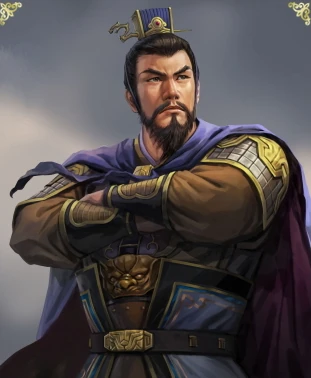
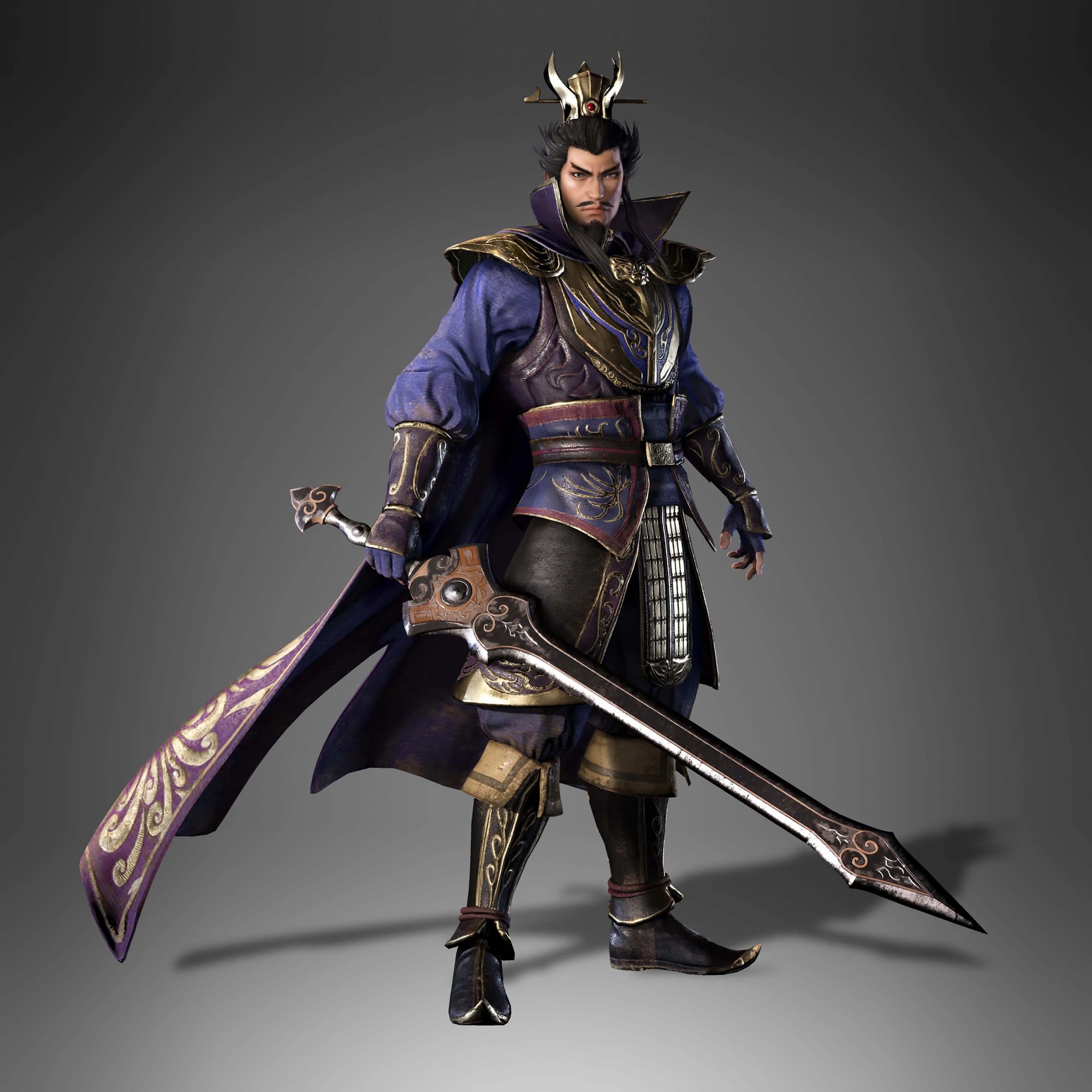
Cao Shuang
His rise, and the case against him. Cao Zhen's son, raised in and out of the Palace, named Regent Marshal and Court Administrator on Liu Fang and Sun Zu's recommendation, and at first scrupulous: 'Sima Yi as well as I received the late Emperor's sacred trust, and I mean to be true.' He Yan changes that in two sentences by reminding him whose temper killed his father. He then memorialises Sima Yi into the honorific post of Imperial Guardian, which strips him of the army; gives the three Palace guard commands to his brothers Cao Xi, Cao Xun and Cao Yan; and puts He Yan, Deng Yang and Ding Mi over three boards, Bi Gui over the Capital District and Li Sheng over Henan. Then the descent: Palace patterns in his dress and table service, tribute reaching his house before the Emperor's, eighteen of the late Emperor's handmaids sent to him by Zhang Dang, a chorus of forty well-born ladies, towers and pavilions and gold and silver plate. Warned twice about the hunting — by his own brother Cao Xi and by Huan Fan — and answers both the same way: 'The whole military authority is in my hands, and what is there to fear?' Ends the chapter taking the Emperor and every one of his brothers out of the city at once.
36 mentions in this chapter
78 mentions in the book
|
|
Cao Xi
Made Commander of the Center Army with three thousand Palace guards and the right to come and go from the Palace at will. He is also the only one of the brothers who sees the danger, and he raises it with Cao Shuang directly: 'You are in an exalted position and yet you are constantly being out hunting. If anyone took advantage of this to work you evil, you might have to be exceedingly regretful.' He gets anger for an answer.
2 mentions in this chapter
8 mentions in the book
|
|
Cao Xun
Made Commander of the Imperial Guards, one of the three brothers given three thousand Palace troops each, and one of the party that rides out of the city with Cao Shuang to the Gaoping Tombs.
1 mention in this chapter
4 mentions in the book
|
|
Cao Yan
The third of Cao Shuang's brothers to be given a Palace command — Commander of the Cavalry, with three thousand guards and free passage in and out of the Palace — and one of those who leave the capital with him at the end of the chapter.
1 mention in this chapter
2 mentions in the book
|
|
Cao Yu
Cao Rui's brother, summoned to the capital to be Regent Marshal and assist the Heir Apparent, and he declines it — 'being modest and retiring by nature' — which is what opens the regency to Cao Shuang. Liu Fang and Sun Zu then memorialise to have him sent home, and the edict in the Emperor's own hand orders him back to Yan at once with no return to court without special command. 'Cao Yu wept, but he left forthwith.'
7 mentions in this chapter
10 mentions in the book
|
|
Cao Zhen
Named in passing only, and dead since ch100. He is present here as a debt and as a grievance: Liu Fang and Sun Zu recommend his son because they 'had both received many favors from Cao Zhen', and He Yan pushes Cao Shuang into the breach with Sima Yi by reminding him how his father died — 'your father suffered much from this man's temper, which ultimately brought about his death. Why do you not look into that?'
2 mentions in this chapter
137 mentions in the book
|
|
Chen Qun
As General Chen Qun he challenges the whole conduct of the siege - 'When you besieged Shangyong, O Commander, you attacked all round at eight points, and the city fell in eight days. Meng Da was taken… Now your forty thousand troops have borne their armors many days over long marches and you do not press the attack, but keep them in the mud and mire and let the enemy gather supplies' - and draws out the chapter's clearest statement of Sima Yi's method: at Shangyong the enemy had supplies and few men and Wei had the reverse, so speed was right; here Liaodong has the numbers and no food while Wei is fed, so the gate is left open and the garrison is allowed to desert. He acknowledges the correction.
2 mentions in this chapter
10 mentions in the book
|
|
Chou Lian
Commander of the Right, who asks the same question Pei Jing has just asked and is executed for it: 'His head was suspended at the camp gate as a warning to others. The soldiers dared to complain any more.' The cost, paid by one man, of the strategy Sima Yi explains to Chen Qun a paragraph later.
2 mentions in this chapter
2 mentions in the book
|
|
Consort Guo
She does one thing in this chapter: on Cao Rui's death and Cao Fang's accession, 'Empress Guo was given the title of Empress Dowager.' That title is what Sima Yi will use next chapter, but here it is only conferred.
2 mentions in this chapter
25 mentions in the book
|
|
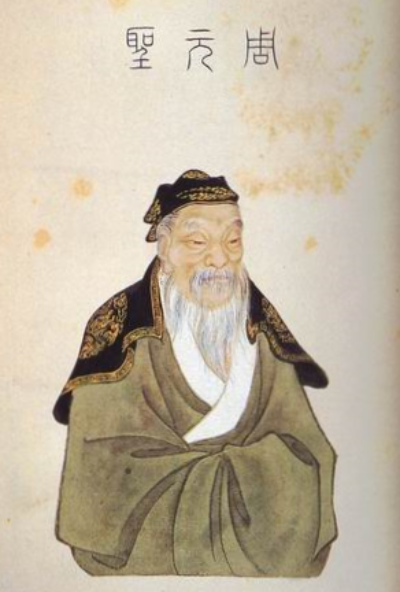
Dan
Cited by Guan Lu as the second model of the modest minister: 'Duke Zhou assisted the young Emperor Cheng of Zhou Dynasty' - a regent who held absolute power over a child emperor and gave it back, which is precisely the comparison the rest of the chapter is setting up.
1 mention in this chapter
11 mentions in the book
|
|
Deng Yang
A descendant of Commander Deng Yu of Han, one of the five 'wholly light and foppish' companions, and made Chair of a board. Present at the Guan Lu interview, where he opens with a sneer at the diviner's diction and closes by calling the reading 'mere senile gossip' — and is answered 'The gift of age is to see that which is yet to come; the gift of gossip is to perceive what is not said.' Guan Lu's private verdict: his gait is 'that of one whose sinews are loosed from his bones… This is the aspect of a disembodied soul.'
6 mentions in this chapter
10 mentions in the book
|
|
Deng Yu
Named in passing only, as the ancestor who gives Deng Yang his standing: 'Deng Yang was a descendant of Commander Deng Yu of Han.'
1 mention in this chapter
2 mentions in the book
|
|
Ding Mi
One of the five favourites, made Chair of one of the three boards Cao Shuang distributes among his friends.
2 mentions in this chapter
4 mentions in the book
|
|
Empress Mao
She comes back. 'One night the Ruler of Wei was suddenly awakened by a chill blast that extinguished all the lights, but he saw the form of the late Empress Mao, with a score or two of other Palace attendants, coming toward the bed whereon he lay, and as they approached they demanded his life.' Cao Rui's death illness begins with that visitation — the attendants he executed in ch105 come back with her.
1 mention in this chapter
7 mentions in the book
|
|
Gongsun Du
Named in the opening genealogy as Gongsun Yuan's grandfather - 'Gongsun Du the Warlike' - the founder of the family's hold on Liaodong that Gongsun Yuan inherits and destroys.
1 mention in this chapter
2 mentions in the book
|
|
Gongsun Gong
Gongsun Kang's brother, who took the chiefship while his nephews were young and was confirmed in the lordship by Cao Pi with the rank of General of the Flying Cavalry - and from whom Gongsun Yuan 'took away his uncle's power' on coming of age in AD 228.
1 mention in this chapter
2 mentions in the book
|
|
Gongsun Huang
Gongsun Kang's elder son, named in the genealogy as too young to inherit when his father died, which is how the chiefship passed sideways to his uncle and then to his brother.
1 mention in this chapter
1 mention in the book
|
|
Gongsun Kang
Gongsun Yuan's father, and the reason the family was ever trusted: in the twelfth year of Rebuilt Tranquillity he captured the fleeing Yuan Xi and Yuan Shang, beheaded them and sent the heads to Cao Cao, and was made Lord of Xiangping for it.
4 mentions in this chapter
14 mentions in the book
|
|
Gongsun Xiu
Gongsun Yuan's son and Heir Apparent, offered to Sima Yi as a hostage in the second embassy and refused ('a hostage would be useless'). Rides out of the south gate with his father in the dead of night among the thousand chosen horse, and is cut down beside him three miles from the wall.
2 mentions in this chapter
2 mentions in the book
|
|
Gongsun Yuan
The chapter's title character, and he dies in it. Grandson of Gongsun Du and second son of Gongsun Kang, he takes the chiefship from his uncle Gongsun Gong when he comes of age, kills Sun Quan's envoys and sends their heads to Wei for the Dukedom of Yuelang, and then declares himself Prince of Yan with the reign-title Extending Han anyway. Executes Jia Fan and then Lun Zhi in the public place for arguing against it. Raises a hundred and fifty thousand men, loses Liaosui to a feint, loses Bei Yan to Xiahou Ba, and is penned in Xiangping until the horses are eaten and his own soldiers start talking about killing him. Sends two embassies — the first two envoys are beheaded and their heads returned over the wall, the second is told the five courses open to an army and runs 'like a rat'. Breaks out of the south gate at night with a thousand horse and his son, gets three miles, and is taken. 'Gongsun Yuan and Gongsun Xiu were slain where they stood.' Seventy heads of his clan and supporters follow.
26 mentions in this chapter
30 mentions in the book
|
|
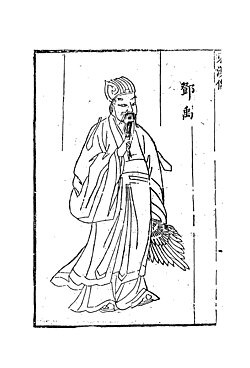
Guan Lu
Summoned from Pingyuan by He Yan to discuss the Book of Changes, he answers the request for a fortune with a lecture: Gao Kai and Gao Yuan aided King Shun, Duke Zhou assisted the young Emperor Cheng, 'all these were kindly and modest and enjoyed great happiness', whereas 'those who esteem you are few and those who fear you, many'. The blue flies of the dream gather to foul objects; the lofty fears a fall. Walks out on being called senile, and tells his alarmed uncle why he is not afraid: 'I have been talking to two dead men.'
7 mentions in this chapter
52 mentions in the book
|
|
He Yan
The one who turns Cao Shuang, in two sentences, from a scrupulous colleague into a rival: 'My lord, you should not let your great powers slip into the hands of any other, or you will repent it', and then the reminder that Sima Yi's temper killed Cao Zhen. Made Chair of one of three boards. Also the man who summons Guan Lu to read his fortune and hears it: he has come to high honours and 'those who esteem you are few and those who fear you, many', the blue flies of his recurring dream gather to foul objects, and the lofty fears a fall. Guan Lu's private verdict on him afterwards is that he is 'bloodless, and what should be solid in him is mere vapor. He looks like rotten wood.'
7 mentions in this chapter
11 mentions in the book
|
|
Hu Zun
Leads the van of the campaign. Camps in Liaodong to fix Gongsun Yuan's attention, joins the encirclement that takes the Gongsuns on the road, and his army is the one already inside Xiangping by the time Sima Yi turns back to besiege it.
5 mentions in this chapter
17 mentions in the book
|
|
Huan Fan
Minister of Agriculture, nicknamed 'Bag of Wisdom', the one man among Cao Shuang's six confidants with 'good parts' — and he spends the chapter warning: first against the endless hunting trips, then against the Gaoping Tombs procession itself. 'Your Lordship are in charge of the capital security, and you and your brothers should not leave the city together. Suppose there were a revolt, what then?' Cao Shuang's answer is 'Who would dare make trouble? Hold your wild tongue!'
3 mentions in this chapter
21 mentions in the book
|
|
Ji Song
Cited by Guan Lu as the child king whom Duke Zhou served without usurping - the exemplar held up, unheeded, to a court in which two regents are sharing an eight-year-old emperor.
1 mention in this chapter
2 mentions in the book
|
|
Jia Fan
The first man executed for telling Gongsun Yuan the truth. 'My lord, the central authorities have treated you well and honored you. I fear that Sima Yi is too skillful a leader for rebellion to succeed. You see even Zhuge Liang cannot defeat him. How much less can you?' Condemned to death for it, and beheaded in the public place with Lun Zhi. Sima Yi honours his tomb and gives rank to his children after the city falls.
5 mentions in this chapter
5 mentions in the book
|
|
Li Sheng
Made Governor of Henan among Cao Shuang's distributions, then appointed Imperial Protector of Qingzhou, and sent to take leave of Sima Yi and report on his health. Sima Yi sees through it before he is admitted. Li Sheng gets deafness ('Ah, Bingzhou is in the north; you will have to be very careful there'), a request for paper and a pen, broth spilled down the old man's dress, and a dying request to look after his sons — and carries it all back to Cao Shuang, who says 'If the old man died, I should not be the one to grieve.'
14 mentions in this chapter
16 mentions in the book
|
|
Liu Bei
Named in passing only, and long dead, but as the explicit model for the scene being played: Cao Rui takes Sima Yi's hand and says 'When Liu Bei lay dying at Baidicheng, he confided his son, so soon to be an orphan, to the care of Zhuge Liang, who labored in this task to the very end and whose devotion only ceased with death.' The comparison is meant as reassurance and reads, after ch107, as the chapter's irony.
1 mention in this chapter
1978 mentions in the book
|
|
Liu Fang
One of the two men who choose the next regent. Set over the privy council with Sun Zu when Cao Rui falls ill, asked who of the family could support the Heir Apparent, and answers - 'as Liu Fang and Sun Zu had both received many favors from Cao Zhen' - 'None is so fit as Cao Shuang, the son of Cao Zhen.' Then memorialises to get Cao Yu out of the capital, and carries the edict that does it. Present at the deathbed.
5 mentions in this chapter
5 mentions in the book
|
|
Liu Fu
Imperial Censor of Liaodong, sent out with Wang Jian on the first embassy and lowered from the wall on the same rope. Beheaded with him, and his head sent back into the city.
2 mentions in this chapter
2 mentions in the book
|
|
Lun Zhi
His remonstrance is the chapter's whole catalogue of portents, and it costs him his head. A dog in red clothes and a turban walking like a man on a roof; a child boiled to death in a cooking pan; a cave by the market place throwing up 'a large, fleshy body completely human save that it lacked limbs', which swords could not cut and arrows could not pierce, and the soothsayers' reading of it — 'Incomplete shape, silent mouth: A state is near destruction.' Executed in the public place with Jia Fan, and honoured posthumously by the man he warned about.
3 mentions in this chapter
3 mentions in the book
|
|
Meng Da
Named in passing only, and long dead, as the measure of the Shangyong siege that Chen Qun holds up against the Xiangping one: eight points of attack, eight days, and Meng Da taken. The comparison is the hinge of the chapter's argument about when to hurry a siege and when not to.
2 mentions in this chapter
108 mentions in the book
|
|
Pei Jing
Commander of the Left, and the first to ask the obvious question after a month of rain has put the plain under three feet of water: 'The rain keeps pouring down, and tents cannot be pitched on mud. May the army be moved to camp on the higher ground?' Sima Yi flouts the suggestion and announces that anyone who raises it again will be put to death. Pei Jing agrees and goes away, which is why he survives the chapter.
2 mentions in this chapter
2 mentions in the book
|
|
Shun
Cited by Guan Lu as the model ruler served by modest men — 'Gao Kai and Gao Yuan aided King Shun' — the first half of the contrast with He Yan.
1 mention in this chapter
16 mentions in the book
|
|
Sima Shi
Rides in the party that cuts off the Gongsuns' night escape ('Stop, O rebel!'), and later resigns his office with his brother when their father takes to his bed, which is half of what makes the illness convincing. He is one of the two sons briefed to play their parts before Li Sheng is admitted.
1 mention in this chapter
94 mentions in the book
|
|
Sima Yi
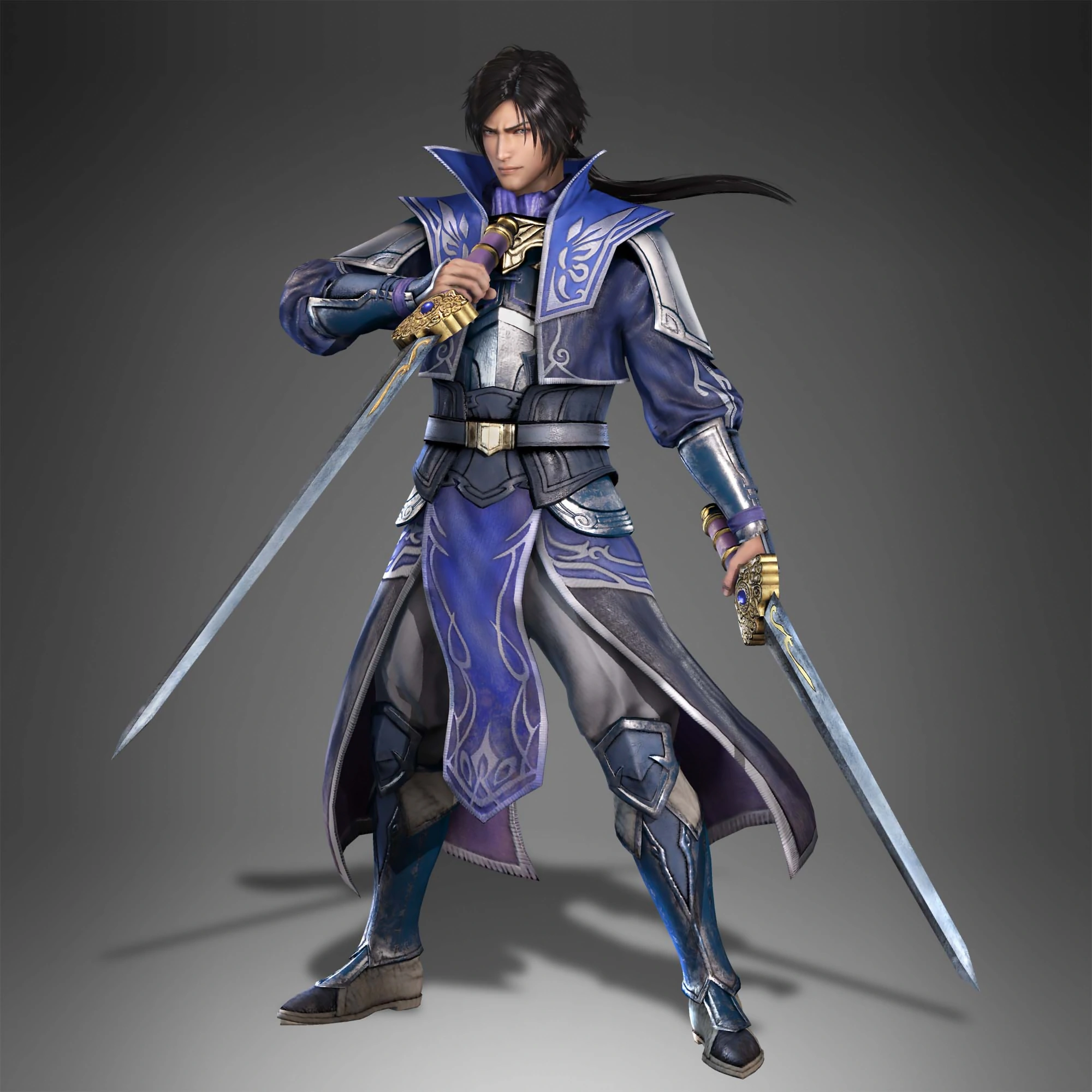
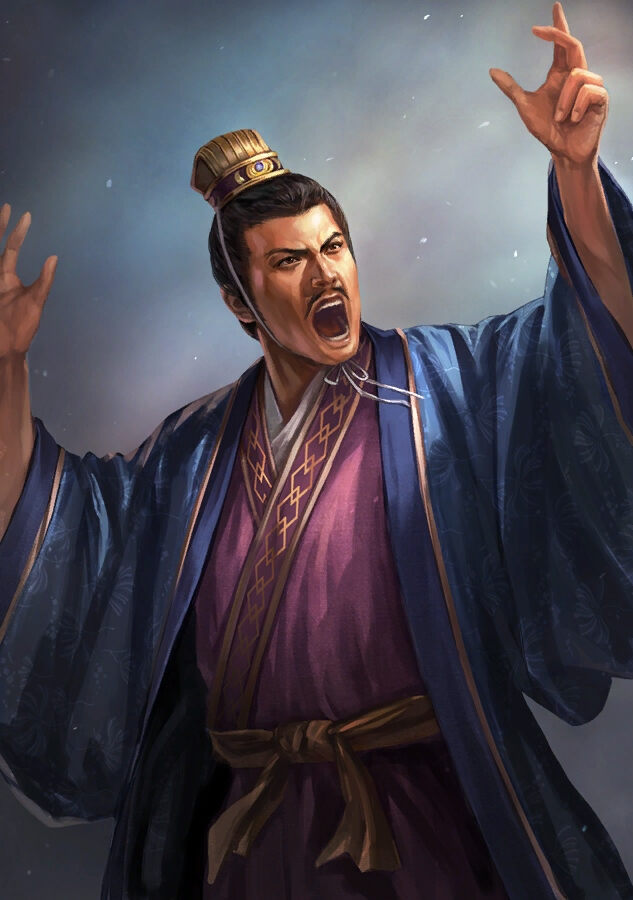
The Liaodong campaign in full, and the sickbed act. He takes the commission with forty thousand men against a hundred and fifty thousand — 'The strength of an army is not in numbers, but in strategy' — and budgets the war to the day: a hundred days out, a hundred attacking, a hundred back, sixty resting, one year. Predicts Gongsun Yuan's three possible plans and says the worst of them, holding Xiangping, is the one that will get him captured. Feints at Xiangping to pull Bei Yan out of his walled camp, refuses to move the army off the flooded plain and executes Chou Lian for asking twice, then deliberately opens a gate and pulls back seven miles so the starving garrison can desert — and explains the whole reasoning to Chen Qun by contrasting it with Shangyong. Reads a falling star over Shoushan Mountain and names the day: 'Five days from now Gongsun Yuan will be slain where that star fell.' Refuses two embassies, beheading the first, and gives the second the five courses open to an army: 'If you can fight, fight; if you cannot fight, defend; if you cannot defend, flee; if you cannot flee, surrender; if you cannot surrender, die.' Kills the Gongsuns on the road and honours the tombs of the two men Gongsun Yuan executed for opposing the revolt. Then, back at court, he is promoted into a civil sinecure, gives out that he is ill, and stages the scene for Li Sheng — hair loose, bedding tumbled, two servant girls holding him up, deaf to the difference between Qingzhou and Bingzhou, and broth spilled down his front. 'Li Sheng will take a full account of this to Cao Shuang, who will not fear me any more. But wait till Cao Shuang goes on his next hunting trip, and we will see what can be done.'
51 mentions in this chapter
470 mentions in the book
|
|
Sima Zhao
With his father and brother on the road outside Xiangping when the Gongsuns break out, and then resigns his office as part of the withdrawal from public life that sets the trap for Cao Shuang.
1 mention in this chapter
170 mentions in the book
|
|
Sun Quan
His one move in this chapter is the overture that starts the whole disaster: two envoys, Zhang Mi and Xu Yan, with gold, gems and pearls, offering Gongsun Yuan the title of Prince of Yan. Gongsun Yuan takes the title later and kills the envoys first.
2 mentions in this chapter
603 mentions in the book
|
|
Sun Zi
The other half of the pair that makes Cao Shuang. Set over the privy council with Liu Fang, owes his advancement to Cao Zhen, recommends Cao Zhen's son, and joins in the memorial that sends the Prince of Yan home. Present at the deathbed. (Tagged as 'Sun Zu', the spelling the translation uses for the Wei official - the same disambiguation made in ch96.)
5 mentions in this chapter
8 mentions in the book
|
|
Wang Jian
Gongsun Yuan's Prime Minister and one of the two men sent to beg terms. Let down from the wall by ropes because no gate can be opened, he asks Sima Yi to withdraw seven miles so the officers can come out and surrender — and is beheaded for coming in his master's place: 'Why did not Gongsun Yuan himself come? He is rude.' His head is thrown back over the wall.
2 mentions in this chapter
2 mentions in the book
|
|
Wei Yan
Gongsun Yuan's High Counselor and second envoy, and the recipient of the chapter's most quoted speech. Approaches on his knees and offers Gongsun Xiu as hostage with every officer bound in cords, and is answered: 'There are five possible operations for any army. If you can fight, fight; if you cannot fight, defend; if you cannot defend, flee; if you cannot flee, surrender; if you cannot surrender, die.' He 'put his hands over his head and fled like a rat'.
3 mentions in this chapter
3 mentions in the book
|
|
Xiahou Ba
Sima Yi's strike force: posted with Xiahou Wei on the River Ji to take Bei Yan and Yang Zuo in the flank as they leave their walled camp, accepts Bei Yan's open challenge, kills him in a few bouts, and drives Gongsun Yuan back inside Xiangping. Present again in the encirclement on the night of the break-out.
5 mentions in this chapter
66 mentions in the book
|
|
Xiahou Wei
In the field. Shares the River Ji ambush with Xiahou Ba — bomb, drums, flags and two forces closing from both sides — and rides in the party that surrounds Gongsun Yuan three miles outside the south gate.
3 mentions in this chapter
8 mentions in the book
|
|
Xu Yan
One of Sun Quan's two envoys to Liaodong, sent with Zhang Mi to buy Gongsun Yuan's support, and beheaded for his trouble so that the heads could be sent to Wei as proof of fealty.
1 mention in this chapter
1 mention in the book
|
|
Yang Zuo
Gongsun Yuan's Leader of the Van and the author of the Liaodong strategy, which is Sima Yi's own turned back on him: 'When the Wei army comes near, we will not fight. They will have come a long march and their supplies will be short… These were the tactics Sima Yi used against Zhuge Liang on River Wei, and Zhuge Liang died before the end of the expedition. We will try similar means.' It is a good plan, and Bei Yan talks him out of it in one sentence.
5 mentions in this chapter
5 mentions in the book
|
|
Yuan Shang
Named in the opening genealogy, and long dead: he and Yuan Xi fled east after Cao Cao's pursuit, and Gongsun Kang beheaded them both and sent the heads to Cao Cao - the service that bought the family Liaodong.
1 mention in this chapter
78 mentions in the book
|
|
Yuan Xi
Named in the opening genealogy with his brother Yuan Shang, as the fugitive whose head Gongsun Kang sent to Cao Cao in the twelfth year of Rebuilt Tranquillity.
1 mention in this chapter
22 mentions in the book
|
|
Yue Chen
One of the five who surround the Gongsuns on the night road out of Xiangping, making escape impossible and forcing the dismount and surrender that Sima Yi does not accept.
1 mention in this chapter
17 mentions in the book
|
|
Zhang Dang
Minister of the Inner Bureau, and what he does is procure: he 'toadied to Cao Shuang so far as to select eighteen of the late Emperor's handmaids and send them to the now powerful minister'.
1 mention in this chapter
4 mentions in the book
|
|
Zhang Hu
One of the five commanders — with Hu Zun, Xiahou Ba, Xiahou Wei and Yue Chen — who close on Gongsun Yuan and his son three miles outside the south gate of Xiangping and leave them no room to ride.
1 mention in this chapter
12 mentions in the book
|
|
Zhang Mi
Sent by Sun Quan with Xu Yan and gifts of gold, gems and pearls to offer Gongsun Yuan the title of Prince of Yan; Gongsun Yuan, afraid of how the Middle Land would read it, 'slew the Wu envoys and sent the heads to the Ruler of Wei'.
1 mention in this chapter
1 mention in the book
|
|
Zhuge Liang
Named in passing only, and long dead, in the same deathbed comparison - the guardian whose devotion 'only ceased with death', held up to Sima Yi as the standard he is expected to meet. He is also invoked twice in the Liaodong half: Jia Fan warns that 'even Zhuge Liang cannot defeat' Sima Yi, and Yang Zuo proposes to beat Wei with the very tactics that outlasted him on River Wei.
4 mentions in this chapter
1454 mentions in the book
|
-
Baidicheng Settlement
-
Bing Province Province(37.7396, 112.4885)
-
Gaoping Tombs Landmark
-
Henan Commandery Commandery(34.6716, 112.4351)
-
Wikipedia entry Location
-
-
Huashan Mountains Mountains/Hills
-
Liaodong Commandery Commandery
-
Liaosui
-
Luoyang County(34.7316, 112.5963)
-
-
-
Middle Land Region
-
Pingyuan Commandery(37.0649, 116.3455)
-
Qing Province Province
-
-
-
River Ji River
-
River Wei River
-
Shangyong Commandery Commandery(32.2261, 110.2286)
-
Shoushan Mountain Mountains/Hills
-
Shu (Three Kingdoms) Region
-
Wei (Three Kingdoms) Region
-
Wu (Three Kingdoms) Region
-
Xiangping County
-
Yan Commandery Commandery(39.9196, 116.3494)
-
Yuelang