Liu Bei
劉備
Courtesy name: Xuande (玄德)
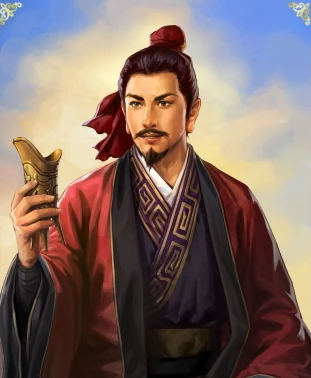
Source:
Koei Wiki (Fandom)
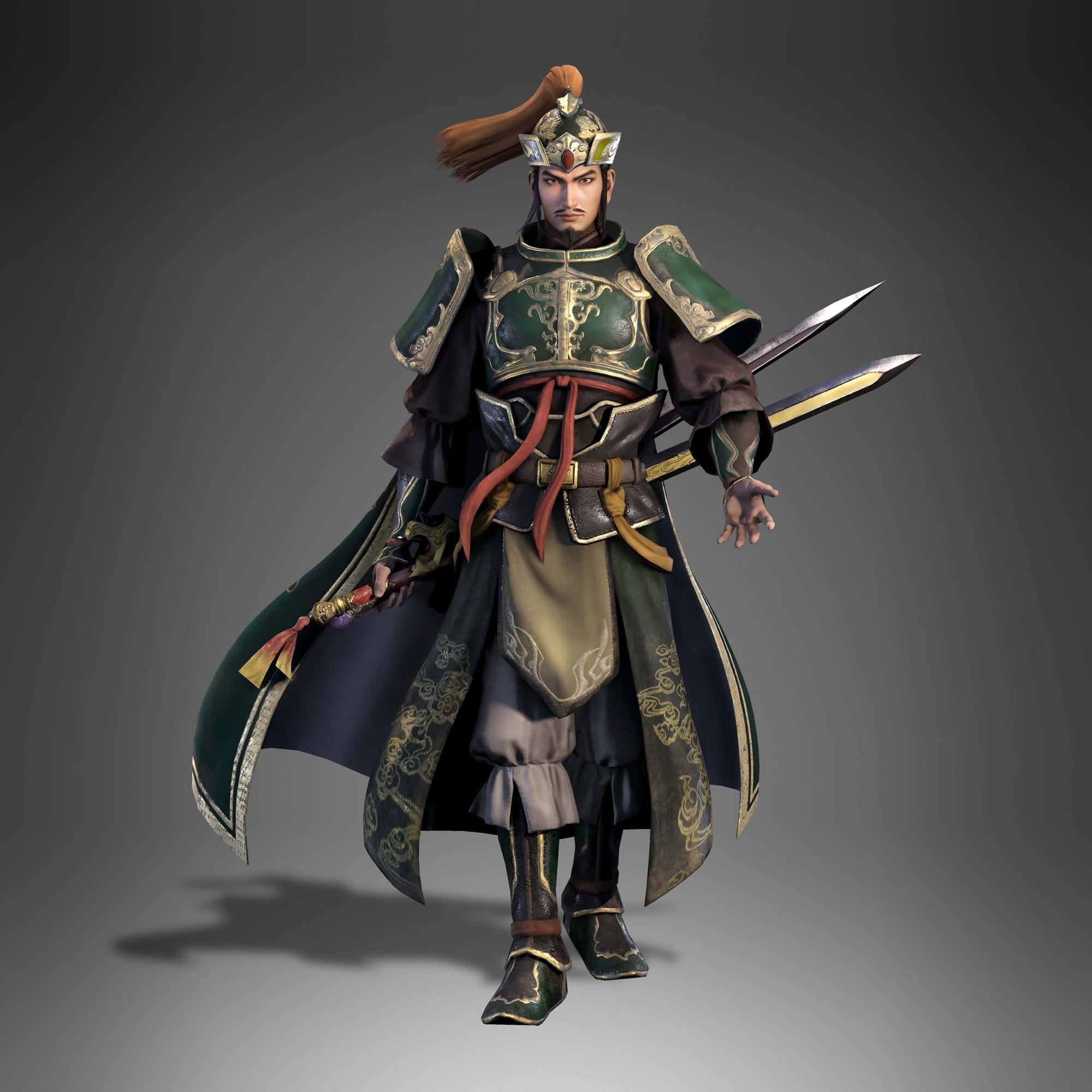
Source:
Koei Wiki (Fandom)
- Born
- 161
- Died
- 223
- Ancestral home
- Zhuo County, Zhuo (Zhuozhou, Hebei)
- Also known as
- Prince of Hanzhong
- Book mentions
- 1978
Roles:
emperor
Relationships:
Liu Feng
Adopted Son
Liu Sheng
Ancestor
Liu Zhang
Distant Cousin/Relative
Liu Hong
Father
Liu Chen
Grandson
Liu Cong
Grandson
Liu Qu
Grandson
Liu Xuan
Grandson
Liu Xun
Grandson
Liu Yao
Grandson
Liu Zan
Grandson
Liu Li
Son
Liu Shan
Son
Liu Yong
Son
Guan Yu
Sworn Brother
Zhang Fei
Sworn Brother
Liu Yuanqi
Uncle
Empress Wu
Wife
Lady Gan
Wife
Lady Mi
Wife
Sun Ren
Wife
Links:
-
Wikipedia entry Bio
Appears in 93 chapters:
-
Chapter 1
— Three Heroes Swear Brotherhood In The Peach Garden; One Victory Shatters The Rebels In Battlegrounds.
Descended from Prince Sheng of Zhongshan but selling straw sandals and weaving mats when the Yellow Turban call comes. At 28 he reads the Zhuo volunteer notice and sighs at his helplessness - the sigh that draws Zhang Fei in. Initiates the Peach Garden oath, leads his first 500 troops to crush Cheng Yuanzhi, ambushes the rebels besieging Qingzhou, and joins Lu Zhi at Guangzong before being sent on to Yingchuan.
-
Chapter 2
— Zhang Fei Whips The Government Officer; He Jin Plots To Kill The Eunuchs.
After the Yellow Turbans are broken, Liu Bei is appointed magistrate of Anxi but is barely settled before the petty inspector arrives demanding a bribe. Refuses to abandon his ideals, restrains Zhang Fei after the whipping, and hangs his official seal on the inspector's neck before leaving with his brothers.
-
Chapter 5
— Cao Cao Appeals To The Powerful Lords; The Three Brothers Fight Against Lu Bu.
Joins the coalition from Pingyuan under Gongsun Zan's wing and is seated last among the lords for his imperial blood. At Tiger Trap Pass he rides in with his twin swords to complete the three-against-one melee against Lü Bu - the triangle of steeds that finally makes the halberd waver.
-
Chapter 6
— Burning The Capital, Dong Zhuo Commits An Atrocity; Hiding The Imperial Hereditary Seal, Sun Jian Breaks Faith.
Takes Tiger Trap Pass with his brothers when Zhao Cen abandons River Si, then follows Gongsun Zan out of the dissolving coalition and is left in command at Pingyuan.
-
Chapter 7
— Yuan Shao Fights Gongsun Zan At The River Pan; Sun Jian Attacks Liu Biao Across The Great River.
Arrives with his brothers and Gongsun Zan's troops at the Pan River; their charge breaks Yan Liang and Wen Chou's encirclement and saves Gongsun Zan. Meets Zhao Yun for the first time; the two part reluctantly when the emperor's truce envoy ends the campaign.
-
Chapter 11
— Liu Bei Rescues Kong Rong At Beihai; Lu Bu Defeats Cao Cao Near Puyang.
Marches from Pingyuan with three thousand men and his brothers to break the Beihai siege - 'and does he know there is a Liu Bei in this world?' - then borrows two thousand troops and Zhao Zilong from Gongsun Zan for Xuzhou. He cuts through to the city, writes the letter that (with Lü Bu's help) lifts the siege, and three times refuses Tao Qian's offered governorship, settling instead at little Xiaopei to stand watch.
-
Chapter 12
— Tao Qian Thrice Offers Xuzhou To Liu Bei; Cao Cao Retakes Yanzhou From Lu Bu.
Liu Bei; relieves Xuzhou with the help of his brothers and is finally pressed by Tao Qian into accepting the governorship at his deathbed. Takes the seal of office only after Tao Qian's third dying request, and brings the city under his control - the foundation of his independent career.
-
Chapter 13
— Li Jue and Guo Si Duel In Changan; The Emperor Establishes Anyi The New Capital.
Receives the fugitive Lü Bu with full honors over Mi Zhu's objection and - to his brothers' horror - offers him the seal of Xuzhou outright. When the guest-host friction turns dangerous he lodges Lü Bu at Xiaopei, keeping both his honor and his province.
-
Chapter 14
— Cao Cao Moves The Court To Xuchang; Lu Bu Leads A Night Raid Against Xuzhou.
Handed the Xuzhou protectorship and a lordship by Cao Cao's own memorial - with a private note ordering him to kill Lü Bu. He shows Lü Bu the letter instead, seeing through the 'Rival Tigers' ruse; but the follow-up 'Tiger against Wolf' edict he obeys, marching on Yuan Shu - and while Guan Yu duels Ji Ling at Xuyi, Xuzhou and his own family fall to Lü Bu behind him. 'Success is not worth rejoicing; failure is not worth grieving.'
-
Chapter 15
— Taishi Ci Fights With The Young Overlord; Sun Ce Cuts Short The White Tiger King.
Liu Bei; back at Xuyi after fleeing the night raid; held off Lu Bu's pressure and ultimately accepted Chen Gong's compromise to settle at Xiaopei as Lu Bu's nominal subordinate.
-
Chapter 16
— In The Camp Gate, Lu Bu Shoots The Halberd; At River Yu, Cao Cao Suffers A Defeat.
Saved once by the halberd shot and besieged anyway over Zhang Fei's horse raid, he abandons Xiaopei by moonlight and throws himself on Cao Cao - who, over Xun Yu's and Cheng Yu's urgings to kill him, calls him brother, gives him troops and grain, and has him made Imperial Protector of Yuzhou.
-
Chapter 17
— Yuan Shu Marches Out Seven Armies; Cao Cao And Three Generals Join Forces.
First to welcome the grand army - presenting the heads of Han Xian and Yang Feng, whose plundering he ended with a dropped cup at his own banquet. He fights on the southern face at Shouchun and is then planted at Xiaopei: Cao Cao's 'pitfall for the tiger', with secret orders to heed only the two Chens.
-
Chapter 18
— Giving Counsels, Jia Xu Directs A Great Victory; Braving Battlefield, Xiahou Dun Loses An Eye.
Exposed by his intercepted reply to Cao Cao, he shuts Xiaopei's four gates - himself at the south, Sun Qian north, Guan Yu west, Zhang Fei east, the Mi brothers guarding the family - sends Jian Yong for help, and marches out to camp when Cao Cao's fifty thousand approach. The chapter ends with Lü Bu, Gao Shun, and Zhang Liao each taking one brother.
-
Chapter 19
— Cao Cao Makes Flood In Xiapi; Lu Bu Perishes At The White Gate Tower.
Liu Bei; rides with Cao Cao to Xiapi. On the scaffold, reminds Cao Cao 'remember Ding Yuan and Dong Zhuo' - the line that seals Lu Bu's death sentence.
-
Chapter 20
— Cao Cao Organizes A Hunting Expedition In Xutian; Dong Cheng Receives A Secret Command In The Palace.
Certified the Emperor's uncle by the Books of the Genealogies and made General of the Left Army, Lord of Yicheng. He drops a hare with his first arrow at Xutian, then saves everything by waving back Guan Yu's drawn blade when Cao Cao usurps the imperial cheers - 'when you throw stones at a rat, beware of the vase.' Ma Teng's finger lands on his name as the chapter ends.
-
Chapter 21
— In A Plum Garden, Cao Cao Discusses Heroes; Using The Host's Forces, Guan Yu Takes Xuzhou.
Survives Cao Cao's heroes test by pretending fear of thunder; uses the Yuan Shu-versus-Yuan Shao march as cover to leave Xuchang with 50,000 troops, then slays Che Zhou and retakes Xuzhou. The escape that begins his anti-Cao Cao career.
-
Chapter 22
— Yuan Shao And Cao Cao Both Take The Field; Guan Yu And Zhang Fei Captures Two Generals.
Liu Bei; receives Sun Qian's news that Yuan Shao has agreed in principle to an alliance after Zheng Xuan's letter; sets the brothers to picket the Cao Cao probe and welcomes the relief alliance.
-
Chapter 23
— Mi Heng Slips His Garment And Rails At Traitors; Ji Ping Pledges To Kill The Prime Minister.
Liu Bei; off-stage in this chapter at Xuzhou; awaiting Yuan Shao's intervention.
-
Chapter 24
— Cao Cao Murdered The Consort Dong; Liu Bei Flees To Yuan Shao.
Defeated by Cao Cao's overwhelming attack on Xuzhou; loses contact with Guan Yu (now in Xiapi), Zhang Fei (fled to Mangdang Hills), and his wives. Flees alone north to Yuan Shao via Mi Zhu and Sun Qian.
-
Chapter 25
— Besieged In Tushan, Guan Yu Makes Three Conditions; Relieved At Baima, Cao Cao Beholds A Marvel.
Grieving and rootless at Jizhou, he tips Yuan Shao into war - 'you are failing in your duty if you do not attack' - and begs the doomed Tian Feng into mere imprisonment. Then Baima's survivors describe his brother's saber-work, and the chapter ends with lictors leading him out to die.
-
Chapter 26
— Yuan Shao Loses Another Leader; Guan Yu Abandons Rank And Wealth.
Talks his head off the block twice - 'is every red-faced man with a beard named Guan Yu?', then 'Cao Cao arranged it all to make you kill me' - and glimpses his brother's Hanshou banner across the river at Yenjin. His letter of loving reproach, carried by Chen Zhen, brings Guan Yu out of Xuchang.
-
Chapter 27
— The Man Of Beautiful Beard Rides On A Solitary Journey; Guan Yu Slays Six Generals Through Five Passes.
Already gone from Yuan Shao's court: reading the jealous quarrels around him, he and Sun Qian contrived his departure, and he waits now with Liu Pi at Runan - the destination Sun Qian turns the carriage toward.
-
Chapter 28
— Putting Cai Yang To Death, The Brothers' Doubts Disappear; Meeting At Gucheng, Lord and Lieges Fortify Each Other.
Reunites with both brothers, Zhao Yun, Mi Zhu, Mi Fang, and Sun Qian at Gucheng - a council that returns the brothers to Runan to begin again under Liu Pi and Gong Du.
-
Chapter 31
— Cao Cao Overcomes Yuan Shao In Cangting; Liu Bei Seeks Shelter With Liu Biao In Jingzhou.
Recites the Girdle Mandate to Cao Cao's face at the Rang Mountains and wins the first day - then loses both brothers to relief missions, is ambushed by night, and flees alone into the hills. Saved by Liu Pi's death and Zhao Zilong's spear, he reaches the Han River with a thousand men, offers to release his followers, and instead takes Sun Qian's counsel: refuge with his kinsman Liu Biao, who welcomes him into Jingzhou - the start of the long exile.
-
Chapter 32
— Jizhou Taken: Yuan Shang Strives; River Zhang Cut: Xun You Schemes.
Sent out by Liu Biao to make the first resistance at the Xiping front; when Cao Cao suddenly decamps north he smells a ruse, lets the retreat go unmolested, and takes himself back to Jingzhou.
-
Chapter 33
— A Gallant Warrior, Cao Pi Marries Lady Zhen; An Expiring Star, Guo Jia Settles Liaodong.
Counsels Liu Biao against helping Yuan Tan - nothing to gain, and a loophole handed to Cao Cao - and proposes answering both brothers as a gracious peacemaker instead; the letters end Yuan Tan's southern hopes.
-
Chapter 34
— Behind The Screen, Lady Cai Overhears A Secret; Across The Tan Torrent, The Dilu Horse Carries Its Master.
Liu Bei; at a banquet for the Jingzhou notables overhears Cai Mao plotting his death; flees the city on his horse Dilu (the 'unlucky steed'), is cornered at the Tan Torrent and makes the famous leap - Dilu clears the gorge at a single bound. The novel's most-quoted miracle escape.
-
Chapter 35
— Liu Bei Meets A Recluse At Nanzhang; Shan Fu Sees A Noble Lord At Xinye.
After leaping the Tan Torrent and pausing at the recluse Sima Hui's hut, Liu Bei is told the famous prophecy 'when Sleeping Dragon or Young Phoenix is yours, the empire is yours.' Returns to Xinye and meets Shan Fu (Xu Shu) on the road - the start of his strategist's life.
-
Chapter 36
— Shan Fu's Strategy: Fankou Is Captured; Xu Shu's Affection: Zhuge Liang Is Recommended.
Liu Bei; wins his first major engagement under Shan Fu's strategy at Xinye; loses Shan Fu to the forged letter; sets out toward Sleeping Dragon Ridge after Xu Shu's recommendation.
-
Chapter 37
— Sima Hui Recommends A Scholar To Liu Bei; Liu Bei Pays Three Visits To The Sleeping Dragon Ridge.
Liu Bei; the famous Three Visits to Sleeping Dragon Ridge begin. First visit: Zhuge Liang isn't home - encounters Zhuge Jun. Second visit through deep snow: still not home; meets Zhuge Liang's father-in-law Huang Chengyan and brother Zhuge Jun, and learns to wait patiently. The arc spans the chapter.
-
Chapter 38
— Zhuge Liang Plans For The Three Kingdoms; Sun Quan Attacks Xiakou To Take Revenges.
Third Visit chapter: he answers his brothers with Prince Huan and King Wen, walks the last quarter mile on foot, and stands through the sage's nap and another hour besides. The Longzhong Plan unrolls before him on a map - Jingzhou first, the River Lands next, the empire in trinity - and his tears at 'what will become of the people?' win what gifts could not.
-
Chapter 39
— At Jingzhou, The Son Of Liu Biao Thrice Begs Advice; At Bowang Slope, The Directing Instructor Plans His First Battle.
Declines Jingzhou to its owner's face - 'he has always been most kind; I could not take advantage of his weakness' - stages the colic that sends Zhuge Liang into Liu Qi's ladder trap, and answers his brothers' jealousy with 'I have him as if the fish has got into the water again.' At Bowang he hands over sword and seal, plays the retreating bait himself, and watches the fire prove the young strategist to everyone.
-
Chapter 40
— Lady Cai Renounces Jingzhou; Zhuge Liang Burns Xinye.
Refuses twice - Zhuge Liang's urging to seize failing Jingzhou ('I would rather perish than do what is wrong') and Yi Ji's plan to grab Liu Zong at the mourning - after promising the dying Liu Biao to guard his orphans. He releases the captured envoy, evacuates every soul of Xinye to Fancheng by boat, and watches the fire plan from a hilltop, drinking under umbrellas in Xu Chu's furious view.
-
Chapter 41
— Liu Bei Leads His People Over The River; Zhao Zilong Rescues The Child Lord At Dangyang.
Marches at the people's pace - three or four miles a day, a hundred thousand souls - weeping at the crossing until he must be held back from the river, praying at Liu Biao's tomb, refusing twice to abandon the crowd ('the success of every great enterprise depends upon humanity'). Overtaken at the fourth watch by the picked horsemen, he loses wives, son, and officers in the dark - and still stakes his own judgment on the loyalty of the vanished Zhao Zilong.
-
Chapter 42
— Screaming Zhang Fei Triumphs At Long Slope Bridge; Defeated Liu Bei Marches To Hanjin.
Flings his rescued son to the ground to honor the man who saved him, schools Zhang Fei on why the broken bridge invites pursuit, and is cornered against the Great River - saved by Guan Yu's ambush, Liu Qi's fleet, and Zhuge Liang's boats in turn. At Jiangxia he plays his part in the coaching: know nothing of Cao Cao's numbers, and let Lu Su beg for the man who does.
-
Chapter 43
— Zhuge Liang Disputes With The Southern Scholars; Lu Su Denounces The Majority Opinion.
Liu Bei; at Jiangxia; awaits the outcome of Zhuge Liang's embassy.
-
Chapter 44
— Zhuge Liang Stirs Zhou Yu To Actions; Sun Quan Decides To Attack Cao Cao.
Liu Bei; off-stage at Jiangxia.
-
Chapter 45
— At The Three Gorges, Cao Cao Loses Soldiers; In The Gathering Of Heroes, Jiang Gan Is Trapped.
Sails to Zhou Yu's camp with one boat and twenty men, laughing through a banquet staged for his assassination - the dropped-cup signal never comes because Guan Yu stands sword in hand behind his chair. Only in the boat does Zhuge Liang tell him how close it was; he leaves with the strange instruction about the twentieth day and the southeast wind.
-
Chapter 47
— Kan Ze Presents A Treacherous Letter; Pang Tong Suggests Chaining The Ships.
Liu Bei; off-stage at Jiangxia.
-
Chapter 48
— Banquet On The Great River, Cao Cao Sings A Song; Battle On Water, Northerners Fight With Chained Ships.
Liu Bei; off-stage at Jiangxia.
-
Chapter 49
— On Seven-Star Altar, Zhuge Liang Sacrifices To The Winds; At Three Gorges, Zhou Yu Liberates The Fire.
Waits at Xiakou scanning the river until the single sail appears; then takes his own strange assignment - sit calmly in a high tower at Fankou and watch Zhou Yu's great scheme burn - voicing the one doubt Zhuge Liang confirms: Guan Yu will let Cao Cao pass, and is meant to.
-
Chapter 51
— Cao Ren Withstands The South Land; Zhuge Liang Angers Zhou Yu.
Camps at Youkou with congratulations and gifts - and plays his coached line: Cao Ren may be too much for the South Land, so 'should you not take it, then we will occupy it.' The wager witnessed, he waits while the armies bleed each other, doubting aloud until Zhuge Liang whispers the design; by chapter's end Nanjun, Jingzhou, and Xiangyang all fly his banners.
-
Chapter 52
— Zhuge Liang Negotiates With Lu Su; Zhao Zilong Captures Guiyang.
Fends off Lu Su's restitution demand behind Liu Qi's living body, takes Ma Liang's four-commandery plan, and marches on Lingling - sparing Xing Darong to use him, forgiving Liu Xiang, and reappointing the surrendered Liu Du. At Guiyang he draws the lesson from Zhao Zilong's refusal of the widow: 'you are indeed right honorable.'
-
Chapter 53
— Guan Yu Releases Huang Zhong; Sun Quan Fights With Zhang Liao.
Follows his over-confident brother with supports, enters Changsha to the tale of the two mercies, and goes in person to the house where Huang Zhong sits behind a plea of illness - the visit that wins the veteran. He makes Huang Zhong and Wei Yan Van Leaders, gives Changsha to Liu Pan and Wuling to Gong Zhi, renames Youkou to Gongan - and wails at the news of Liu Qi, knowing the promise that death matures.
-
Chapter 54
— The Dowager Marchioness Sees Her Son-In-Law; The Imperial Uncle Takes A Worthy Consort.
Fifty and grizzled, he sails into the enemy's capital with ten ships, five hundred gala-dressed guards, and three silken bags he cannot read: the public shopping spree makes the engagement irreversible, the Dowager takes one look and claims him, and his kneeling appeal - 'if you would slay me, let it be here' - turns her wrath on the assassins. He splits the boulder on a secret prayer, matches Sun Quan gallop for gallop on the slope, and walks through the red torches into a bridal chamber hung with spears.
-
Chapter 55
— Liu Bei Rouses The Spirit Of Lady Sun; Zhuge Liang A Second Time Angers Zhou Yu.
A year of fair women, silk, and music nearly does what armies could not - until Zhao Zilong's invented invasion wakes him. He weeps his way to the truth twice: the ancestor-sacrifice fiction that wins the Dowager's blessing, and the third bag's full confession at the roadblock - 'you were the bait with which to hook me' - that turns his bride into his shield. At Loving Shore, despairing on an empty river, he finds twenty boats and a smiling Daoist waiting.
-
Chapter 56
— Cao Cao Feasts In The Bronze Bird Tower; Zhuge Liang Provokes Zhou Yu A Third Time.
Weeps on cue - covering his face when Lu Su names the rendition, beating his breast as Zhuge Liang's speech peaks - and agrees to the borrowed-road offer on his adviser's rapid nod, understanding none of it until the ruse is named for him afterwards.
-
Chapter 57
— Sleeping Dragon Mourns In Chaisang; Young Phoenix Intervenes At Leiyang.
Judges the Young Phoenix by his unbowed salutation and ugly face and posts him to Leiyang - then, when Zhang Fei returns amazed and Lu Su's letter surfaces ('beware of judging him by his looks'), goes out to meet him and apologizes at the foot of the steps. With both Sleeping Dragon and Young Phoenix in service - 'surely the Hans will rise again.'
-
Chapter 58
— Ma Chao Launches An Expedition For Revenge; Cao Cao Flees The Field In Disguise.
His letter raises the west: recalling the Girdle Edict he shared with Ma Teng, he calls Ma Chao to attack from one side while Jingzhou blocks the retreat - 'you cannot let the same sky cover you and your father's murderer.' The letter is Zhuge Liang's device to abort Cao Cao's southern expedition without moving a man.
-
Chapter 60
— Zhang Song Turns The Table On Yang Xiu; Pang Tong Proposes The Occupation Of Shu.
Stage-manages the courtship of Zhang Song — Zhao Yun at the border, Guan Yu at the guest-house, three days of banquets never once mentioning the west — until the parting tears draw out the offer of Yizhou and the map from Zhang Song's sleeve. Refuses Pang Tong's assassination scheme at Fucheng ('he is a brother of my house'), but marches west with fifty thousand troops.
-
Chapter 61
— In The River, Zhao Zilong Recovers Liu Shan; With One Letter, Sun Quan Repulses Cao Cao.
Refuses the assassination again and breaks up the sword-dance at the Fucheng banquet with a drawn sword — 'this is no Hongmen Banquet' — then marches to Jiameng Pass at Liu Zhang's request to hold off Zhang Lu, winning the people by strict discipline while events unfold at home without him.
-
Chapter 62
— The Taking Of River Fu Pass, Yang Huai and Gao Pei Perish; The Siege Of Luocheng, Huang Zhong and Wei Yan Rival.
Tears up Liu Zhang's stingy letter and picks Pang Tong's middle scheme: lures Yang Huai and Gao Pei to a farewell, has the hidden daggers found on them, and takes River Fu Pass without a drop of blood. Drunk at the victory feast he drives Pang Tong from the table ('the success of King Wu of Zhou was celebrated with music'), apologizes at dawn in full ceremony — then shadows his quarrelling generals to Luocheng and pockets the empty camp himself, flying the amnesty flag for every West River soldier who yields.
-
Chapter 63
— Zhuge Liang Mourns For Pang Tong; Zhang Fei Releases Yan Yan.
Shaken by dream and warning letter, he still lets Pang Tong talk him forward — and gives him the white horse that draws the ambush's every arrow. Beaten back to River Fu Pass, he turns his face west and mourns, then holds the Pass on the defensive and sends Guan Ping to fetch Zhuge Liang: the campaign has cost him 'an arm.'
-
Chapter 64
— Zhuge Liang Plans For The Capture Of Zhang Ren; Yang Fu Borrows Soldiers To Destroy Ma Chao.
Nearly dies in Zhang Ren's sortie — one man whipped over the hills ahead of a whole company until Zhang Fei appears — then gives Yan Yan the golden chain mantle, spares and wins the surrendered, and grieves for the irreconcilable Zhang Ren, burying him with honor beside the Golden Goose Bridge.
-
Chapter 65
— Ma Chao Battles At Jiameng Pass; Liu Bei Takes Over Yizhou.
Restrains Zhang Fei all morning, calls the gongs twice, and ends the torchlit duel with a knight's word — 'I will not take advantage of your repose' — that plants the seed of Ma Chao's respect. Receives Liu Zhang weeping, hand in hand ('I am the victim of circumstances'), enters Chengdu to incense and lamps, protects the holdouts Huang Quan and Liu Ba, and takes the Protectorship of Yizhou — dissuaded from confiscating the people's lands by Zhao Zilong.
-
Chapter 66
— Armed With Sword, Guan Yu Goes To A Feast Alone; For The State, Empress Fu Offers Her Life.
Plays his part in the script: rages at Sun Quan's marriage-theft grievance, lets Zhuge Liang's tears wring out the offer of Changsha, Lingling, and Guiyang — with a warning that Guan Yu's nature 'is as a fierce fire' — and afterwards promises the real answer: Jingzhou after Hanzhong, someday.
-
Chapter 67
— Cao Cao Conquers Hanzhong; Zhang Liao Terrorizes Xiaoyao.
Alarmed by Hanzhong's fall and the panic spreading through Yizhou, he approves Zhuge Liang's diversion and sends Yi Ji east with the letters and gifts.
-
Chapter 68
— Gan Ning's Hundred Horsemen Raid The Northern Camp; Zuo Ci's Flung-Down Cup Fools Cao Cao.
Liu Bei; off-stage at Chengdu.
-
Chapter 69
— Guan Lu Sees Things In The Book Of Changes; Five Loyal Subjects Die For Their State.
Off-stage but present in every plan: the conspirators mean to summon 'Liu Bei, the Imperial Uncle' to finish Cao Cao, and his generals have already taken Xiabian Pass.
-
Chapter 70
— Zhang Fei Takes Wakou Pass With Tactics; Huang Zhong Captures Tiandang Mountain By Stratagem.
Frets over Zhang Fei's reported drinking until Zhuge Liang reads it as stratagem, sends the fifty vessels of wine and then Liu Feng; adopts Fa Zheng's advance plan and marches a hundred thousand from Chengdu in the seventh month of AD 218, rewarding the two veterans at Jiameng and commissioning Huang Zhong against Dingjun Mountain.
-
Chapter 71
— At Opposite Hill, Huang Zhong Scores A Success; On The River Han, Zhao Zilong Conquers A Host.
Crowns his veterans: General Who Conquers the West for the head of Xiahou Yuan, General Who Possesses Tiger Prowess after walking the ground of the empty-camp fight — 'truly, the man is brave all through!' Judges that killing Zhang He would have been worth ten Xiahou Yuans, and laughs off Cao Cao's Xie Valley thrust: 'we shall gain command of the river.'
-
Chapter 72
— Zhuge Liang's Wit Takes Hanzhong; Cao Cao's Army Retires To The Ye Valley.
Wins Hanzhong: welcomes Wang Ping ('I shall surely capture Hanzhong now that you are here'), gives Cao Cao the parley he asked for and a bill of charges with it — Empress Fu, the kingship, the imperial chariot — springs the river-at-back trap, and follows the wreck of the Wei army through Baozhou and Nanzheng, pacifying as he goes.
-
Chapter 73
— Liu Bei Becomes The Prince Of Hanzhong; Guan Yu Marches To Attack Xiangyang.
Prince of Hanzhong at last — refuses the imperial title, refuses thrice more, and takes the princedom on the altar at Mianyang in the seventh month of 219, Liu Shan named heir. His memorial to Xuchang indicts Cao Cao from Dong Cheng to the Empress. Returns to Chengdu to build — palace, guest-houses, four hundred post stations toward Baishui — and, learning of the Cao-Sun treaty, sends Guan Yu his title and the order for Fancheng.
-
Chapter 74
— Pang De Takes His Coffin To The Field; Guan Yu Uses Water To Drown The Seven Armies.
Off-stage in Chengdu — Guan Xing rides to him with the roll of the flood victory's services and the request for promotions.
-
Chapter 76
— Xu Huang Fights At The River Mian; Guan Yu Retreats To Maicheng.
Off-stage but everywhere: the bounty Mi Fang cannot bring himself to betray, the adoption Meng Da picks apart, the help from the west that never comes.
-
Chapter 77
— Cao Cao Is Possessed At Luoyang; Guan Yu Manifests At The Jade Spring Mount.
Marries the sister of Wu Yi on Fa Zheng's counsel and the Duke Wen precedent, and she bears him Liu Yong and Liu Li — then the dread begins: creeping flesh, sleepless nights, the weeping apparition begging 'brother, send your armies to avenge me.' He overhears Zhuge Liang's hidden star-omen, swears by the oath — 'how can I go on living if he is lost?' — and at the final word of both deaths utters a great cry and falls swooning.
-
Chapter 78
— Treating A Headache, A Famous Physician Dies; Giving The Last Words, The Crafty Hero Departs.
Grief without bottom: swoons again at the sight of Guan Xing, fasts three days, weeps until his garments show spots of blood, and swears not to live under the same heaven as Sun Quan — held back only by Zhuge Liang's counsel to mourn, wait, and let Wei and Wu collide first. Decrees mourning for all officials and wails a whole day at the south gate summoning his brother's spirit.
-
Chapter 79
— Brother Oppressing Brother: Cao Zhi Composes Poems; Nephew Harming Uncle: Liu Feng Receives Punishment.
Presides over the reckoning: floats war on Sun Quan, follows the promote-and-separate counsel, lets Peng Yang die in gaol, rages at Meng Da's farewell memorial — and when his adopted son crawls home with a hundred riders, has him expelled and executed: 'you have no more the instincts of a man than an image of clay or wood.' Then learns Liu Feng had torn Meng Da's letter and killed his messenger, and grieves himself ill.
-
Chapter 80
— Cao Pi Deposes The Emperor, Taking Away The Fortunes of Han; Liu Bei Assumes The Throne, Continuing The Heritage.
Mourns the Emperor he believes murdered until illness hands the court to Zhuge Liang — then holds out through two deputations ('can I imitate the deeds of such a rebel?') and falls only to the sickbed ruse: his dying strategist's grief springs the hidden officers from behind the screen. Ascends the Mount Wudan altar on the twelfth day of the fourth month, indicts the Caos before Heaven, takes the seal he twice laid down — Manifest Might, year one; Lady Wu Empress, Liu Shan heir — and at his first court vows the whole kingdom against Wu for Guan Yu, until Zhao Yun throws himself down crying 'it may not be so!'
-
Chapter 81
— Eager For Vengeance, Zhang Fei Is Assassinated; Athirst Of Retribution, The First Ruler Goes To War.
Overrides Zhao Yun's public-before-private plea and Qin Mi's near-fatal candor (death sentence commuted to prison 'until the Army of Vengeance return'), throws Zhuge Liang's memorial to the floor, and marches seven hundred fifty thousand on the tiger day of the seventh month. The meteor tells him before the letter does — 'alas! my other brother is gone!' — and he weeps himself sick between the two white-armored sons of his dead brothers, burns the old seer's grave-drawing as madness, and knots Guan Xing and Zhang Bao into a new sworn brotherhood with a broken arrow.
-
Chapter 82
— Sun Quan Submits To Wei, Receiving The Nine Dignities; The First Ruler Attacks Wu, Rewarding Six Armies.
Camps at Baidicheng through the Kui Pass and turns Zhuge Jin's whole package — Lady Sun, the bound turncoats, Jingzhou itself — into one sentence: 'tell your master to cleanse his neck ready for the blade.' Strings forty camps twenty-five miles from Wukou to Yiling, glories in his nephews ('now that I have such two valorous nephews, I have no fear for Sun Quan') — and lets slip the 'old and useless leaders' remark that sends Huang Zhong storming to the front, smiling at what the old man means to prove.
-
Chapter 83
— Fighting At Xiaoting, The First Ruler Captures An Enemy; Defending The Three Gorges, A Student Takes Supreme Command.
Wins everything and learns nothing: takes Xiaoting with eight divisions ('the tiger fathers have not begotten curs of sons'), collects the heads of all five men he hated plus his brother's assassins, and sacrifices them at the altars — then refuses Wu's whole concession package: 'the one I would grind to pieces is Sun Quan.' Strings forty camps two hundred miles, scoffs at the 'callow youth' commanding Wu, moves the army into the forest shade against Ma Liang's warning, and plants the Hu Ban ambush he is sure will catch Lu Xun — sending the camp-map to Zhuge Liang only as an afterthought.
-
Chapter 84
— Lu Xun Burns All Consecutive Camps; Zhuge Liang Plans The Eight-Array Maze.
The catastrophe: dismisses the fallen standard and the 'reconnaissance,' then watches the night turn red — camp after camp, the trees themselves alight. Chased from Feng Xi's burning camp through Xu Sheng and Ding Feng's pincer to the top of Saddle Hill, brought down at dusk between Guan Xing and Zhang Bao, burning his own soldiers' clothing in the road to slow the hunt — 'This is the end!' — until Zhao Yun cuts through and Zhu Ran dies on his spear. He reaches Baidicheng with about a hundred men.
-
Chapter 85
— The First Ruler Confides His Son To A Guardian; The Prime Minister Calmly Settles Five Attacks.
The end at sixty-three: forgives Huang Quan's surrender ('really, I betrayed him, not he me') and keeps paying the family; is visited by the shades of his brothers — 'ere long, brother, we three shall be together' — and knows his hour. The entrustment: warns Zhuge Liang privately that Ma Su's 'words exceed his deeds,' writes the testament ('do not do evil because it is a small evil...'), and offers the throne itself: 'if my son proves a fool, then take the throne yourself.' Makes his sons bow to the Prime Minister as to a father, charges Zhao Yun by their old dangers, and dies on the twenty-fourth of the fourth month, buried at Huiling as the Glorious Emperor.
-
Chapter 86
— Using Words, Qin Mi Overcomes Zhang Wen; Setting Fire, Xu Sheng Defeats Cao Pi.
Named in passing — 'our First Ruler was not on friendly terms with Wu. But that is all changed.'
-
Chapter 87
— Conquering The South Mang, The Prime Minister Marches The Army; Opposing Heaven Troops, The King Of The Mangs Is Captured.
Invoked as the debt behind the march — the man who 'came thrice to seek me and doubled my obligation when he confided to me the care of his son.'
-
Chapter 88
— Crossing River Lu: The Mang King Is Bound The Second Time; Recognizing A Pretend Surrender: Meng Huo Is Captured The Third Time.
The debt behind the campaign and the warning inside it: the poem marches south 'to repay the First Ruler's deference,' and Jiang Wan sees in the forest stockades the very mistake that broke him at Yiling.
-
Chapter 89
— The Lord of Wuxiang Uses The Fourth Ruse; The King of Mang Is Captured The Fifth Time.
Invoked in both of the chapter's prayers — the First Ruler whose confided trust drives the Prime Minister through poison country.
-
Chapter 91
— Sacrificing At River Lu, The Prime Minister Marches Homeward; Attacking Wei, The Lord Of Wuxiang Presents A Memorial.
Dead, and the moral centre of the chapter's second half. The Chu Shi Biao is built on him: the great task half-accomplished at his death, the three visits to the humble cot in Nanyang twenty-one years ago, the testament that chose Fei Yi and Guo Youzhi and Dong Yun, the epithet 'capable' he applied to Xiang Chong after testing him, his talk of Emperors Huan and Ling, and the charge confided on his deathbed that makes Zhuge Liang live 'a life of anxiety lest I should fail in my trust and so dim his glory'. Zhao Zilong dates his own service from the day he first joined him.
-
Chapter 92
— Zhao Zilong Slays Five Generals; Zhuge Liang Takes Three Cities.
Dead, and invoked once at the chapter's emotional peak — Zhao Zilong, rescued and refusing to rest on it, going back out to try for Xiahou Mao 'for the sake of my old lord the First Ruler'. The Dangyang feat Xiahou Mao had thought fabricated is from the same service.
-
Chapter 93
— Jiang Wei Goes Over To Zhuge Liang; Zhuge Liang Reviles Wang Lang.
Named once, at the hinge of Zhuge Liang's answer to Wang Lang: 'But happily the design of Heaven is to retain the glorious dynasty. The late Emperor Bei continued the line in the River Lands, and I have been entrusted by the present Emperor with the task of destroying you rebels.' The legitimacy claim the whole oration turns on.
-
Chapter 96
— Shedding Tears, Zhuge Liang Puts Ma Su To Death; Cutting Hair, Zhou Fang Beguiles Cao Xiu.
Dead, and quoted twice as the better judge of men. On Zhao Zilong: 'When the First Ruler lived, he never tired of extolling Zhao Zilong's virtues. The First Ruler was perfectly right.' And on Ma Su, the warning at Baidicheng that Zhuge Liang ignored and now weeps over — 'Ma Su's words exceed his deeds. Do not make much use of him.'
-
Chapter 97
— Sending A Second Memorial, Zhuge Liang Renews The Attack On Wei; Forging A Letter, Jiang Wei Defeats The Northern Army.
The Second Memorial is built on his charge and his words: 'Han and rebels cannot coexist; a ruler's domain cannot be confined.' He assigned the task knowing his minister's powers were inadequate to it, because waiting for destruction was the only alternative. The memorial also tracks his own reversals — defeated in Jingzhou, then taking Wu and Yue's support, Ba and Shu, and Xiahou Yuan's life — as proof that no forecast holds.
-
Chapter 100
— Raiding A Camp, The Shu Soldiers Defeat Cao Zhen; Contesting Array Battles, Zhuge Liang Shames Sima Yi.
Named in passing only, and long dead - but he is Zhuge Liang's whole answer to Sima Yi's demand that he go home: 'Our First Ruler entrusted to me the custody of his orphan son: Think you that I shall fail to exert myself to the uttermost to destroy rebels against his authority?'
-
Chapter 101
— Going Out From Longshang, Zhuge Liang Dresses As A God; Dashing Toward Saber Pass, Zhang He Falls Into A Snare.
Named in passing only, and long dead, but invoked twice as the reason Li Yan keeps his head: Fei Yi pleads that 'the First Ruler had loved and trusted Li Yan with his son', and Jiang Wan that Liu Shan's late father had named him a guardian of his youth. Zhuge Liang's own obligation to him is the chapter's other refrain.
-
Chapter 102
— Sima Yi Occupies The Banks Of River Wei; Zhuge Liang Constructs Mechanical Bullocks And Horses.
Named in passing only, and long dead, in the salutation of Zhuge Liang's letter to Sun Quan: 'My late master, Emperor Bei, confided a great task to me, and I must exhaust every effort to achieve it.'
-
Chapter 103
— In Gourd Valley, Sima Yi Is Trapped; In Wuzhang Hills, Zhuge Liang Invokes The Stars.
Named in passing only, and long dead, but at the chapter's most exposed moment: the prayer to the Seven Stars of the North is addressed on his account - 'But His Majesty, Liu Bei the Glorious Emperor, sought him thrice and confided to him the heavy responsibility of guarding his son. He dared not do less than spend himself to the utmost in such a task.'
-
Chapter 105
— The Lord of Wuxiang Leaves A Plan In The Silken Bag; The Ruler of Wei Removes The Bronze Statue With The Dew Bowl.
Named in passing only, and long dead, but quoted by his widow at the decisive moment of the council: 'The First Ruler used to say that Zhuge Liang knew that treachery lurked in the heart of Wei Yan, and he wished to deal with Wei Yan; he only spared Wei Yan because Wei Yan is a valiant and committed leader.'
-
Chapter 106
— Suffering Defeat, Gongsun Yuan Meets His Death; Pretending Illness, Sima Yi Deceives Cao Shuang.
Named in passing only, and long dead, but as the explicit model for the scene being played: Cao Rui takes Sima Yi's hand and says 'When Liu Bei lay dying at Baidicheng, he confided his son, so soon to be an orphan, to the care of Zhuge Liang, who labored in this task to the very end and whose devotion only ceased with death.' The comparison is meant as reassurance and reads, after ch107, as the chapter's irony.
-
Chapter 117
— Deng Ai Gets Through The Yinping Mountains; Zhuge Zhan Falls In The Battlefield Of Mianzhu.
Named in passing only, and long dead, in Zhuge Zhan's acceptance of the command: 'My father and I owe too much to the First Ruler's and Your Majesty's kindness for me to think any sacrifice too great to make for Your Majesty.'
-
Chapter 118
— Weeping At The Ancestral Temple, A Filial Prince Dies; Marching To The West River Land, Two Leaders Competes.
Named in passing throughout, and always as the reproach: Liu Chan invokes him three times ('we shall be able to look the First Ruler in the face, unashamed'), dies in his temple, and the closing lament turns on him — 'And the plans of the First Ruler, / Excellent and far-reaching, / Whereby he laid the foundations of a mighty state, / Were brought to nought in one day.' Jiang Wei's map is the one Zhuge Liang gave him before either of them had a kingdom.
-
Chapter 119
— The False Surrender: A Wit Scheme Becomes A Vain Plan; The Abdication: Later Seeds Learn From The Ancient.
Named in passing only, and long dead. The cause he founded ends in this chapter with the deaths of Jiang Wei, his heir apparent and Guan Yu's grandson, and with his son answering 'With such music as this, I forget Shu.'
-
Chapter 120
— Recommending Du Yu, An Old General Offers New Plans; Capturing Of Sun Hao, Three Kingdoms Becomes One.
Named in the closing elegy, where the founding of the three kingdoms is recited backwards from the unified empire - the hero whose thirty-year labour is one line of a poem.