Weeping At The Ancestral Temple, A Filial Prince Dies;
Marching To The West River Land, Two Leaders Competes.
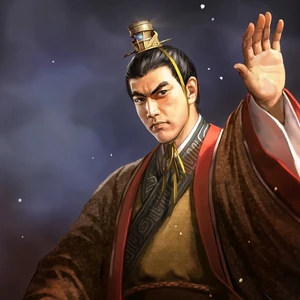
The news of the fall of Mianzhu and the deaths in battle of Zhuge Zhan and Zhuge Shang, father and son, brought home to the Latter Ruler that danger was very near, and he summoned a council.
Then the officials said, "Panic has seized upon the people, and they are leaving the city in crowds. Their cries shake the very sky!"
Sorely he felt his helplessness. Soon they reported the enemy were actually near the city, and many courtiers advised flight.
"We do not have enough troops to protect the capital. Leave the city and flee south to the seven counties of Nanzhong," said they. "The country is difficult and easily defended. We can get the Mangs to come and help us."
But Minister Qiao Zhou opposed, saying, "No, no, that will not do. The Mangs are old rebels. To go to them would be a calamity."
Then some proposed seeking refuge in Wu: "The people of Wu are our sworn allies, and this is a moment of extreme danger. Let us go thither."
But Qiao Zhou also opposed this, saying, "In the whole course of past ages no emperor has ever gone to another state. So far as I can see, Wei will presently absorb Wu, and certainly Wu will never overcome Wei. Imagine the disgrace of becoming a minister of Wu and then having to style yourself minister of Wei. It would double the mortification. Do neither. Surrender to Wei, and Wei will give Your Majesty a strip of land where the ancestral temple can be preserved, and the people will be saved from suffering. I desire Your Majesty to reflect well upon this."
The distracted Latter Ruler retired from the council without having come to any decision. Next day confusion had become still worse. Qiao Zhou saw that matters were very urgent and presented a written memorial. The Latter Ruler accepted it and decided to yield.
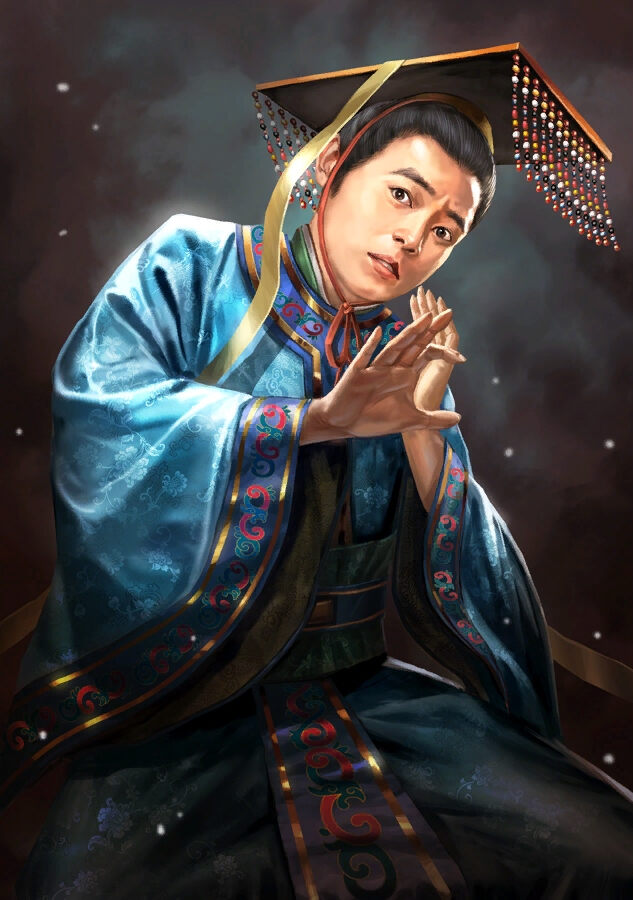
But from behind a screen stepped out the fifth of the Emperor's sons, Liu Chan, Prince of Beidi.
Liu Chan shouted at Qiao Zhou, "You corrupt pedant, unfit to live among people! How dare you offer such mad advice in a matter concerning the existence of a dynasty? Has any emperor ever yielded to the enemy?"
The Latter Ruler had seven sons in all---Liu Rui, Liu Dao, Liu Zhong, Liu Zan, Liu Chan, Liu Xue, and Liu Ju. But the ablest, and the only one above the common level of people, was this Liu Chan.
The Latter Ruler turned feebly to his son and said, "The ministers have decided otherwise: They advise surrender. You are the only one who thinks that boldness may avail, and would you drench the city in blood?"
The Prince said, "While the First Ruler lived, this Qiao Zhou had no voice in state affairs. Now he gives this wild advice and talks the most subversive language. There is no reason at all in what he says, for we have in the city many legions of soldiers, and Jiang Wei is undefeated in Saber Pass. He will come to our rescue as soon as he knows our straits, and we can help him to fight. We shall surely succeed. Why listen to the words of this dryasdust? Why abandon thus lightly the work of our great forerunner?"
The Latter Ruler became angry at this harangue and turned to his son, saying, "Be silent! You are too young to understand Heaven's will!"
Liu Chan beat his head upon the ground and implored his father to make an effort.
"If we have done our best and defeat yet comes, if parents and children, lords and ministers have set their backs to the wall and died in one final effort to preserve the dynasty, then in the shades of the Nine Golden Springs we shall be able to look the First Ruler in the face, unashamed. But what if we surrender?"
The appeal left the Latter Ruler unmoved.
The Prince cried, "Is it not shameful in one day to throw down all that our ancestors built up with so great labor? I would rather die."
The Latter Ruler, now very angry, bade the courtiers thrust the young man out of the Palace. Then he ordered Qiao Zhou to prepare the formal Act of Surrender. After it had been written, three officers---Adviser Zhang Shao, Imperial Son-in-Law and Commander Deng Liang, and Minister Qiao Zhou---were sent with it and the Hereditary Seal to the camp of Deng Ai to offer submission.
Every day Deng Ai's horsemen rode to the city to see what was afoot. It was a glad day when they returned reporting the hoisting of the flag of surrender. The general had not long to wait. The three messengers soon arrived and presented the letter announcing surrender and the seal therewith. Deng Ai read the letter with great exultation, and took possession of the seal. He treated the envoys courteously, and by their hands sent back a letter to allay any anxiety among the people. In due time they reentered the city and bore this missive to the Latter Ruler, and they told him they had been treated well. The Latter Ruler read the letter with much satisfaction. Then he sent Minister Jiang Xian to order Jiang Wei to surrender.
Then Li Hu, Chair of the Secretariat, carried to the victorious Deng Ai the statistical documents of the resources of the kingdom:
2,800,000 households, 9,140,000 souls, 102,000 active armed soldiers of all ranks, and 40,000 civil employees. Besides, there were granaries with 4,000,000 carts of grain, treasuries with 3,000 pounds of gold and silver and 200,000 rolls of silks of many qualities, and many unenumerated but precious things in the various storehouses.
Li Hu arranged that the ceremony of surrender should take place on the first day of the twelfth month.
The wrath of Prince Liu Chan swelled high as heaven when he heard that his father had actually arranged the date of his abdication.
Girding on his sword, he was setting out for the Palace when his Consort, Lady Cui, stopped him, saying, "My Prince, why does your face bear this look of terrible anger?"
He replied, "The army of Wei is at the gates, and my father has made his Act of Surrender. Tomorrow he and all his ministers are going out of the city to submit formally, and the dynasty will end. But rather than bow the knee to another, I will die and go into the presence of the First Ruler in the realms below."
"How worthy; how worthy!" replied she. "And if my lord must die, I, thy handmaid, prays that she may die first. Then may my Prince depart."
"But why should you die?"
"The Prince dies for his father and the handmaid for her husband. One eternal principle guides us all."
Thereupon she dashed herself against a pillar, and so she died. Then Liu Chan slew his three sons and cut off the head of his Consort that he might sever all ties to life lest he be tempted to live. Bearing the head of the princess in his hand, he went to the Temple of the First Ruler, where he bowed his head, saying, "Thy servant is ashamed at seeing the kingdom pass to another. Therefore has he slain his Consort and his sons that nothing should induce him to live and forego death."
This announcement recited, he made yet another to his ancestors.
"My ancestors, if you have spiritual intelligence, you know the feelings of your descendant."
Then he wept sore till his eyes ran blood, and he committed suicide. The people of Shu grieved deeply for him, and a poet has praised his noble deed.
Both king and courtiers, willing, bowed the knee,
One son alone was grieved and would not live.
The western kingdom fell to rise no more,
A noble prince stood forth, for aye renowned
As one who died to save his forbears' shame.
With grievous mien and falling tears he bowed
His head, declaring his intent to die.
While such a memory lingers none may say
That the Han Dynasty has perished.
When the Latter Ruler knew of the death of his son, he sent people to bury him.
Soon the main body of the Wei army came. The Latter Ruler and all his courtiers to the number of sixty went out three miles from the north gate to bow their heads in submission, the Latter Ruler binding himself with cord and taking a coffin with him. But Deng Ai with his own hands loosened the bonds and raised the Latter Ruler from the ground. The coffin was burned. Then the victorious leader and the vanquished Emperor returned into the city side by side.
Wei's legions entered Shu,
And the ruler thereof saved his life
At the price of his honor and his throne.
Huang Hao's vicious counsels had brought disaster
Against which Jiang Wei's efforts were vain.
How bright shone the loyalty of the faithful one!
How noble was the grandson of the First Ruler!
Alas! It led him into the way of sorrow.
And the plans of the First Ruler,
Excellent and far-reaching.
Whereby he laid the foundations of a mighty state,
Were brought to nought in one day.
The common people rejoiced at the magnanimity of Deng Ai, and met the returning cavalcade with burning incense and flowers. The title of General of the Flying Cavalry was given to the Latter Ruler and other ranks were given to the ministers who had surrendered.
Deng Ai requested the Latter Ruler to issue one more proclamation from the Palace to reassure the people, and then the conquerors took formal possession of the state and its granaries and storehouses. Two officers---Governor of Yizhou Zhang Shao and Minister Zhang Jung---were sent into the counties and territories to explain the new situation and pacify malcontents, and another messenger was sent to exhort Jiang Wei to yield peaceably. A report of the success was sent to Capital Luoyang.
Huang Hao, the eunuch whose evil counsels had wrought such ruin to his master, was looked upon as a danger, and Deng Ai decided to put him to death. However, Huang Hao was rich, and he gave bribes to Deng Ai's people, and so he escaped the death penalty.
Thus perished the House of Han. Reflecting on its end a poet recalled the exploits of Zhuge Liang the Martial Lord, and he wrote a poem.
The denizens of tree-tops, apes and birds,
Most lawless of crested things, yet knew
And feared his mordant pen. The clouds and winds
Conspired to aid him to defend his lord.
But nought awaited the leader's precepts, wise
To save; with base content the erstwhile king
Too soon surrendered, yielding all but life.
In gifts Zhuge Liang was peer with
Guan Zhong and Yue Yi,
His hapless death compared with
Zhang Fei's and Guan Yu's;
Sad sight, his temple on the river's brink!
It wrings the heart more than the tearful verse
Of the Liangfu songs he most loved.
In due time Minister Jiang Xian reached the Saber Pass, and gave Jiang Wei the Latter Ruler's command to surrender to the invaders. Jiang Wei was dumb with amazement at the order; his officers ground their teeth with rage and mortification. Their hair stood on end with anger; they drew their swords and slashed at stones in their wrath.
Shouted they, "While we are fighting to our death, the Latter Ruler has yielded!"
The roar of their angry lamentation was heard for miles.
But Jiang Wei soothed them with kindly words, saying, "Generals, grieve not. Even yet I can restore the House of Han!"
"How?" cried they.
And he whispered low in their ears.
The flag of surrender fluttered over the ramparts of Saber Pass, and a messenger went to Zhong Hui's camp. When Jiang Wei and his generals drew near, Zhong Hui went out to meet them.
"Why have you been so long in coming?" said Zhong Hui.
Jiang Wei looked him straight in the face and said, without a tremor, but through falling tears, "The whole armies of the state are under me, and I am here far too soon!"
Zhong Hui wondered about this firm remark, and said nothing more. The two saluted each other and took their seats, Jiang Wei being placed in the seat of honor.
Jiang Wei said, "I hear that every detail of your plans, from the time you left the South of River Huai till now, has been accomplished. The good fortune of the Sima family is owing to you, and so I am the more content to bow my head and yield to you. Had it been Deng Ai, I should have fought to the death, for I would not have surrendered to him!"
Then Zhong Hui broke an arrow in twain, and they two swore close brotherhood. Their friendship became close-knit. Jiang Wei was continued in command of his own army, at which he secretly rejoiced. He sent Jiang Xian back to Chengdu.
As conqueror, Deng Ai arranged for the administration of the newly-gained territory. He made Shi Zuan Imperial Protector of Yizhou and appointed Qian Hong, Yang Xin, and many others to various posts. He also built a tower in Mianzhu in commemoration of his conquest.
At a great banquet, where most of the guests were people of the newly-conquered land, Deng Ai drank too freely and in his cups became garrulous.
With a patronizing wave of his hand, he said to his guests, "You are lucky in that you have had to do with me. Things might well have been otherwise, and you might all have been put to death, if you surrender to other leader!"
The guests rose in a body and expressed their gratitude. Just at that moment Jiang Xian arrived from his visit to Jiang Wei to say that Jiang Wei and his army had surrendered to Zhong Hui. Deng Ai thereupon conceived a great hatred for Zhong Hui, and soon after he wrote to Luoyang a letter something like this:
"I would venture to remark that misleading rumors of war should precede actual attack. Now that Shu has been overcome, the manifest next move is against Wu, and in present circumstances victory would easily follow an attack. But after a great effort, both leaders and led are weary and unfit for immediate service. Therefore of this army twenty thousand Wei troops should be left west of Longyou, and with them twenty thousand Shu troops, to be employed in boiling salt so as to improve the finances. Moreover, ships should be built ready for an expedition down the river. When these preparations shall be complete, then send an envoy into Wu to lay before its ruler the truth about its position. It is possible that matters may be settled without any fighting.
"Further, generous treatment of Liu Shan will tend to weaken Sun Xiu; but if Liu Shan be removed to Luoyang, the people of Wu will be perplexed and doubtful about what may happen to them, and they will not be amenable. Therefore it seems the most fitting to leave the late Ruler of Shu here. Next year, in the winter season, he might be removed to the capital. For the present I would recommend that he be created Prince of Fufeng, and granted a sufficient revenue and suitable attendants. His sons also should receive ducal rank. In this way would be demonstrated that favorable treatment follows upon submission. Such a course would inspire fear of the might of Wei and respect for its virtue, and the result will be all that could be desired."
Reading this memorial, the thought entered the mind of Sima Zhao that Deng Ai was exaggerating his own importance, wherefore he first wrote a private letter and sent it by the hand of Wei Guan to Deng Ai and then caused the Ruler of Wei to issue an edict promoting Deng Ai. The edict ran thus:
"General Deng Ai has performed a glorious exploit, penetrating deeply into a hostile country and reducing to submission a usurping potentate. This task has been quickly performed: The clouds of war have already rolled away, and peace reigns throughout Ba and Shu.
"The merits of Deng Ai surpass those of Bai Qi, who subdued the mighty state of Chu, and Han Xin, who conquered the state of Zhao. Deng Ai is created Grand Commander, and we confer upon him a fief of twenty thousand homesteads, and his two sons are ennobled, each with a fief of one thousand homesteads."
After the edict had been received with full ceremonies, Wei Guan produced the private letter, which said that Deng Ai's proposals would have suitable consideration in due time.
Then said Deng Ai, "A general in the field may decline to obey even the orders of his prince. My commission was to conquer the west. Why are my plans hindered?"
So he wrote a reply and sent it to the capital by the hand of the envoy. At that time it was common talk at court that Deng Ai intended to rebel; and when Sima Zhao read the letter, his suspicions turned to certainty, and he feared. This was the letter:
"Deng Ai, General Who Conquers the West, has reduced the chief of the revolt to submission, and must have authority to act according as he sees best in order to settle the early stages of administration of the new territory. To await government orders for every step means long delays. According to the Spring and Autumn Annals a high officer, when abroad, has authority to follow his own judgment for the safety of the Throne and the advantage of the state.
"Now seeing that Wu is still unsubdued, all interest centers upon this country, and schemes of settlement should not be nullified by strict adherence to rules and formalities. In war advances are made without thought of reputation, retreats without consideration of avoiding punishment. Though I do not possess the fortitude of the ancients, I shall not be deterred from acting for the benefit of the state by craven and selfish fears for my own reputation."
In his perplexity Sima Zhao turned to Jia Chong for advice.
Said he, "Deng Ai presumes upon his services to be haughty and imperious. His recalcitrance is very evident. What shall I do?"
"Why not order Zhong Hui to reduce him to obedience?" replied Jia Chong.
Sima Zhao accepted the suggestion and issued an edict raising Zhong Hui to Minister of the Interior. After this he made Wei Guan the Inspector of the Forces and set Wei Guan over both armies, with special orders to keep a watch upon Deng Ai and guard against any attempt at insubordination.
The edict sent to Zhong Hui ran as follows:
"Zhong Hui, General Who Conquers the West, against whose might none can stand, before whom no one is strong, whose virtue conquers every city, whose wide net no one escapes, to whom the valiant army of Shu humbly submitted, whose plans never fail, whose every undertaking succeeds, is hereby made Minister of the Interior and raised to the rank of lordship of a fief of ten thousand families. His two sons also have similar rank with a fief of one thousand families."
When this edict reached Zhong Hui, he called in Jiang Wei and said to him, "Deng Ai has been rewarded more richly than I and is the Grand Commander. But Sima Zhao suspects him of rebellion and has ordered Wei Guan and myself to keep him in order. What does my friend Jiang Wei think ought to be done?"
Jiang Wei replied, "They say Deng Ai's origin was ignoble and in his youth he was a farmer and breeder of cattle. However, he had good luck and has won a great reputation in this expedition. But this is due not to his able plans, but to the good fortune of the state. If you had not been compelled to hold me in check at Saber Pass, he could not have succeeded. Now he wishes the late Ruler of Shu to be created Prince of Fufeng, whereby he hopes to win the goodwill of the people of Shu. But to me it seems that perfidy lies therein. The Duke of Jin suspects him, it is evident."
Zhong Hui complimented him. Jiang Wei continued, "If you will send away your people, I have something to say to you in private."
When this had been done and they two were alone, Jiang Wei drew a map from his sleeve and spread it before Zhong Hui, saying, "Long ago, before he had left his humble cot. Zhuge Liang gave this to the First Ruler and told him of the riches of Yizhou and how well it was fitted for an independent state. Whereupon Chengdu was seized as a first step towards attaining it. Now that Deng Ai has got to the same point, it is small wonder that he has lost his balance."
Zhong Hui asked many questions about the details of the features of the map, and Jiang Wei explained in full. Toward the end, he asked how Deng Ai could be got rid of.
"By making use of the Duke of Jin's suspicions," replied Jiang Wei. "Send up a memorial to say that it looks as if Deng Ai really contemplated rebellion. You will receive direct orders to check the revolt."
So a memorial was sent to Luoyang. It said that Deng Ai aimed at independence, nourished base designs, was making friends with the vanquished, and was about to revolt.
At this news the court was much disturbed. Then to support his charges, Zhong Hui's soldiers intercepted Deng Ai's letters and rewrote them in arrogant and rebellious terms. Sima Zhao was greatly angered and sent Jia Chong to lead an expedition into the Xie Valley, he ordered Zhong Hui to arrest Deng Ai, and he himself directing a great march under the leadership of the Ruler of Wei, Cao Huang, whom he compelled to go with him.
Then said Shao Ti, "Zhong Hui's army outnumbers that of Deng Ai by six to one. You need not go. You need only order Zhong Hui to arrest Deng Ai."
"Have you forgotten?" said Sima Zhao, smiling. "You said Zhong Hui was a danger. I am not really going against Deng Ai, but against the other."
"I feared lest you had forgotten," said Shao Ti. "I ventured to remind you, but the matter must be kept secret."
The expedition set out.
By this time Zhong Hui's attitude had aroused Jia Chong's suspicions, and he spoke of it to Sima Zhao, who replied, "I have sent you: Should I have doubts about you, too? However, come to Changan and things will clear up."
The dispatch of the army under Sima Zhao was reported to Zhong Hui, who wondered what it might mean. He at once called in Jiang Wei to consult about the seizure of Deng Ai.
Lo! He is victor here, a king must yield;
And there a threatening army takes the field.
The next chapter will relate the plan to arrest Deng Ai.
-
Wikipedia entry Bio
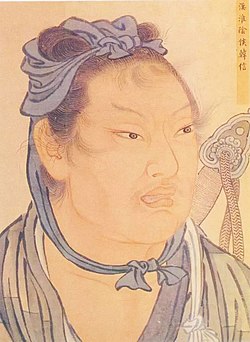
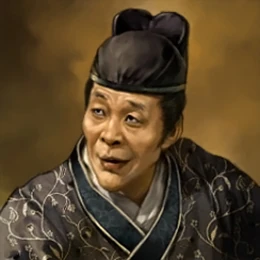
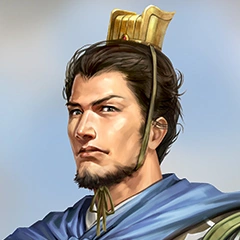
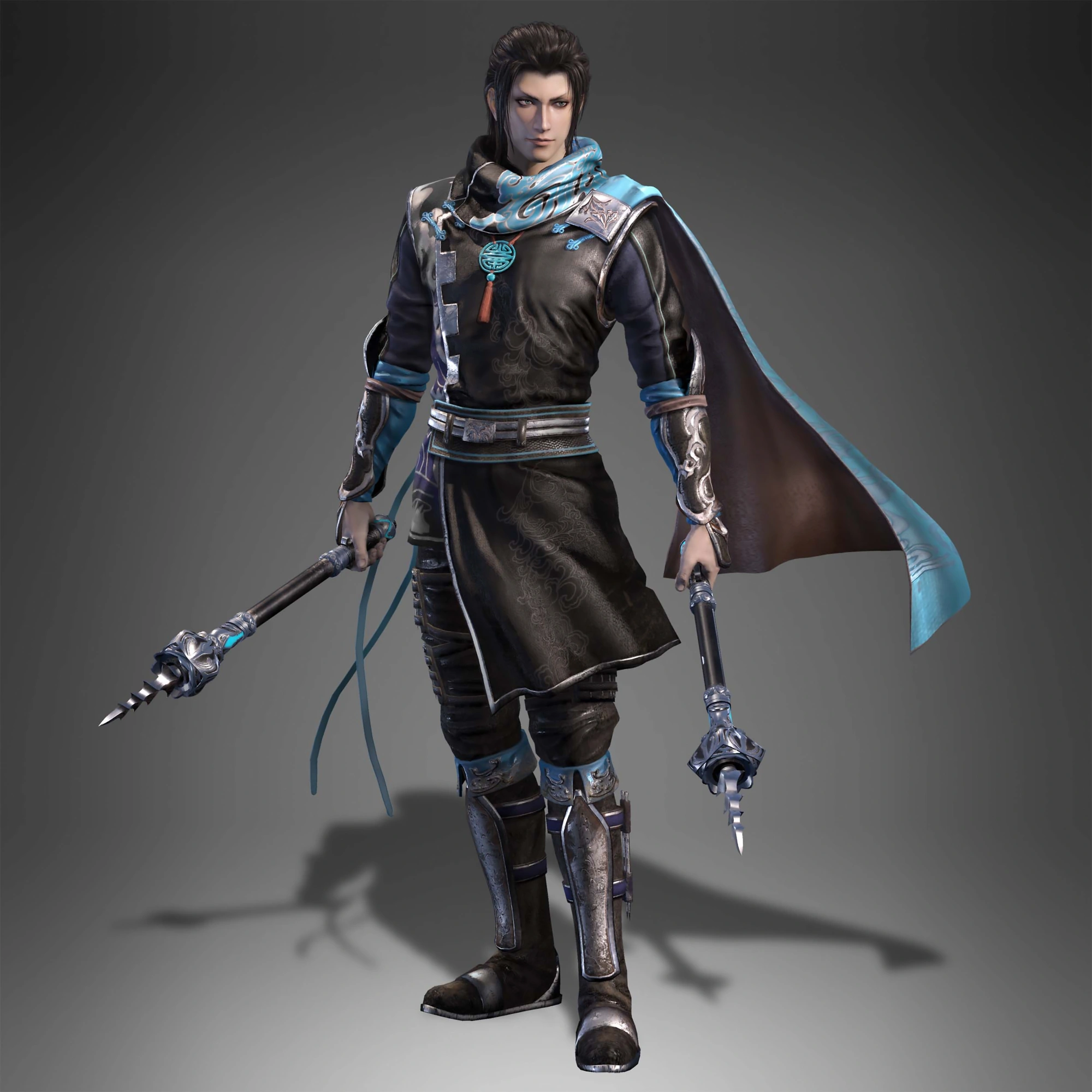
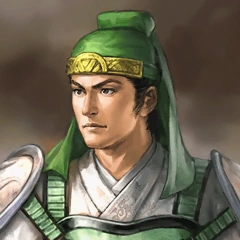
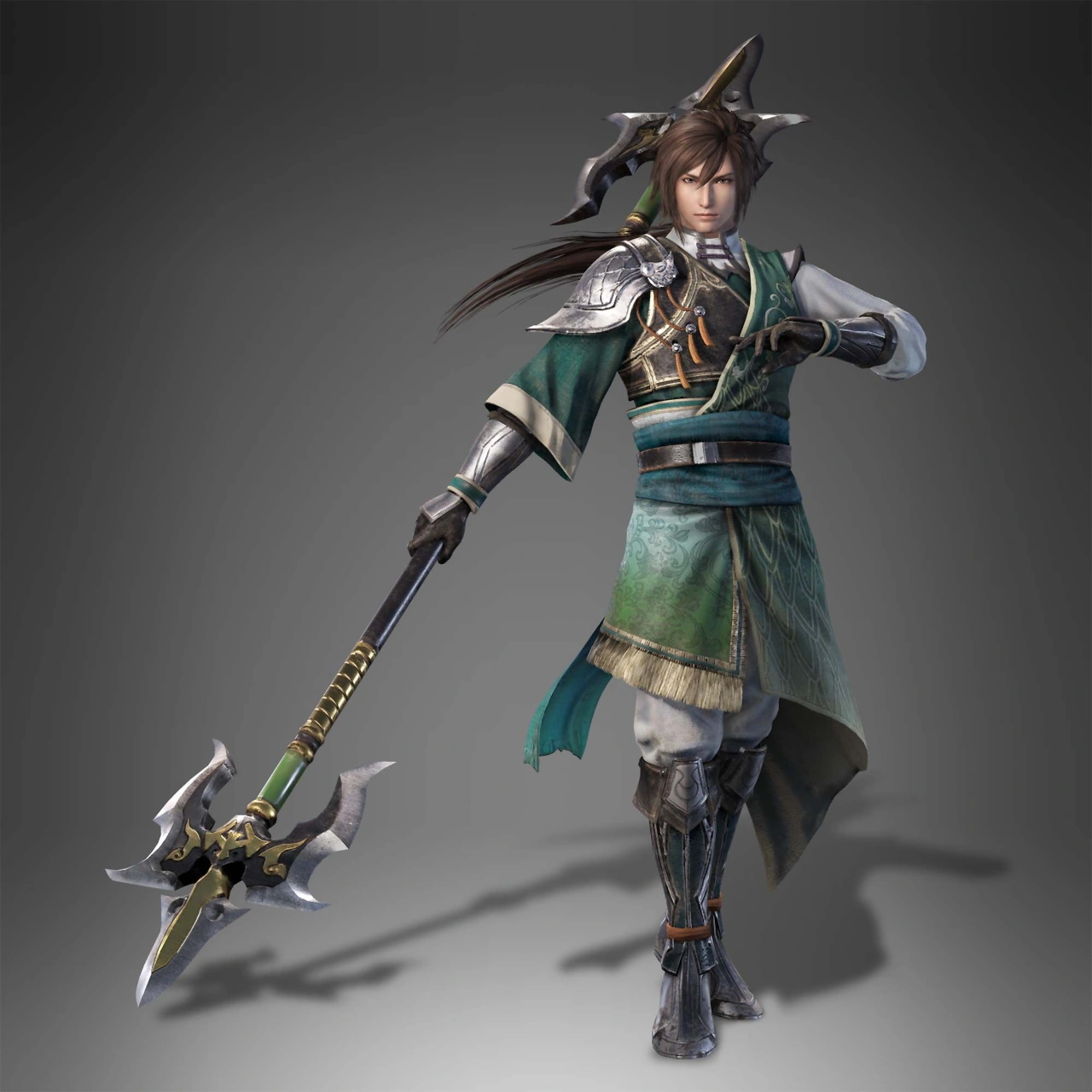
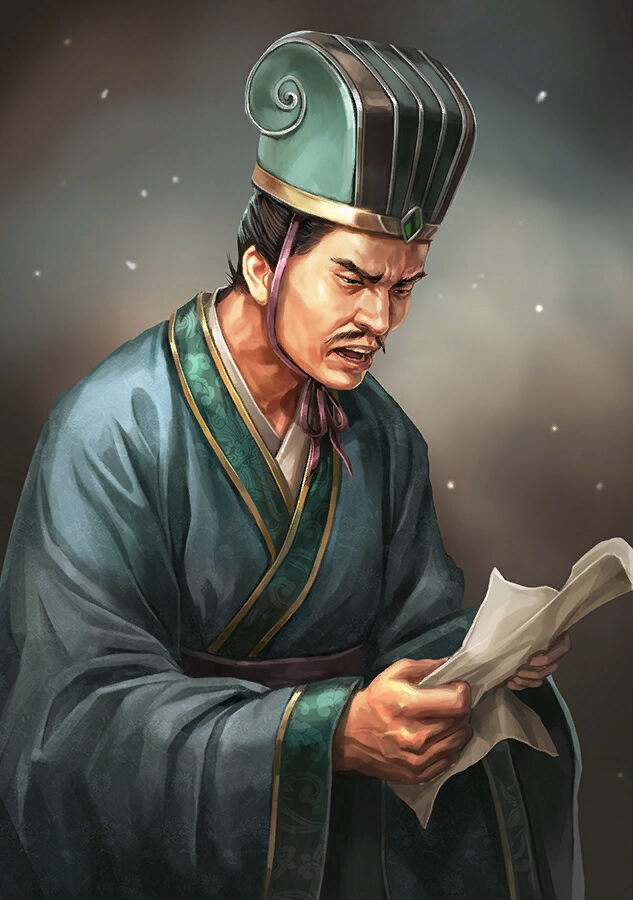
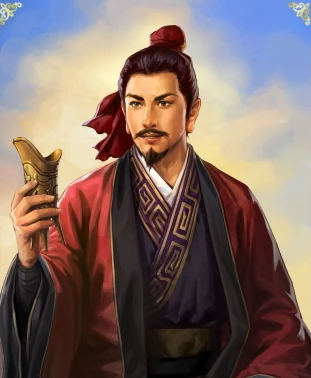
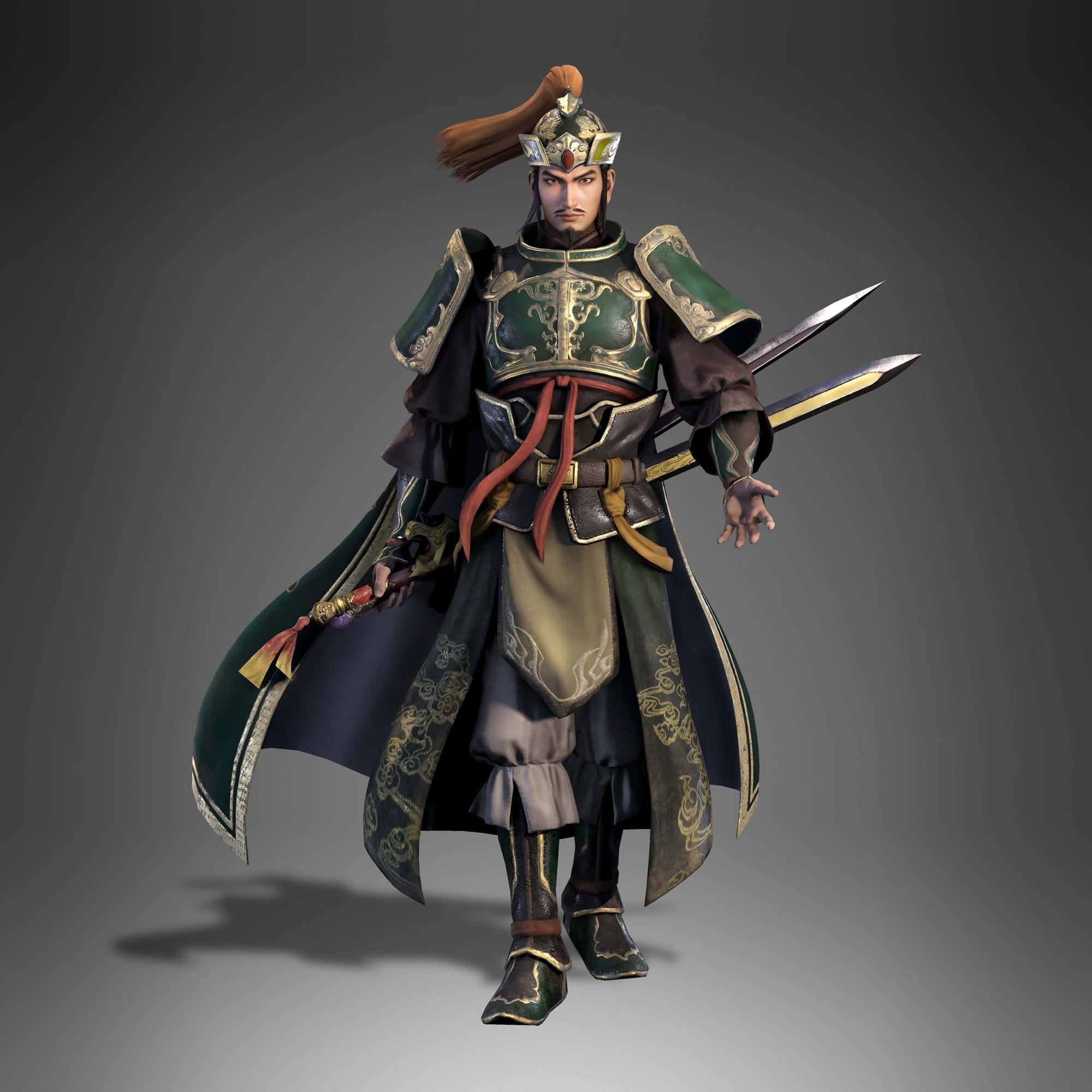
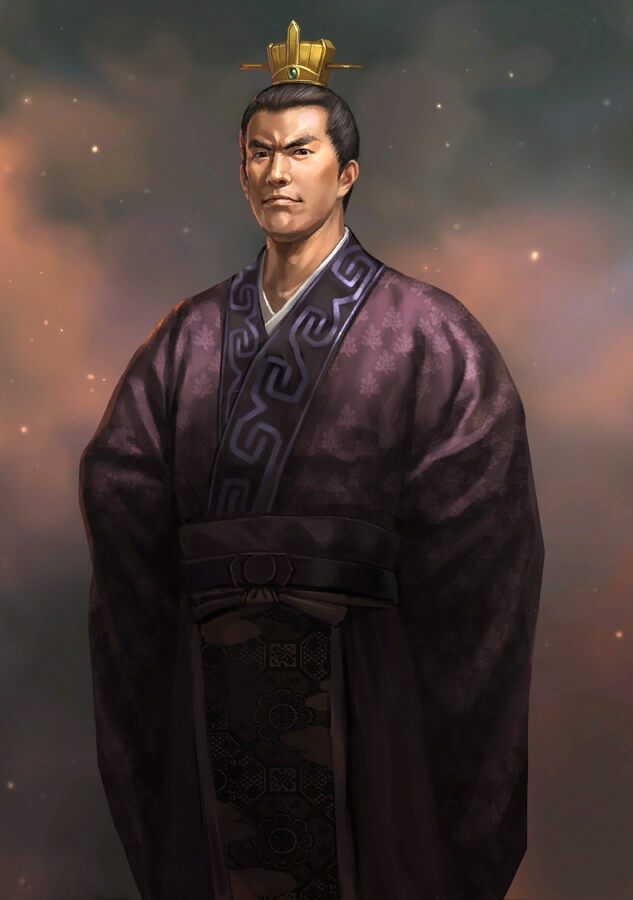
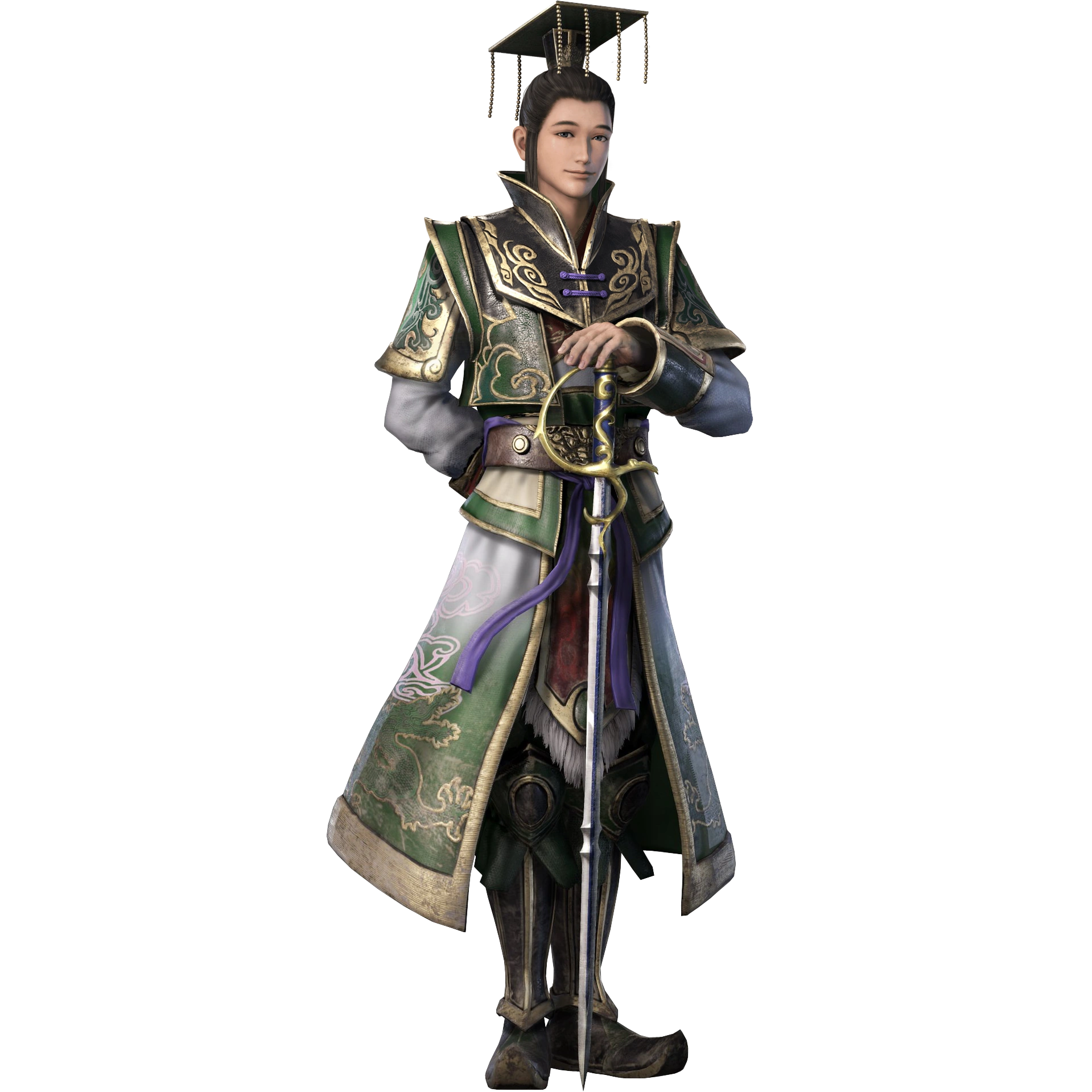
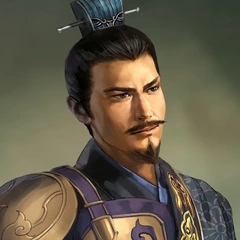
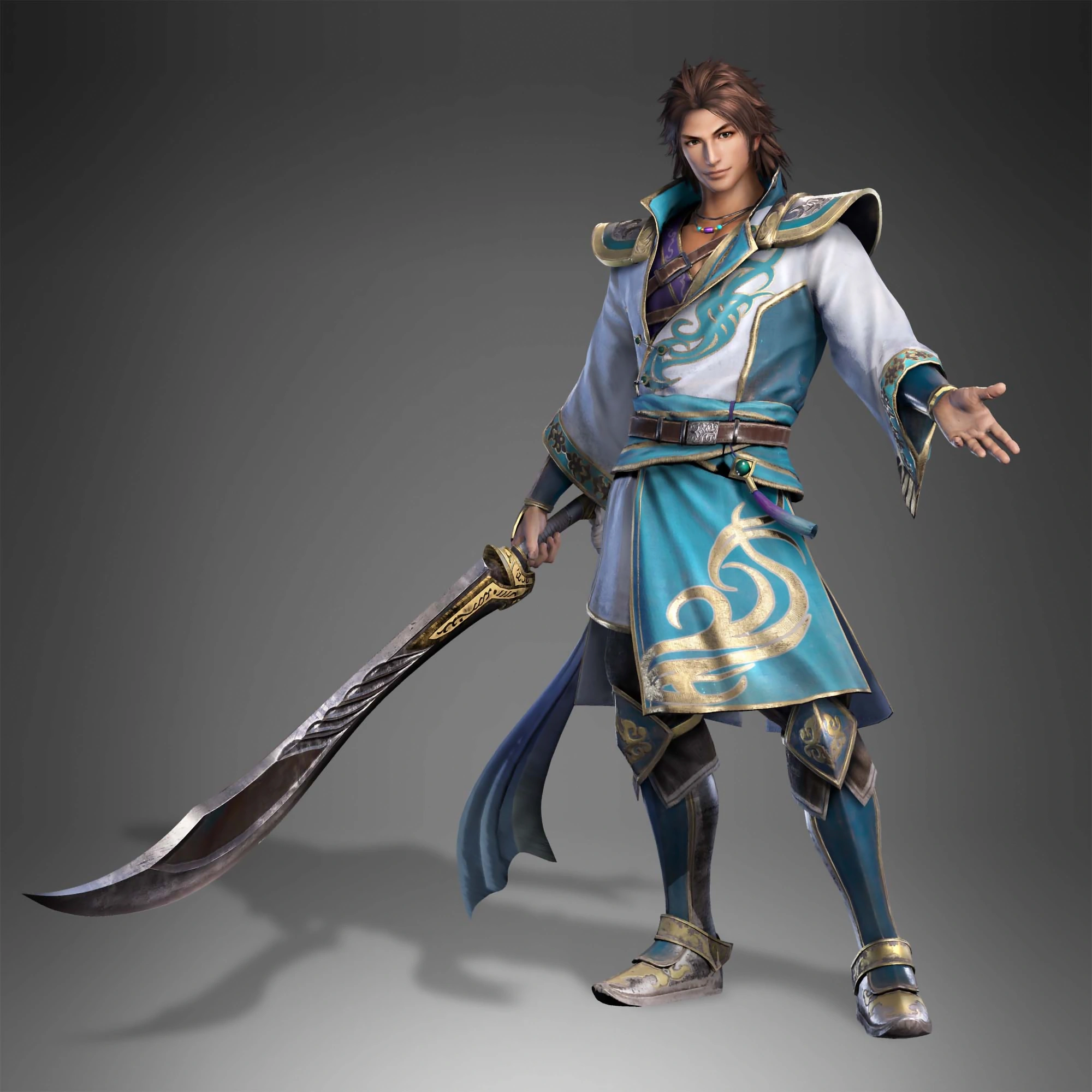
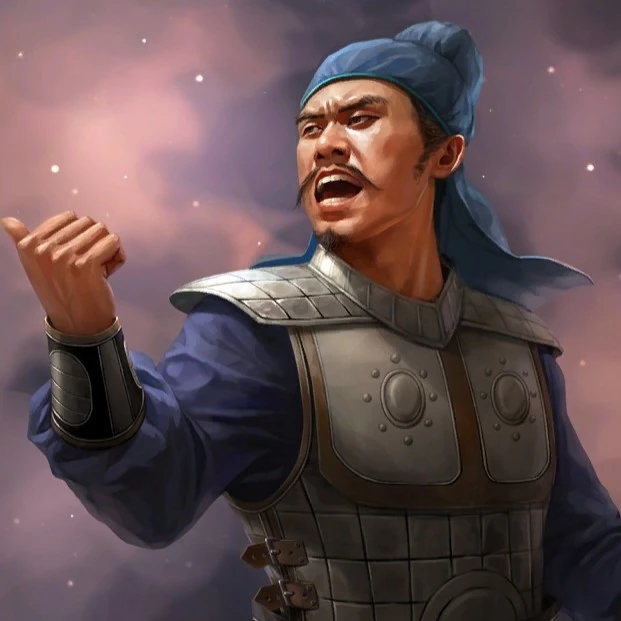
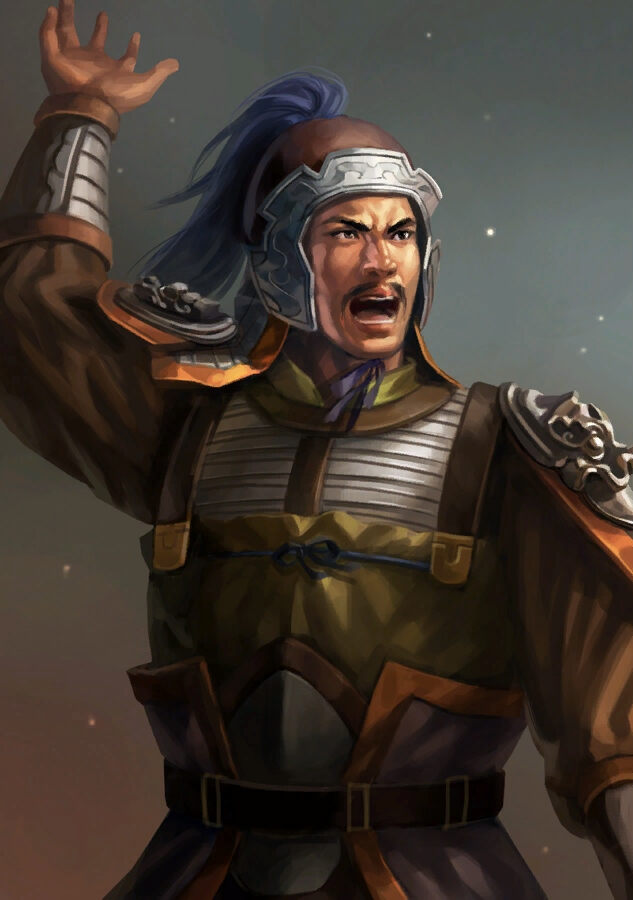
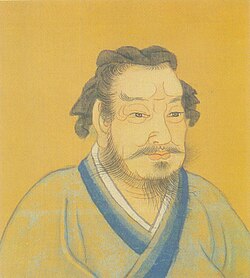
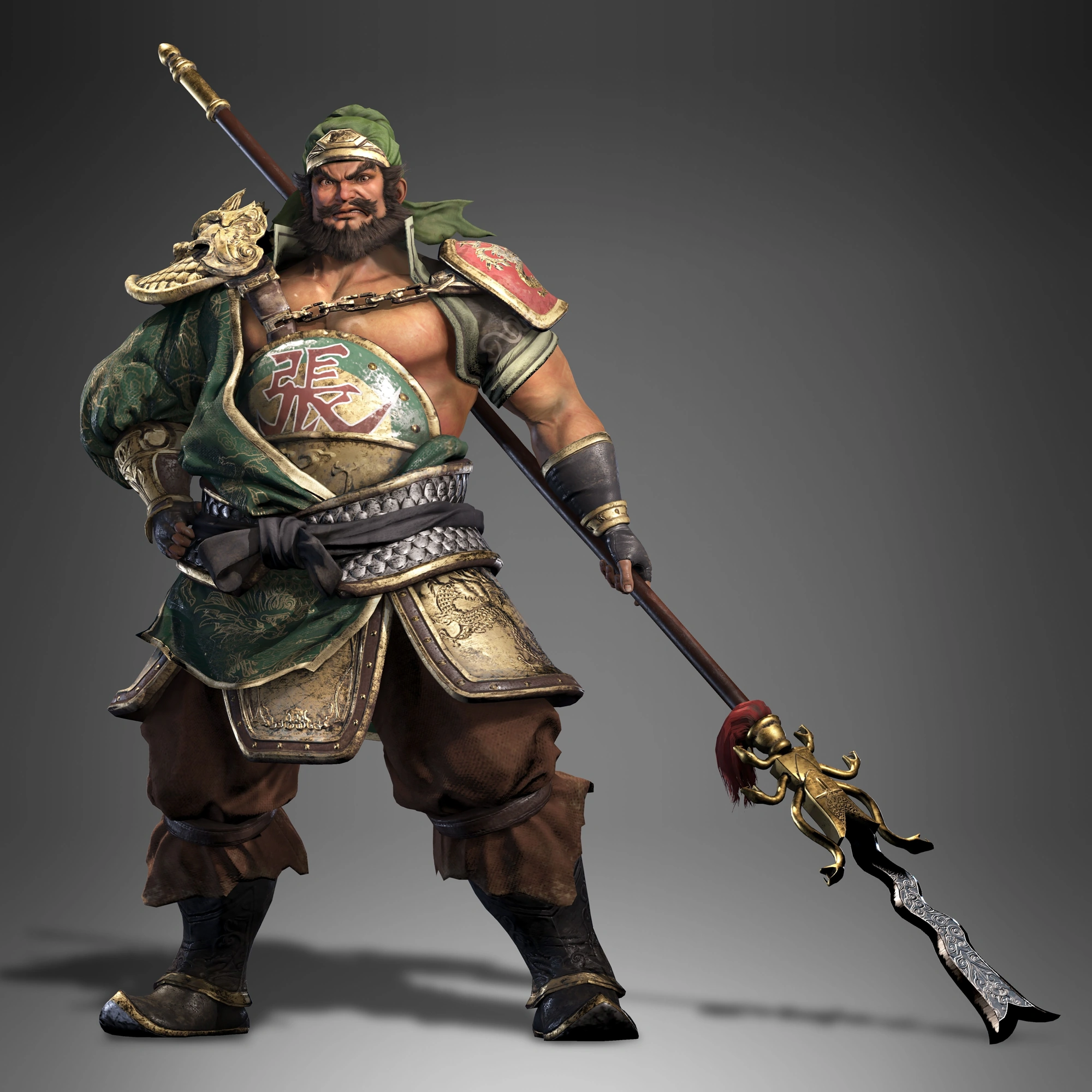
|
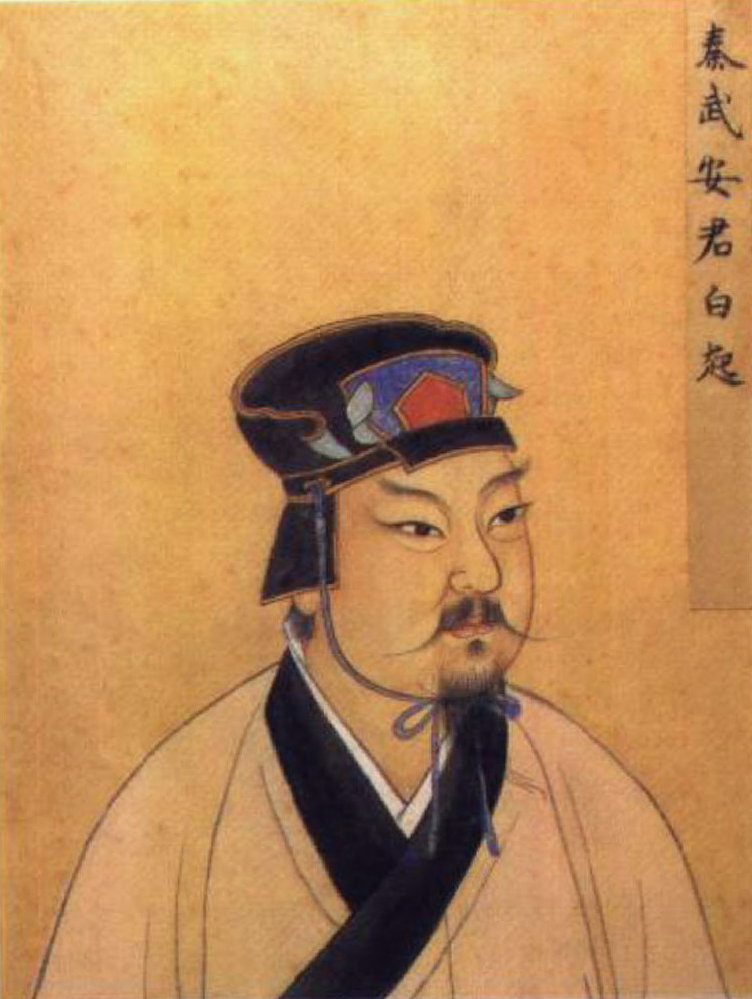
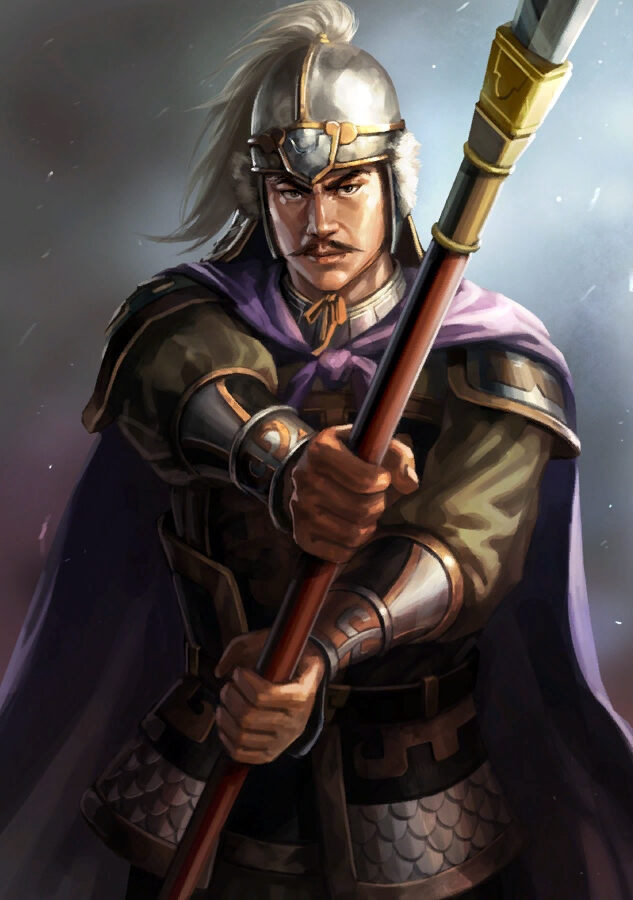
Bai Qi
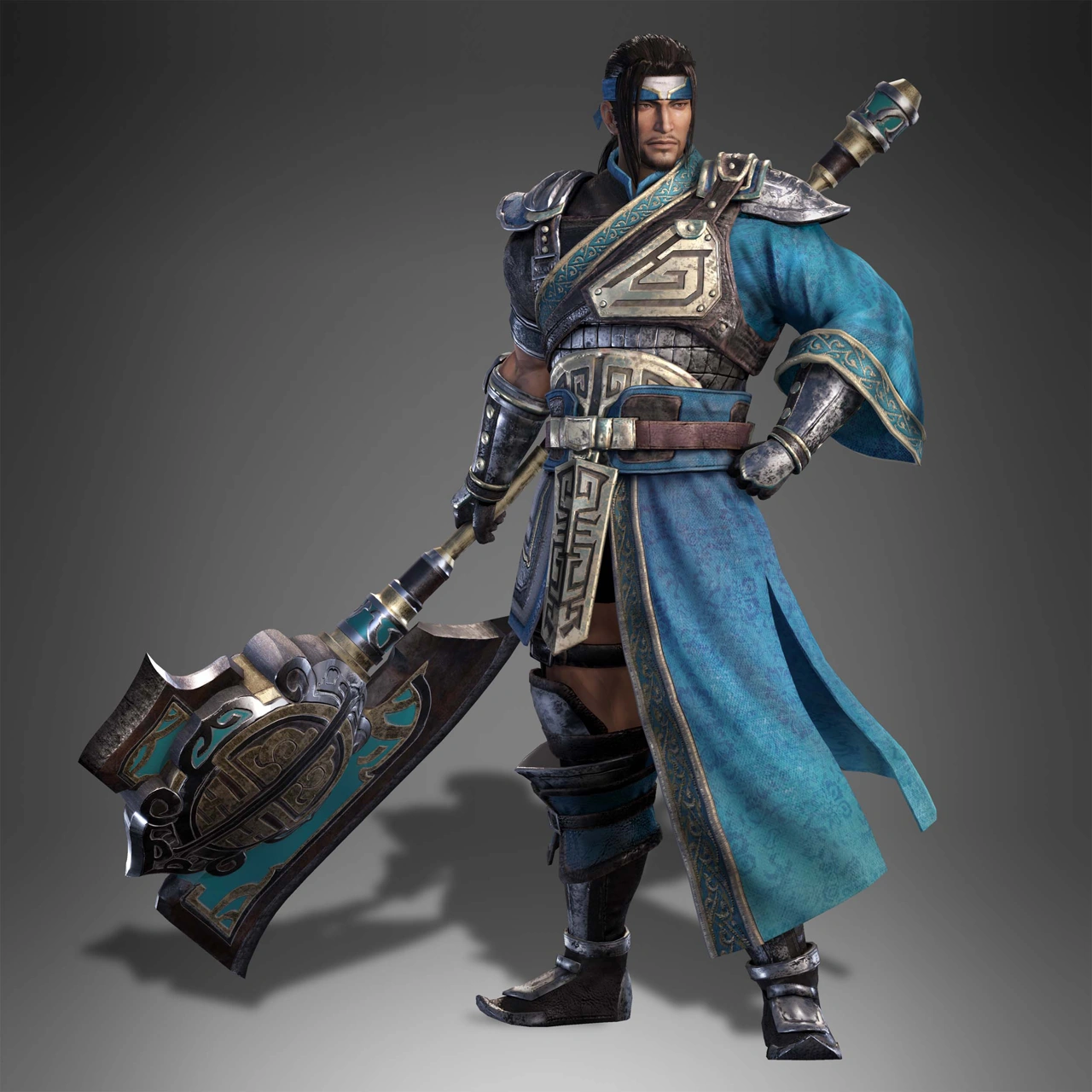
Named in the edict promoting Deng Ai as one of the two conquerors he is said to have surpassed: 'The merits of Deng Ai surpass those of Bai Qi, who subdued the mighty state of Chu, and Han Xin, who conquered the state of Zhao.'
1 mention in this chapter
1 mention in the book
|
|
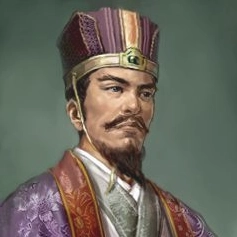
Cao Huan
The Wei emperor in whose name the whole conquest is conducted, and who is taken along on the march west whether he likes it or not: Sima Zhao sets out 'directing a great march under the leadership of the Ruler of Wei, Cao Huang, whom he compelled to go with him'. Both edicts in the chapter — Deng Ai's promotion and Zhong Hui's — are issued over his name and neither is his idea.
3 mentions in this chapter
38 mentions in the book
|
|
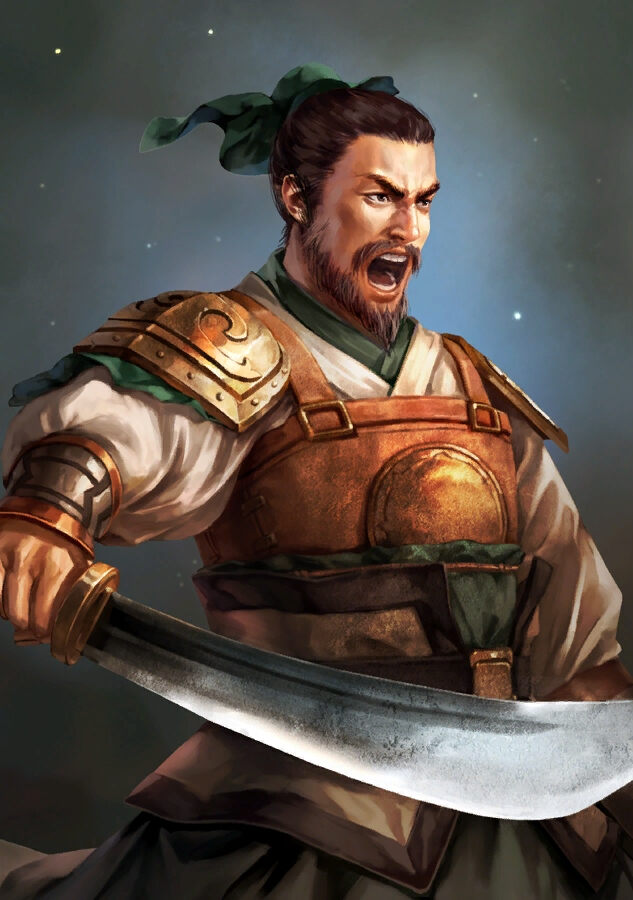
Deng Ai
Wins the kingdom and starts losing himself in the same chapter. Unbinds the Latter Ruler with his own hands, burns the coffin, and rides into Chengdu beside him to burning incense and flowers; forbids plunder, keeps the surrendered ministers in rank, and sends men out to pacify the counties. Then the drink talks at his own banquet: 'You are lucky in that you have had to do with me. Things might well have been otherwise, and you might all have been put to death, if you surrender to other leader!' Takes Jiang Wei's surrender to Zhong Hui as a personal insult. Writes to Luoyang proposing to hold Shu a year, boil salt, build ships, keep Liu Shan in Chengdu as Prince of Fufeng and talk Wu into submission - and, when the reply is a promotion and a private note saying his proposals will be considered in due time, answers with the line that finishes him: 'A general in the field may decline to obey even the orders of his prince. My commission was to conquer the west. Why are my plans hindered?' His letter cites the Spring and Autumn Annals on a high officer's authority abroad; Zhong Hui's men intercept the next ones and rewrite them.
38 mentions in this chapter
248 mentions in the book
|
|
Deng Liang
One of the three Shu envoys who carry the surrender: 'Adviser Zhang Shao, Imperial Son-in-Law and Commander Deng Liang, and Minister Qiao Zhou---were sent with it and the Hereditary Seal to the camp of Deng Ai to offer submission.'
1 mention in this chapter
1 mention in the book
|
|
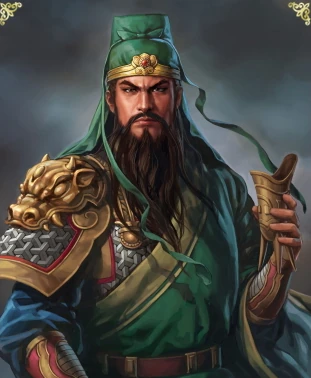
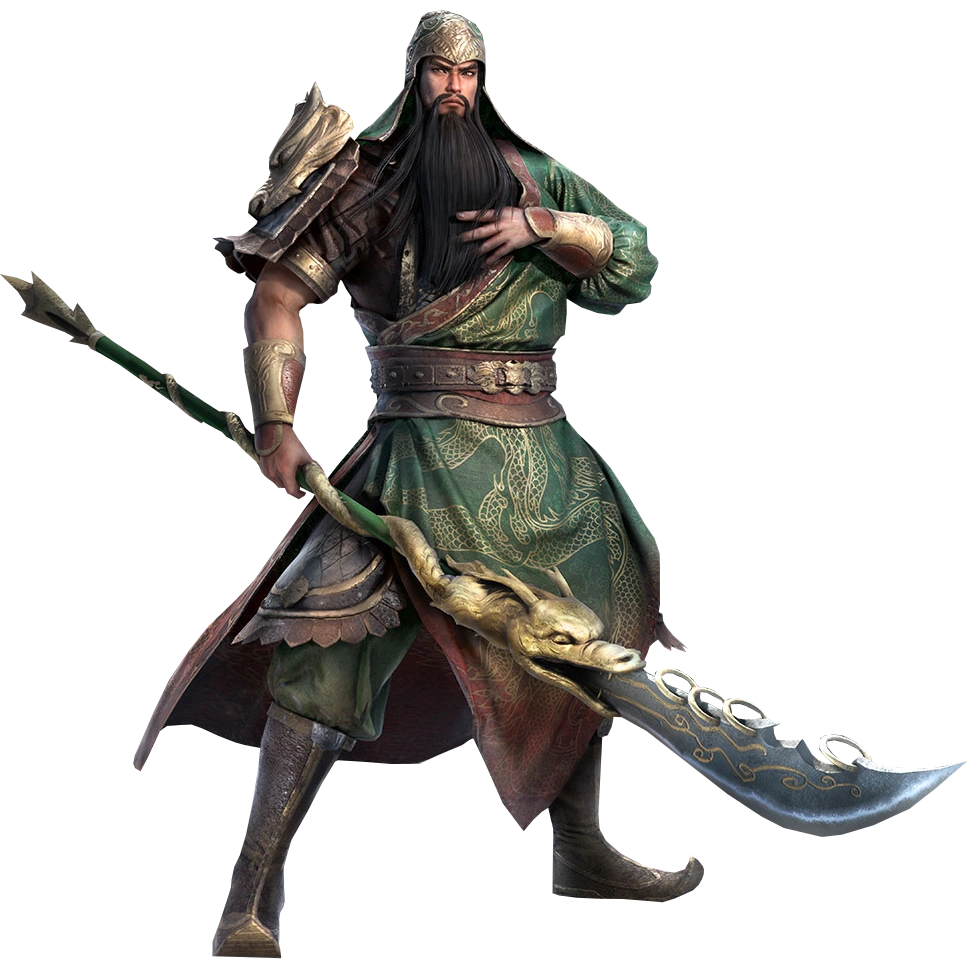
Guan Yu
Named in the elegy, paired with Zhang Fei, in the line that measures Zhuge Liang's death against theirs. The three names that opened the book close it.
1 mention in this chapter
905 mentions in the book
|
|
Guan Zhong
Named in the elegy for Zhuge Liang at the fall of Shu, as one of the two statesmen he was the peer of - the same comparison he made for himself in the thatched cottage, closing the arc a hundred chapters later.
1 mention in this chapter
11 mentions in the book
|
|
Han Xin
Named in the same edict, paired with Bai Qi, as the measure of Deng Ai's achievement - and, in a chapter about a victorious general who is about to be destroyed by his own government, an uncomfortable comparison.
1 mention in this chapter
13 mentions in the book
|
|
Huang Hao
Deng Ai decides to put him to death as the man whose counsels ruined his master — and 'However, Huang Hao was rich, and he gave bribes to Deng Ai's people, and so he escaped the death penalty.' He buys his way out of the fall of the kingdom he destroyed, and the chapter leaves him alive.
3 mentions in this chapter
32 mentions in the book
|
|
Jia Chong
Supplies the instrument and then becomes a suspect himself. Asked what to do about Deng Ai's insubordination, he answers 'Why not order Zhong Hui to reduce him to obedience?' - the move that sets the two conquerors against each other. Later sent to lead an expedition into the Xie Valley, and by then his own suspicions of Zhong Hui have grown enough to raise with Sima Zhao, who turns them back on him with a smile.
4 mentions in this chapter
47 mentions in the book
|
|
Jiang Wei
Surrenders without surrendering, and the chapter gives him the best line in it. Dumb with amazement at the order, with his officers hacking at stones in their rage and the sound of their lamentation carrying for miles, he quiets them with 'Generals, grieve not. Even yet I can restore the House of Han!' - 'And he whispered low in their ears.' Rides to Zhong Hui, is asked why he took so long, and answers through falling tears without a tremor: 'The whole armies of the state are under me, and I am here far too soon!' Flatters him where it lands ('Had it been Deng Ai, I should have fought to the death'), swears brotherhood over a broken arrow, keeps command of his own army, and then talks him into destroying his colleague - Deng Ai was a farmer and cattle-breeder who owes everything to luck and to Saber Pass having held Jiang Wei in check, and 'The Duke of Jin suspects him, it is evident.' Finally produces from his sleeve the map Zhuge Liang gave the First Ruler before he left his cottage, and lets Zhong Hui look at Yizhou for a while.
22 mentions in this chapter
443 mentions in the book
|
|
Jiang Xian
Carries the order that ends the war and brings back the news that starts the next one. Sent by the Latter Ruler to Saber Pass to order Jiang Wei to surrender; and it is his return to Chengdu, reporting that Jiang Wei has surrendered to Zhong Hui rather than to Deng Ai, that arrives in the middle of Deng Ai's victory banquet and 'Deng Ai thereupon conceived a great hatred for Zhong Hui'.
4 mentions in this chapter
4 mentions in the book
|
|
Lady Cui
Dies first, and on purpose. Liu Chan's consort, who stops him at the door to ask why his face bears 'this look of terrible anger', hears that he means to die rather than bow the knee, and answers 'How worthy; how worthy! And if my lord must die, I, thy handmaid, prays that she may die first. Then may my Prince depart.' Asked why she should die at all: 'The Prince dies for his father and the handmaid for her husband. One eternal principle guides us all.' 'Thereupon she dashed herself against a pillar, and so she died.' Her severed head goes with him to the ancestral temple.
1 mention in this chapter
1 mention in the book
|
|
Li Hu
Hands over the kingdom on paper. Chair of the Secretariat, he carries the statistical documents to Deng Ai: 2,800,000 households, 9,140,000 souls, 102,000 soldiers of all ranks, 40,000 civil employees, 4,000,000 carts of grain, 3,000 pounds of gold and silver, 200,000 rolls of silk. He also fixes the date of the surrender ceremony for the first day of the twelfth month — which is what tells Liu Chan there is nothing left to argue about.
2 mentions in this chapter
2 mentions in the book
|
|
Liu Bei
Named in passing throughout, and always as the reproach: Liu Chan invokes him three times ('we shall be able to look the First Ruler in the face, unashamed'), dies in his temple, and the closing lament turns on him — 'And the plans of the First Ruler, / Excellent and far-reaching, / Whereby he laid the foundations of a mighty state, / Were brought to nought in one day.' Jiang Wei's map is the one Zhuge Liang gave him before either of them had a kingdom.
7 mentions in this chapter
1978 mentions in the book
|
|
Liu Chen
The chapter's title character: 'Weeping At The Ancestral Temple, A Filial Prince Dies' is about him. Fifth son of the Latter Ruler, Prince of Beidi, 'the ablest, and the only one above the common level of people'. Steps out from behind a screen to shout down Qiao Zhou — 'You corrupt pedant, unfit to live among people! How dare you offer such mad advice in a matter concerning the existence of a dynasty?' — and makes the only strategic argument anyone offers: the city still holds many legions, Jiang Wei is undefeated at Saber Pass and will come. Told he is too young to understand Heaven's will, he beats his head on the ground: 'If we have done our best and defeat yet comes, if parents and children, lords and ministers have set their backs to the wall and died in one final effort to preserve the dynasty, then in the shades of the Nine Golden Springs we shall be able to look the First Ruler in the face, unashamed. But what if we surrender?' Thrust out of the Palace. When the date of the abdication is fixed he girds on his sword, watches his wife kill herself rather than let him go first, kills his three sons and cuts off her head so that nothing can tempt him to live, carries it to the Temple of the First Ruler, announces himself to his ancestors, 'wept sore till his eyes ran blood', and takes his own life. 'While such a memory lingers none may say / That the Han Dynasty has perished.'
7 mentions in this chapter
7 mentions in the book
|
|
Liu Cong
Named in the roll of the Latter Ruler's seven sons, as 'Liu Zhong'.
1 mention in this chapter
1 mention in the book
|
|
Liu Qu
Named in the roll of the Latter Ruler's seven sons, as 'Liu Ju' - the youngest. Deng Ai's memorial proposes that all of them receive ducal rank as a demonstration that submission is rewarded.
1 mention in this chapter
1 mention in the book
|
|
Liu Shan
The chapter where he ends the dynasty. Convenes a council with the enemy at the gates and lets it argue between flight to the Mangs, flight to Wu and surrender; accepts Qiao Zhou's written memorial; has his own son thrown out of the Palace for objecting; orders the Act of Surrender drawn up and the Hereditary Seal sent out. Goes three miles beyond the north gate with sixty courtiers, bound with cord and bringing a coffin, and is unbound and raised from the ground by Deng Ai's own hands. Made General of the Flying Cavalry, and issues one more proclamation from his own Palace to reassure the people it is over. Buries the son he would not listen to. Deng Ai's memorial proposes keeping him in Chengdu as Prince of Fufeng for a year precisely because generous treatment of him is the best argument against Wu.
24 mentions in this chapter
254 mentions in the book
|
|
Liu Xuan
The eldest of the Latter Ruler's seven sons - 'Liu Rui, Liu Dao, Liu Zhong, Liu Zan, Liu Chan, Liu Xue, and Liu Ju' - of whom only the fifth, Liu Chan, is said to be 'above the common level of people'.
1 mention in this chapter
2 mentions in the book
|
|
Liu Xun
Named in the roll of the Latter Ruler's seven sons, as 'Liu Xue'.
1 mention in this chapter
1 mention in the book
|
|
Liu Yao
Named in the roll of the Latter Ruler's seven sons, as 'Liu Dao' - one of the six who go quietly into the surrender while their brother kills himself at the ancestral temple.
1 mention in this chapter
2 mentions in the book
|
|
Liu Zan
Named in the roll of the Latter Ruler's seven sons, as 'Liu Zan'.
1 mention in this chapter
1 mention in the book
|
|
Qian Hong
Named among the officers Deng Ai appoints to posts in the conquered territory: 'He made Shi Zuan Imperial Protector of Yizhou and appointed Qian Hong, Yang Xin, and many others to various posts' — the unauthorised appointments that Sima Zhao reads as the first act of a rebellion.
1 mention in this chapter
5 mentions in the book
|
|
Qiao Zhou
Every argument he makes is practical, and that is what makes them effective. Against flight to Nanzhong: 'The Mangs are old rebels. To go to them would be a calamity.' Against flight to Wu: no emperor has ever gone to another state, Wei will absorb Wu in any case, and 'Imagine the disgrace of becoming a minister of Wu and then having to style yourself minister of Wei. It would double the mortification.' For surrender: Wei will preserve the ancestral temple and spare the people. When the council breaks up undecided he puts it in writing the next day, and the Latter Ruler signs. He then drafts the Act of Surrender himself and carries it to Deng Ai's camp in person. Liu Chan's verdict on him — 'While the First Ruler lived, this Qiao Zhou had no voice in state affairs' — is the chapter's own.
7 mentions in this chapter
25 mentions in the book
|
|
Shao Ti
Points out that the expedition is unnecessary on the arithmetic — 'Zhong Hui's army outnumbers that of Deng Ai by six to one. You need not go' — and is let into the real reason, which is the ch115 warning he gave himself: 'I feared lest you had forgotten. I ventured to remind you, but the matter must be kept secret.'
2 mentions in this chapter
7 mentions in the book
|
|
Shi Zuan
Made Imperial Protector of Yizhou by Deng Ai on his own authority - the single appointment that does most to convince Luoyang that Deng Ai means to keep the kingdom he has taken.
1 mention in this chapter
15 mentions in the book
|
|
Sima Zhao
Plays both his generals against each other and tells only one man why. Reads Deng Ai's memorial as a man 'exaggerating his own importance', sends a promotion and a private note by Wei Guan's hand, gets the Spring and Autumn Annals quoted back at him, and takes Jia Chong's advice to set Zhong Hui on him. Then marches west himself with the Ruler of Wei compelled to come along - and when Shao Ti points out that Zhong Hui outnumbers Deng Ai six to one and there is no need to go, he smiles: 'Have you forgotten? You said Zhong Hui was a danger. I am not really going against Deng Ai, but against the other.' To Jia Chong, who has begun to suspect Zhong Hui too: 'I have sent you: Should I have doubts about you, too? However, come to Changan and things will clear up.'
9 mentions in this chapter
170 mentions in the book
|
|
Sun Xiu
Named in Deng Ai's memorial as the objective of the next war and as the reason for handling Liu Shan gently: 'generous treatment of Liu Shan will tend to weaken Sun Xiu; but if Liu Shan be removed to Luoyang, the people of Wu will be perplexed and doubtful about what may happen to them, and they will not be amenable.'
1 mention in this chapter
66 mentions in the book
|
|
Wei Guan
Carries Sima Zhao's private letter to Deng Ai alongside the public edict of promotion, and is then 'made the Inspector of the Forces and set over both armies, with special orders to keep a watch upon Deng Ai and guard against any attempt at insubordination'.
5 mentions in this chapter
23 mentions in the book
|
|
Yang Xin
Named among the officers Deng Ai places in posts across the conquered territory without waiting for authority from the capital.
1 mention in this chapter
11 mentions in the book
|
|
Yue Yi
Named in the elegy, paired with Guan Zhong, as the measure of Zhuge Liang's gifts.
1 mention in this chapter
13 mentions in the book
|
|
Zhang Fei
Named in the elegy for Zhuge Liang, as one of the two whose deaths his is compared with - 'His hapless death compared with Zhang Fei's and Guan Yu's' - the three of them gone and the kingdom with them.
1 mention in this chapter
520 mentions in the book
|
|
Zhang Jun
Sent with Zhang Shao into the counties and territories of the conquered state 'to explain the new situation and pacify malcontents' — the administrative half of a conquest that took three months.
1 mention in this chapter
1 mention in the book
|
|
Zhang Shao
Does two jobs on the day the kingdom ends. One of the three envoys who carry the Act of Surrender and the Hereditary Seal out to Deng Ai's camp, and then, as Governor of Yizhou, one of the two sent 'into the counties and territories to explain the new situation and pacify malcontents'.
2 mentions in this chapter
4 mentions in the book
|
|
Zhong Hui
Takes the surrender he did not win and begins the rebellion he will die in. Meets Jiang Wei outside his camp, gives him the seat of honour, breaks an arrow with him and swears brotherhood. Made Minister of the Interior with ten thousand families and lordships for his sons, in an edict so fulsome it is quoted in full ('against whose might none can stand, before whom no one is strong'). Then takes Jiang Wei's advice: memorialises that Deng Ai is courting the conquered and about to revolt, and has Deng Ai's outgoing letters intercepted and 'rewrote them in arrogant and rebellious terms'. Sima Zhao reads the forgeries and believes them.
22 mentions in this chapter
131 mentions in the book
|
|
Zhuge Liang
Named in passing, and the chapter stops to write him an elegy on the fall of the state he built. 'The denizens of tree-tops, apes and birds... yet knew / And feared his mordant pen... But nought awaited the leader's precepts, wise / To save; with base content the erstwhile king / Too soon surrendered, yielding all but life. / In gifts Zhuge Liang was peer with Guan Zhong and Yue Yi, / His hapless death compared with Zhang Fei's and Guan Yu's; / Sad sight, his temple on the river's brink!' He is also the source of the map Jiang Wei pulls out of his sleeve to seduce Zhong Hui.
3 mentions in this chapter
1454 mentions in the book
|
|
Zhuge Shang
Named in passing only, and dead since last chapter, in the same sentence as his father - the report that convinces the Latter Ruler there is nothing between Deng Ai and Chengdu.
1 mention in this chapter
8 mentions in the book
|
|
Zhuge Zhan
Named in passing only, and dead since last chapter - but his death is what opens this one: 'The news of the fall of Mianzhu and the deaths in battle of Zhuge Zhan and Zhuge Shang, father and son, brought home to the Latter Ruler that danger was very near.'
1 mention in this chapter
23 mentions in the book
|
-
Ba State (Warring States/Spring+Autumn) Region
-
Beidi Commandery Commandery(34.5380, 109.0853)
-
Chang'an County County(34.2464, 108.9070)
-
Chengdu County County(30.6661, 104.0754)
-
Chu State (Warring States/Spring+Autumn) Region
-
Fufeng Commandery Commandery(34.2625, 108.5093)
-
Jin State (Spring+Autumn) Region
-
Liangfu marquisate County County(35.8889, 117.6634)
-
Longyou Region
-
Luoyang County(34.7316, 112.5963)
-
-
-
Mianzhu County County(31.2429, 104.4185)
-
Nanzhong
-
River Huai River
-
Saber Pass Pass
-
Shu (Three Kingdoms) Region
-
Wei (Three Kingdoms) Region
-
Wu (Three Kingdoms) Region
-
Xie Valley Landmark
-
Yi Province Province(31.0466, 104.3000)
-
Zhao State (Warring States) Region