Zhong Hui
鍾會
Courtesy name: Shiji (士季)
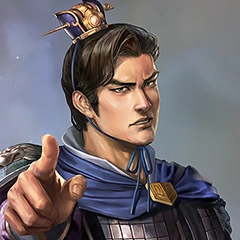
Source:
Koei Wiki (Fandom)
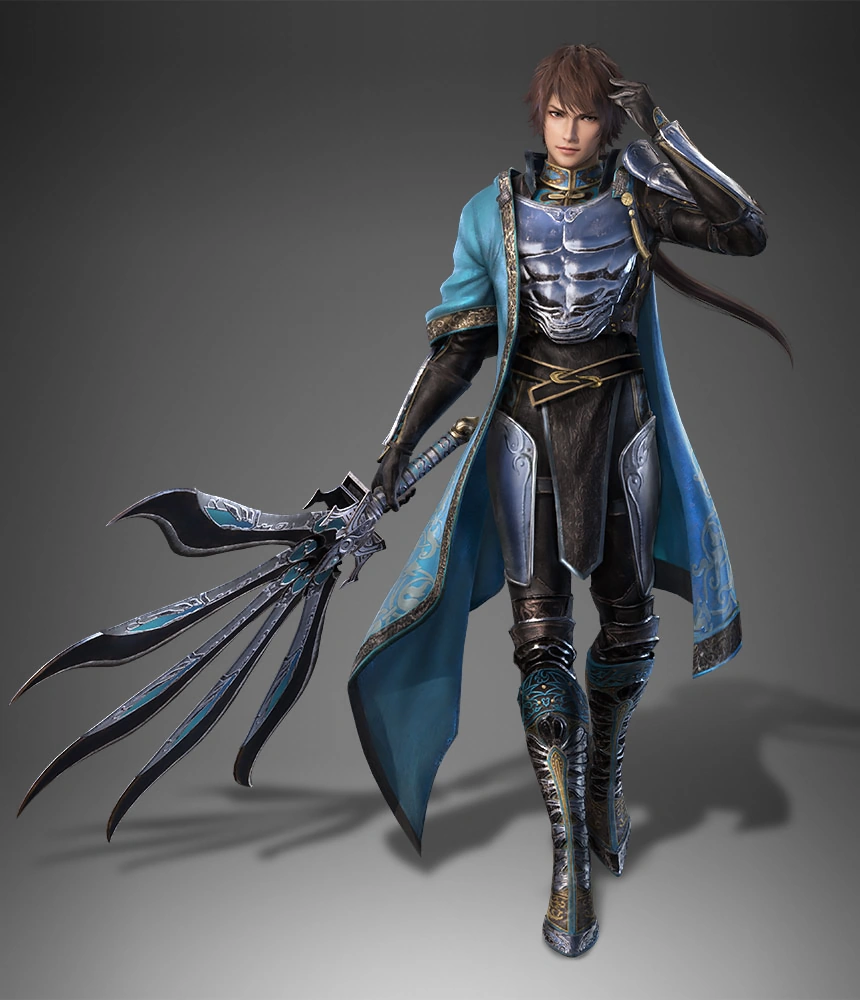
Source:
Koei Wiki (Fandom)
- Born
- 225
- Died
- 264
- Ancestral home
- Changshe, Yingchuan (Changge, Henan)
- Book mentions
- 131
Roles:
calligrapher
general
politician
writer
Links:
-
Wikipedia entry Bio
Appears in 9 chapters:
-
Chapter 107
— The Ruler of Wei Hands Over The Power To Sima Yi; Jiang Wei Is Defeated At Ox Head Hills.
Described in absentia, by Xiahou Ba, as one of the two men Shu should fear. A man of Changsha and son of the former Imperial Guardian Zhong Yao, noted as a boy for boldness and quickness: taken to court at seven with his elder brother Zhong Yu, who was sweating and explained 'Whenever I am frightened, the sweat pours out', he answered the same question with 'I am so frightened that the sweat cannot come out.' Grew up on books of war and tactics into an able strategist admired by both Sima Yi and Jiang Ji, and is at this point a secretary in the Palace.
-
Chapter 110
— Riding Alone, Wen Yang Repulses A Brave Force; Following The River, Jiang Wei Defeats The Enemy.
Makes two decisions, and both change the succession. First he tells the sick Sima Shi that no substitute will do — 'The forces of the South of River Huai and Chu are very formidable. If you send another, there is danger whatever happens' — which is what puts Sima Shi in the padded carriage and ultimately kills him. Then, with Sima Zhao ordered to stay at Xuchang, he tells him to disobey: 'The death of your brother has disturbed the country. If you remain here, some shifting of power at the capital will surely work to your disadvantage. It will be too late for regrets then.'
-
Chapter 112
— Rescuing Shouchun, Yu Quan Dies Nobly; Attacking Changcheng, Jiang Wei Mobilizes.
Four separate decisions in this chapter are his, and Sima Zhao names him for it. Opens by reading the Wu alliance correctly — 'The Wu army is helping our enemies for the sake of profit, and hence we can seduce them with an offer of greater profit' — which produces the abandoned-baggage trap. Then designs the siege: attack on three sides only and leave the south gate open, so the garrison is tempted to run and the Wu relief is tempted in, while light cavalry cut their supply. 'You are my Zhang Liang,' said Sima Zhao, stroking the back of his adviser. Talks Sima Zhao out of executing Wen Yang — 'If you slay those who surrender, you will strengthen the obstinacy of those who remain in the city' — which is what collapses the garrison's will. And finally talks him out of Pei Xiu's proposal to bury the Wu prisoners: 'When the ancients made war, their policy was to maintain the state as a whole, and so they only put to death the originators of trouble. It would be inhumane to slay all.'
-
Chapter 115
— Listening To Slander, The Latter Ruler Recalls His Army; Living In Farms, Jiang Wei Avoids Disaster.
Arrives with the invasion already planned. Asked whether he can lead an expedition against Wu, he answers 'My lord's design is not against Wu, but Shu' — and when asked how he would do it, produces maps showing 'the camps, and storehouses, and roads all complete'. Declines to share a line of march with Deng Ai ('The River Lands is large, and there is space for more than one set of operations'). Made General Who Conquers the West with command over the forces Within the Passes and the armies of six provinces. Then builds large ships in five provinces and sends Tang Zi along the coast for more, purely as a feint — 'If Shu hears that we intend to attack the west, they will ask assistance from Wu. So I pretend to attack Wu… When Shu is beaten, the ships will be ready and useful for an expedition into the east.' It deceives his own chief.
-
Chapter 116
— On Hanzhong Roads, Zhong Hui Divides The Army; In Dingjun Mountain, The Martial Lord Shows His Apparition.
The invasion is his, and so is everything strange about it. Musters some eighty officers, appoints and then executes his own Leader of the Van, is nearly killed on a bridge his van leader failed to repair, takes Nanzheng and then the Yangping Pass with its grain and weapons. Then the chapter turns: two nights of shouting in the southwest with nothing to find by day, a hill 'of sinister aspect overhung by angry clouds' that turns out to be Dingjun Mountain, and a charge of phantom horsemen that unhorses a dozen generals and hurts nobody. Told the only thing on the hill is Zhuge Liang's tomb, he sacrifices an ox there - and the wind drops, the clouds clear, and a cool breeze and a gentle shower follow. That night the figure in the Daoist robe with the feather fan comes to his tent: 'After you have passed the frontier, do not slay ruthlessly.' He puts a white flag at the head of the army reading 'Secure the state, comfort the people', with death for anyone who kills wantonly - 'so that the invaders were welcomed in every step'.
-
Chapter 117
— Deng Ai Gets Through The Yinping Mountains; Zhuge Zhan Falls In The Battlefield Of Mianzhu.
Rejects the plan that wins the war and says so in front of his staff. Sentences Zhuge Xu to death for losing the Yinping Bridge and then attacking without orders, is told by Wei Guan that a subordinate of Deng Ai's is not his to judge, and answers 'I have a command from the Emperor and orders from the Prime Minister to attack Shu. If Deng Ai himself offended, I would behead him.' Receives Deng Ai's courtesy call behind a wall of drawn-up guards, hears out the Yinping proposal, calls it 'A very good plan' to his face - and the moment he is gone: 'They say Deng Ai is able. I think he is of most ordinary capacity... the by-roads by Yinping Mountains are impassable, nothing but lofty cliffs and steep hills. A hundred defenders at a critical point could cut all communications, and Deng Ai's army would starve to death.' Then settles down to besiege Saber Pass with ladders and stone-throwers, and laughs when the scouts report Deng Ai marching.
-
Chapter 118
— Weeping At The Ancestral Temple, A Filial Prince Dies; Marching To The West River Land, Two Leaders Competes.
Takes the surrender he did not win and begins the rebellion he will die in. Meets Jiang Wei outside his camp, gives him the seat of honour, breaks an arrow with him and swears brotherhood. Made Minister of the Interior with ten thousand families and lordships for his sons, in an edict so fulsome it is quoted in full ('against whose might none can stand, before whom no one is strong'). Then takes Jiang Wei's advice: memorialises that Deng Ai is courting the conquered and about to revolt, and has Deng Ai's outgoing letters intercepted and 'rewrote them in arrogant and rebellious terms'. Sima Zhao reads the forgeries and believes them.
-
Chapter 119
— The False Surrender: A Wit Scheme Becomes A Vain Plan; The Abdication: Later Seeds Learn From The Ancient.
Forges an imperial mandate at a party. At a Feast of Lanterns banquet on the fifteenth he lifts his cup, bursts into wailing, and announces that the Empress Guo has just died leaving him an edict 'recounting the crimes of Sima Zhao and charging him with aiming at the Throne. I am commissioned to destroy him, and you all must join me in the task.' When nobody speaks he draws his sword — 'Here is death for those who oppose!' — collects signatures one by one and imprisons every guest in the Palace, with a pit already dug and clubs ready. Then trusts Qiu Jian with the one errand that undoes him. When Hu Yuan's mutiny breaks in he closes the Hall of Audience and has his men throw roof tiles down on the attackers; the doors come open, and 'Zhong Hui faced them and slew a few, but others shot at him with flights of arrows, and he fell and died. They hacked off his head.' His elegy calls him 'the Zhang Liang of the hour'.
-
Chapter 120
— Recommending Du Yu, An Old General Offers New Plans; Capturing Of Sun Hao, Three Kingdoms Becomes One.
Named in passing only, and dead since ch119 - the other half of the pair of conquerors who destroyed each other within weeks of their victory.