Deng Ai Gets Through The Yinping Mountains;
Zhuge Zhan Falls In The Battlefield Of Mianzhu.
When Dong Jue, General Who Upholds the State, heard of the invasion of Wei in ten divisions, he brought to the frontier twenty thousand troops to Saber Pass. And when the dust showed an approaching army, Dong Jue thought it wise to go to the Pass lest the coming armies should be enemies to be stopped.
But Dong Jue found that the newcomers were Jiang Wei, Liao Hua, and Zhang Yi. He let them pass through. Then he gave them the news from the capital, bad news of the deeds of both the Latter Ruler and Huang Hao. His tears fell as he told the tales.
"But do not grieve," said Jiang Wei. "So long as I live, I will not allow Wei to come and conquer Shu. Now we must defend this pass, and then evolve a strategy."
They kept good guard at Saber Pass, while they discussed future plans.
"Though we are holding this pass, yet Chengdu is well-nigh empty of soldiers," said Dong Jue. "If it was attacked, it would go crack!"
Jiang Wei replied, "The natural defenses of Chengdu are excellent: It is hard to cross over the mountains and climb the steep roads. No one needs fear."
Soon after this, Zhuge Xu appeared at the pass challenging the defenders. Jiang Wei forthwith placed himself at the head of five thousand troops and went down to meet the Wei army. He gained an easy victory, slaying many of the enemy and taking much spoil in horses and weapons.
While Jiang Wei went back to the pass, the defeated Zhuge Xu made his way to Zhong Hui's camp, seven miles away, to confess his failure. His general was very angry.
"My orders to you were to hold Yinping Bridge so as to stop Jiang Wei, and you lost it. Now without any orders you attack and are defeated."
"Jiang Wei played so many deceitful tricks. He pretended to be going to take Yongzhou, and I thought that was very important, so I sent troops to rescue it. Then he meanly got away. I followed to the pass, but never thought he would come out and defeat my troops."
Zhuge Xu pleaded thus, but he was sentenced to die.
Now Wei Guan, Army Inspector, said, "Zhuge Xu is really a subordinate of Deng Ai and, admitting that he is in fault, his punishment should not have been pronounced by you, O Commander."
But Zhong Hui swaggeringly replied, "I have a command from the Emperor and orders from the Prime Minister to attack Shu. If Deng Ai himself offended, I would behead him."
However, other leaders interceded for Zhuge Xu, and Zhong Hui did not put him to death, but sent him a caged prisoner to the capital to be judged. The surviving soldiers were added to Zhong Hui's army.
This insolent speech of Zhong Hui was duly repeated to Deng Ai, who was angry in his turn and said, "His rank and mine are the same. I have held a frontier post for years and sustained many fatigues in the country's service. Who is he that he gives himself such airs?"
His son Deng Zhong endeavored to appease his wrath.
"Father, if you cannot suffer small things, you may upset the grand policy of the state. Unfriendliness with him may do great harm, so I hope you will bear with him."
Deng Ai saw his son was right, and said no more; but he nourished anger in his heart. With a small escort he went to call upon his colleague.
When his coming was announced, Zhong Hui asked his staff, "How many soldiers are following Deng Ai?"
"He has only some twenty horsemen," they replied.
Zhong Hui had a large body of guards drawn up about his tent, and then gave orders that his visitor should be led in. Deng Ai dismounted, and the two men saluted each other. But the visitor did not like the look on the faces of his host's guards. He decided to find out what Zhong Hui was thinking.
"The capture of Hanzhong is a piece of excellent fortune for the state," said Deng Ai. "The capture of Saber Pass can now be accomplished easily."
"What is your own idea, General?" asked Zhong Hui.
Deng Ai tried to evade answering the question, admitting he had no good suggestion. But Zhong Hui pressed him to reply.
Finally he said, "In my simple opinion one might proceed by by-roads from the pass through the Yinping Mountains to Deyang in Hanzhong, and thence make a surprise march to Chengdu. Jiang Wei must go to its defense, and you, General, can take the Saber Pass."
"A very good plan," said Zhong Hui. "You may start forthwith, and I will wait here till I hear news of your success."
They drank, and Deng Ai took his leave. Zhong Hui went back to his own tent filled with contempt for Deng Ai's plan. which he thought impracticable.
"They say Deng Ai is able. I think he is of most ordinary capacity," said he to his officers.
"But why?" said they.
"Because the by-roads by Yinping Mountains are impassable, nothing but lofty cliffs and steep hills. A hundred defenders at a critical point could cut all communications, and Deng Ai's army would starve to death. I shall go by the direct road, and there is no fear about the result. I shall overcome Shu."
So he prepared scaling ladders and stone-throwing machines and set himself to besiege Saber Pass.
Deng Ai went out to the main gate of the court. While mounting, he said to his followers, "What did Zhong Hui think of me?"
"He looked as though he held a poor opinion of what you had said, General, and disagreed with you, although his words were fair enough."
"He thinks I cannot take Chengdu. So I shall take it!"
He was received at his own camp by Shi Zuan and his son Deng Zhong, and a party of others of his generals, and they asked what the conversation had been about.
"I told Zhong Hui simple truth, but he thinks I am just a common person of no ability to speak of. He regards the capture of Hanzhong as an incomparable feat of arms. Where would he have been if I had not held up Jiang Wei at Tazhong? But I think the capture of Chengdu will beat that of Hanzhong."
That night the camp was broken up, and Deng Ai set his army out upon a long march along the mountainous paths. At twenty miles from Saber Pass they made a camp. The scouts told Zhong Hui of his movement, and Zhong Hui laughed at the attempt.
From his camp Deng Ai sent a letter to Sima Zhao.
Then he called his officers to his tent and asked them, saying, "I am going to make a dash for Chengdu while it is still undefended, and success will mean unfading glory for us all. Will you follow me?"
"We will follow you and obey your orders," cried they all.
So the final dispositions were made. Deng Zhong and three thousand troops went first to improve the road. His troops wore no armor, but they had axes and boring tools. They were to level roads and build bridges.
Next went thirty thousand troops furnished with dry grain and ropes. At every one hundred miles they were to make a post of three thousand.
In autumn of that year, they left Yinping, and in the tenth month they were in most precipitous country of the Yinping Mountains. They had taken twenty days to travel two hundred and fifty miles. They were in an uninhabited country. After garrisoning the various posts on the way, they had only two thousand soldiers left. Before them stood a range named Heaven Cliffs, which no horse could ascend. Deng Ai climbed up on foot to see his son and the troops with him opening up a road. They were exhausted with fatigue and weeping.
Deng Ai asked why they were so sad, and his son replied, "We have found an impassable precipice away to the northwest which we cannot get through. All our labor has been in vain."
Deng Ai said, "We have got over two hundred and fifty miles, and just beyond is Jiangyou. We cannot go back. How can one get tiger cubs except by going into tiger caves? Here we are, and it will be a very great feat to capture Chengdu."
They all said they would go on. So they came to the precipice. First they threw over their weapons; then the leader wrapped himself in blankets and rolled over the edge; next the generals followed him, also wrapped in blankets. Those who had not blankets were let down by cords round the waist, and others clinging to trees followed one after another till all had descended and the Heaven Cliffs was passed. Then they retook their armor and weapons and went on their way.
They came across a stone by the roadside. It bore a mysterious inscription, translated literally it read:
"This stone is a message of Zhuge Liang the Prime Minister: Two fires were just founded; armies pass by here. Two soldiers compete; both soon die."
Deng Ai was astonished. Presently he bowed before the stone and prayed to the spirit of Zhuge Liang.
"O Martial Lord, immortal! I grieve that I am not thy worthy disciple."
The rugged lofty mountain peaks
Of Yinping, pierce the sky,
The somber crane with wearied wing
Can scarcely over them fly.
Intrepid Deng Ai in blankets wrapped
Rolled down the craggy steep,
His feat Zhuge Liang prophesied
By insight wondrous deep.
Having crossed this great range of mountains without discovery, Deng Ai marched forward. Presently he came to a roomy camp, empty and deserted. He was told that while Zhuge Liang lived, a thousand troops had been kept in garrison at this point of danger, but the Latter Ruler had withdrawn them. Deng Ai sighed at the thought.
He said to his troops, "Now retreat is impossible, there is no road back. Before you lies Jiangyou with stores in abundance. Advance and you live, retreat and you die. You must fight with all your strength."
"We will fight to the death!" they cried.
The leader was now afoot, doing double marches with his two thousand troops toward Jiangyou.
The Commander at Jiangyou was Ma Miao. He heard the East River Land had fallen into the hands of the enemy. Though some thing prepared for defense, yet his post had a wide area to cover and guard, and he trusted Jiang Wei would defend the Saber Pass. So he did not take his military duties very seriously, just maintaining the daily drills and then going home to his wife to cuddle up to the stove and drink.
His wife was of the Li family. When she heard of the state of things on the frontier, she said to her husband, "If there is so great danger on the borders, how is it you are so unaffected?"
"The affair is in Jiang Wei's hands and is not my concern," replied he.
"Nevertheless, you finally have to guard the capital, and that is a heavy responsibility."
"O, well! The Emperor trusts his favorite Huang Hao entirely and is sunk in vice and pleasure. Disaster is very near. If the Wei armies get here, I shall yield. It is no good taking it seriously."
"You call yourself a man! Have you such a disloyal and treacherous heart? Is it nothing to have held office and taken pay for years? How can I bear to look upon your face?"
Ma Miao was too ashamed to attempt to reply. Just then his house servants came to tell him that Deng Ai, with his two thousand troops, had found their way along some road and had already broken into the city. Ma Miao was now frightened and hastily went out to find the leader and offer his formal submission.
He went to the Town Hall and bowed on the steps, crying, "I have long desired to come over to Wei. Now I yield myself and my army and all the town."
Deng Ai accepted his surrender and incorporated his army with his own force. He took Ma Miao into his service as guide.
Then came a servant with the news: "Lady Li has hanged herself!"
Deng Ai asked why she had done it, and Ma Miao told him. Deng Ai, admiring her rectitude, gave orders for an honorable burial. He also went in person to sacrifice. Everyone extolled her conduct.
When the Ruler of Shu had wandered from the way,
And the House of Han fell lower,
Heaven sent Deng Ai to smite the land.
Then did a woman show herself most noble,
So noble in conduct,
That no leader equaled her.
As soon as Jiangyou was taken, the posts along the road by which the army had come were withdrawn, and there was a general rendezvous at this point. This done, they marched toward Fucheng.
General Tian Xu remonstrated, saying, "We have just finished a long and perilous march and are weary and worn out. We ought to repose for a few days to recover."
Deng Ai angrily replied, "Speed is the one important matter in war. Do not encourage any discontent. I will not have it."
Tian Xu was sentenced to death. But as many officers interceded for him, he was pardoned.
The army pressed on toward Fucheng. As soon as they arrived, the officers yielded as if they thought Deng Ai had fallen from the heavens. Some took the news to the capital, and the Latter Ruler began to feel alarmed. He hastily called for Huang Hao, who at once denied the report.
"That is just false rumor. The spirits would not deceive Your Majesty," said Huang Hao.
The Latter Ruler summoned the wise woman to the Palace, but the messengers said she had gone no one knew whither.
And now urgent memorials and letters fell in from every side like a snow storm, and messengers went to and fro in constant streams. The Latter Ruler called a court to discuss the danger, but no one had any plan or suggestion to offer. The courtiers just looked blankly into each other's faces.
Finally Xi Zheng spoke out, "In this extremity Your Majesty should call in the help of the son of the Martial Lord."
This son of Zhuge Liang was named Zhuge Zhan. His mother was born of the Huang family and a daughter of Huang Chenyan. She was singularly plain and extraordinarily talented. She had studied everything, even books of strategy and magic. Zhuge Liang in Nanyang had sought to marry her because of her goodness, and she had studied with him for all their lives. She had survived her husband but a short time, and her last words to her son had been "be loyal and filial".
Zhuge Zhan had been known as a clever lad and had married a daughter of the Latter Ruler, so that he was an Imperial Son-in-Law. His father's rank, Lord of Wuxiang, had descended to him. In the fourth year of Wonderful Sight (AD 261) Zhuge Zhan received the rank of General of the Guard as well. But he had retired when Huang Hao, the eunuch, as first favorite, began to direct state affairs.
As suggested, the Latter Ruler summoned Zhuge Zhan to court, and he said, weeping, "Deng Ai has defeated Fucheng, and the capital is seriously threatened. You must think of your father and rescue me!"
"My father and I owe too much to the First Ruler's and Your Majesty's kindness for me to think any sacrifice too great to make for Your Majesty. I pray that you give me command of the troops in the capital, and I will fight a decisive battle."
So the soldiers, seventy thousand, were placed under Zhuge Zhan's command.
When he had gathered all together, he said, "Who dares be Leader of the Van?"
His son, Zhuge Shang, then nineteen, offered himself, saying, "Since my father commands the army, I volunteer to lead the van!"
Zhuge Shang had studied military books and made himself an adept in the various exercises. So he was appointed, and the army marched to find the enemy.
In the meantime the surrender general, Ma Miao, had given Deng Ai a very complete map of the country showing the whole sixty miles of road to Chengdu. However, Deng Ai was dismayed when he saw the difficulties ahead of him.
"If they defend the hills in front, I shall fail; for if I am delayed, Jiang Wei will come up, and my army will be in great danger. The army must press on."
He called Shi Zuan and his son Deng Zhong and said, "Lead one army straight to Mianzhu to keep back any Shu soldiers sent to stop our march. I will follow as soon as I can. But hasten; for if you let the enemy forestall you, I will put you to death."
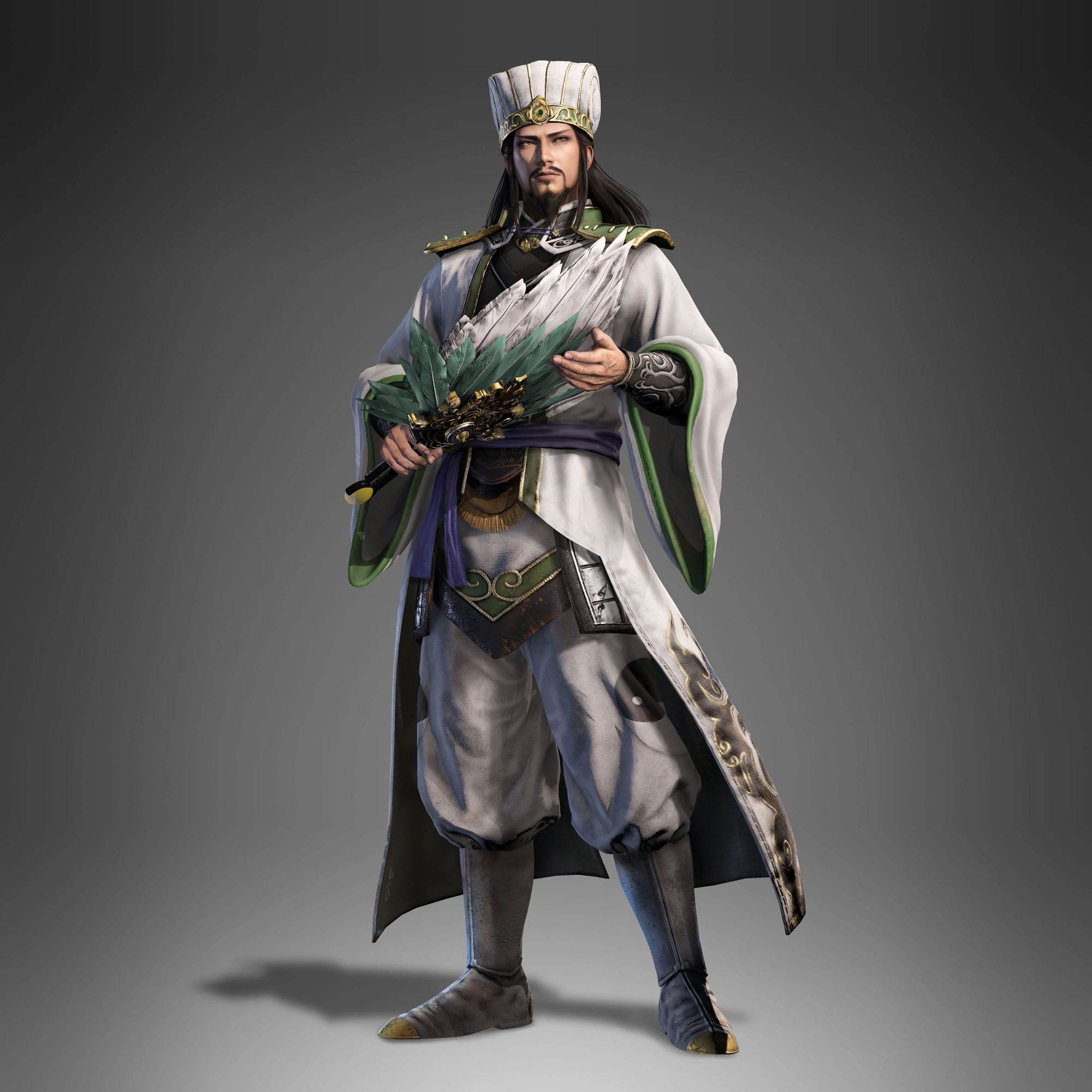
They went. Nearing Mianzhu they met the army under Zhuge Zhan. Both sides prepared for battle. The Shu armies adopted the Eight Diagrams formation and presently, after the usual triple roll of drums, Shi Zuan and Deng Zhong saw their opponents' ranks open in the center, and therefrom emerge a light carriage in which sat a figure looking exactly as Zhuge Liang used to look when he appeared on the battlefield. Everybody knew the Daoist robes and the feather fan. The standard bore his name and titles The Han Prime Minister Zhuge Liang.
The sight was too much for Deng Zhong and Shi Zuan. The cold sweat of terror poured down them, and they stammered out.
"If Zhuge Liang is still alive, that is the end of us!"
They led their army to flee. The troops of Shu came on, and the army of Wei was driven away in defeat and chased a distance of seven miles. Then the pursuers sighted Deng Ai, and they turned and retired.
When Deng Ai had camped, he called the two leaders before him and reproached them for retreating without fighting.
"We saw Zhuge Liang leading the enemy," said Deng Zhong, "So we ran away."
"Why should we fear, even if they bring Zhuge Liang to life again? You ran away without cause, and we have lost. You ought both to be put to death."
However, they did not die, for their fellows pleaded for them, and Deng Ai's wrath was mollified.
Then the scouts came in to say: "The leader of the army is a son of Zhuge Liang, Zhuge Zhan. The Van Leader is Zhuge Zhan's son, Zhuge Shang. They had set up on the carriage the old wooden image of the late strategist."
Deng Ai, however, said to Deng Zhong and Shi Zuan, "This is the critical stage. If you lose the next battle, you will certainly lose your lives with it!"
At the head of ten thousand troops, they went out to battle once more. This time they met the vanguard led by Zhuge Shang, who rode out alone, boldly offering to repulse the leaders of Wei. At Zhuge Zhan's signal the two wings advanced and threw themselves against the Wei line. The center portion of the Wei line met them, and the battle went to and fro many times, till at length the force of Wei, after great losses, had to give way. Both Deng Zhong and Shi Zuan being badly wounded, they fled and the army of Shu pursued and drove the invaders into their camp.
Shi Zuan and Deng Zhong had to acknowledge a new defeat, but, when Deng Ai saw both were severely wounded, he forbore to blame them or decree any penalty.
To his officers Deng Ai said, "This Zhuge Zhan well continues the paternal tradition. Twice they have beaten us and slain great numbers. We must defeat them, and that quickly, or we are lost."
Then Military Inspector Qiu Ben said, "Why not persuade their leader with a letter?"
Deng Ai agreed and wrote a letter, which he sent by the hand of a messenger. The warden of the Shu camp gate led the messenger in to see Zhuge Zhan, who opened the letter and read:
"Deng Ai, General Who Conquers the West, writes to Zhuge Zhan, General of the Guard and Leader of the army in the field.
"Now having carefully observed all the talents of the time, I see not one of them is equal to your most honored father. From the moment of his emergence from his retreat, he said that the country was to be in tripod division. He conquered Jingzhou and Yizhou and Hanzhong and thus established a position. Few have been his equal in all history. He made six expeditions from Qishan, and, if he failed, it was not that he lacked skill---it was the will of Heaven.
"But now this Latter Ruler is dull and weak, and his kingly aura is already exhausted. I have a command from the Son of Heaven to smite Shu with severity, and I already possess the land. Your capital must quickly fall. Why then do you not bow to the will of Heaven and fall in with the desires of people by acting rightly and coming over to our side? I will obtain the rank of Prince of Langye for you, whereby your ancestors will be rendered illustrious. These are no vain words if happily you will consider them."
The letter made Zhuge Zhan furiously angry. He tore it to fragments and ordered the bearer thereof to be put to death immediately. He also ordered the escort to bear the head of the messenger to the camp of Wei and lay it before Deng Ai.
Deng Ai was very angry at this insult and wished to go forth at once to battle. But Qiu Ben dissuaded him.
"Do not go out to battle," said he. "Rather overcome him by some unexpected stroke."
So Deng Ai laid his plans. He sent Wang Qi, Governor of Tianshui, and Qian Hong, Governor of Longxi, to lie in wait in the rear while he led the main body.
Zhuge Zhan happened to be close at hand seeking battle. When he heard the enemy was near, he led out his army eagerly and rushed into the midst of the invaders. Then Deng Ai fled as though worsted, so luring on Zhuge Zhan. But when the pursuit had lasted some time, the pursuers were attacked by those who lay in wait, and the Shu troops were defeated. They ran away into Mianzhu.
Therefore Deng Ai besieged Mianzhu, and the troops of Wei shouted about the city and watched the ramparts, thus keeping the defenders close shut in as if held in an iron barrel.
Zhuge Zhan was desperate, seeing no way of escape without help from outside. Wherefore he wrote a letter to East Wu begging for assistance, and he gave this letter to Peng He to bear through the besiegers.
Peng He fought his way through and reached Wu, where he saw the Ruler of Wu, Sun Xiu. And he presented the letter showing the wretched plight of Zhuge Zhan and his urgent need.
Then the Ruler of Wu assembled his officers and said to them, "The land of Shu being in danger, I cannot sit and look on unconcerned."
He therefore decided to send fifty thousand troops, over whom he set the Veteran General Ding Feng, with two able assistants---Sun Yin and Ding Fung. Having received his edict, Ding Feng sent away his commanders with twenty thousand troops to Mianzhu, and he himself went with thirty thousand troops toward Shouchun. The army marched in three divisions.
In the city of Mianzhu, Zhuge Zhan waited for the rescue which never came.
Weary of the hopeless delay, he said to his generals, "This long defense is useless. I will fight!"
Leaving his son Zhuge Shang and Chair of the Secretariat Zhang Zun---Zhang Fei's grandson---in the city, Zhuge Zhan put on his armor and led out three thousand troops through three gates to fight in the open. Seeing the defenders making a sortie, Deng Ai drew off and Zhuge Zhan pursued him vigorously, thinking Deng Ai really fled before his force. But there was an ambush, and falling therein he was quickly surrounded as is the kernel of a nut by the shell. In vain he thrust right and shoved left, he only lost his troops in the raining arrows and bolts. The troops of Wei poured in more flights of arrows, so that his army were all shattered. Before long, Zhuge Zhan was wounded and fell.
"I am done," cried he. "But in my death I will do my duty!" He drew his sword and slew himself.
From the city walls his son Zhuge Shang saw the death of his father. Girding on his armor he made to go out to fight.
But Zhang Zun told him, "Young general, do not go out immediately!"
Cried Zhuge Shang, "My father and I and all our family have received favors from the state. My father has died in battle against our enemies, and can I live?"
He whipped his horse and dashed out into the thick of the fight, where he died. A poem has been written extolling the conduct of both father and son.
In skill he was found wanting, not in loyalty,
But the Lord's word had gone forth,
That the Ruler of Shu was to be cut off,
Noble were Zhuge Liang's descendants.
In commiseration of their loyalty, Deng Ai had both father and son buried fittingly. Then he began attacking the city vigorously. Zhang Zun, Huang Chong, and Li Qiu, the defenders, however, held the city desperately, but to no avail for their numbers being small, and the three leaders were slain. This was the end of the defense, and Deng Ai then entered as conqueror. Having rewarded his army, he set out for Chengdu.
The closing days of the Latter Ruler were
As had been those of Liu Zhang.
The next chapter will tell of the defense of Chengdu.
-
Wikipedia entry Bio

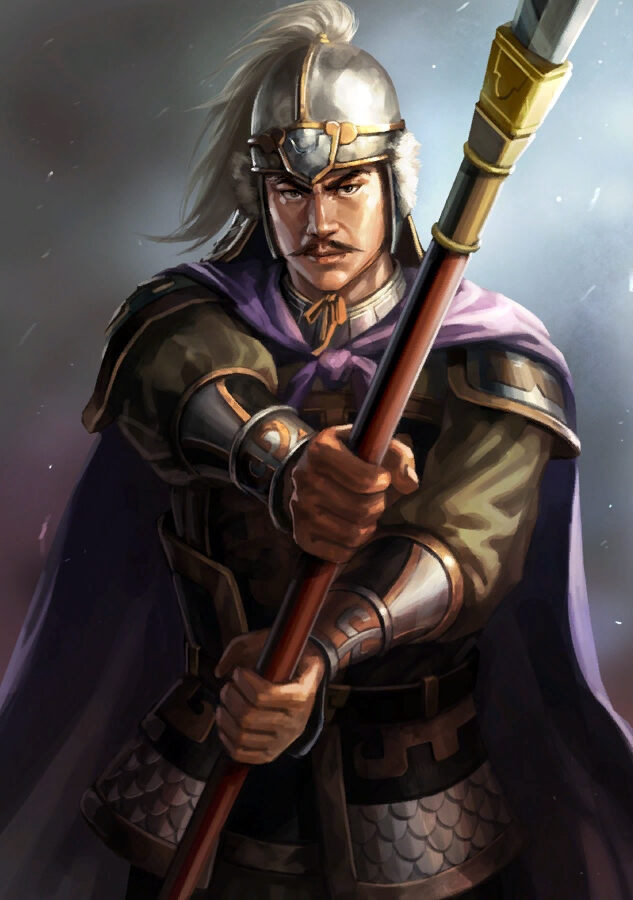
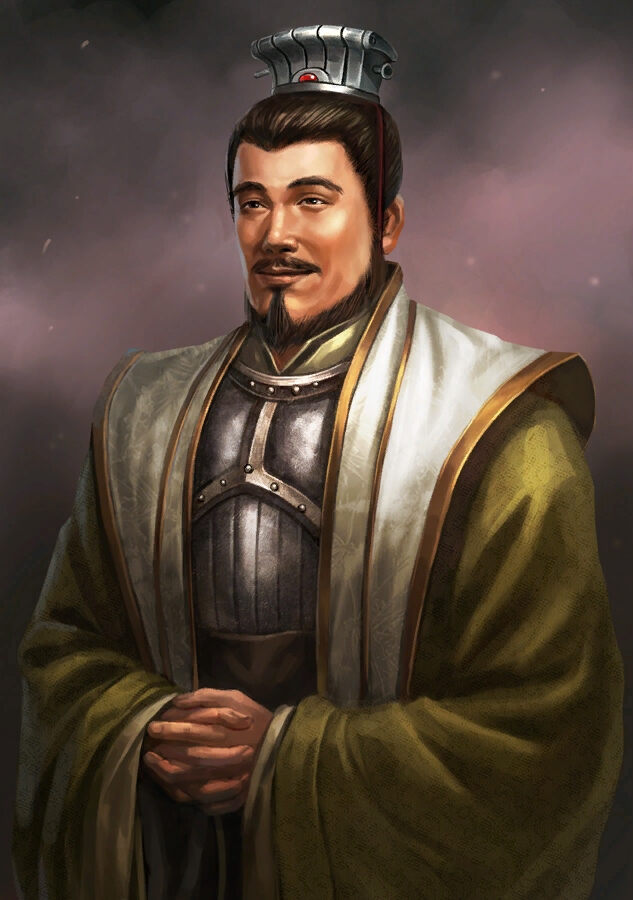
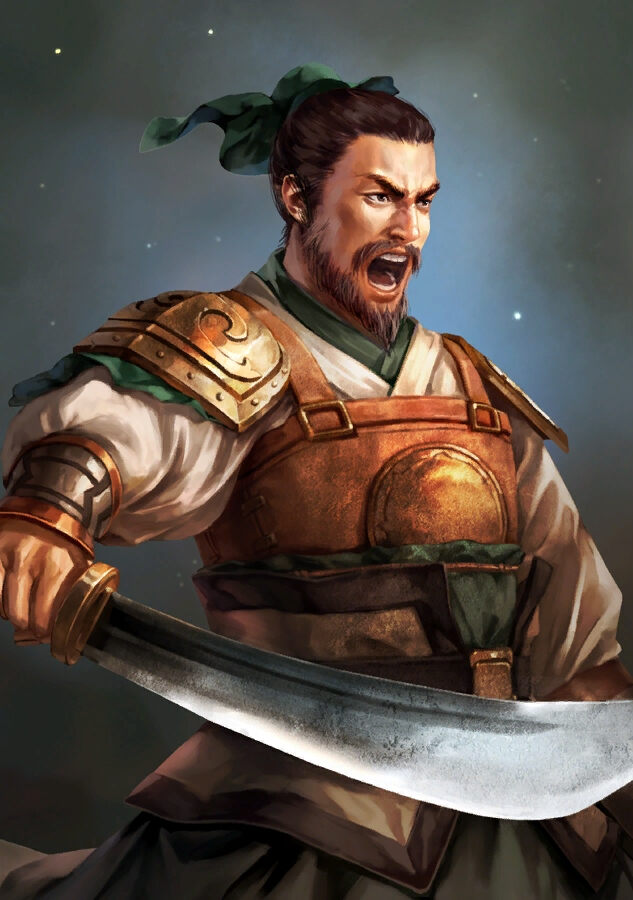
|
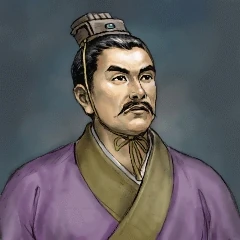
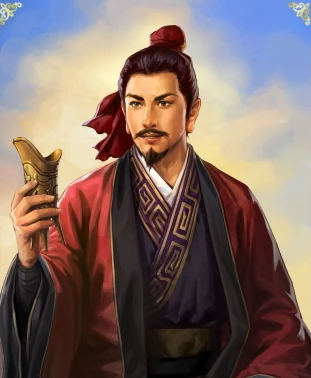
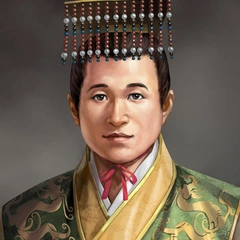
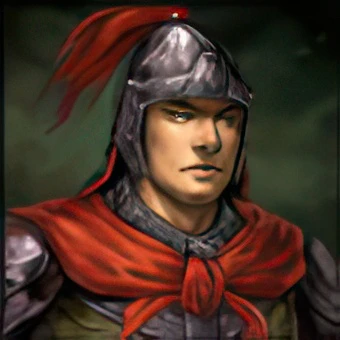
Cao Huan
Named only through the authority Zhong Hui claims when he oversteps it: 'I have a command from the Emperor and orders from the Prime Minister to attack Shu.'
0 mentions in this chapter
38 mentions in the book
|
|
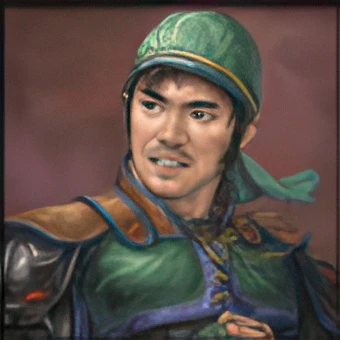
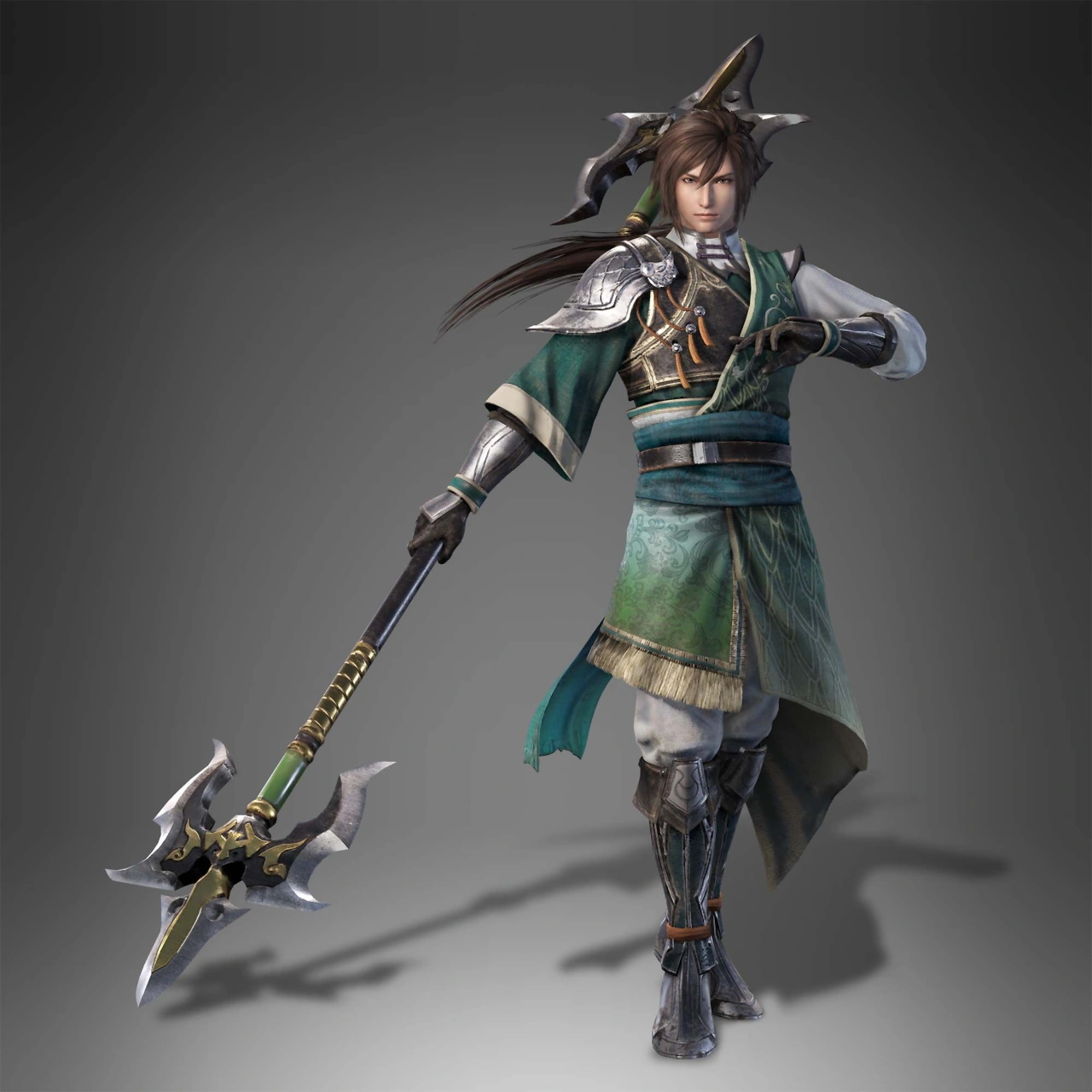
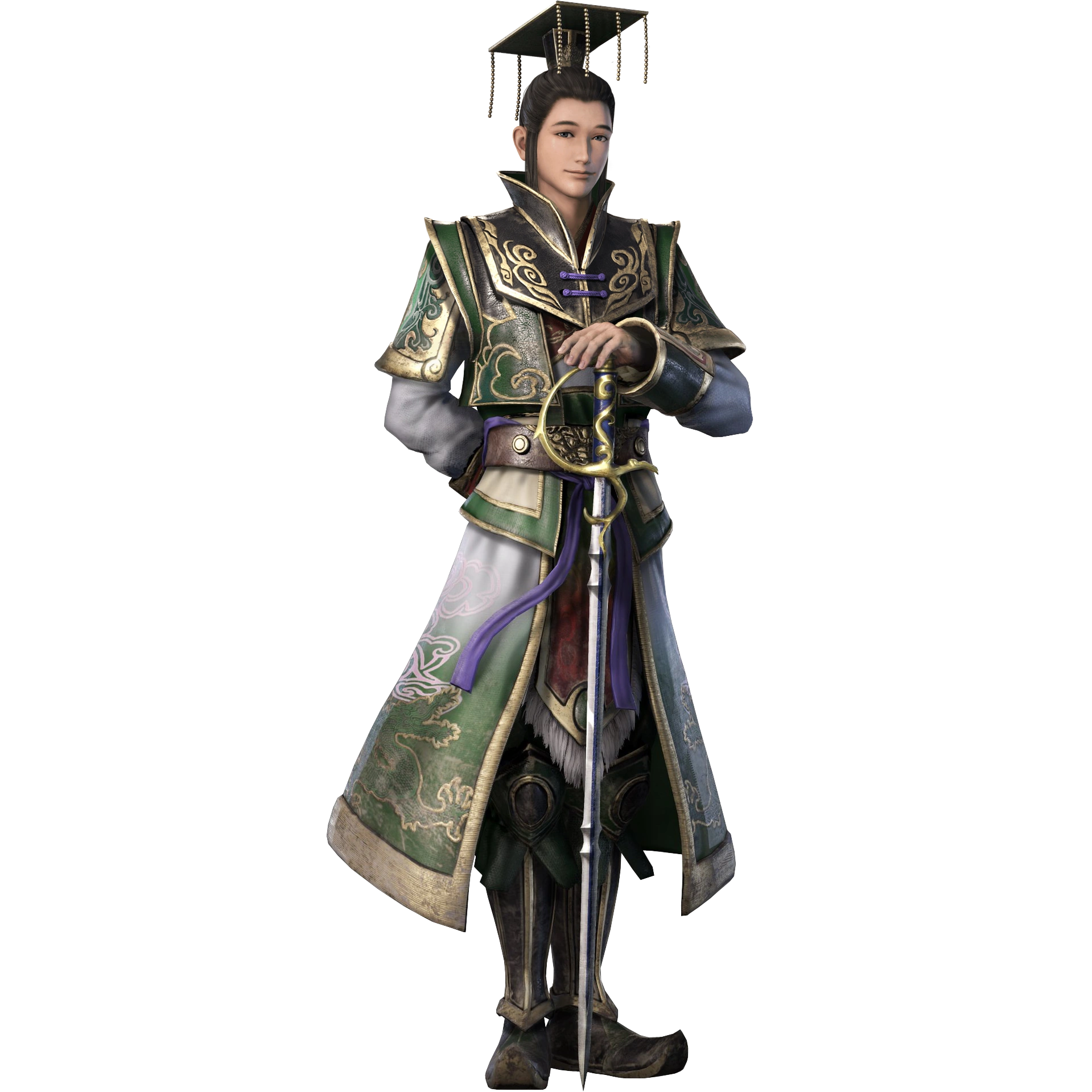
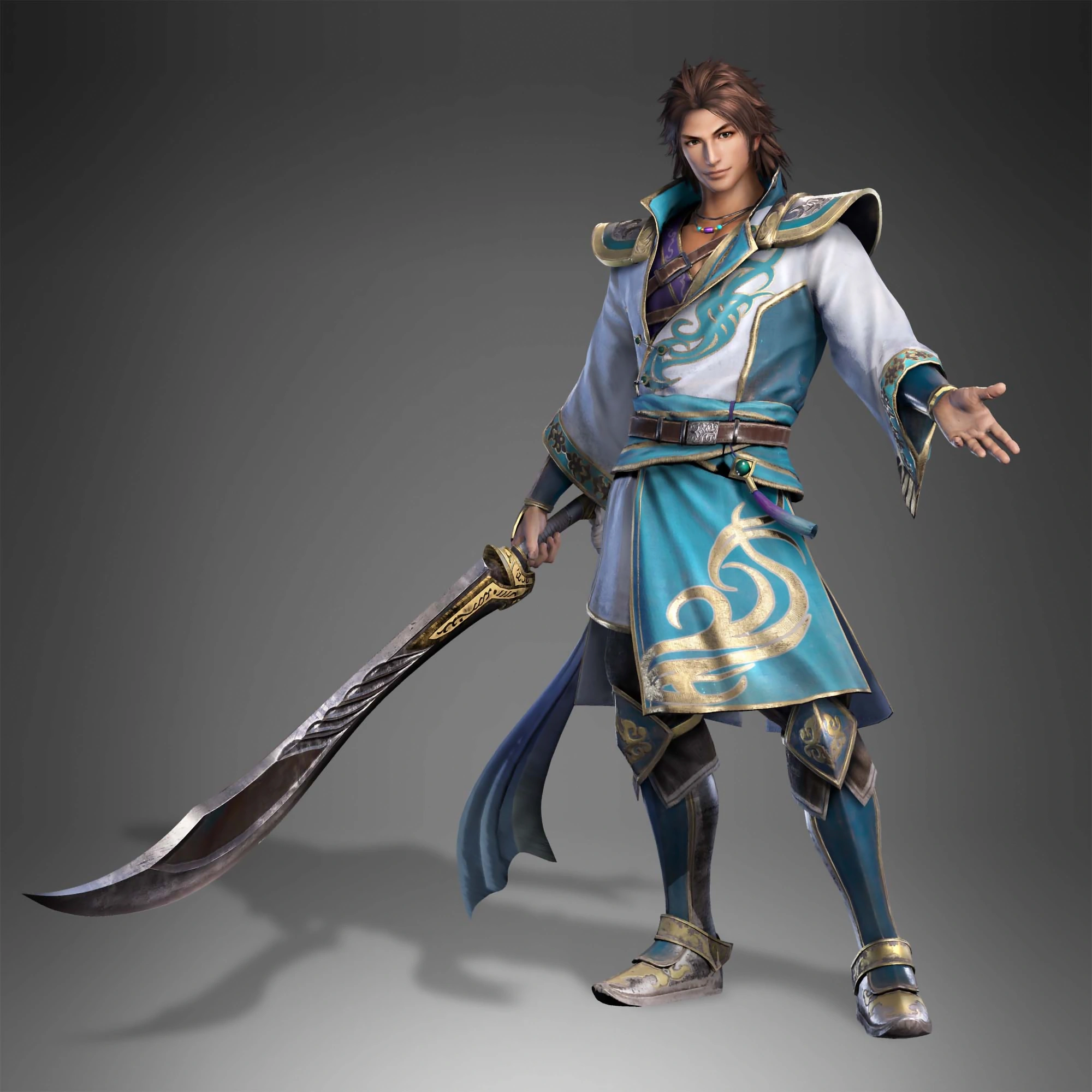
Deng Ai
Two hundred and fifty miles in twenty days: thirty thousand men with dry grain and ropes, a post of three thousand dropped every hundred miles until only two thousand are left, an uninhabited country, and his son's road party in tears at an impassable precipice in the Heaven Cliffs — 'How can one get tiger cubs except by going into tiger caves?' Weapons thrown over first, then Deng Ai wrapped in blankets rolling over the edge, then the generals, then men lowered on cords or clinging to trees. At the bottom he finds a stone with Zhuge Liang's inscription ('Two fires were just founded; armies pass by here. Two soldiers compete; both soon die'), before which he bows and prays, and an abandoned garrison post where Zhuge Liang had kept a thousand men and the Latter Ruler had withdrawn them. Takes Jiangyou, buries Ma Miao's wife with honours, condemns Tian Xu for asking to rest, sweeps up Fucheng, and beats Zhuge Zhan at Mianzhu on the third attempt with an ambush after two defeats.
49 mentions in this chapter
248 mentions in the book
|
|
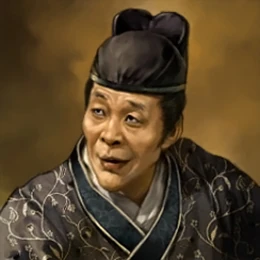
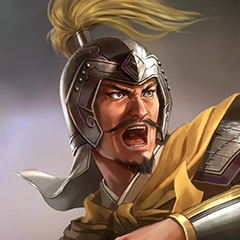
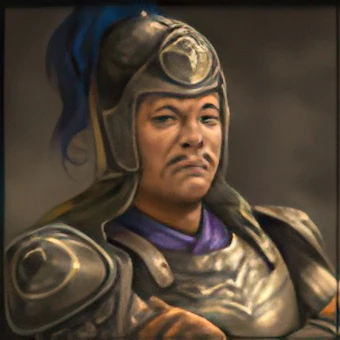
Deng Zhong
Talks his father out of an open breach with Zhong Hui - 'if you cannot suffer small things, you may upset the grand policy of the state' - then leads the three thousand road-openers over the Yinping mountains with axes and boring tools, and is found weeping with them at the impassable precipice. Later routed at Mianzhu by his own terror of a wooden statue: 'If Zhuge Liang is still alive, that is the end of us!' Badly wounded in the second battle.
10 mentions in this chapter
20 mentions in the book
|
|
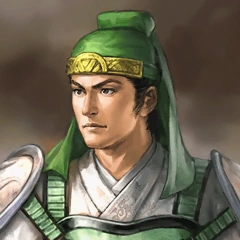
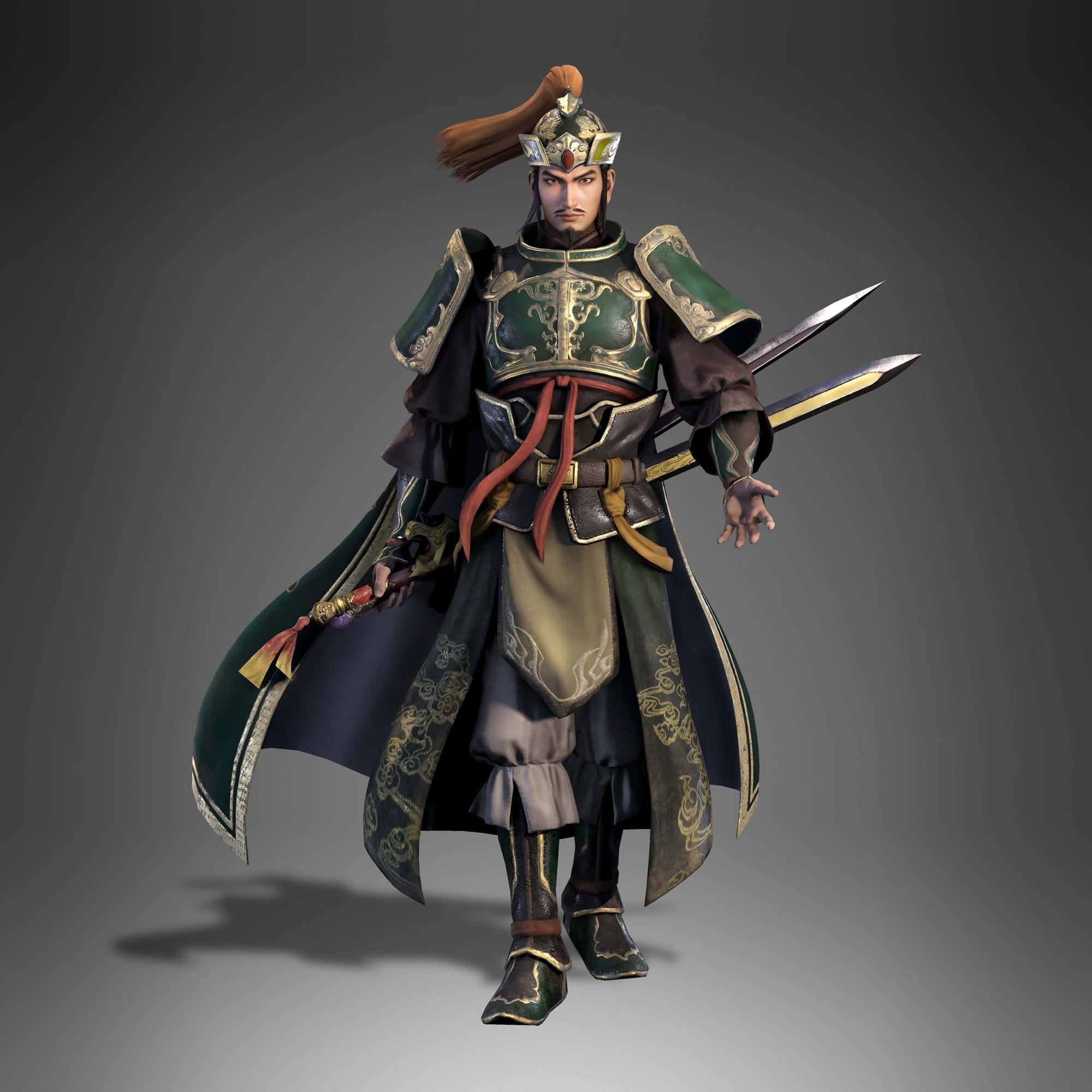
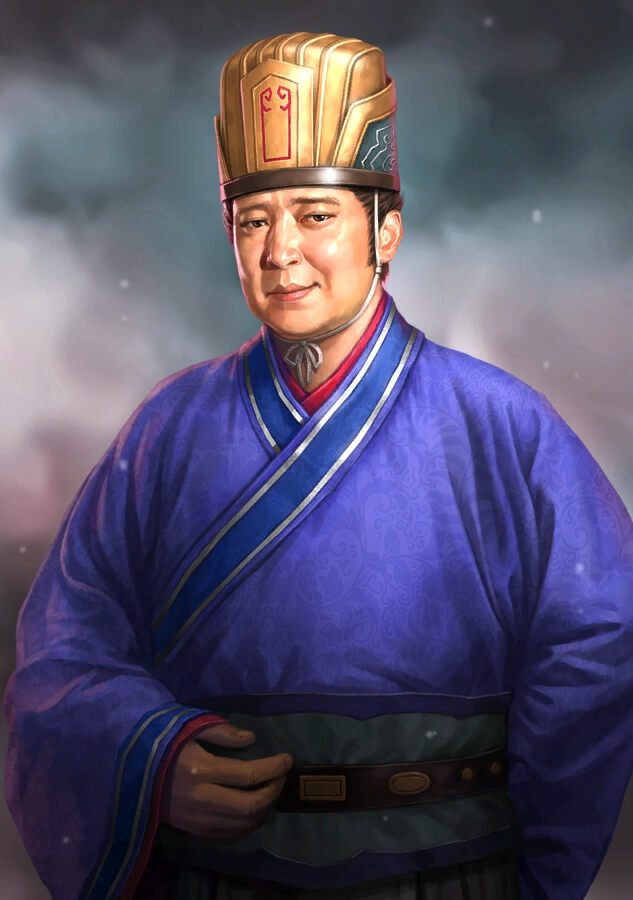
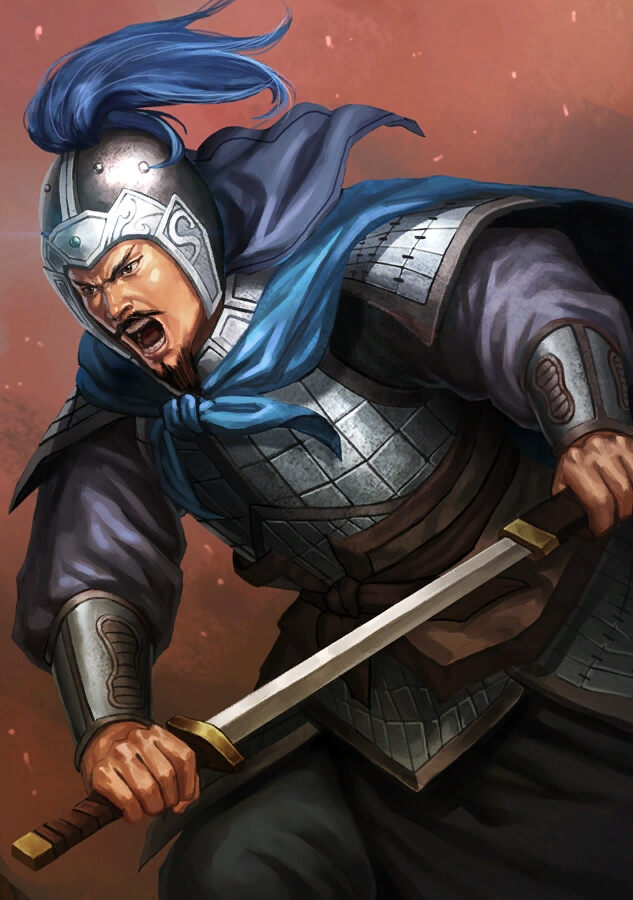
Ding Feng
One of the two assistants Sun Xiu gives the veteran Ding Feng for the relief of Shu — 'two able assistants---Sun Yin and Ding Fung'.
1 mention in this chapter
1 mention in the book
|
|
Ding Feng
Given the fifty thousand and two assistants, he sends the commanders with twenty thousand to Mianzhu and takes thirty thousand toward Shouchun himself, so that Wei has to look two ways at once. The relief never arrives in time, but in this chapter it is still on the road.
2 mentions in this chapter
53 mentions in the book
|
|
Dong Jue
At the front, and the first to say what is about to happen. General Who Upholds the State, he brings twenty thousand men to Saber Pass, lets Jiang Wei's column through, and weeps as he reports what the Latter Ruler and Huang Hao have been doing at the capital. Then he names the danger exactly: 'Though we are holding this pass, yet Chengdu is well-nigh empty of soldiers. If it was attacked, it would go crack!' — and is reassured by Jiang Wei that the mountains make it impossible.
4 mentions in this chapter
10 mentions in the book
|
|
Huang Chong
Dies defending Mianzhu. One of the three left holding the city after Zhuge Zhan and Zhuge Shang are killed: 'Zhang Zun, Huang Chong, and Li Qiu, the defenders, however, held the city desperately, but to no avail for their numbers being small, and the three leaders were slain.'
1 mention in this chapter
1 mention in the book
|
|
Huang Hao
Keeps denying it until the evidence is at the gates. Told of Deng Ai at Fucheng, he assures the throne 'That is just false rumor. The spirits would not deceive Your Majesty' - and when the Latter Ruler sends for the wise woman to confirm it, 'the messengers said she had gone no one knew whither.' After that the memorials come in 'like a snow storm' and there is nothing left to intercept.
5 mentions in this chapter
32 mentions in the book
|
|
Jiang Wei
Holds Saber Pass and wins the only Shu victory of the chapter - five thousand men down off the pass against Zhuge Xu, 'slaying many of the enemy and taking much spoil in horses and weapons' - and is still holding it when the war ends behind him. His one misjudgement is the chapter's hinge: told by Dong Jue that Chengdu is nearly empty of troops and would 'go crack' if attacked, he answers 'The natural defenses of Chengdu are excellent: It is hard to cross over the mountains and climb the steep roads. No one needs fear.' Deng Ai crosses them nine pages later.
12 mentions in this chapter
443 mentions in the book
|
|
Lady Li
The moral centre of the chapter's first half, and it gives her a poem. Ma Miao's wife, of the Li family, who asks him how he can be so unaffected by the danger on the borders and gets his intention to surrender for an answer: 'You call yourself a man! Have you such a disloyal and treacherous heart? Is it nothing to have held office and taken pay for years? How can I bear to look upon your face?' 'Ma Miao was too ashamed to attempt to reply.' When the town falls she hangs herself. Deng Ai, told why, orders an honourable burial and goes in person to sacrifice — 'Then did a woman show herself most noble, / So noble in conduct, / That no leader equaled her.'
1 mention in this chapter
1 mention in the book
|
|
Li Qiu
The third of the Mianzhu defenders, killed with Zhang Zun and Huang Chong in the last stand after the Zhuge father and son are dead — the end of organised resistance west of Chengdu.
1 mention in this chapter
1 mention in the book
|
|
Liao Hua
At Saber Pass with Jiang Wei and Zhang Yi, admitted through Dong Jue's lines at the start of the chapter, and holding the front that Deng Ai's march makes irrelevant.
1 mention in this chapter
87 mentions in the book
|
|
Liu Bei
Named in passing only, and long dead, in Zhuge Zhan's acceptance of the command: 'My father and I owe too much to the First Ruler's and Your Majesty's kindness for me to think any sacrifice too great to make for Your Majesty.'
1 mention in this chapter
1978 mentions in the book
|
|
Liu Shan
The reckoning for four chapters of his court. He is alarmed by the first report, calls for the eunuch rather than a general, sends for the medium who has vanished, convenes a court that has nothing to say, and finally summons Zhuge Zhan and weeps at him: 'Deng Ai has defeated Fucheng, and the capital is seriously threatened. You must think of your father and rescue me!' The seventy thousand men he hands over are the last army Shu has. He is also, the chapter notes twice, the man who withdrew Zhuge Liang's thousand-man garrison from the pass Deng Ai walks through.
12 mentions in this chapter
254 mentions in the book
|
|
Liu Zhang
Named in the chapter's closing couplet, as the exact precedent for what is about to happen at Chengdu: 'The closing days of the Latter Ruler were / As had been those of Liu Zhang.' The man Liu Bei took the River Lands from in ch65, invoked as the pattern for losing them.
1 mention in this chapter
105 mentions in the book
|
|
Ma Miao
Surrenders Jiangyou without a blow, and the chapter makes his character exact before it happens: with the eastern River Land already lost he keeps up the daily drills and then goes home 'to his wife to cuddle up to the stove and drink', on the reasoning that 'The affair is in Jiang Wei's hands and is not my concern' and 'If the Wei armies get here, I shall yield. It is no good taking it seriously.' When Deng Ai's two thousand men are actually inside the town he hurries to the Town Hall and bows on the steps: 'I have long desired to come over to Wei.' Deng Ai takes his army into his own and uses him as a guide, and he later supplies the complete map of the sixty miles to Chengdu.
6 mentions in this chapter
6 mentions in the book
|
|
Peng He
The one man to get out of Mianzhu. Given Zhuge Zhan's letter begging Wu for help, 'Peng He fought his way through and reached Wu, where he saw the Ruler of Wu, Sun Xiu' - and the fifty thousand troops Sun Xiu sends in response are the direct result. They arrive too late for the man who sent him.
2 mentions in this chapter
2 mentions in the book
|
|
Qian Hong
Governor of Longxi, sent with Wang Qi to lie in wait in the rear while Deng Ai feigns defeat in front — the ambush that finally breaks Zhuge Zhan and drives him back into Mianzhu.
1 mention in this chapter
5 mentions in the book
|
|
Qiu Ben
Both of the chapter's decisive suggestions are his. Military Inspector, he proposes trying a letter on Zhuge Zhan first — 'Why not persuade their leader with a letter?' — and when the reply comes back as a severed head and Deng Ai wants to attack in a rage, he stops him: 'Do not go out to battle. Rather overcome him by some unexpected stroke.' The ambush that follows wins Mianzhu.
2 mentions in this chapter
2 mentions in the book
|
|
Shi Zuan
Sent with Deng Zhong to reach Mianzhu ahead of any Shu force, on pain of death - and runs from Zhuge Liang's wooden image alongside him, 'the cold sweat of terror' pouring down. Told that losing the next battle will cost him his life, he loses it too and is badly wounded; Deng Ai forbears the penalty when he sees the wounds.
7 mentions in this chapter
15 mentions in the book
|
|
Sima Zhao
Present only by post. Deng Ai writes to him from the camp before starting the mountain crossing, and Zhuge Xu is sent to him in a cage to be judged - the two threads that will bring him into the next two chapters as the arbiter of both his commanders' fates.
1 mention in this chapter
170 mentions in the book
|
|
Sun Xiu
Answers the appeal from Mianzhu at once: 'The land of Shu being in danger, I cannot sit and look on unconcerned.' Commits fifty thousand troops under Ding Feng with Sun Yin and Ding Fung as assistants, in three divisions - twenty thousand toward Mianzhu and thirty thousand against Shouchun as a diversion.
3 mentions in this chapter
66 mentions in the book
|
|
Sun Yi
One of the two assistants given to Ding Feng for the Shu relief.
1 mention in this chapter
2 mentions in the book
|
|
Tian Xu
Sentenced to death for asking for a rest. After the mountain crossing and the taking of Jiangyou he says what everyone is thinking — 'We have just finished a long and perilous march and are weary and worn out. We ought to repose for a few days to recover' — and Deng Ai answers 'Speed is the one important matter in war. Do not encourage any discontent. I will not have it.' Pardoned only because many officers intercede.
2 mentions in this chapter
6 mentions in the book
|
|
Wang Qi
Governor of Tianshui, and Qian Hong's partner in the ambush that wins the battle of Mianzhu: Deng Ai runs as though worsted, Zhuge Zhan pursues, 'and when the pursuit had lasted some time, the pursuers were attacked by those who lay in wait'.
1 mention in this chapter
6 mentions in the book
|
|
Wei Guan
Army Inspector, and the only man who tells Zhong Hui he has exceeded his authority: 'Zhuge Xu is really a subordinate of Deng Ai and, admitting that he is in fault, his punishment should not have been pronounced by you, O Commander.' The answer he gets - that Zhong Hui would behead Deng Ai himself - is repeated to Deng Ai and starts the quarrel that destroys them both.
1 mention in this chapter
23 mentions in the book
|
|
Xi Zheng
His is the only suggestion made in a court where 'no one had any plan or suggestion to offer. The courtiers just looked blankly into each other's faces.' Xi Zheng speaks out: 'In this extremity Your Majesty should call in the help of the son of the Martial Lord' — which is what brings Zhuge Zhan out of retirement and produces the defence of Mianzhu.
1 mention in this chapter
11 mentions in the book
|
|
Zhang Fei
Named in passing only, and long dead, as the descent of one of the Mianzhu defenders: 'Chair of the Secretariat Zhang Zun---Zhang Fei's grandson'. The last of his line dies in the same city as the last of Zhuge Liang's.
1 mention in this chapter
520 mentions in the book
|
|
Zhang Yi
One of the three commanders who reach Saber Pass with Jiang Wei after the retreat from the Yinping Bridge, and part of the garrison that holds it successfully throughout the chapter while the war is lost a hundred miles behind them.
1 mention in this chapter
76 mentions in the book
|
|
Zhang Zun
Zhang Fei's grandson, Chair of the Secretariat, left in Mianzhu with Zhuge Shang when Zhuge Zhan makes his sortie - and the one who tries to stop the boy going out after him. Holds the city with Huang Chong and Li Qiu after both Zhuges are dead, 'held the city desperately, but to no avail for their numbers being small, and the three leaders were slain.'
3 mentions in this chapter
3 mentions in the book
|
|
Zhong Hui
Rejects the plan that wins the war and says so in front of his staff. Sentences Zhuge Xu to death for losing the Yinping Bridge and then attacking without orders, is told by Wei Guan that a subordinate of Deng Ai's is not his to judge, and answers 'I have a command from the Emperor and orders from the Prime Minister to attack Shu. If Deng Ai himself offended, I would behead him.' Receives Deng Ai's courtesy call behind a wall of drawn-up guards, hears out the Yinping proposal, calls it 'A very good plan' to his face - and the moment he is gone: 'They say Deng Ai is able. I think he is of most ordinary capacity... the by-roads by Yinping Mountains are impassable, nothing but lofty cliffs and steep hills. A hundred defenders at a critical point could cut all communications, and Deng Ai's army would starve to death.' Then settles down to besiege Saber Pass with ladders and stone-throwers, and laughs when the scouts report Deng Ai marching.
16 mentions in this chapter
131 mentions in the book
|
|
Zhuge Liang
Named in passing throughout, and he is more present in this chapter than most of the living. His inscription is waiting on a stone at the foot of Heaven Cliffs, prophesying both the crossing and the deaths of the two commanders who make it; the garrison post he established on that road stands empty because the Latter Ruler withdrew it; his wooden image in a light carriage routs two Wei generals without a blow; his widow - a daughter of the Huang family, 'singularly plain and extraordinarily talented', who had studied strategy and magic with him and whose last words to their son were 'be loyal and filial' - is given a paragraph; and Deng Ai's letter to that son opens with the judgement that 'not one of them is equal to your most honored father'.
13 mentions in this chapter
1454 mentions in the book
|
|
Zhuge Shang
Nineteen years old, Leader of the Van at his own request - 'Since my father commands the army, I volunteer to lead the van!' - and he rides out alone to challenge the Wei leaders in the second battle. Watches his father die from the wall of Mianzhu, and is told by Zhang Zun not to go out. 'My father and I and all our family have received favors from the state. My father has died in battle against our enemies, and can I live?' He whips his horse into the thick of it and dies there. Deng Ai has father and son buried fittingly.
7 mentions in this chapter
8 mentions in the book
|
|
Zhuge Xu
Beaten by Jiang Wei outside Saber Pass, he goes to Zhong Hui's camp to confess and is sentenced to death for having lost the Yinping Bridge and then attacked without orders; his defence — that Jiang Wei feinted at Yongzhou and 'meanly got away' — does not help him. Other leaders intercede, and instead of execution 'he sent him a caged prisoner to the capital to be judged. The surviving soldiers were added to Zhong Hui's army.'
5 mentions in this chapter
12 mentions in the book
|
|
Zhuge Zhan
Called out of the retirement he took when Huang Hao began directing affairs, given the seventy thousand troops of the capital, he wins the first two battles by putting his father's old wooden image in a light carriage under the standard 'The Han Prime Minister Zhuge Liang' — which routs Deng Zhong and Shi Zuan without a fight. Deng Ai's letter offers him the rank of Prince of Langye and frames it as a compliment to his father: nobody of the age was his father's equal, the six Qishan expeditions failed only by the will of Heaven, but 'this Latter Ruler is dull and weak, and his kingly aura is already exhausted'. Zhuge Zhan tears the letter to fragments, has the messenger beheaded on the spot, and sends the head back to Deng Ai's camp. Beaten by an ambush on the third battle, penned in Mianzhu, and finally unwilling to wait any longer for a Wu relief that never comes: 'This long defense is useless. I will fight!' Surrounded with three thousand men, wounded, he draws his sword — 'I am done, but in my death I will do my duty!' — and kills himself.
21 mentions in this chapter
23 mentions in the book
|
-
Chengdu County County(30.6661, 104.0754)
-
Deyang County
-
East River Land Region
-
Fucheng County County(37.8828, 116.2676)
-
Hanzhong Commandery Commandery(33.0730, 107.0359)
-
Heaven Cliffs Mountains/Hills
-
Jiangyou Pass
-
Jing Province Province
-
Langye Commandery Commandery(35.0613, 118.3306)
-
Longxi Commandery Commandery(34.9891, 104.6395)
-
Mianzhu County County(31.2429, 104.4185)
-
Nanyang Commandery Commandery(33.0017, 112.5355)
-
-
-
Qishan
-
Saber Pass Pass
-
Shouchun County
-
Shu (Three Kingdoms) Region
-
Tazhong
-
Tianshui Commandery Commandery(34.7376, 105.4484)
-
Wei (Three Kingdoms) Region
-
Wu (Three Kingdoms) Region
-
Yi Province Province(31.0466, 104.3000)
-
Yinping Bridge Bridge/Ferry
-
Yinping County County(23.0991, 109.6084)
-
Yinping Mountains Mountains/Hills
-
Yong Province Province