On Hanzhong Roads, Zhong Hui Divides The Army;
In Dingjun Mountain, The Martial Lord Shows His Apparition.
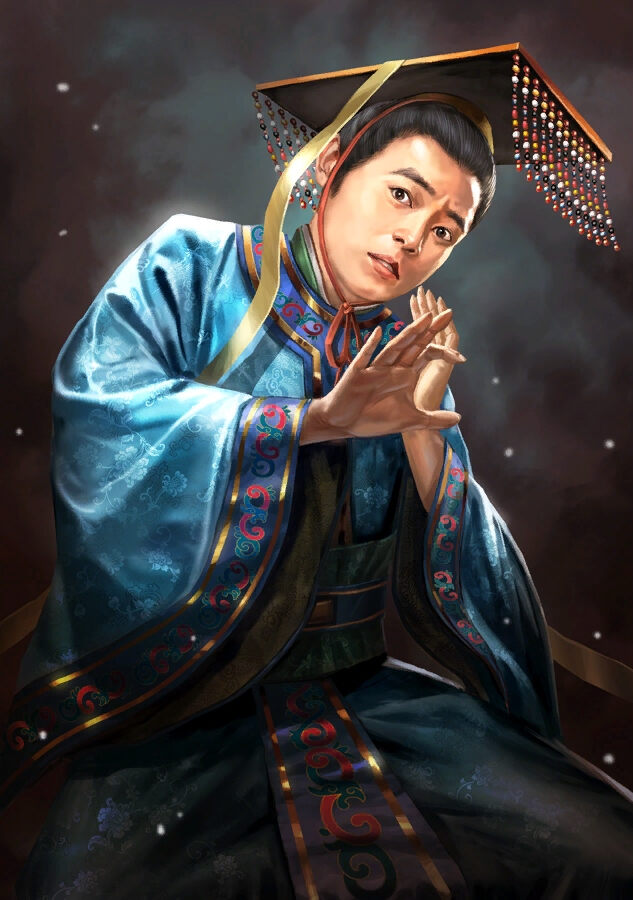
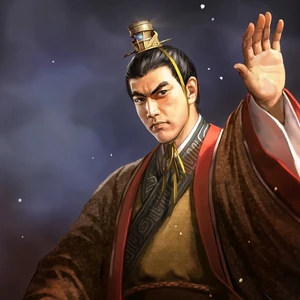
The words whispered in the ear of Shao Ti proved Sima Zhao's subtlety.
Said Sima Zhao, "This morning the officers all maintained that Shu should not be attacked, because they are timid. If I let them lead the army, they would surely be defeated. You saw Zhong Hui was set upon his plan, and he is not afraid. Shu must therefore be beaten, and then the Shu people's hearts will be torn. Beaten leaders cannot boast, and the officers of a broken state are no fit guardians of its welfare. When Zhong Hui turns against us, the people of Shu cannot support him. Further, our troops being victors, they will wish to return home and will not follow their leader into revolt. Hence there is nothing to be feared. I know this, as you do, but it must remain our secret."
Shao Ti showed his admiration for Sima Zhao.
In his camp, just prior to his march, Zhong Hui assembled his officers, among them were Army Inspector Wei Guan, Assistant General Hu Lie, Generals Tian Xu, Tian Zhang, Yuan Xing, Qiu Jian, Xiahou Xian, Wang Mai, Huangfu Kai, Gou Ai, and others, some eighty of them.
"Firstly I want a Leader of the Van," said Zhong Hui. "He must be skilled in making roads and repairing bridges."
"I will take that post," said a voice, and the speaker was Xu Yi, son of the Tiger Leader Xu Chu.
"Nobody is fitter!" cried all present.
"You shall have the seal," said Zhong Hui. "You are lithe and strong and have the renown of your father to maintain. Beside, all your colleagues recommend you. Your force shall be five thousand of cavalry and a thousand of footmen. You are to march into Hanzhong in three divisions, the center you will lead through the Xie Valley, the other two passing through the Luo and Ziwu Valleys. You must level and repair the roads, put the bridges in order, bore tunnels and break away rocks. Use all diligence, for any delay will entail punishment."
Xu Yi was told to set out immediately, and his chief would follow with one hundred thousand troops.
In West Valley Land, as soon as Deng Ai received his orders to attack Shu, he sent Sima Wang to keep the Qiangs in check. Next he summoned Zhuge Xu, Imperial Protector of Yongzhou, Wang Qi, Governor of Tianshui, Qian Hong, Governor of Longxi, and Yang Xin, Governor of Jincheng, and soon soldiers gathered in the West Valley Land like clouds.
One night Deng Ai dreamed a dream wherein he was climbing a lofty mountain on the way into Hanzhong. Suddenly a spring of water gushed out at his feet and boiled up with great force so that he was alarmed.
He awoke all in a sweat and did not sleep again, but sat awaiting the dawn. At daybreak he summoned his guard Shao Yuan, who was skilled in the Book of Changes, told him the dream and asked the interpretation.
Shao Yuan replied, "According to the book, 'water on a mountain' signifies the diagram Jian, whereunder we find that the southwest augurs well, but the northeast is unpropitious. Confucius said of Jian that it meant advantage in the southwest, that is, success, but the northeast spelt failure, that is, there was no road. In this expedition, General, you will overcome Shu, but you will not have a road to return."
Deng Ai listened, growing more and more sad as the interpretation of his dream was unfolded.
Just then came dispatches from Zhong Hui asking him to advance into Hanzhong together. Deng Ai at once sent Zhuge Xu with fifteen thousand troops to cut off Jiang Wei's retreat; and Wang Qi was to lead fifteen thousand troops to attack Tazhong from the left; Qian Hong was to march fifteen thousand troops to attack Tazhong from the right; and Yang Xin with fifteen thousand troops was to block Jiang Wei at Gansong. Deng Ai took command of a force to go to and fro and reinforce whatever body needed help.
Meanwhile in the camp of Zhong Hui, all the officials came out to see him depart. It was a grand sight, the gay banners shutting out the sun, breastplates and helmets glittering. The soldiers were fit and the horses in good condition. They all felicitated the leader.
All save one; for Adviser Liu Shi was silent. He smiled grimly.
Then Grand Commander Wang Xiang made his way through the crowd and said, "Do you think these two---Zhong Hui and Deng Ai---will overcome Shu?"
Said Liu Shi, sighing, "With such brave soldiers and bold leaders and their talents, they will overcome Shu certainly. Only I think neither will ever come back."
"Why do you say that?"
But Liu Shi did not reply; he only smiled. And the question was not repeated.
The armies of Wei were on the march when Jiang Wei heard of the intended attack. He at once sent up a memorial:
Your Majesty need to make defensive arrangements by commanding Zhang Yi, Left Commander of the Flying Cavalry, to guard the Yangping Pass, and Liao Hua, Right Commander of the Flying Cavalry, to guard the Yinping Bridge in Yinping. These two places are the most important points upon which depend the security of Hanzhong. Send also to engage the help of Wu. I, thy humble servant, shall gather soldiers in Tazhong ready for the march."
That year in Shu the reign-style had been changed from Wonderful Sight, the fifth year, to Joyful Prosperity, the first year (AD 263). When the memorial of Jiang Wei came to the Latter Ruler, it found him as usual amusing himself with his favorite Huang Hao.
He read the document and said to the eunuch, "Here Jiang Wei says that the Wei armies under Deng Ai and Zhong Hui are on the way against us. What shall we do?"
"There is nothing of the sort. Jiang Wei only wants to get a name for himself, and so he says this. Your Majesty need feel no alarm, for we can find out the truth from a certain wise woman I know. She is a real prophetess. May I call her?"
The Latter Ruler consented, and a room was fitted up for the seance. They prepared therein incense, flowers, paper, candles, sacrificial articles and so on, and then Huang Hao went with a chariot to beg the wise woman to attend upon the Latter Ruler.
She came and was seated on the Dragon Couch. After the Latter Ruler had kindled the incense and repeated the prayer, the wise woman suddenly let down her hair, dropped her slippers, and capered about barefoot. After several rounds of this, she coiled herself up on a table.
Huang Hao then said, "The spirit has now descended. Send everyone away and pray to her."
So the attendants were dismissed, and the Latter Ruler entreated the wise woman.
Suddenly she cried out, "I am the guardian spirit of the West River Land. Your Majesty, rejoices in tranquillity; why do you inquire about other matters? Within a few years the land of Wei shall come under you, wherefore you need not be sorrowful."
She then fell to the ground as in a swoon, and it was some time before she revived. The Latter Ruler was well satisfied with her prophesy and gave her large presents. Further, he thereafter believed all she told him. The immediate result was that Jiang Wei's memorial remained unanswered; and as the Latter Ruler was wholly given to pleasure, it was easy for Huang Hao to intercept all urgent memorials from the commander.
Meanwhile Zhong Hui was hastening toward Hanzhong. The Van Leader Xu Yi was anxious to perform some startling exploit, and so he led his force to Nanzheng.
He said to his officers, "If we can take this pass, then we can march directly into Hanzhong. The defense is weak."
A dash was made for the fort, each one vying with the rest to be first. But the Commander of Nanzheng was Lu Xu, and he had had early information of the coming of his enemies. So on both sides of the bridge he posted soldiers armed with multiple bows and crossbows. As soon as the attacking force appeared, the signal was given by a clapper and a terrific discharge of arrows and bolts opened. Many troops of Wei fell, and the army of Xu Yi was defeated.
Xu Yi returned and reported his misfortune. Zhong Hui himself went with a hundred armored horsemen to see the conditions. Again the machine bows let fly clouds of missiles, and Zhong Hui turned to flee.
Lu Xu led out five hundred troops to pursue. As Zhong Hui crossed the bridge at a gallop, the roadway gave, and his horse's hoof went through so that he was nearly thrown. The horse could not free its hoof, and Zhong Hui slipped from his back and fled on foot. As he ran down the slope of the bridge, Lu Xu came at him with a spear, but one of Zhong Hui's followers, Xun Kai by name, shot an arrow at Lu Xu and brought him to the earth.
Seeing this lucky hit, Zhong Hui turned back and signaled to his force to make an attack. They came on with a dash, the defenders were afraid to shoot, as their own troops were mingled with the enemy, and soon Zhong Hui crushed the defense and possessed the pass. The defenders scattered.
The pass being captured, Xun Kai was well rewarded for the shot that had saved his general's life. He was promoted to Assistant General and received presents of a horse and a suit of armor.
Xu Yi was called to the tent, and Zhong Hui blamed him for the lack of care in his task, saying, "You were appointed Leader of the Van to see that the roads were put in repair, and your special duty was to see that the bridges were in good condition. Yet on the bridge just now my horse's hoof was caught, and I nearly fell. Happily Xun Kai was by, or I had been slain. You have been disobedient and must bear the penalty."
The delinquent was sentenced to death.
The other generals tried to beg him off, pleading, "His father is Xu Chu who had rendered good services to the state!"
"How can discipline be maintained if the laws are not enforced?" said Zhong Hui.
The sentence was carried out, and the unhappy Xu Yi's head was exposed as a warning. This severity put fear into the hearts of the officers.
On the side of Shu, Wang Han commanded at Yuecheng, and Jiang Bin was in Hancheng. As the enemy came in great force, they dared not go out to meet them, but stood on the defensive with the gates of the cities closed.
Zhong Hui issued an order, "Speed is the soul of war: No halts."
Li Du was ordered to lay siege to Yuecheng, and Xun Kai was to surround Hancheng. The main army under Zhong Hui would capture the Yangping Pass.
The Shu General Fu Qian commanded at the pass. He discussed plans with Jiang Shu, his second in command, and Jiang Shu was wholly in favor of defense, saying, "The enemy is too strong to think of any other course."
"I do not agree," replied Fu Qian. "They are now fatigued with marching, and we need not fear them. Unless we go out and attack, Yuecheng and Hancheng will fall."
Jiang Shu made no reply. Soon the enemy arrived, and both officers went up to the wall and looked out.
As soon as Zhong Hui saw them, he shouted, "We have here a host of one hundred thousand. If you yield, you shall have higher rank than you hold now. But if you persist in holding out then, when we take the pass, you shall all perish. Jewels and pebbles will share the same destruction!"
This threat angered Fu Qian. He bade Jiang Shu guard the walls, and he went down to give battle, taking three thousand troops. He attacked, and Zhong Hui retreated. Fu Qian pursued. But soon the army of Wei closed up their ranks and counterattacked. Fu Qian turned to retire. But when he reached his own defenses, he saw they flew the flags of Wei---the banners of Shu had gone.
"I have yielded!" cried Jiang Shu from the ramparts.
Fu Qian shouted angrily, "Ungrateful and treacherous rogue! How can you ever face the world again?"
But that did no good. Fu Qian turned to go once more into the battle. He was soon surrounded. He fought desperately, but could not win clear. His troops fell one by one, and when they were reduced to one out of ten, he cried, "Alive I have been a servant of Shu; dead I will be one of their spirits!"
Fu Qian forced his way into the thickest of the fight. Then his steed fell, and as he was grievously wounded, he put an end to his own life.
The loyalty Fu Qian showed in stressful days
Won him a thousand autumns' noble praise;
The base Jiang Shu lived on, a life disgraced,
One would prefer the death that Fu Qian faced.
With the Yangping Pass falling into the hands of Zhong Hui were great booty of grain and weapons. He feasted the army, and that night they rested in the city of Yangan. However, the night was disturbed by sounds as of people shouting, so that Zhong Hui got up and went out thinking there must be an attack. But the sounds ceased, and he returned to his couch. However, he and his army could not sleep.
Next night the same thing happened, shoutings in the southwest. As soon as day dawned scouts went out to search, but they came back to say they had gone three miles and found no sign of any Shu soldier. Zhong Hui did not feel satisfied, so he took a hundred cavalrymen and rode in the same direction to explore.
Presently they happened upon a hill of sinister aspect overhung by angry clouds, while the summit was wreathed in mist.
"What hill is that?" asked Zhong Hui, pulling up to question the guides.
"It is known as the Dingjun Mountain," was the reply. "It is where Xiahou Yuan met his death."
This did not sound cheering at all, and Zhong Hui turned back to camp greatly depressed. Rounding the curve of a hill, he came full into a violent gust of wind and there suddenly appeared a large body of horse coming down the wind as if to attack.
The whole party galloped off panic-stricken, Zhong Hui leading the way. Many generals fell from their steeds. Yet when they arrived at the pass, not a man was missing, although there were many with bruises and cuts from the falls and many had lost helmets. Everyone had seen phantom horsemen, who did no harm when they came near, but melted away in the wind.
Zhong Hui called the surrendered General Jiang Shu and asked, "Is there any temple to any supernatural being on the Dingjun Mountain?"
"No," replied he, "there is nothing but the tomb of Zhuge Liang."
"Then this must have been a manifestation of Zhuge Liang," said Zhong Hui. "I ought to sacrifice to him."
So he prepared presents and slew an ox and offered sacrifice at the tomb, and when the sacrifice had been completed, the wind calmed, and the dark clouds dispersed. There followed a cool breeze and a gentle shower, and the sky cleared. Pleased with the evidence of the acceptance of their offerings, the sacrificial party returned to camp.
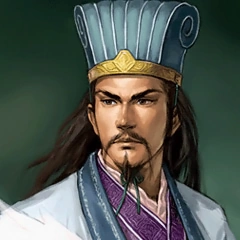
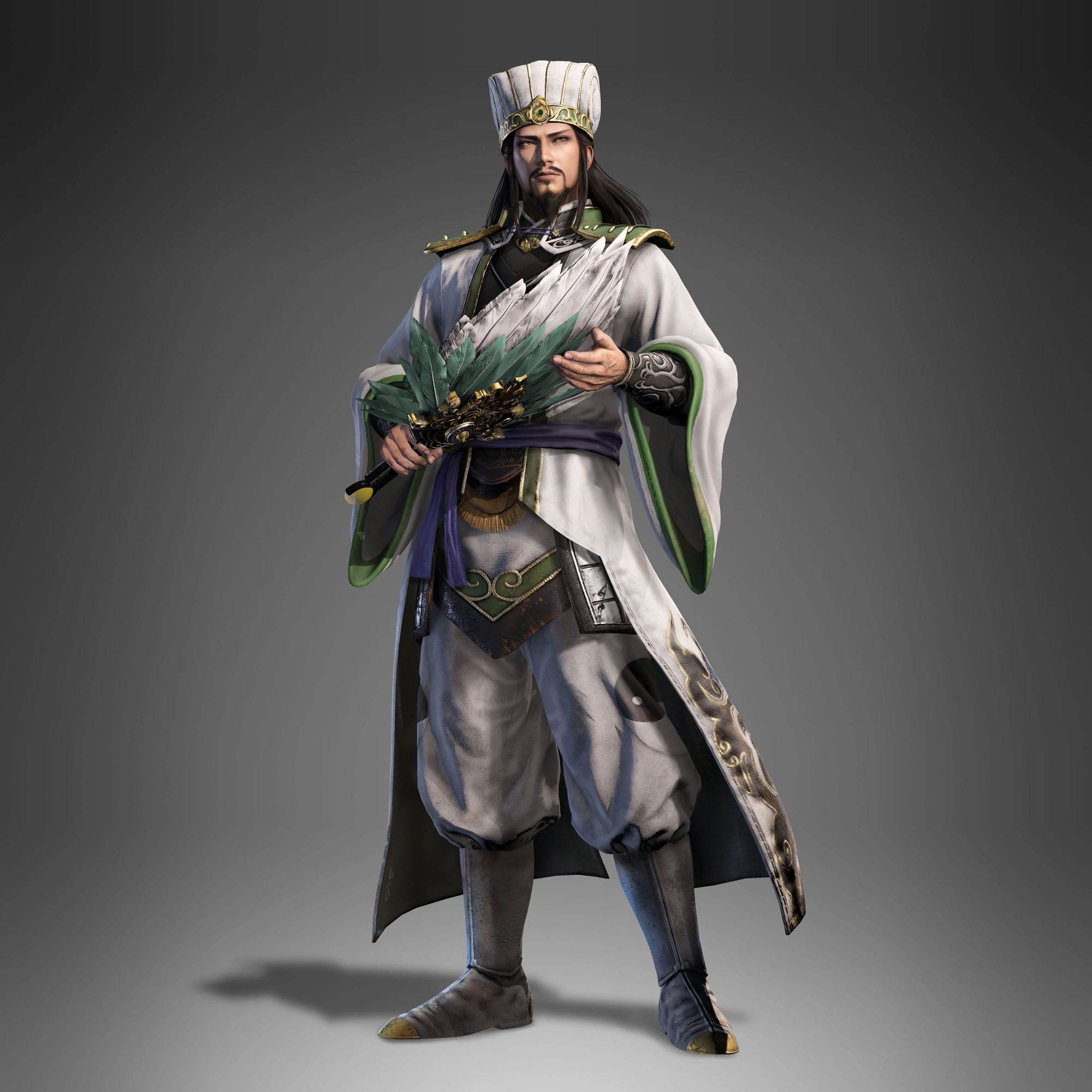
That night Zhong Hui fell asleep in his tent with his head resting on a small table. Suddenly a cool breeze began to blow, and he saw a figure approaching clad in Daoist garb, turban, feather fan, white robe of Daoist cut bound with a black girdle. The countenance of the figure was as refined as jade, the lips a deep red and the eyes clear. The figure moved with the calm serenity of a god.
"Who are you, Sir?" asked Zhong Hui, rising.
"Out of gratitude for your kindly visit this morning, I would make a communication. Though the Hans have declined and the mandate of the Eternal cannot be disobeyed, yet the people of the west, exposed to the inevitable miseries of war, are to be pitied. After you have passed the frontier, do not slay ruthlessly."
Then the figure disappeared with a flick of the sleeves of its robe, nor would it stay to answer any questions.
Zhong Hui awoke and knew that he had been dreaming, but he felt that the spirit of Zhuge Liang the Martial Lord had visited him, and he was astonished.
He issued an order that the leading division of his army should bear a white flag with six words plainly written thereon, Secure the state, comfort the people, so that all might know that no violence was to be feared. If anyone was slain wantonly, then the offender should pay with his own life. This tender care was greatly appreciated, so that the invaders were welcomed in every step. Zhong Hui soothed the people, and they suffered no injury.
Those phantom armies circling in the gleam
Moved Zhong Hui to sacrifice at Zhuge Liang's tomb;
For the Lius had Zhuge Liang wrought unto the end,
Though dead, he would the Han people still defend.
Jiang Wei at Tazhong heard of the invasion and wrote to his three generals---Zhang Yi, Liao Hua, and Dong Jue---to march against the enemy, while he prepared to repulse them if they came to his station.
Soon they came, and he went out to encounter them. Their leader was Wang Qi, Governor of Tianshui.
When near enough, Wang Qi shouted, "Our forces are numbered by millions, our generals by thousands. Two hundred thousand are marching against you, and Chengdu has already fallen. In spite of this you do not yield, wherefore it is evident you do not recognize the divine command!"
Jiang Wei cut short this tirade by galloping out with his spear set. Wang Qi stood three bouts and then fled. Jiang Wei pursued, but seven miles away he met a cohort drawn up across the road. On the banner he read Qian Hong, Governor of Longxi.
"Dead rat! No match for me," said Jiang Wei, smiling.
Despising this antagonist, he led his army straight on, and the enemy fell back. He drove them before him for three more miles, and then came upon Deng Ai. A battle at once began, and the lust of battle held out in the breast of Jiang Wei for a score of bouts. But neither could overbear the other. Then in the Shu rear arose the clang of gongs and other signs of coming foes.
Jiang Wei retired the way he had come, and presently one came to report: "The Governor of Jincheng, Yang Xin, has destroyed the camps at Gansong."
This was evil tidings. He bade his generals keep his own standard flying and hold Deng Ai while he went to try to recover the camps. On the way he met Yang Xin, but Yang Xin had no stomach for a fight with Jiang Wei and made for the hills. Jiang Wei followed till he came to a precipice down which the enemy were hurling boulders and logs of wood so that he could not pass.
Jiang Wei turned to go back to the battlefield he had just left, but on the way he met the defeated Shu army, for Deng Ai had crushed his generals. Jiang Wei joined them but was surrounded by the Wei forces. Presently he got clear with a sudden rush and hastened to the great camp.
Next came the news: "Zhong Hui has defeated the Yangping Pass; Jiang Shu has surrendered, while Fu Qian has fallen in the field. Hanzhong is now in the possession of Wei. Wang Han of Yuecheng and Jiang Bin of Hancheng has also opened their gates and yielded to the invaders at the loss of Hanzhong. Hu Ji has gone to Chengdu for help."
This greatly troubled Jiang Wei, so he broke camp and set out for Hanzhong. That night the Shu army reached the Frontier River Pass. An army under Yang Xin barred his way, and again Jiang Wei was forced to fight. He rode out in a great rage, and as Yang Xin fled, he shot at him thrice, but his arrows missed.
Throwing aside his bow, he gripped his spear and set off in pursuit, but his horse tripped and fell, and Jiang Wei lay on the ground. Yang Xin turned to slay his enemy now that he was on foot, but Jiang Wei thrust Yang Xin's horse in the head. Other Wei troops came up rescued Yang Xin.
Mounting another steed of his follower, Jiang Wei was just setting out again in pursuit when they reported that Deng Ai was coming against his rear. Realizing that he could not cope with this new force, Jiang Wei collected his troops in order to retreat into Hanzhong.
However, the scouts reported: "Zhuge Xu, Imperial Protector of Yongzhou, is holding Yinping Bridge, our retreat path."
So Jiang Wei halted and made a camp in the mountains. Advance and retreat seemed equally impossible.
He cried in anguish, "Heaven is destroying me!"
Then said Ning Sui, one of his generals, "If our enemies are blocking Yinping Bridge, they can only have left a weak force in Yongzhou. We can make believe to be going thither through the Konghan Valley and so force them to abandon the bridge in order to protect the city. When the bridge is clear, you can make a dash for Saber Pass and plan for a recapture of Hanzhong."
This plan seemed to promise success, so Jiang Wei ordered them to march into the Konghan Valley, making as though they would go to Yongzhou.
When Zhuge Xu, who was at the Yinping Bridge, heard this, he said in great shock, "Yongzhou is my own city, and headquarters of the expedition. If it would be lost, I would be punished!"
So Zhuge Xu set off to its relief by the south road. He left only a small force at the bridge.
Jiang Wei marched along the north road for ten miles till he guessed that Zhuge Xu had abandoned the bridge, when he reversed his course, making the rearguard the van. He dispersed the small force left at the bridge head and burned their camp. Zhuge Xu, as he marched, saw the flames, and he turned back to the bridge, but he arrived too late. The army of Shu had already crossed, and he dared not pursue.
Soon after Jiang Wei crossed the bridge, he saw another force, but this was led by his own generals, Liao Hua and Zhang Yi.
They told him, "The Latter Ruler, firm in his faith in a wise woman, would not send help to defend the frontiers. We heard Hanzhong was threatened, and thus marched there to its rescue, but then Zhong Hui had taken the Yangping Pass. We also heard you were surrounded here, so we came to your help."
The two armies amalgamated and marched together.
Liao Hua said, "We are attacked all round, and the grain transportation is blocked. It seems to me wisest to retire on the Saber Pass and plan other designs."
But Jiang Wei was doubtful. Then they heard that Deng Ai and Zhong Hui were approaching in ten divisions.
Jiang Wei was disposed to stand, but Liao Hua said, "This country of White Water is laced with by-roads and is too narrow and difficult to fight in with any hope of success. It would be better to retreat to the Saber Pass. If we loss that pass, all paths will be closed to us."
At last Jiang Wei consented, and the march began. But as they neared the pass, they heard drums rolling and saw flags fluttering, which told them that the pass was held.
Hanzhong, that strong defense, is lost;
And storm clouds gather round Saber Pass.
What force was at the pass will be told in the next chapter.
-
Wikipedia entry Bio
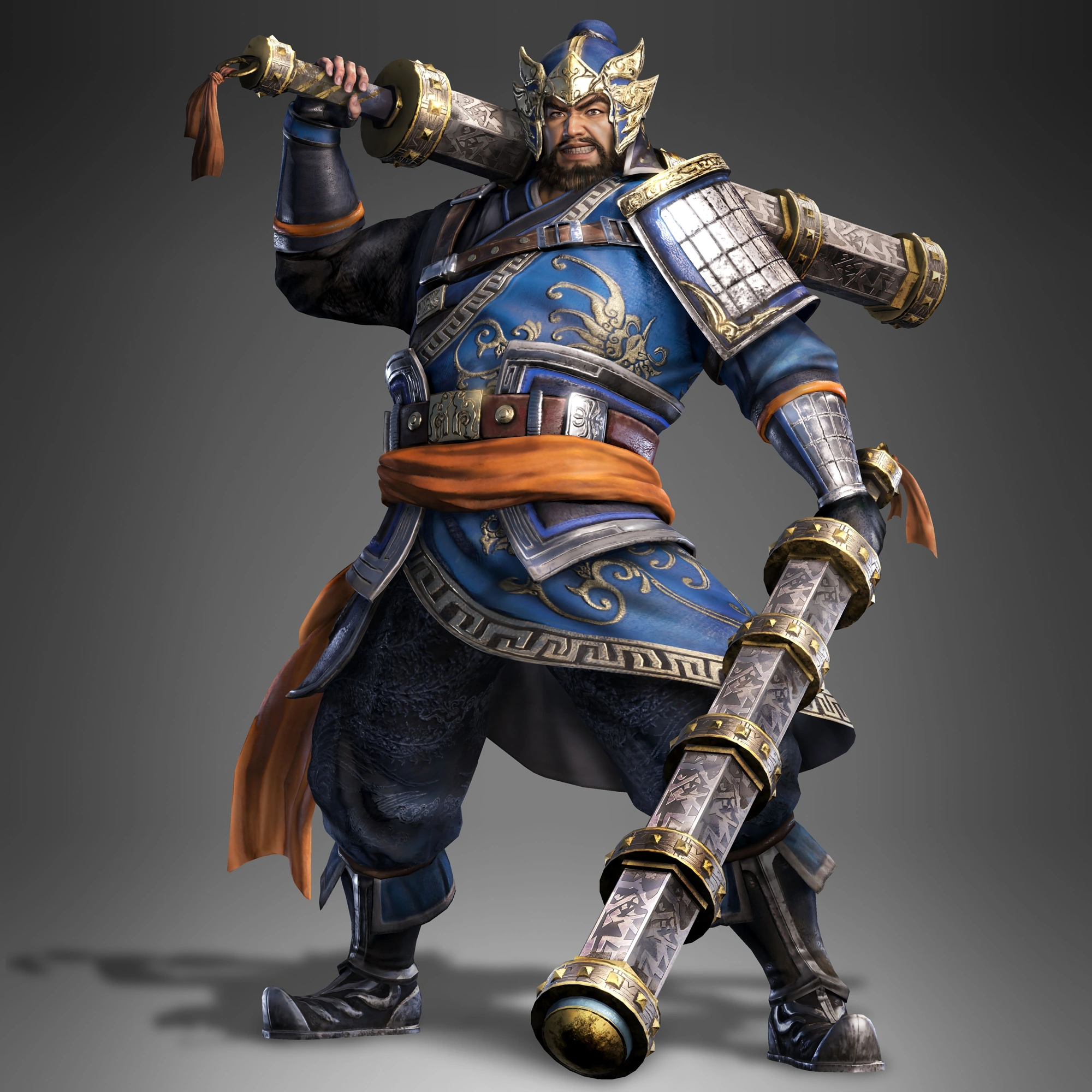
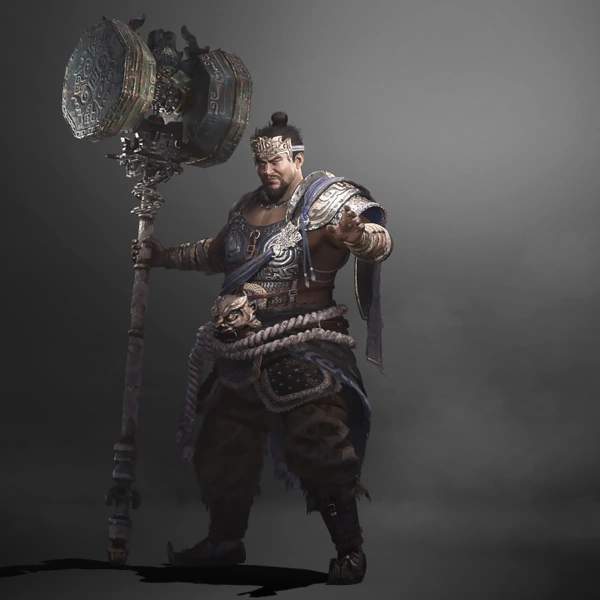
|
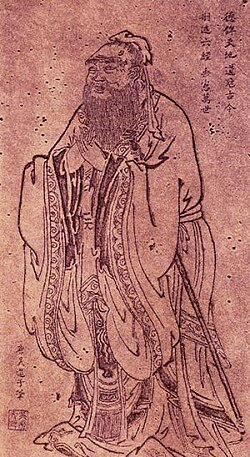
Confucius
Cited inside Shao Yuan's reading of the Jian diagram, as the authority for what it means: 'Confucius said of Jian that it meant advantage in the southwest, that is, success, but the northeast spelt failure, that is, there was no road.'
1 mention in this chapter
16 mentions in the book
|
|
Deng Ai
Winning the western battle and being told he will not come home from it. Sets Sima Wang to hold the Qiangs, gathers the western governors, and splits sixty thousand men four ways — Zhuge Xu to cut the retreat, Wang Qi and Qian Hong onto Tazhong from both flanks, Yang Xin to block Gansong — keeping a mobile force himself. Fights Jiang Wei twenty bouts without either overbearing the other. But the chapter's real business with him is the dream: climbing a high mountain toward Hanzhong, a spring bursting out at his feet and boiling up, and waking in a sweat to sit until dawn. Shao Yuan reads it as the Jian diagram — 'In this expedition, General, you will overcome Shu, but you will not have a road to return.' 'Deng Ai listened, growing more and more sad as the interpretation of his dream was unfolded.'
12 mentions in this chapter
248 mentions in the book
|
|
Dong Jue
One of the three generals Jiang Wei writes to from Tazhong when the invasion begins, ordered to march against the enemy while Jiang Wei holds his own station.
1 mention in this chapter
10 mentions in the book
|
|
Fu Qian
Dies here. Refuses to sit behind the walls — 'They are now fatigued with marching, and we need not fear them. Unless we go out and attack, Yuecheng and Hancheng will fall' — takes three thousand men down against a hundred thousand, drives Zhong Hui back and pursues, and is counter-attacked and driven home to find his own pass in enemy hands and his second-in-command shouting the surrender from the wall. Fights on until nine men in ten are dead: 'Alive I have been a servant of Shu; dead I will be one of their spirits!' His horse falls, he is grievously wounded, and he takes his own life. 'The loyalty Fu Qian showed in stressful days / Won him a thousand autumns' noble praise.'
11 mentions in this chapter
24 mentions in the book
|
|
Gou Ai
Named among the eighty officers at Zhong Hui's muster.
1 mention in this chapter
17 mentions in the book
|
|
Hu Ji
Carries the news that the war is already lost. Holding Hanshou in Jiang Wei's cordon, he is the one who breaks out when Hanzhong falls: 'Hu Ji has gone to Chengdu for help.'
1 mention in this chapter
3 mentions in the book
|
|
Hu Lie
Assistant General, named among the eighty officers at Zhong Hui's muster - one of the commanders who will matter when the army turns on itself at Chengdu.
1 mention in this chapter
5 mentions in the book
|
|
Huang Hao
Loses the war before it starts, and does it with a medium. Handed Jiang Wei's memorial naming Deng Ai and Zhong Hui, he tells the Emperor 'There is nothing of the sort. Jiang Wei only wants to get a name for himself' and proposes 'a certain wise woman I know. She is a real prophetess.' Fetches her himself in a chariot; she lets down her hair, drops her slippers, capers barefoot and coils up on a table, and announces as the guardian spirit of the West River Land that 'Within a few years the land of Wei shall come under you.' The Latter Ruler is delighted and believes everything she says thereafter - 'The immediate result was that Jiang Wei's memorial remained unanswered; and as the Latter Ruler was wholly given to pleasure, it was easy for Huang Hao to intercept all urgent memorials from the commander.'
4 mentions in this chapter
32 mentions in the book
|
|
Huangfu Kai
Named among the eighty officers Zhong Hui assembles before the campaign opens.
1 mention in this chapter
1 mention in the book
|
|
Jiang Bin
Holds Hancheng, dares not go out against Zhong Hui's numbers, is besieged by Xun Kai, and surrenders after the Yangping Pass falls: 'Wang Han of Yuecheng and Jiang Bin of Hancheng has also opened their gates and yielded to the invaders at the loss of Hanzhong.'
2 mentions in this chapter
9 mentions in the book
|
|
Jiang Shu
Fu Qian's second in command at the Yangping Pass. Argues for pure defence, is overruled, and is left holding the walls while Fu Qian goes down to fight — and when Fu Qian is driven back he finds the banners of Shu gone and Wei flags flying. 'I have yielded!' cried Jiang Shu from the ramparts. Fu Qian's answer — 'Ungrateful and treacherous rogue! How can you ever face the world again?' — is the last thing he hears from his own side, and the chapter's quatrain names him: 'The base Jiang Shu lived on, a life disgraced.' Afterwards he is the man Zhong Hui asks about the shrine on Dingjun Mountain.
8 mentions in this chapter
12 mentions in the book
|
|
Jiang Wei
Fights the whole western campaign at a disadvantage and gets his army out anyway. Sends the memorial that names the two points Shu cannot lose - Yangping Pass and the Yinping Bridge - and asks for Wu's help; it is intercepted by Huang Hao and never answered. Then rides through Wang Qi in three bouts and Qian Hong without stopping, fights Deng Ai twenty bouts to a standstill, loses Gansong behind him, is turned back by boulders under a precipice, and is surrounded and cuts his way out. Loses his horse under him at the Frontier River Pass and kills Yang Xin's horse from the ground. Finds the Yinping Bridge held, takes Ning Sui's feint, crosses, and burns the guard's camp. Argues twice against retreating to Saber Pass and gives way twice to Liao Hua - and reaches it to find drums rolling and flags flying on a pass that should be his.
30 mentions in this chapter
443 mentions in the book
|
|
Li Fu
One of the two officers Zhong Hui detaches once the passes are open: 'Li Du was ordered to lay siege to Yuecheng, and Xun Kai was to surround Hancheng' — the sieges that take the last two Hanzhong cities.
1 mention in this chapter
1 mention in the book
|
|
Liao Hua
Sent to hold the Yinping Bridge in Jiang Wei's memorial, marches to relieve Hanzhong instead when no orders come, and then finds Jiang Wei. Twice argues the case that decides the rest of the war: 'We are attacked all round, and the grain transportation is blocked. It seems to me wisest to retire on the Saber Pass', and then 'This country of White Water is laced with by-roads and is too narrow and difficult to fight in with any hope of success... If we loss that pass, all paths will be closed to us.' Jiang Wei consents the second time.
5 mentions in this chapter
87 mentions in the book
|
|
Liu Shan
The chapter where his court stops functioning altogether. Reads Jiang Wei's warning aloud to the eunuch who is the reason it will not be acted on, consents to the seance, kindles the incense and says the prayer himself, and rewards the medium handsomely for telling him Wei will fall to him within a few years. Every subsequent despatch from the frontier is intercepted before it reaches him.
8 mentions in this chapter
254 mentions in the book
|
|
Liu Shi
A Wei Adviser standing in the send-off crowd, and his one contribution is a smile and a prophecy. Alone among the officials watching the banners and the breastplates, 'Adviser Liu Shi was silent. He smiled grimly' — and when Wang Xiang asks whether the two commanders will conquer Shu, he answers 'With such brave soldiers and bold leaders and their talents, they will overcome Shu certainly. Only I think neither will ever come back.' Asked why, 'Liu Shi did not reply; he only smiled.' Both prophecies come true in ch118-119.
3 mentions in this chapter
3 mentions in the book
|
|
Lu Xun
Very nearly ends the invasion in its first week. Commander of Nanzheng, warned in time, he posts multiple bows and crossbows on both sides of the bridge and opens on a clapper signal, breaking Xu Yi's assault outright and then driving Zhong Hui himself off with a second volley. Pursues with five hundred men, is a spear-thrust from killing Zhong Hui on foot at the bridge, and is shot dead by Xun Kai.
4 mentions in this chapter
4 mentions in the book
|
|
Ning Sui
His is the plan that saves Jiang Wei's army. With the bridge held and Deng Ai behind, 'Advance and retreat seemed equally impossible' and Jiang Wei cries 'Heaven is destroying me!' — and Ning Sui answers: 'If our enemies are blocking Yinping Bridge, they can only have left a weak force in Yongzhou. We can make believe to be going thither through the Konghan Valley and so force them to abandon the bridge in order to protect the city. When the bridge is clear, you can make a dash for Saber Pass.' It works exactly as described.
1 mention in this chapter
1 mention in the book
|
|
Qian Hong
Governor of Longxi, summoned by Deng Ai with the other western governors, and given fifteen thousand troops to attack Tazhong from the right. Jiang Wei rides straight through him — 'Dead rat! No match for me,' said Jiang Wei, smiling — and drives his column three miles.
3 mentions in this chapter
5 mentions in the book
|
|
Qiu Jian
Named among the eighty officers at the muster - the general who will carry Zhong Hui's fatal letter in ch119.
1 mention in this chapter
7 mentions in the book
|
|
Shao Ti
His warning about Zhong Hui in ch115 is answered in this chapter's opening paragraph, and the answer is Sima Zhao's whole political calculation: the timid officers would lose, Zhong Hui will win, a conquered Shu cannot support a rebel, and victorious troops want to go home rather than follow one. 'I know this, as you do, but it must remain our secret.' 'Shao Ti showed his admiration for Sima Zhao.'
2 mentions in this chapter
7 mentions in the book
|
|
Sima Wang
Detached from the main effort for the job that makes it safe: 'as soon as Deng Ai received his orders to attack Shu, he sent Sima Wang to keep the Qiangs in check' - the western tribes who have swung two of Jiang Wei's earlier campaigns.
1 mention in this chapter
20 mentions in the book
|
|
Sima Zhao
Delivers the finest piece of political reasoning in the late novel, privately, to Shao Ti: the timid officers would lose, Zhong Hui will win because he believes in it, a beaten Shu will not follow a rebel, beaten leaders cannot boast, and 'our troops being victors, they will wish to return home and will not follow their leader into revolt. Hence there is nothing to be feared. I know this, as you do, but it must remain our secret.'
3 mentions in this chapter
170 mentions in the book
|
|
Tian Xu
Named among the eighty officers assembled for the invasion, in the roll that opens the campaign.
1 mention in this chapter
6 mentions in the book
|
|
Tian Zhang
Named among the eighty officers at Zhong Hui's muster before the march into Hanzhong.
1 mention in this chapter
1 mention in the book
|
|
Wang Han
Holds Yuecheng with the gates closed against Zhong Hui's advance, is besieged by Li Du, and yields with Jiang Bin once Hanzhong is gone.
2 mentions in this chapter
9 mentions in the book
|
|
Wang Mai
Named among the eighty officers at Zhong Hui's muster before the invasion of Shu.
1 mention in this chapter
1 mention in the book
|
|
Wang Qi
Governor of Tianshui, given fifteen thousand troops to attack Tazhong from the left, and the man who opens the western fighting with a boast: 'Our forces are numbered by millions, our generals by thousands. Two hundred thousand are marching against you, and Chengdu has already fallen.' Jiang Wei cuts the speech short by riding at him, and he lasts three bouts.
5 mentions in this chapter
6 mentions in the book
|
|
Wang Xiang
Grand Commander, and the man who draws Liu Shi's prophecy out of him: he pushes through the crowd of well-wishers to ask 'Do you think these two---Zhong Hui and Deng Ai---will overcome Shu?' - and gets an answer he does not press twice.
1 mention in this chapter
3 mentions in the book
|
|
Wei Guan
Army Inspector on the campaign, named first among the eighty officers Zhong Hui assembles - Sima Zhao's own man travelling with an army whose commander his master has just privately described as a future rebel.
1 mention in this chapter
23 mentions in the book
|
|
Xiahou Xian
Named among the eighty officers assembled for the march into Hanzhong.
1 mention in this chapter
1 mention in the book
|
|
Xiahou Yuan
Named in passing only, and long dead, as the reason the hill unsettles Zhong Hui before he knows whose tomb is on it: asked what the sinister cloud-wreathed mountain is called, the guides answer 'It is known as the Dingjun Mountain. It is where Xiahou Yuan met his death.'
1 mention in this chapter
105 mentions in the book
|
|
Xu Chu
Named in passing only, and long dead - but twice load-bearing. His renown is why Xu Yi gets the van ('You are lithe and strong and have the renown of your father to maintain'), and it is the plea the other generals make when Xu Yi is sentenced: 'His father is Xu Chu who had rendered good services to the state!' It does not work.
2 mentions in this chapter
135 mentions in the book
|
|
Xu Yi
Appointed, failed and executed inside one chapter. Xu Chu's son, he volunteers as Leader of the Van on the strength of road and bridge work, is given five thousand horse and a thousand foot and told that 'any delay will entail punishment'. Attacks Nanzheng on his own initiative to make a name, and is shot to pieces by Lu Xu's crossbows. Then Zhong Hui's own horse puts its hoof through the planking of a bridge and nearly kills him, and Xu Yi is condemned for it. His colleagues plead his father's services, and Zhong Hui answers 'How can discipline be maintained if the laws are not enforced?' — and has his head exposed as a warning.
7 mentions in this chapter
7 mentions in the book
|
|
Xun Kai
Saves the commander-in-chief with one arrow and is made a general for it. With Lu Xu's spear already coming at the dismounted Zhong Hui on the bridge slope, 'Xun Kai by name, shot an arrow at Lu Xu and brought him to the earth' - which turns the rout around and takes the pass. Promoted to Assistant General with a horse and a suit of armour, and then given Hancheng to besiege.
4 mentions in this chapter
6 mentions in the book
|
|
Yang Xin
Governor of Jincheng, and the most effective of Deng Ai's four columns. Destroys the Shu camps at Gansong, which is what pulls Jiang Wei off the main battle; refuses to fight him on the hills and draws him under a precipice where boulders and logs are rolled down; and later bars the road at the Frontier River Pass, survives three arrows and a spear-thrust that kills his horse, and is rescued.
10 mentions in this chapter
11 mentions in the book
|
|
Yuan Shao
Delivers the chapter's second prophecy. Deng Ai's guard, 'who was skilled in the Book of Changes', asked to interpret the dream of the mountain spring: 'water on a mountain' is the diagram Jian, in which the southwest augurs well and the northeast is unpropitious — 'you will overcome Shu, but you will not have a road to return.'
2 mentions in this chapter
2 mentions in the book
|
|
Yuan Xing
Named among the eighty officers Zhong Hui assembles before the invasion.
1 mention in this chapter
1 mention in the book
|
|
Zhang Yi
Named in Jiang Wei's memorial as the man who should hold the Yangping Pass — the post that instead goes to Fu Qian and Jiang Shu and is lost by treachery. Marches with Liao Hua to relieve Hanzhong, finds it gone, and joins Jiang Wei's column for the retreat on Saber Pass.
3 mentions in this chapter
76 mentions in the book
|
|
Zhong Hui
The invasion is his, and so is everything strange about it. Musters some eighty officers, appoints and then executes his own Leader of the Van, is nearly killed on a bridge his van leader failed to repair, takes Nanzheng and then the Yangping Pass with its grain and weapons. Then the chapter turns: two nights of shouting in the southwest with nothing to find by day, a hill 'of sinister aspect overhung by angry clouds' that turns out to be Dingjun Mountain, and a charge of phantom horsemen that unhorses a dozen generals and hurts nobody. Told the only thing on the hill is Zhuge Liang's tomb, he sacrifices an ox there - and the wind drops, the clouds clear, and a cool breeze and a gentle shower follow. That night the figure in the Daoist robe with the feather fan comes to his tent: 'After you have passed the frontier, do not slay ruthlessly.' He puts a white flag at the head of the army reading 'Secure the state, comfort the people', with death for anyone who kills wantonly - 'so that the invaders were welcomed in every step'.
39 mentions in this chapter
131 mentions in the book
|
|
Zhuge Liang
The chapter's own title calls it 'In Dingjun Mountain, The Martial Lord Shows His Apparition'. Two nights of disembodied shouting, a charge of phantom horsemen that throws generals from the saddle and injures no one, and then the apparition itself in Zhong Hui's tent — turban, feather fan, white robe, black girdle, 'countenance as refined as jade, the lips a deep red and the eyes clear' — delivering a message that is half concession and half command: 'Though the Hans have declined and the mandate of the Eternal cannot be disobeyed, yet the people of the west, exposed to the inevitable miseries of war, are to be pitied. After you have passed the frontier, do not slay ruthlessly.' Dead twenty-nine years, he saves more Shu lives in this chapter than Jiang Wei does.
5 mentions in this chapter
1454 mentions in the book
|
|
Zhuge Xu
Sent with fifteen thousand men to hold the Yinping Bridge and cut the Shu retreat - the one Wei position that would have finished Jiang Wei - and talked off it by a feint. When the Shu army marches up the Konghan Valley toward Yongzhou he panics: 'Yongzhou is my own city, and headquarters of the expedition. If it would be lost, I would be punished!' He leaves a small force on the bridge and goes south; Jiang Wei turns round after ten miles, scatters the guard, burns their camp and crosses. Zhuge Xu sees the flames from the road and arrives too late.
7 mentions in this chapter
12 mentions in the book
|
-
Chengdu County County(30.6661, 104.0754)
-
Dingjun Mountain Mountains/Hills
-
Frontier River Pass Pass
-
Gansong
-
Hancheng
-
Hanzhong Commandery Commandery(33.0730, 107.0359)
-
Jincheng Commandery Commandery(36.0509, 103.9995)
-
Konghan Valley
-
Longxi Commandery Commandery(34.9891, 104.6395)
-
Luo Valley Landmark
-
Nanzheng County
-
Saber Pass Pass
-
Shu (Three Kingdoms) Region
-
Tazhong
-
Tianshui Commandery Commandery(34.7376, 105.4484)
-
Wei (Three Kingdoms) Region
-
West River Land Region
-
West Valley Land Region
-
White Water
-
Wu (Three Kingdoms) Region
-
Xie Valley Landmark
-
Yangan
-
Yangping Pass Pass
-
Yinping Bridge Bridge/Ferry
-
Yong Province Province
-
Yuecheng
-
Ziwu Valley Landmark