Liu Shan
劉禪
Courtesy name: Gongsi (公嗣)
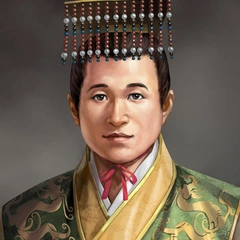
Source:
Koei Wiki (Fandom)
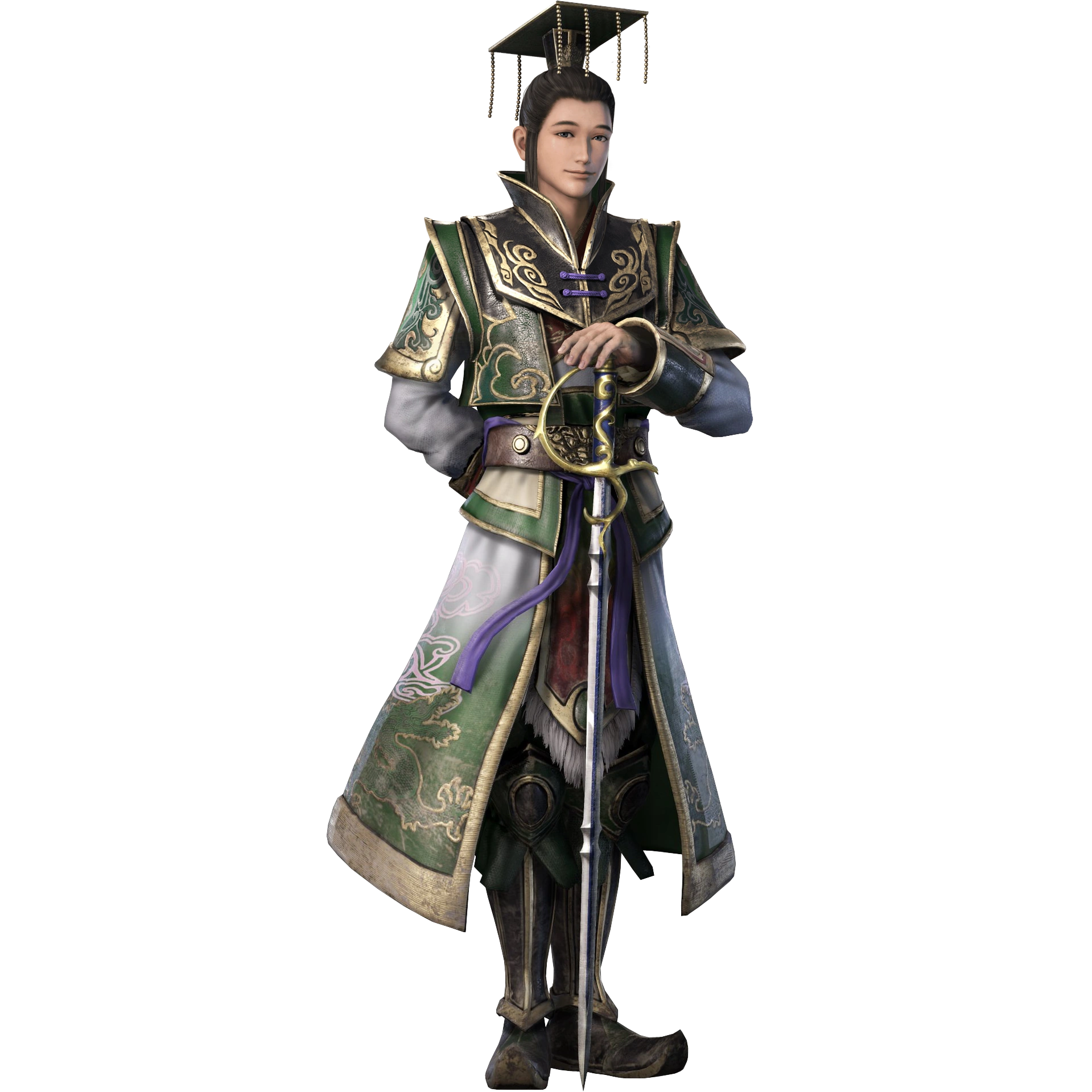
Source:
Koei Wiki (Fandom)
- Born
- 207
- Died
- 271
- Ancestral home
- Zhuo County, Zhuo (Zhuozhou, Hebei)
- Book mentions
- 254
Roles:
emperor
Factions:
Shu Han
(primary)
Relationships:
Huo Yi
Adopted Son
Liu Bei
Father
Lady Gan
Mother
Liu Chen
Son
Liu Cong
Son
Liu Qu
Son
Liu Xuan
Son
Liu Xun
Son
Liu Yao
Son
Liu Zan
Son
Empress Jing'ai
Wife
Empress Zhang
Wife
Links:
-
Wikipedia entry Bio
Appears in 36 chapters:
-
Chapter 34
— Behind The Screen, Lady Cai Overhears A Secret; Across The Tan Torrent, The Dilu Horse Carries Its Master.
Liu Shan; born in this chapter - Liu Bei's first son by Lady Gan. Will be the future second emperor of Shu Han.
-
Chapter 41
— Liu Bei Leads His People Over The River; Zhao Zilong Rescues The Child Lord At Dangyang.
The infant of Changban: thrown to the ground by his dying mother so Zhao Zilong must take him, carried inside the loosened breastplate through the whole slaughter - and when horse and rider crash into a pit with Zhang He's spear poised, the light that flashes out of the pit and lifts them clear is read as his imperial destiny.
-
Chapter 54
— The Dowager Marchioness Sees Her Son-In-Law; The Imperial Uncle Takes A Worthy Consort.
Liu Shan; named in passing - at Jingzhou.
-
Chapter 61
— In The River, Zhao Zilong Recovers Liu Shan; With One Letter, Sun Quan Repulses Cao Cao.
Liu Shan; taken by Lady Sun toward Wu; intercepted on the river by Zhao Yun and Zhang Fei.
-
Chapter 73
— Liu Bei Becomes The Prince Of Hanzhong; Guan Yu Marches To Attack Xiangyang.
Liu Shan; named heir to the kingship of Hanzhong; the first time he is foregrounded as the next Liu Bei.
-
Chapter 80
— Cao Pi Deposes The Emperor, Taking Away The Fortunes of Han; Liu Bei Assumes The Throne, Continuing The Heritage.
Liu Shan; named heir of Shu-Han at his father's accession. The eventual last emperor.
-
Chapter 83
— Fighting At Xiaoting, The First Ruler Captures An Enemy; Defending The Three Gorges, A Student Takes Supreme Command.
Named in passing — 'the heir, Liu Shan, is my nephew,' pleads Mi Fang, counting on a kinship that does not save him.
-
Chapter 85
— The First Ruler Confides His Son To A Guardian; The Prime Minister Calmly Settles Five Attacks.
Sixteen and Emperor: installed under the testament, era Beginning Prosperity, married to Zhang Fei's prudent seventeen-year-old daughter. When the five armies loom and the Prime Minister will not appear, he walks alone past the third gate to find him at the fishpond — and leaves 'as one awakened from a dream,' calling him Minister Father.
-
Chapter 86
— Using Words, Qin Mi Overcomes Zhang Wen; Setting Fire, Xu Sheng Defeats Cao Pi.
Receives Zhang Wen with the brocaded stool at his left hand, banquets, and rich parting gifts — the courtesy Zhuge Liang prescribed to bind the league.
-
Chapter 87
— Conquering The South Mang, The Prime Minister Marches The Army; Opposing Heaven Troops, The King Of The Mangs Is Captured.
Afraid to be left — 'Sun Quan is in the east, and Cao Pi the north' — he consents with the chapter's most honest line: 'I am young and ignorant, and can only exist with you to decide for me.' Sends Ma Su after the army with wine and silks.
-
Chapter 88
— Crossing River Lu: The Mang King Is Bound The Second Time; Recognizing A Pretend Surrender: Meng Huo Is Captured The Third Time.
Named in passing — the Emperor to whom Meng Huo's feigned tribute would flow, and whose sanction Zhuge Liang promises for a submitted King's perpetual guardianship.
-
Chapter 89
— The Lord of Wuxiang Uses The Fourth Ruse; The King of Mang Is Captured The Fifth Time.
The Emperor in whose name the expedition marches — cited to Ma Yuan's spirit and to the hermit alike as the source of the command.
-
Chapter 91
— Sacrificing At River Lu, The Prime Minister Marches Homeward; Attacking Wei, The Lord Of Wuxiang Presents A Memorial.
Comes ten miles out from Chengdu in state to meet the returning army and waits at the roadside, raising Zhuge Liang from his prostration by the hand and riding back to the capital beside him. Provides for the families of the dead of the southern expedition on the memorial's proposal. Receives the Chu Shi Biao and answers it with concern rather than policy — 'My Father Minister, you have only just returned… I fear this march to the north will be almost too much even for you' — then sees the army off three miles beyond the north gate.
-
Chapter 94
— Zhuge Liang Defeats The Qiangs In A Snowstorm; Sima Yi Captures Meng Da By A Rapid March.
Off-stage, but the authority Zhuge Liang invokes when he releases the captured Qiang Prime Minister: 'My master, the Emperor of the Great Han, sent me to destroy those who are in revolt.'
-
Chapter 96
— Shedding Tears, Zhuge Liang Puts Ma Su To Death; Cutting Hair, Zhou Fang Beguiles Cao Xiu.
Reads the self-demotion memorial and tries to wave it away — 'Why does the Prime Minister speak thus? It is but the ordinary fortune of war' — and is talked round by Fei Yi. Issues the edict reducing Zhuge Liang to General of the Right Army while leaving him in charge of state affairs and the armies, which is a demotion in name only.
-
Chapter 97
— Sending A Second Memorial, Zhuge Liang Renews The Attack On Wei; Forging A Letter, Jiang Wei Defeats The Northern Army.
Weeps for Zhao Yun as the man who saved him as a child, and heaps honours on him and on both his sons. Then wavers over the new expedition — 'the courtiers much inclined to a cautious policy and somewhat fearful', and the doubts enter his own mind — until the Second Memorial is spread on the table in front of him, which convinces him, and he issues the edict to march.
-
Chapter 98
— Pursuing The Shu Army, Wang Shuang Meets His Death; Raiding Chencang, Zhuge Liang Scores A Victory.
Receives Sun Quan's envoy proposing an alliance and a shared empire, puts it to a court that mostly wants to reject him as a usurper, and on Jiang Wan's motion refers it to Zhuge Liang - then follows the advice, sending Chen Zhen with presents to congratulate the new Emperor of Wu. Also sends Chen Shi west to reinforce the expedition.
-
Chapter 99
— Zhuge Liang Defeats The Wei Army; Sima Yi Invades The West River Land.
Issues the edict that restores Zhuge Liang to Prime Minister, carried to Qishan by Fei Yi: it lays Jieting squarely on Ma Su, credits the year with Wang Shuang slain, Guo Huai driven back, the Qiangs reduced and Wudu and Yinping taken, and refuses to let him 'remain under a cloud for any length of time and cloak your grand virtue'. Later comes in person to ask after his health at Chengdu and sends his own physicians.
-
Chapter 100
— Raiding A Camp, The Shu Soldiers Defeat Cao Zhen; Contesting Array Battles, Zhuge Liang Shames Sima Yi.
Takes the eunuchs' alarm at face value when they bring him Gou An's lie, asks 'In such a case what am I to do?', accepts their answer — recall him and take away his military powers so he cannot rebel — and issues the edict that ends the campaign. Then fends off Jiang Wan's objection with 'I have a private matter to consult him about. I must see him personally.'
-
Chapter 101
— Going Out From Longshang, Zhuge Liang Dresses As A God; Dashing Toward Saber Pass, Zhang He Falls Into A Snare.
Cannot meet Zhuge Liang's eye over the recall - 'For a long time the Latter Ruler made no reply', then 'I longed to see your face once more, that is the only reason' - and finally admits it: 'The fact is I recalled you because of the talk of the eunuchs. But I understand now and am unutterably sorry.' Later orders Li Yan's death on Fei Yi's report and relents at Jiang Wan's intervention, and tries to talk Zhuge Liang out of the next campaign altogether: 'The empire has settled on a tripod, and Wu and Wei trouble us not at all. Why not enjoy the present tranquillity, O Father Minister?'
-
Chapter 102
— Sima Yi Occupies The Banks Of River Wei; Zhuge Liang Constructs Mechanical Bullocks And Horses.
Takes Zhuge Liang's leave after the Dynastic Temple sacrifice and sees the sixth expedition out. Named only by title here, and only as the throne the Prime Minister reports to before marching.
-
Chapter 104
— A Falling Star: The Prime Minister Ascends To Heaven; A Wooden Statue: The Commander-In-Chief Is Terrified.
Greatly alarmed by the memorial from Wuzhang, he sends Li Fu at once to ask after the Prime Minister and - though Li Fu forgets it the first time - to ask who should govern after him. He is the addressee of the testament, which asks him to cleanse his heart, limit his desires, practise self-control, love the people, keep a filial attitude toward his late father, seek out the recluse scholars and repel the wicked; and which accounts for the eight hundred mulberry trees so that he can never suspect he was wronged.
-
Chapter 105
— The Lord of Wuxiang Leaves A Plan In The Silken Bag; The Ruler of Wei Removes The Bronze Statue With The Dew Bowl.
Dreams that the Silky Hills protecting his capital were rived and fell, loses his appetite and his sleep over it, and hears the meaning from Qiao Zhou before Li Fu confirms it. Collapses at the news — 'Heaven smites me!' — and holds no court for many days. Sits through a fortnight of contradictory memorials without deciding anything, sends Dong Yun to mediate, and goes seven miles out of Chengdu with the whole court to meet the coffin. Reads the testament weeping, has the tomb sited by lot and then defers to Zhuge Liang's own wish for Dingjun Mountain, and confers the posthumous title of Zhuge Liang the Loyally Martial. Distributes the offices as the testament directs, and imprisons Yang Yi when Fei Yi reports what he said.
-
Chapter 107
— The Ruler of Wei Hands Over The Power To Sima Yi; Jiang Wei Is Defeated At Ox Head Hills.
Hears Jiang Wei's case and Fei Yi's objection and closes the argument without deciding the merits of either: 'Sir, as you desire to conquer Wei, do your best. I will not damp your enthusiasm.' That sentence is the whole of Shu's strategic policy for the next ten chapters.
-
Chapter 108
— In The Snow, Ding Feng Wins A Victory; At A Banquet, Sun Jun Executes A Secret Plan.
Grants Jiang Wei the audience at which he asks for authority to raise another army against the north, on the strength of Zhuge Ke's letter — the request the next chapter opens on.
-
Chapter 110
— Riding Alone, Wen Yang Repulses A Brave Force; Following The River, Jiang Wei Defeats The Enemy.
Receives Jiang Wei's memorial arguing that Sima Zhao 'will be unable to leave Luoyang until he has consolidated his position', agrees, and orders the army raised — the third time in four chapters he authorises a northern expedition without weighing it.
-
Chapter 111
— Deng Ai Outwits Jiang Wei; Zhuge Dan Battles Sima Zhao.
Receives the report of Zhang Ni's death from Hanzhong and 'bestowed suitable honors upon his family', and accepts Jiang Wei's own request for demotion after the public blames him for their dead — putting him back to General of the Rear Army while leaving him the command.
-
Chapter 112
— Rescuing Shouchun, Yu Quan Dies Nobly; Attacking Changcheng, Jiang Wei Mobilizes.
Gives Jiang Wei authority for the expedition, over Qiao Zhou's objection — and is himself the subject of that objection: a court 'sunk in dissipation', an emperor whose confidence has gone to the eunuch Huang Hao, and state affairs neglected for pleasure.
-
Chapter 113
— Ding Feng Makes A Plan To Slay Sun Chen; Jiang Wei Arrays A Battle To Defeat Deng Ai.
Sends congratulations to Wu on Sun Xiu's accession — the courtesy that produces Xue Xu's devastating report on his own court in return. Then, on Huang Hao's word and a manufactured rumour bought with Wei gold, recalls Jiang Wei from a position he has just won, by Imperial Edict and without giving a reason.
-
Chapter 114
— Driving To The South Gate, Cao Mao Plunges Into Death; Abandoning Stores, Jiang Wei Defeats The Wei Army.
The audience is one of the saddest scenes in the late novel. Asked why he recalled the army, he offers 'Because you have been so long on the frontier, Noble Sir. I thought the soldiers must be weary. There was no other reason' — and then 'sat lost in thought, and silent' while Jiang Wei tells him he has been played. His answer, 'after a long pause', is 'I do not distrust you. You may return into Hanzhong and await the next favorable opportunity.'
-
Chapter 115
— Listening To Slander, The Latter Ruler Recalls His Army; Living In Farms, Jiang Wei Avoids Disaster.
Refuses to see it, twice over, and in almost the same words both times. Tells Jiang Wei that Huang Hao 'is but a minor servant, one who runs errands for me. If he tried to do as you say, he could not. I always wondered why Dong Yun seemed to hate poor Huang Hao so much. Now you are the same.' And when Jiang Wei beats his head on the ground: 'If you love anyone, you want him to live; if you dislike him, you desire his death. Can you not bear with my one poor eunuch?' Then has Huang Hao fetched to apologise to the man he has just ruined. He also signs the three recall edicts and, afterwards, the consent for Tazhong.
-
Chapter 116
— On Hanzhong Roads, Zhong Hui Divides The Army; In Dingjun Mountain, The Martial Lord Shows His Apparition.
The chapter where his court stops functioning altogether. Reads Jiang Wei's warning aloud to the eunuch who is the reason it will not be acted on, consents to the seance, kindles the incense and says the prayer himself, and rewards the medium handsomely for telling him Wei will fall to him within a few years. Every subsequent despatch from the frontier is intercepted before it reaches him.
-
Chapter 117
— Deng Ai Gets Through The Yinping Mountains; Zhuge Zhan Falls In The Battlefield Of Mianzhu.
The reckoning for four chapters of his court. He is alarmed by the first report, calls for the eunuch rather than a general, sends for the medium who has vanished, convenes a court that has nothing to say, and finally summons Zhuge Zhan and weeps at him: 'Deng Ai has defeated Fucheng, and the capital is seriously threatened. You must think of your father and rescue me!' The seventy thousand men he hands over are the last army Shu has. He is also, the chapter notes twice, the man who withdrew Zhuge Liang's thousand-man garrison from the pass Deng Ai walks through.
-
Chapter 118
— Weeping At The Ancestral Temple, A Filial Prince Dies; Marching To The West River Land, Two Leaders Competes.
The chapter where he ends the dynasty. Convenes a council with the enemy at the gates and lets it argue between flight to the Mangs, flight to Wu and surrender; accepts Qiao Zhou's written memorial; has his own son thrown out of the Palace for objecting; orders the Act of Surrender drawn up and the Hereditary Seal sent out. Goes three miles beyond the north gate with sixty courtiers, bound with cord and bringing a coffin, and is unbound and raised from the ground by Deng Ai's own hands. Made General of the Flying Cavalry, and issues one more proclamation from his own Palace to reassure the people it is over. Buries the son he would not listen to. Deng Ai's memorial proposes keeping him in Chengdu as Prince of Fufeng for a year precisely because generous treatment of him is the best argument against Wu.
-
Chapter 119
— The False Surrender: A Wit Scheme Becomes A Vain Plan; The Abdication: Later Seeds Learn From The Ancient.
The chapter contains his most famous scene. Sent to Luoyang under escort, made Duke of Anle with a residence, a revenue, presents of silk and a hundred servants. At Sima Zhao's banquet the music and dances of Wei are performed and every Shu officer present is sick at heart — 'Only the Latter Ruler appeared merry.' Asked whether he never thinks of Shu, he answers 'With such music as this, I forget Shu.' Coached by Xi Zheng to weep and say he longs for his ancestors' tombs, he repeats the words, tries to cry, fails, and shuts his eyes — and when Sima Zhao asks 'Is not that just what Xi Zheng told you to say?' answers 'It is just as you say.' Everyone laughs, and Sima Zhao concludes there is nothing to fear from him: 'The man lacks feeling. That is what has ruined him. Even if Zhuge Liang had lived, he could not have maintained such a man.'
-
Chapter 120
— Recommending Du Yu, An Old General Offers New Plans; Capturing Of Sun Hao, Three Kingdoms Becomes One.
His death is reported in the novel's final accounting: 'Liu Shan, the Emperor of Shu-Han, passed away in the seventh year of Great Beginning, in Jin calendar (AD 271). Cao Huang, the Emperor of Wei, passed away in the first year of Magnificent Peace (AD 302). And Sun Hao, the Emperor of Wu, passed away in the fourth year of Prosperous Peace (AD 283). All three died of natural causes.' He is also the precedent Wu's own ministers hold up to Sun Hao when the end comes: 'Your Majesty, why not imitate the conduct of Liu Shan of Shu, now Duke of Anle?'