Ding Feng Makes A Plan To Slay Sun Chen;
Jiang Wei Arrays A Battle To Defeat Deng Ai.
Fearing lest reinforcements would strengthen his enemy beyond his own power of resistance, Jiang Wei decided to retreat while he could. He sent all his stores and baggage away first with the footmen, and kept the cavalry to cover the retirement.
The spies reported his movements to Deng Ai, who said, "He has gone because he knew that the main army would soon be upon him. Let him go, and do not follow. If we pursue, he will play us some evil trick."
Scouts were sent to keep in touch with the retreating army, and when they returned they reported that preparations of dry woods and straws had been made in the Luo Valley to check any pursuit with fire.
The officers praised the prescience of Deng Ai, "General, your calculation is superhuman!"
When Deng Ai reported these matters to the capital, Sima Zhao was very pleased and confer more rewards.
The Prime Minister of Wu, Sun Chen, was greatly angered by the desertion of so many of his soldiers and officers to Wei, and revenged himself by putting their families to death. The Ruler of Wu, Sun Liang, disapproved of these acts of cruelty, but he was powerless.
The young Emperor was of an ingenious turn of mind. One day he went to the West Park to eat of the newly ripened plums. He bade one of the eunuchs bring some honey. It was brought, but there were mouse droppings in it. The Ruler of Wu called the storekeeper and blamed him for carelessness.
The storekeeper said, "We are very careful to keep the stores in good order, and the honey cannot not possibly have been fouled in the storehouse."
"Has anyone asked you for honey lately?" asked the Ruler of Wu.
"One of the eunuchs asked for some a few days ago. I refused him."
The Ruler of Wu called the named eunuch and said, "You defiled the honey out of spite."
The man denied it.
"It is very easy to tell," said the Ruler of Wu. "If the dirt has been lying in the honey for some time it will be wet all through."
Then the Ruler of Wu ordered them to cut one of the lumps, and it was quite dry inside. The eunuch then confessed.
This shows the Ruler of Wu was quick-witted. But clever as he was, he could not control his Prime Minister, whose relatives were in command of all the garrisons and armies, so that he was unassailable. His four brothers all had high offices: Sun Ju was General Who Terrifies Distant Regions and Commander of Imperial Guards; Sun En, General Who Shows Prowess; Sun Gan, Imperial Commander; and Sun Kan, Commander of Changshui.
One day the Ruler of Wu, musing over his sorrows and feeling very miserable, began to weep. The officer in charge of the eunuchs, who was an Imperial Brother-in-Law, stood by.
"Sun Chen holds all real power and does as he wishes, while I am despised," said the Ruler of Wu. "Something must be done."
Quan Ji said, "I would think no sacrifice too great if Your Majesty would make use of me."
"If you could muster the Palace guards and help General Liu Cheng to keep the gates, I would go and murder that ruffian. But you must not let anyone know; for if you tell your noble mother, who is a sister of Sun Chen, she will tell her brother, and that would be very serious for me."
"Will Your Majesty give me a command that I may have authority to act when the time comes?" said Quan Ji. "At the critical moment I could show the edict and hold back Sun Chen's supporters."
The command was given, and Quan Ji went home. But he could not keep his secret, and confided the plan to his father, Quan Shang.
His father told his wife, "Sun Chen will be got rid of in three days."
"Oh, he deserves that," said she.
Although she seemed to approve with her tongue, she sent a secret messenger with a letter to the proposed victim.
That same night Sun Chen called in his four leader brothers, and the Palace was surrounded. The conspirators were seized, with Liu Cheng and Quan Shang and all their families.
About dawn the Ruler of Wu was disturbed by a commotion at the gates, and a servant told him, "Sun Chen with his army has surrounded the Inner Palace!"
Sun Liang knew that he had been betrayed. He turned on Empress Quan, who was of the Quan house, and reproached her.
"Your father and brother have upset all my plans!"
Drawing his sword, he was dashing out when his Consort and her people clung to his clothing and held him back.
After putting to death Liu Cheng's and Quan Shang's parties, Sun Chen assembled the officers in the court and addressed them thus: "The Emperor is vicious and weak, depraved and foolish and unfit for his high office. Wherefore he must be deposed. Any of you who oppose will be punished as for conspiracy."
"We shall obey your command, O General!" said the court officiers out of fear.
Only one of those present dared to say a word of protest.
It was Chair of the Secretariat Huan Yi, who said, "How dare you utter such words? Our Emperor is very intelligent, and I will not support you. I would rather die!"
Sun Chen wrathfully drew his sword and slew Huan Yi.
Then Sun Chen went into the Palace and said to Sun Liang, "O unrighteous and unenlightened Highness, your death would be the only fitting reparation to make to the empire, but out of consideration for your ancestors you are only deposed and degraded to princely rank as Prince of Kuaiji. I will select a worthy successor."
Secretary Li Zong was ordered to bring in the royal seal, which was delivered to Deng Cheng. The deposed ruler retired weeping.
The sage example of the wise Yi Yin
Perverted now to traitor's use we see;
And Huo Guang's faithful services are made
A cloak to cover vilest treachery.
Even able princes are but toys of fate,
And need our pity, fallen from high estate.
Sun Chen then sent two ministers of the court, Royal Clan Recorder Sun Kai and Secretary Dong Cao, went as envoys to Hulin to request Sun Xiu, Prince of Langye, the sixth son of Sun Quan, to ascend the throne.
The Emperor-elect had had some premonition of the high honor to which he was now called, for in a dream he saw he ascended into the skies seated on a dragon. Only the dragon seemed to have no tail. He woke up in a fright, and the next day brought the Imperial Envoys, Sun Kai and Dong Cao.
Sun Xiu set out. At Que his carriage was stopped by a venerable old man who claimed to be Gan Xiu and offered felicitations.
"Your Majesty should move faster, for things may change swiftly," said the aged one.
Sun Xiu thanked the old man.
At Busai Pavilion awaited Sun En with a chariot, but Sun Xiu's modesty would not allow him to mount it. He remained in his own simple carriage and therein traveled to the Palace. Officials lined the road to salute him, and he dismounted to return their salutations. Then Sun Chen stood forth and bade them take the newly-elected Emperor by the arm and lead him into the Great Hall, where, after thrice refusing the honor, he at last took his seat in the dragon throne and received the jade seal passed from one ruler to another.
When all the officers had made obeisance, there were the usual amnesties, promotions, and honors, and Eternal Tranquillity, the first year (AD 258), was the name of the new reign. Sun Chen was confirmed as Prime Minister, with the Imperial Protectorship of Jingzhou. Moreover, Sun Hao, the son of his elder brother, was created Lord of Wucheng.
Sun Chen, with five persons in his family holding lordships and the whole army under their command, was immensely powerful, able to set up and pull down at will. The new Ruler of Wu, Sun Xiu, secretly feared him; and although outwardly he showed Sun Chen great favor, yet he kept careful watch over Sun Chen, whose arrogance knew no bounds.
In the winter Sun Chen sent into the Palace presents of oxen and wine as birthday gifts. The Ruler of Wu declined them. Sun Chen was very annoyed and took the presents to Zhang Bu's residence, where they two dined together. Zhang Bu was the General of the Left Army.
When warmed with wine, Sun Chen said, "When I deposed the present Prince of Kuaiji, many people urged me to take the throne myself. But I acted magnanimously and set up this present Emperor. Now I suffer the mortification of seeing my presents rejected. You will see what will come of this slight."
Zhang Bu showed sympathy, but the next day he secretly told the Ruler of Wu, and Sun Xiu's fears increased so that he could not rest. Shortly after this, Sun Chen sent a large body of troops under the command of Minister Meng Zong into camp at Wuchang, and Sun Chen armed them from the state arsenals.
Whereupon General Wei Miao and Imperial Guard Shi Shuo secretly memorialized the Ruler of Wu: "Sun Chen has moved the troops outside and provided them with state arms. This action points to rebellion."
Sun Xiu was shocked, and called in Zhang Bu to consult, and he said, "The Veteran General Ding Feng is an able and trustworthy officer. He should be consulted."
So Ding Feng was called and taken into the Emperor's confidence.
"Have no anxiety," said Ding Feng. "I will find some way of ridding the state of this evil."
"What do you propose?"
"When the winter court is held, and all the officers are assembled, spread a great banquet and invite Sun Chen. I shall be ready to act."
Wei Miao and Shi Shuo were taken into the plot and were to do what was possible outside the Palace, and Zhang Bu saw to arrangements within.
One night a heavy storm came on to blow, which tore up great trees by the roots. However, by daylight it had abated, and that morning an Emperor's messenger arrived bearing an invitation to a banquet in the Palace. Sun Chen rose from his couch, and, as he did so, fell flat on the ground as though he had been pushed from behind. This accident troubled him, and he felt apprehensive, so he called half a score of his trusty guards to act as his escort to the Palace.
As he was leaving home, his family besought him not to go out, saying, "The storm last night and the fall this morning are fearful omens. You should not go to that banquet."
However, he made light of their fears and said, "My brothers are holding the army. Who will dare come near me? But if there is anything amiss, you just give a fire signal from the Prime Minister's residence."
So Sun Chen took his seat, and the carriage set out. When he reached the court, the Ruler of Wu rose from his place to welcome him, and at table Sun Chen sat in the seat of honor. The banquet proceeded.
"There is a fire outside: What does that mean?" said a guest presently.
Sun Chen rose to go out, but the Ruler of Wu said, "There is no danger, and there are plenty of soldiers outside to take care of that."
Just at that moment Zhang Bu entered at the head of thirty armed guards. He rushed up the banquet chamber, shouting, "I hold a command to slay the rebel Sun Chen!"
Instantly the Prime Minister was seized. He fell prostrate before the Ruler of Wu, knocking his head on the ground and crying, "Spare my life! Exile me to Jiaozhou, where I will do plow work."
"Did you exile any of your victims---Teng Yin, Lu Ju, Wang Chun, and others?" said the Ruler of Wu, angrily.
The order went forth to carry out the execution, and Sun Chen was hustled out and put to death. No single person of his servants raised a hand to help him.
Then Zhang Bu read an edict: "Sun Chen is the only culprit, and no other will be questioned."
Then at Zhang Bu's request, the Ruler of Wu went up on the Tower of the Five Phoenixes. Zhang Bu, Wei Miao, and Shi Shuo brought the brothers of the Prime Minister before Sun Xiu, and he condemned them to death. After this their families were slain, so that many hundreds suffered death. Not content with all these things, the tomb of Sun Jun was broken open and his corpse beheaded.
Magnificent tombs were raised to his victims---Zhuge Ke, Teng Yin, Lu Ju, Wang Chun, and others. Thus at last loyalty was rewarded, and the banished were permitted to return home with full pardon. The conspirators were rewarded.
News of this revolution was sent into Chengdu, and the Latter Ruler sent an envoy into Wu with felicitations. In return, the Ruler of Wu sent Xue Xu as his envoy to Shu.
When Xue Xu returned, the Ruler of Wu questioned about affairs in the west, and Xue Xu said, "All affairs of state are in the hands of a certain eunuch named Huang Hao, and all the courtiers look up to him as to a father. At court plain truth is never heard, and the country people look sallow and starved. The whole country appears on the verge of destruction. The birds on the roof do not know that the building is about to be burned."
"Ah ! If only Zhuge Liang the Martial Lord was still alive---how different all would be!" said Sun Xiu, with a sigh.
Letters were prepared saying that beyond doubt Sima Zhao intended usurpation, and when that came about in Wei, both Wu and Shu would be invaded. Wherefore both should be ready.
On the arrival of these letters, Jiang Wei hastened to seek permission to attempt another expedition. Consent being given, a large army marched into Hanzhong in the winter of the first year of Wonderful Sight (AD 258). Liao Hua and Zhang Yi were appointed Leaders of the Van, Wang Han and Jiang Bin as Commanders of the Left Army, and Jiang Shu and Fu Qian as Commanders of the Right Army, while Jiang Wei and Xiahou Ba led the main column.
Asked what he thought should be the first objective, Xiahou Ba replied, "There is no better fighting ground than Qishan, as the tactics of the late Prime Minister made evident, and it is the only good exit."
So thither three armies marched, and they made three camps at the entrance to the valley. At this time Deng Ai had a training camp at Qishan drilling the Longyou troops.
The scouts told him: "The Shu army have pitched three camps in the valley."
He ascended a hill to see and verify their reports. He seemed pleased when he saw the enemy camp.
"They have just done as I foresaw," said Deng Ai.
Now Deng Ai had carefully considered the topography of the countryside, and so had not interfered with the Shu army when it was on the march or settling into camp. Moreover, he had excavated a subterranean road to the spot where he had thought they would halt, and their left camp had been pitched just on it. Wang Han and Jiang Bin commanded in that camp.
Deng Ai called his son Deng Zhong and Shi Zuan and sent them with ten thousand troops each to attack the left camp, one on each flank. Then he sent Zheng Lun and five hundred troops into the underground road, which opened in rear of the camp of Wang Han and Jiang Bin.
As the newly made camp was not yet well fortified, Wang Han and Jiang Bin exercised great care and kept their troops under arms all night, watching with vigilance. So when the alarm was given, they had but to seize their weapons and go out. But as the two leaders were mounting their steeds, Deng Zhong and Shi Zuan had attacked from without, and Zheng Lun from within. Thus attacked from three sides, soon Wang Han and Jiang Bin found the position untenable and fled.
When Jiang Wei saw that his left camp had been attacked on three sides, he mounted and took his position in front of the center camp.
"Let no one move on pain of death!" he shouted. "Stand still. When the enemy approaches, shoot!"
The right camp was ordered to stand fast. His defense was effective. A dozen of times the troops of Wei came forward, only to be driven back before the arrows and bolts of the defenders. Daylight found the Shu camps still firm, and the Wei troops drew off.
"Jiang Wei has indeed learned of Zhuge Liang," said Deng Ai. "His soldiers stood the night attack without flinching, and the leaders took the chances of battle quite calmly. He is able."
Next day, when Wang Han and Jiang Bin went to confess their fault, Jiang Wei said, "It was less your fault than mine, for I did not clearly recognize the nature of the terrain."
So no penalty was inflicted. The camp was made stronger, and the subterranean passage was filled with the bodies of the slain.
A challenge to battle for the following day was sent to Deng Ai, who accepted it joyfully.
Next day the two armies were arrayed in front of the Qishan Mountains. The troops of Shu arrayed according to the "Eight Formations" designed by Zhuge Liang, which are called Heaven, Earth, Wind, Cloud, Bird, Serpent, Dragon, and Tiger. While the maneuver was in progress, Deng Ai recognized it as the Eight Gates Formation and placed his troops accordingly.
Jiang Wei then gripped his spear and rode out, saying, "You have made a good imitation of my eight, but can you work variations?"
"You call these yours! Did you think that you alone held the secret? Since I have made it, of course I know the variations."
Deng Ai reentered his ranks, gave the signal officers certain orders, and the eight gates were evolved in rapid succession into sixty-four gates. Then he rode to the front again.
"What of my evolution?" asked Deng Ai.
"Not so bad. Would you like to try a surrounding move with me?" replied Jiang Wei.
"Why not?"
The two armies moved in orderly ranks. Deng Ai stood in the midst of his army giving the necessary orders. Then the clash came, but his tactics did not grip. Then Jiang Wei waved a certain signal flag, and his force suddenly assumed the form of a serpent coiled on the ground with Deng Ai in the center. Shouts arose all about him, and Deng Ai could not understand what had happened and began to feel afraid. Gradually the troops of Shu closed in upon him, and he saw no way of escape.
"Deng Ai, you must surrender!" cried the soldiers.
"Indeed a moment of pride had led me into the trap of Jiang Wei!" he sighed.
Suddenly from the northwest a cohort dashed in. To Deng Ai's great joy they were soldiers of Wei, and they forced over the battle array and released him. The leader was Sima Wang.
But although Deng Ai had been rescued, his nine camps were seized by his enemy and he had to retire. He led his army to the south of River Wei and made a camp.
"How did you know exactly where to strike in that maze?" asked Deng Ai of his rescuer.
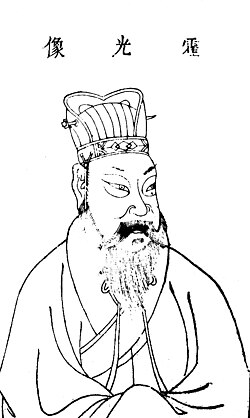
Sima Wang replied, "In my youth I went to study in Jingzhou and was friendly with Shi Guangyuan and Cui Zhouping. They explained that formation to me. Jiang Wei used what is known as 'The Serpent Coil', and the only way to break it is to attack the head, which I saw was in the northwest."
Deng Ai replied, "Although I have studied formations, I do not know all the modifications. But since you know about this, we may be able to recover our camps."
"I fear the little I have learned will not be enough to overcome Jiang Wei."
"Tomorrow you shall contend with him, and while his attention is engaged, I will attack the rear of Qishan, and we will recover our camps."
So a force was prepared to attack on the morrow, and Deng Ai sent a letter of challenge to a contest in tactics for the same day. Jiang Wei marked in to accept.
Jiang Wei said to his officers, "In the secret book that I received from the Prime Minister, the variations of the formation are three hundred and sixty-five, corresponding to the circuit of the heavens. This challenge from them is as one going to teach hewing to the God of Carpenters. I think some ruse lies behind this. Can you guess what it is?"
Liao Hua replied, "While they engage your attention in this competition, they intend to attack our rear."
"Just so; that is also my opinion," replied Jiang Wei.
So he prepared a counter-stroke by sending Liao Hua and Zhang Yi to lie in wait at the back of the hills with ten thousand troops.
Next day Jiang Wei led all the troops from the nine camps out and drawn up in front of the hills. Sima Wang came out on the other side and presently rode to the front to parley.
"You have challenged me to a contest. Now draw up your army for me to see," said Jiang Wei.
Sima Wang did so and arrayed the eight diagrams.
"That is what we know as the Octagon," said Jiang Wei. "But it is nothing wonderful, only a sort of array fit for a brigand's raid."
"You also have only stolen another man's tactics," replied his adversary.
"How many modifications of this are there?" asked Jiang Wei.
"Since I have arranged this, naturally I know the variations, of which there are nine nines, making eighty-one."
"Try them."
Sima Wang returned to his array and evolved many, finally riding out and asking his opponent if he recognized them.
"My formation admits of three hundred and sixty-five variations. You are but a frog in a well and know nothing of the deeper mysteries."
Now Sima Wang knew that so many variations were possible, but had not studied them. However, he put on a bold air and said contemptuously, "I do not believe you. Prove it!"
"Go and call Deng Ai," replied Jiang Wei. "I will display them to him."
"General Deng Ai has excellent plans and does not think much of such tactics."
"What plans? I suppose you mean a plan to keep me here while he tries a surprise attack in the rear."
Sima Wang was aghast. He made a sudden dash forward, and a melee began. Jiang Wei made a signal with his whip, and his force poured in from both wings. The troops of Wei were seized with sudden panic, threw down their weapons and fled.
Now Deng Ai had hurried on Zheng Lun to make the first attack. As Zheng Lun turned the corner of the hill, a bomb exploded. At once the drums rolled and an ambush discovered itself. Liao Hua was in command. Neither side stayed to parley, and the leaders engaged in single combat. In the first encounter Liao Hua cut Zheng Lun down.
Deng Ai had not expected such preparation, and he hastened to withdraw. Then Zhang Yi came forth and attacked on the other side. The army of Wei was worsted. Deng Ai fought his way out, but he bore four arrow wounds upon his body. He got to the river, where he found Sima Wang, and they discussed how to get away.
But Sima Wang proposed another form of attack.
"Recently the Ruler of Shu has had a favorite, Eunuch Huang Hao, in whom he places all his trust and with whom he spends his time in one round of pleasure. Let us use the eunuch to sow distrust between the Emperor and his general and so get Jiang Wei recalled. In that way we shall retrieve our defeat."
So Deng Ai assembled his advisers and asked who could go into Shu and get into communication with Huang Hao.
Dang Jun volunteered at once. Deng Ai entrusted gold and pearls and precious things to him, and sent him into Shu to win the treacherous alliance of the eunuch. As Dang Jun went, he also disseminated reports that Jiang Wei was angry and intended to go over to Wei.
These rumors became the common talk in Chengdu, and everyone believed them. Huang Hao carried them to the Emperor, and a messenger was sent to call the general to the capital.
Meanwhile Jiang Wei tried every day to bring the enemy to give battle, but they remained obstinately behind their defenses. Jiang Wei began to think some evil scheme was afoot, when suddenly he was recalled by Imperial Edict. Although ignorant of the reason, he could not disobey; and when he began the retreat, Deng Ai and Sima Wang knew that their plot had succeeded. They broke camp and set out to attack the retreating army.
Because of court intrigues
Yue Yi and Yue Fei failed.
How matters went will be told in the next chapter.
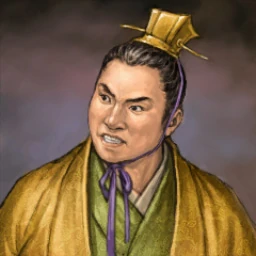
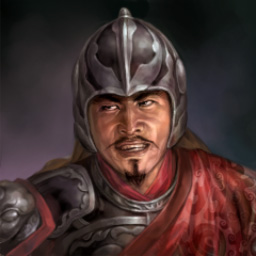
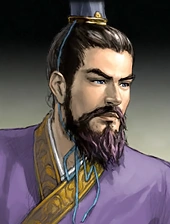
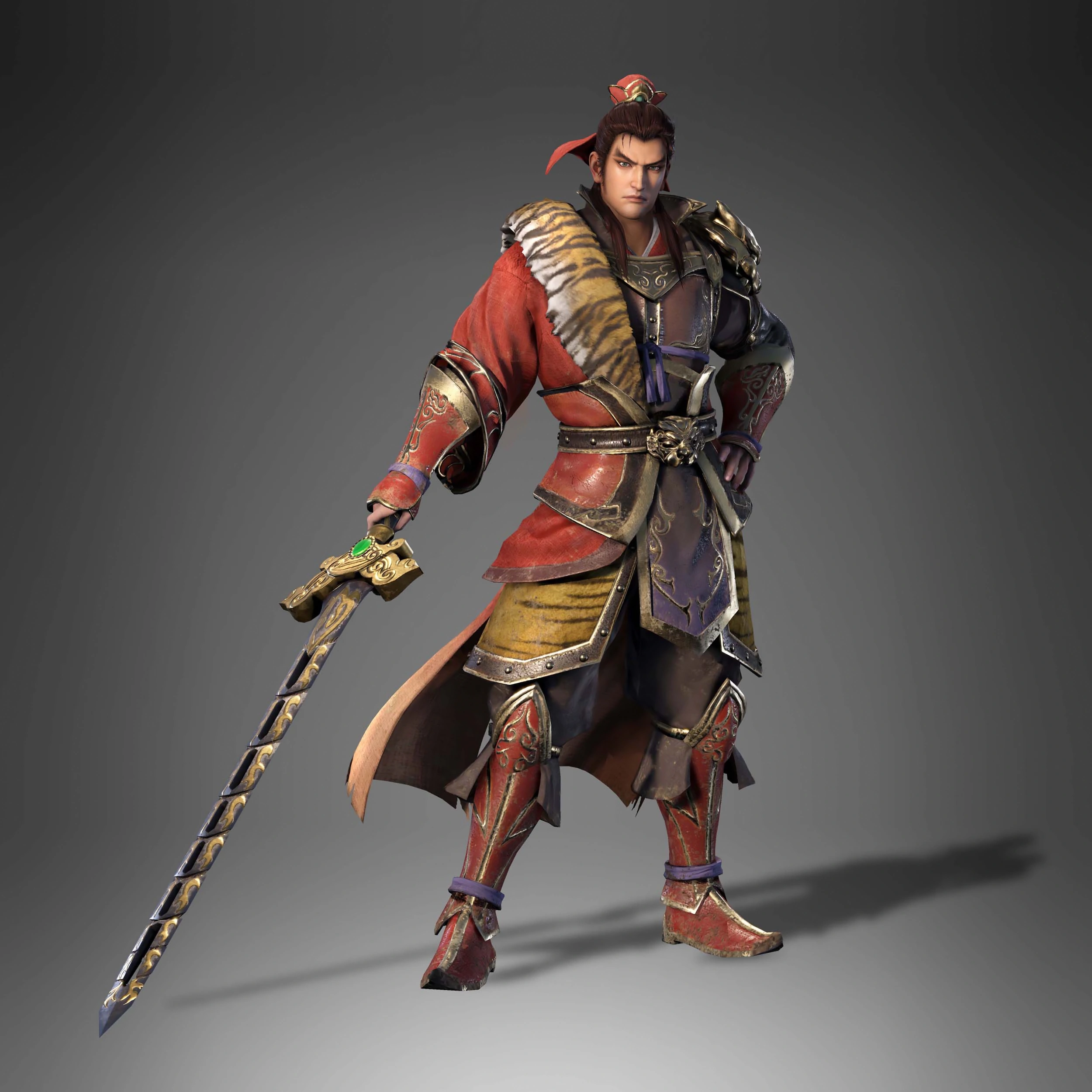
|
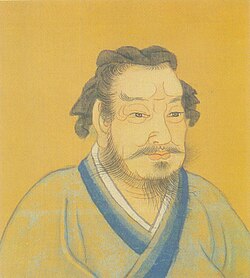
Cui Jun
Named as one of the two men who taught Sima Wang how to break the Serpent Coil. 'In my youth I went to study in Jingzhou and was friendly with Shi Guangyuan and Cui Zhouping. They explained that formation to me.' The friend of Zhuge Liang's cottage years from ch35, reappearing eighty chapters later as the reason Deng Ai gets out alive.
1 mention in this chapter
8 mentions in the book
|
|
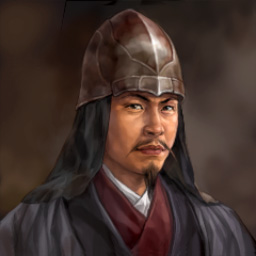
Dang Jun
Undoes an entire campaign with a bag of jewellery. Volunteers when Deng Ai asks who can get into communication with Huang Hao, is entrusted with 'gold and pearls and precious things', and on the way 'also disseminated reports that Jiang Wei was angry and intended to go over to Wei'. 'These rumors became the common talk in Chengdu, and everyone believed them.' Huang Hao carries them to the Emperor and Jiang Wei is recalled from a position he has just won.
2 mentions in this chapter
4 mentions in the book
|
|
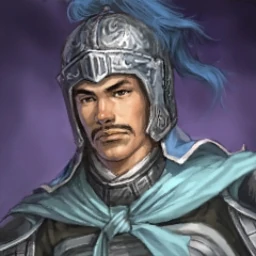
Deng Ai
Loses nine camps and wins the war by post. Calls off the pursuit from Changcheng on the reasoning that Jiang Wei would not retreat without a trick, and is proved right by the fire-traps in the Luo Valley. Digs a tunnel to the exact spot he calculates the Shu army will camp on, and takes their left camp with it. Reads the Eight Formations correctly and evolves the eight gates into sixty-four - and is then folded into the Serpent Coil and would have been taken but for Sima Wang: 'Indeed a moment of pride had led me into the trap of Jiang Wei!' Loses all nine camps and falls back over River Wei with four arrow wounds in him. Then adopts Sima Wang's proposal, finds a man to carry gold to Huang Hao, and gets Jiang Wei recalled without another battle.
29 mentions in this chapter
248 mentions in the book
|
|
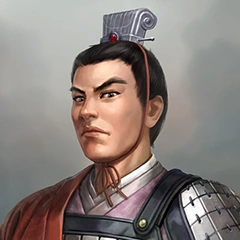
Deng Cheng
The officer to whom the imperial seal is delivered once Li Zong has brought it out, holding it between one reign and the next until Sun Xiu takes it in the Great Hall.
1 mention in this chapter
1 mention in the book
|
|
Deng Zhong
One of the two flank attacks on the Shu left camp, ten thousand men each, timed to coincide with Zheng Lun coming up out of the tunnel behind it.
2 mentions in this chapter
20 mentions in the book
|
|
Ding Feng
Sun Xiu's instrument, and the chapter's title says so. Called in as 'an able and trustworthy officer' when the arsenals report comes, he answers 'Have no anxiety. I will find some way of ridding the state of this evil', and supplies the whole design: wait for the winter court when every officer is assembled, spread a great banquet, invite Sun Chen, and be ready. Wei Miao and Shi Shuo handle the outside, Zhang Bu the inside.
3 mentions in this chapter
53 mentions in the book
|
|
Dong Cao
Secretary, and Sun Kai's fellow envoy to Hulin to invite Sun Xiu, Prince of Langye, to ascend the throne.
2 mentions in this chapter
2 mentions in the book
|
|
Fu Qian
Joint commander with Jiang Shu of the right army of the expedition - the wing Jiang Wei orders to stand fast during the night attack, and which holds without moving.
1 mention in this chapter
24 mentions in the book
|
|
Gan Xiu
His one scene is a portent. 'At Que his carriage was stopped by a venerable old man who claimed to be Gan Xiu and offered felicitations. "Your Majesty should move faster, for things may change swiftly," said the aged one.' Sun Xiu thanks him and goes on; nothing more is said of him.
1 mention in this chapter
1 mention in the book
|
|
Huan Yi
The one man in the court who says no. When Sun Chen tells the assembled officers the Emperor must be deposed and threatens anyone who opposes, every other man says 'We shall obey your command, O General!' out of fear. 'It was Chair of the Secretariat Huan Yi, who said, "How dare you utter such words? Our Emperor is very intelligent, and I will not support you. I would rather die!" Sun Chen wrathfully drew his sword and slew Huan Yi.'
2 mentions in this chapter
2 mentions in the book
|
|
Huang Hao
The instrument of the chapter's last reversal. Xue Xu reports that every affair of state is in his hands and the courtiers treat him as a father. Sima Wang then names him as the way to beat Jiang Wei without fighting - 'Let us use the eunuch to sow distrust between the Emperor and his general and so get Jiang Wei recalled' - and Dang Jun's gold, pearls and precious things buy him. He carries the manufactured rumour that Jiang Wei means to go over to Wei straight to the throne, and the recall follows.
4 mentions in this chapter
32 mentions in the book
|
|
Huo Guang
Named in the same quatrain, paired with Yi Yin: 'And Huo Guang's faithful services are made / A cloak to cover vilest treachery.' Two regents who set kings aside for the state's good, invoked here by a man doing the opposite.
1 mention in this chapter
6 mentions in the book
|
|
Jiang Bin
Joint commander with Wang Han of Jiang Wei's left army, whose camp is built unknowingly on the mouth of Deng Ai's tunnel and attacked from three directions in the night.
6 mentions in this chapter
9 mentions in the book
|
|
Jiang Shu
'Jiang Shu and Fu Qian as Commanders of the Right Army' in the expedition that marches into Hanzhong in the winter of AD 258.
1 mention in this chapter
12 mentions in the book
|
|
Jiang Wei
Withdraws from Changcheng with fire-traps laid in the Luo Valley that make Deng Ai call off the pursuit; marches again to Qishan on Xiahou Ba's advice; loses his left camp to a tunnel dug under it before he arrived, and holds the centre by standing absolutely still — 'Let no one move on pain of death! Stand still. When the enemy approaches, shoot!' — through a dozen Wei charges, which draws from Deng Ai the admission 'Jiang Wei has indeed learned of Zhuge Liang.' Takes the blame for the lost camp himself rather than punish Wang Han and Jiang Bin. Then wins the Eight Formations duel outright: matches Deng Ai's sixty-four gates, folds the array into the Serpent Coil with Deng Ai inside it, and takes all nine of his camps. Reads the second challenge as a diversion before it is made, ambushes the flanking column, and is winning when the recall arrives — 'Although ignorant of the reason, he could not disobey.'
25 mentions in this chapter
443 mentions in the book
|
|
Li Zong
The Secretary ordered to fetch the royal seal out of the deposed Sun Liang's hands — the formal act of the deposition, carried out while its subject 'retired weeping'.
1 mention in this chapter
1 mention in the book
|
|
Liao Hua
Leader of the Van with Zhang Yi, and the man who names the trap before it is sprung: asked what lies behind Deng Ai's second challenge, he answers 'While they engage your attention in this competition, they intend to attack our rear.' Sent to lie in wait behind the hills with ten thousand men, and kills Zheng Lun in the first encounter when the flanking column comes round the corner.
5 mentions in this chapter
87 mentions in the book
|
|
Liu Cheng
Half the plot's machinery. The general Quan Ji is told to help hold the Palace gates once the guards are mustered — and he is seized the same night with Quan Shang, before anything can be attempted, and his whole party put to death.
3 mentions in this chapter
3 mentions in the book
|
|
Liu Shan
Sends congratulations to Wu on Sun Xiu's accession — the courtesy that produces Xue Xu's devastating report on his own court in return. Then, on Huang Hao's word and a manufactured rumour bought with Wei gold, recalls Jiang Wei from a position he has just won, by Imperial Edict and without giving a reason.
3 mentions in this chapter
254 mentions in the book
|
|
Lü Ju
Named twice, both posthumously: among the victims Sun Xiu lists back at Sun Chen when he begs for exile, and among those given magnificent tombs afterwards. He was killed in Sun Chen's ch111 purge.
2 mentions in this chapter
4 mentions in the book
|
|
Meng Zong
His command is the evidence that gets Sun Chen killed. 'Sun Chen sent a large body of troops under the command of Minister Meng Zong into camp at Wuchang, and Sun Chen armed them from the state arsenals' — which Wei Miao and Shi Shuo memorialise as proof of intended rebellion, and which sets the banquet in motion.
1 mention in this chapter
1 mention in the book
|
|
Quan Huijie
Sun Liang's consort and a daughter of the Quan house, and the one who catches him at the door: when the Palace is surrounded and he draws his sword to go out, 'his Consort and her people clung to his clothing and held him back'. His last words to her are the reproach 'Your father and brother have upset all my plans!'
1 mention in this chapter
1 mention in the book
|
|
Quan Ji
The plot is entrusted to him and he loses it. Imperial Brother-in-Law and officer in charge of the eunuchs, he volunteers — 'I would think no sacrifice too great if Your Majesty would make use of me' — is told to muster the Palace guards and help Liu Cheng hold the gates, and asks for a written command so he can face down Sun Chen's supporters at the critical moment. He is told explicitly not to tell his mother, Sun Chen's sister. 'But he could not keep his secret, and confided the plan to his father, Quan Shang.' Seized with the rest that night.
3 mentions in this chapter
3 mentions in the book
|
|
Quan Shang
The second leak. Told the secret by his son, he tells his wife - 'Sun Chen will be got rid of in three days' - and she, who is Sun Chen's sister, 'seemed to approve with her tongue' and sent a secret messenger with a letter to the intended victim the same day. Seized that night with his whole family and put to death.
3 mentions in this chapter
3 mentions in the book
|
|
Shi Guangyuan
Named with Cui Zhouping as one of Sima Wang's Jingzhou study companions, and so as a source of the knowledge that breaks Jiang Wei's Serpent Coil — the other of Zhuge Liang's early friends turning up in the endgame.
1 mention in this chapter
3 mentions in the book
|
|
Shi Shuo
The Imperial Guard who co-signs the memorial about the arsenals and is then brought into the conspiracy to act outside the Palace. One of the three who bring Sun Chen's brothers before Sun Xiu afterwards.
3 mentions in this chapter
3 mentions in the book
|
|
Shi Zuan
Paired with Deng Zhong for the other flank of the night attack on Wang Han and Jiang Bin's camp - the assault that succeeds only because the tunnel had been dug before the camp was pitched.
2 mentions in this chapter
15 mentions in the book
|
|
Sima Wang
Rescues Deng Ai out of the Serpent Coil by knowing where its head is, and explains how: 'In my youth I went to study in Jingzhou and was friendly with Shi Guangyuan and Cui Zhouping. They explained that formation to me… the only way to break it is to attack the head, which I saw was in the northwest.' Then fights the formation contest as the deliberate diversion, bluffs about knowing all eighty-one variations, is caught out by Jiang Wei's 'I suppose you mean a plan to keep me here while he tries a surprise attack in the rear', and is routed. And it is Sima Wang who proposes the plan that actually wins: buy Huang Hao and have Jiang Wei recalled.
10 mentions in this chapter
20 mentions in the book
|
|
Sima Zhao
Named briefly and rewards generously: when Deng Ai reports the fire-traps in the Luo Valley and the decision not to pursue, 'Sima Zhao was very pleased and confer more rewards.' The Wei half of the chapter is run entirely by his subordinates.
2 mentions in this chapter
170 mentions in the book
|
|
Sun Chen
Dies in this chapter, and it is half named for it: 'Ding Feng Makes A Plan To Slay Sun Chen'. He puts the families of the Shouchun defectors to death, has his four brothers holding every command in the capital, pre-empts Quan Ji's plot the same night he is warned of it, cuts down Huan Yi in open court for objecting, and deposes Sun Liang to Prince of Kuaiji. Then he over-reaches: his birthday presents are refused, he gets drunk at Zhang Bu's and says the unsayable — 'When I deposed the present Prince of Kuaiji, many people urged me to take the throne myself… Now I suffer the mortification of seeing my presents rejected. You will see what will come of this slight' — and moves troops to Wuchang armed out of the state arsenals. The last morning is all omens: a storm that tears up trees, a fall flat on his face as he rises. He goes to the banquet anyway. Zhang Bu comes up the hall with thirty men, and he ends on the floor begging to be exiled to Jiaozhou to do plough work, and is answered 'Did you exile any of your victims---Teng Yin, Lu Ju, Wang Chun, and others?' Executed, with his four brothers and several hundred of his family; 'No single person of his servants raised a hand to help him.'
30 mentions in this chapter
41 mentions in the book
|
|
Sun En
One of Sun Chen's four brothers, 'General Who Shows Prowess', and the one who waits at the Busai Pavilion with a state chariot for the incoming emperor — which Sun Xiu declines to ride in. Executed with the rest of the family.
2 mentions in this chapter
2 mentions in the book
|
|
Sun Gan
One of Sun Chen's four brothers — 'Sun Gan, Imperial Commander' — part of the ring of commands that made the regent untouchable, and condemned to death with him.
1 mention in this chapter
1 mention in the book
|
|
Sun Hao
Named in passing, but with the title that matters later: at the new reign's honours, 'Sun Hao, the son of his elder brother, was created Lord of Wucheng.' He will be the last emperor of Wu.
1 mention in this chapter
49 mentions in the book
|
|
Sun Ju
The eldest of the four brothers whose commands make Sun Chen unassailable: 'Sun Ju was General Who Terrifies Distant Regions and Commander of Imperial Guards.' Called in with the other three on the night the plot is betrayed, and condemned to death with them on the Tower of the Five Phoenixes.
1 mention in this chapter
1 mention in the book
|
|
Sun Jun
His corpse is not left alone: after the executions, 'Not content with all these things, the tomb of Sun Jun was broken open and his corpse beheaded.' The assassin of Zhuge Ke is punished posthumously in the same hour his brother's family is destroyed.
1 mention in this chapter
16 mentions in the book
|
|
Sun Kai
Royal Clan Recorder, sent with Dong Cao as Imperial Envoy to Hulin to bring Sun Xiu to the throne — the errand that arrives the morning after the dream of the tailless dragon.
2 mentions in this chapter
2 mentions in the book
|
|
Sun Kan
The fourth brother, 'Sun Kan, Commander of Changshui', one of the four who surround the Inner Palace the night Quan Ji's plot is betrayed and who are executed together after the banquet.
1 mention in this chapter
1 mention in the book
|
|
Sun Liang
Given mouse droppings in his honey at the West Park, he questions the storekeeper, learns a eunuch had been refused honey a few days before, and convicts him by physics: 'If the dirt has been lying in the honey for some time it will be wet all through' — the lumps are cut open, they are dry inside, and the eunuch confesses. Clever enough for that and powerless against a Prime Minister whose four brothers hold every command. His plot leaks through Quan Ji to Quan Shang to Quan Shang's wife, who is Sun Chen's sister, and he wakes to find the Inner Palace surrounded. Deposed and degraded to princely rank as Prince of Kuaiji.
16 mentions in this chapter
45 mentions in the book
|
|
Sun Quan
Named in passing only, and long dead, as the descent that qualifies the new emperor: Sun Xiu is 'Prince of Langye, the sixth son of Sun Quan'.
1 mention in this chapter
603 mentions in the book
|
|
Sun Xiu
Sixth son of Sun Quan and Prince of Langye, fetched from Hulin after dreaming he rode a tailless dragon into the sky, warned on the road at Que by an old man calling himself Gan Xiu that 'Your Majesty should move faster, for things may change swiftly'. Refuses the state chariot sent to meet him, travels in his own carriage, dismounts to return the officials' salutations, and declines the throne three times before taking it. Then spends the autumn outwardly favouring Sun Chen and secretly watching him; is told of the drunken boast by Zhang Bu, of the arsenals by Wei Miao and Shi Shuo, takes Ding Feng into his confidence, and springs the banquet. Refuses the plea for exile, executes the whole family, has Sun Jun's tomb opened and the corpse beheaded, and raises magnificent tombs to Zhuge Ke, Teng Yin, Lu Ju and Wang Chun. His sigh over Xue Xu's report on Shu is the chapter's epitaph: 'Ah! If only Zhuge Liang the Martial Lord was still alive---how different all would be!'
25 mentions in this chapter
66 mentions in the book
|
|
Teng Yin
Named twice, both times as a grievance being settled: Sun Xiu throws his name at Sun Chen when the plea for exile comes ('Did you exile any of your victims---Teng Yin, Lu Ju, Wang Chun, and others?'), and afterwards 'Magnificent tombs were raised to his victims---Zhuge Ke, Teng Yin, Lu Ju, Wang Chun, and others.'
2 mentions in this chapter
7 mentions in the book
|
|
Wang Chun
Named with Teng Yin and Lu Ju as one of the ministers Sun Chen destroyed on his way to power, thrown back at him at the moment of his own arrest and honoured with a tomb after it.
2 mentions in this chapter
3 mentions in the book
|
|
Wang Han
He and Jiang Bin command Jiang Wei's left army. Their camp is pitched, by accident, directly over the mouth of a tunnel Deng Ai had dug in advance; attacked from both flanks by Deng Zhong and Shi Zuan and from within by Zheng Lun's five hundred, they have just enough vigilance to get their men under arms and out. They offer to take the punishment the next day and Jiang Wei refuses it: 'It was less your fault than mine, for I did not clearly recognize the nature of the terrain.'
6 mentions in this chapter
9 mentions in the book
|
|
Wei Miao
His memorial is the trigger. He and Shi Shuo secretly tell Sun Xiu that 'Sun Chen has moved the troops outside and provided them with state arms. This action points to rebellion' — and they are then taken into the plot to handle matters outside the Palace while Zhang Bu handles the inside. Present on the Tower of the Five Phoenixes when the brothers are condemned.
3 mentions in this chapter
3 mentions in the book
|
|
Xiahou Ba
Alive, in the field, and choosing the campaign's objective. 'Jiang Wei and Xiahou Ba led the main column', and when Jiang Wei asks what the first objective should be it is Xiahou Ba who answers: 'There is no better fighting ground than Qishan, as the tactics of the late Prime Minister made evident, and it is the only good exit.'
2 mentions in this chapter
66 mentions in the book
|
|
Xue Xu
Delivers the chapter's verdict on Shu, and it is the most quoted passage in it. Sent as Wu's return envoy to Chengdu, he reports: 'All affairs of state are in the hands of a certain eunuch named Huang Hao, and all the courtiers look up to him as to a father. At court plain truth is never heard, and the country people look sallow and starved. The whole country appears on the verge of destruction. The birds on the roof do not know that the building is about to be burned.'
3 mentions in this chapter
3 mentions in the book
|
|
Yi Yin
Named in the poem on Sun Liang's deposition, as the precedent Sun Chen is abusing: 'The sage example of the wise Yi Yin / Perverted now to traitor's use we see.' The same pair of names Sima Shi used for the same purpose in ch109.
1 mention in this chapter
17 mentions in the book
|
|
Yue Fei
Named in the closing couplet alongside Yue Yi - the Song general recalled from a winning campaign by his own government, and the sharpest available comparison for what Huang Hao's rumour does to Jiang Wei. (An anachronism by nine centuries, deliberate on the narrator's part.)
1 mention in this chapter
1 mention in the book
|
|
Yue Yi
Named in the chapter's closing couplet as a commander destroyed not by the enemy but by his own court: 'Because of court intrigues / Yue Yi and Yue Fei failed.' The comparison is to Jiang Wei, recalled mid-victory.
1 mention in this chapter
13 mentions in the book
|
|
Zhang Bu
Does the actual killing. General of the Left Army, he is the host at whose table Sun Chen gets drunk and boasts about having declined the throne, and he reports it the next day. He recommends Ding Feng. He arranges the inside of the Palace. And it is Zhang Bu who 'entered at the head of thirty armed guards. He rushed up the banquet chamber, shouting, "I hold a command to slay the rebel Sun Chen!"' — then reads the edict limiting the punishment, and brings Sun Chen's four brothers before the throne on the Tower of the Five Phoenixes.
9 mentions in this chapter
11 mentions in the book
|
|
Zhang Yi
The other Leader of the Van, sent with Liao Hua to the back of the hills, and the second jaw of the ambush — 'Then Zhang Yi came forth and attacked on the other side. The army of Wei was worsted.'
3 mentions in this chapter
76 mentions in the book
|
|
Zheng Lun
Does two jobs and dies at the second. Sent with five hundred men through Deng Ai's subterranean road to come up inside the Shu left camp — the inner third of the three-sided night attack. Then hurried on to make the first attack in the flanking move on Qishan, where he turns the corner of the hill into Liao Hua's ambush and is cut down in the first encounter.
5 mentions in this chapter
5 mentions in the book
|
|
Zhuge Ke
Named in passing only, and long dead, but first on the list of the rehabilitated: 'Magnificent tombs were raised to his victims---Zhuge Ke, Teng Yin, Lu Ju, Wang Chun, and others. Thus at last loyalty was rewarded.' The man Sun Jun murdered at a banquet in ch108 is honoured in the same hour Sun Jun's corpse is beheaded.
1 mention in this chapter
41 mentions in the book
|
|
Zhuge Liang
Named in passing four times, and he is the standard everything is measured against: Xiahou Ba picks Qishan because 'the tactics of the late Prime Minister made evident' it was the only good exit; Deng Ai concedes 'Jiang Wei has indeed learned of Zhuge Liang'; the Eight Formations that trap Deng Ai are his, and the three hundred and sixty-five variations come out of 'the secret book that I received from the Prime Minister'; and Sun Xiu sighs over the state of Shu - 'Ah! If only Zhuge Liang the Martial Lord was still alive---how different all would be!'
3 mentions in this chapter
1454 mentions in the book
|
-
Busai Pavilion Structure/Building
-
Changshui
-
Chengdu County County(30.6661, 104.0754)
-
Great Hall
-
Hanzhong Commandery Commandery(33.0730, 107.0359)
-
Jiao Province Province
-
Jing Province Province
-
Kuaiji Commandery Commandery
-
Langye Commandery Commandery(35.0613, 118.3306)
-
Longyou Region
-
Luo Valley Landmark
-
Qishan
-
Que County
-
River Wei River
-
Shu (Three Kingdoms) Region
-
Tower of the Five Phoenixes Structure/Building
-
Wei (Three Kingdoms) Region
-
West Park
-
Wu (Three Kingdoms) Region
-
Wuchang County