Deng Ai
鄧艾
Courtesy name: Shizai (士載)
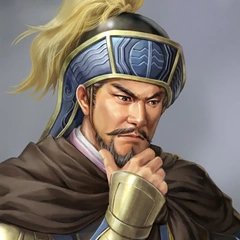
Source:
Koei Wiki (Fandom)
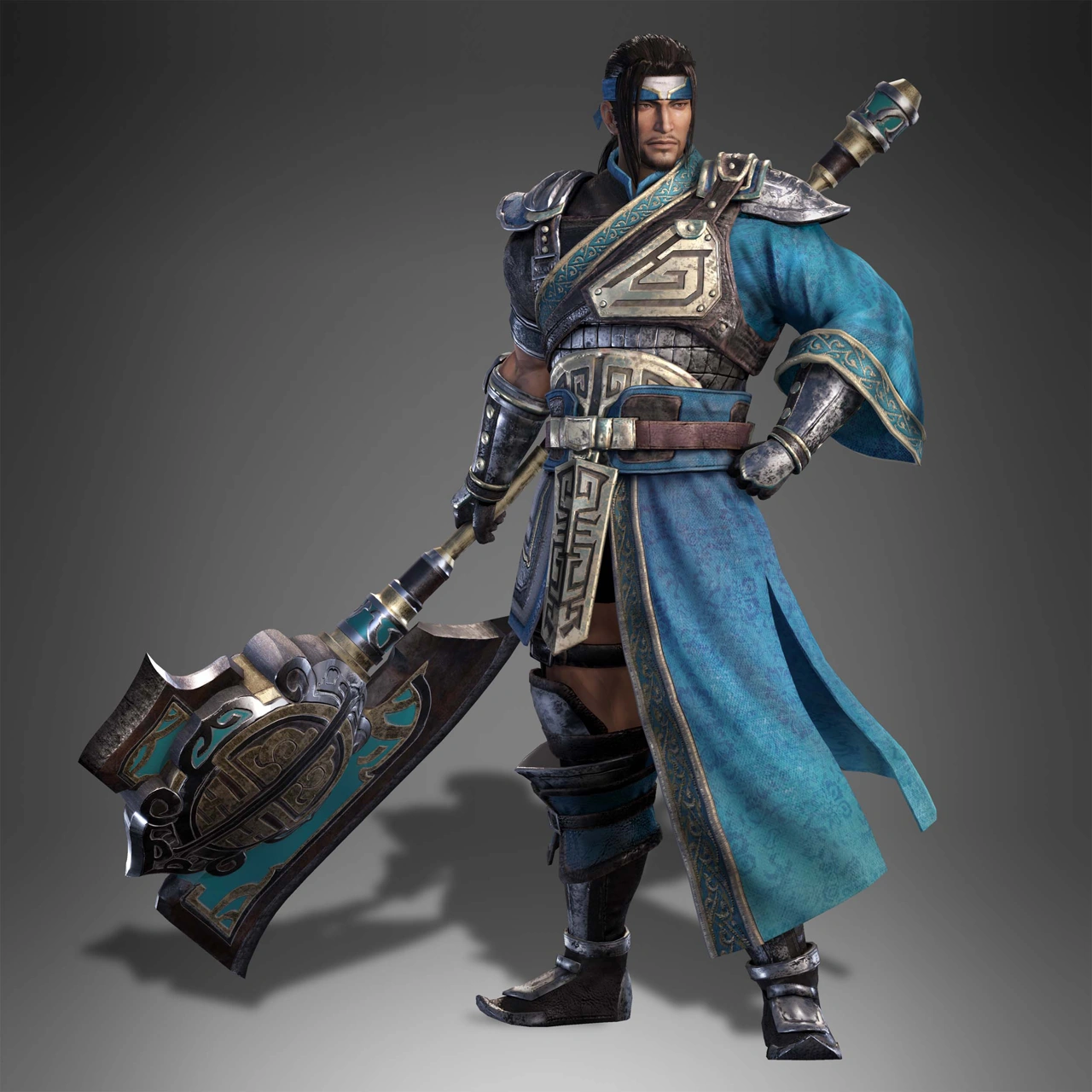
Source:
Koei Wiki (Fandom)
- Died
- 264
- Ancestral home
- Jiyang, Yiyang (Xinye County, Henan)
- Book mentions
- 248
Roles:
general
Factions:
Cao Wei
(primary)
Relationships:
Deng Zhong
Son
Links:
-
Wikipedia entry Bio
Appears in 12 chapters:
-
Chapter 107
— The Ruler of Wei Hands Over The Power To Sima Yi; Jiang Wei Is Defeated At Ox Head Hills.
Described to Jiang Wei by Xiahou Ba, as the second of the two men to fear. An orphan from Yiyang, ambitious and enterprising, who could not look at a mountain or a marsh without picking out where troops could camp, where depots could go and where combustibles could be laid — which people laughed at and Sima Yi did not. He stammered, and called himself 'Deng-eng-eng-Ai'; asked by Sima Yi how many of him there were, he answered at once 'There is only one phoenix when they say "O Phoenix! O Phoenix!"'
-
Chapter 110
— Riding Alone, Wen Yang Repulses A Brave Force; Following The River, Jiang Wei Defeats The Enemy.
Named to the eastern command by Fu Gu specifically as 'a man of tactics', fights Wen Yang to a standstill over fifty bouts, kills Ge Yong in the first encounter of the final battle, and then wins the western campaign as well — reading Jiang Wei's position exactly ('If they do not think of that, but try to take Didao, they will only fritter away their energies against a place too strongly fortified for them to capture') and beating him with an army that barely exists: twenty cohorts of fifty men hidden in the valleys southeast of Didao with many ensigns, trumpets and huge night fires. Jiang Wei only discovers it was 'make-believe' after he has retreated all the way to Saber Pass.
-
Chapter 111
— Deng Ai Outwits Jiang Wei; Zhuge Dan Battles Sima Zhao.
Wins the whole chapter. Opens with the five reasons Jiang Wei will certainly come back — the confident look of the retreating Shu army against Wei's broken one, Zhuge Liang's trained troops against Wei's mixed drafts, Shu moving by boat and arriving fresh against Wei marching, Shu able to concentrate where Wei must guard Didao, Longxi, Nanan and Qishan at once, and Shu able to live off Qiang grain or the Qishan wheat — which leaves Chen Tai saying 'Sir, your foresight is godlike.' Lays out the nine linked camps on Qishan. Reads the rotating flag colours as a feint from a hilltop and deduces the real objective ('Jiang Wei must not be in this camp. He must be on his way to capture Nanan'). Beats him to the Wucheng Mountain by double marches, holds it without giving battle, and sets Deng Zhong and Shi Zuan in Block Valley for the follow-up. Made General Who Pacifies the West, then promoted again by special commission, with a lordship for his son.
-
Chapter 112
— Rescuing Shouchun, Yu Quan Dies Nobly; Attacking Changcheng, Jiang Wei Mobilizes.
Wins a campaign without fighting it. Arrives to relieve Changcheng at the moment the wall is burning, sees his son held to a draw, and rescues him. Then agrees a formal battle for the next day — 'whoever shall take any secret advantage is a base fellow' — and simply does not come: no flags, no drums, no army, for five days running, answering every letter courteously and pleading indisposition. The reasoning is in his note to Sima Wang: 'we should not give battle, but wait for reinforcements. Meanwhile the soldiers of Shu will be consuming their supply of grain, and we will attack on three sides when they begin to be hungry.' Camps on River Wei and lets Jiang Wei sit on the hills until the news from Shouchun ends the campaign for him.
-
Chapter 113
— Ding Feng Makes A Plan To Slay Sun Chen; Jiang Wei Arrays A Battle To Defeat Deng Ai.
Loses nine camps and wins the war by post. Calls off the pursuit from Changcheng on the reasoning that Jiang Wei would not retreat without a trick, and is proved right by the fire-traps in the Luo Valley. Digs a tunnel to the exact spot he calculates the Shu army will camp on, and takes their left camp with it. Reads the Eight Formations correctly and evolves the eight gates into sixty-four - and is then folded into the Serpent Coil and would have been taken but for Sima Wang: 'Indeed a moment of pride had led me into the trap of Jiang Wei!' Loses all nine camps and falls back over River Wei with four arrow wounds in him. Then adopts Sima Wang's proposal, finds a man to carry gold to Huang Hao, and gets Jiang Wei recalled without another battle.
-
Chapter 114
— Driving To The South Gate, Cao Mao Plunges Into Death; Abandoning Stores, Jiang Wei Defeats The Wei Army.
Nearly captured, and he loses fifty thousand men's worth of position. Opens the chapter with the tribute that frames the whole endgame — watching the Shu retreat go by in perfect order, 'Jiang Wei is a worthy inheritor of the warlike methods of Zhuge Liang' — and closes it in a ditch. Accepts Wang Guan's written plan with the reservation that it may not be enough, takes the forged letter at face value, and leads fifty thousand veterans to the Yunshan Valley by moonlight. His own instinct is right ('The mountains ahead are hazardous. If by any chance an ambush has been laid, we could hardly escape. We will wait here') and two horsemen with an urgent message override it. When the wagons go up and the price on his head is shouted from the hillsides, he 'dropped his arms, threw aside his armor, slipped from his steed, mingled with the footmen, and with them scrambled up the hills' — the Shu generals were only looking for a mounted man. Asks to be degraded, and is sent gifts and fifty thousand reinforcements instead.
-
Chapter 115
— Listening To Slander, The Latter Ruler Recalls His Army; Living In Farms, Jiang Wei Avoids Disaster.
Wins everything in this chapter and maps the rest. Contradicts Sima Wang's reading of the Taoyang march with an exact one of his own - Jiang Wei always goes where the supplies are, Taoyang has none, therefore he expects it to be undefended, and if he takes it he gets a base, Qiang contacts and a grand plan - then abandons Qishan, hides Sima Wang's force inside Taoyang with the gates open, and lies in wait at Houxia eight miles off, 'which is the throat of the place'. The trap kills Xiahou Ba. Attacks the Shu camp the same night and beats Jiang Wei again. Fights him thirty bouts, then refuses every subsequent challenge, works out from the persistence that Qishan is the real target, makes a night demonstration as cover and relieves it. Afterwards his spies map the forty Shu cantonments 'each connected with the next like the joints of a huge serpent', and that map is what puts the conquest of Shu on Sima Zhao's desk.
-
Chapter 116
— On Hanzhong Roads, Zhong Hui Divides The Army; In Dingjun Mountain, The Martial Lord Shows His Apparition.
Winning the western battle and being told he will not come home from it. Sets Sima Wang to hold the Qiangs, gathers the western governors, and splits sixty thousand men four ways — Zhuge Xu to cut the retreat, Wang Qi and Qian Hong onto Tazhong from both flanks, Yang Xin to block Gansong — keeping a mobile force himself. Fights Jiang Wei twenty bouts without either overbearing the other. But the chapter's real business with him is the dream: climbing a high mountain toward Hanzhong, a spring bursting out at his feet and boiling up, and waking in a sweat to sit until dawn. Shao Yuan reads it as the Jian diagram — 'In this expedition, General, you will overcome Shu, but you will not have a road to return.' 'Deng Ai listened, growing more and more sad as the interpretation of his dream was unfolded.'
-
Chapter 117
— Deng Ai Gets Through The Yinping Mountains; Zhuge Zhan Falls In The Battlefield Of Mianzhu.
Two hundred and fifty miles in twenty days: thirty thousand men with dry grain and ropes, a post of three thousand dropped every hundred miles until only two thousand are left, an uninhabited country, and his son's road party in tears at an impassable precipice in the Heaven Cliffs — 'How can one get tiger cubs except by going into tiger caves?' Weapons thrown over first, then Deng Ai wrapped in blankets rolling over the edge, then the generals, then men lowered on cords or clinging to trees. At the bottom he finds a stone with Zhuge Liang's inscription ('Two fires were just founded; armies pass by here. Two soldiers compete; both soon die'), before which he bows and prays, and an abandoned garrison post where Zhuge Liang had kept a thousand men and the Latter Ruler had withdrawn them. Takes Jiangyou, buries Ma Miao's wife with honours, condemns Tian Xu for asking to rest, sweeps up Fucheng, and beats Zhuge Zhan at Mianzhu on the third attempt with an ambush after two defeats.
-
Chapter 118
— Weeping At The Ancestral Temple, A Filial Prince Dies; Marching To The West River Land, Two Leaders Competes.
Wins the kingdom and starts losing himself in the same chapter. Unbinds the Latter Ruler with his own hands, burns the coffin, and rides into Chengdu beside him to burning incense and flowers; forbids plunder, keeps the surrendered ministers in rank, and sends men out to pacify the counties. Then the drink talks at his own banquet: 'You are lucky in that you have had to do with me. Things might well have been otherwise, and you might all have been put to death, if you surrender to other leader!' Takes Jiang Wei's surrender to Zhong Hui as a personal insult. Writes to Luoyang proposing to hold Shu a year, boil salt, build ships, keep Liu Shan in Chengdu as Prince of Fufeng and talk Wu into submission - and, when the reply is a promotion and a private note saying his proposals will be considered in due time, answers with the line that finishes him: 'A general in the field may decline to obey even the orders of his prince. My commission was to conquer the west. Why are my plans hindered?' His letter cites the Spring and Autumn Annals on a high officer's authority abroad; Zhong Hui's men intercept the next ones and rewrite them.
-
Chapter 119
— The False Surrender: A Wit Scheme Becomes A Vain Plan; The Abdication: Later Seeds Learn From The Ancient.
Dies on the road. His two enemies on the spot being dead, his old soldiers begin talking about rescuing him — and it is that, not any order from Luoyang, that kills him. Wei Guan, who made the arrest, says plainly 'If Deng Ai lives, I will die in his hand!' and Tian Xu volunteers a private grudge ('When Deng Ai took Jiangyou, he wished to put me to death'). Five hundred cavalry catch the cage-carts at Mianzhu, where father and son have just been let out of them; seeing his own former soldiers coming up, 'Deng Ai took no thought for defense. Nor did Tian Xu waste time in preliminaries. He went up to where Deng Ai was standing and cut him down.' His elegy: 'The earth could hide no secrets from his eye, / With equal skill he read the starry sky… But foulest murder closed a great career.'
-
Chapter 120
— Recommending Du Yu, An Old General Offers New Plans; Capturing Of Sun Hao, Three Kingdoms Becomes One.
Named in passing only, and dead since ch119, in the closing accounting of the men who took Shu and did not live to see the empire united.