Recommending Du Yu, An Old General Offers New Plans;
Capturing Of Sun Hao, Three Kingdoms Becomes One.
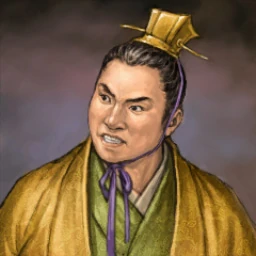
When Sun Xiu, the Ruler of Wu, knew that the House of Wei had fallen before the Jins, he also knew that the usurper's next thought would be the conquest of his own land. The anxiety made him ill, so that he took to his bed and was like to die. He then summoned to his bedside his Prime Minister, Puyang Xing, and his heir, Sun Wan. But they two came almost too late. The dying Ruler, with his last effort, took the Minister by the hand, but could only point to his son. Then he died.
Puyang Xing left the couch and called a meeting of the officers, whereat he proposed to place the heir on his father's throne.
Then Wan Yu, Inspector of the Left Army, rose and said, "Prince Sun Wan is too youthful to rule in such troublous times. Let us confer the throne to Sun Hao, Lord of Wucheng."
Zhang Bu, General of the Left Army, supported his election, saying, "Sun Hao is able and prompt in decision. He can handle the responsibilities of an emperor."
However, Puyang Xing was doubtful and consulted the Empress Dowager.
"Settle this with the officials;" she replied, "I am a widow and know nothing of such matters."
Finally Sun Hao won the day, and in the seventh month he was enthroned as Emperor of Wu, and the first year of his reign was Prosperous Beginning (AD 264). Sun Hao was the son of Sun He, a former Heir Apparent, and grandson of Sun Quan the Great Emperor. The excluded prince, Sun Wan, was consoled with the title of Prince of Yuzhang. Posthumous rank was given to his late father, Sun He the Scholar Emperor, and his mother, Lady He, the Scholar Empress. The Veteran Leader Ding Feng was made Commander of the Right and Left Armies.
However, the year-style was changed to Sweet Dew the very next year. The new ruler soon proved himself cruel and oppressive and day by day grew more so. Sun Hao indulged in every form of vice and chose Eunuch Cen Hun as his confidant and favorite. When Prime Minister Puyang Xing and General Zhang Bu ventured upon remonstrance, both, with all their family, were put to death. Thereafter none dared to speak; the mouth of every courtier was shut tight.
Another year-style, Treasured Paramount, was adopted the next year (266), and the responsibility of the Prime Minister's office was shared by two officers, Lu Kuai the Left and Wan Yu the Right.
At this time the imperial residence was in Wuchang. The people of Yangzhou shouldered heavy tribute and suffered exceedingly. There was no limit to the Ruler's extravagance. The treasury was swept clean, and the income of the royal domain exhausted.
At length Lu Kuai, Left Prime Minister, ventured a memorial, saying:
"No natural calamity has fallen upon the people, yet they starve; no public work is in progress, yet the treasury is empty. I am distressed. The country under the Hans has fallen apart and three states have arisen therefrom. Those ruled by the Caos and the Lius, as the result of their own folly, have been lost in Jin. Foolish I may be, but I would protect the state for Your Majesty against the evils we have seen in the other divisions. This city of Wuchang is not safe as a royal residence. There is a rhyme concerning it, the gist of which is that it is better to drink the water of Jianye than eat the fish of Wuchang, better to die in Jianye than to live in Wuchang. This shows the regard of the people as well as the will of Heaven. Now the public storehouses are nearly empty; they contain insufficient for a year's use. The officers of all grades vex and distress the people and none pity them.
"In former times the Palace women numbered less than a hundred; for years past they have exceeded a thousand. This is an extravagant waste of treasure. The courtiers render no disinterested service, but are split into cliques and cabals. The honest are injured, and the good driven away. All these things undermine the state and weaken the people. I beg Your Majesty to reduce the number of officers and remove grievances, to dismiss the Palace women and select honest officers, to the joy of the people and the tranquillity of the state."
But the Ruler of Wu was displeased, threw the memorial away, and showed his contempt for the Minister's remonstrance by beginning to collect material for the building of a new palace complex to be called the Reflected Light Palace. He even made the officers of the court go into the forest to fell trees for the work.
The Ruler of Wu called in the soothsayer Shang Guang and bade him take the cast and inquire as to the attainment of empire.
Shang Guang cast a lot and replied, "All is propitious, and in the year of the 'mouse' your blue umbrella will enter Luoyang!"
And Sun Hao was pleased.
He said to Minister Hua Jiao, "The former Rulers listened to your words and sent generals to various points and placed defensive camps along the rivers. And over all these was set Ding Feng. Now my desire is to conquer Han and avenge the wrongs of my brother, the Ruler of Shu. What place should be first conquered?"
Hua Jiao replied, "Now that Chengdu has fallen and the Throne there been overturned, Sima Yan will assuredly desire to absorb this southern land. Your Majesty should display virtue and restore confidence to your people. That would be the best plan. If you engage in war, it will be like throwing on hemp to put out a fire---the hemp only adds to the blaze. This is worthy of careful consideration."
But Sun Hao grew angry and said, "I desire to take this opportunity to return to my real heritage. Why do you employ this ill-omened language? Were it not for your long service, now would I slay you and expose your head as a warning."
He bade the lictors hustle Minister Hua Jiao from his presence, and Hua Jiao left the court.
"It is pitiful," said Hua Jiao. "Ere long our silky, beautiful country will pass to another!"
So Hua Jiao retired.
And the Ruler of Wu ordered Lu Kang, General Who Guards the East, to camp his army at Jiangkou in order to attack Xiangyang.
Spies reported this in Luoyang, and it was told the Ruler of Jin. When Sima Yan heard that the army of Wu threatened to invade Xiangyang, he called a council.
Jia Chong stood forth, saying, "I hear the government of Wu, under its present ruler, Sun Hao, is devoid of virtue, and the Ruler of Wu has turned aside out of the road. Your Majesty should send Commander Yang Hu to oppose this army. When internal trouble shall arise, let him attack, and victory will then be easy."
The Ruler of Jin issued an edict ordering Yang Hu to prepare, and so he mustered his troops and set himself to guard the county.
Yang Hu became very popular in Xiangyang. Any of the soldiers of Wu who desired to desert to the other side were allowed to come over. He employed only the fewest possible troops on patrol duty. Instead he set his soldiers to till the soil, and they cultivated an extensive area, whereby the hundred days supplies with which they set out were soon increased to enough for ten years.
Yang Hu maintained great simplicity, wearing the lightest of garments and no armor. His personal escort and servants numbered only about ten.
One day his officers came to his tent and said, "The spies reported great laxity in the enemy's camp. It is time to make an attack!"
But Yang Hu replied, "You must not despise Lu Kang, for he is able and crafty. Formerly his master sent him to attack Xiling, and he slew Bu Chan and many of his generals, before I could save that city. So long as Lu Kang remains in command, I shall remain on the defensive. I shall not attack till there be trouble and confusion among our enemies. To be rash and not await the proper moment to attack is to invite defeat."
They found him wise and said no more. They only kept the boundaries.
One day Yang Hu and his officers went out to hunt, and it happened that Lu Kang had chosen the same day to hunt. Yang Hu gave strict orders not to cross the boundary, and so each hunted only on his own side.
Lu Kang was astonished at the enemy's scrupulous propriety.
He sighed, "The soldiers of Yang Hu have so high a discipline that I may not make any invasion now."
In the evening, after both parties had returned, Yang Hu ordered an inspection of the slaughtered game and sent over to the other side any that seemed to have been first struck by the soldiers of Wu.
Lu Kang was greatly pleased and sent for the bearers of the game.
"Does your leader drink wine?" asked he.
They replied, "Only fine wines does he drink."
"I have some very old wine," replied Lu Kang, smiling, "and I will give of it to you to bear to your general as a gift. It is the wine I myself brew and drink on ceremonial occasions, and he shall have half in return for today's courtesy."
They took the wine and left.
"Why do you give him wine?" asked Lu Kang's officers.
"Because he has shown kindness, and I must return courtesy for courtesy."
When the gift of wine arrived and the bearers told Yang Hu the story of their reception, he laughed.
"So he knows I can drink," said Yang Hu.
He had the jar opened, and the wine was poured out. One of his generals, Chen Yuan, begged him to drink moderately lest there should be some harm come of it.
"Lu Kang is no poisoner," replied Yang Hu.
And he drank. The friendly intercourse thus continued, and messengers frequently passed from one camp to the other.
One day the messengers said that Lu Kang was unwell and had been ailing for several days.
"I think he suffers from the same complaint as I," said Yang Hu. "I have some remedies ready prepared and will send him some."
The drugs were taken over to the Wu camp.
But the sick man's officers were suspicious and said, "This medicine is surely harmful: It comes from the enemy."
However, Lu Kang said, "No, old Uncle Yang Hu would not poison a person. Do not doubt."
He drank the decoction. Next day he was much better.
When his staff came to congratulate him, he said, "If our opponents take their stand upon virtue and we take ours upon violence, they will drag us after them without fighting. See to it that the boundaries be well kept and that we seek not to gain any unfair advantage."
Soon after came a special envoy from the Ruler of Wu to urge upon Lu Kang prompt activity.
"Our Emperor sends orders for you to press forward," said the envoy. "You are not to await a Jin invasion."
"You may return, and I will send up a memorial," replied Lu Kang.
So a memorial was written and soon followed the envoy to the capital, which by this time was Jianye. When the Ruler of Wu, Sun Hao, read it, he found therein many arguments against attacking Jin and exhortations to exercise a virtuous rule instead of engaging in hostilities. It angered him.
"They say Lu Kang has come to an understanding with the enemy, and now I believe it!" said the Ruler of Wu.
Thereupon he deprived Lu Kang of his command and took away his commission and degraded him into Marching General. Sun Ji, General of the Left Army, was sent to supersede Lu Kang. And none dared to intervene.
Sun Hao became still more arbitrary and of his own will changed the year-style once more to the Phoenix (AD 269). Day by day his life became more wanton and vicious. The soldiers in every camp murmured with anger and resentment, and at last three high officers---Prime Minister Wan Yu, General Liu Ping, and Minister of Agriculture Lou Xuan---boldly and earnestly remonstrated with the Emperor for his many irregularities. They suffered death. Within ten years more than forty ministers were put to death for doing their duty.
Sun Hao maintained an extravagantly large guard of fifty thousand heavy cavalry, and these soldiers were the terror of everyone.
Now when Yang Hu, on the Jin side of the frontier, heard that his opponent Lu Kang had been removed from his command and that the conduct of the Ruler of Wu had become wholly unreasonable, he knew that the time was near for him to conquer Wu. Wherefore he presented a memorial:
"Although fate is superior to human, yet success depends upon human effort. Now as the geographic difficulties of the South Land are not as those of the River Lands, while the ferocity of Sun Hao exceeds that of Liu Shan, the misery of the people of Wu exceeds that of the dwellers in Shu. Our armies are stronger than ever before, and if we miss this opportunity to bring the whole land under one rule, but continue to weary our army with continual watching and cause the world to groan under the burden of militarism, then our efficiency will decline and we shall not endure."
When Sima Yan read this, he gave orders for the army to move. But three officers---Jia Chong, Xun Xu, and Feng Dan---opposed it, and the orders were withdrawn.
Yang Hu was disappointed at the news and said, "What a pity it is that of ten affairs in the world, one always meets with eight or nine vexations!"
In the fourth year of Universal Tranquillity, in Jin calendar (AD 278), Yang Hu went to court and asked leave to retire on account of ill health.
Before granting him leave to go, Sima Yan asked, "Do you have plans to propose to settle the empire?"
Yang Hu replied, "Sun Hao is a very cruel ruler and could be conquered without fighting. If he were to die and a wise successor sat upon his throne, Your Majesty would never be able to gain possession of Wu."
The Ruler of Jin realized the truth, and he said, "Suppose your army attacked now. What then?"
"I am now too old and too ill for the task," replied Yang Hu. "Some other bold and capable leader must be found."
Yang Hu left the court and retired to his home. Toward the end of the year he was nigh unto death, and the Ruler of Jin went to visit him. The sight of his master at his bedside brought tears to the eyes of the faithful old leader.
"If I died a myriad times, I could never requite Your Majesty," said Yang Hu.
Sima Yan also wept, saying, "My great grief is that I could not take advantage of your abilities to attack Wu. Who now is there to carry out your design?"
Hesitatingly the sick man replied, "I am dying and must be wholly sincere. General Du Yu is equal to the task, and is the one man to attack Wu."
Sima Yan said, "How beautiful it is to bring good people into prominence! But why did you write a memorial recommending certain people and then burn the draft so that no one knew?"
The dying man answered, "I bowed before the officials in open court, but I did not beseech the kindness of the private attendants."
So Yang Hu died, and Sima Yan wailed for him and then returned to his palace. He conferred on the dead leader the posthumous rank of Imperial Guardian and Lord of Juping. The traders closed their shops out of respect to his memory, and all the frontier camps were filled with wailing. The people of Xiangyang, recalling that he loved to wander on the Xian Hills, built there a temple to him and set up a stone and sacrificed regularly at the four seasons. The passers-by were moved to tears when they read Yang Hu's name on the tablet, so that it came to be called "The Stone of Tears".
I saw the fragments of a shattered stone
One spring time on the hillside, when, alone,
I walked to greet the sun. The pines distilled
Big drops of dew unceasing; sadness filled
My heart. I knew this was the Stone of Tears,
The stone of memory of long-past years.
On the strength of Yang Hu's recommendation, Du Yu was made Commander of Jingzhou, and the title of General Who Guards the South was conferred upon him. He was a man of great experience, untiring in study and devoted to the Zuo Volume, the book of commentaries composed by Zuo Qiuming upon the Spring and Autumn Annals. In hours of leisure, a copy of Zuo Volume was never out of his hand; and when he went abroad, an attendant rode in front with the beloved book. He was said to be "Zuo mad".
Du Yu went to Xiangyang and began by being kind to the people and caring for his soldiers. By this time Wu had lost by death both Ding Feng and Lu Kang.
The conduct of the Ruler of Wu waxed worse and worse. He used to give great banquets whereat intoxication was universal. He appointed Rectors of Feasts to observe all the faults committed by guests, and after these banquets all offenders were punished, some by flaying the face, others by gouging out the eyes. Everyone went in terror of these Rectors.
Wang Jun, Imperial Protector of Yizhou, sent in a memorial advising an attack upon Wu. He said:
"Sun Hao is steeped in vice and should be attacked at once. Should he die and be succeeded by a good ruler, we might meet with serious opposition. The ships I built seven years ago lie idle and rotting: We can use them. I am seventy years of age and must soon die. If any one of these three events happen---the death of Sun Hao, the destruction of these ships, or my death---then success will be difficult to ensure. I pray Your Majesty not to miss the tide."
At the next assembly of officers Sima Yan said to them, "I have decided to act. I have received similar advice from Yang Hu and Wang Jun."
At this arose Minister Wang Hun and said, "I hear Sun Hao intends to march north to the Middle Land and has his army ready. Report says it is formidable and would be hard to defeat. I counsel to await another year till that army has lost its first vigor."
A command to cease warlike preparations was the result of this counsel. The Ruler of Jin betook himself to his private chamber where he engaged in a game of chess with Secretary Zhang Hua as opponent. While at the game, another memorial arrived. It was from Du Yu. It read:
"Formerly Yang Hu explained his plans confidentially to Your Majesty, but did not lay them before the court. The result has been much debate and conflict of opinion. In every project there are pros and cons, but in this the arguments are mostly in favor. The worst that can happen is failure. Since last autumn the proposed attack has become generally known, and, if we stop now, Sun Hao will be frightened and remove the capital to Wuchang, repair his fortifications in the South Land, and move his threatened people out of danger. Then the southern capital cannot be assaulted, nor is there anything left in the countryside to rob. Hence next year's attack will also fail."
Just as the Ruler of Jin finished reading, Zhang Hua pushed aside the board, rose and drew his hands into his sleeves, saying, "Your Majesty's skill in war is almost divine, your state is prosperous, and the army strong. The Ruler of Wu is a tyrant, his people are miserable, and his country mean. Now you can easily conquer him, and I pray that there be no further hesitation!"
"How could I hesitate after your discourse?" said Sima Yan.
Thereupon he returned to the council chamber and issued his commands. Du Yu was made Commander-in-Chief and, with one hundred thousand troops, was to attack Jiangling; Sima Zhou, Prince of Langye and General Who Guards the East, was to attack Tuzhong; Wang Hun, General Who Conquers the East, to go up against Hengjiang; Wang Rong, General Who Exhibits Prowess, to move against Wuchang; Hu Fen, General Who Pacifies the South, to attack Xiakou. And all divisions, fifty thousand troops each, were under the orders of Du Yu. In addition to the land forces, two large fleets were to operate on the river under Wang Jun, General Who Shows Dragon Courage, and Tang Bin, General Who Possesses Martial Bravery. Marines and lands troops amounted to more than two hundred thousand. A separate force under Yang Ji, General Who Holds the South, was sent away to Xiangyang to coordinate all forces.
The Ruler of Wu was greatly alarmed at the news of such armies and fleets, and he called to him quickly his Prime Minister Zhang Ti, Minister of the Interior He Zhi, and Minister of Works Teng Xun, to consult how to defend his land.
Zhang Ti proposed: "Send Commander of the Flying Chariots Wu Yan to meet the enemy at Jiangling; Commander of the Flying Cavalry Sun Xin to Xiakou; I volunteer to take command of a camp at Niuzhu, together with the General of the Left Army Shen Zong and the General of the Right Army Zhuge Xing, ready to lend help at any point."
The Ruler of Wu approved his dispositions and felt satisfied that he was safe by land. But in the privacy of his own apartment he felt miserable, for he realized that no preparations had been made against an attack by water under the Jin leader Wang Jun.
Then the favorite eunuch Cen Hun asked the Emperor why he bore a sad countenance, and Sun Hao told him of his dread of the enemy navy.
"The armies of Jin are coming, and I have deployed troops for general defense. Only the water front, by which Wang Jun and his several thousand battleships sail east along the tide, makes me feel so worried."
"But I have a scheme that will smash all Wang Jun's ships!" cried Cen Hun.
"What is it?" asked the Ruler of Wu, pleased to hear this.
"Iron is plentiful. Make great chains with heavy links and stretch them across the river at various points. Also forge many massive hammers and arrange them in the stream, so that when the enemy's ships sail down before the wind, they will collide with the hammers and be wrecked. Then they will sail no more."
Blacksmiths were soon at work on the river bank welding the links and forging the hammers. Work went on day and night, and soon all the chains were placed in different points.
As has been said Du Yu was to attack Jiangling, and he sent General Zhou Zhi with eight hundred sailors to sail secretly along the Great River to capture Yuexiang. There they were to make an ambush in the Bashan Mountains and a great show of flags along the bank and among the trees. Drums were to be beaten and bombs exploded during the day and many fires lighted at night to give the appearance of a great army.
So Zhou Zhi sailed to the Bashan Mountains.
Next day Du Yu directed the army and the marine forces in a simultaneous advance.
The scouts reported: "The Ruler of Wu has sent the land force under Wu Yan, the navy under Lu Jing, and the vanguard under Sun Xin!"
Du Yu led his forces forward. The vanguard of Wu, under Sun Xin, came up, and at the first encounter Du Yu's army retired. Sun Xin landed his marines and pursued. But in the midst of the pursuit a signal bomb sounded, and Sun Xin was attacked on all sides by the Jin troops. He tried to retire, but the army he had been pursuing, Du Yu's force, turned back too and joined in the attack. Wu's losses were very heavy, and Sun Xin hastened back to the city. But the eight hundred Jin soldiers of Zhou Zhi mingled with the Wu army at the ramparts and so entered the gates. The Jin soldiers raised signal fires on the walls.
This maneuver amazed Sun Xin, and he said, "The northern troops had surely flown across the river into the city!"
Sun Xin made an effort to escape, but the leader of Jin, Zhou Zhi, unexpectedly appeared and slew him.
Admiral Lu Jing of the Wu fleet of that had accompanied Sun Xin saw on the south shore, in the Bashan Mountains, a great standard bearing the name Jin General Who Guards the South Du Yu. Lu Jing became alarmed and landed to try to escape, but the Jin General Zhang Shang soon found and slew him.
At his position at Jiangling, Wu Yan heard of these defeats and knew his position was untenable, so he fled. However, he was soon captured and led into the presence of the victorious general.
"No use sparing you," said Du Yu, and he sentenced the prisoner to death.
Thus Jiangling was captured and all the counties along the River Xiang and River Yuan as far as Huangzhou, which surrendered at the first summons.
Du Yu sent out officers to soothe the people of the conquered counties, and they suffered nothing from the soldiery. Next he marched toward Wuchang, and that city also yielded. So the glory of Du Yu became very great. He then summoned his officers to a council to decide upon attacking Capital Jianye.
Hu Fen said, "A one-century rebellion will not be reduced completely at once. The time of the spring rise of waters is near, and our position is precarious. We should do well to await the coming spring."
Du Yu replied, "In the days of old, Yue Yi overcame the powerful state Qi in one battle in Jixi. Our prestige is now high and success certain, easy as the splitting of a bamboo, which seems to welcome the knife after the first few joints have been overcome. We shall meet no great opposition."
So Du Yu gave orders to the various leaders to move in concert against the capital land of Jianye.
Now the Jin leader Wang Jun had gone down the river with his naval force. From his scouts he heard of the iron chains and the hammers that had been laid in the river to hinder his progress. But he only laughed. He constructed great rafts of timber and placed on them straw effigies of soldiers in armors and sent them down river with the current. The defenders of Wu took them for real troops and, alarmed by their numbers, fled in panic. Then the great hammers and chains were dragged away as the rafts drifted on. Moreover, on the rafts they laid great torches many fathoms long, and very thick, made of straw soaked in linseed oil. When the raft was checked by a chain, the torches were lighted and the chains exposed to the heat till they melted and broke asunder. Thus the rafts went down stream conquering wherever they came.
Then the Prime Minister of Wu, Zhang Ti, sent two leaders, General of the Left Army Shen Zong and General of the Right Army Zhuge Xing, to try to check the advance of the armies.
Shen Zong said to his colleague, "The forces above have failed to stop the enemy, and the enemy will surely come here. We shall have to put forth all our strength. If haply we can succeed, the safety of our South Land is assured. But suppose we fight and lose the battle, then is our country lost."
"Sir, you only say what is too true," said Zhuge Xing.
Just as they talked of these matters came reports of the approach of their enemies in irresistible force. The two leaders were seized with panic and went back to see the Prime Minister.
"Our country is lost!" cried Zhuge Xing. "Why not run?"
"We all know that the land is doomed," replied Zhang Ti. "But if we make no defense, and no one dies for his country, shall we not be shamed?"
Zhuge Xing left, weeping; and Zhang Ti went with Shen Zong to the army. The invaders soon arrived, and the Jin General Zhou Zhi was the first to break into the camp. Zhang Ti resisted stubbornly, but was soon slain in a melee, and Shen Zong was killed by Zhou Zhi. The army of Wu was defeated and scattered.
Jin's army banners waved on Bashan Mountains
And trusty Zhang Ti in Jiangling fighting died;
He accepted not that the kingly grace was spent,
He rather chose to die than shame his side.
The armies of Jin conquered at Niuzhu and penetrated deeply into the country of Wu. From his camp Wang Jun sent a report of his victory to Luoyang, and Sima Yan was pleased.
But Jia Chong again opposed further fighting, saying, "The armies have been long absent, and the soldiers will suffer from the unhealthiness of the southern country. It would be well to call them home."
Zhang Hua spoke against this course, saying, "The Jin army has reached the very home and center of the enemy. Soon Wu courage will fail, and the Ruler of Wu himself will be our prisoner. To recall the army now would be to waste the efforts already made."
The Ruler of Jin inclined to neither side.
Jia Chong turned upon Zhang Hua savagely, saying, "You are wholly ignorant and understand nothing. You are bent upon winning some sort of glory at the expense of our soldiers' lives. Death would be too good for you!"
"Why wrangle?" said Sima Yan. "Zhang Hua agrees with me, and he knows my wishes."
Just at this moment came a memorial from the leader Du Yu also recommending advance, whereupon the Ruler of Jin decided that the army should go on.
The royal mandate duly reached the camp of Wang Jun, and the Jin navy went out to the attack in great pomp. The soldiers of Wu made no defense, but surrendered at once.
When Sun Hao, the Ruler of Wu, heard his armies had surrendered thus, he turned pale, and his courtiers said, "What is to be done? Here the northern army comes nearer every day and our troops just give in."
"But why do they not fight?" said Sun Hao.
The courtiers replied, "The one evil of today is Eunuch Cen Hun. Slay him, and we ourselves will go out and fight to the death!"
"How can a eunuch harm a state?" cried Sun Hao.
"Have we not seen what Huang Hao did in Shu?" shouted the courtiers in chorus.
Moved by sudden fury, the courtiers rushed into the Palace, found the wretched object of their hate and slew him, and even feeding on his palpitating flesh.
Then Tao Jun said, "All my ships are small, but give me large vessels and I will place thereon twenty thousand marines and go forth to fight. I can defeat the enemy."
His request was granted, and the royal guards were sent up the river to join battle, while another naval force went down stream, led by Leader of the Van Zhang Xiang. But a heavy gale came on. The flags were blown down and lay over in the ships, and the marines would not embark. They scattered leaving their leader with only a few score men.
Wang Jun, the leader of Jin, set sail and went down the river.
After passing Three Mountains, the sailing master of his ship said, "The gale is too strong for the fleet to go on. Let us anchor till the storm has moderated."
But Wang Jun would not listen. Drawing his sword, he said, "I wish to capture Capital Shidou, and will not hear of anchoring."
So he compelled the sailing master to continue. On the way Zhang Xiang, one of the leaders of Wu, came to offer surrender.
"If you are in earnest, you will lead the way and help me," said Wang Jun.
Zhang Xiang consented, returned to his own ship, and led the squadron. When he reached the walls of Shidou, he called to the defenders to open the gates and allow the Jin army to enter. The gates were opened.
When the Ruler of Wu heard that his enemies had actually entered the capital city, he wished to put an end to his life, but his officers prevented this.
Secretary Hu Zong and Palace Officer Xue Rong said, "Your Majesty, why not imitate the conduct of Liu Shan of Shu, now Duke of Anle?"
So Sun Hao no longer thought of death, but went to offer submission. He bound himself and took a coffin with him. His officers followed him. He was graciously received, and the Jin General Wang Jun himself loosened the bonds, and the coffin was burned. The vanquished Ruler was treated with the ceremony due to a prince.
A poet of the Tang Dynasty wrote a few lines on this surrender:
Adown the stream ride storied warships tall;
With massive chains some seek to stop their way.
But Jiangling's independence fades away,
And soon "We yield" is signaled from the wall.
Full oft I think of bygone days and sigh,
Along the stream, unmoved, the old hills rest,
While I am homeless on the earth's broad breast,
Where grim old forts stand gray beneath the sky.
Therefore Wu was subdued and ceased to exist as a state. Its 4 regions, 43 counties, 313 districts, 5,230,000 families, 62,000 civil officers, 230,000 soldiers and military officers, 23,000,000 inhabitants, its stores of grain and over five thousand large ships, all fell booty to the victorious Jin Dynasty. In the women's quarters of the Palace were found more than five thousand persons.
Proclamations were issued; treasuries and storehouses were sealed. Tao Jun's navy soon melted away without striking a blow. Wang Jun was greatly elated at his success. Sima Zhou, Prince of Langye, and General Wang Rong also arrived and congratulated each other.
When Du Yu, the Commander-in-Chief, arrived, there were great feastings and rewards for the soldiers. The granaries were opened and doles of grain issued to the people, so that they also were glad of peace.
Only one city stood out---Jianping, under Governor Wu Yang. However, he too surrendered when he heard the capital had fallen.
The tidings of all these successes reached Capital Luoyang just at the celebration of the birthday of the Ruler of Jin, and the rejoicings and congratulations were redoubled. At one of the banquets the Ruler of Jin did honor to the memory of the late Yang Hu.
Raising his wine cup, and in a voice broken by emotion, he said, "Today's success is the merit of the Imperial Guardian. I regret that he is not here to share our rejoicings."
In Wu, Sun Xi, General of the Flying Cavalry, went away from the court and wailed, facing the south.
"Alas, ye blue heavens! What manner of man is this Sun Hao to yield thus the heritage of his family, won by the sword of General Sun Jian the Martially Glorious in the brave days that are past?"
Meantime the victors marched homeward, and Sun Hao went to Luoyang to present himself at court. In his capacity of minister, he prostrated himself at the feet of the Emperor of the Jin Dynasty in the Hall of Audience. He was allowed a seat.
"I set that seat for you long since," said the Ruler of Jin.
"Thy servant also set a seat for Your Majesty in the south," retorted Sun Hao.
The Ruler of Jin laughed loudly.
Then Jia Chong turned to Sun Hao and said, "I hear, Sir, that when you were in the south, they gouged out people's eyes and flayed their faces. What crimes were so punished?"
"Murders of princes and malicious speech and disloyal conduct were so punished!"
Jia Chong was silenced, for he was ashamed.
Sun Hao was created Lord of Guiming. His sons and grandsons received minor ranks and other grades were conferred upon his ministers who had followed him in his surrender. The sons and grandsons of the late Prime Minister of Wu, Zhang Ti, who had perished in battle, were given ranks. The victorious leader, Wang Jun, was rewarded with the title General Who Upholds the State. And many other ranks were conferred to the Jin officers.
The three states now became one empire under the rule of Sima Yan of the Jin Dynasty. That is the world under heaven, after a long period of union, tends to divide; after a long period of division, tends to unite.
Liu Shan, the Emperor of Shu-Han, passed away in the seventh year of Great Beginning, in Jin calendar (AD 271). Cao Huang, the Emperor of Wei, passed away in the first year of Magnificent Peace (AD 302). And Sun Hao, the Emperor of Wu, passed away in the fourth year of Prosperous Peace (AD 283). All three died of natural causes.
A poet has summed up the history of these stirring years in a poem:
It was the dawning of a glorious day
When first the Founder of the House of Han
Xianyang's proud Palace entered. Noontide came
When Liu Xiu the imperial rule restored.
Alas, that Liu Xian succeeded in full time
And saw the setting of the sun of power!
He Jin, the feeble, fell beneath the blows
Of Palace minions. Dong Zhuo, vile though bold,
Then ruled the court. The plot Wang Yun
To oust him, failed, recoiled on his own head.
The Li Jue and Guo Si lit up the flame of war
And brigands swarmed like ants through all the land.
Then rose the valiant and deployed their might.
Sun Ce carved out a kingdom in the southeast,
North of Yellow River the Yuans strove to make their own.
Liu Zhang went west and seized on Ba and Shu,
Liu Biao laid hold on Jingzhou and Chu,
Zhang Lu, in turn held Hanzhong by force.
Ma Teng and Han Sui kept Xiliang.
Tao Qian and Gongsun Zan built up quarters,
Zhang Xiu and Lu Bu challenged the bold.
But overtopping all Cao Cao the strong
Became first minister, and to his side,
Drew many able people. He swayed the court,
Without, he held the nobles in his hand;
By force of arms he held the capital
Against all rivals. Of imperial stock
Was born Liu Bei, who with sworn brothers twain
Made oath the dynasty should be restored.
These wandered homeless east and west for years,
A petty force. But Destiny was kind
And led Liu Bei to Nanyang's rustic cot,
Where lay Sleeping Dragon, he who
Already that the empire must be rent.
Twice Liu Bei essayed in vain to see the sage
Once more he went? And then his fortune turned.
Jingzhou fell to him, followed the River Lands,
A fitting base to build an empire on.
Alas! He ruled there only three short years,
Then left his only son to Zhuge Liang's care.
Full nobly Zhuge Liang played protector's part,
Unceasing strove to win first place for Shu;
But Fate forbade; one night for aye his star
Went down behind the rampart of the hills.
Jiang Wei the strong inherited his task
And struggled on for years.
But Zhong Hui and Deng Ai
Attacked the Hans' last stronghold, and it fell.
Five sons of Cao Cao sat on the dragon throne,
And Sima Yan snatched the court from Cao Huang.
Before him bowed the kings of Shu and Wu,
Content to forfeit kingly power for life.
All down the ages rings the note of change,
For fate so rules it; none escapes its sway.
The three kingdoms have vanished as a dream,
The useless misery is ours to grieve.
THE END see also, The Ending Song
The Three Kingdoms ended here, 60 years after the fall of Han. Even though the novel ends with a union moment, the empire was actually on the verge of being divided for another 300 years, until Sui Dynasty (AD 581-617) and Tang Dynasty emerged (AD 618-907). But those are other chapters in history: "When the last Han emperor abdicated in 220, each of the warlords proclaimed himself ruler, beginning what is known as the Three Kingdoms Period (220-265). The northern state, Wei, was the strongest, but before it had succeeded in unifying the realm, Sima Yan, a Wei general, led a successful coup in 265 and founded the Jin Dynasty. By 280 he had reunited the north and south, but unity was only temporary, as the Jin princes began fighting among themselves. The non-Chinese groups of the north seized the opportunity to attack, and by 317 the Jin had lost all control of North China. For the next 250 years, North China was fractured and ruled by numerous non-Chinese dynasties, while the south was ruled by a sequence of four short-lived Chinese dynasties, all centered at present-day Nanjing [the city of Shidou, in Jianye, near today Shanghai]." (from Encarta Encyclopedia).
-
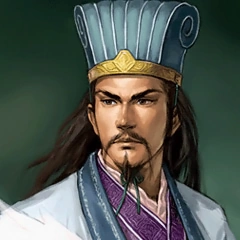
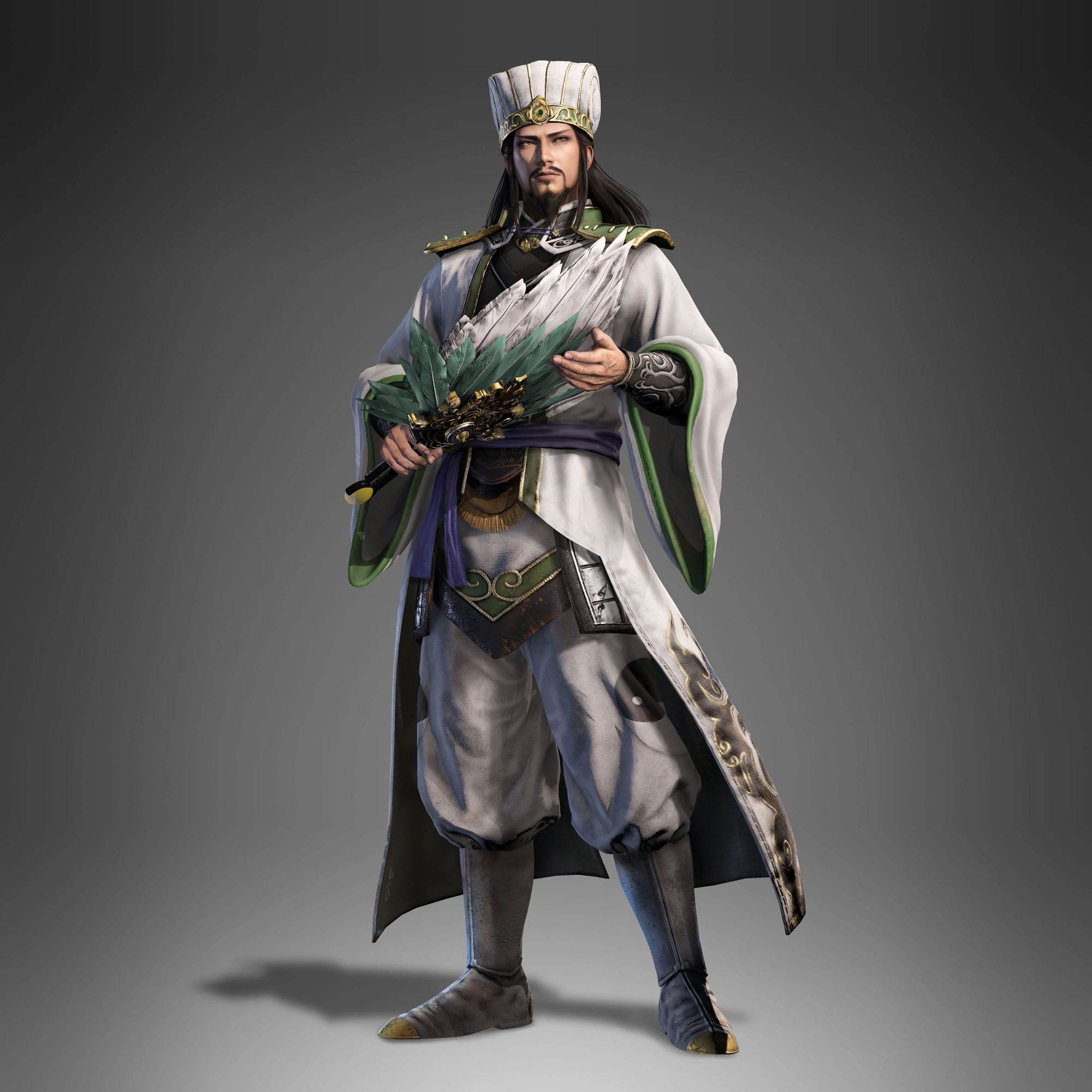
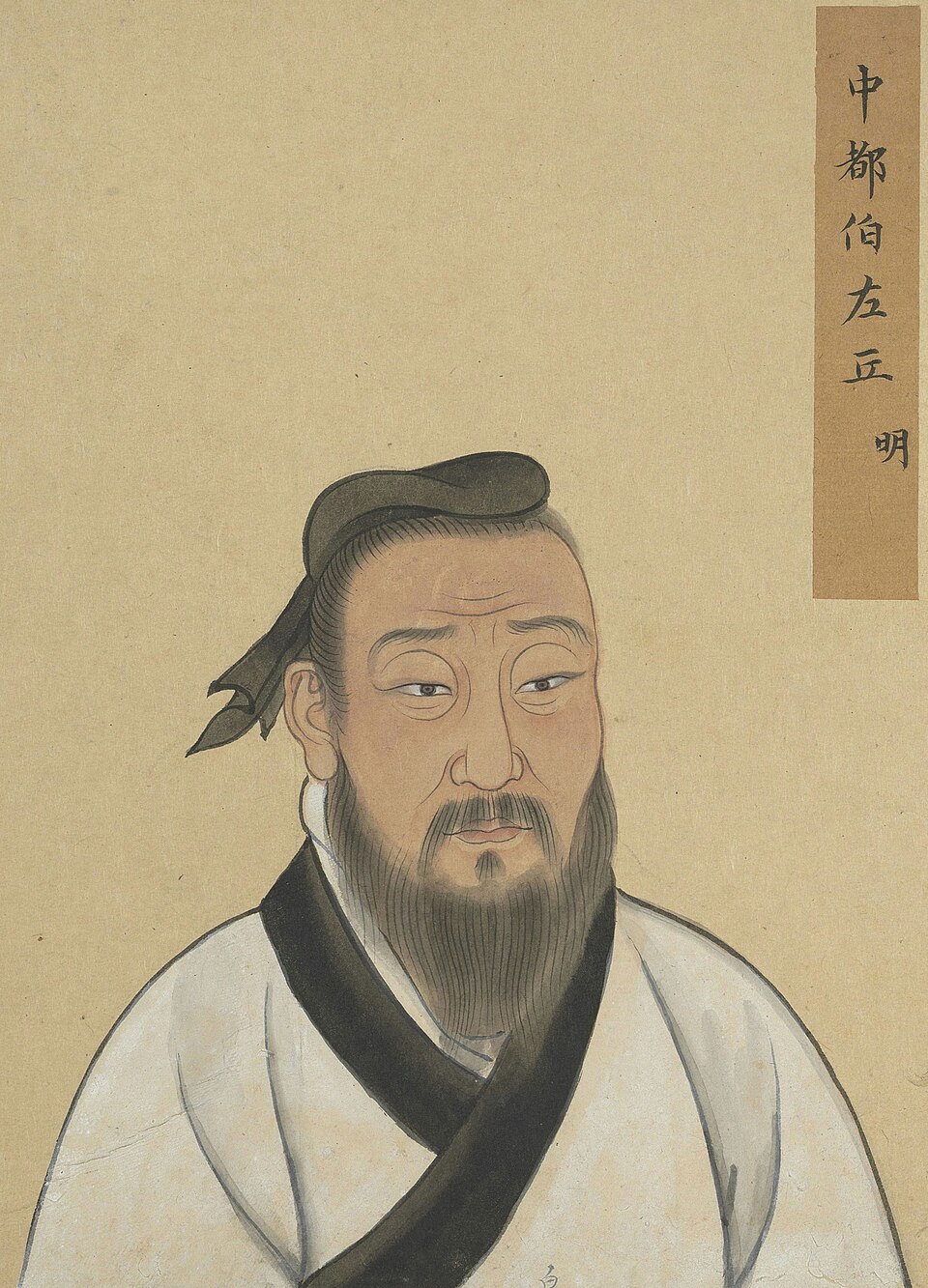
Kongming entry Bio


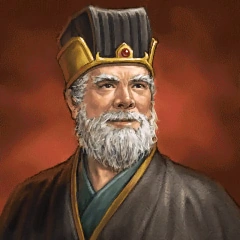
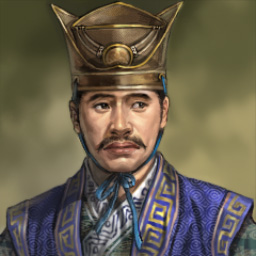
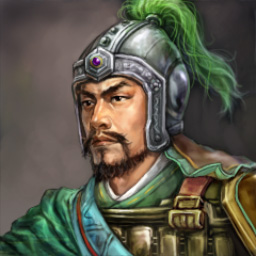
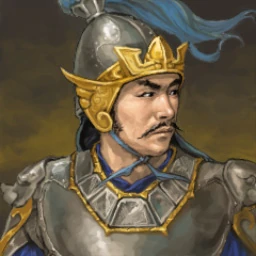
|
Bu Chan
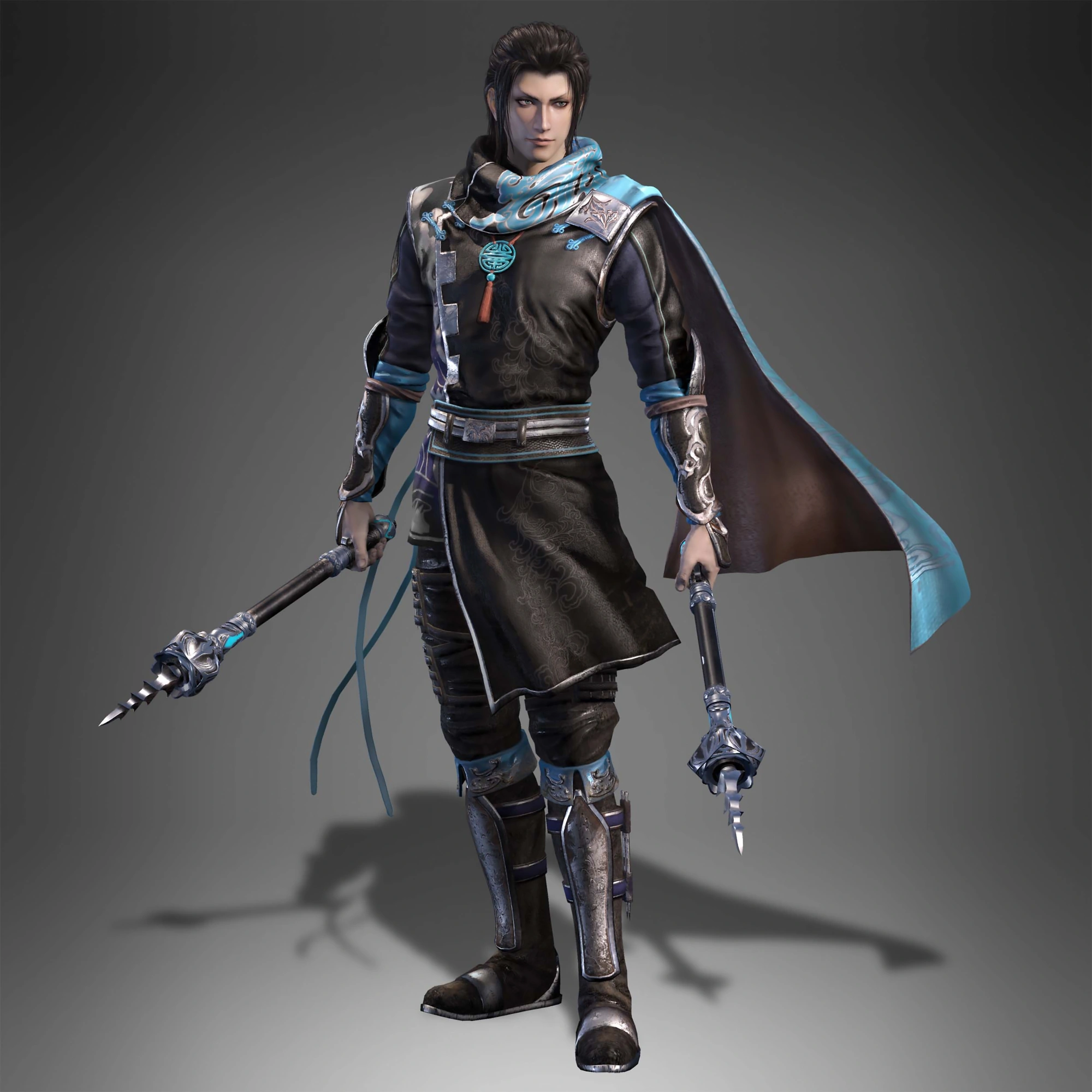
Killed for his defection. Yang Hu's account: 'Formerly his master sent him to attack Xiling, and he slew Bu Chan and many of his generals, before I could save that city' — the defection that Lu Kang punished before the relief column could arrive, and the reason Yang Hu rates him so highly.
1 mention in this chapter
1 mention in the book
|
|
Cao Cao
Named in the closing elegy among the contenders whose names are all that survive: 'Of the three contending heroes only their names remain.'
2 mentions in this chapter
2543 mentions in the book
|
|
Cao Huan
The deposed last emperor of Wei, whose fate is reported in the novel's final accounting: he 'passed away in the first year of Magnificent Peace (AD 302)', of natural causes — outliving both the man who took his throne and the two rulers he is counted beside.
3 mentions in this chapter
38 mentions in the book
|
|
Cen Hun
The favourite eunuch, the confidant Sun Hao chooses on his accession, and the author of the chain-and-hammer barrier that is supposed to stop the Jin navy: 'Iron is plentiful. Make great chains with heavy links and stretch them across the river at various points. Also forge many massive hammers and arrange them in the stream.' Blacksmiths work day and night; Wang Jun laughs and melts the chains with oil-soaked torches. When the court finally finds its voice it names him as the one thing to be done: 'The one evil of today is Eunuch Cen Hun. Slay him, and we ourselves will go out and fight to the death!'
4 mentions in this chapter
4 mentions in the book
|
|
Chen Yuan
Named in the closing matter of the chapter, among the figures of the final settlement.
1 mention in this chapter
1 mention in the book
|
|
Deng Ai
Named in passing only, and dead since ch119, in the closing accounting of the men who took Shu and did not live to see the empire united.
1 mention in this chapter
248 mentions in the book
|
|
Ding Feng
Dies in this chapter, though the text does not say of old age - only that 'By this time Wu had lost by death both Ding Feng and Lu Kang'. Before that he is made Commander of the Right and Left Armies at Sun Hao's accession, and he is the man Sun Hao names when reviewing the defences he inherited: 'over all these was set Ding Feng'. Wu's last link to the Dongxing snow charge of ch108.
3 mentions in this chapter
53 mentions in the book
|
|
Dong Zhuo
Named in the closing elegy, at the head of the roll of warlords the novel opened with.
1 mention in this chapter
281 mentions in the book
|
|
Du Yu
Appointed Commander of Jingzhou and General Who Guards the South on Yang Hu's dying recommendation, and carries out his plan to the letter. The chapter takes care to say what kind of man he is: 'a man of great experience, untiring in study and devoted to the Zuo Volume, the book of commentaries composed by Zuo Qiuming upon the Spring and Autumn Annals. In hours of leisure, a copy of Zuo Volume was never out of his hand; and when he went abroad, an attendant rode in front with the beloved book. He was said to be "Zuo mad".' Begins at Xiangyang by being kind to the people and caring for the soldiers, and moves only once both Ding Feng and Lu Kang are dead.
19 mentions in this chapter
19 mentions in the book
|
|
Empress Dowager He
Sun Hao's mother, given posthumous rank at his accession: 'Posthumous rank was given to his late father, Sun He the Scholar Emperor, and his mother, Lady He, the Scholar Empress.'
1 mention in this chapter
1 mention in the book
|
|
Empress Zhu
The Empress Dowager whose word settles the succession when Puyang Xing loses his nerve: the meeting has already proposed Sun Wan, and it is her consultation that lets Sun Hao be chosen instead.
1 mention in this chapter
1 mention in the book
|
|
Feng Dan
In the Jin court during the preparation of the conquest of Wu - one of the officials around Sima Yan as the last campaign is argued out.
1 mention in this chapter
1 mention in the book
|
|
Gongsun Zan
Named in the closing elegy among the warlords swept away in the early chapters.
1 mention in this chapter
87 mentions in the book
|
|
Guo Si
Named in the closing elegy among the warlords of the opening chapters.
1 mention in this chapter
96 mentions in the book
|
|
Han Sui
Named in the closing elegy among the western warlords of the opening decades.
1 mention in this chapter
71 mentions in the book
|
|
He Jin
Named in the closing elegy - the general whose summons of the frontier armies in ch2 began the whole disaster.
1 mention in this chapter
56 mentions in the book
|
|
He Zhi
Minister of the Interior, one of the three Sun Hao calls in when the scale of the Jin armies and fleets is first reported - 'his Prime Minister Zhang Ti, Minister of the Interior He Zhi, and Minister of Works Teng Xun, to consult how to defend his land.'
1 mention in this chapter
1 mention in the book
|
|
Hu Fen
One of the Jin commanders in the seven-army advance on Wu - part of the coordinated push that leaves the Wu river defences with nothing to concentrate against.
2 mentions in this chapter
3 mentions in the book
|
|
Hu Zong
One of the two who tell Sun Hao how to end it: 'Secretary Hu Zong and Palace Officer Xue Rong said, "Your Majesty, why not imitate the conduct of Liu Shan of Shu, now Duke of Anle?"' The kingdom's last policy decision is to copy the one it had outlived.
1 mention in this chapter
1 mention in the book
|
|
Hua He
The minister Sun Hao consults about where to attack first, and the man who is reminded of what he has already achieved: 'The former Rulers listened to your words and sent generals to various points and placed defensive camps along the rivers.' His lips-and-teeth memorial is the reason Wu still has a river defence to abandon.
6 mentions in this chapter
7 mentions in the book
|
|
Huang Hao
Named in passing only, and executed in ch119 - recalled in the closing accounting as the eunuch whose influence brought a kingdom to nothing.
1 mention in this chapter
32 mentions in the book
|
|
Jia Chong
The Jin court's hardest voice, and the one who asks the question everybody wants asked. Present through the planning of the conquest, and at the reception of the captured Sun Hao he puts it to his face: 'I hear, Sir, that when you were in the south, they gouged out people's eyes and flayed their faces. What crimes were so punished?'
6 mentions in this chapter
47 mentions in the book
|
|
Jiang Wei
Named in passing only, and dead since ch119. The last inheritor of Zhuge Liang's project appears in the final chapter as a name in the reckoning.
1 mention in this chapter
443 mentions in the book
|
|
Li Jue
Named in the closing elegy among the warlords of the opening chapters, paired as ever with Guo Si.
1 mention in this chapter
118 mentions in the book
|
|
Liu Bei
Named in the closing elegy, where the founding of the three kingdoms is recited backwards from the unified empire - the hero whose thirty-year labour is one line of a poem.
3 mentions in this chapter
1978 mentions in the book
|
|
Liu Biao
Named in the closing elegy among the provincial lords whose territories the three kingdoms were built out of.
1 mention in this chapter
179 mentions in the book
|
|
Liu Ping
Executed. One of the three high officers — with Wan Yu and Lou Xuan — who remonstrate with Sun Hao over his wanton and vicious rule when the camps are already murmuring, and are put to death for it.
1 mention in this chapter
1 mention in the book
|
|
Liu Shan
His death is reported in the novel's final accounting: 'Liu Shan, the Emperor of Shu-Han, passed away in the seventh year of Great Beginning, in Jin calendar (AD 271). Cao Huang, the Emperor of Wei, passed away in the first year of Magnificent Peace (AD 302). And Sun Hao, the Emperor of Wu, passed away in the fourth year of Prosperous Peace (AD 283). All three died of natural causes.' He is also the precedent Wu's own ministers hold up to Sun Hao when the end comes: 'Your Majesty, why not imitate the conduct of Liu Shan of Shu, now Duke of Anle?'
5 mentions in this chapter
254 mentions in the book
|
|
Liu Xie
Named in the closing survey of the dynasty's fall — the last Han emperor, whose abdication the Wei abdication of the previous chapter deliberately copied.
1 mention in this chapter
351 mentions in the book
|
|
Liu Xiu
Named in the closing elegy as the founder of the Latter Han — the restoration that the whole book is about failing to repeat.
1 mention in this chapter
15 mentions in the book
|
|
Liu Zhang
Named in the closing elegy - the lord of the River Lands whose inheritance Liu Bei took and whose fate the ch117 couplet said the Latter Ruler would share.
1 mention in this chapter
105 mentions in the book
|
|
Lou Xuan
The third of the three executed remonstrants: 'Prime Minister Wan Yu, General Liu Ping, and Minister of Agriculture Lou Xuan---boldly and earnestly remonstrated with the Emperor for his many irregularities. They suffered death. Within ten years more than forty ministers were put to death for doing their duty.'
1 mention in this chapter
1 mention in the book
|
|
Lu Jing
Named in passing, as one of the Lu family in the last years of Wu - Lu Kang's son, of the house that supplied Wu's commanders from Lu Xun to the end.
3 mentions in this chapter
3 mentions in the book
|
|
Lu Kai
Left Prime Minister from AD 266, he is the one who 'ventured a memorial' against the way the state was being run — and unlike Wan Yu, Liu Ping and Lou Xuan, the chapter does not record him being killed for it.
2 mentions in this chapter
2 mentions in the book
|
|
Lu Kang
The last thing standing between Wu and the end, and the chapter says so twice. Kills Bu Chan and many of his generals at Xiling before Yang Hu can relieve the city, which is why Yang Hu will not attack while he lives. Then dies of illness alongside Ding Feng - 'By this time Wu had lost by death both Ding Feng and Lu Kang' - and Du Yu moves within a paragraph.
18 mentions in this chapter
19 mentions in the book
|
|
Lü Bu
Named in the closing elegy: 'Zhang Xiu and Lu Bu challenged the bold' — the roll of early challengers reduced to a single line.
1 mention in this chapter
545 mentions in the book
|
|
Ma Teng
Named in the closing elegy among the warlords of the opening decades.
1 mention in this chapter
67 mentions in the book
|
|
Puyang Xing
Proposes to honour his master's dying wish and is killed for the second thought. As Prime Minister he calls the meeting and proposes putting Sun Wan on the throne, then doubts himself and consults the Empress Dowager, and so lets Sun Hao in. When he and Zhang Bu later remonstrate against Sun Hao's cruelty, 'both, with all their family, were put to death. Thereafter none dared to speak; the mouth of every courtier was shut tight.'
4 mentions in this chapter
4 mentions in the book
|
|
Shang Guang
Delivers the chapter's cruellest joke. Called in to cast a lot on the attainment of empire, he answers 'All is propitious, and in the year of the "mouse" your blue umbrella will enter Luoyang!' - and Sun Hao takes it for a prophecy of conquest. The blue umbrella does enter Luoyang in the year of the mouse, over a prisoner.
2 mentions in this chapter
2 mentions in the book
|
|
Shen Ying
General of the Left Army, sent with Zhuge Xing to check the Jin advance and then dying beside Zhang Ti at Niuzhu: 'Shen Zong was killed by Zhou Zhi. The army of Wu was defeated and scattered.'
5 mentions in this chapter
5 mentions in the book
|
|
Sima Yan
Opens the chapter already emperor. Keeps Yang Hu on the frontier for years without pressing him, is moved to tears by his deathbed recommendation, appoints Du Yu on it, and finally launches the seven-army river campaign. Asks Yang Hu why he burned the draft of a memorial recommending men — 'How beautiful it is to bring good people into prominence!' Mourns him with the posthumous rank of Imperial Guardian and Lord of Juping. Takes Wu's surrender in AD 280 and makes Sun Hao Lord of Guiming, and the novel ends with the empire in one pair of hands for the first time in ninety years.
26 mentions in this chapter
45 mentions in the book
|
|
Sima Zhou
Prince of Langye and one of the seven Jin commands in the final campaign; arrives at the captured Jianye with Wang Rong to congratulate the victors.
2 mentions in this chapter
2 mentions in the book
|
|
Sun Ce
Named in the closing elegy, among the Sun brothers whose conquest of the South Land is now a Jin province.
1 mention in this chapter
242 mentions in the book
|
|
Sun Hao
Son of the former heir Sun He and grandson of Sun Quan, enthroned in the seventh month of AD 264 over the excluded prince Sun Wan. Changes his reign-style four times in six years; takes the eunuch Cen Hun as his confidant; kills Puyang Xing and Zhang Bu with all their families for remonstrating at his accession, then Wan Yu, Liu Ping and Lou Xuan together, 'and within ten years more than forty ministers were put to death for doing their duty'. Sends for a soothsayer and is told his blue umbrella will enter Luoyang in the year of the mouse — which comes true as a prisoner's journey. Surrenders at Jianye, is made Lord of Guiming, and is asked at the Jin court about gouging out eyes and flaying faces. Dies of natural causes in AD 283.
47 mentions in this chapter
49 mentions in the book
|
|
Sun He
The former Heir Apparent destroyed by Princess Quan's intrigues, made Scholar Emperor posthumously when his son takes the throne of Wu — the rehabilitation that legitimises Sun Hao.
2 mentions in this chapter
5 mentions in the book
|
|
Sun Ji
Named among the Sun clan in the settlement of the last Wu reign.
1 mention in this chapter
1 mention in the book
|
|
Sun Jian
Named in the closing elegy as the founding ancestor of the house whose last emperor has just been made Lord of Guiming.
1 mention in this chapter
126 mentions in the book
|
|
Sun Quan
Named in the closing elegy as one of the three whose kingdoms are now 'gone like a passing dream'.
1 mention in this chapter
603 mentions in the book
|
|
Sun Wan
The heir who is not enthroned. Sun Xiu's son, pointed at from the deathbed and then set aside by Wan Yu on the ground that 'Prince Sun Wan is too youthful to rule in such troublous times', and consoled with the title of Prince of Yuzhang while Sun Hao takes the throne.
3 mentions in this chapter
3 mentions in the book
|
|
Sun Xin
Named in Zhang Ti's last dispositions: 'Commander of the Flying Cavalry Sun Xin to Xiakou' — one of the three points Wu tries to hold as the Jin fleet comes down the river.
9 mentions in this chapter
9 mentions in the book
|
|
Sun Xiu
General of the Flying Cavalry, who leaves the court when the surrender is settled and wails facing south — the last private act of loyalty in the novel.
1 mention in this chapter
1 mention in the book
|
|
Sun Xiu
Dies in the chapter's opening paragraph, and the manner of it is the last of the novel's failed handovers: knowing that Jin will come for Wu next, 'The anxiety made him ill, so that he took to his bed and was like to die.' He summons Puyang Xing and his heir Sun Wan, and they arrive almost too late - 'The dying Ruler, with his last effort, took the Minister by the hand, but could only point to his son. Then he died.' The son is passed over within the hour.
2 mentions in this chapter
66 mentions in the book
|
|
Sun Yi
Named among the Wu commands of the last years.
0 mentions in this chapter
2 mentions in the book
|
|
Tang Bin
One of the Jin commanders in the final campaign against Wu, serving with Wang Jun's river force on its way down the Yangtze.
1 mention in this chapter
1 mention in the book
|
|
Tao Jun
Asks for and gets Wu's last fleet. 'All my ships are small, but give me large vessels and I will place thereon twenty thousand marines and go forth to fight. I can defeat the enemy.' The request is granted, and the ending is one sentence: 'Tao Jun's navy soon melted away without striking a blow.'
2 mentions in this chapter
2 mentions in the book
|
|
Tao Qian
Named in the closing elegy among the provincial governors of the opening chapters.
1 mention in this chapter
47 mentions in the book
|
|
Teng Xun
Minister of Works, and the third of the three officials Sun Hao summons when the invasion is reported — the council that produces Zhang Ti's plan and Cen Hun's chains.
1 mention in this chapter
1 mention in the book
|
|
Wan Yu
Makes Sun Hao emperor and is executed by him. Inspector of the Left Army, it is he who proposes passing over the heir - 'Let us confer the throne to Sun Hao, Lord of Wucheng' - and he who, as Right Prime Minister, later joins Liu Ping and Lou Xuan in remonstrating 'boldly and earnestly' against Sun Hao's irregularities. 'They suffered death.'
3 mentions in this chapter
3 mentions in the book
|
|
Wang Hun
Commands the eastern Yangtze axis, and the precedence quarrel with Wang Jun over who should receive the surrender is the one sour note in the Jin victory.
2 mentions in this chapter
2 mentions in the book
|
|
Wang Jun
Destroys the chain barrier and takes Jianye. Cen Hun's scheme was 'great chains with heavy links… stretched across the river at various points' plus massive submerged hammers to wreck any ship running down before the wind. Wang Jun hears about them from his scouts 'But he only laughed.' He builds great timber rafts loaded with straw effigies in armour and floats them down; the Wu defenders take them for troops and run, and the rafts drag the hammers and chains away with them. Then he lays torches many fathoms long and very thick, of straw soaked in linseed oil, on the rafts — 'When the raft was checked by a chain, the torches were lighted and the chains exposed to the heat till they melted and broke asunder. Thus the rafts went down stream conquering wherever they came.' Takes Shidou when Zhang Xiang opens the gates for him, receives the surrender at Jianye, and is made General Who Upholds the State.
15 mentions in this chapter
15 mentions in the book
|
|
Wang Rong
One of the Jin commanders of the final river campaign, and among the first into the fallen Wu capital with Sima Zhou.
2 mentions in this chapter
2 mentions in the book
|
|
Wang Yun
Named in the closing elegy - the minister of the Dong Zhuo chapters, a hundred and fifteen chapters back.
1 mention in this chapter
94 mentions in the book
|
|
Wu Yan
One of the three field commands in Zhang Ti's final defensive scheme: 'Send Commander of the Flying Chariots Wu Yan to meet the enemy at Jiangling.'
4 mentions in this chapter
4 mentions in the book
|
|
Xue Rong
Palace Officer, and Hu Zong's partner in the advice that produces the surrender — to do what Liu Shan did and accept a dukedom.
1 mention in this chapter
1 mention in the book
|
|
Xun Xu
In the Jin court during the deliberations over the Wu campaign, one of the officials weighing Yang Hu's recommendations after his death.
1 mention in this chapter
3 mentions in the book
|
|
Yang Hu
Dies here, and the chapter gives him the most affectionate obituary in the book. Opposite Lu Kang on the Wu frontier, he refuses to attack a good commander - 'You must not despise Lu Kang, for he is able and crafty... So long as Lu Kang remains in command, I shall remain on the defensive' - and wins the border by conduct instead. Recommends Du Yu to Sima Yan and burns the draft of the memorial so that nobody would know whom to thank. Made Imperial Guardian and Lord of Juping after his death; the traders shut their shops, the frontier camps filled with wailing, and the people of Xiangyang built a temple on the Xian Hills where he had loved to walk. 'The passers-by were moved to tears when they read Yang Hu's name on the tablet, so that it came to be called "The Stone of Tears".'
27 mentions in this chapter
27 mentions in the book
|
|
Yang Ji
A Jin officer in the final campaign, named among the commands that close on Wu from the north and east.
1 mention in this chapter
1 mention in the book
|
|
Yue Yi
Named in the closing matter among the ancients the novel has measured its people against — the last of the many appearances of the Guan Zhong and Yue Yi comparison.
1 mention in this chapter
13 mentions in the book
|
|
Zhang Bu
Helps make Sun Hao emperor and is executed by him. Supports the election — 'Sun Hao is able and prompt in decision. He can handle the responsibilities of an emperor' — and is put to death with his whole family, alongside Puyang Xing, the first time he objects to the results.
2 mentions in this chapter
11 mentions in the book
|
|
Zhang Hua
In the Jin court through the argument about when to move on Wu - one of the voices for acting on Yang Hu's plan rather than letting it lapse with its author.
5 mentions in this chapter
5 mentions in the book
|
|
Zhang Lu
Named in the closing elegy among the regional lords absorbed into the three kingdoms.
1 mention in this chapter
83 mentions in the book
|
|
Zhang Shang
Named among the Wu officials of the last reign, in the collapse that follows Sun Hao's forty executions.
1 mention in this chapter
1 mention in the book
|
|
Zhang Ti
Dies in the field, and the chapter gives him its last great line of defiance. Prime Minister of Wu, he draws up the whole defensive scheme - Wu Yan to Jiangling, Sun Xin to Xiakou, himself with Shen Zong and Zhuge Xing at Niuzhu - and when Zhuge Xing tells him it is hopeless answers 'We all know that the land is doomed. But if we make no defense, and no one dies for his country, shall we not be shamed?' Zhou Zhi breaks into the camp, and 'Zhang Ti resisted stubbornly, but was soon slain in a melee.' Sima Yan afterwards gives ranks to his sons and grandsons.
8 mentions in this chapter
8 mentions in the book
|
|
Zhang Xiang
Opens the last gate. Leader of the Van of the final Wu squadron, abandoned by marines who would not embark in a gale, he comes to Wang Jun to offer surrender — and then leads the Jin fleet in person: 'When he reached the walls of Shidou, he called to the defenders to open the gates and allow the Jin army to enter. The gates were opened.'
3 mentions in this chapter
3 mentions in the book
|
|
Zhang Xiu
Named in the closing elegy, paired with Lu Bu: 'Zhang Xiu and Lu Bu challenged the bold'.
1 mention in this chapter
57 mentions in the book
|
|
Zhong Hui
Named in passing only, and dead since ch119 - the other half of the pair of conquerors who destroyed each other within weeks of their victory.
1 mention in this chapter
131 mentions in the book
|
|
Zhou Zhi
Breaks the last Wu field army. 'the Jin General Zhou Zhi was the first to break into the camp' at Niuzhu, and it is Zhou Zhi who kills Shen Zong while Zhang Ti falls in the melee.
6 mentions in this chapter
6 mentions in the book
|
|
Zhuge Jing
General of the Right Army, and the one who says out loud what everyone knows — and then goes anyway, in tears, when Zhang Ti answers that someone has to die for the country. 'Zhuge Xing left, weeping.'
5 mentions in this chapter
5 mentions in the book
|
|
Zhuge Liang
Named in the closing elegy that ends the novel. The chapter's last verse runs the whole book back through its names and leaves him among them — the ninety-year quarrel reduced to 'rivers and hills as before', with the kingdoms gone.
3 mentions in this chapter
1454 mentions in the book
|
|
Zuo Qiuming
Named as the author of the book Du Yu could not put down: the Zuo Volume, 'the book of commentaries composed by Zuo Qiuming upon the Spring and Autumn Annals'. Du Yu's nickname, 'Zuo mad', is the last piece of characterisation the novel gives anyone.
1 mention in this chapter
1 mention in the book
|
-
Anle
-
Ba State (Warring States/Spring+Autumn) Region
-
Bashan Mountains Mountains/Hills
-
Chengdu County County(30.6661, 104.0754)
-
Chu State (Warring States/Spring+Autumn) Region
-
Guiming
-
Hall of Audience Structure/Building
-
Hanzhong Commandery Commandery(33.0730, 107.0359)
-
Hengjiang
-
Huangzhou Settlement
-
Jiangkou Landmark
-
Jiangling County County(30.3504, 112.1908)
-
Jianping Commandery
-
Jianye Settlement
-
Jin State (Spring+Autumn) Region
-
Jing Province Province
-
Jixi
-
Juping
-
Langye Commandery Commandery(35.0613, 118.3306)
-
Luoyang County(34.7316, 112.5963)
-
Luoyang Location
-
-
Middle Land Region
-
Nanjing
-
Nanyang Commandery Commandery(33.0017, 112.5355)
-
-
-
Niuzhu Settlement
-
Qi State (Warring States/Spring+Autumn) Region
-
Reflected Light Palace
-
River Xiang River
-
River Yuan River
-
Shanghai
-
Shidou City
-
Shu (Three Kingdoms) Region
-
Stone of Tears Landmark
-
Three Mountains Mountains/Hills
-
Tuzhong
-
Wei (Three Kingdoms) Region
-
Wu (Three Kingdoms) Region
-
Wuchang County
-
Xiakou Settlement
-
Xian Hills Mountains/Hills
-
Xiangyang Commandery Commandery(32.0265, 112.1587)
-
Xianyang County County
-
Xiliang Region
-
Xiling County County
-
Yang Province Province
-
Yangtze River River
-
Yellow River River
-
Yi Province Province(31.0466, 104.3000)
-
Yuexiang
-
Yuzhang Commandery Commandery