Sima Yi
司馬懿
Courtesy name: Zhongda (仲達)
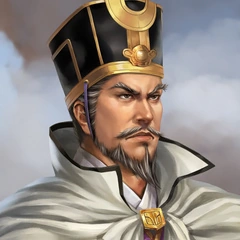
Source:
Koei Wiki (Fandom)
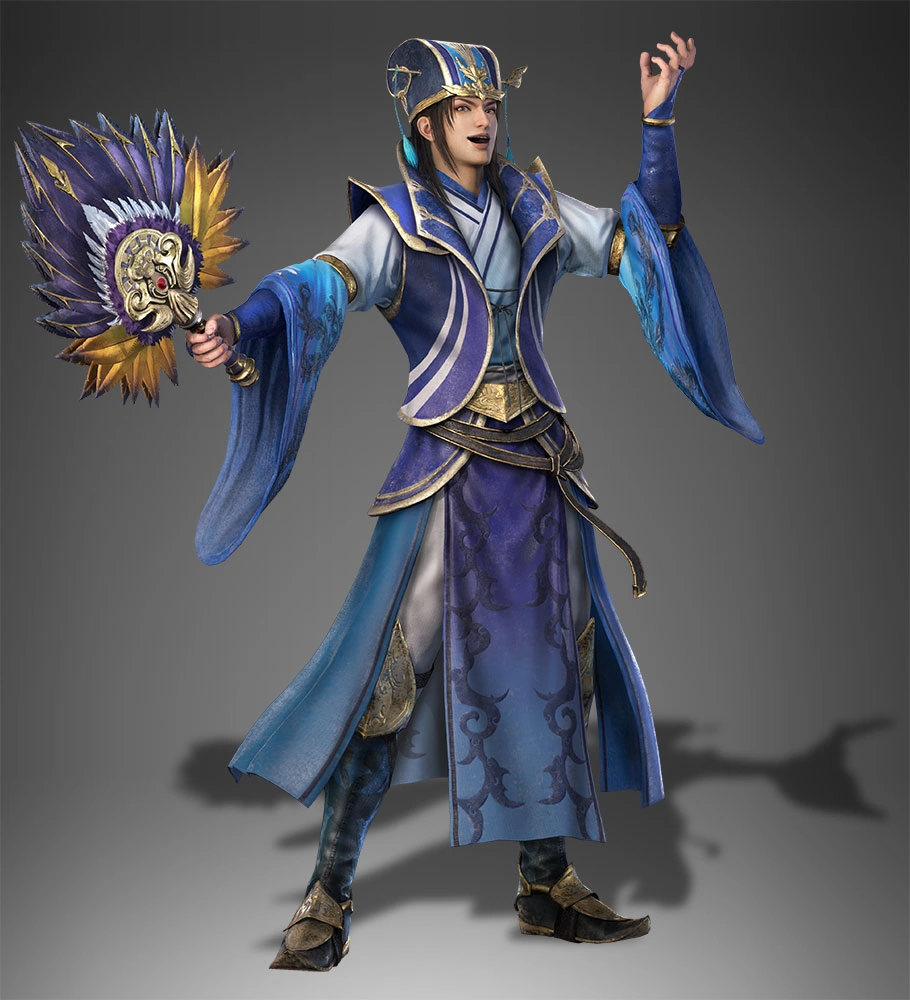
Source:
Koei Wiki (Fandom)
- Born
- 179
- Died
- 251
- Ancestral home
- Xiaojing, Wen County, Henei (Zhaoxian Town, Wen County, Henan)
- Book mentions
- 470
Roles:
general
politician
regent
Factions:
Cao Wei
(primary)
Relationships:
Sima Jun
Ancestor
Sima Fu
Brother
Sima Jin
Brother
Sima Lang
Brother
Sima Xun
Brother
Sima Fang
Father
Sima Juan
Grandfather
Sima Yan
Grandson
Sima Wang
Nephew
Sima Jun
Son
Sima Shi
Son
Sima Zhao
Son
Sima Zhou
Son
Links:
-
Wikipedia entry Bio
Appears in 29 chapters:
-
Chapter 39
— At Jingzhou, The Son Of Liu Biao Thrice Begs Advice; At Bowang Slope, The Directing Instructor Plans His First Battle.
Appointed literary secretary as Cao Cao absorbs the great offices - introduced by lineage alone: grandson of Sima Juan, son of Sima Fang, younger brother of Sima Lang, a man of Henei. The quietest debut of the book's longest game.
-
Chapter 67
— Cao Cao Conquers Hanzhong; Zhang Liao Terrorizes Xiaoyao.
Speaks first for pressing into Shu while Liu Bei's grip is raw — 'the wise person takes the occasion when it serves' — and draws Cao Cao's famous sigh instead of an army.
-
Chapter 69
— Guan Lu Sees Things In The Book Of Changes; Five Loyal Subjects Die For Their State.
Warns against the Wang Bi appointment — 'the man is given to wine, and slack' — and is overruled by Cao Cao's loyalty argument. The night of fires proves him right.
-
Chapter 73
— Liu Bei Becomes The Prince Of Hanzhong; Guan Yu Marches To Attack Xiangyang.
Sima Yi; first major counsel - proposes goading Sun Quan to attack Jingzhou to relieve Wei pressure. The strategy that produces the Lu Meng raid.
-
Chapter 75
— Guan Yu Has A Scraped-Bone Surgery; Lu Meng Crosses The River In White Robe.
Sima Yi; on Cao Cao's council; with Jiang Ji presses the Sun Quan back-channel - let Wu attack Jingzhou.
-
Chapter 77
— Cao Cao Is Possessed At Luoyang; Guan Yu Manifests At The Jade Spring Mount.
Sima Yi; advises Cao Cao to bury Guan Yu's head honourably so the vengeance goes to Wu, not Wei. The classic deflection move.
-
Chapter 78
— Treating A Headache, A Famous Physician Dies; Giving The Last Words, The Crafty Hero Departs.
Turns Sun Quan's flattery into policy — confer titles on the self-declared servant and set him on Liu Bei — and takes his place among the four advisers at the deathbed. The three horses feed at the manger unread.
-
Chapter 80
— Cao Pi Deposes The Emperor, Taking Away The Fortunes of Han; Liu Bei Assumes The Throne, Continuing The Heritage.
Stops Cao Pi from accepting on the first offer — decorum demands refusal, 'so as to silence people's criticism.'
-
Chapter 85
— The First Ruler Confides His Son To A Guardian; The Prime Minister Calmly Settles Five Attacks.
Steps from the ranks over Jia Xu's caution — 'if you neglect this moment, can you expect a more favorable opportunity?' — and lays out the five-route plan: half a million men on five roads, 'hard for Zhuge Liang to hold his own, even if he had the talent of Lu Wang himself.'
-
Chapter 86
— Using Words, Qin Mi Overcomes Zhang Wen; Setting Fire, Xu Sheng Defeats Cao Pi.
Designs the whole naval campaign — River Huai, Shouchun, Guangling, cross to Nanxu — and is then made Chair of the Secretariat and left in the capital with a Regent Marshal's powers while it fails without him.
-
Chapter 91
— Sacrificing At River Lu, The Prime Minister Marches Homeward; Attacking Wei, The Lord Of Wuxiang Presents A Memorial.
Asks for the vacant Yongzhou-Liangzhou command and gets it, putting every western army under him — which is exactly what makes Zhuge Liang say he must be attacked at once. Ma Su's forged proclamation destroys him instead. Rides out to meet his Emperor at Anyi with a hundred thousand of his own men purely to show off his dignity, and the display damns him; Cao Xiu's accusation turns him pale and sweating. He grasps the mechanism immediately — 'This is a vile plot on the part of our rivals, Shu and Wu, to cause dissension' — sends his army back, goes forward alone to the chariot and begs weeping to be allowed to destroy Shu and then Wu to prove himself. Hua Xin's compromise strips his military power and sends him to his native village; Cao Xiu takes his command. The obstacle to the Northern Expedition removes itself.
-
Chapter 94
— Zhuge Liang Defeats The Qiangs In A Snowstorm; Sima Yi Captures Meng Da By A Rapid March.
The chapter's pivot, recalled from idleness at Wancheng. Sighing over Wei's defeats in front of his sons, he is answered by Sima Zhao — 'they will send for you presently' — and the commission is literally at the gate as he says it. Shen Yi's secret message about Meng Da arrives the same hour and he reads the whole board at once: 'if I can seize this Meng Da before he makes any move, that will damp Zhuge Liang's spirits and he will retreat.' Overrules Sima Shi's advice to memorialize the Throne — a month's delay would mean failure — orders double-rapid marches on pain of death, and sends Liang Ji ahead with a friendly letter telling Meng Da to make ready to join the western expedition, purely to keep him still. Picks up Xu Huang on the road, captures Meng Da's courier with Zhuge Liang's warning letter on him, and remarks that but for that luck 'our plan would have been foiled by Zhuge Liang's cleverness'. Rewarded with a pair of golden axes and the right to act in important matters without first seeking sanction — the grant that makes the rest of the novel possible — and names Zhang He his Van Leader.
-
Chapter 95
— Ma Su's Disobedience Causes The Loss Of Jieting; Zhuge Liang's Lute Repulses The Army Of Sima Yi.
Reads the whole campaign off the map before it starts: Zhuge Liang is too careful for the Ziwu Valley, so he will come by the Xie Valley through Meicheng, and the throat of it all is Jieting and Liliu. Warns Zhang He that this is not Meng Da and to reconnoitre far ahead. Rides out at night in disguise with a small escort to look at the hill himself, and on hearing who holds it delivers the verdict — 'A man of false reputation and very ordinary ability. If Zhuge Liang uses such as Ma Su, he will fail.' Blocks Wang Ping with Zhang He, gives the hill and its water to the Shens, lets Ma Su out on purpose, and then beats Guo Huai to Liliu to greet him from the rampart: 'How late you are, friend Guo Huai!' At Xicheng the calculation turns on him — he reads the open gates and the lute as a subtlety too deep to enter, and the retreat is his own carefulness used against him. Learns the truth afterwards from returning villagers and says it plainly: 'Zhuge Liang is a cleverer man than I am.'
-
Chapter 96
— Shedding Tears, Zhuge Liang Puts Ma Su To Death; Cutting Hair, Zhou Fang Beguiles Cao Xiu.
Endorses Sun Zu's holding strategy in two words, draws up the scheme of defence and stations the troops. Judges Shu unattackable in the hot weather and prepares instead for the invasion he is sure is coming, naming Chencang and the man to hold it. Reads Zhou Fang's memorandum as reasonable and volunteers to exploit it, concedes Jia Kui's objection must also be listened to — 'Yet such a chance must not be missed' — and leads the third army against Jiangling, where Zhuge Jin holds him. Withdraws on the news of Cao Xiu's defeat without having fought.
-
Chapter 97
— Sending A Second Memorial, Zhuge Liang Renews The Attack On Wei; Forging A Letter, Jiang Wei Defeats The Northern Army.
Brings his army home from the Wu front and is asked why he hurried back; his answer is pure anticipation — if Zhuge Liang hears of the defeat he may go for Changan, and the whole West Valley Land would be helpless. His officers 'listened and smiled, for they thought he was afraid'. He returns at the very end with the chapter's cliffhanger: 'I have a scheme all ready, not only to turn back Zhuge Liang, but to do so without any exertion on our part. They will retire of their own will.'
-
Chapter 98
— Pursuing The Shu Army, Wang Shuang Meets His Death; Raiding Chencang, Zhuge Liang Scores A Victory.
Right about everything and not in command until the last page. Explains that Chencang was garrisoned precisely because Zhuge Liang would come that way, that Shu's advantage is a quick battle and Wei's is delay, and that a month will starve the invaders out; declines to lead in person because he is holding the east against Lu Xun, and predicts flatly that 'Sun Quan will declare himself Emperor before long. If he does, he will be afraid of Your Majesty's attack, and so he will try to invade us first.' Has his own advice delivered to Cao Zhen as a royal command with his name kept out of it - 'do not tell him the suggestion was mine; only quote the royal command.' Later reads the Shu-Wu alliance correctly too: Zhuge Liang still wants Wu for Xiaoting, Lu Xun is 'sitting on the fence', and Wei should only defend westward. Made Commander-in-Chief of all forces in the west, and refuses the seal three times before taking it from the sick Cao Zhen's hands.
-
Chapter 99
— Zhuge Liang Defeats The Wei Army; Sima Yi Invades The West River Land.
Arrives at Changan, makes Zhang He Leader of the Van with Dai Ling under him and a hundred thousand troops, camps on River Wei's south bank, and reasons from Shu's inactivity that something is being worked out. Sends Guo Huai and Sun Li secretly to relieve Wudu and Yinping and take the Shu rear — and they come back on foot. Sends Zhang He and Dai Ling on a night march to the Shu rear while he arrays in front — straw-carts across the road and torches on every hill. Then, against his own judgement, lets Zhang He talk him into the pursuit and follows with fifty thousand, and loses the camp raid to Jiang Wei and Liao Hua: 'I knew Zhuge Liang would plan some trick, but you did not believe me.' His verdicts are the chapter's refrain — 'It is no fault of yours. The fact is he is sharper than I', 'He is more than human!', and finally 'The man appears like a god and disappears like a demon. He is too much for me.' Made Grand Commander and second to Cao Zhen for the AD 230 invasion, where he is the one who reads the rain out of the stars and argues for stopping at Chencang.
-
Chapter 100
— Raiding A Camp, The Shu Soldiers Defeat Cao Zhen; Contesting Array Battles, Zhuge Liang Shames Sima Yi.
Wins the argument with Cao Zhen about whether Shu will come at all and stakes a painted face on it; goes among his own camps disguised as a common soldier to hear what is said, hauls out the junior officer he catches grumbling about the wager and has him beheaded in front of the assembled officers. Warns Cao Zhen in time and is disbelieved, then rides to pull him out of the wreck of his camp and refuses to press the wager: 'We must both do our best for the country.' At River Wei he opens the parley with the legitimacy argument — Cao Pi's accession 'after the manner of King Yao, who abdicated in favor of King Shun', against 'a plowman from Nanyang' — and takes the flush of shame when Zhuge Liang answers that his own ancestors ate of Han's bounty. Loses the array contest, sends Zhang Hu, Dai Ling and Yue Chen into the Eight Arrays and gets them back on foot with their faces inked, attacks in a temper and loses six or seven of every ten men. Then buys Gou An, plants the Chengdu rumour, waits for the recall he has engineered — and lets the retreat go because of the cooking stoves, counted in two successive abandoned camps and found increased by half: 'Zhuge Liang imitated the ruse of Sun Bin to rouse my suspicion. His thinking is superior to mine.'
-
Chapter 101
— Going Out From Longshang, Zhuge Liang Dresses As A God; Dashing Toward Saber Pass, Zhang He Falls Into A Snare.
Takes the command after Cao Zhen's death with a straight offer to Cao Rui, is escorted out of the city in the imperial chariot, and reads Zhuge Liang's supply problem correctly on arrival — 'Zhuge Liang… certainly intends to reap the wheat in West Valley Land' — and beats him to Longshang. Then loses his nerve to the four-chariot apparition: three identical Zhuge Liangs in three identical chariots with barefoot, loose-haired swordsmen and black seven-starred flags, and a cold mist that his cavalry cannot ride through. He names it as sorcery out of the Book of Six Layers Deities, decides 'they must be heaven-sent soldiers', and runs all the way to Shanggui and shuts the gates for three days. Gets the truth out of a captured reaper and says only 'His comings and goings are not human.' Talked back into the field by Guo Huai, loses the night assault on Lucheng to four corner ambushes, and is then pinned by the reinforcement plan. Finally, and against his own explicit warning that 'they will leave an ambush at every possible point', he lets Zhang He go — and owns it: 'Letting friend Zhang He die is my fault!'
-
Chapter 102
— Sima Yi Occupies The Banks Of River Wei; Zhuge Liang Constructs Mechanical Bullocks And Horses.
His best chapter and his worst hour in the same forty pages. Asks for the four sons of Xiahou Yuan by name and by aptitude (Xiahou Ba and Xiahou Wei as archer-cavaliers for the van, Xiahou Hui and Xiahou He as strategists), musters four hundred thousand on River Wei with nine floating bridges and an earth rampart behind the camp, carrying a private written command from Cao Rui that lays out the whole waiting strategy. Then reads Zhuge Liang's Beiyuan plan off the spies' report exactly right — 'He proposes to make a show of taking Beiyuan, and then, dropping down the river, he will try to burn our bridges' — and beats it comprehensively: Sun Li abandons Beiyuan as a feint, Wei Yan and Ma Dai are caught between him and Guo Huai, Hu Ban is drowned, and Shu loses more than ten thousand men. That is his one clean victory over Zhuge Liang in the novel. He then loses all of it to Zheng Wen's forged letter, which he tests carefully and passes; only Sima Shi's objection stops him leading the raid in person, and Qin Lang dies in his place while he himself is caught on both flanks by Wei Yan and Jiang Wei and loses eight or nine of every ten men. Ends the chapter copying the wooden oxen, having two thousand built in a fortnight, and watching Wang Ping steal his own convoy back.
-
Chapter 103
— In Gourd Valley, Sima Yi Is Trapped; In Wuzhang Hills, Zhuge Liang Invokes The Stars.
His chapter runs from the humiliating to the masterly. Opens fleeing the field as a lone horseman with Liao Hua's sword missing him by a tree's width, and gets clear only by throwing his golden helmet away on the east side of the wood and riding west. Takes his generals' captured Shu soldiers and frees them all, on an explicit precedent — 'Let them go back to their own and praise the kindliness of the Wei leaders. That will slacken the desire of their comrades to fight against us. That was the plan by which Lu Meng captured Jingzhou.' Is fed a fortnight of dummy convoys, believes the Gourd Valley is Shu's granary, takes it with his two sons, and ends clasping them in his arms in the fire: 'My sons, we three are doomed!' Saved by the storm, breaks out, burns the floating bridges behind him and holds the north bank. Receives Zhuge Liang's letter calling him a coward and 'pretended to take it all as a joke and smiled'. Then makes the two calls that decide the war — that the Wuzhang Hills rather than Wugong means Wei is safe ('Our great Emperor of Wei has remarkable fortune'), and that Zhuge Liang, eating a few pints of grain a day and personally judging every case over twenty strokes, cannot last: 'Indeed, Zhuge Liang eats little and works much. Can he last long?' Extracts an imperial edict forbidding battle purely to silence his own officers, and thanks Xin Pi for seeing through him.
-
Chapter 104
— A Falling Star: The Prime Minister Ascends To Heaven; A Wooden Statue: The Commander-In-Chief Is Terrified.
Reads the death correctly off a large red star that passes from the northeast to the southwest, dips three times and drops over the Shu camps - 'Zhuge Liang is dead!' - orders the pursuit, and talks himself out of it at his own camp gates. Sends Xiahou Ba to check instead, finds the camps empty, and this time goes himself with both sons. Then the banner of the Prime Minister of Han, Lord of Wuxiang, and the small carriage with the feather fan: 'Then Zhuge Liang is still alive! And I have rashly placed myself in his power.' Gallops fifteen miles without pulling rein and has to be stopped by two generals catching at his bridle, and the first thing he says when they do is 'Have I still a head?' The verdict, once the natives bring him the truth about the wooden image: 'While he lived, I could guess what he would do; dead, I was helpless!' Resumes the pursuit to the Red Hills, finds the enemy long gone, and rides home past their abandoned camps admiring the layout - 'Truly a wonderful genius!'
-
Chapter 105
— The Lord of Wuxiang Leaves A Plan In The Silken Bag; The Ruler of Wei Removes The Bronze Statue With The Dew Bowl.
His entire appearance is one sentence: in AD 235 'Sima Yi was created Grand Commander, with command over all the forces of Wei, and he departed for Luoyang.' That single promotion puts every Wei army under him before Gongsun Yuan gives him a reason to use them.
-
Chapter 106
— Suffering Defeat, Gongsun Yuan Meets His Death; Pretending Illness, Sima Yi Deceives Cao Shuang.
The Liaodong campaign in full, and the sickbed act. He takes the commission with forty thousand men against a hundred and fifty thousand — 'The strength of an army is not in numbers, but in strategy' — and budgets the war to the day: a hundred days out, a hundred attacking, a hundred back, sixty resting, one year. Predicts Gongsun Yuan's three possible plans and says the worst of them, holding Xiangping, is the one that will get him captured. Feints at Xiangping to pull Bei Yan out of his walled camp, refuses to move the army off the flooded plain and executes Chou Lian for asking twice, then deliberately opens a gate and pulls back seven miles so the starving garrison can desert — and explains the whole reasoning to Chen Qun by contrasting it with Shangyong. Reads a falling star over Shoushan Mountain and names the day: 'Five days from now Gongsun Yuan will be slain where that star fell.' Refuses two embassies, beheading the first, and gives the second the five courses open to an army: 'If you can fight, fight; if you cannot fight, defend; if you cannot defend, flee; if you cannot flee, surrender; if you cannot surrender, die.' Kills the Gongsuns on the road and honours the tombs of the two men Gongsun Yuan executed for opposing the revolt. Then, back at court, he is promoted into a civil sinecure, gives out that he is ill, and stages the scene for Li Sheng — hair loose, bedding tumbled, two servant girls holding him up, deaf to the difference between Qingzhou and Bingzhou, and broth spilled down his front. 'Li Sheng will take a full account of this to Cao Shuang, who will not fear me any more. But wait till Cao Shuang goes on his next hunting trip, and we will see what can be done.'
-
Chapter 107
— The Ruler of Wei Hands Over The Power To Sima Yi; Jiang Wei Is Defeated At Ox Head Hills.
The coup is his: with Cao Shuang and every one of his brothers out of the city, he uses his Imperial Guardian's authority to put Gao Rou over Cao Shuang's camp and Wang Guan over Cao Xi's, goes to the Empress Dowager for the warrant — 'I have prepared plans for the destruction of these base ministers and will see to it that no trouble happens to yourself' — has Jiang Ji and Sima Fu copy out his memorial, seizes the arsenals, and camps on River Luo at the Floating Bridge. Sends three separate embassies to Cao Shuang swearing by the river that he wants nothing but the military power. Then takes the seal, arrests Zhang Dang, extracts the names of the five, and puts Cao Shuang, his brothers, their friends and all their clans to death in the market place. Refuses Jiang Ji's request to punish Xin Chang, Lu Zhu and Yang Zong — 'They are righteous people who serves their master faithfully' — confirms them in office, and amnesties the rest of the faction. Finally moves against Xiahou Ba with a summons to Luoyang, and drives him into Shu. Ends the chapter alive, Prime Minister, holding the Nine Dignities and running the state with his two sons.
-
Chapter 108
— In The Snow, Ding Feng Wins A Victory; At A Banquet, Sun Jun Executes A Secret Plan.
He dies in this chapter. In the eighth month of the third year of Domestic Calm (AD 251) he falls ill, the sickness gains rapidly, and he calls both sons to the bed for a last word that is half warning and half confession: 'I have served Wei many years and reached the highest rank possible among ministers. People have suspected me of ulterior aims, and I have always felt afraid of that. After my death the government will be in your hands, and you must be doubly careful.' He dies on that sentence.
-
Chapter 109
— A Ruse Of A Han General: Sima Zhao Is Surrounded; Retribution For The House Of Wei: Cao Fang Is Dethroned.
Named in passing only, and long dead - but in the one sentence that gives the Iron Cage Mountain siege its meaning for Jiang Wei: 'I have always regretted that our great Prime Minister was unable to capture Sima Yi in the Gourd Valley, but now I think his son is doomed to fall into our hands!' The son gets out the same way the father did, by weather.
-
Chapter 111
— Deng Ai Outwits Jiang Wei; Zhuge Dan Battles Sima Zhao.
Named in passing only, and long dead - but the mention is odd enough to be worth flagging: after killing Yue Chen, Zhuge Dan 'sent to Luoyang a memorial detailing Sima Yi's many faults', where the man he is actually indicting is SIMA ZHAO. Either the translation's slip or the narrator's; it is left as it stands here.
-
Chapter 119
— The False Surrender: A Wit Scheme Becomes A Vain Plan; The Abdication: Later Seeds Learn From The Ancient.
Named in passing only, and long dead, but twice honoured: made Original Prince when his son becomes Prince of Jin, and Original Emperor when his grandson takes the throne. First of the seven ancestral temples Sima Yan builds.