Sima Zhao
司馬昭
Courtesy name: Zishang (子上)
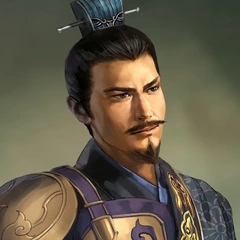
Source:
Koei Wiki (Fandom)
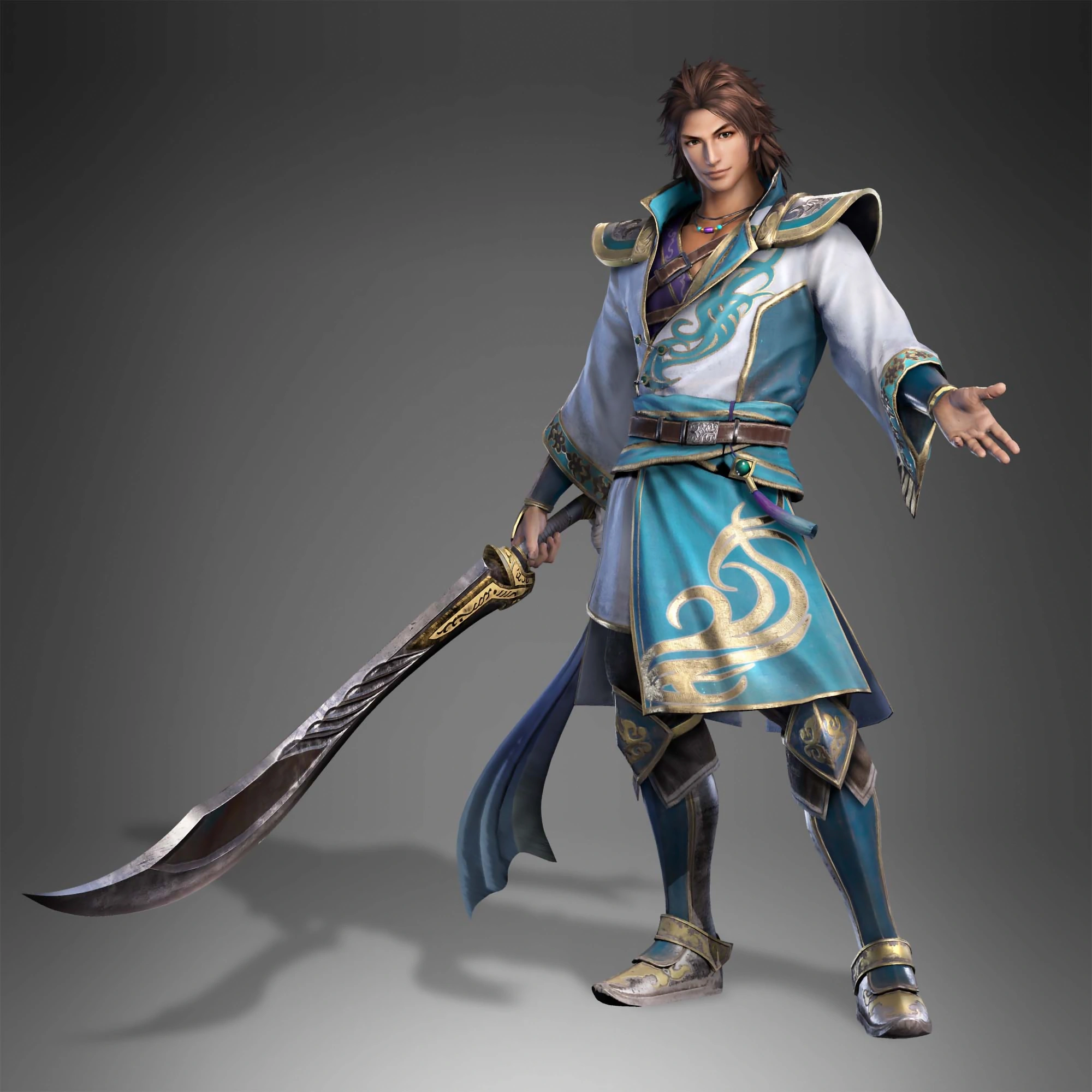
Source:
Koei Wiki (Fandom)
- Born
- 211
- Died
- 265
- Ancestral home
- Wen County, Henei (Wen County, Henan)
- Book mentions
- 170
Roles:
general
politician
regent
Factions:
Cao Wei
(primary)
Relationships:
Sima Jun
Brother
Sima Shi
Brother
Xun Yi
Brother-in-law
Sima Wang
Cousin
Sima Yi
Father
Sima Zhou
Half-Brother
Sima Yan
Son
Sima You
Son
Wang Yuanji
Wife
Links:
-
Wikipedia entry Bio
Appears in 18 chapters:
-
Chapter 94
— Zhuge Liang Defeats The Qiangs In A Snowstorm; Sima Yi Captures Meng Da By A Rapid March.
At Wancheng with his brother, and it is his line that the chapter immediately fulfils — 'But they will send for you presently', said as the bearer of the commission is already standing at the gate. Brings up the rear of the forced march with Sima Shi.
-
Chapter 95
— Ma Su's Disobedience Causes The Loss Of Jieting; Zhuge Liang's Lute Repulses The Army Of Sima Yi.
Sent to reconnoitre Jieting with orders not to advance if it is garrisoned, and brings back the report that decides the battle — no camp on the road, the enemy on the hill. Challenges his father's retreat from Xicheng too — 'I am certain there are no soldiers behind this foolery' — and is answered with the reasoning that turns out to be wrong. Commands one side of the ambush that surrounds Wei Yan.
-
Chapter 102
— Sima Yi Occupies The Banks Of River Wei; Zhuge Liang Constructs Mechanical Bullocks And Horses.
Sent with his brother Sima Shi to reinforce the front camp on River Wei while Sima Yi takes his own army to relieve Beiyuan.
-
Chapter 103
— In Gourd Valley, Sima Yi Is Trapped; In Wuzhang Hills, Zhuge Liang Invokes The Stars.
Rides on his father's right into the Gourd Valley and is one of the two sons Sima Yi embraces when he believes all three are about to burn. Breaks out with them when the storm quenches the fire.
-
Chapter 106
— Suffering Defeat, Gongsun Yuan Meets His Death; Pretending Illness, Sima Yi Deceives Cao Shuang.
With his father and brother on the road outside Xiangping when the Gongsuns break out, and then resigns his office as part of the withdrawal from public life that sets the trap for Cao Shuang.
-
Chapter 107
— The Ruler of Wei Hands Over The Power To Sima Yi; Jiang Wei Is Defeated At Ox Head Hills.
After the Nine Dignities 'his two sons were made assistants to their father, and all state affairs fell under the control of these three'. His one action on the page is to guard his father across the court while Pan Ju's bowmen are on the wall above them.
-
Chapter 108
— In The Snow, Ding Feng Wins A Victory; At A Banquet, Sun Jun Executes A Secret Plan.
Made Commander-in-Chief of the three-pronged invasion of Wu and argues for it in council - 'The occasion is most opportune. Sun Quan is newly dead, and the present ruler is a child.' Watches the Dongxing front break and orders the retreat without having fought. Later sent west to reinforce Guo Huai against Jiang Wei while Guanqiu Jian and Hu Zun hold off Wu.
-
Chapter 109
— A Ruse Of A Han General: Sima Zhao Is Surrounded; Retribution For The House Of Wei: Cao Fang Is Dethroned.
Commander-in-Chief of the western expedition, and the chapter's most famous miracle. Penned on the Iron Cage Mountain with six thousand men, one road up, and a single spring 'enough to serve a hundred people or so', he looks up and says 'Death will surely come to me here!' Reminded by Wang Tao of Geng Gong, he kneels at the spring and prays: if he is to die here let the water stop and he will end his own life and let the men surrender, but if his span is not reached, 'then, O Blue Vault, increase the flow of water and save the lives of this multitude.' The water gushes. Comes down off the hill the moment Jiang Wei's camp breaks, pursues, and goes home to Luoyang to govern jointly with his brother.
-
Chapter 110
— Riding Alone, Wen Yang Repulses A Brave Force; Following The River, Jiang Wei Defeats The Enemy.
Inherits everything in the space of four paragraphs. Left in charge at Luoyang, called to the deathbed at Xuchang, given the seal and the warning about entrusting power to outsiders. Ordered by edict to remain at Xuchang; goes to River Luo instead on Zhong Hui's advice, which alarms the Emperor into creating him Regent Marshal with control of the Secretariat - after which 'all matters and the whole government were under Sima Zhao's hand'.
-
Chapter 111
— Deng Ai Outwits Jiang Wei; Zhuge Dan Battles Sima Zhao.
Consolidates and then over-reaches. Made Empire's Commander-in-Chief with three thousand mail-clad guards and cavalry squadrons whenever he goes out, 'so that the court was rather in his palace than in that of the Emperor' - and 'plans for taking the final step constantly occupied his thoughts'. Sends Jia Chong east under cover of thanking the troops, to find out who would support a usurpation; gets 'The rat!' for an answer, and moves against Zhuge Dan with a secret letter to Yue Chen and a promotion designed to bring him to the capital. Then takes Jia Chong's advice about the expedition - bring the Empress Dowager and the Emperor along so that nothing can shift behind you - and mobilises two hundred sixty thousand men of the two capitals.
-
Chapter 112
— Rescuing Shouchun, Yu Quan Dies Nobly; Attacking Changcheng, Jiang Wei Mobilizes.
Wins the last of the Huainan rebellions and takes every one of Zhong Hui's suggestions to do it. Lays the abandoned-baggage trap with Shi Bao and Zhou Cai in ambush, besieges Shouchun on three sides with the south gate open, cuts Zhu Yi's relief on the road, pardons the Wen brothers against his own inclination, and releases the surrendered Wu soldiers against Pei Xiu's advice. Puts Zhuge Dan's whole family to death, and then does the chapter's one gracious thing: offers each of Zhuge Dan's captured guards his life at the moment of execution, finds that not one will take it, and has them all honourably interred. Turns for home and is met by the news that Jiang Wei is at Changcheng.
-
Chapter 113
— Ding Feng Makes A Plan To Slay Sun Chen; Jiang Wei Arrays A Battle To Defeat Deng Ai.
Named briefly and rewards generously: when Deng Ai reports the fire-traps in the Luo Valley and the decision not to pursue, 'Sima Zhao was very pleased and confer more rewards.' The Wei half of the chapter is run entirely by his subordinates.
-
Chapter 114
— Driving To The South Gate, Cao Mao Plunges Into Death; Abandoning Stores, Jiang Wei Defeats The Wei Army.
Has an emperor killed and refuses a throne in the same chapter. Goes to court armed, complains out loud that Duke of Jin and the Nine Dignities are beneath his family's services, and throws the Lurking Dragon poem in Cao Mao's face - 'That poem about the Lurking Dragon called us slimy creatures. What sort of politeness is that?' Afterwards he beats his head against the carriage weeping, offers Chen Tai a lesser scapegoat than Jia Chong, has Cheng Ji's tongue cut out and his family exterminated, and allows the royal funeral. Then declines the abdication with a piece of pure Cao Cao - 'Formerly King Wen had two-thirds of the empire, and yet he supported and served the state of Yin to its end... Emperor Cao of Wei would not replace the Hans, nor will I accept an abdication of Wei' - and everyone present understands it to mean his son will take it instead. Installs Cao Huan, becomes Prime Minister and Duke of Jin with a hundred thousand gold coins and ten thousand rolls of silk.
-
Chapter 115
— Listening To Slander, The Latter Ruler Recalls His Army; Living In Farms, Jiang Wei Avoids Disaster.
Decides to conquer Shu, and lays out exactly how. Furious at Deng Ai's map of the forty cantonments - 'This Jiang Wei has invaded our country many times, and we have been unable to destroy him. He is the one sorrow of my heart' - he rejects Jia Chong's assassin for Xun Xu's army, appoints Zhong Hui and Deng Ai, and executes Deng Dun on the spot for objecting. His strategy is stated in full: six years of preparation since the east, Shu first and then Wu 'like a flood', which is 'the method destroy Guo to capture Yu'; and a troop count to the nearest ten thousand on both sides. Sees through Zhong Hui's shipbuilding, accepts the explanation, escorts him three miles out of the city - and then tells Shao Ti, who has just warned him that Zhong Hui is too ambitious to trust, 'Think you I do not know?'
-
Chapter 116
— On Hanzhong Roads, Zhong Hui Divides The Army; In Dingjun Mountain, The Martial Lord Shows His Apparition.
Delivers the finest piece of political reasoning in the late novel, privately, to Shao Ti: the timid officers would lose, Zhong Hui will win because he believes in it, a beaten Shu will not follow a rebel, beaten leaders cannot boast, and 'our troops being victors, they will wish to return home and will not follow their leader into revolt. Hence there is nothing to be feared. I know this, as you do, but it must remain our secret.'
-
Chapter 117
— Deng Ai Gets Through The Yinping Mountains; Zhuge Zhan Falls In The Battlefield Of Mianzhu.
Present only by post. Deng Ai writes to him from the camp before starting the mountain crossing, and Zhuge Xu is sent to him in a cage to be judged - the two threads that will bring him into the next two chapters as the arbiter of both his commanders' fates.
-
Chapter 118
— Weeping At The Ancestral Temple, A Filial Prince Dies; Marching To The West River Land, Two Leaders Competes.
Plays both his generals against each other and tells only one man why. Reads Deng Ai's memorial as a man 'exaggerating his own importance', sends a promotion and a private note by Wei Guan's hand, gets the Spring and Autumn Annals quoted back at him, and takes Jia Chong's advice to set Zhong Hui on him. Then marches west himself with the Ruler of Wei compelled to come along - and when Shao Ti points out that Zhong Hui outnumbers Deng Ai six to one and there is no need to go, he smiles: 'Have you forgotten? You said Zhong Hui was a danger. I am not really going against Deng Ai, but against the other.' To Jia Chong, who has begun to suspect Zhong Hui too: 'I have sent you: Should I have doubts about you, too? However, come to Changan and things will clear up.'
-
Chapter 119
— The False Surrender: A Wit Scheme Becomes A Vain Plan; The Abdication: Later Seeds Learn From The Ancient.
Dies in this chapter, and the manner of it is abrupt. Made Prince of Jin for the conquest, he posthumously creates his father Original Prince and his brother Wonderful Prince, and says of the succession 'The empire was really my brother's'. Wants Sima You as heir and is talked out of it by six of his own ministers. Delivers the verdict on Liu Shan at the banquet - 'The man lacks feeling. That is what has ruined him' - and is pleased rather than offended by the answer about Xi Zheng. Then a memorial arrives about a twenty-foot white-haired giant seen at Xiangwu announcing a change of ruler, and proposes the twelve-stringed imperial headdress, the six-horse chariot and an Empress; 'Sima Zhao was greatly pleased. He returned to his palace, but just as he was sitting down, he was suddenly seized with paralysis and lost the use of his tongue.' He can only point at his heir before he dies.