Deng Ai Outwits Jiang Wei;
Zhuge Dan Battles Sima Zhao.
Jiang Wei camped at Zhongti. The army of Wei camped outside Didao. Wang Jing welcomed Chen Tai and Deng Ai and prepared a banquet to celebrate the raising of the siege and also rewarded the army with gifts. Then Chen Tai sent up a memorial to the Ruler of Wei, Cao Mao, eulogizing the magnificent services of Deng Ai, who was rewarded with the title General Who Pacifies the West. For the time, Deng Ai was left in the west. He and Chen Tai placed their men in cantonments in Yongzhou, Liangzhou, and the counties round about.
After Deng Ai had rendered his thanks to the Emperor, Chen Tai spread a great feast in his honor, and in congratulating his guest, said, "Jiang Wei slipped off in the night because he was broken, and he will never dare to return."
"I think he will," replied Deng Ai, smiling. "I can give five reasons why he should."
"What are they?"
"First, although the soldiers of Shu have retired, they have the self-possessed and confident look of holding the victory; our soldiers are really weak and broken. Second, the soldiers of Shu were trained and inspirited by Zhuge Liang and are easy to mobilize; our generals are all of different periods of service, and our army indifferently trained. Third, the Shu soldiers often use boats for traveling, and so they move at leisure and the troops arrive fresh; ours do all their journeys on land, and they arrive fatigued with marching. Fourth, again, Didao, Longxi, Nanan, and Qishan are all places suitable for defense or use as battle fields, and thus the army of Shu can conceal their intentions and strike where they will; we have to remain on guard at many points, thus dividing our forces; when they concentrate, they have only to reckon with a part of our force. And fifth, if they come out by way of Longxi and Nanan, they have the grain of the Qiangs to depend upon; and if they choose Qishan, they have the wheat there. These are the five reasons why they should make another expedition."
Chen Tai was overcome with the clear vision of his new colleague.
"Sir, your foresight is godlike. I think we need feel no anxiety about what the enemy can achieve."
The two leaders became the best of friends in spite of the difference of age. Deng Ai spent his time in training the army, and garrisons were placed at all points where surprise attacks seemed possible.
There was feasting also at Zhongti, and the occasion was taken to discuss a new attack on Wei.
But Assistant Fan Jian opposed. "General, your expeditions have partly failed many times; you have never scored a complete victory. But now on River Yao the army of Wei recognize your superiority, and why should you try again? There is small chance of success, and you risk all you have gained."
Jiang Wei replied, "You all regard only the largeness and population of Wei and the time necessary for conquest, but you do not see five reasons for victory."
The assembly asked what these were.
"First, the fighting spirit of the soldiers of Wei has been badly broken on River Yao, while that of our soldiers, although we retired, is unimpaired. If we attack, we shall certainly succeed. Second, our soldiers can travel in boats and so will not be wearied with marching; their soldiers have to march to meet us. Third, our soldiers are thoroughly trained; theirs are recruits, a mere flock of crows, quite undisciplined. Fourth, when we go out by Qishan, we can seize upon the autumn wheat for food. Finally, they are scattered, having to defend various points, while we can concentrate on any point we wish, and they will find it difficult to bring up reinforcements. If we miss this chance, can we hope for a better?"
Xiahou Ba said, "Deng Ai is young, but he is deep and crafty. He has certainly taken great pains to secure the regions under his charge as General Who Pacifies the West. Victory will not be so easy as it was before."
"Why should I fear him?" cried Jiang Wei, angrily. "You should not laud the spirit of the enemy and belittle that of our own soldiers. But in any case I have made up my mind and shall take West Valley Land."
No one dared to offer any further opposition. Jiang Wei himself led the first army; the others followed in due order; and thus the soldiers of Shu marched out of Zhongti to Qishan.
Before they could reach Qishan, the scouts reported the hills already occupied by the armies of Wei. Jiang Wei rode forward to verify this, and, surely enough, he saw the Wei camps, nine in number, stretching over the hills like a huge serpent, and all arranged to give each other support.
"Xiahou Ba spoke only too well," said he. "The plan of those camps is excellent and only our Zhuge Liang could have laid them out with equal skill."
Returning to his own army, he said to his officers, "They must have known of my coming, and I think Deng Ai is here too. Now from this as base you are to send out daily small reconnoitering parties showing my banner, but different flags and uniforms, blue, yellow, red, white, and black, in turns. While you are thus distracting attention, I will lead the main army by Dongting to attack Nanan."
Bao Su was sent to camp at the mouth of the Qishan Mountains Valley while the main army marched.
As soon as Deng Ai had heard that the enemy would come out at Qishan, he had camped there with his colleague Chen Tai. But when days had passed without anyone coming to fling a challenge, he sent out spies to find out where the Shu army was lurking. They could find nothing, and so Deng Ai went to the summit of a hill to look around.
He came to the conclusion, saying, "Jiang Wei must not be in this camp. He must be on his way to capture Nanan. Those soldiers in the Shu camp were nothing but a feint, accentuated by the daily change of uniform. Going to and fro for days, the horses look tired, and their leaders are certainly none of the ablest. Therefore, General, I advise an attack here. If that succeeds, the Dongting road can be occupied, and Jiang Wei will be unable to retreat. I think I ought to try to relieve Nanan. I will go by the Wucheng Mountain, and if I occupy that, the enemy will try to take Shanggui. Near that place is a narrow and precipitous valley called Block Valley, just the place for an ambush, where I shall lie in wait till Jiang Wei comes to take the Wucheng Mountain."
Chen Tai replied, "I have been here over twenty years and have never known so much of the military possibilities of the place. You are very wonderful and must carry out your plan."
So Deng Ai marched toward Nanan by double marches. Soon they came to the Wucheng Mountain, where they camped without opposition. He sent his son Deng Zhong and Shi Zuan, each leading five thousand troops, to lie in wait in the Block Valley and not to betray their presence.
In the meantime Jiang Wei was marching between Dongting and Nanan.
Near the Wucheng Mountain, he turned to Xiahou Ba and said, "That hill is our point, and Nanan is close. I fear lest the artful Deng Ai may seize and fortify it."
They hastened, anxious to reach the hill before the enemy. But it was not to be. Presently they heard the roar of bombs and the beating of drums, and then flags and banners appeared, all of Wei. And among them fluttered the leader's standard, bearing two words Deng Ai.
This was a sad disappointment. The army of Shu halted, and veteran soldiers of Wei came rushing down from various points on the hill, too many for the troops of Shu to drive back. So the advance guard was defeated. Jiang Wei went to their help with his central body, but when he got near, the soldiers of Wei had retreated up to the hill.
Jiang Wei went on to the foot of the hill and challenged, but no one came out to accept. The soldiers of Shu began to shout abuse, and kept it up till late in the day, but they failed to provoke a fight. As the army of Shu began to retire, the Wei drums beat furiously, yet no one appeared. Jiang Wei turned about to ascend the hill, but its defenders prevented that by stones thrown from above. He hung on till the third watch, when he tried again. But he failed. Thereupon he went down the hill and halted, bidding his soldiers build a barricade of wood and boulders. The troops of Wei came on again, and the Shu troops scrambled to run to the old camp.
Next day Jiang Wei brought up many transport wagons and placed them on the slope as the nucleus of a camp. But in the night a number of Wei troops came down with torches and set fire to them. A fight ensued, which lasted till dawn.
Seeing that a camp could not be made there, Jiang Wei retired to consider new plans with Xiahou Ba.
"Since we cannot take Nanan, our next best plan is to try for Shanggui, which is the storehouse of Nanan."
Leaving Xiahou Ba on the hill, Jiang Wei led a force of veteran soldiers and bold officers along the road toward Shanggui. They marched all night, and dawn found them in a deep valley, which the guides said was Block Valley.
"That sounds too much like 'Cut-off Valley'," said Jiang Wei. "And if a force held the mouth, we should be in sorry straits."
While hesitating whether to advance farther or not, the leading troops came back to say: "We have seen a cloud of dust beyond the hills, which seems to indicate a body of soldiers in hiding."
So the order was given to retire. At that moment the armies under Shi Zuan and Deng Zhong came out and attacked. Jiang Wei, alternately fighting and retreating, tried to get away. Then Deng Ai himself appeared, and the Shu army had enemies on three sides. They were in grave danger, but Xiahou Ba came to their rescue, and so Jiang Wei escaped.
Jiang Wei proposed to return to Qishan, but Xiahou Ba said, "We cannot go thither, for Chen Tai has destroyed the force under Bao Su, and he himself was killed. All that was left of that army has gone back into Hanzhong."
It was no longer a question of taking the Dongting road. Jiang Wei sought out by-roads to march along. Deng Ai came in pursuit, and as he pressed hard on the rear, Jiang Wei sent the others on ahead while he covered the retreat.
Soon Chen Tai came out from the hills, and Jiang Wei was surrounded by a shouting body of the enemy. He fought all directions, but could not clear the way. He and his horse were very weary when Zhang Ni, who had heard of his straits, came to his rescue with a body of cavalry. Zhang Ni cut his way in, and Jiang Wei immediately broke the siege and got out. Zhang Ni saved his general, but lost his own life in the melee. Finally Jiang Wei got back into Hanzhong.
From Hanzhong the death of Zhang Ni in battle was reported to the Latter Ruler, who bestowed suitable honors upon his family.
The Shu people blamed Jiang Wei for the serious loss of life of their relatives in the military operations that had just failed, and Jiang Wei, following the precedent in Jieting of the late Lord of Wuxiang, asked that he himself should be degraded in rank, retaining, however, the command. He was put back to General of the Rear Army.
The country being now cleared of the enemy, Chen Tai and Deng Ai prepared a banquet in honor of victory and gave rewards to the soldiers who had fought. Chen Tai sent a memorial to the capital upon the services of Deng Ai, and a special commission of Sima Zhao brought Deng Ai higher rank; the title of lordship was given to his son, Deng Zhong.
At this time the style of the reign in Wei was changed from Right Origin, the third year, to Gentle Dew Era, the first year (AD 256). Sima Zhao commanded all the military forces and made himself Empire's Commander-in-Chief. He assumed great pomp, and whenever he moved outside his palace, he was escorted by three thousand mail-clad guards, beside squadrons of cavalry. All power lay in his hands, and he decided all questions so that the court was rather in his palace than in that of the Emperor.
Plans for taking the final step constantly occupied his thoughts. The question of mounting the throne was openly mooted by Jia Chong, a confidant, who was a son of Commander Jia Kui. Jia Chong was holding the High Counselor office in the Prime Minister's palace.
Jia Chong said, "Sir, all real authority is in your hands, and the country is not tranquil. The only remedy is for you to become actual ruler, and you should find out who are your supporters."
Sima Zhao replied, "This has been in my thoughts a long time. You might be my emissary to the east to find out the feeling there. You can pretend you go to thank the soldiers who took part in the late campaign. That would be a good pretext."
Accordingly Jia Chong traveled into the South of River Huai, where he saw Zhuge Dan, General Who Guards the East. This officer was from Nanyang and a cousin of the late Lord of Wuxiang, Zhuge Liang. Zhuge Dan had gone to Wei for employment, but had received no significant office while Zhuge Liang was the Prime minister of Shu. After Zhuge Liang's death, Zhuge Dan's promotion was rapid. He was now Lord of Gaoping and Commander of the South and East of River Huai.
Jia Chong went to Zhuge Dan to ask him to convey to the army the appreciation of the soldiers' services. Jia Chong was received courteously, and at a banquet, when host and guest were both mellow with wine, Jia Chong set himself to discover Zhuge Dan's feelings.
Jia Chong said, "Lately in Luoyang there has been much talk of the weakness and lack of ability of the Emperor and his unfitness to rule. Now General Sima Zhao comes of a family noted for state service for three generations. His own services and virtues are high as the heavens, and he is the man best fitted to take the rulership of Wei. Is this not your opinion?"
But Zhuge Dan did not favor the suggestion. On the contrary, he broke out angrily, "You are a son of Jia Kui of Yuzhou, and your family have received the bounty of Wei. Yet you dare speak of rebellion!"
Jia Chong said, "I only repeat what people have said."
Zhuge Dan said, "If the state is in difficulty, then one ought to stand up for it even to the death!"
Jia Chong said no more. He soon returned and told Sima Zhao what had been said.
"The rat!" cried Sima Zhao, angrily.
"Zhuge Dan is exceedingly popular there in the South of River Huai; and if he is left too long, he will do harm."
Sima Zhao began to take measures. He wrote privately to Yue Chen, Imperial Protector of Yangzhou, and sent a messenger to Zhuge Dan with an edict making him Minister of Works. This meant that Zhuge Dan had to come to the capital.
But Zhuge Dan knew that Jia Chong had done him mischief, and he interrogated the messenger, who told him that Yue Chen knew all about the matter.
"How does he know?"
"General Sima Zhao sent him a private letter."
The messenger was condemned to death. Then Zhuge Dan placed himself at the head of his personal guard and marched to Yangzhou. The city gates were closed and the drawbridge raised. He summoned the gate, but no one answered.
"How dare this fellow Yue Chen treat me thus?" cried Zhuge Dan.
He ordered his troops to force the gate. Ten of his bold generals dismounted, crossed the moat, and climbed the ramparts, where they slew all who opposed them and opened the gate. The others entered, set fire to the houses, and began to fight their way toward the state residence.
The Imperial Protector sought refuge in a tower, but Zhuge Dan made his way up and reproached his enemy, crying, "Your father, Yue Jing, enjoyed the bounty of Wei. Yet you have not sought to repay the kindness of the Ruling House, but you want to help the rebel Sima Zhao!"
Before Yue Chen was able to answer, Zhuge Dan slew him. Then he sent to Luoyang a memorial detailing Sima Yi's many faults, and made preparations for war. He called up all the militia of the south and east of River Huai, to the total of one hundred thousand, and took over the forty thousand troops who had surrendered on the fall of Yue Chen and gathered supplies. He also sent Adviser Wu Gang to Wu for aid, offering his son Zhuge Jing as a hostage for his good faith.
At this time Sun Jun had died and his brother, Sun Chen, was Prime Minister. Sun Chen was a man of cruel and violent temper and had put many officers to death on his way to power---among them were Grand Commander Teng Yin, General Lu Ju, and Minister Wang Chun. The Ruler of Wu, Sun Liang, although intelligent, was helpless in his hands.
The messenger, Wu Gang, conducted Zhuge Jing to the residence of Sun Chen in Shidou, who asked what he had come for.
Wu Gang explained, "Zhuge Dan is a cousin of the Lord of Wuxiang in Shu. Zhuge Dan had been in service of Wei; and seeing Sima Zhao depose the his prince and oppress good people, he wants to punish the tyrant. But his force is not enough, and he asks for your help. To show his sincerity, he sends his son Zhuge Jing as a token of good faith."
Wu Gang's request was received favorably, and Sun Chen sent seventy thousand troops with a full complement of officers---Quan Yi and Quan Duan as Commanders, Yu Quan as Rear Guard, Tang Zi and Zhu Yi as Leaders of the Van, Wen Qin as Military Guide. They marched in three directions to attack Wei.
Wu Gang returned to Shouchun report success. Zhuge Dan thought all was going well and prepared the army for a general attack.
In Luoyang, Zhuge Dan's memorial angered Sima Zhao, who wished to set out to revenge the attack at once, but Jia Chong preached caution.
"My lord, you derived your power from your father and brother, and people have not had time to discover your own virtue. If you leave the court and there be a revulsion of feeling against you, you will lose all. Rather request the Empress Dowager and the Son of Heaven to go with you in the expedition, and nothing is to be feared," said Jia Chong.
"That is an excellent plan."
Sima Zhao went into the Palace and proposed it to Her Majesty, saying, "Zhuge Dan is in revolt, and my colleagues and I intend to punish him. I beg that you will accompany the expedition as the late Emperor would have done."
The Empress was afraid, but dared not refuse, and the next day was requested to set out with the Ruler of Wei, Cao Mao.
Cao Mao said, "General, you command all the armies and dispose them as you will. Why do you ask me to go?"
Sima Zhao replied, "Your Majesty is wrong to hesitate. Your ancestors traveled over the empire and wished to unite the whole under one ruler. Wherever there was a worthy opponent, they went to face him. Your Majesty should follow their example and sweep the land clean. Why fear?"
Cao Mao, fearing his minister's terrible power, consented, and an edict was issued for the commands to mobilize two hundred sixty thousand troops of two capitals. Wang Ji, General Who Corrects the South, was in command of the van, and Chen Qian, General Who Pacifies the East, was second in command of the van. Shi Bao, Army Inspector, and Zhou Cai, Imperial Protector of Yangzhou, led the Imperial Escort. The army moved into the South of River Huai like a great flood.
Zhu Yi, the Leader of the Van of Wu, encountered them, and both sides drew up for battle. Zhu Yi rode out and took the challenge, but was overcome by Wang Ji in the third bout and he fled. Tang Zi also rode out, but was also beaten in the third encounter by Wang Ji. Then Wang Ji ordered a full attack. The troops of Wu were broken and retired fifteen miles and camped. Thence they sent tidings of their ill-success to Shouchun.
Zhuge Dan in Shouchun led out his bold and strong soldiers to join forces with Wen Qin and his two sons, Wen Yang and Wen Hu. Then they set out against Sima Zhao.
Now here is a check to the armies of Wu,
And Wei's gallant men advance.
The next chapter will tell how went victory.
-
Kongming entry Bio
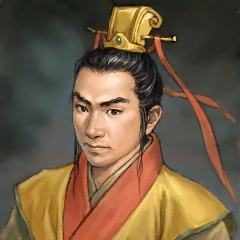
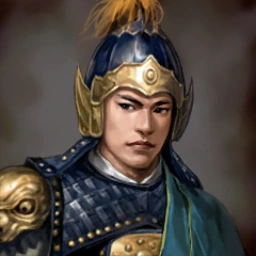
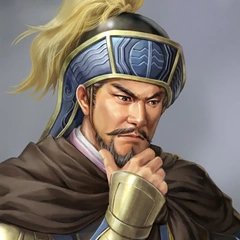
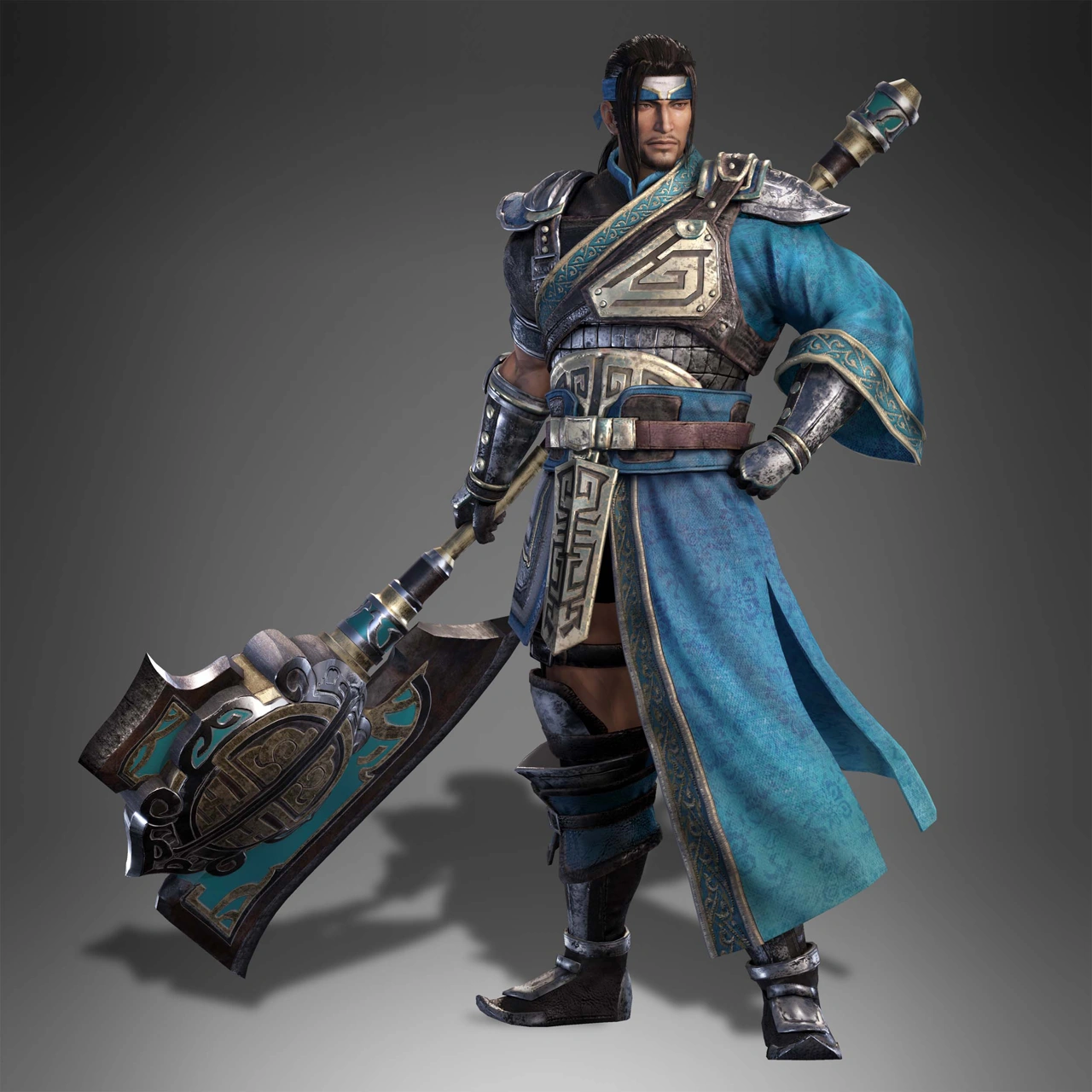
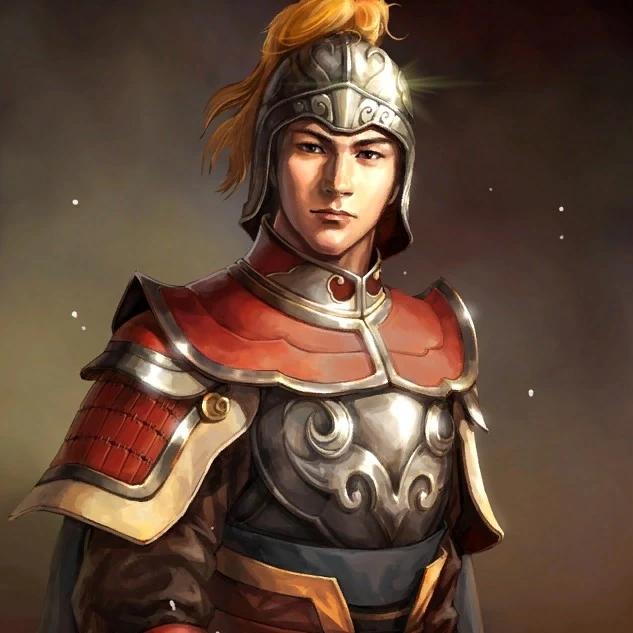
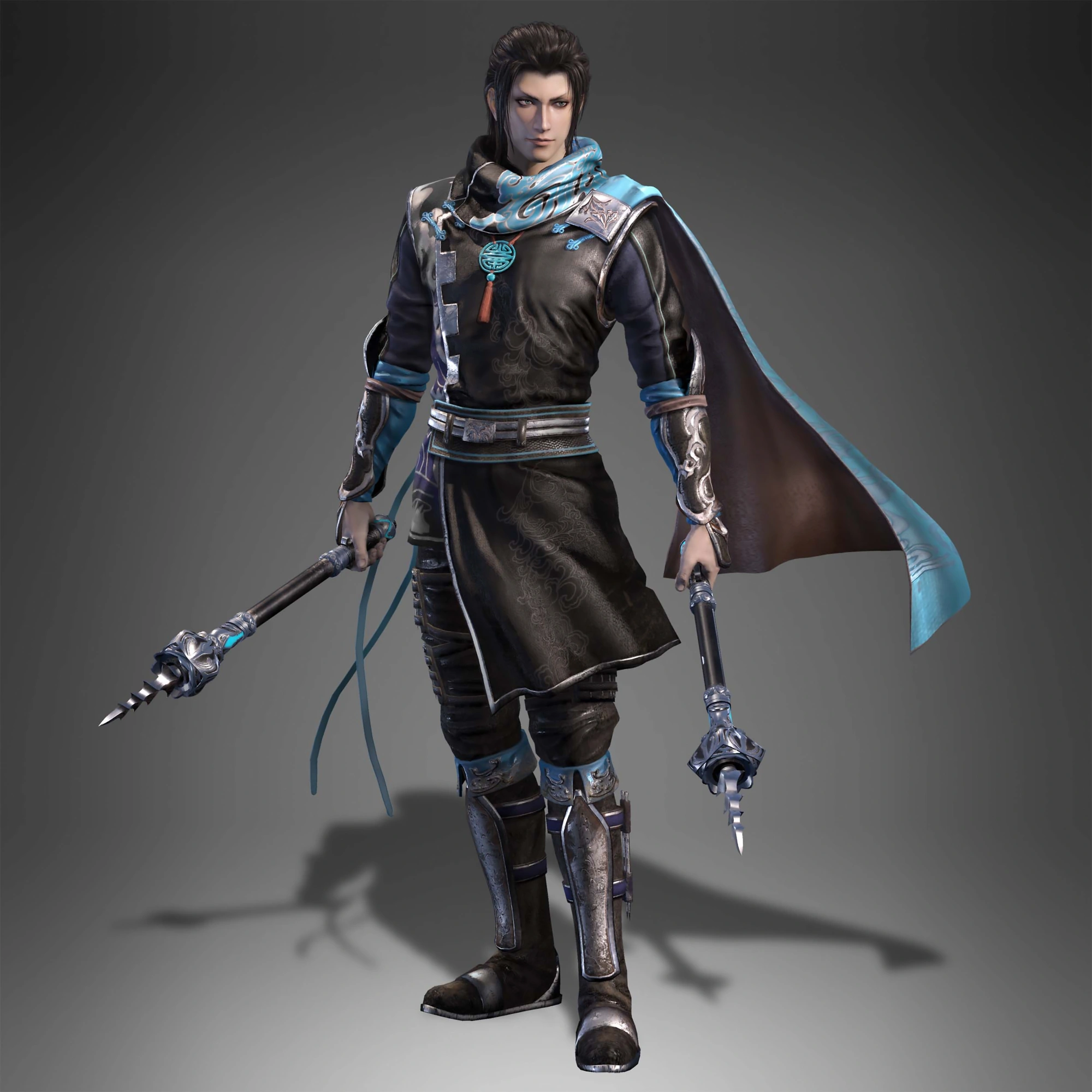
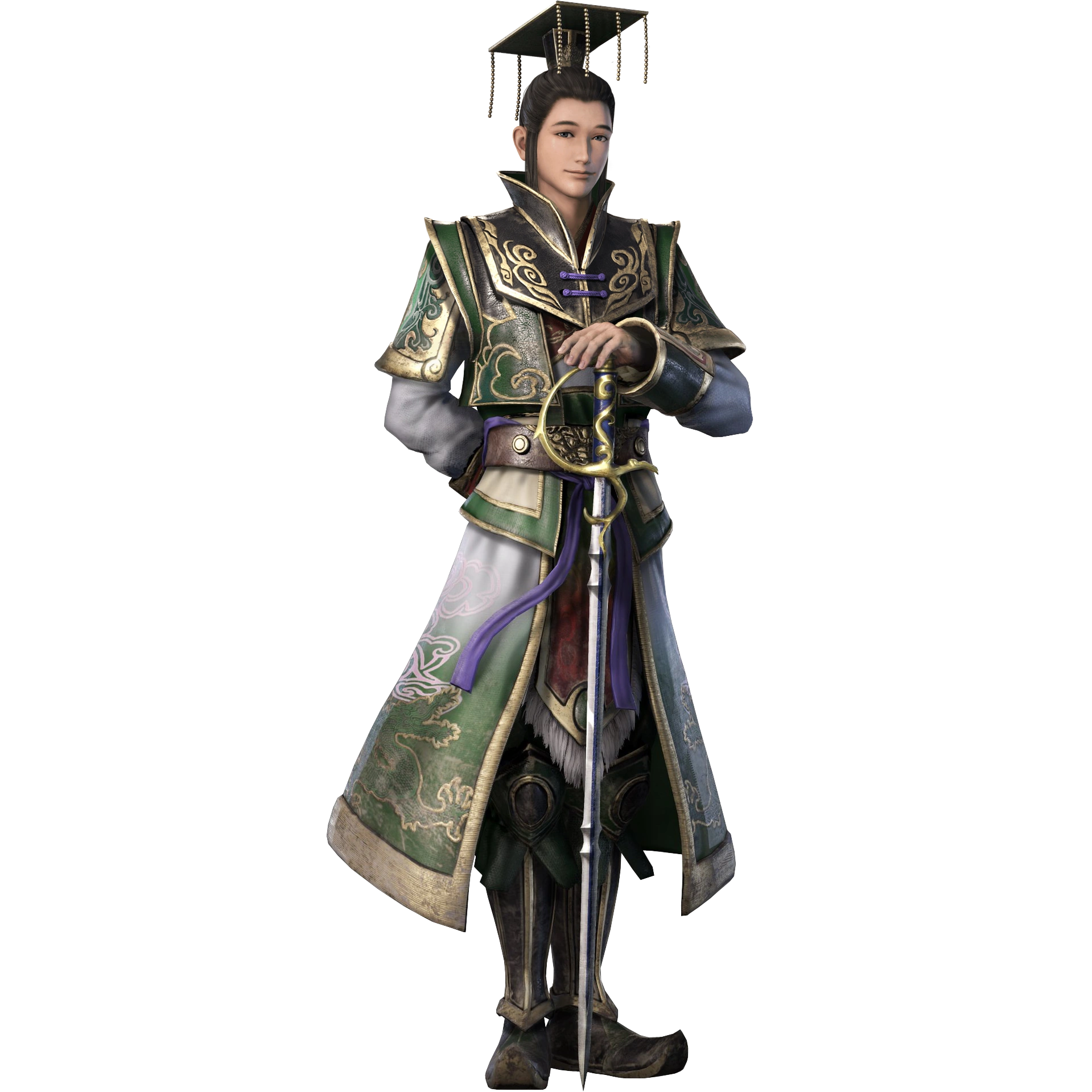
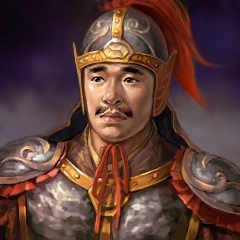
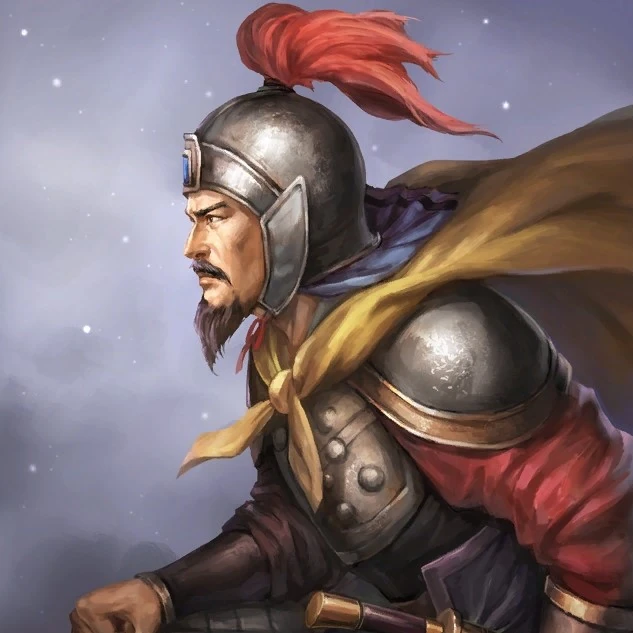
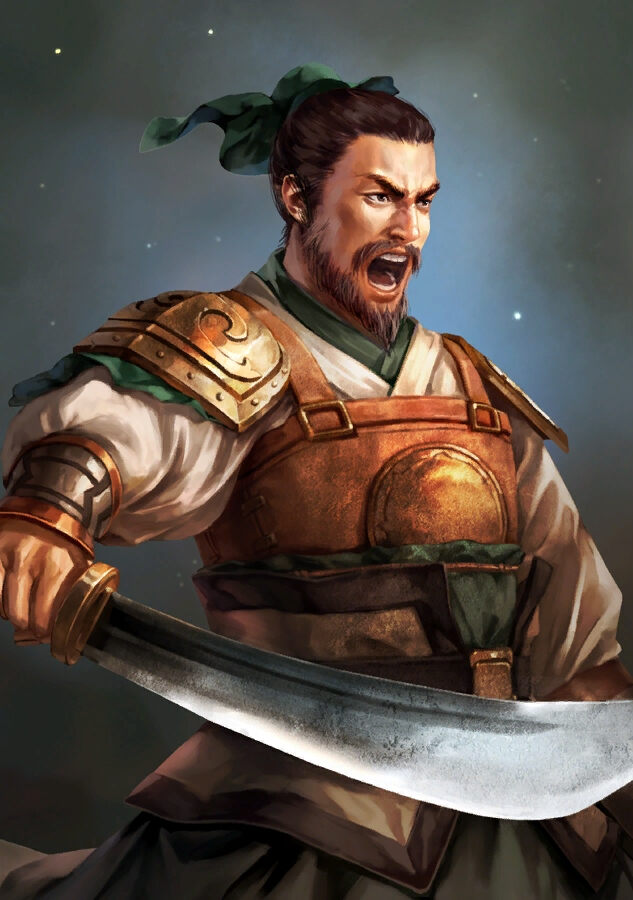
|
Bao Su
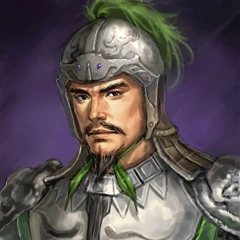
Dies in this chapter. Left to camp at the mouth of the Qishan Mountains Valley as the covering force while Jiang Wei takes the main army by Dongting toward Nanan — which makes him the one man Chen Tai can reach: 'Chen Tai has destroyed the force under Bao Su, and he himself was killed. All that was left of that army has gone back into Hanzhong.' Losing him is what closes the Dongting road and turns the retreat into a scramble down by-roads.
2 mentions in this chapter
2 mentions in the book
|
|
Cao Mao
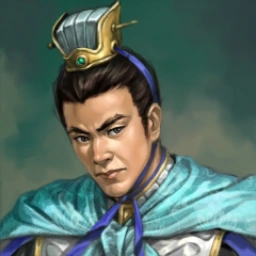
Compelled to go on campaign against a rebellion raised in his own name. Asks the obvious question - 'General, you command all the armies and dispose them as you will. Why do you ask me to go?' - and is answered with a lecture about his ancestors sweeping the land clean. 'Cao Mao, fearing his minister's terrible power, consented.' The edict mobilising two hundred sixty thousand men goes out over his name.
10 mentions in this chapter
50 mentions in the book
|
|
Chen Qian
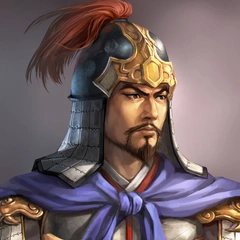
Chen Qian, General Who Pacifies the East, is named second in command of the van under Wang Ji for the expedition into the South of River Huai.
1 mention in this chapter
5 mentions in the book
|
|
Chen Tai
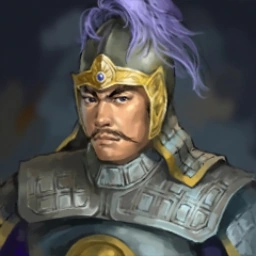
In the west throughout, at Didao and then Qishan with Deng Ai, and his own work is decisive twice: he destroys Bao Su's covering force at the Qishan Mountains Valley and kills Bao Su, then comes out of the hills onto the retreating Jiang Wei and surrounds him. He also memorialises the throne twice on Deng Ai's services, and gives the chapter its measure of him: 'I have been here over twenty years and have never known so much of the military possibilities of the place. You are very wonderful.'
11 mentions in this chapter
44 mentions in the book
|
|
Consort Guo
Sima Zhao comes into the Palace and asks her to accompany the expedition 'as the late Emperor would have done'; 'The Empress was afraid, but dared not refuse, and the next day was requested to set out with the Ruler of Wei, Cao Mao.' Taking both of them along is Jia Chong's insurance against anything shifting at Luoyang while the army is away.
1 mention in this chapter
25 mentions in the book
|
|
Deng Ai
Wins the whole chapter. Opens with the five reasons Jiang Wei will certainly come back — the confident look of the retreating Shu army against Wei's broken one, Zhuge Liang's trained troops against Wei's mixed drafts, Shu moving by boat and arriving fresh against Wei marching, Shu able to concentrate where Wei must guard Didao, Longxi, Nanan and Qishan at once, and Shu able to live off Qiang grain or the Qishan wheat — which leaves Chen Tai saying 'Sir, your foresight is godlike.' Lays out the nine linked camps on Qishan. Reads the rotating flag colours as a feint from a hilltop and deduces the real objective ('Jiang Wei must not be in this camp. He must be on his way to capture Nanan'). Beats him to the Wucheng Mountain by double marches, holds it without giving battle, and sets Deng Zhong and Shi Zuan in Block Valley for the follow-up. Made General Who Pacifies the West, then promoted again by special commission, with a lordship for his son.
18 mentions in this chapter
248 mentions in the book
|
|
Deng Zhong
Deng Ai's son, given five thousand troops with Shi Zuan and hidden in Block Valley with orders not to betray their presence - the trap Jiang Wei walks into on the Shanggui road. Rewarded with a title of lordship when his father's services are memorialised.
3 mentions in this chapter
20 mentions in the book
|
|
Fan Jian
With the army at Zhongti, and he is the one who says the quiet part at the victory banquet: 'General, your expeditions have partly failed many times; you have never scored a complete victory. But now on River Yao the army of Wei recognize your superiority, and why should you try again? There is small chance of success, and you risk all you have gained.' Jiang Wei answers with his own five reasons and marches anyway.
1 mention in this chapter
7 mentions in the book
|
|
Jia Chong
The instrument of both halves of Sima Zhao's policy. Puts the question of the throne to him outright - 'all real authority is in your hands, and the country is not tranquil. The only remedy is for you to become actual ruler, and you should find out who are your supporters' - then goes east himself as the sounding board, gets Zhuge Dan drunk and finds out exactly what he thinks. When Sima Zhao wants to march at once, it is Jia Chong who supplies the caution that shapes the whole campaign: 'you derived your power from your father and brother, and people have not had time to discover your own virtue. If you leave the court and there be a revulsion of feeling against you, you will lose all. Rather request the Empress Dowager and the Son of Heaven to go with you.'
13 mentions in this chapter
47 mentions in the book
|
|
Jia Kui
Named in passing only, and long dead, as the whole of Zhuge Dan's case against his son: 'You are a son of Jia Kui of Yuzhou, and your family have received the bounty of Wei. Yet you dare speak of rebellion!'
2 mentions in this chapter
18 mentions in the book
|
|
Jiang Wei
Comprehensively beaten by Deng Ai. He overrules Fan Jian and Xiahou Ba with his own five reasons for victory, marches on Qishan, finds nine Wei camps already laid out 'like a huge serpent' and admits what that means ('only our Zhuge Liang could have laid them out with equal skill'), then tries a feint — daily patrols under his own banner with the flag colours rotated blue, yellow, red, white and black — which Deng Ai reads in a single look from a hilltop. Loses the race to the Wucheng Mountain, cannot storm it in three attempts, is burned out of his wagon-camp, and then walks toward Shanggui into Block Valley, whose name he distrusts a moment too late. Caught on three sides and pulled out by Xiahou Ba; caught again on the retreat and pulled out by Zhang Ni, who dies doing it. Loses Bao Su's covering force to Chen Tai. Back in Hanzhong he takes the Jieting precedent on himself and asks to be demoted, and is put back to General of the Rear Army — the first time the Shu public blames him by name for their dead.
27 mentions in this chapter
443 mentions in the book
|
|
Liu Shan
Receives the report of Zhang Ni's death from Hanzhong and 'bestowed suitable honors upon his family', and accepts Jiang Wei's own request for demotion after the public blames him for their dead — putting him back to General of the Rear Army while leaving him the command.
1 mention in this chapter
254 mentions in the book
|
|
Lü Ju
Put to death by Sun Chen along with Teng Yin and Wang Chun in the purge that clears his way to the regency — one of Zhuge Ke's Dongxing column commanders from ch108.
1 mention in this chapter
4 mentions in the book
|
|
Quan Duan
Named with Quan Yi as joint Commander of the Wu relief force sent to Shouchun under Sun Chen's orders.
1 mention in this chapter
5 mentions in the book
|
|
Quan Yi
Named with Quan Duan as one of the two Commanders of Sun Chen's seventy-thousand relief force for Zhuge Dan - the Wu half of the three-pronged attack on Wei.
1 mention in this chapter
6 mentions in the book
|
|
Shi Bao
Army Inspector, and with Zhou Cai the commander of the Imperial Escort - the force that guards Cao Mao and the Empress Dowager on the march, which is the political point of the whole arrangement.
1 mention in this chapter
4 mentions in the book
|
|
Shi Zuan
Given five thousand troops with Deng Zhong and concealed in Block Valley, and one of the two who break out on Jiang Wei's column when it turns to retire out of the defile.
2 mentions in this chapter
15 mentions in the book
|
|
Sima Yi
Named in passing only, and long dead - but the mention is odd enough to be worth flagging: after killing Yue Chen, Zhuge Dan 'sent to Luoyang a memorial detailing Sima Yi's many faults', where the man he is actually indicting is SIMA ZHAO. Either the translation's slip or the narrator's; it is left as it stands here.
1 mention in this chapter
470 mentions in the book
|
|
Sima Zhao
Consolidates and then over-reaches. Made Empire's Commander-in-Chief with three thousand mail-clad guards and cavalry squadrons whenever he goes out, 'so that the court was rather in his palace than in that of the Emperor' - and 'plans for taking the final step constantly occupied his thoughts'. Sends Jia Chong east under cover of thanking the troops, to find out who would support a usurpation; gets 'The rat!' for an answer, and moves against Zhuge Dan with a secret letter to Yue Chen and a promotion designed to bring him to the capital. Then takes Jia Chong's advice about the expedition - bring the Empress Dowager and the Emperor along so that nothing can shift behind you - and mobilises two hundred sixty thousand men of the two capitals.
14 mentions in this chapter
170 mentions in the book
|
|
Sun Chen
Takes over Wu on his brother's death and spends his first paragraph killing people: 'Sun Chen was a man of cruel and violent temper and had put many officers to death on his way to power---among them were Grand Commander Teng Yin, General Lu Ju, and Minister Wang Chun.' Then receives Wu Gang and Zhuge Jing and commits seventy thousand men in three directions - Quan Yi and Quan Duan as Commanders, Yu Quan as Rear Guard, Tang Zi and Zhu Yi as Leaders of the Van, Wen Qin as Military Guide.
4 mentions in this chapter
41 mentions in the book
|
|
Sun Jun
His whole notice is one clause: 'At this time Sun Jun had died and his brother, Sun Chen, was Prime Minister.' The assassin of Zhuge Ke leaves the stage in half a sentence.
1 mention in this chapter
16 mentions in the book
|
|
Sun Liang
Named once, and the sentence is his whole situation: 'The Ruler of Wu, Sun Liang, although intelligent, was helpless in his hands.' Sun Chen kills three senior ministers and commits seventy thousand troops to a foreign rebellion without reference to him.
2 mentions in this chapter
45 mentions in the book
|
|
Tang Zi
One of Wu's two Leaders of the Van in the relief force, and he loses to Wang Ji in three bouts and runs.
2 mentions in this chapter
5 mentions in the book
|
|
Teng Yin
Executed. Grand Commander of Wu, and the first name on the list of officers Sun Chen 'had put to death on his way to power'. The man who designed the banquet that killed Zhuge Ke in ch108 is disposed of by the man he made regent.
1 mention in this chapter
7 mentions in the book
|
|
Wang Chun
A Wu minister, and the third of the officers Sun Chen executes on his way to power, with Teng Yin and Lu Ju.
1 mention in this chapter
3 mentions in the book
|
|
Wang Ji
Commands the van of the two-hundred-sixty-thousand army, and wins the chapter's only clean fight: beats Zhu Yi in three bouts, beats Tang Zi in three more, then orders the general attack that breaks the Wu relief force and drives it fifteen miles back.
4 mentions in this chapter
18 mentions in the book
|
|
Wang Jing
The general beaten at River Yao in the previous chapter, now welcoming Chen Tai and Deng Ai into Didao and giving the banquet for the raising of the siege — the celebration that opens the chapter and at which Deng Ai lays out why Jiang Wei will be back.
1 mention in this chapter
20 mentions in the book
|
|
Wen Hu
Appears in one line, arriving at Shouchun with his father Wen Qin and his brother Wen Yang as the Wu relief comes up.
1 mention in this chapter
2 mentions in the book
|
|
Wen Qin
Back in service: sent by Sun Chen as Military Guide of the seventy-thousand relief force — the obvious choice, since he raised the last rebellion in the same place — and he joins Zhuge Dan at Shouchun with both his sons in the chapter's closing lines.
2 mentions in this chapter
25 mentions in the book
|
|
Wen Yang
Comes back to Shouchun with his father and his brother: 'Zhuge Dan in Shouchun led out his bold and strong soldiers to join forces with Wen Qin and his two sons, Wen Yang and Wen Hu.'
1 mention in this chapter
14 mentions in the book
|
|
Wu Gang
The embassy that brings Wu into the war. Sent to Sun Chen at Shidou with Zhuge Jing as hostage, he makes the case in full — Zhuge Dan is the Lord of Wuxiang's cousin, he has seen Sima Zhao depose his prince and oppress good people, his own force is not enough — and comes back to Shouchun with seventy thousand troops and a full complement of Wu officers behind him.
5 mentions in this chapter
5 mentions in the book
|
|
Xiahou Ba
The man who gets Jiang Wei out of the ambush: caught on three sides in the valley by Shi Zuan, Deng Zhong and Deng Ai, 'They were in grave danger, but Xiahou Ba came to their rescue, and so Jiang Wei escaped.' He also opens the chapter by warning against the campaign — 'Deng Ai is young, but he is deep and crafty… Victory will not be so easy as it was before' — and is snapped at for it, and he is the one who reports that Bao Su's force is destroyed and Bao Su dead. The valley is called Block Valley, which Jiang Wei hears as 'Cut-off Valley'.
7 mentions in this chapter
66 mentions in the book
|
|
Yu Quan
Appointed Rear Guard of Sun Chen's seventy thousand, one of the six officers named to the relief of Zhuge Dan.
1 mention in this chapter
6 mentions in the book
|
|
Yue Chen
Killed in this chapter. Imperial Protector of Yangzhou, secretly written to by Sima Zhao about Zhuge Dan — which is how Zhuge Dan learns he has been sold. Shuts his city gates and raises the drawbridge against Zhuge Dan's personal guard, and when ten men cross the moat and open the gate from inside he takes refuge in a tower. Zhuge Dan climbs up after him with the reproach that does for him — 'Your father, Yue Jing, enjoyed the bounty of Wei. Yet you have not sought to repay the kindness of the Ruling House, but you want to help the rebel Sima Zhao!' — and 'Before Yue Chen was able to answer, Zhuge Dan slew him.'
5 mentions in this chapter
17 mentions in the book
|
|
Yue Jin
Named in passing only, and long dead, but as the whole substance of the charge against his son: Zhuge Dan kills Yue Chen on the argument that Yue Jing 'enjoyed the bounty of Wei' and his son has repaid it by helping Sima Zhao.
1 mention in this chapter
51 mentions in the book
|
|
Zhang Ni
Dies in this chapter. When Chen Tai comes out of the hills and Jiang Wei is surrounded, fighting in every direction with his horse spent, 'Zhang Ni, who had heard of his straits, came to his rescue with a body of cavalry. Zhang Ni cut his way in, and Jiang Wei immediately broke the siege and got out. Zhang Ni saved his general, but lost his own life in the melee.' The Latter Ruler bestows honours on his family when the death is reported from Hanzhong.
4 mentions in this chapter
54 mentions in the book
|
|
Zhou Cai
Imperial Protector of Yangzhou — the post Yue Chen held until Zhuge Dan killed him earlier in the same chapter — and joint commander with Shi Bao of the Imperial Escort on the march into the South of River Huai.
1 mention in this chapter
3 mentions in the book
|
|
Zhu Yi
The other Wu Leader of the Van, and the first man the campaign's fighting touches: 'Zhu Yi rode out and took the challenge, but was overcome by Wang Ji in the third bout and he fled', after which Wang Ji's general attack breaks the Wu line and drives it back fifteen miles.
3 mentions in this chapter
10 mentions in the book
|
|
Zhuge Dan
A cousin of Zhuge Liang's from Nanyang who got nowhere in Wei service while Zhuge Liang lived and rose fast after he died, he is now Lord of Gaoping and Commander of the South and East of River Huai. Refuses Jia Chong's sounding-out flat — 'You are a son of Jia Kui of Yuzhou, and your family have received the bounty of Wei. Yet you dare speak of rebellion!… If the state is in difficulty, then one ought to stand up for it even to the death!' — executes the messenger who brings the promotion that would have drawn him to the capital, storms Yangzhou and kills Yue Chen in a tower, and memorialises Luoyang. Raises 'all the militia of the south and east of River Huai, to the total of one hundred thousand' and adds 'the forty thousand troops who had surrendered on the fall of Yue Chen'. Sends Wu Gang to Wu for help with his own son Zhuge Jing as the hostage, and ends the chapter marching out of Shouchun to meet Sima Zhao.
21 mentions in this chapter
42 mentions in the book
|
|
Zhuge Jing
Zhuge Dan's son, handed over to Wu as the pledge of his father's good faith: Wu Gang 'conducted Zhuge Jing to the residence of Sun Chen in Shidou', and the offer of the boy is what buys the seventy thousand troops.
3 mentions in this chapter
3 mentions in the book
|
|
Zhuge Liang
Named in passing four times, and each is load-bearing: Deng Ai credits him with the training that makes the Shu army easy to mobilise; Jiang Wei looks at Deng Ai's nine linked camps and says 'only our Zhuge Liang could have laid them out with equal skill'; Jiang Wei asks for his own demotion 'following the precedent in Jieting of the late Lord of Wuxiang'; and Zhuge Dan is introduced as his cousin, a man who got nothing from Wei while Zhuge Liang lived and rose quickly once he was dead.
5 mentions in this chapter
1454 mentions in the book
|
-
Zhuge Dan's Rebellion Rebellion · c. June 257 – March or April 258 · ShouchunDefenders: Cao Wei
-
Wikipedia entry Rebellion
-
-
-
Block Valley Landmark
-
Cut-off Valley
-
Didao
-
Dongting
-
Gaoping
-
Hanzhong Commandery Commandery(33.0730, 107.0359)
-
Jieting
-
Liang Province Province(37.9267, 102.6323)
-
Longxi Commandery Commandery(34.9891, 104.6395)
-
Luoyang County(34.7316, 112.5963)
-
-
-
Nanan Commandery
-
Nanyang Commandery Commandery(33.0017, 112.5355)
-
-
-
Qishan
-
Qishan Mountains Valley
-
River Huai River
-
River Yao River
-
Shanggui
-
Shidou City
-
Shouchun County
-
Shu (Three Kingdoms) Region
-
Wei (Three Kingdoms) Region
-
West Valley Land Region
-
Wu (Three Kingdoms) Region
-
Wucheng Mountain Mountains/Hills
-
Wuxiang County
-
Yang Province Province
-
Yong Province Province
-
Yu Province Province
-
Zhongti