Cao Rui
曹叡
Courtesy name: Yuanzhong (元仲)
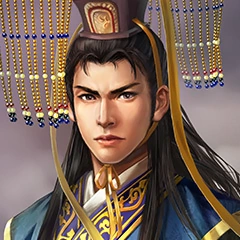
Source:
Koei Wiki (Fandom)
- Born
- 205
- Died
- 239
- Ancestral home
- Qiao County, Pei (Bozhou, Anhui)
- Book mentions
- 166
Roles:
emperor
Factions:
Cao Wei
(primary)
Relationships:
Guo Nüwang
Adopted Mother
Cao Fang
Adopted Son
Consort Guo
Consort
Cao Pi
Father
Cao Cao
Grandfather
Lady Bian
Grandmother
Cao Rui
Half-Brother
Lady Zhen
Mother
Cao Yu
Uncle
Empress Mao
Wife
Links:
-
Wikipedia entry Bio
Appears in 15 chapters:
-
Chapter 91
— Sacrificing At River Lu, The Prime Minister Marches Homeward; Attacking Wei, The Lord Of Wuxiang Presents A Memorial.
Succeeds at his father's deathbed and spends the chapter being played. The forged proclamation in Sima Yi's name — Ma Su's design — turns him pale in open court; Hua Xin and Wang Lang both urge execution, and only Cao Zhen's caution redirects him to Liu Bang's Lake Yunmeng precedent instead. Rides to Anyi with a hundred thousand guards, is unconvinced by Sima Yi's weeping protest of loyalty, and settles on Hua Xin's compromise: strip the powers, send him home. Then hands the western command to Xiahou Mao over Wang Lang's objection. Two decisions, both Zhuge Liang's gain.
-
Chapter 92
— Zhao Zilong Slays Five Generals; Zhuge Liang Takes Three Cities.
Off-stage throughout, named once in the scouts' report that opens the campaign: 'The Ruler of Wei, Cao Rui, has put in motion all western forces under Xiahou Mao.' (He receives no despatches in this chapter — the western disasters reach him in chapter 93.)
-
Chapter 93
— Jiang Wei Goes Over To Zhuge Liang; Zhuge Liang Reviles Wang Lang.
Alarmed by the report that Xiahou Mao has lost three counties and fled to the Qiang and that Shu is on the west bank of the River Wei — 'Who shall go out and drive off the enemy for me?' Presses the command on a reluctant Cao Zhen with his father's trust as the argument — 'The late Emperor confided me to your guardianship. You cannot sit by while the enemy ravages the country' — grants him Guo Huai as second, and rides out to the west gate to see the army off.
-
Chapter 94
— Zhuge Liang Defeats The Qiangs In A Snowstorm; Sima Yi Captures Meng Da By A Rapid March.
Recalls the man he dismissed, restoring rank and titles and adding Commander-in-Chief of the Western Forces and General Who Pacifies the West, and sets the Nanyang troops moving while he leads them to Changan. The audience afterwards is an apology: 'Once I doubted you, but then I did not understand, and I listened to mischief-makers. I regret it. Had you not suppressed Meng Da, both capitals would have gone wrong.' Reads Zhuge Liang's intercepted letter, calls Sima Yi wiser than Wu Qi and Sun Tzu, and confers the pair of golden axes with the right to act without first seeking sanction. Has Meng Da's body exposed in the Luoyang market and rewards the four betrayers.
-
Chapter 95
— Ma Su's Disobedience Causes The Loss Of Jieting; Zhuge Liang's Lute Repulses The Army Of Sima Yi.
Appoints Xin Pi and Sun Li with fifty thousand to assist Cao Zhen alongside Sima Yi's two hundred thousand. At the end receives Sima Yi at Changan with 'It is by your good service that all counties of West Valley Land is again mine', and authorises the new army for the invasion of the River Lands that Sima Yi immediately asks for.
-
Chapter 96
— Shedding Tears, Zhuge Liang Puts Ma Su To Death; Cutting Hair, Zhou Fang Beguiles Cao Xiu.
Adopts Sun Zu's defensive strategy, rewards the army and returns to Luoyang. Promotes Hao Zhao to hold Chencang on Sima Yi's recommendation. Reads Zhou Fang's seven-point memorandum on the couch with Sima Yi, hears Jia Kui's objection, and splits the difference by sending them both — 'You and Jia Kui might both go to the help of Cao Xiu' — which is how the one man who saw through it ends up placed to rescue the man who didn't.
-
Chapter 97
— Sending A Second Memorial, Zhuge Liang Renews The Attack On Wei; Forging A Letter, Jiang Wei Defeats The Northern Army.
Buries Cao Xiu with honour, then takes Cao Zhen's redemption bid and his champion together — summoning Wang Shuang to the hall, laughing at the sight of him, and dressing him in a silken robe and golden breastplate with the title General Who Possesses the Tiger Majesty. Calls Sima Yi in at the end of the chapter to ask how the new invasion is to be met.
-
Chapter 98
— Pursuing The Shu Army, Wang Shuang Meets His Death; Raiding Chencang, Zhuge Liang Scores A Victory.
Holds the Wei court through the chapter. Pleased by Sima Yi's analysis but pointed about it — 'Since, Noble Sir, you foresaw all this so plainly, why did you not lead an army to prevent it?' — then sends Han Ji with the edict restraining Cao Zhen from battle. Alarmed by the fall of Chencang and San Pass and then by Man Chong's report of Sun Quan's accession, he calls in Sima Yi, accepts his reading that Wu will not actually move ('Your insight is very profound'), and makes him Commander-in-Chief in the west. He is also the master in Sun Li's tiger story, hunting on Great Rock Hill.
-
Chapter 99
— Zhuge Liang Defeats The Wei Army; Sima Yi Invades The West River Land.
Approves Cao Zhen's memorial for the invasion of Shu and has it confirmed by Liu Ye; then nearly punishes Liu Ye on Yang Jin's accusation of double-dealing, calls him in, is told only 'I have studied the details. Shu cannot be attacked', and laughs — and only once Yang Jin has left does he get the real answer, that state policy 'should be divulged to no person. The essential of a military move is secrecy'. Holds Liu Ye in greater consideration afterwards. Prays ceremonially for fine weather himself during the month of rain, without effect, and finally issues the recall on the memorials of Wang Su, Yang Fu and Hua Xin.
-
Chapter 100
— Raiding A Camp, The Shu Soldiers Defeat Cao Zhen; Contesting Array Battles, Zhuge Liang Shames Sima Yi.
Named only through his title. He is the source of the girdle and steed Cao Zhen stakes on the wager, and after Cao Zhen's coffin reaches Luoyang he issues the edict urging Sima Yi to prosecute the war, raise a great army and fight Zhuge Liang — which is what puts the two of them face to face at River Wei. Sima Yi also invokes him as the patron who will find Gou An a post.
-
Chapter 101
— Going Out From Longshang, Zhuge Liang Dresses As A God; Dashing Toward Saber Pass, Zhang He Falls Into A Snare.
Gratified by Sima Yi's unprompted offer to take the field after Cao Zhen's death, gives him a banquet, issues the edict next day, and rides out of the city in his state chariot to see him off - the warmest send-off any Wei commander gets in these chapters. At the end he weeps for Zhang He and has the body searched for and honourably buried.
-
Chapter 102
— Sima Yi Occupies The Banks Of River Wei; Zhuge Liang Constructs Mechanical Bullocks And Horses.
Distressed by the report of thirty legions in five divisions, calls Sima Yi in and grants him everything he asks: the four Xiahou brothers, the supreme command, and full authority. Also the chapter's one note of caution, remembering the last Xiahou given an army - 'You remember the evil results of employing the Dynastic Son-in-Law Xiahou Mao: He lost his army and is still too ashamed to return to court. Are you sure these are not of the same kidney?' Then writes the campaign plan out in his own hand: fortify River Wei, give no battle, do not pursue a feigned retreat, wait until their supplies are consumed. His reign style has just been changed to Green Dragon after a green dragon was seen to emerge from Mopo Well.
-
Chapter 103
— In Gourd Valley, Sima Yi Is Trapped; In Wuzhang Hills, Zhuge Liang Invokes The Stars.
Takes the field in person with the main army at Hefei, and the eastern campaign is largely his. Approves Man Chong's night attack on the Wu marine camp at Lake Chaohu and gives Zhang Qiu five thousand men and the firebrands for it. Reads Lu Xun's intercepted memorial and sighs 'This Lu Xun of Wu is really very resourceful.' Refuses to be drawn when Lu Xun feints at Xiangyang, and when the Wu armies are confirmed gone consoles himself with 'Lu Xun knows the art of war even as did Sun Zi and Wu Qi. The subjugation of the southeast is not for me this time.' Finally understands, on Xin Pi's reading, that Sima Yi's request to fight is a request for an order NOT to fight, and sends the authority ensign accordingly.
-
Chapter 105
— The Lord of Wuxiang Leaves A Plan In The Silken Bag; The Ruler of Wei Removes The Bronze Statue With The Dew Bowl.
The chapter's second half is an indictment of him: he builds a palace complex at Xuchang and, at Luoyang, the Hall of Sunrise, the Hall of the Firmament, the Hall of Complete Patterns, the Hall of Beautiful Passions, the Green Flageolet Tower, the Phoenix Tower and the Nine Dragons Pool, with 'myriads of ordinary workers' labouring day and night until 'the strength of the people was spent in this toil'. He sets officers of state to carrying earth and timber for the Fragrant Forest Park, degrades Dong Xun for objecting and executes Zhang Mao for the same, ignores Yang Fu's memorial entirely, sends ten thousand workers to Chang'an for the bronze Dew Bowl figure, has the pedestal broken up for two colossi and a pair of dragons and phoenixes, and orders the most beautiful women in the empire selected for his garden. Then he puts every attendant who told Empress Mao about his party to death and forces her to suicide to make room for Lady Guo. The chapter ends with him convening the council over Gongsun Yuan's revolt.
-
Chapter 106
— Suffering Defeat, Gongsun Yuan Meets His Death; Pretending Illness, Sima Yi Deceives Cao Shuang.
Dies in this chapter, at thirty-six, after a reign of thirteen years, in the first month of the third year of Spectacular Beginning (AD 239). Backs Sima Yi's Liaodong expedition against his own court — 'The leader of our army is most capable and best able to decide upon what should be done… wait a few days and let us not be anxious about the result' — and keeps the supplies moving. Then the ghost: a chill blast puts out the lights and the form of the late Empress Mao with a score of Palace attendants comes to his bed demanding his life, and he falls ill of it. Tries to make his brother Cao Yu regent, is refused, takes Liu Fang and Sun Zu's recommendation of Cao Shuang instead, and sends Cao Yu home. Dies holding Sima Yi's hand, having compared himself to Liu Bei at Baidicheng: 'If such conduct is possible in the mere remnant of a dying dynasty continued in a small state, how much more may I hope for it in a great country!' Posthumously Emperor Rui the Knowledgeable, buried in the Gaoping Tombs.