Zhuge Liang Defeats The Qiangs In A Snowstorm;
Sima Yi Captures Meng Da By A Rapid March.
Guo Huai laid before his colleague the scheme to overcome the army of Shu, saying, "The Qiang tribes have paid tribute regularly since the days of the Founder of Wei. Emperor Pi regarded them with favor. Now let us hold such points of vantage as we may, while we send secret emissaries to engage their help in exchange for kindly treatment. We may get the Qiangs to attack Shu and engage their attention, while we gather a large army to smite them at another place. Thus attacking, how can we help gaining a great victory?"
A messenger was sent forthwith bearing letters to the Qiang tribespeople.
The King of the western Qiangs was named Cheli Ji. He had rendered yearly tribute since the days of Cao Cao. He had two ministers, one for civil and the other for military affairs, named, respectively, Prime Minister Ya Dan and Chief Leader Yue Ji.
The letter was accompanied by presents of gold and pearls, and when the messenger arrived, he first sought Prime Minister Ya Dan, to whom he gave gifts and whose help he begged. Thus he gained an interview with the King, to whom he presented the letter and the gifts. The King accepted both and called his counselors to consider the letter.
Ya Dan said, "We have had regular intercourse with the Wei kingdom. Now that Cao Zhen asks our aid and promises an alliance, we ought to accede to his request."
Cheli Ji agreed that it was so, and he ordered his two chief ministers to raise an army of two hundred fifty thousand of trained soldiers, archers and crossbowmen, spearmen and swordsmen, warriors who flung maces and hurled hammers. Beside these various weapons, the tribesmen used chariots covered with iron plates nailed on. They prepared much grain and fodder and many spare weapons, all of which they loaded upon these iron-clad chariots. The chariots were drawn by camels or teams of horses. The carts or chariots were known as "iron chariots".
The two leaders took leave of their King and went straightway to Xiping Pass.
The commander in charge of the Pass, Han Zhen, at once sent intelligence to Zhuge Liang, who asked, "Who will go to attack the Qiangs?"
Guan Xing and Zhang Bao said they would go.
Then Zhuge Liang said, "You shall be sent. But as you are ignorant of the road and the people, Ma Dai shall accompany you."
To Ma Dai he said, "You know the disposition of the Qiangs from your long residence there. You shall go as guide."
They chose out fifty thousand of veterans for the expedition. When they had marched a few days and drew near their enemy, Guan Xing went in advance with a hundred horsemen and got first sight of them from a hill. The Qiangs were marching, the long line of iron chariots one behind another in close order. Then they halted and camped, their weapons piled all along the line of chariots like the ramparts of a moated city. Guan Xing studied them for a long time quite at a loss to think how to overcome them. He came back to camp and consulted with his two colleagues.
Ma Dai said, "We will see tomorrow what they will do when we make our array, and discuss our plans when we know more."
So the next day they drew up their army in three divisions, Guan Xing's division being in the center, Zhang Bao's in the left, and Ma Dai's in the right. Thus they advanced.
The enemy also drew up in battle order. Their Chief Leader, Yue Ji, had an iron mace in his hand and a graven bow hung at his waist. He rode forward on a curvetting steed boldly enough. Guan Xing gave the order for all three divisions to go forward. Then the enemy's ranks opened in the center and out rolled the iron chariots like a great wave. At the same time the Qiangs shot arrows and bolts, and the men of Shu could not stand against them.
The wing divisions under Ma Dai and Zhang Bao retired, and the Qiangs were thus enabled to surround the center. In spite of every effort, Guan Xing could not get free, for the iron chariots were like a city wall and no opening could be found. The troops of Shu were absolutely helpless, and Guan Xing made for the mountains in hope of finding a road through.
As it grew dark a Qiang leader with a black flag approached, his warriors like a swarm of wasps about him.
Presently the leader cried out to him, "Youthful general, flee not. I am Yue Ji!"
But Guan Xing only hastened forward, plying his whip to urge his steed. Then he suddenly came on a deep gully, and there seemed nothing but to turn and fight. Yue Ji come close and struck at him with the mace. Guan Xing evaded the blow, but it fell upon his steed and knocked it over into water. Guan Xing went into the water too.
Presently he heard a great noise again behind him. Yue Ji and his troops had found a way down into the gully and were coming at him down the stream. Guan Xing braced himself for a struggle in the water.
Then he saw Zhang Bao and Ma Dai coming up on the bank fighting with, and driving off, the Qiangs. Yue Ji was struck by Zhang Bao, and he too fell into the gully. Guan Xing gripped his sword and was about to launch a stroke at Yue Ji as he came up, when Yue Ji jumped out of the water and ran away.
At once Guan Xing caught the steed Yue Ji had left, led it up the bank and soon had it ready to mount. Then he girded on his sword, got on the horse, and joined the battle with his colleagues.
After driving off the Qiangs, Guan Xing, Zhang Bao, and Ma Dai gathered together and rode back. They quickly gained the camp.
"I do not know how to overcome these men," said Ma Dai. "Let me protect the camp while you go back and ask the Prime Minister what we should do."
Guan Xing and Zhang Bao started at once and made the best of their way back. They told Zhuge Liang what had happened. He at once sent off Zhao Zilong and Wei Yan to go into ambush. After this he went himself with thirty thousand troops and Jiang Wei, Zhang Yi, Guan Xing, and Zhang Bao and soon came to Ma Dai's camp. The day after, from the summit of a hill, Zhuge Liang surveyed the country and the enemy, who were coming on in a ceaseless stream.
"It is not difficult," said Zhuge Liang.
He called up Ma Dai and Zhang Yi and gave them certain orders.
They having gone, he turned to Jiang Wei, saying, "My friend, do you know how to overcome them?"
"The enemy only depend upon force and courage. They shall not expect this fine strategy," was the reply.
"You know," said Zhuge Liang, smiling. "Those dark clouds and the strong north wind mean snow. Then I can do what I wish."
The two leaders, Guan Xing and Zhang Bao, were sent into ambush, and Jiang Wei went out to offer battle. But he was to retire before the iron chariots. At the entrance to the camp were displayed many flags, but the soldiers that should serve under them were not there.
It was now full winter, the twelfth month, and the snow had come. The army of Shu went out to offer battle. When the iron chariots came forward, they retired and thus led the Qiangs to the gate of the camp, Jiang Wei going to its rear. The Qiangs came to the gate and stopped to look. They heard the strumming of a lute, but there were no soldiers there; the flags meant nothing. They told Yue Ji, and he suspected some ruse. Instead of entering, he went back to Prime Minister Ya Dan and told him.
"It is a ruse," said Ya Dan. "Zhuge Liang's base trick is the pretense of a pretense, and you had better attack."
So Yue Ji led his troops again to the camp gate, and there he saw Zhuge Liang with a lute just getting into his chariot. With a small escort, he went toward the back of the camp. The tribesmen rushed into the camp and caught sight of the light chariot again just as it disappeared into a wood.
Then said Ya Dan, "There may be an ambush, but I think we need not be afraid of these soldiers."
Hence they decided to pursue. Ahead of them they saw the division under Jiang Wei hastening off through the snow. Yue Ji's rage boiled up at this sight, and he urged his men to go faster. The snow had filled in the roads among the hills, making every part look like a level plain.
As they marched, one reported that some of the enemy were appearing from the rear of the hills. Some thought this meant an ambush, but Ya Dan said it did not matter, and they need not fear. He urged them to hasten.
Shortly after this they heard a roaring as if the hills were rending asunder and the earth falling in, and the pursuers on foot fell one atop of the other into great pits that were invisible in the snow. The iron chariots, being close behind and hurrying along, could not stop, and they went into the pits also. Those still farther in the rear halted, but just as they were facing about, Guan Xing and Zhang Bao came up, one on either side, and attacked. Myriads of bolts flew through the air. Then three other divisions under Jiang Wei, Ma Dai, and Zhang Yi arrived and confusion was worse than ever.
The Qiang leader, Yue Ji, fled to the rear and was making for the mountains when he met Guan Xing, who slew him in the first encounter. Prime Minister Ya Dan was captured by Ma Dai and taken to the main camp. The soldiers scattered.
Hearing of the capture of one leader, Zhuge Liang took his seat in his tent and bade them bring the prisoner. He told the guards to loose his bonds, and he had wine brought to refresh him and soothed him with kindly words.
Ya Dan was grateful for this kindness, and felt more so when Zhuge Liang said, "My master, the Emperor of the Great Han, sent me to destroy those who are in revolt. Why are you helping them? But I will release you, and you will return to your master and say that we are neighbors and we will swear an oath of everlasting friendship, and tell him to listen no more to the words of those rebels."
Ya Dan was released and so were all the soldiers that had been captured, and all their stuff was given back to them. They left for their own country.
The Qiangs being thus disposed of, Zhuge Liang quickly marched again to Qishan. He sent letters to Capital Chengdu announcing his success.
Meanwhile Cao Zhen anxiously waited for news of his expected allies. Then a scout came in with the news that the army of Shu had broken camp and were marching away.
"That is because the Qiangs have attacked," said Guo Huai gleefully, and the two made ready to pursue.
They saw ahead of them the army of Shu seemed to be in confusion. The Van Leader Cao Zun led the pursuit.
Suddenly, as he pressed on, there came a roll of drums, followed by the appearance of a cohort led by Wei Yan, who cried, "Stop! You rebels!"
But Cao Zun did not obey the summons. He dashed forward to meet the attack. He was killed in the third encounter. His colleague Zhu Zan in similar fashion fell in with a cohort under Zhao Zilong, to whose long spear he soon fell victim. The loss of these two made Cao Zhen and Guo Huai hesitate, and they made to retire.
But before they could face about, they heard the drums of an army in their rear, and Guan Xing and Zhang Bao came out and surrounded them. Cao Zhen and Guo Huai made a stand for a time, but were soon worsted and fled. The army of Shu pursued the beaten enemy to the bank of River Wei, where they took possession of the Wei camp.
Cao Zhen was greatly chagrined at his defeat and sad at the loss of his generals. He send a report of his misfortune to his master and asked for reinforcements.
At the court of Wei one of the ministers told the story, saying, "Cao Zhen has been defeated repeatedly, and his two Van Leaders were slain. Further, his Qiang allies have suffered great loss. Cao Zhen is sending for help, and the case is very urgent."
Cao Rui was alarmed and asked for someone to say how to drive off the victorious foe.
Thereupon Hua Xin said, "It will be necessary for Your Majesty to go in person. You should call together all the nobles, and each will have to exert himself. Unless this is done, Capital Changan will be lost and the whole Land Within the Passes be in danger."
But Imperial Guardian Zhong Yao opposed him.
Said he, "The knowledge of every leader must exceed that of those led; then only will he be able to control them. Sun Zi the Strategist sums it up very briefly: 'Know the enemy, know thyself, and every battle is a victory.' I know Cao Zhen has had great experience in the field, but he is no match for Zhuge Liang. Still there is such a match, and I will pledge my whole family that he will succeed. But Your Majesty may be unwilling to listen to me."
The Ruler of Wei replied, "You are a minister of high rank and old. If you know any wise person able to repel these soldiers of Shu, call him without delay and ease my mind."
Then said Zhong Yao, "When Zhuge Liang decided to invade us, he was afraid of the one man I will name. Wherefore he spread calumnies concerning him, raising suspicion in Your Majesty's mind that you might dismiss him. That done, Zhuge Liang invaded. Now employ this man again, and the enemy will retire."
"Who is it?" asked the Ruler of Wei.
"I mean the Imperial Commander of the Flying Cavalry, Sima Yi."
"I have long regretted my action," said Cao Rui. "Where now is friend Sima Yi?"
"He is at the city of Wancheng, idle."
An edict was prepared recalling Sima Yi and restoring him to his rank and titles, and conferring upon him the new title Commander-in-Chief of the Western Forces and General Who Pacifies the West. All troops of Nanyang were set in motion, and Cao Rui led them to Changan. At the same time Cao Rui ordered Sima Yi to be there to meet him on a certain day. And the orders were sent by a swift messenger to the city of Wancheng.
At this time Zhuge Liang greatly rejoiced at the success he had had. He was at Qishan, busy with plans for other victories, when Li Yan, who was in command at the Palace of Eternal Peace, sent his son Li Teng to the camp. Zhuge Liang concluded that such a visit could only mean that Wu had invaded them, and he was in consequence cast down. However, he summoned Li Teng to his tent, and when asked the object of his mission, Li Teng replied that he had joyful news to impart.
"What is your joyful news?" said Zhuge Liang.
"Formerly Meng Da deserted to Wei, but only because he could do nothing else. Cao Pi thought much of his capabilities, treated him most generously, kept him at his side, gave him titles of General Who Establishes Strong Arms and Lord of Pingyang, and appointed him to the posts of Governor of Xincheng and Commander of Shangyong and Jincheng, and so on. But when Cao Pi died, all was changed. In Cao Rui's court were many who were jealous of Meng Da's influence and power, so that he enjoyed no peace.
"He used to talk about being originally one of the Shu leaders, and he was forced to do so-and-so. Lately he has sent several confidants with letters to my father asking that he would state his case to you as to the happenings. When the five armies came upon Shu, he wanted to rejoin the River Lands. Now he is at Xincheng, and, hearing you are attacking Wei, he proposes to lead the army of the three counties about Xincheng, Jincheng, and Shangyong to attack Luoyang while you attack Changan, whereby both capitals will be taken. I have brought with me his messenger and his letters."
This was good news, and the bearer was fittingly rewarded. But at that moment came the news that Cao Rui was leading an army to Changan and had recalled the banished Sima Yi to office. This piece of bad news saddened Zhuge Liang not a little.
He told Ma Su, who said, "Cao Rui should not be your worry. If he goes to Changan, we will march there and capture him on the road, and there will be an end of him."
"Do you think I fear him?" said Zhuge Liang bitterly. "But the recall of Sima Yi is another matter; that troubles me. And Meng Da's proposal will avail nothing if he comes across this man. Meng Da is no match for him. He will he captured, and, if he should be, the Middle Land will be hard to conquer."
"Why not put Meng Da on his guard then?" said Ma Su.
Zhuge Liang decided to write, and the letter was dispatched immediately.
Meng Da was then at Xincheng, anxiously expecting the return of his last confidential messenger, when, one day, the man returned and gave him this letter from Zhuge Liang himself:
"Your last letter has convinced me of your loyal rectitude, and I still remember with joy our old friendship. If your plan succeeds, you will certainly stand in the first rank of most worthy ministers. But I scarcely need impress upon you the extreme necessity for most perfect secrecy. Be very careful whom you trust. Fear everyone, guard against everyone. This news of the recall of Sima Yi and the proposed junction of armies at Changan is very serious. If a word reaches Sima Yi, he will come to you first. Therefore take every precaution and do not regard this as a matter of unimportance."
"They say Zhuge Liang leaves nothing to chance," said Meng Da, smiling as he read. "This proves it."
He lost no time in preparing a reply, which he sent also by a trusty messenger. This letter was like this:
"I acknowledge your most valuable advice, but is it possible that I should be remiss? For my part I do not think the Sima Yi's affair need cause anxiety, for Wancheng is three hundred miles from Luoyang and four hundred miles from Xincheng. Should he hear anything, it would take a month to send a memorial to the capital and get a reply. My ramparts here are strong and my forces posted in the best positions. Let him come! I am not afraid of the result, so you, O Prime Minister, need feel no anxiety. You have only to wait for the good news of success."
Zhuge Liang read the letter and threw it on the ground, stamping his foot with rage.
"Meng Da is a dead man!" said he, "A victim of Sima Yi."
"Why do you say that?" said Ma Su.
"What does the Art of War say? 'Attack before the enemy is prepared; do what he does not expect.' What is the use of reckoning upon a month's delay for sending up a memorial? Cao Rui's commission has already gone, and Sima Yi may strike whom he will. He will not have to wait to memorialize the Throne. Ten days after he hears of Meng Da's defection, he will be upon Meng Da with an army, and Meng Da will be helpless."
The others agreed. However, Zhuge Liang sent the messenger back again with a message:
“If the matter has not yet actually started, no other person is to be told of it; for if anyone knows, it shall certainly come to nothing.”
And the messenger left for Xincheng.
In his idle retreat in Wancheng, Sima Yi had heard of his master's ill-success against the armies of Shu, and the news made him very sad. He lifted up his eyes and sighed.
He had two sons, Sima Shi the elder and Sima Zhao, both clever and ambitious, and both earnest students of military books. One day they were present when their father seemed very cast down, and Sima Shi asked his father the reason.
"You would not understand," said the father.
"I think you are grieving because the Ruler of Wei does not use you," replied Sima Shi.
"But they will send for you presently," said Sima Zhao.
The prophecy was not long in fulfillment, for even then the bearer of the command stood at the gate, and the servant announced a messenger from the court bearing a commission.
As soon as he heard its terms, Sima Yi set about ordering the armies of Wancheng. Soon came a messenger from Governor Shen Yi of Jincheng with a secret message for Sima Yi. The messenger was taken into a private chamber, and his message was that Meng Da was on the point of rebellion. The leakage of this news was due to Li Gu, a confidential subordinate of Meng Da, and Deng Xian, Meng Da's nephew. Li Gu and Deng Xian went to confess the plot in exchange for a promise of amnesty.
Sima Yi smote his forehead.
"This is the Emperor's great good fortune, high as heaven itself. Zhuge Liang's army is at Qishan already, and all people's courage is at the brink of breakdown. The Emperor must go to Changan, and if he does not use me soon, Meng Da will carry out his plan; his plot will succeed, and both capitals will be lost. Meng Da is surely in league with Zhuge Liang, and if I can seize this Meng Da before he makes any move, that will damp Zhuge Liang's spirits and he will retreat."
His elder son Sima Shi remarked, "It is necessary to memorialize the Throne."
"No," replied his father, "that would take a month, and delay would mean failure."
Sima Yi gave orders to prepare to advance by double-rapid marches and threatened death to all loiterers. In order to avert suspicion, he sent letters to Meng Da by the hand of Military Adviser Liang Ji to tell Meng Da to prepare to join the western expedition.
Sima Yi quickly followed Liang Ji. After two days' march Sima Yi fell in with an army of General Xu Huang over the hills.
Xu Huang got an interview with Sima Yi, and he said, "The Emperor has arrived at Changan to lead an expedition against Shu. Whither is the Commander-in-Chief going?"
Sima Yi, in a low voice, said to him, "Meng Da is on the verge of rebellion, and I am going to seize him."
"Let me go as your Van Leader," said Xu Huang.
So Xu Huang's troops were joined to the expedition and marched in the van. Sima Yi commanded the center, and his sons brought up the rear.
Two days farther on, some of the scouts captured Meng Da's confidential messenger, and with him Zhuge Liang's reply.
Sima Yi said to the man, "I will let you live if you tell all you know."
So the messenger told all about the letters and messages he had taken from one to the other.
When Sima Yi read, he remarked, "All able people think the same way. Our plan would have been foiled by Zhuge Liang's cleverness unless, by the good luck of the Emperor, this messenger had been captured. Now Meng Da will be helpless."
The army pressed on still more rapidly.
Meng Da had arranged for his stroke with Governor Shen Yi of Jincheng and Governor Shen Dan of Shangyong and was awaiting the day he had fixed. But Shen Yi and Shen Dan were only pretending to abet him, although they went on training and drilling their troops to keep up appearances till the soldiers of Wei could arrive. To Meng Da they pretended delay in their transport as the reason for being unable to start. And he believed them.
Just then Liang Ji came, and when he had been ceremoniously received, he produced the order from Sima Yi and said, "The Commander-in-Chief has received the edict of the Emperor to call in all the forces in this area, and he has sent me to direct you to hold your troops in readiness to march."
"On what day does the Commander-in-Chief start?" asked Meng Da.
"He is just about starting now, and is on the way to Changan" replied Liang Ji.
Meng Da smiled inwardly, for, this being so, he saw success before him. He gave a banquet to Liang Ji. After Liang Ji took his leave, Meng Da sent to his fellow conspirators---Shen Yi and Shen Dan---to say the first step must be taken next day by exchanging the banners of Wei for those of Han and marching to attack Luoyang.
Then the watchmen reported a great cloud of dust in the distance as though an army was coming. Meng Da was surprised and went up on the ramparts to see for himself. Soon he made out the banner of Xu Huang leading. He ran down from the wall and in a state of trepidation ordered the raising of the drawbridge. Xu Huang still came on and in due time stood on the bank of the moat.
Then Xu Huang called out, "Let the traitor Meng Da yield quickly!"
Meng Da, in a rage, opened upon him with arrows, and Xu Huang was wounded in the forehead. He was helped to a place of safety while the arrows flew down in great numbers. When the soldiers of Wei retired, Meng Da opened the gates and went in pursuit. But the whole of Sima Yi's army soon came up, and the banners stood so thick that they hid the sun.
"This is what Zhuge Liang foresaw!" said Meng Da despairingly. The gates were closed and barred.
Meanwhile the wounded general, Xu Huang, had been borne to his tent, where the arrow head was extracted and the physician attended to him. But that night he died. He was fifty-nine. His body was sent to Luoyang for burial.
Next day, when Meng Da went up on the wall, he saw the city was entirely surrounded as with a girdle of iron. He was greatly perturbed and could not decide what to do. Presently he saw two bodies of troops coming up, their banners bearing the names of his fellow conspirators---Shen Yi and Shen Dan. He could only conclude that they had come to his help, so he opened the gates to them and went out to join them in the fight.
"Rebel, stay!" cried they both as they came up.
Realizing that they had been false, he turned and galloped toward the city, but a flight of arrows met him, and the two who had betrayed him, Li Gu and Deng Xian, began to revile him.
"We have already yielded the city!" they cried.
Then Meng Da fled. But he was pursued, and as he and his horse were both exhausted, he was speedily overtaken and slain. They exposed his head, and his soldiers submitted. Sima Yi was welcomed at the open gates. The people were pacified, the soldiers were rewarded and, this done, a report of their success was sent to Cao Rui.
Cao Rui ordered the body of Meng Da to be exposed in the market place of Luoyang, and he promoted Shen Yi and Shen Dan and gave them posts in the army of Sima Yi. He gave Li Gu and Deng Xian command of the cities of Xincheng and Shangyong.
Then Sima Yi marched to Changan and camped. The leader entered the city to have audience with his master, by whom he was most graciously received.
"Once I doubted you," said Cao Rui, "but then I did not understand, and I listened to mischief-makers. I regret it. Had you not suppressed Meng Da, both capitals would have gone wrong."
Sima Yi replied, "Shen Yi gave the information of the intended revolt and thought to memorialize Your Majesty. But there would have been a long delay, and so I did not await orders, but set forth at once. Delay would have played into Zhuge Liang's hands."
Then Sima Yi handed in Zhuge Liang's letter to Meng Da.
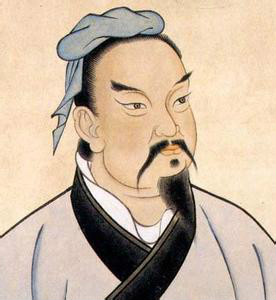
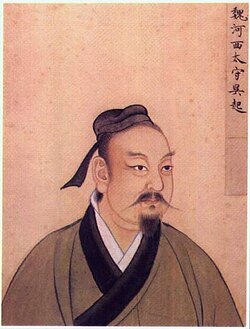
When the Emperor had read that, he said, "You are wiser than both the great strategists of old---Wu Qi and Sun Zi."
The Ruler of Wei conferred upon the successful leader a pair of golden axes and the privilege of taking action in important matters without first obtaining his master's sanction. Then Sima Yi was ordered to lead the army to the pass against the enemy.
Sima Yi said, "May I name the Leader of the Van?"
"Whom do you nominate?"
"Zhang He, General of the Right Army, can shoulder this task."
"Just the man I wished to send," said Cao Rui, smiling. And Zhang He was appointed.
Sima Yi took his army off Changan and marched it to the camp of the Shu army.
By strategy the leader shows his skill;
He needs bold fighting men to work his will.
The result of the campaign will appear in the next chapter.
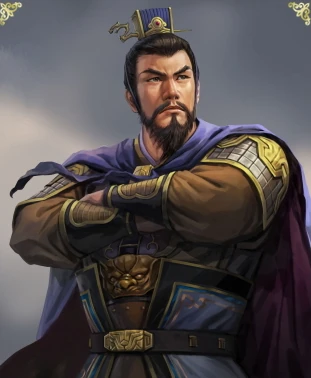
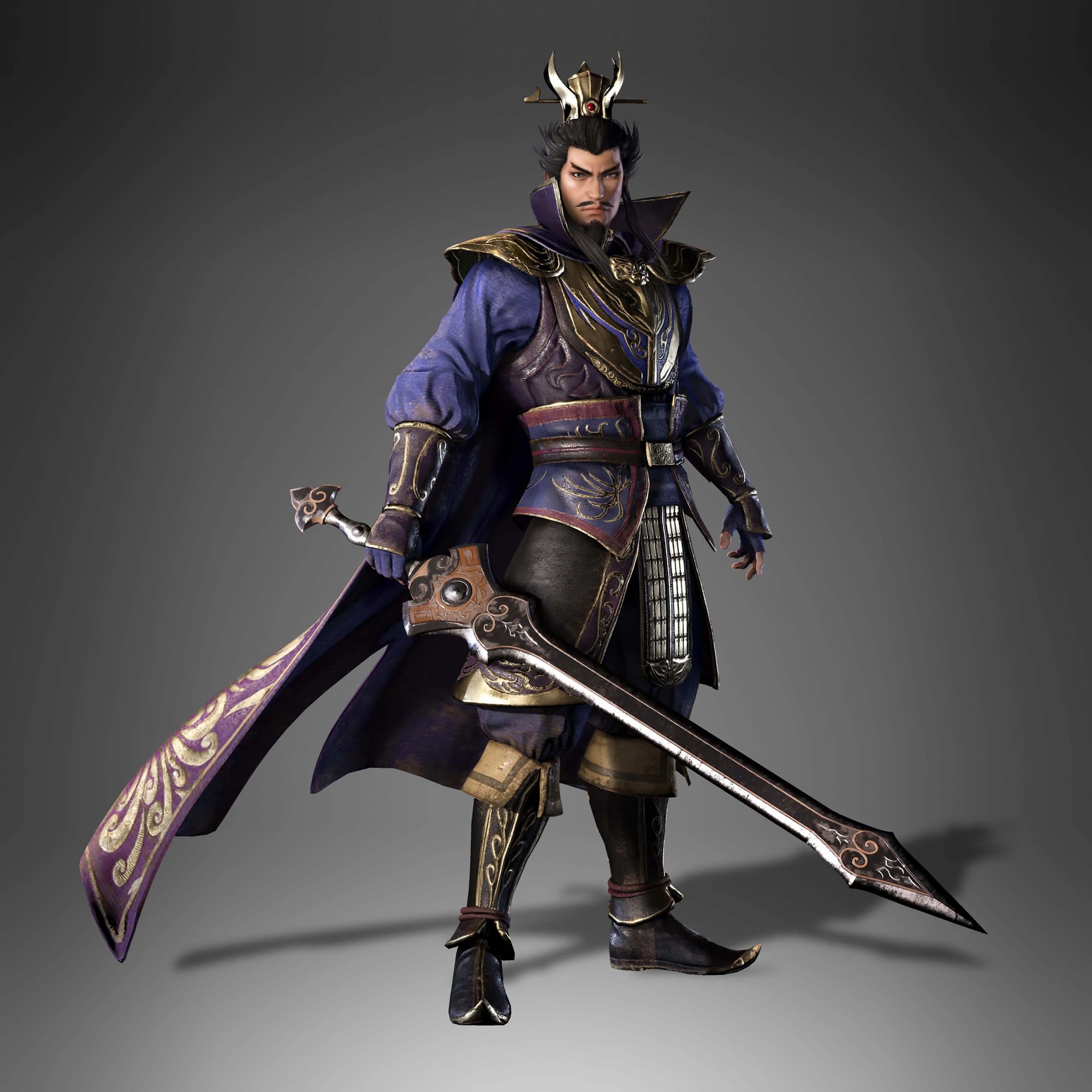
-
Wikipedia entry Bio
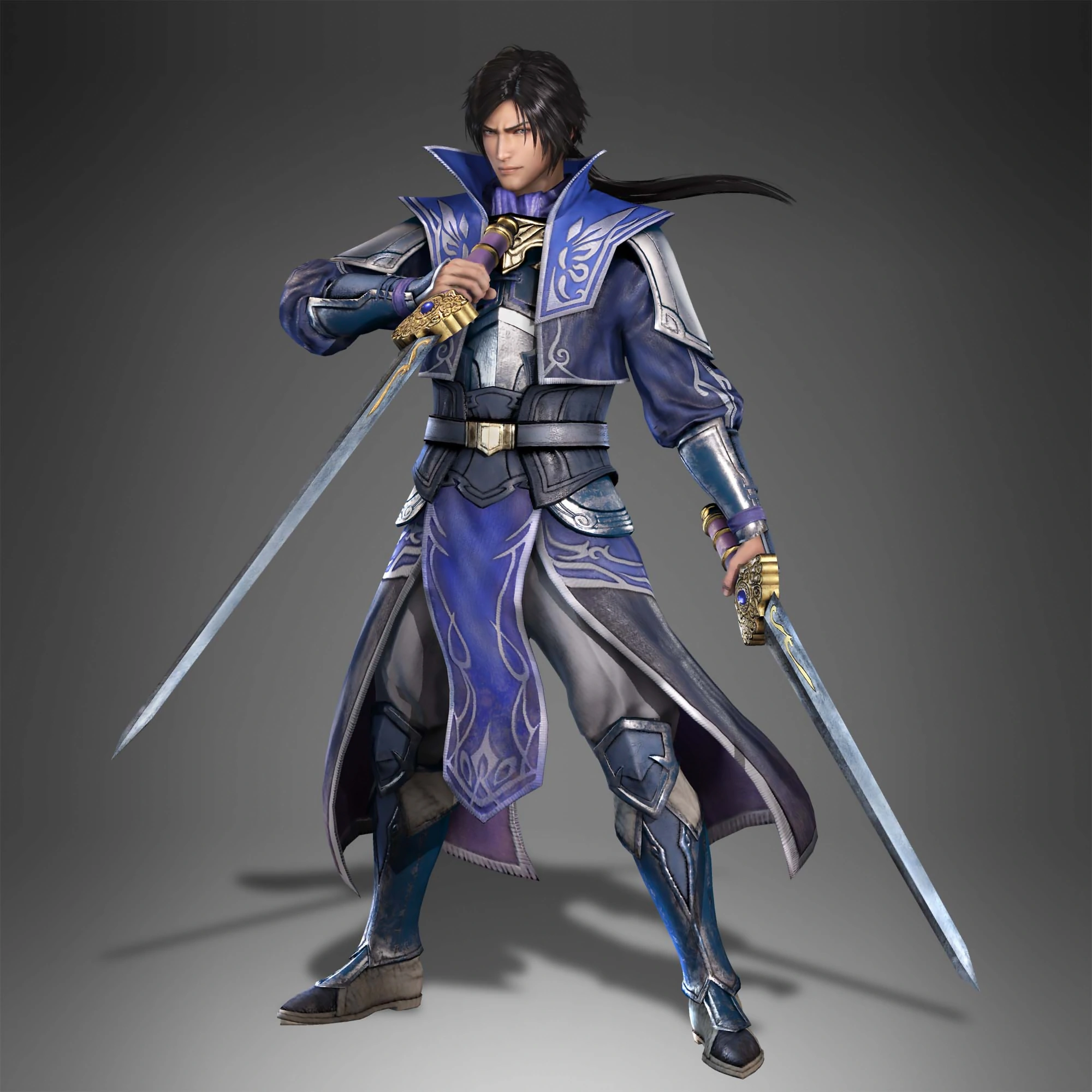
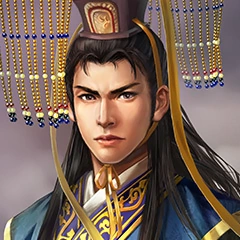
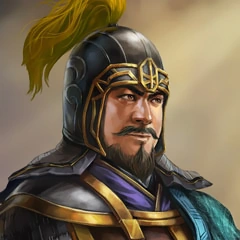
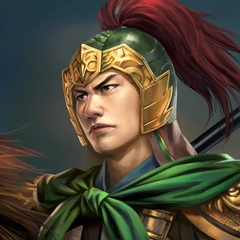
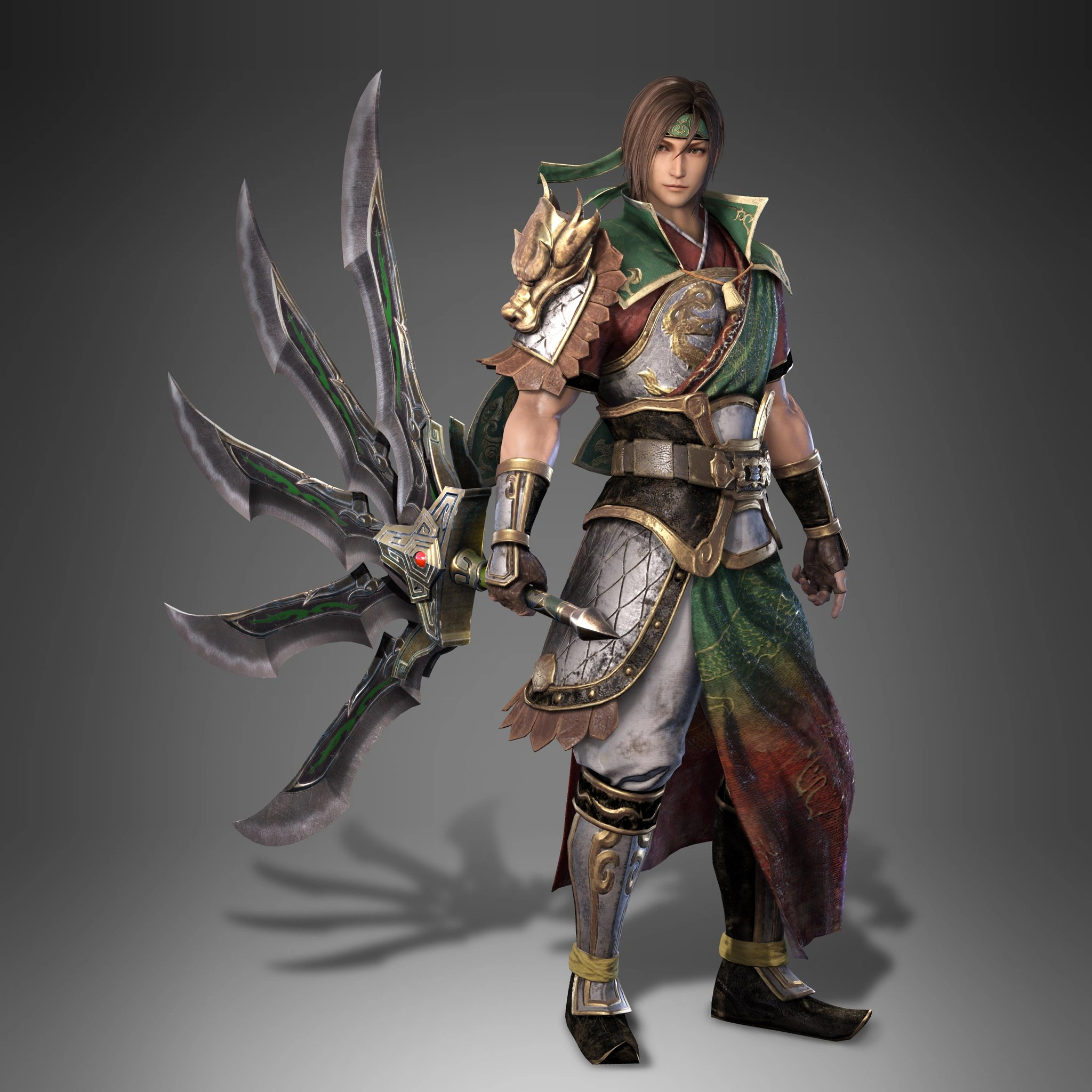
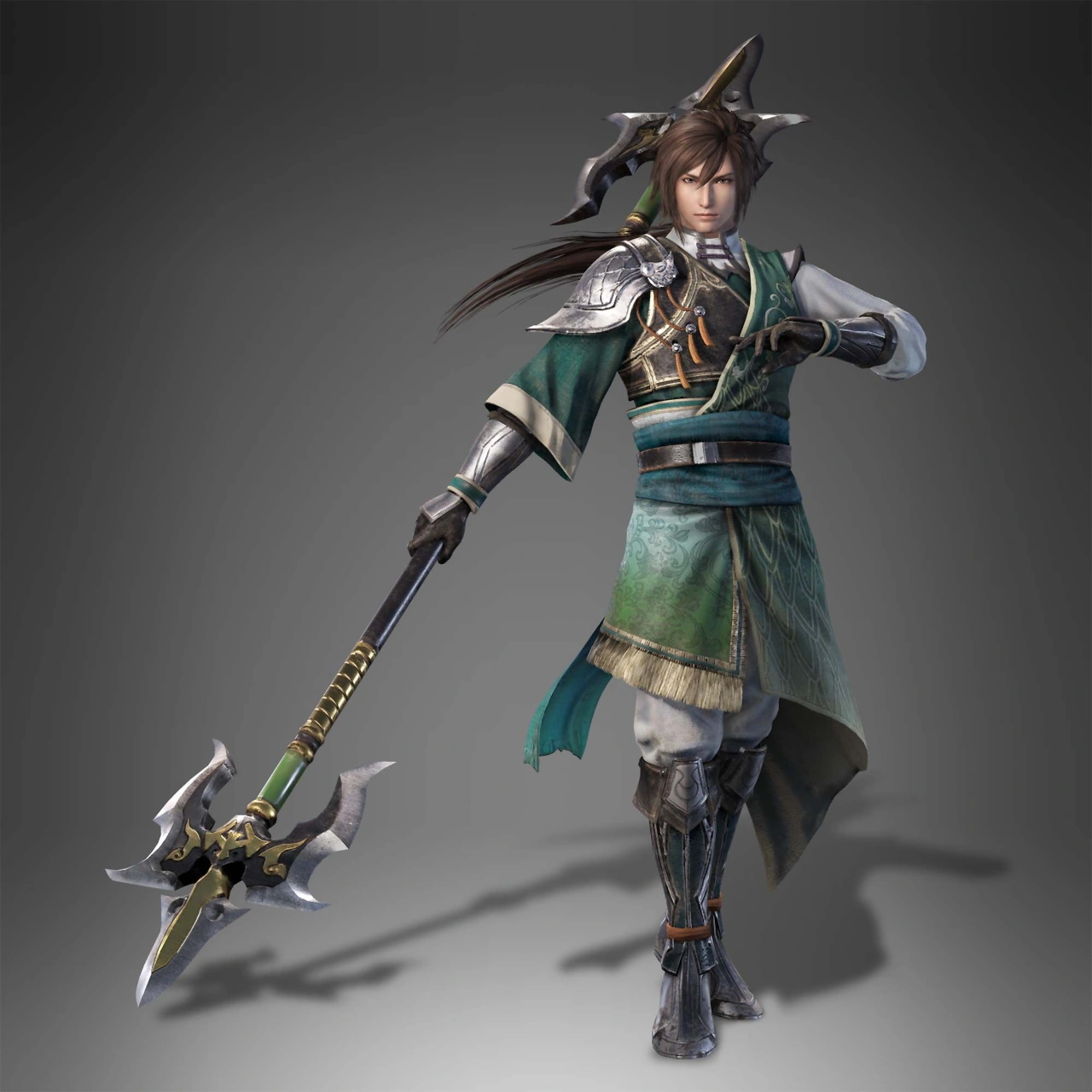
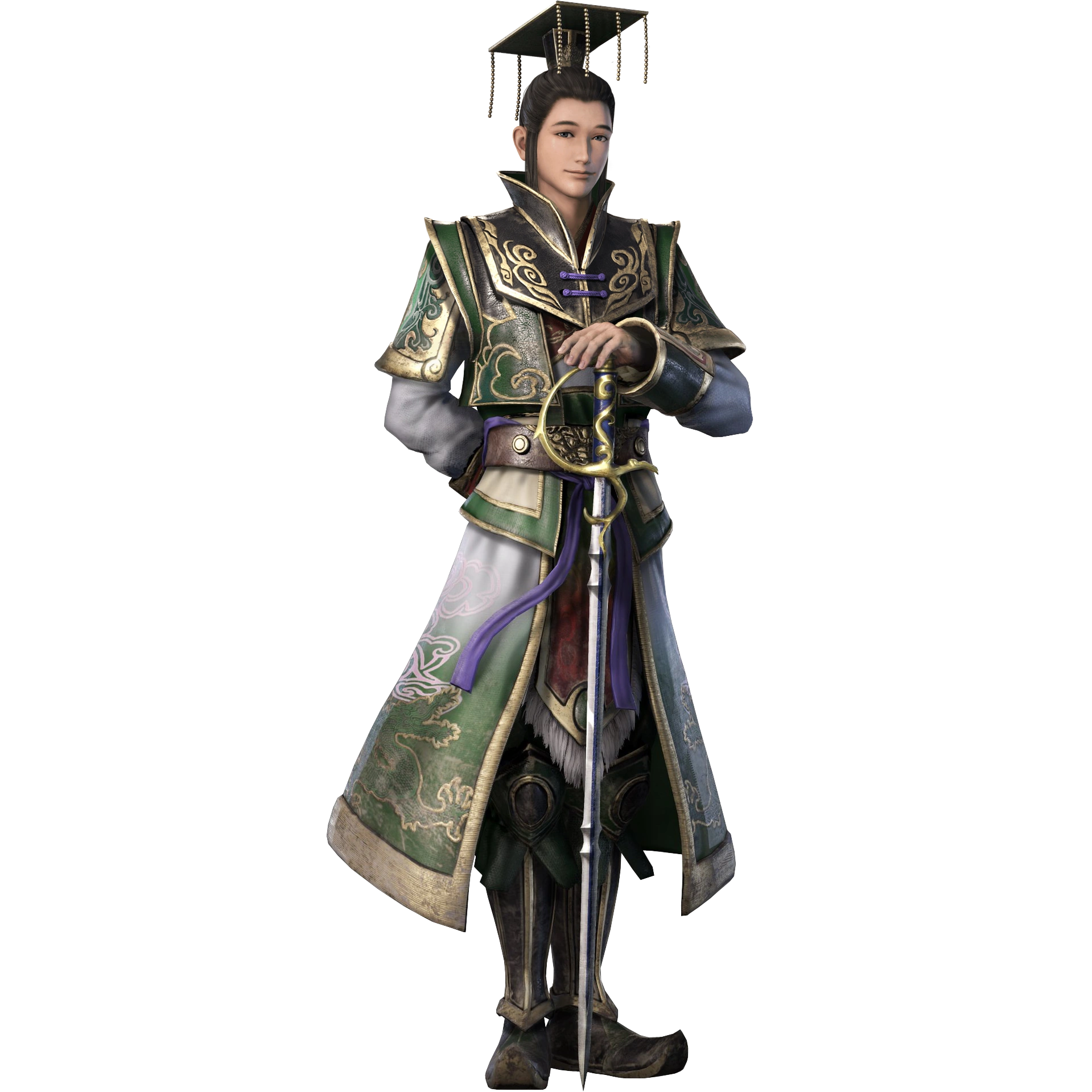
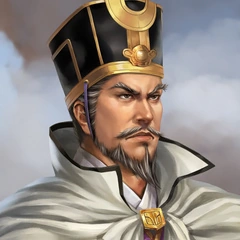
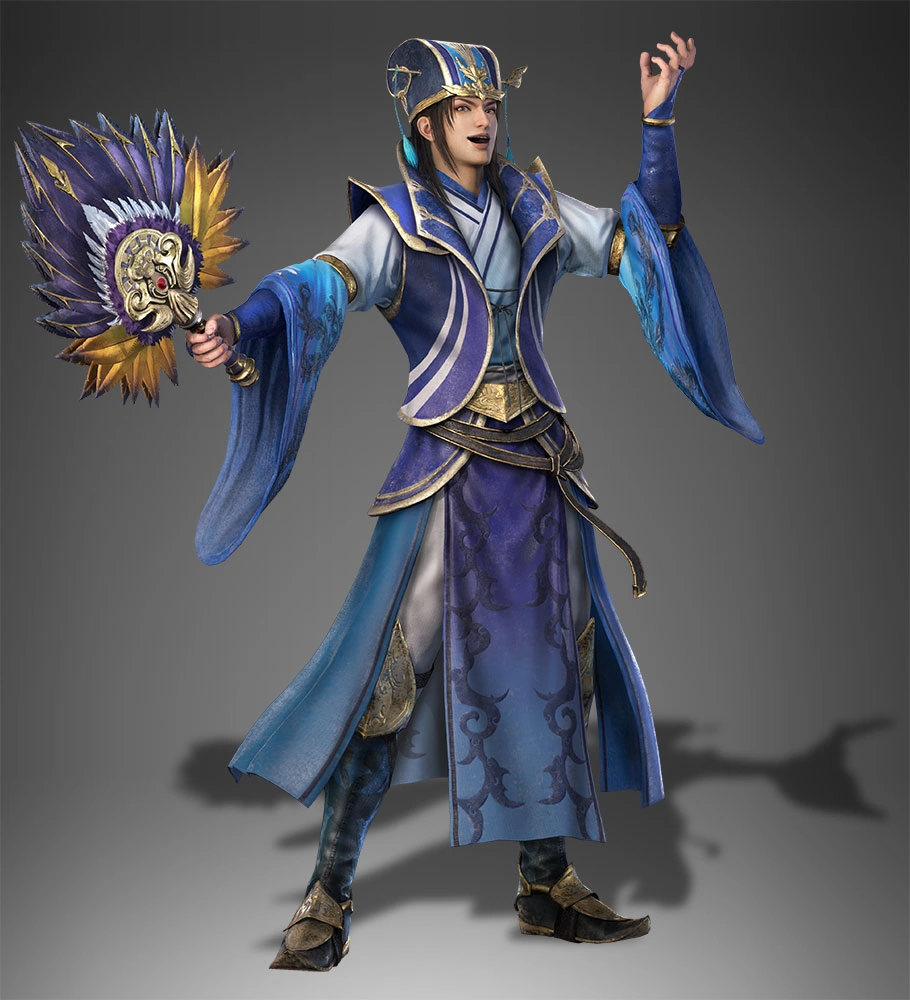
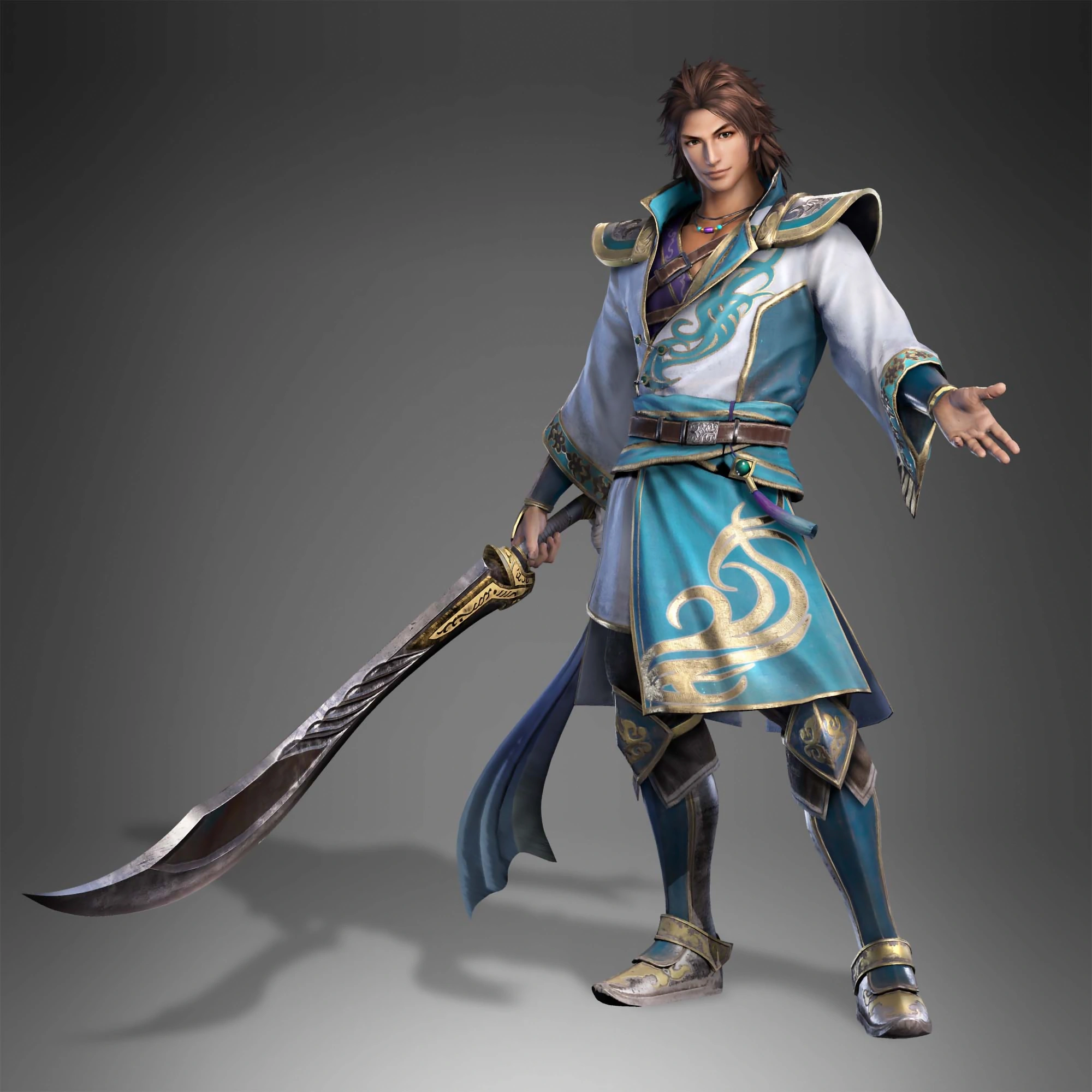
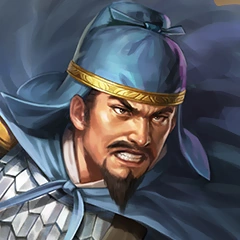
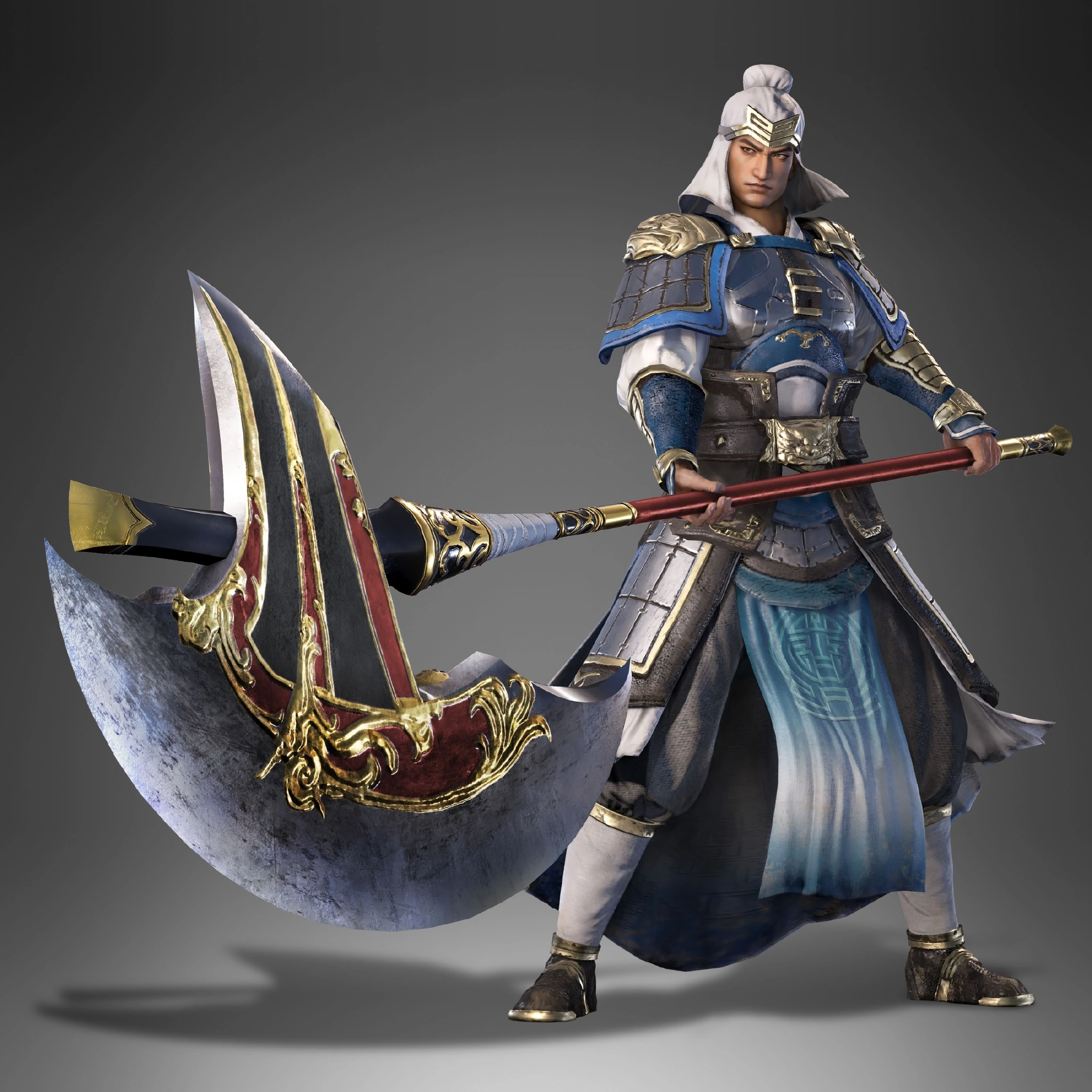
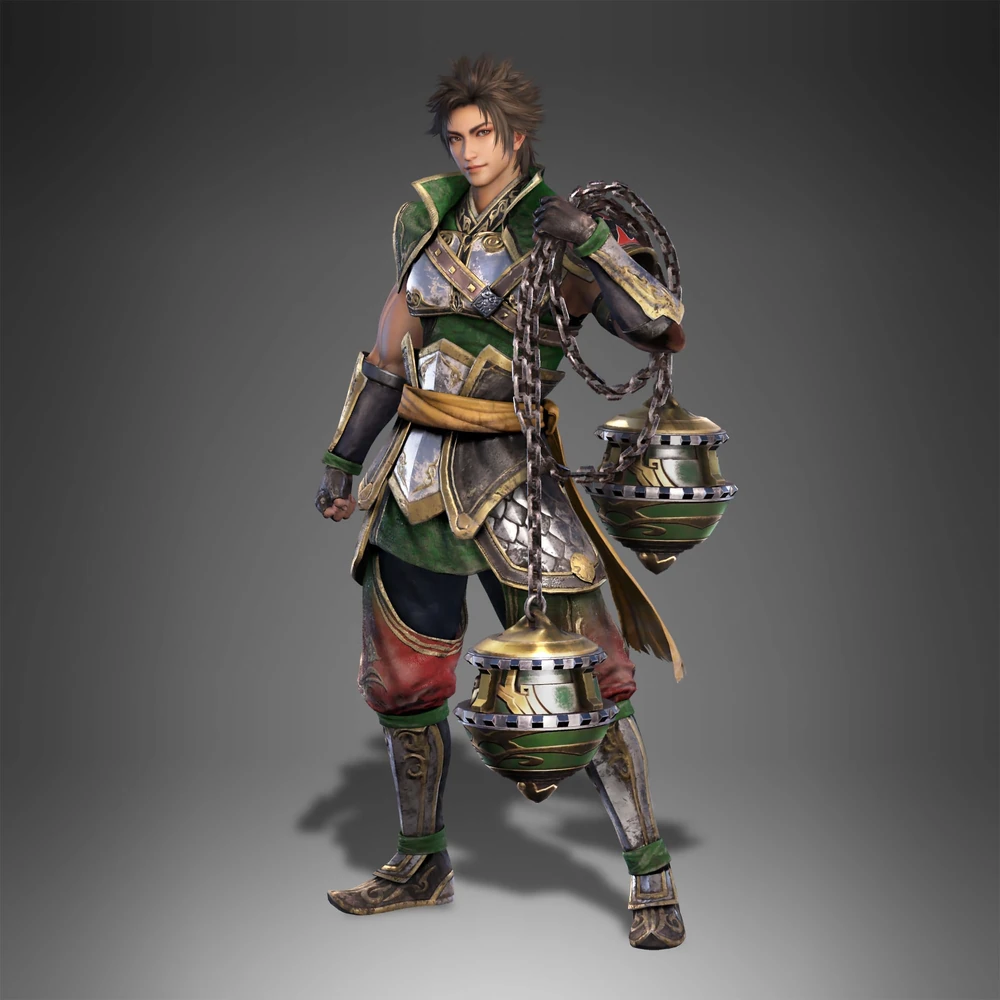
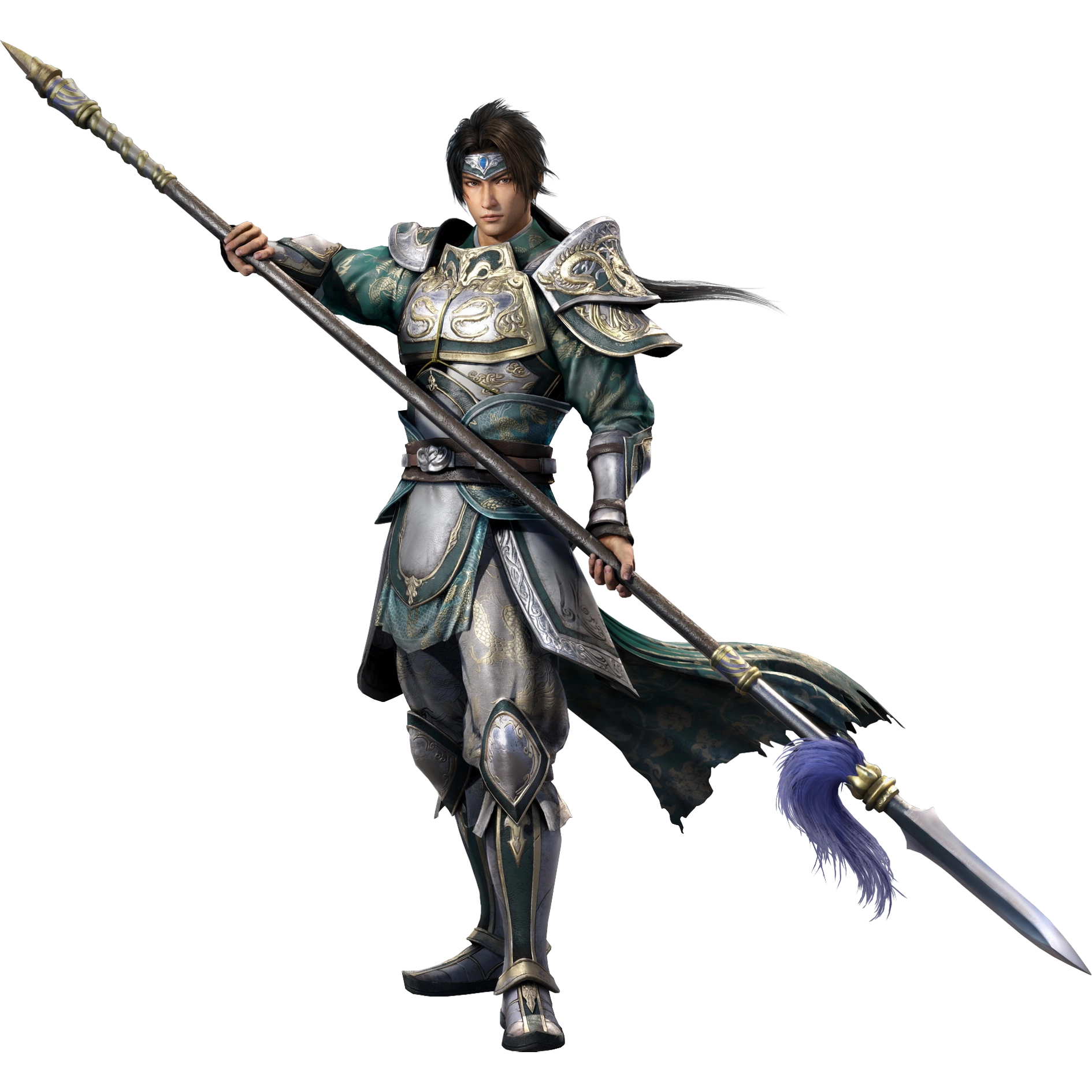
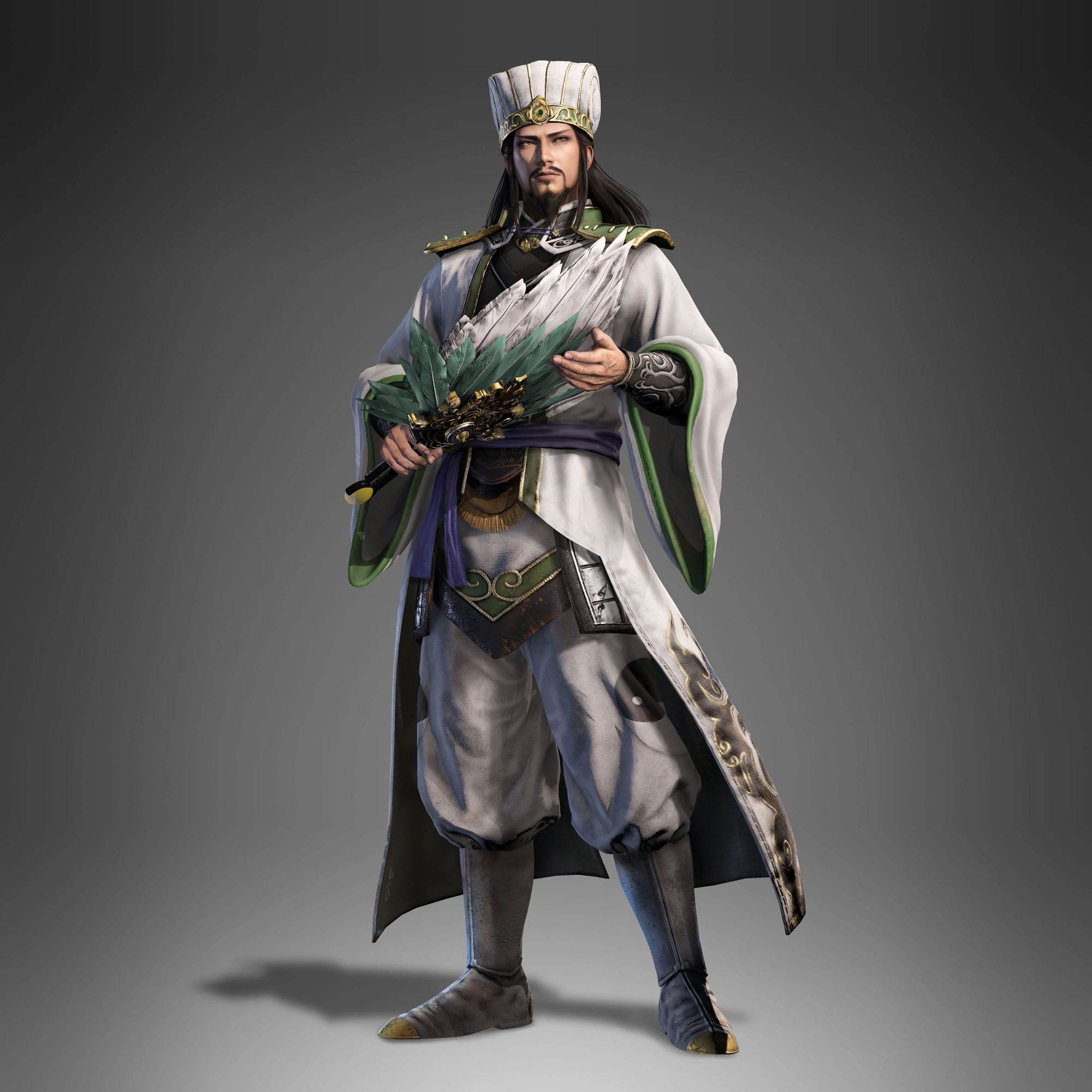
|
Cao Cao
Named as the origin of the Qiang tribute relationship Guo Huai proposes to cash in — the tribes 'have paid tribute regularly since the days of the Founder of Wei', and Cheli Ji 'had rendered yearly tribute since the days of Cao Cao'.
2 mentions in this chapter
2543 mentions in the book
|
|
Cao Pi
Dead, and named twice as the better past: he 'regarded them with favor' in the Qiang relationship Guo Huai revives, and it was under him that Meng Da held every title and honour that Cao Rui's court then made intolerable — 'But when Cao Pi died, all was changed.'
3 mentions in this chapter
171 mentions in the book
|
|
Cao Rui
Recalls the man he dismissed, restoring rank and titles and adding Commander-in-Chief of the Western Forces and General Who Pacifies the West, and sets the Nanyang troops moving while he leads them to Changan. The audience afterwards is an apology: 'Once I doubted you, but then I did not understand, and I listened to mischief-makers. I regret it. Had you not suppressed Meng Da, both capitals would have gone wrong.' Reads Zhuge Liang's intercepted letter, calls Sima Yi wiser than Wu Qi and Sun Tzu, and confers the pair of golden axes with the right to act without first seeking sanction. Has Meng Da's body exposed in the Luoyang market and rewards the four betrayers.
22 mentions in this chapter
166 mentions in the book
|
|
Cao Zhen
Waits on the Qiang alliance Guo Huai arranged, mistakes the Shu withdrawal for its success, and pursues — losing both Van Leaders in minutes, his brother Cao Zun to Wei Yan and Zhu Zan to Zhao Zilong. Surrounded with Guo Huai by Guan Xing and Zhang Bao, beaten back to the River Wei and out of his own camp. 'Greatly chagrined at his defeat and sad at the loss of his generals', he writes to Cao Rui for reinforcements — the report that triggers Sima Yi's recall.
8 mentions in this chapter
137 mentions in the book
|
|
Cao Zun
Killed in this chapter. Leads the pursuit when the Shu army appears to break up, ignores Wei Yan's summons to stop, dashes forward to meet him — 'He was killed in the third encounter.'
2 mentions in this chapter
9 mentions in the book
|
|
Cheli Ji
King of the western Qiangs, tributary to Wei since Cao Cao's day. Takes Cao Zhen's gold and pearls, consults his two ministers, accepts Ya Dan's advice that the old intercourse obliges them, and raises two hundred fifty thousand trained soldiers — archers, crossbowmen, spearmen, swordsmen, mace-throwers and hammer-hurlers — with the iron chariots drawn by camels and horse teams. He never leaves home; the war is fought by his ministers and lost in a snowstorm.
2 mentions in this chapter
2 mentions in the book
|
|
Deng Xian
4 mentions in this chapter
5 mentions in the book
|
|
Guan Xing
Scouts the iron chariots from a hill with a hundred horse and comes back 'quite at a loss to think how to overcome them'. Commands the centre and is the one the chariots surround when both wings give way; driven to a gully, his horse killed under him by Yue Ji's mace and himself thrown into the water, he braces to fight in the stream and is saved by Zhang Bao and Ma Dai. Catches Yue Ji's abandoned horse, rides it back into the battle, and at the end of the chapter kills Yue Ji himself in the first encounter.
20 mentions in this chapter
127 mentions in the book
|
|
Guo Huai
Author of the Qiang alliance: the tribes have paid tribute since Cao Cao's day and Cao Pi favoured them, so buy them with gold and pearls and a promise of kindly treatment, let them engage Shu's attention, and strike elsewhere. It works as far as raising two hundred fifty thousand and the iron chariots, and no further. Pursues with Cao Zhen on the false read of the Shu withdrawal and is routed back to the River Wei.
4 mentions in this chapter
106 mentions in the book
|
|
Han Zhen
Commander of Xiping Pass, who sends Zhuge Liang the first intelligence that the Qiang host has marched — the warning that starts the campaign's western half.
1 mention in this chapter
1 mention in the book
|
|
Hua Xin
Argues that the Emperor must take the field in person and call up all the nobles, on pain of losing Changan and the whole Land Within the Passes — the proposal Zhong Yao talks him out of in favour of recalling Sima Yi.
1 mention in this chapter
48 mentions in the book
|
|
Jiang Wei
Asked how he would beat the iron chariots and gives the answer of a student rather than a soldier — 'The enemy only depend upon force and courage. They shall not expect this fine strategy' — which earns Zhuge Liang's smiling 'You know.' Draws the chariots onto the concealed pits by offering battle and retiring before them, past an empty camp full of flags, and is the bait the whole pursuit follows through the snow.
6 mentions in this chapter
443 mentions in the book
|
|
Li Gu
Meng Da's own confidential subordinate, and with Deng Xian the original source of the leak — the two 'went to confess the plot in exchange for a promise of amnesty', which is how Shen Yi came to have anything to tell Sima Yi. Reviles Meng Da from the wall as he turns back into a flight of arrows — 'We have already yielded the city!' — and is given command of Xincheng.
4 mentions in this chapter
5 mentions in the book
|
|
Li Teng
Li Yan's son, sent from the Palace of Eternal Peace to Qishan with what he calls joyful news — the whole account of Meng Da's position under Cao Rui and his offer to raise Xincheng, Jincheng and Shangyong against Luoyang — bringing Meng Da's messenger and letters with him. Fittingly rewarded, moments before the news of Sima Yi's recall arrives and sours it all.
3 mentions in this chapter
4 mentions in the book
|
|
Li Yan
Commanding at the Palace of Eternal Peace, he is the channel Meng Da has been writing through, and he sends his son Li Teng to the camp at Qishan with Meng Da's messenger and letters. Zhuge Liang's first thought on seeing the visit is that Wu must have invaded.
1 mention in this chapter
37 mentions in the book
|
|
Liang Ji
Sima Yi's Military Adviser, sent ahead with a courteous letter telling Meng Da to hold his troops ready to join the western expedition — a lie designed to keep him still. Received ceremoniously and given a banquet, and answers the one question that matters, that the Commander-in-Chief 'is just about starting now, and is on the way to Changan'. Meng Da smiles inwardly and sees success; the army is already on the road to him.
6 mentions in this chapter
6 mentions in the book
|
|
Liu Shan
Off-stage, but the authority Zhuge Liang invokes when he releases the captured Qiang Prime Minister: 'My master, the Emperor of the Great Han, sent me to destroy those who are in revolt.'
1 mention in this chapter
254 mentions in the book
|
|
Ma Dai
Sent as guide rather than commander — 'You know the disposition of the Qiangs from your long residence there' — and commands the right wing. Proposes holding the camp while the other two ride back for instructions when the iron chariots prove unbeatable. Takes Ya Dan prisoner in the rout and brings him to the main camp.
12 mentions in this chapter
123 mentions in the book
|
|
Ma Su
Offers to intercept Cao Rui on the Changan road and make an end of him, and is told bitterly that Cao Rui was never the worry — 'But the recall of Sima Yi is another matter; that troubles me.' Then asks the question that produces the warning letter: 'Why not put Meng Da on his guard then?'
3 mentions in this chapter
56 mentions in the book
|
|
Meng Da
Destroyed by his own confidence. Cao Pi had made him General Who Establishes Strong Arms, Lord of Pingyang, Governor of Xincheng and Commander of Shangyong and Jincheng; under Cao Rui the jealousy of the court leaves him no peace, so he opens a correspondence through Li Yan proposing to raise Xincheng, Jincheng and Shangyong against Luoyang while Zhuge Liang takes Changan. Reads Zhuge Liang's warning to guard against everyone and laughs it off — 'They say Zhuge Liang leaves nothing to chance. This proves it' — answering that Wancheng is four hundred miles off and a memorial and reply would take a month. Zhuge Liang throws the letter on the ground and stamps: 'Meng Da is a dead man!' The leak was never Shen Yi's doing in the first instance — it came from his own confidential subordinate Li Gu and his nephew Deng Xian, who confessed the plot for an amnesty. He wounds Xu Huang fatally from the wall, then opens his gates to what he takes for his fellow conspirators arriving to help, is met with 'Rebel, stay!', and is overtaken on an exhausted horse and slain. His head is exposed, and Cao Rui has the body displayed in the Luoyang market.
37 mentions in this chapter
108 mentions in the book
|
|
Shen Dan
Governor of Shangyong, the other false conspirator — pretending to abet Meng Da while waiting for the Wei army. Rides up beside Shen Yi to the gates Meng Da opens for them and springs the trap. Promoted and given a post in Sima Yi's army.
5 mentions in this chapter
13 mentions in the book
|
|
Shen Yi
Governor of Jincheng, and never a real conspirator: he and Shen Dan 'were only pretending to abet' Meng Da, drilling troops to keep up appearances and pleading transport delays to explain why they could not start. It is Shen Yi's secret message that tells Sima Yi the revolt is coming. Arrives outside Xincheng under his own banner, is taken for a rescuer, and answers the opened gates with 'Rebel, stay!' Promoted and given a post in Sima Yi's army.
7 mentions in this chapter
14 mentions in the book
|
|
Sima Shi
At Wancheng with his brother when their father sits cast down, and the one who names the reason aloud: 'I think you are grieving because the Ruler of Wei does not use you.' Advises memorializing the Throne before moving on Meng Da and is overruled — a month's delay would mean failure. Brings up the rear of the forced march with Sima Zhao.
4 mentions in this chapter
94 mentions in the book
|
|
Sima Yi
The chapter's pivot, recalled from idleness at Wancheng. Sighing over Wei's defeats in front of his sons, he is answered by Sima Zhao — 'they will send for you presently' — and the commission is literally at the gate as he says it. Shen Yi's secret message about Meng Da arrives the same hour and he reads the whole board at once: 'if I can seize this Meng Da before he makes any move, that will damp Zhuge Liang's spirits and he will retreat.' Overrules Sima Shi's advice to memorialize the Throne — a month's delay would mean failure — orders double-rapid marches on pain of death, and sends Liang Ji ahead with a friendly letter telling Meng Da to make ready to join the western expedition, purely to keep him still. Picks up Xu Huang on the road, captures Meng Da's courier with Zhuge Liang's warning letter on him, and remarks that but for that luck 'our plan would have been foiled by Zhuge Liang's cleverness'. Rewarded with a pair of golden axes and the right to act in important matters without first seeking sanction — the grant that makes the rest of the novel possible — and names Zhang He his Van Leader.
33 mentions in this chapter
470 mentions in the book
|
|
Sima Zhao
At Wancheng with his brother, and it is his line that the chapter immediately fulfils — 'But they will send for you presently', said as the bearer of the commission is already standing at the gate. Brings up the rear of the forced march with Sima Shi.
2 mentions in this chapter
170 mentions in the book
|
|
Sun Tzu
Quoted twice. Zhong Yao uses him to argue that Cao Zhen is outmatched — 'Know the enemy, know thyself, and every battle is a victory' — and Cao Rui uses him at the end as the measure Sima Yi has exceeded: 'You are wiser than both the great strategists of old — Wu Qi and Sun Zi.'
2 mentions in this chapter
16 mentions in the book
|
|
Wei Yan
Sent into ambush with Zhao Zilong against Cao Zhen's pursuit. Stops Cao Zun with 'Stop! You rebels!' and kills him in the third encounter when he refuses, then comes up again to complete the rout.
2 mentions in this chapter
353 mentions in the book
|
|
Wu Qi
Paired with Sun Tzu in Cao Rui's praise of Sima Yi after reading the intercepted letter — 'You are wiser than both the great strategists of old — Wu Qi and Sun Zi.'
1 mention in this chapter
9 mentions in the book
|
|
Xu Huang
Falls in with Sima Yi's column on the road, learns what it is for, and asks for the van himself. Rides to Meng Da's moat and calls out 'Let the traitor Meng Da yield quickly!' — and is answered with an arrow in the forehead. Carried to his tent, the head extracted, he dies that night aged fifty-nine, and his body is sent to Luoyang for burial.
9 mentions in this chapter
148 mentions in the book
|
|
Ya Dan
Qiang Prime Minister, the civil half of the command. Advises accepting Wei's alliance, then twice overrides the suspicion that would have saved the army: told of the empty camp and the lute he answers 'Zhuge Liang's base trick is the pretense of a pretense, and you had better attack', and when troops appear behind the hills he says it does not matter and urges the pursuit faster — straight into the covered pits. Captured by Ma Dai, he is unbound, given wine and kind words, and released with every prisoner and all their gear, carrying an offer of everlasting friendship and an instruction to stop listening to rebels.
10 mentions in this chapter
10 mentions in the book
|
|
Yue Ji
Qiang Chief Leader, with an iron mace and a graven bow. Rolls the iron chariots out of the centre and surrounds Guan Xing's division with them, then runs him down to a gully and knocks horse and rider into the water with the mace — the closest Guan Xing comes to dying in the campaign. Struck into the same gully by Zhang Bao, he escapes on foot leaving his horse for his enemy. Suspicious of the empty camp and talked out of it by Ya Dan, he leads the pursuit through the snow in a rage, and is cut down by Guan Xing in the first encounter as he flees for the mountains.
13 mentions in this chapter
13 mentions in the book
|
|
Zhang Bao
Commands the left wing against the iron chariots and is driven off with Ma Dai, leaving Guan Xing surrounded. Comes back down the gully bank fighting, strikes Yue Ji into the water and rescues Guan Xing from it. Later one of the two ambushes that fall on the Qiang column as it founders in the pits, and one of the two that close behind Cao Zhen and Guo Huai.
11 mentions in this chapter
92 mentions in the book
|
|
Zhang He
Named Leader of the Van at the very end, on Sima Yi's own nomination — 'Zhang He, General of the Right Army, can shoulder this task' — and Cao Rui's answer that he was 'just the man I wished to send'. The pairing that will decide the next chapter.
2 mentions in this chapter
232 mentions in the book
|
|
Zhang Yi
Takes secret orders with Ma Dai before the snowstorm battle, and comes in with Jiang Wei and Ma Dai as the third of the converging divisions once the Qiang column has gone into the pits.
3 mentions in this chapter
76 mentions in the book
|
|
Zhao Yun
Sent into ambush with Wei Yan against the pursuit Zhuge Liang knows the feigned withdrawal will draw, and kills Zhu Zan, the second of Cao Zhen's two Van Leaders, on his long spear.
2 mentions in this chapter
475 mentions in the book
|
|
Zhong Yao
The man who brings Sima Yi back. Opposes Hua Xin's proposal that the Emperor take the field, quoting Sun Tzu — 'Know the enemy, know thyself, and every battle is a victory' — and judging plainly that Cao Zhen 'is no match for Zhuge Liang'. Pledges his whole family on the alternative, then names it and explains the trap the court fell into: 'When Zhuge Liang decided to invade us, he was afraid of the one man I will name. Wherefore he spread calumnies concerning him… That done, Zhuge Liang invaded.' Tells Cao Rui where to find him — idle at Wancheng.
2 mentions in this chapter
15 mentions in the book
|
|
Zhu Zan
Killed in this chapter — 'his colleague Zhu Zan in similar fashion fell in with a cohort under Zhao Zilong, to whose long spear he soon fell victim.' (The ch93 summary that had him dying was a chapter early; this is where it happens.)
1 mention in this chapter
8 mentions in the book
|
|
Zhuge Liang
Wins the western half of the campaign with the weather. Told the iron chariots cannot be broken, he looks once from a hilltop and says 'It is not difficult', reading the dark clouds and the north wind — 'Then I can do what I wish.' Empties a camp of everything but flags and a lute, lets himself be seen leaving it, and lets Jiang Wei draw the pursuit through snow that has levelled the hill roads over covered pits. Releases Ya Dan and every Qiang prisoner with their gear and an offer of friendship, which ends the western threat without another battle. Then the news of Sima Yi's recall lands on the same day as Meng Da's offer, and he sees the whole sequence at once — 'Meng Da is a dead man! A victim of Sima Yi' — throws the complacent reply on the ground and stamps on it, and quotes the Art of War back at his own staff: attack before the enemy is prepared.
32 mentions in this chapter
1454 mentions in the book
|
-
Chang'an County County(34.2464, 108.9070)
-
Chengdu County County(30.6661, 104.0754)
-
Jincheng Commandery Commandery(36.0509, 103.9995)
-
Luoyang County(34.7316, 112.5963)
-
-
-
Middle Land Region
-
Nanyang Commandery Commandery(33.0017, 112.5355)
-
-
-
Palace of Eternal Peace Structure/Building
-
Pingyang Commandery Commandery(36.0581, 111.4147)
-
Qishan Mountains Mountains/Hills
-
River Wei River
-
Shangyong Commandery Commandery(32.2261, 110.2286)
-
Shu (Three Kingdoms) Region
-
Wancheng County County(39.3733, 116.2570)
-
-
-
Wei (Three Kingdoms) Region
-
Wu (Three Kingdoms) Region
-
Xincheng Commandery Commandery(32.0590, 110.7271)
-
Xiping Pass Pass