Jiang Wei Goes Over To Zhuge Liang;
Zhuge Liang Reviles Wang Lang.
Jiang Wei propounded his scheme of defense, saying, "Zhuge Liang will lay an ambush behind the city, induce our soldiers to go out and then take advantage of its undefended state to capture it. Now give me three thousand good soldiers, and I will place them in ambush at a certain critical place. Lead your troops out, but go slowly and not further than ten miles, and then turn to retire. However, look out for a signal, and if you see one, attack, for the attack will be double. If Zhuge Liang is there himself, we shall capture him."
The Governor adopted this plan, gave the needed troops to Jiang Wei, who marched at once, and then Ma Zun went forth himself with Liang Qian. Only two civil officials---Liang Xu and Yin Shang---were left to guard the city.
Zhao Zilong had been sent to lie in ambush in a secret place among the hills till the Tianshui army left the city, when he was to rush in and capture it. His spies reported the departure of the Governor, and only civil officials remained within the city. Zhao Zilong sent on the news to those who were acting with him, Zhang Yi and Gao Xiang, that they might attack Ma Zun.
Zhao Zilong and his five thousand troops then quickly marched to the city wall and called out, "I am Zhao Zilong of Changshan. You have fallen into our trap, but if you will surrender quickly, you will save many lives."
But instead of being alarmed, Liang Xu looked down from the wall and said, "On the contrary, you have fallen into our trap. Only you do not know it yet!"
Zhao Zilong began his attack on the walls. Soon there was heard a roar, and fire broke out all round, and forth came a youthful leader armed with a spear, riding a curvetting steed.
"Look at me, Jiang Wei of Tianshui!" cried he.
Zhao Zilong made at him, but after a few bouts he found Jiang Wei was getting very eager.
Zhao Zilong was surprised, and wondered, "No one knows there is such an able man in Tianshui."
As the fight went on, along came the two other forces under Ma Zun and Liang Qian, now returning. As Zhao Zilong found he could not prevail, he set to cut an alley through and lead off his defeated troops. He was pursued, but Zhang Yi and Gao Xiang poured forth to save him, and he got away safely.
Zhuge Liang was surprised when he heard what had happened.
"Who is this?" said he. "Who has thus seen into the dark depths of my secret plan?"
A man of Nanan, who happened to be there, told him, "He is Jiang Wei from Jicheng of Tianshui County. He is very filial to his mother. Civil skill and military prowess, wisdom and courage, he has all. Truly, he is a hero of the age."
Zhao Zilong also praised his skill with the spear, which was superior to any other's.
Zhuge Liang said, "I want to take Tianshui now. I did not expect to find such a man as this."
The Shu army then advanced in force.
Jiang Wei went back to Ma Zun and said, "Zhao Zilong's defeat will bring up Zhuge Liang with the main body. He will conclude that we shall be in the city, wherefore you had better divide your force into four. I, with one party, will go into hiding on the east so that I may cut off our enemies if they come that way. You, O Governor, and Liang Qian and Yin Shang will lie in ambush on the other sides of the city. Let Liang Xu and the common people go up on the wall to make the defense."
Ma Zun agreed to the plan and prepared everything.
Due to Jiang Wei, Zhuge Liang himself led the main army to Tianshui.
When they reached the city, Zhuge Liang gave a general orders: "Attacking a city must be proceeded as soon as the army reaches it. At the rolling of drums, incite and urge the soldiers to advance with a rush. The keenness of the soldiers will be spoiled by any delay."
So this time also the army came straight up to the rampart. But they hesitated and dared not attack when they saw the flags flying in such good order and apparently such thorough preparation.
About the middle of the night, fires started up all around and a great shouting was heard. No one could see whence the Wei soldiers were coming, but there were answering shouts from the wall. The soldiers of Shu grew frightened and ran. Zhuge Liang mounted a horse and, with Guan Xing and Zhang Bao as escort, got out of danger. Looking back, they saw many mounted troops with torches winding along like a huge serpent.
Zhuge Liang bade Guan Xing find out what this meant, and Guan Xing report: "These are Jiang Wei's troops."
Zhuge Liang remarked, "An army owes more to its leading than to its numbers. This Jiang Wei is a true genius."
Zhuge Liang led the army back to camp, and then he thought for a long time. Suddenly he called up one of the Anding men and said, "Where is the mother of this Jiang Wei?"
"She lives in Jicheng," replied he.
Zhuge Liang called Wei Yan and said to him, "March off with a body of troops, giving out that you are going to take Jicheng. If Jiang Wei comes up, let him enter the city."
Then Zhuge Liang asked, "What is the most important place in connection with this place?"
The man from Anding replied, "The storehouse of Tianshui is at Shanggui. If that is taken, the supplies are cut off."
This was good news, so Zhao Zilong was sent to attack Shanggui, while Zhuge Liang made a camp ten miles south of the city.
The spies took the news of the movements of these three forces into Tianshui.
When Jiang Wei heard that one army was to attack his own place, he pleaded with Ma Zun, saying, "My mother is in Jicheng, and I am worried about the attacking force. Let me go to its defense, that I may keep the city and do my duty by my mother at the same time."
So Jiang Wei received command of three thousand troops and marched toward his home.
When Jiang Wei came near the walls, he saw a cohort under Wei Yan. He attacked. After a show of defense Wei Yan retreated, and Jiang Wei entered the city. He closed the gates and prepared to defend the wall. Then he went home to see his mother.
In the same way Liang Qian was allowed to enter Shanggui.
Then Zhuge Liang sent for his prisoner, Xiahou Mao, and, when he was brought to his tent, Zhuge Liang said suddenly, "Are you afraid of death?"
Xiahou Mao prostrated himself and begged for his life.
"Well, Jiang Wei of Tianshui, who, is now gone to guard Jicheng, has sent a letter to say that he would surrender if only that would secure your safety. Now I am going to let you go if you will promise to induce Jiang Wei to come over to me. Do you accept the condition?"
"I am willing to induce him to yield to you," said Xiahou Mao.
Zhuge Liang then gave his prisoner clothing and a horse and let him ride away. Nor did he send anyone to follow him, but let him choose his own road.
Having got outside, Xiahou Mao wanted to get away, but he was perfectly ignorant of the roads and knew not which to take. Presently he came across some people, apparently in flight, and he questioned them.
"We are Jicheng people," said they. "Jiang Wei has surrendered the city and deserted to Zhuge Liang. The troops of Shu are looting and burning, and we have escaped. We are going to Shanggui."
"Do you know who is holding Tianshui?"
"Governor Ma Zun is in there," said they.
Hearing this, Xiahou Mao rode quickly toward Tianshui. Presently he met more people, evidently fugitives, leading sons and carrying daughters, who told the same story. By and by he came to the gate of the city, and, as he was recognized, the wardens of the gate admitted him, and the Governor came to greet him and asked of his adventures. He told all that had happened, that Jiang Wei had surrendered and related what the fugitives had said.
"I did not think Jiang Wei would have gone over to Shu," said the Governor sadly.
"It seems he thought by this to save you, Sir Commander-in-Chief," said Liang Xu. "I am sure he has made only a pretense of surrendering."
"Where is the pretense when it is a fact that he has surrendered?" said Xiahou Mao.
They were all perplexed. Then at the third watch the troops of Shu came to begin an attack. The fires round the wall were very bright, and there in the glare was seen Jiang Wei, armed and riding up and down under the ramparts calling out for Xiahou Mao. Xiahou Mao and Ma Zun ascended the wall, whence they saw Jiang Wei swaggering to and fro.
Seeing the chiefs on the wall, Jiang Wei called out, "I surrendered for the sake of you, O General. Why have you gone back on your word?"
"Why did you surrender to Shu after enjoying so much of Wei's bounty?" said Xiahou Mao. "And why do you talk thus?"
"What do you mean talking thus after writing me a letter telling me to surrender? You want to secure your own safety by involving me. But I have surrendered, and as I am a superior general in their service now, I see no sense in returning to Wei."
So saying, he urged the soldiers on to the attack. The assault continued till dawn, when the besiegers drew off.
Now the appearance of Jiang Wei in this fashion was but a ruse. Zhuge Liang had found among his men one who resembled Jiang Wei and had disguised him so that Jiang Wei appeared to be leading the attack on the ramparts. In the smoke and fire during the night no one could penetrate the disguise.
Zhuge Liang then led the army to attack Jicheng. The grain in the city was insufficient to feed the people. From the wall Jiang Wei saw wagons of grain and forage being driven into the Shu camp, and he determined to try to secure some. So he led three thousand troops out of the city to attack the train of wagons. As soon as he appeared, the convoy abandoned the carts and fled. Jiang Wei seized them, and was taking them into the city, when he was met by a cohort under the command of Zhang Yi. They plunged into battle. After a short time Wang Ping came to reinforce Zhang Yi, so that Jiang Wei was attacked on two sides. All Jiang Wei's efforts were vain, and he had to abandon the spoil and try to reenter the city.
But as he drew near, he saw the walls were decorated with Shu ensigns, for Wei Yan had captured the place and was in possession. By desperate fighting Jiang Wei got clear and set off for Tianshui. But he only had a few score horsemen left. Presently the small force fell in with Zhang Bao, and at the end of this engagement Jiang Wei found himself alone, a single horseman. He reached Tianshui and hailed the gate. The watchers above the gate knew him and went to tell the Governor.
"This fellow has came to beguile me into opening the gate," said Ma Zun.
So Ma Zun ordered the defenders to shoot at the fugitive. Jiang Wei turned back, but there were the army of Shu close at hand. He set off as fast as he could for Shanggui. But when he got there Liang Qian hurled a volley of abuse at him.
"You traitor!" cried Liang Qian. "Dare you come to try to cajole me out of my city? I know you have surrendered to Shu."
Liang Qian's soldiers also began to shoot at the hapless fugitive.
Jiang Wei was helpless. He could not explain the real truth to those who doubted him. Lifting his eyes to heaven, while tears rolled down his cheeks, he whipped up his steed and rode off toward Changan.
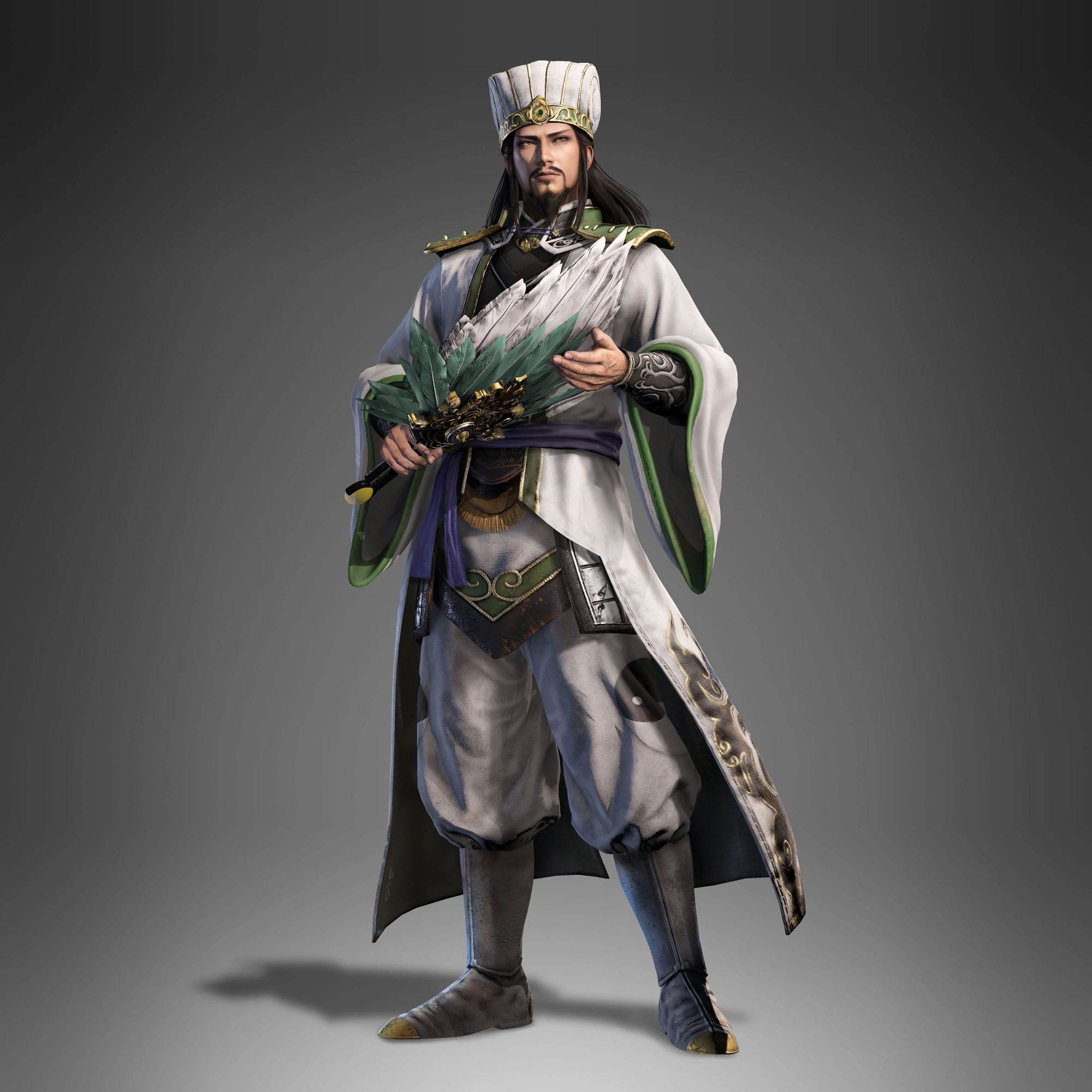
Before he had got very far, he came to a spot where were many heavy foliaged trees. From among these appeared a company of soldiers, led by Guan Xing. Weary as were both horse and rider, there was no chance of successful resistance, and Jiang Wei turned back. But soon appeared a small chariot in which sat Zhuge Liang, dressed simply as usual in a white robe and carrying his feather fan.
"Friend Jiang Wei," said Zhuge Liang, "is it not time to yield?"
Jiang Wei stopped and pondered. There was Zhuge Liang, and Guan Xing's troops were behind him. There was no way out. So he dismounted and bowed his head in submission.
Zhuge Liang at once got out of the chariot and bade him welcome, taking him by the hand and saying, "Ever since I left my humble cottage, I have been seeking some worthy person to whom I might impart the knowledge that my life has been spent in acquiring. I have found no one till this moment, and now my desire is attained. You are the one."
Jiang Wei bowed and thanked him, and they two returned to camp.
Soon after their arrival, the new recruit and Zhuge Liang consulted how to capture Tianshui and Shanggui. Jiang Wei had a scheme.
"The two civil officers in charge of the city, Yin Shang and Liang Xu, are excellent friends of mine," said he, "and I will write a letter to each, shoot it over the wall tied to an arrow, and ask them to help by raising a revolt within the city."
They decided upon this, and two secret letters were duly written and sent flying over the ramparts, where they were found and taken to the Governor. Ma Zun was doubtful what action to take and consulted with Xiahou Mao, asking him to decide.
Said Ma Zun, “Yin Shang and Liang Xu are in league with Jiang Wei, and they plot to aid the enemy from within. What should be done?”
"Put both the men to death," Xiahou Mao replied.
But Yin Shang heard what was toward and said to Liang Xu, "The best course for us is to yield the city to Shu and trust to them to treat us well as our recompense."
That evening Xiahou Mao sent many times to summon the two officers to him, but they thought it too great a risk to answer the call. Instead, they armed themselves and rode at the head of their own soldiers to the gates, opened them and let in the troops of Shu. Ma Zun and Xiahou Mao fled by the west gate with a hundred faithful followers and sought refuge with the Qiang tribespeople.
Liang Xu and Yin Shang welcomed Zhuge Liang, who entered the city, restored order, and calmed the people.
This done, Zhuge Liang asked how he might capture Shanggui.
Liang Xu said, "My brother, Liang Qian, holds that city, and I will call upon him to yield it."
Thereupon Liang Xu rode over to Shanggui and called out his brother to submit. Zhuge Liang rewarded the two brothers and then made Liang Xu Governor of Tianshui; Yin Shang, Magistrate of Jicheng; and Liang Qian, Magistrate of Shanggui. Next the army prepared to advance.
His officers asked, "O Prime Minister, why do you not pursue and capture Xiahou Mao?"
Zhuge Liang replied, "I let him go as I would release a duck. In my friend Jiang Wei I recognized a phoenix."
Such awe and fear seized upon the country around when these exploits of Zhuge Liang were heard of that many other cities simply opened their gates without making any resistance. Zhuge Liang brought all soldiers from Hanzhong, horse and foot, and marched on to Qishan.
When the Shu army reached the west bank of River Wei, the scouts reported their movements in Luoyang, and, at a court held in the first year of the era of Calm Peace (AD 227), the ministers told the Ruler of Wei of the threatened invasion.
They said, "Xiahou Mao, the Imperial Son-in-Law, has lost the three counties and fled to the Qiangs. The enemy has reached Qishan, and their advanced columns are on the west bank of River Wei. I pray that an army be sent to repulse them."
The Emperor, Cao Rui, was alarmed and asked, “Who shall go out and drive off the enemy for me?”
Minister Wang Lang stepped forward and said, "I observed that whenever General Cao Zhen was sent by the late Emperor on any expedition, he succeeded. Why not send him to drive off these soldiers of Shu?"
Cao Rui approved of the suggestion.
Whereupon he called up Cao Zhen and said to him, "The late Emperor confided me to your guardianship. You cannot sit by while the enemy ravages the country."
Cao Zhen replied, "Your Majesty, my talents are but poor and unequal to the task you propose."
"You are a trusted minister of state, and you may not really refuse this task. Old and worn as I am, I will use the little strength left me to accompany you," said Wang Lang.
"After the bounties I have received, I cannot refuse," replied Cao Zhen. "But I must ask for an assistant."
"You have only to name him, O Noble One," said the Emperor.
So Cao Zhen named Guo Huai, a man of Yangqu, whose official rank was Lord of Sheting; he was also Imperial Protector of Yongzhou.
Thereupon Cao Zhen was appointed Commander-in-Chief, and the ensigns of rank were conferred upon him. Guo Huai was appointed his second, and Wang Lang was created Instructor of the Army. Wang Lang was then already old, seventy-six.
The army of Cao Zhen consisted of two hundred thousand troops, the best from both capitals. His brother, Cao Zun, was made Leader of the Van with an assistant, Zhu Zan, General Who Opposes Brigands. The army moved out in the eleventh month of that year, and the Ruler of Wei went with it to the outside of the west gate.
Cao Zhen marched by way of Changan and camped on the west bank of the River Wei. At a council, which the Commander-in-Chief called to consider the best mode of attack, Wang Lang asked that he might be allowed to parley with the enemy.
Said Wang Lang, "Let the army be drawn up in complete battle order and unfurl all the banners. I will go out and call a parley with Zhuge Liang, at which I will make him yield to us without a blow, and the army of Shu shall march home again."
Cao Zhen agreed to the plan. So orders were given to take the early meal at the fourth watch and have the men fall in with their companies and files at daylight, all in review order. Everything was to be grand and imposing, the flags fluttering and the drums rolling, every soldier in his place. Just before this display, a messenger was to deliver a declaration of war.
Next day, when the armies were drawn up facing each other in front of the Qishan Mountains, the soldiers of Shu saw that their enemies were fine, bold warriors, very different from those that Xiahou Mao had brought against them. Then after three rolls of the drums, Minister of the Interior Wang Lang mounted his horse and rode out, next to him rode Commander-in-Chief Cao Zhen, and followed behind was Deputy Commander Guo Huai. The two Leaders of the Van remained in charge of the army.
Then a messenger rode to the front and called out in a loud voice, "We request the leader of the opposing army to come out to a parley."
At this, within the Shu army, an opening was made at the main standard, through which came out Guan Xing and Zhang Bao, who took up their stations right and left. Then followed two lines of generals, and beneath the standard, in the center of the array, was seen a four-wheeled carriage wherein sat Zhuge Liang, with turban, white robe and black sash. A leather fan was in his hand. He advanced with the utmost dignity. Looking up, he saw three commander umbrellas and flags bearing large white characters. In the middle was an aged, white-haired figure, Minister Wang Lang.
"He intends to deliver an oration," thought Zhuge Liang. "I must answer as best I may."
His carriage was then pushed to the front beyond the line of battle, and he directed one of his officers to reply, saying, "The Prime Minister of the Hans is willing to speak with Minister Wang Lang."
Wang Lang advanced. Zhuge Liang saluted him from the carriage with raised hands, and Wang Lang replied from horseback with an inclination. Then Wang Lang began his oration.
"I am happy to meet you, Noble Sir. Your reputation has been long known to me. Since you recognize the decrees of Heaven and are acquainted with the conditions of the world, why do you, without any excuse, lead out such an army?"
Zhuge Liang replied, "How mean you no excuse? I hold an edict to destroy rebels."
Wang Lang replied, "Heaven has its mutations, and change its instruments from time to time. The supreme dignity comes at last to the person of virtue. This is the inevitable and immutable law. In the days of Emperors Huan and Ling arose the Yellow Scarves rebellion, and the whole earth was involved in wrangling and warfare. Later, in the eras of Inauguration of Tranquillity and Rebuilt Tranquillity, Dong Zhuo arose in revolt, a revolt which Li Jue and Guo Si continued after Dong Zhuo had been destroyed. Next Yuan Shu usurped the imperial style, and his brother Yuan Shao played the man of might and valor in the land of Yejun. Liu Biao occupied Jingzhou, and Lu Bu seized and held Xuzhou. Thus rebels have arisen in the land like swarm of wasps and bold spirits have followed their own will, to the danger of the supreme dignity and the peril of the people.
"Then the Founder of Wei, Emperor Cao, swept away rebellion in eight directions, purged the land, and restored order. All hearts turned to him in gratitude, and the people of the four quarters admired his virtue. He gained his position by no manifestation of force: It was simply the will of Heaven. His son and successor, Emperor Pi, was wise and warlike, adequate to the great heritage and fitted to wield supreme power. Wherefore, in accordance with the will of Heaven and the desires of humans, and following the example of the earliest emperors, he took his place as arbiter of the Central Government, whereby the myriad countries are ordered and governed. Can any maintain that it was not the desire of Heaven and the wish of the people?
"Noble Sir, you are a man of natural talent and acquired attainments, worthy, you say yourself, to be compared with Guan Zhong and Yue Yi. Why then place yourself in opposition to the decree of Heaven and turn away from the desire of humankind to do this thing? You cannot be ignorant of the wise old saying: 'He who accords with the Heaven shall flourish, while he who opposes shall be destroyed.'
"Now the armies of Wei are countless legions, and their able leaders are beyond number. Can the glowworm in the parched stubble rival the glorious moon in the sky? If you will turn down your weapons and throw aside your armors and dutifully yield, you shall not lose your rank. The state will have tranquillity and the people rejoice. Is not that a desirable consummation?"
Zhuge Liang laughed.
Said he, "I regarded you as an old and tried servant of the Han Dynasty and thought you would hold some noble discourse. Could I imagine you would talk so foully? I have a word to say that all the armies may hear. In the days of Emperors Huan and Ling the rule of Han declined, the officers of state were the authors of evil, the government fell into confusion, and misfortune settled on the country. Trouble was rife in every quarter. The Yellow Scaves, Dong Zhuo, Li Jue and Guo Si, and other rebels arose one after another, deposing the emperor and afflicting the people. Because the household officers were corrupt and foolish, and the court officials were as brute beasts, living only that they might feed; because high people, wolfishly cruel in their hearts, savagely mean in their conduct, were in office one after another, and slavish flatterers bending slavish knees confounded the administration, therefore the Throne became as a waste heap, and the people were trodden into the mire.
"I know all about you. You came from the eastern seashore. You got into office with a recommendation of filial piety and integrity; you properly aided your sovereign and supported the state, cared for the tranquillity of Han and magnified the Lius. But could one have imagined that you would turn and assist rebels and enter into a plot to usurp the Throne? Indeed your crime is great and your guilt heavy. Heaven and earth will not suffer you. The inhabitants of this land would devour you.
"But happily the design of Heaven is to retain the glorious dynasty. The late Emperor Bei continued the line in the River Lands, and I have been entrusted by the present Emperor with the task of destroying you rebels.
"Since you are such a false and specious minister, you have but to hide your body and cover your head, concern yourself about your belly and your back. Do not come out before the armies to rave about the decrees of Heaven. You fool and rebel! Mark you, today is your last day. This day even you descend to the Nine Golden Springs. How will you stand before the twenty-four emperors of Latter Han that you will meet there? Retire, you rebel! Go tell your rebellious companions to come and fight one battle with me that shall decide the victory!"
Fierce wrath filled the old man's breast. With one despairing cry Wang Lang fell to the earth dead.
This exploit of Zhuge Liang's has been lauded in verse:
In west Qin, when the armies met in the field,
He, the bold one, singly faced a myriad warriors,
And with a simple weapon, just his tongue,
He did to death a wicked minister.
After Wang Lang had fallen, Zhuge Liang waved the fan toward Cao Zhen and said, "As for you, I leave you alone for this occasion. Go and get your army in order for tomorrow's battle."
The chariot turned and left the ground. Both armies retired for that day. To Cao Zhen fell the melancholy duty of rendering the last services to the aged Minister and setting his coffin on its journey to Changan.
Then said General Guo Huai, "Zhuge Liang will certainly think the army occupied with mourning and make a night attack. Let us anticipate him and set out an ambush about our camp. Let two bodies of our troops be hidden outside and two others take the occasion to raid the camp of the enemy."
"I thought of such a scheme myself," said Cao Zhen. "It exactly suits my plans."
So Cao Zhen gave order to Cao Zun and Zhu Zan: "You are to take ten thousand troops each, get away by the rear of the mountain, and look out for the passing of the soldiers of Shu. When they have gone by, you are to make for their camp. But you are only to attempt a raid if they have left."
Cao Zun and Zhu Zan took the order and left. Then the Commander-in-Chief arranged with Guo Huai each to lead a force and hide outside the camp to wait for the raid of Shu. Only a few soldiers were to be left within to make a fire if the enemy were seen to be coming. And all generals set about the necessary preparations.
When Zhuge Liang reached his tent, he called to him Zhao Zilong and Wei Yan, and said to them, "You two are to make a night attack."
"Cao Zhen is a man of experience and will be on the lookout," ventured Wei Yan.
"But that is just what I want: I want him to know we shall attack tonight. He will then put some troops in hiding in rear of the Qishan Mountains, who will make for our camp as soon as they see us pass toward theirs. I am sending you to let yourselves be seen passing the hill. but you are to camp behind it and at a distance. When the soldiers of Wei attack this camp, you will see a signal. Then Wei Yan will hold the approach to the hill, and Zhao Zilong will make his way back in fighting order. He will meet the army of Wei returning and will let them pass. The enemy will assuredly fall to fighting among themselves, and we shall finish the battle."
These two having gone away to carry out their portions of the plan, Zhuge Liang next called up Guan Xing and Zhang Bao: "You are to take each ten thousand troops and hide in the high road to the mountain. When the troops of Wei come, let them pass and then march along the road they came by to their camp that they have just left."
These two having left, Zhuge Liang placed Ma Dai, Wang Ping, Zhang Ni, and Zhang Yi in ambush about the camp.
Within the camp the tents and shelters were left standing as if the camp was occupied, while wood and straw were heaped up ready to give the signal. This done, Zhuge Liang and his officers retired to the rear of the camp to watch the proceedings.
On the side of Wei the two Van Leaders, Cao Zun and Zhu Zan, left at dusk and hastened toward the camp of Shu. About the second watch they saw troops busily moving about in front of the hill.
Cao Zun thought to himself, "General Guo Huai is an excellent strategist and of wonderful prevision."
Then he hastened the march, and in the third watch reached the camp of Shu. He at once dashed into the enclosure, but only to find it totally deserted. Not a man was visible. At once he knew he had stumbled into a trap, and began to withdraw. Then the flames sprang up. Zhu Zan arrived already to fight, and the two bodies of troops, thrown into confusion, fought with each other till the two leaders met, when they found out they were fighting their own men.
As they were restoring order, on came the four bodies of troops of Shu under Ma Dai, Wang Ping, Zhang Ni, and Zhang Yi who had lain in ambush ready for them. Cao Zun and Zhu Zan, with more than a hundred of those nearest to them, ran away to get to the high road. But before long the rolling drums announced another body of their enemy, and their flight was stopped by Zhao Zilong.
"Whither go ye, O rebel leaders?" cried Zhao Zilong. "Stop, for here is death!"
But Cao Zun and Zhu Zan still fled. Then came up a force led by Wei Yan and completed the defeat. The soldiers of Wei were wholly beaten and ran away to their own camp. But the guard left in the camp thought they were the enemy who come to raid, so they lit the fires, and at this signal Cao Zhen rushed up from one side and Guo Huai from the other, and a fierce fight with their own troops began.
While this was going on, three cohorts under Wei Yan, Guan Xing, and Zhang Bao arrived from three points, and a great and confused battle began. The soldiers of Wei were driven off and chased for three miles.
In the fight Wei lost many leaders, and Zhuge Liang gained a great success. Cao Zhen and Guo Huai got together their beaten troops and went back to their own camp.
When they discussed the fight, Cao Zhen said, "The enemy are too strong for us. Have you any plan to drive them away?"
Replied Guo Huai, "Our defeat is one of the ordinary events of war. Let us not be cast down. I have a plan to suggest that will disorder them so that one body cannot help the other, and they will all be compelled to flee."
Wei leaders fail and sadly send
To pray tribespeople help to lend.
The plan will be unfolded in the next chapter.
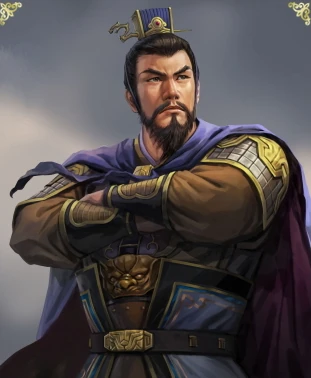
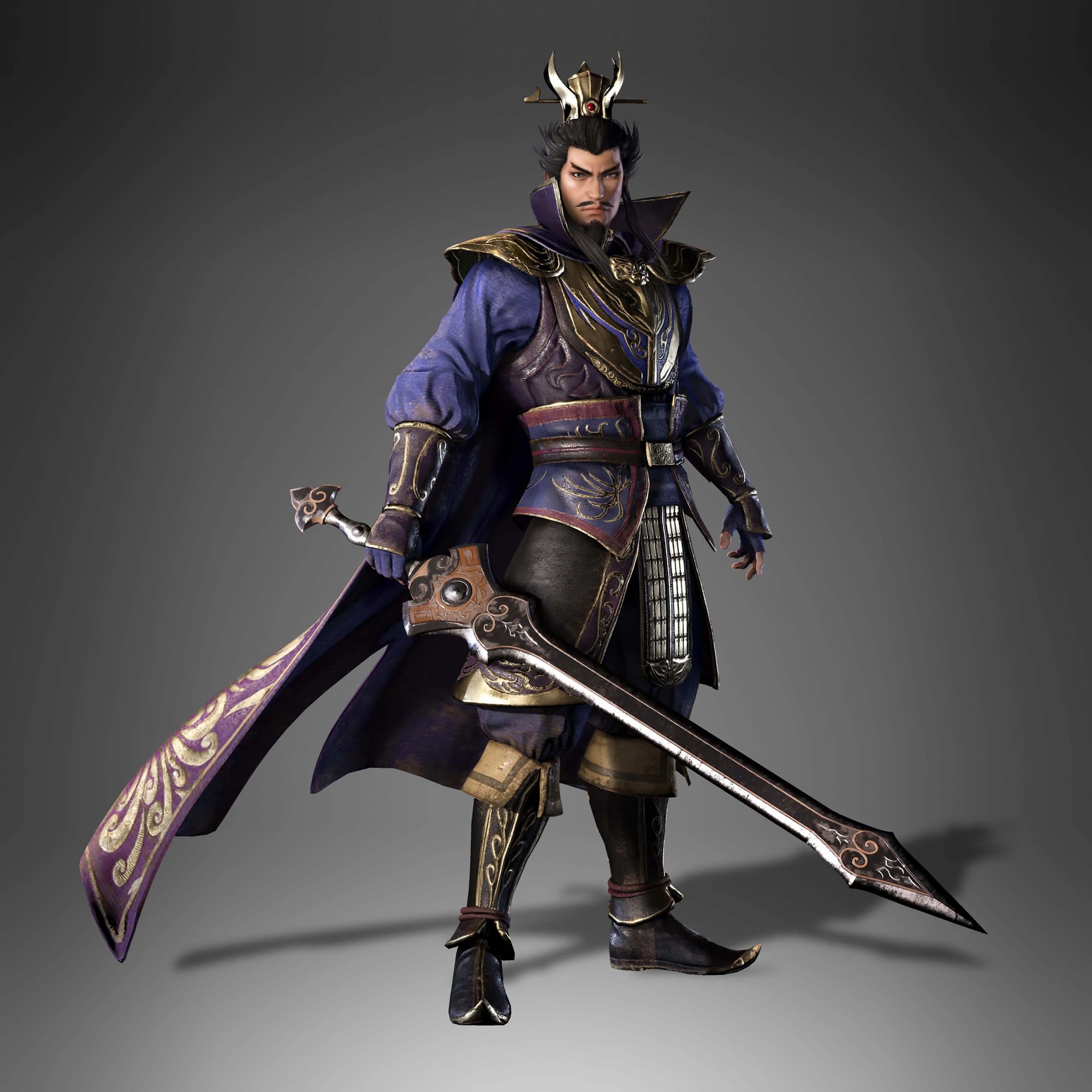
-
Wikipedia entry Bio
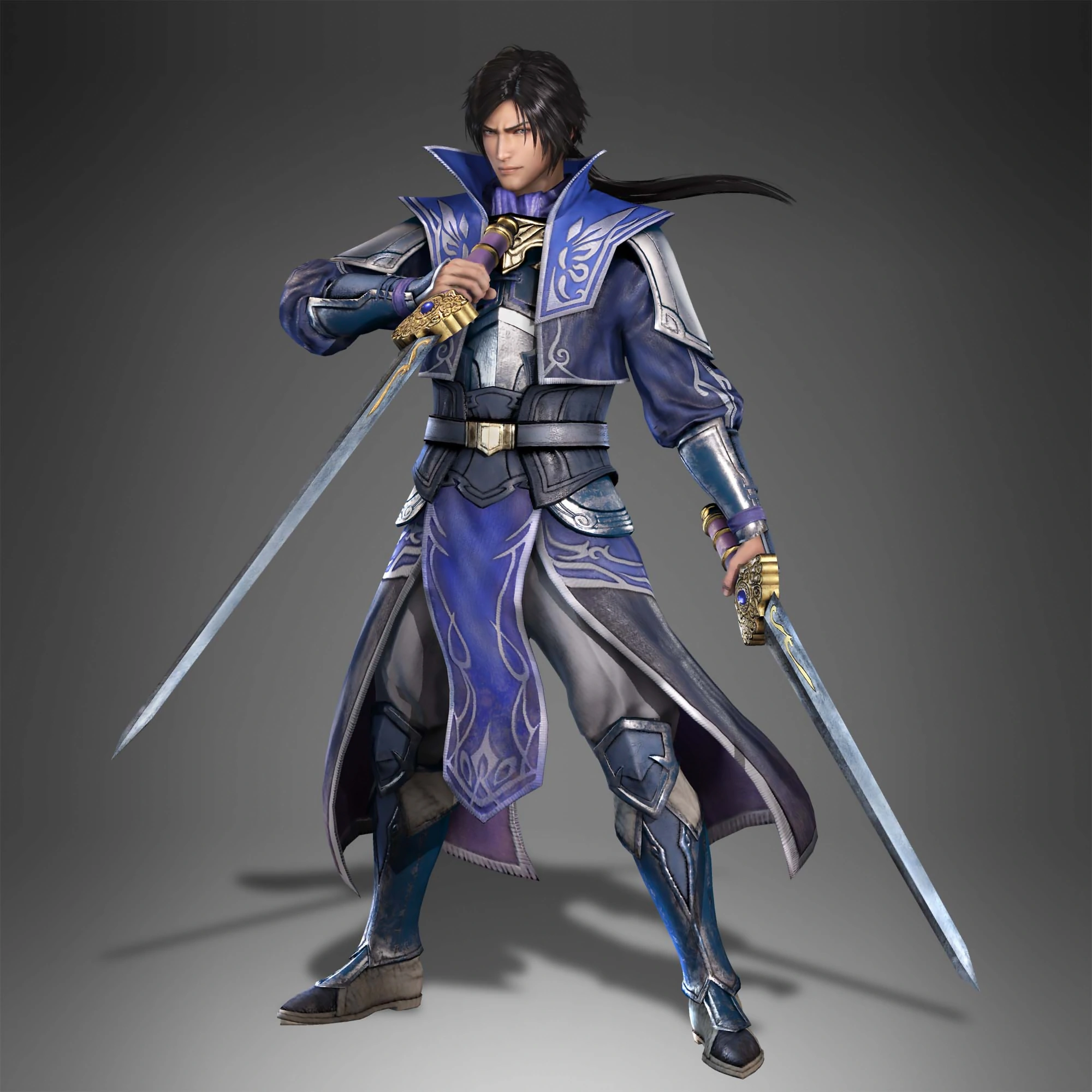
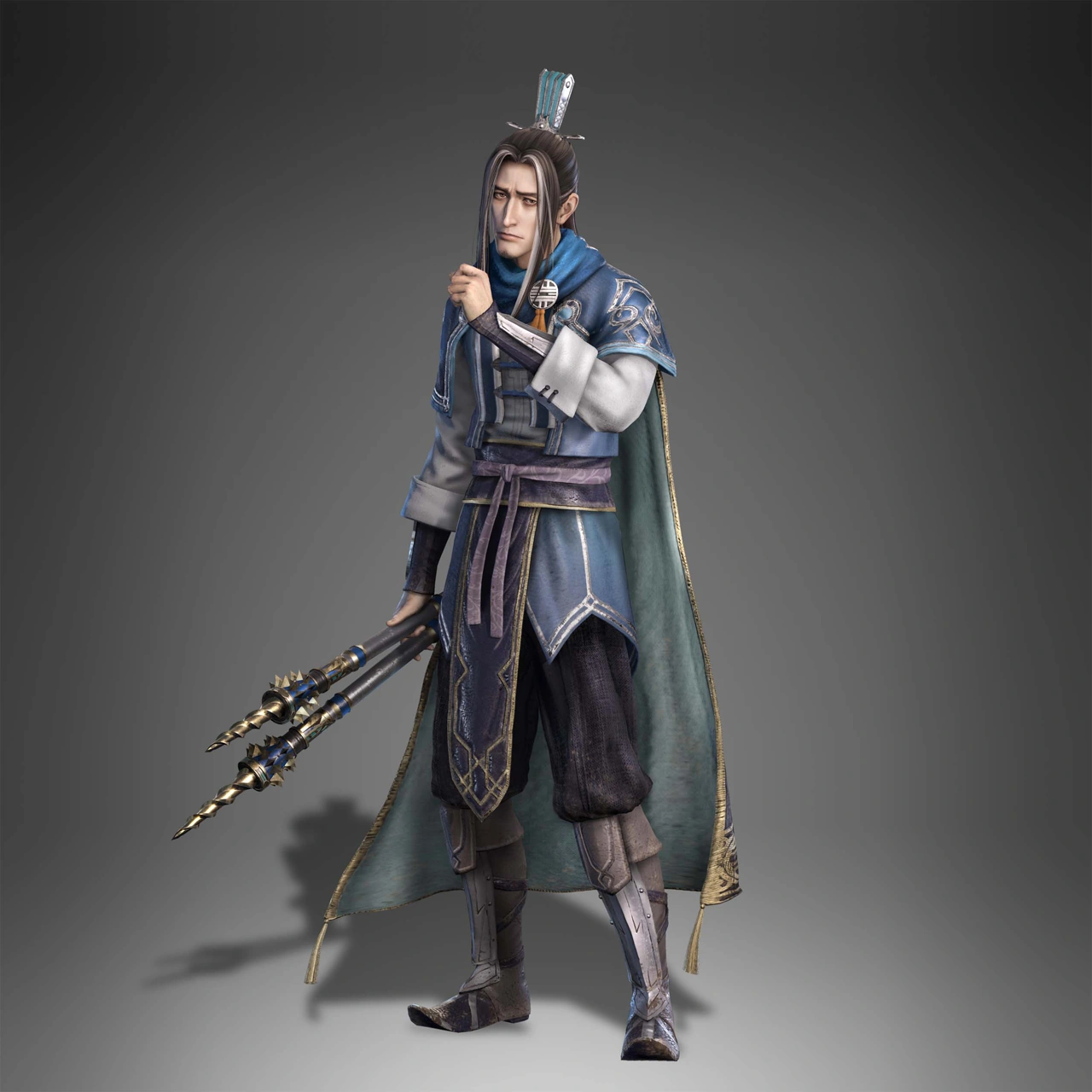
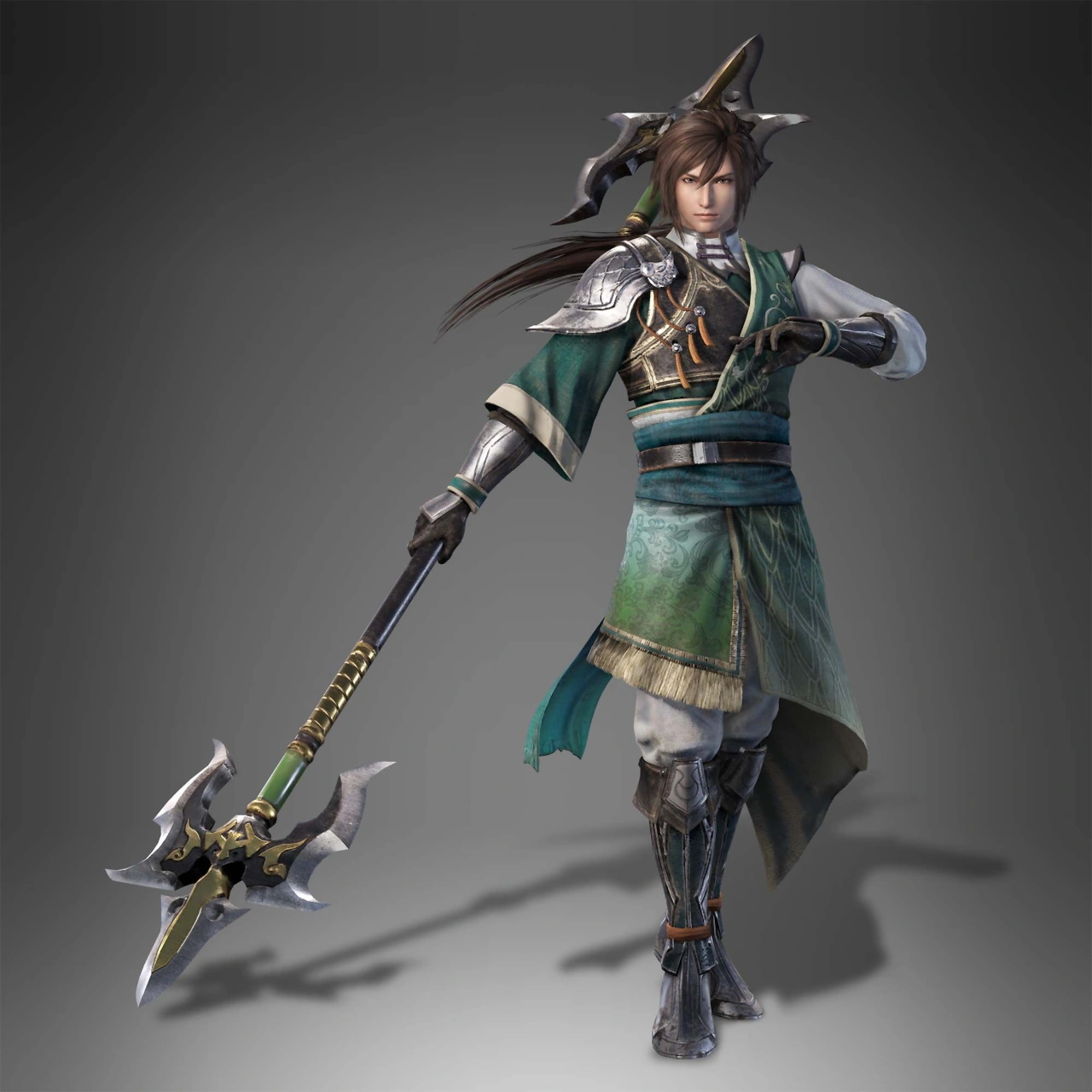
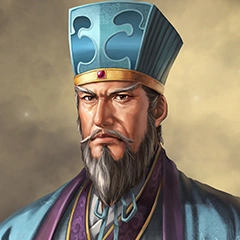
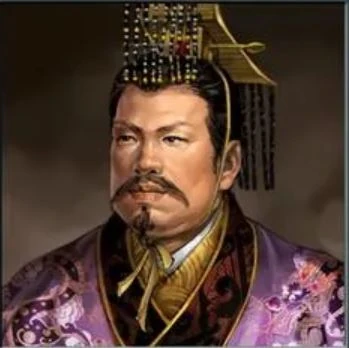
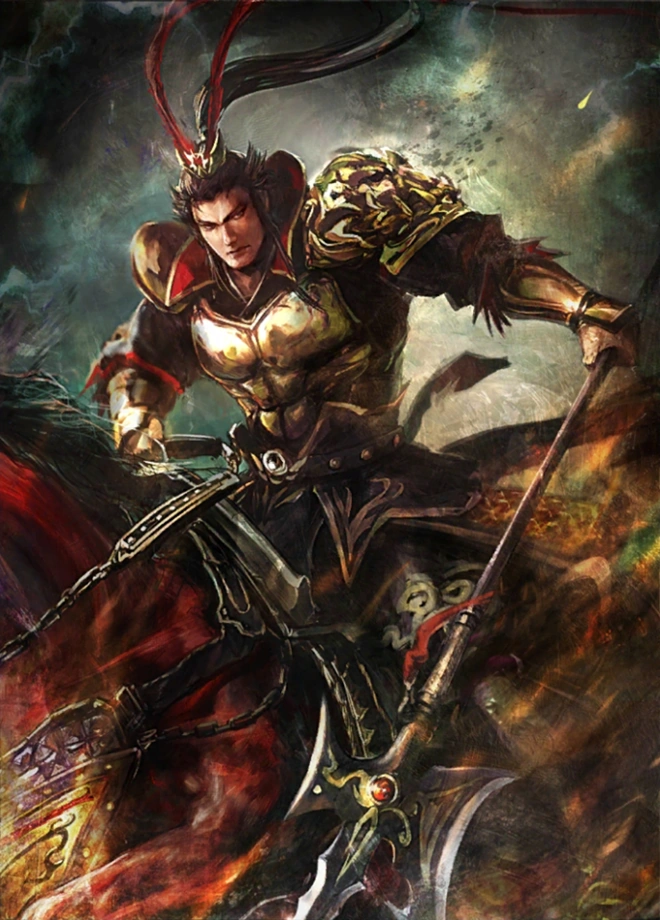
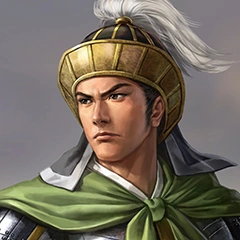
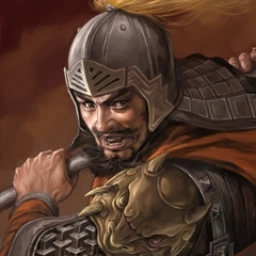
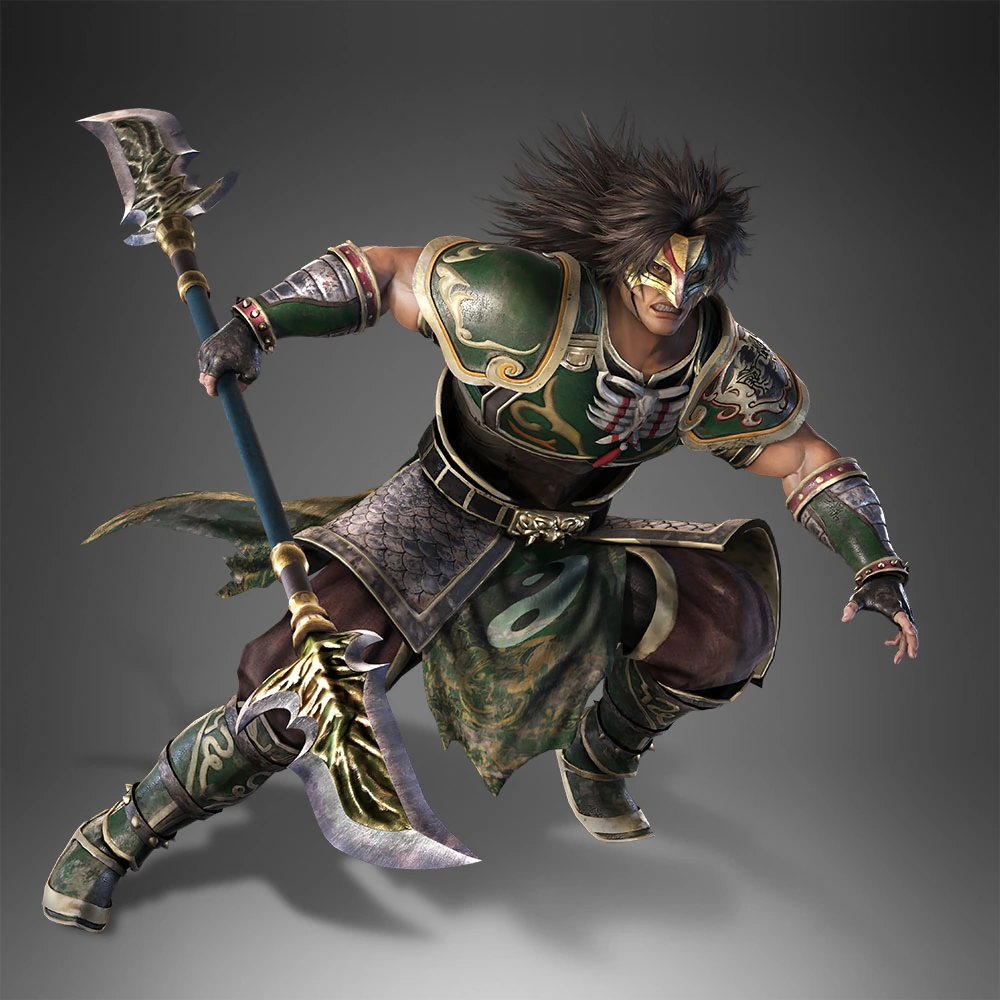
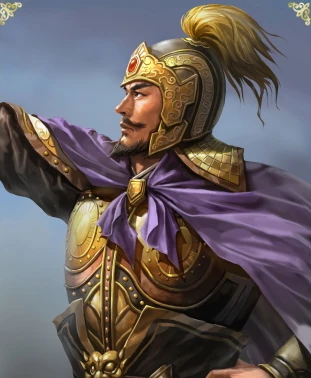
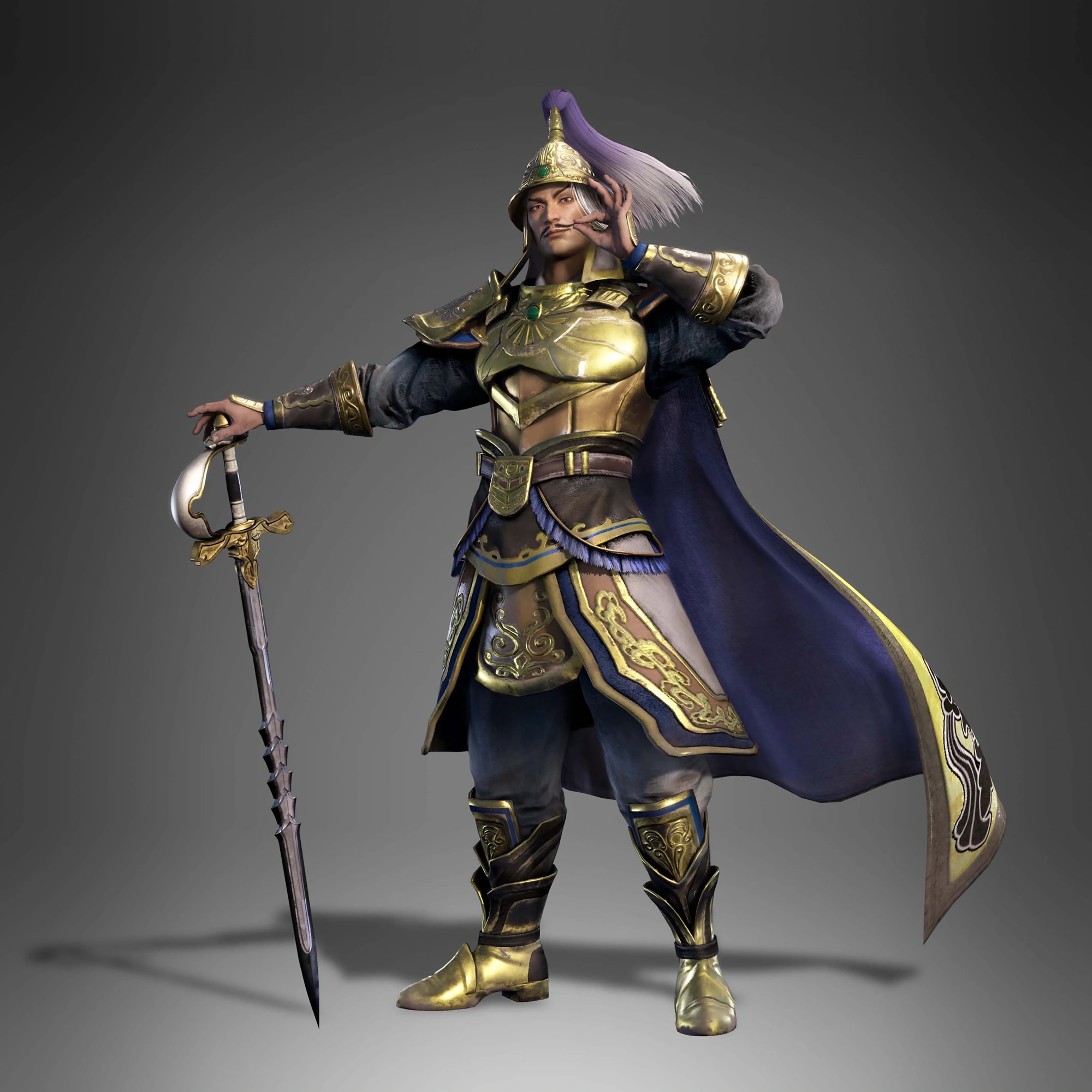
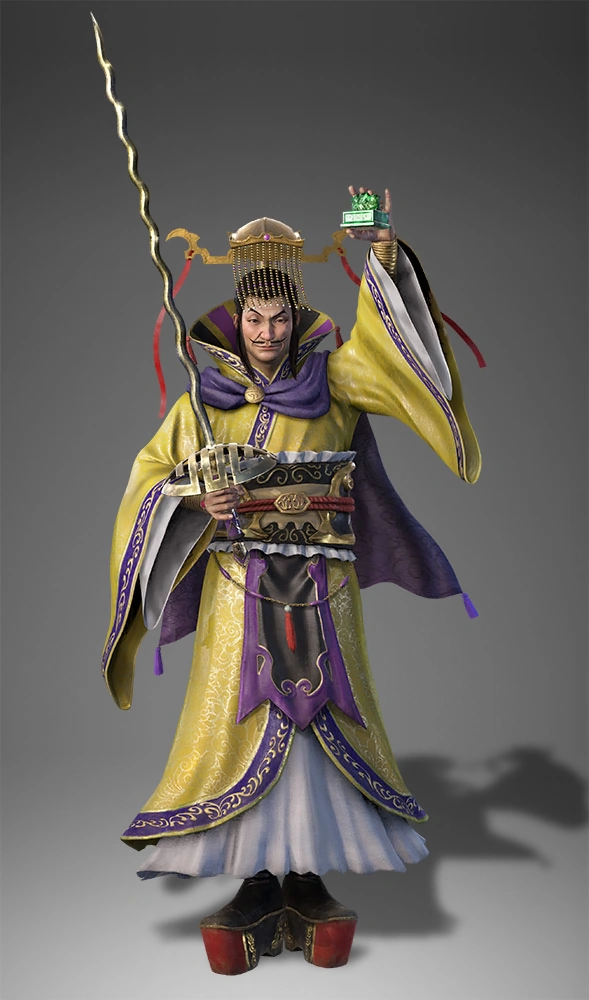
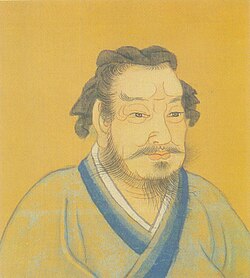
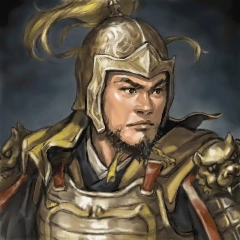
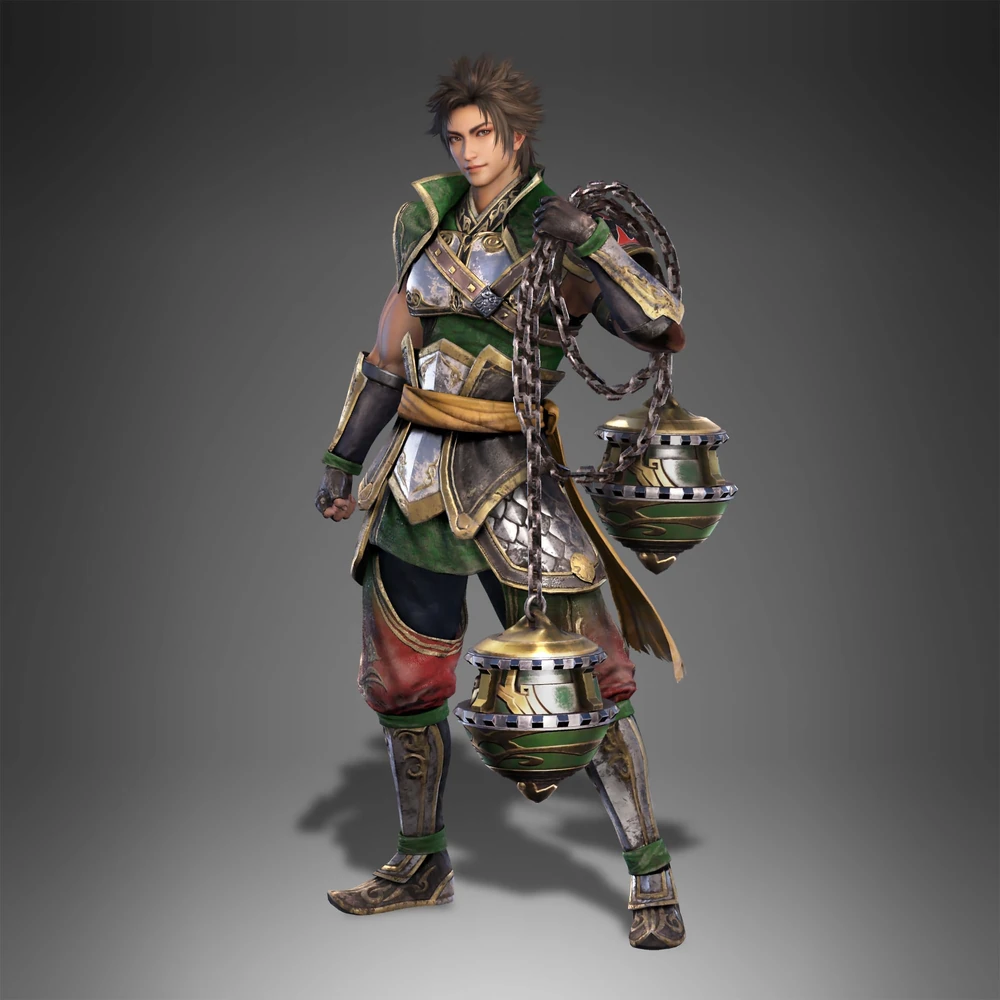
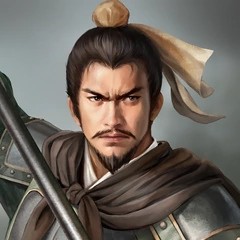
|
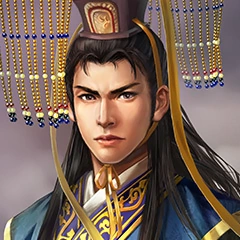
Cao Cao
The centre of Wang Lang's case for Wei's mandate: 'the Founder of Wei, Emperor Cao, swept away rebellion in eight directions, purged the land, and restored order… He gained his position by no manifestation of force: It was simply the will of Heaven.' Zhuge Liang never answers the claim directly — he attacks Wang Lang's own record instead.
1 mention in this chapter
2543 mentions in the book
|
|
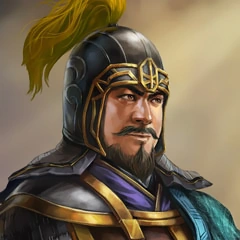
Cao Pi
Twice invoked, once in each register. Wang Lang's oration makes him the legitimate heir — 'His son and successor, Emperor Pi, was wise and warlike, adequate to the great heritage.' And in the Wei court he is the authority behind the appointment: Wang Lang recommends Cao Zhen because 'whenever General Cao Zhen was sent by the late Emperor on any expedition, he succeeded', and Cao Rui presses the command on him with 'The late Emperor confided me to your guardianship.'
3 mentions in this chapter
171 mentions in the book
|
|
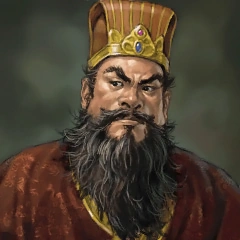
Cao Rui
Alarmed by the report that Xiahou Mao has lost three counties and fled to the Qiang and that Shu is on the west bank of the River Wei — 'Who shall go out and drive off the enemy for me?' Presses the command on a reluctant Cao Zhen with his father's trust as the argument — 'The late Emperor confided me to your guardianship. You cannot sit by while the enemy ravages the country' — grants him Guo Huai as second, and rides out to the west gate to see the army off.
7 mentions in this chapter
166 mentions in the book
|
|
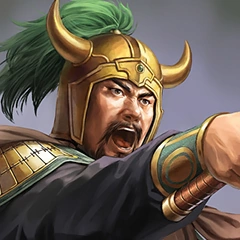
Cao Zhen
Named Commander-in-Chief on Wang Lang's recommendation and tries to decline — 'my talents are but poor and unequal to the task' — accepting only on condition he may choose an assistant, and naming Guo Huai. Takes two hundred thousand, the best of both capitals, with his brother Cao Zun as Leader of the Van. Agrees to let Wang Lang try the parley, and is left to coffin him and send the body to Changan. Adopts Guo Huai's anticipatory ambush, which Zhuge Liang has already anticipated in turn; his own troops and Guo Huai's end up fighting Cao Zun's and Zhu Zan's in the dark, and he goes back to camp beaten, asking 'Have you any plan to drive them away?'
18 mentions in this chapter
137 mentions in the book
|
|
Cao Zun
Cao Zhen's brother, made Leader of the Van of the two hundred thousand. Sent with ten thousand to raid the Shu camp once the Shu army has passed, congratulates himself on Guo Huai's prevision — and dashes into an enclosure that is 'totally deserted. Not a man was visible.' The flames go up, Zhu Zan arrives into the same confusion, and the two van forces fight each other until they recognise their own men. Escapes with about a hundred.
7 mentions in this chapter
9 mentions in the book
|
|
Dong Zhuo
Named in both orations as a rebel of the Han's collapse: Wang Lang lists him rising in revolt after the Yellow Scarves, and Zhuge Liang repeats the list back as the rebels who deposed emperors and afflicted the people.
3 mentions in this chapter
281 mentions in the book
|
|
Gao Xiang
With Zhang Yi, brings the force that gets Zhao Zilong out when Jiang Wei's ambush and Ma Zun's returning columns close on him together.
2 mentions in this chapter
20 mentions in the book
|
|
Guan Xing
Escorts Zhuge Liang out of the failed night assault, then identifies the torchlit column winding 'like a huge serpent' as Jiang Wei's. Holds the high road with Zhang Bao in the counter-ambush. Closes the net on Jiang Wei himself — the company that appears out of the heavy-foliaged trees on the Changan road, leaving him nothing behind and the chariot in front.
8 mentions in this chapter
127 mentions in the book
|
|
Guan Zhong
Invoked by Wang Lang as the measure Zhuge Liang sets for himself — 'worthy, you say yourself, to be compared with Guan Zhong and Yue Yi' — and used to sharpen the charge that such a man should know better than to oppose Heaven.
1 mention in this chapter
11 mentions in the book
|
|
Guo Huai
A man of Yangqu, Lord of Sheting, and Imperial Protector of Yongzhou — named by Cao Zhen as the assistant he will not take the command without, and appointed his second. Proposes the ambush-in-anticipation: Zhuge Liang will think the army distracted by Wang Lang's funeral and raid at night, so hide two forces outside the camp and send two more to raid his. It is a good plan read one move too shallow, and it costs Wei the night. Closes the chapter promising the next scheme — the one that will bring in the Qiang.
9 mentions in this chapter
106 mentions in the book
|
|
Guo Si
Named in both orations, always paired with Li Jue, as the pair who continued Dong Zhuo's revolt after his destruction.
2 mentions in this chapter
96 mentions in the book
|
|
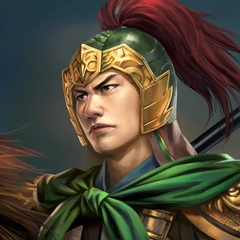
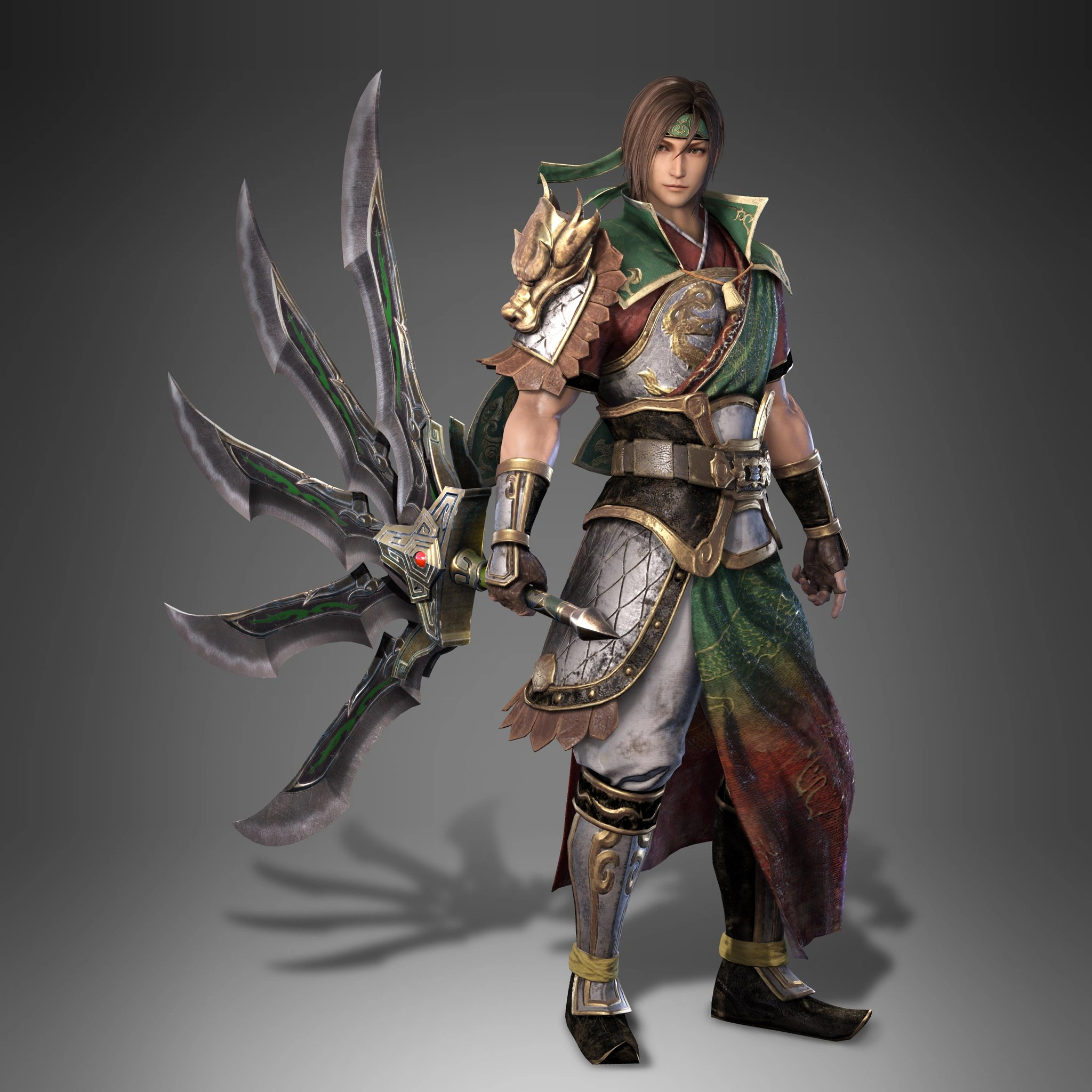
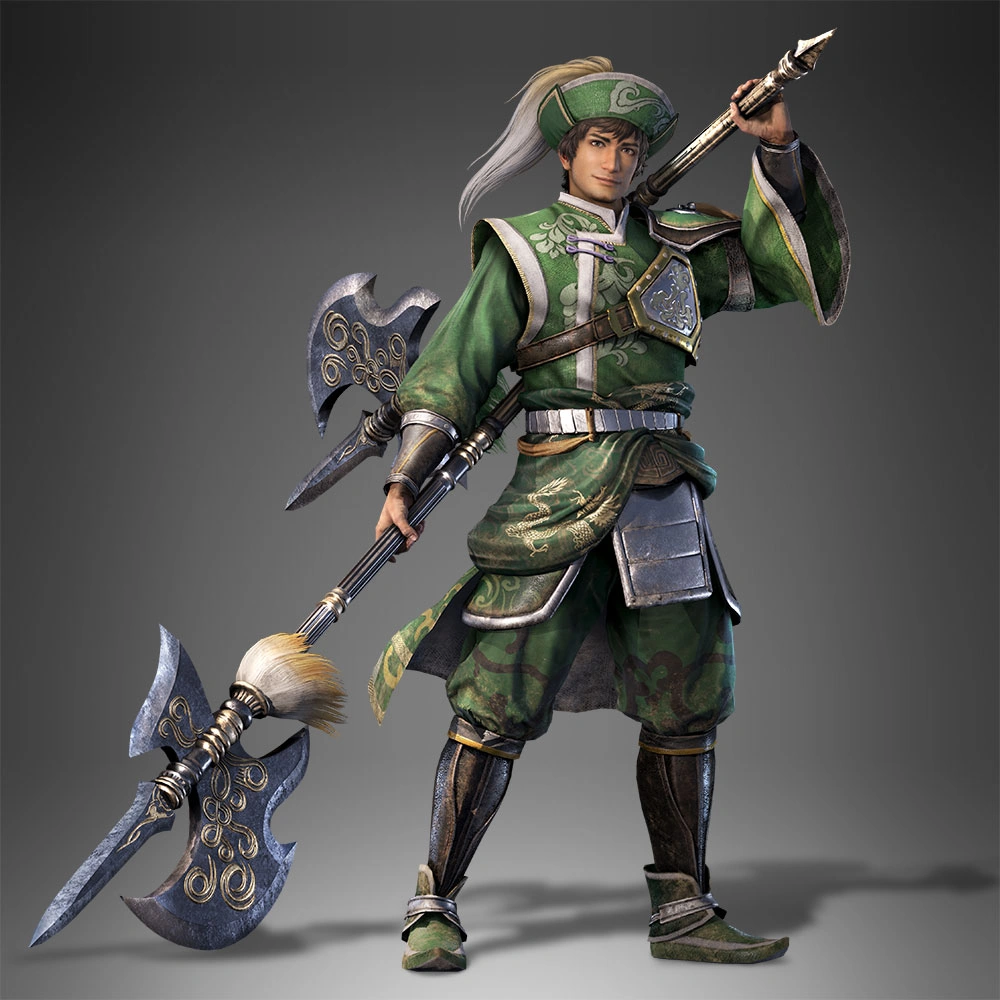
Jiang Wei
Out-thinks Zhuge Liang twice — reading the ambush-behind-the-city plan exactly and trapping Zhao Zilong with it, then dividing Tianshui four ways so the night assault walks into fires on every side. Broken only by the attack on Jicheng, where his mother is: he asks for the command that lets him 'keep the city and do my duty by my mother at the same time', and is let in on purpose. After that every escape closes — his grain raid is caught between Zhang Yi and Wang Ping, Wei Yan has taken Jicheng behind him, Zhang Bao strips him to a single horseman, Ma Zun shoots at him from Tianshui's wall and Liang Qian abuses him from Shanggui's. 'He could not explain the real truth to those who doubted him. Lifting his eyes to heaven, while tears rolled down his cheeks…' Cornered on the Changan road by Guan Xing and the chariot, he dismounts and bows his head. Then he immediately earns the title — his own arrow-letters to Yin Shang and Liang Xu are what actually open Tianshui.
41 mentions in this chapter
443 mentions in the book
|
|
Li Jue
Named in both orations, always paired with Guo Si, as the pair who continued Dong Zhuo's revolt after his destruction.
2 mentions in this chapter
118 mentions in the book
|
|
Liang Qian
Liang Xu's brother. Goes out with Ma Zun on Jiang Wei's first plan, is allowed into Shanggui as part of the second trap, and shuts the last door on Jiang Wei — 'You traitor! Dare you come to try to cajole me out of my city? I know you have surrendered to Shu' — and has his soldiers shoot at him. Yields Shanggui the moment his brother rides over and calls him out, and is made its Magistrate.
9 mentions in this chapter
9 mentions in the book
|
|
Liang Xu
Holds Tianshui's wall through the whole chapter and finally gives it away. Taunts Zhao Zilong as the trap closes — 'On the contrary, you have fallen into our trap. Only you do not know it yet!' — and is left with Yin Shang to defend the city while the field armies manoeuvre. Alone reads the surrender correctly: 'I am sure he has made only a pretense of surrendering.' Receives Jiang Wei's arrow-letter, and when Xiahou Mao summons the pair of them that evening, rides to the gate at the head of his own soldiers and opens it instead. Welcomes Zhuge Liang in, fetches his brother out of Shanggui, and is made Governor of Tianshui.
11 mentions in this chapter
13 mentions in the book
|
|
Liu Bei
Named once, at the hinge of Zhuge Liang's answer to Wang Lang: 'But happily the design of Heaven is to retain the glorious dynasty. The late Emperor Bei continued the line in the River Lands, and I have been entrusted by the present Emperor with the task of destroying you rebels.' The legitimacy claim the whole oration turns on.
1 mention in this chapter
1978 mentions in the book
|
|
Liu Biao
Named in Wang Lang's catalogue of warlords who broke the realm apart — 'Liu Biao occupied Jingzhou' — paired with Lü Bu holding Xuzhou.
1 mention in this chapter
179 mentions in the book
|
|
Liu Hong
Named with Emperor Huan by BOTH speakers, and the only point they agree on: Wang Lang dates the Yellow Scarves and the wrangling of the earth to their reigns, and Zhuge Liang opens his reply with the same words — 'In the days of Emperors Huan and Ling the rule of Han declined.'
2 mentions in this chapter
49 mentions in the book
|
|
Liu Zhi
Named with Emperor Ling by both speakers as the reigns in which the Han's rule declined — the shared premise from which Wang Lang argues Heaven changed its instrument and Zhuge Liang argues the court was simply corrupt.
2 mentions in this chapter
18 mentions in the book
|
|
Lü Bu
Named in Wang Lang's catalogue of the Han's dissolution — 'Lu Bu seized and held Xuzhou' — one of the 'rebels… like swarm of wasps' the oration blames for the dynasty's collapse.
1 mention in this chapter
545 mentions in the book
|
|
Ma Dai
One of the four commanders placed in ambush around the emptied Shu camp, who fall on Cao Zun and Zhu Zan once they are inside and already fighting each other.
2 mentions in this chapter
123 mentions in the book
|
|
Ma Zun
Wins twice on Jiang Wei's plans before losing everything to his own suspicion of him. Adopts the ambush that beats Zhao Zilong and the four-way division that beats the night assault, then believes the manufactured desertion: when the single exhausted horseman hails his gate he says 'This fellow has came to beguile me into opening the gate' and has his own officer shot at. Consults Xiahou Mao over the arrow-letters and accepts 'Put both the men to death' — which is precisely what turns Yin Shang and Liang Xu. Flees west with Xiahou Mao and a hundred followers to the Qiang.
13 mentions in this chapter
18 mentions in the book
|
|
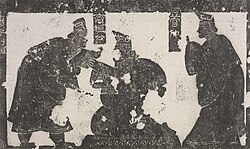
Wang Lang
Recommends Cao Zhen for the command on the strength of the late Emperor's record with him, volunteers to go himself at seventy-six — 'Old and worn as I am, I will use the little strength left me to accompany you' — and is created Instructor of the Army. Asks to parley, promising to make Zhuge Liang 'yield to us without a blow'. His oration is the Mandate-of-Heaven case: the Han's collapse through Huan and Ling, the Yellow Scarves, Dong Zhuo, Li Jue and Guo Si, the Yuans, Liu Biao, Lü Bu; then Cao Cao restoring order by the will of Heaven and Cao Pi succeeding by the desire of humankind; and the glowworm that cannot rival the moon. Zhuge Liang answers it point for point and turns it on his person — that he rose by a recommendation of filial piety and integrity, served the Han, and then turned 'and assist rebels and enter into a plot to usurp the Throne'. 'Fierce wrath filled the old man's breast. With one despairing cry Wang Lang fell to the earth dead.'
15 mentions in this chapter
40 mentions in the book
|
|
Wang Ping
Reinforces Zhang Yi against Jiang Wei's grain raid, making it an attack on two sides that costs him the wagons and the last of his men. One of the four commanders in ambush around the empty camp.
3 mentions in this chapter
107 mentions in the book
|
|
Wei Yan
Given the feint that breaks Jiang Wei: march on Jicheng, and when Jiang Wei comes up, let him in. Makes a show of defence, retreats — and then takes the city behind him, so that Jiang Wei fights his way back to find Shu ensigns on his own walls. Warns that Cao Zhen 'is a man of experience and will be on the lookout' before the night attack, which is exactly what Zhuge Liang is counting on, and holds the approach to the hill in the plan that follows.
9 mentions in this chapter
353 mentions in the book
|
|
Xiahou Mao
The instrument of the feint rather than its target. Asked 'Are you afraid of death?', he prostrates himself, accepts the condition, and is given clothes and a horse and let go unfollowed — carrying the manufactured story that Jiang Wei offered to surrender to save him. Lost on roads he does not know, he is fed the same lie by planted refugees, reaches Tianshui and repeats it, and flatly rejects Liang Xu's correct reading that the surrender is a pretence: 'Where is the pretence when it is a fact that he has surrendered?' Then orders Yin Shang and Liang Xu put to death, which is what makes them open the gates. He does not return to Wei — he flees west by the gate with Ma Zun and a hundred men to shelter with the Qiang. Zhuge Liang's verdict closes the sequence: 'I let him go as I would release a duck. In my friend Jiang Wei I recognized a phoenix.'
16 mentions in this chapter
55 mentions in the book
|
|
Yin Shang
Left with Liang Xu to hold Tianshui, and the one who says the decisive thing when the death order comes: 'The best course for us is to yield the city to Shu and trust to them to treat us well as our recompense.' Ignores Xiahou Mao's repeated summonses, arms, and opens the gates with Liang Xu. Made Magistrate of Jicheng.
7 mentions in this chapter
9 mentions in the book
|
|
Yuan Shao
Named in Wang Lang's catalogue as Yuan Shu's brother, who 'played the man of might and valor in the land of Yejun'.
1 mention in this chapter
414 mentions in the book
|
|
Yuan Shu
Named in Wang Lang's catalogue of the Han's dissolution as the man who 'usurped the imperial style' — the most direct precedent for the charge Zhuge Liang then turns back on Wei.
1 mention in this chapter
148 mentions in the book
|
|
Yue Yi
Paired with Guan Zhong in Wang Lang's oration as the comparison Zhuge Liang claims for himself, turned against him as an argument that he of all people should recognise the decree of Heaven.
1 mention in this chapter
13 mentions in the book
|
|
Zhang Bao
Escorts Zhuge Liang clear of the night assault on Tianshui. Meets the last remnant of Jiang Wei's force on the road and reduces him to 'alone, a single horseman' — the state in which he reaches Tianshui's gate and is shot at. Later holds the high road with Guan Xing and joins the three-cohort attack that finishes the Wei rout.
5 mentions in this chapter
92 mentions in the book
|
|
Zhang Ni
One of the four commanders placed in ambush around the emptied Shu camp for the Wei van's night raid.
2 mentions in this chapter
54 mentions in the book
|
|
Zhang Yi
With Gao Xiang, pours out to rescue Zhao Zilong when Jiang Wei's counter-ambush closes on him. Later intercepts Jiang Wei's raid on the grain wagons and pins him until Wang Ping arrives to make it two sides. One of the four commanders in ambush around the empty camp.
6 mentions in this chapter
76 mentions in the book
|
|
Zhao Yun
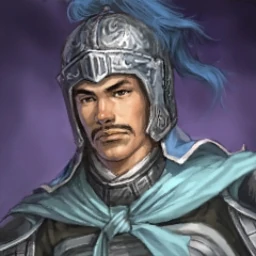
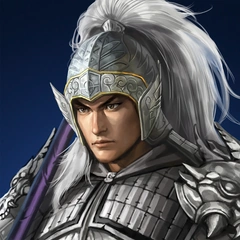
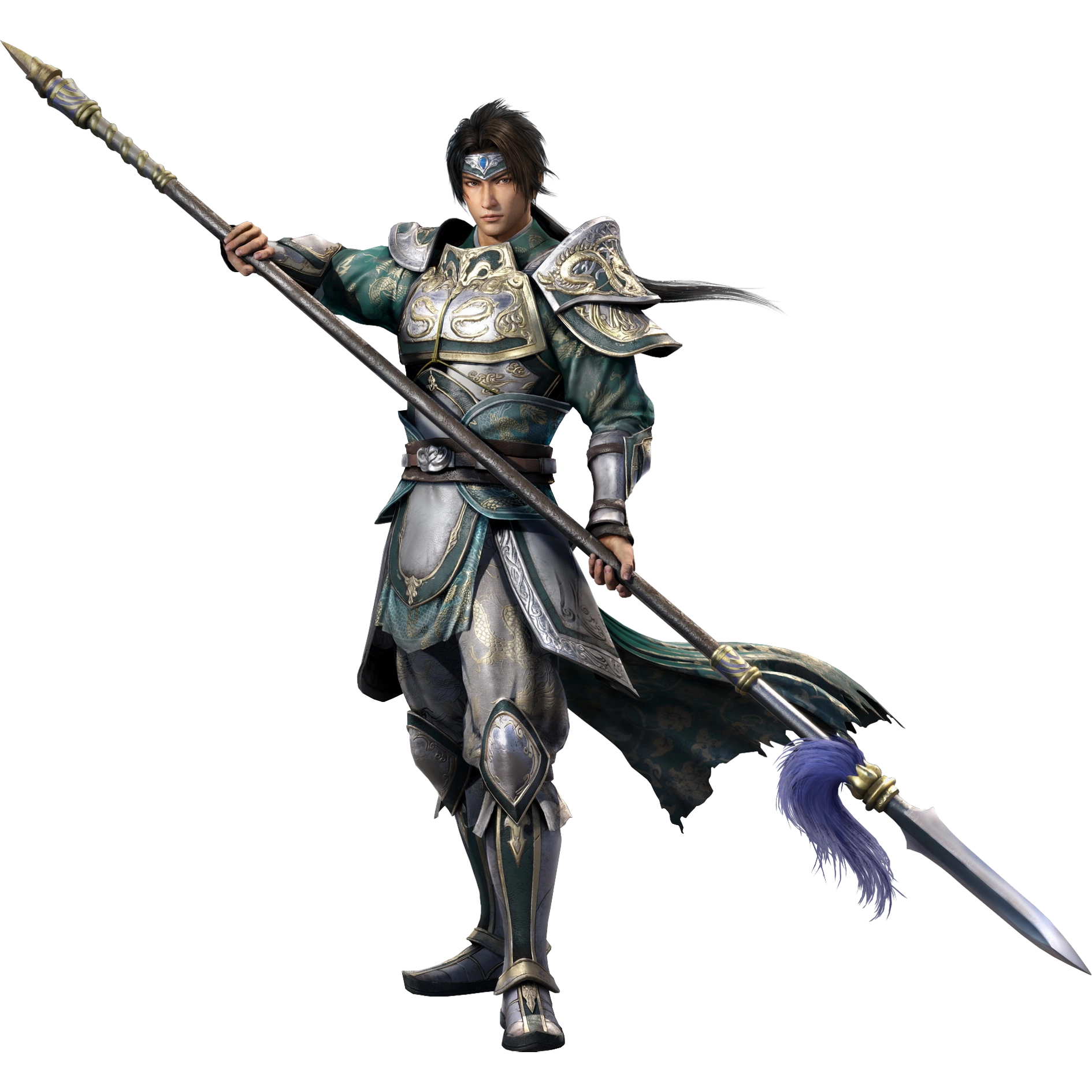
Beaten in the field for once, and by a man nobody had heard of. Lies in ambush to take an emptied Tianshui, announces himself — 'I am Zhao Zilong of Changshan' — and is answered from the wall that it is he who is trapped; Jiang Wei comes out of the fires and presses him so hard he has to cut an alley out, saved by Zhang Yi and Gao Xiang. Afterwards he praises the spearmanship as better than anyone's. Sent to threaten the Shanggui granary, then leads the night attack with Wei Yan and turns back the fleeing Cao Zun and Zhu Zan — 'Whither go ye, O rebel leaders? Stop, for here is death!'
15 mentions in this chapter
475 mentions in the book
|
|
Zhu Zan
Made General Who Opposes Brigands and assistant Leader of the Van under Cao Zun. Arrives into the burning empty camp, fights Cao Zun's own men in the dark by mistake, and escapes: 'Cao Zun and Zhu Zan, with more than a hundred of those nearest to them, ran away to get to the high road', are turned back by Zhao Zilong, and still get clear. He is alive at the chapter's end.
7 mentions in this chapter
8 mentions in the book
|
|
Zhuge Liang
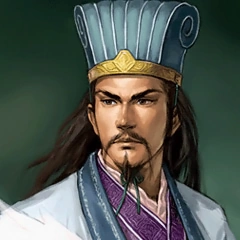
Beaten twice by Jiang Wei before he wins him. Zhao Zilong's ambush is anticipated and reversed; the night assault on Tianshui is met by fires and answering shouts from a city he thought empty — 'An army owes more to its leading than to its numbers. This Jiang Wei is a true genius.' Then he builds the trap out of the one thing Jiang Wei cannot ignore: Wei Yan feints at Jicheng where the mother lives, Zhao Zilong threatens the Shanggui granary, Xiahou Mao is released carrying the lie that Jiang Wei has offered to surrender for his sake, planted refugees repeat it on the road, and a disguised look-alike rides under Tianshui's walls calling Xiahou Mao's name. Every door Jiang Wei runs to is shut and shot at by his own side. The recruitment speech is not 'now I have an heir' but this: 'Ever since I left my humble cottage, I have been seeking some worthy person to whom I might impart the knowledge that my life has been spent in acquiring. I have found no one till this moment, and now my desire is attained. You are the one.' Then the oration that kills Wang Lang, and a counter-ambush that leaves two Wei armies fighting each other in the dark.
45 mentions in this chapter
1454 mentions in the book
|
-
Anding Commandery Commandery(35.3500, 107.3521)
-
Chang'an County County(34.2464, 108.9070)
-
Changshan Commandery Commandery(37.8287, 114.4579)
-
Hanzhong Commandery Commandery(33.0730, 107.0359)
-
Jicheng Settlement
-
Jing Province Province
-
Luoyang County(34.7316, 112.5963)
-
-
-
Nanan Commandery
-
Qin State (Warring States/Spring+Autumn) Region
-
Qishan Mountains Mountains/Hills
-
River Wei River
-
Shanggui
-
Sheting
-
Shu (Three Kingdoms) Region
-
Tianshui Commandery Commandery(34.7376, 105.4484)
-
Wei (Three Kingdoms) Region
-
Xu Province Province
-
Yangqu County County(37.9896, 112.5687)
-
Yejun County
-
Yong Province Province