Sacrificing At River Lu, The Prime Minister Marches Homeward;
Attacking Wei, The Lord Of Wuxiang Presents A Memorial.
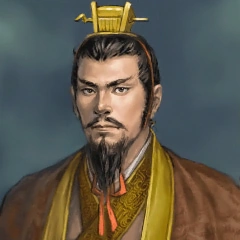
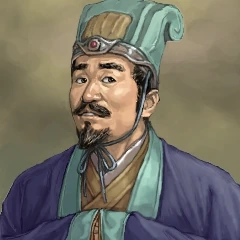
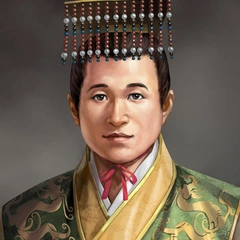
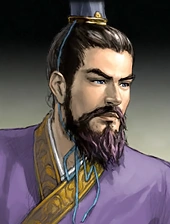
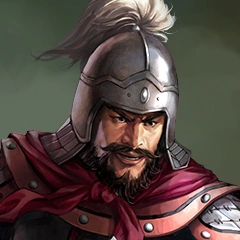
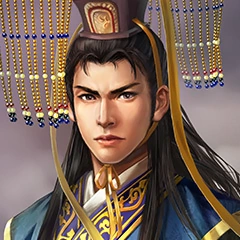
Meng Huo at the head of the Mang Chieftains and Notables attended to do honor to the army of Shu on its departure. They reached the River Lu in autumn, the ninth month. But on trying to cross the river, a tremendous storm came and hindered them. Wei Yan having reported his difficulty to Zhuge Liang, Meng Huo was asked if he knew of any reason for such a storm.
Meng Huo replied, "Wild spirits have always troubled those who would cross this river. It is necessary to propitiate them with sacrifices."
"What is the sacrifice?" asked Zhuge Liang.
"In the old days when malicious spirits brought misfortune, they sacrificed humans to the number of seven sevens and offered their forty-nine heads. They also slew a black ox and a white goat. Sacrifice thus, the wind will subside and the waters come to rest. The same used to be done to secure a plenteous harvest."
"How can I slay a single person now that fighting is done and peace has returned?" said Zhuge Liang.
Zhuge Liang went down to the river to see for himself. The north wind was blowing hard, and the waves were high. Both humans and horses seemed frightened. He himself was perplexed. Then he sought out some of the natives and questioned them.
They said, "We have heard the demons moaning every night since your army crossed the river. The cries begin at dusk and continued till dawn. There are many dark demons in the malarial vapors, and no one dared cross."
"The sin is mine," sighed Zhuge Liang, "for more than a thousand soldiers of Ma Dai perished in these waters beside many southern people. Their poor distressed souls are not yet freed. Therefore I will come this night and sacrifice to them."
"According to the ancient rule the number of victims ought to be forty-nine. Then the spirits will disperse," said the natives.
"As the resentful demons are here because of the deaths of people, where is the sense in slaying more humans? But I know what to do."
Zhuge Liang bade them make balls of flour paste after the manner of human heads and stuff them with the flesh of oxen and goats. These would be used instead of human heads, and they called these 'mantou' or 'human heads'.
By nightfall, an altar had been set up on the bank of the river with the sacrificial objects all arranged. There were also forty-nine lamps. Flags were flying to summon the souls. The forty-nine mantous were piled up on the ground. In the middle of the third watch, at midnight, Zhuge Liang, dressed in Daoist garb, went to offer the sacrifice in person, and he bade Dong Jue read this prayer:
"On the first day of the ninth month of the third year of the era Beginning Prosperity of the Han Dynasty, I, Zhuge Liang, Prime Minister of Han, Lord of Wuxiang, Imperial Protector of Yizhou, reverently order this sacrifice to appease the shades of those soldiers of Shu who have died in their country's service and those of the southern people who have perished.
"I now declare to you, O ye shades, the majesty of my master, the Emperor of the mighty Han Dynasty, excelling that of the Five Feudatories and brilliantly continuing the glory of the Three Dynastic Kings. Recently, when the distant south rebelliously invaded his territory, contumeliously sent an army, loosed the venom of their sorcery, and gave free rein to their savagery in rebellion, I was commanded to punish their crimes. Wherefore my brave armies marched and utterly destroyed the contemptible rebels. My brave soldiers gathered like the clouds, and the insensate rebels melted away. Hearing of the easy successes I won, they were entirely demoralized.
"My army consists of heroes from the Nine Regions, and officers and people are famous in the empire; all are expert in war and skilled in the use of arms. They go whither light leads them and serve the Emperor. All have exerted themselves to obey orders and carried out the plans for the seven captures of Meng Huo. They were whole-hearted in their service and vied in loyalty. Who could foresee that you, O Spirits, would be sacrificed in the strategy and be involved in the enemies' wicked wiles? Some of you went down to the deep springs wounded by flying arrows. Others went out into the long night hurt by lethal weapons. Living you were valorous, dead you left behind a name.
"Now we are returning home. The victors' song is in our mouths and our prisoners accompany us. Your spirits are with us still and certainly hear our prayers. Follow the banners, come with the host, return to your country, each to his own village, where you may enjoy the savor of the meat offerings and receive the sacrifices of your own families. Do not become wandering ghosts in unfamiliar hamlets of restless shades in strange cities. I will memorialize our Emperor that your wives and little ones may enjoy his gracious bounty, every year gifts of food and clothing, every month donations for sustenance. Comfort yourselves with this provision.
"As for you, Spirits of this place, shades of the departed people of the south, here is the usual sacrifice. You are near home. Year-round sacrifice is not lacking. Living you stood in awe of the celestial majesty, dead you come within the sphere of refining influence. It is right that you should hold your peace and refrain from uttering unseemly cries. With bowed head I pray you partake of the sweet savor of this sacrifice.
"Alas, ye dead! To you this offering!"
Zhuge Liang broke into loud lamentations at the end of this prayer and manifested extreme emotion, and the whole army shed tears. Meng Huo and his followers also moaned and wept, and amid the sad clouds and angry mists they saw the vague forms of many demons floating away on the wind till they disappeared.
The material portion of the sacrifice was then thrown into the river. Next day the army stood on the south bank with a clear sky over their heads and calm waters at their feet, the clouds gone and the winds hushed, and the crossing was made without misadventure. They continued their way, whips cracking, gongs clanging, spurs jingling, and ever and anon the song of victory rising over all.
Passing through Yongchang, Wang Kang and Lu Kai were left there in command of the four territories---Yizhou, Yongchang, Zangge, and Yuesui. And then Meng Huo was permitted to leave. He was ordered to be diligent in his administration, maintain good control, and soothe and care for the people left to him to govern and to see to it that agriculture was promoted. He took leave with tears rolling down his cheeks.
When the army neared Capital Chengdu, the Latter Ruler came out ten miles in state to welcome his victorious minister. The Emperor stood by the roadside as Zhuge Liang came up, and waited.
Zhuge Liang quickly descended from his chariot, prostrated himself and said, "Thy servant has offended in causing his master anxiety. But the conquest of the south was long."
The Emperor took Zhuge Liang kindly by the hand and raised him. Then the chariots of the Son of God and his minister returned to Chengdu side by side. In the capital were great rejoicings with banquets and rewards for the army. Henceforward distant nations sent tribute to the Imperial Court to the number of two hundred.
As proposed in a memorial, the Emperor provided for the families of the soldiers who had lost their lives in the expedition, and they were made happy. And the whole land enjoyed tranquillity.
Meanwhile in the Middle Land, the Ruler of Wei, Cao Pi, had now ruled seven years, and it was the fourth year of Beginning Prosperity in Shu-Han calendar. Cao Pi had taken to wife a lady of the Zhen family, formerly the wife of the second son of Yuan Shao. He had discovered Lady Zhen at the sack of Yejun and had married her. She bore him a son, Cao Rui, who was very clever and a great favorite with his father.
Later Cao Pi took as Beloved Consort a daughter of Guo Yong in Guangzong. Lady Guo was a woman of exceeding beauty, whom her father said, "She is the king among women!" And the name "Lady King" stuck to her.
But with Lady Guo's arrival at court, Lady Zhen fell from her lord's favor, and the Beloved Consort's ambition led her to intrigue to replace the Empress. She took Zhang Tao, a minister at the court, into her confidence.
At that time the Emperor was indisposed, and Zhang Tao alleged, saying, "In the palace of the Empress has been dug up a wooden image with Your Majesty's date of birth written thereon. It is meant to exercise a maleficent influence."
Cao Pi in his anger forced his Empress to commit suicide; and he set up the Beloved Consort in her place.
But Lady Guo had no issue. Wherefore she nourished Cao Rui as her own. However, loved as Cao Rui was, he was not then named heir by the Empress.
When he was about fifteen, Cao Rui, who was an expert archer and a daring rider, accompanied his father to the hunt. In a gully they started a doe and its fawn. Cao Pi shot the doe, while the fawn fled. Seeing that the fawn's course led past his son's horse, Cao Pi called out to him to shoot it. Instead the youth bursts into tears.
"Your Majesty has slain the mother. How can one kill the child as well?"
The words struck the Emperor with remorse. He threw aside his bow, saying, "My son, you would make a benevolent and virtuous ruler."
From this circumstance Cao Pi decided that Cao Rui should succeed, and conferred upon him the princedom of Pingyuan.
In the fifth month the Emperor fell ill, and medical treatment was of no avail. So the chief officers were summoned to the bedside of the Emperor. They were Commander of the Center Army Cao Zhen, General Who Guards the West Chen Qun, and Grand Commander Sima Yi.
When they had come, the Emperor's son was called, and the dying Emperor spoke thus: "I am grievously ill, and my end is near. I confide to your care and guidance this son of mine. You must support him out of good feeling for me."
"Why does Your Majesty talk thus?" said they. "We will do our utmost to serve you for a thousand autumns and a myriad years."
"No. I know that I am about to die," said the Emperor. "The sudden fall of the gates of Xuchang this year was the omen, as I well knew."
Just then the attendants said that General Who Conquers the East Cao Xiu had come to ask after the Emperor's health. They were told to call Cao Xiu into the chamber.
When he had entered, Cao Pi said to him, "You and these three are the pillars and cornerstones of the state. If you will only uphold my son, I can close my eyes in peace."
These were his last words. A flood of tears gushed forth, and Cao Pi sank back on the couch dead. He was forty years of age and had reigned seven years (AD 229).
The four ministers raised the wailing for the dead and forthwith busied themselves with setting up Cao Rui as the Emperor of Great Wei. The late Emperor received the posthumous style of "Emperor Pi". The late Empress, the consort who had suffered death, was styled "Empress Zhen".
Honors were distributed freely in celebration of the new reign. Zhong Yao was made Imperial Guardian; Cao Zhen, Regent Marshal; Cao Xiu, Minister of War; Hua Xin, Grand Commander; Wang Lang, Minister of the Interior; Chen Qun, Minister of Works; Sima Yi, Imperial Commander of the Flying Cavalry; and many others, conspicuous and obscure, were promoted. A general amnesty was declared throughout all the land.
About this time a vacancy existed in the commandership of Yongzhou and Liangzhou. Sima Yi asked for the post and got it. He left for his new office as soon as he had received the appointment. All military affairs of the west were now under his command.
In due time the news of all these doings reached Zhuge Liang and perturbed him not a little.
He was anxious, saying, "Cao Pi is dead, and his son Cao Rui has succeeded him. But that is not my concern. Only I am worried about Sima Yi, who is very crafty and skillful in the art of war, and who, in command of all western forces of Yongzhou and Liangzhou, may prove a serious danger to Shu. This Sima Yi ought to be attacked at once."
Counselor Ma Su spoke of this matter. "You, O Prime Minister, have just returned from an arduous and exhausting expedition, and you should take time to recuperate before you undertake such another. However, I have a scheme by which Cao Rui may be brought to work the destruction of Sima Yi. May I lay it before you?"
"What plan have you?" said he.
"The young emperor has no confidence in Sima Yi although Sima Yi is a high minister of state. Now send someone secretly to Luoyang and Yejun to disseminate reports that Sima Yi is about to rebel. Further, prepare a proclamation in his name and post it up so as to cause Cao Rui to mistrust him and put him to death."
Zhuge Liang adopted the suggestion.
Whence it came about that many notices suddenly appeared, and one found its way to the city gate of Yejun. The wardens of the gate took it down and sent it to Cao Rui. This is what it said:
"I, Sima Yi, Imperial Commander of the Flying Cavalry, Commander of the Forces of Yongzhou and Liangzhou, confident in the universal principles of right, now inform the empire, saying:
"The Founder of this Dynasty, Emperor Cao, established himself with the design of recurring the empire to the Lord of Linzi, Cao Zhi. Unfortunately, calumny spread abroad, and the Dragon Ruler could not manifest himself for many years. Emperor Cao's grandson, Cao Rui, does not follow a virtuous course, though sitting in the high place, and has not fulfilled the great intention of his ancestor. Now I, in accordance with the will of Heaven and favoring the desires of the people, have decided upon a day to set my army in motion in order to secure the wish of the people. When that day arrives, I call upon each one to gather to his lord, and I will destroy utterly the family of any who shall disobey. You are hereby informed that you may all know."
This document frightened the young Emperor, and he turned pale. At once he called a council of his officials to consider it.
Hua Xin said, "That was the reason for his having requested the commandership of Yongzhou and Liangzhou. Now Emperor Cao, the Founder of Great Wei, frequently said to me that Sima Yi was ambitious and hungry, and should not be entrusted with military authority lest he harm the state. This is the first beginning of rebellion, and the author should be put to death."
Wang Lang said, "Sima Yi is a master of strategy and skilled in tactics. Moreover, he is ambitious and will cause mischief if he be allowed to live."
Wherefore Cao Rui wrote a command to raise an army, which he would lead to punish the minister.
Suddenly Cao Zhen stood forth from the rank of military officers and said, "What you advise is impossible. His Late Majesty, Emperor Pi, confided his son to the care of certain officers of state, of whom Sima Yi is one, wherefore it is certain that he felt sure of Sima Yi's probity. So far nothing is known certainly. If you hastily send an army to repress him, you may force him into rebellion. This may be but one of the base tricks of Shu or Wu to cause dissension in our midst so that occasion be found to further their own aims. As no one knows, I pray Your Majesty reflect before you do anything."
"Supposing Sima Yi really contemplates a revolt. What then?" said Cao Rui.
Cao Zhen replied, "If Your Majesty suspects him, then do as did Liu Bang the Supreme Ancestor of Han when, under pretense of taking a trip on the Lake Yunmeng, he summoned his vassals---and seized Han Xin, who had been denounced. Go to Anyi; Sima Yi will assuredly come out to meet you, and his actions and demeanor may be watched closely. He can be arrested if needed."
Cao Rui changed his mind. Leaving Cao Zhen to regulate the affairs of state, the young Emperor went out with the Imperial Guards, to the number of one hundred thousand, and traveled to Anyi.
Ignorant of the reason of the Emperor's coming, and anxious to show off his dignity, Sima Yi went to welcome his ruler in all the pomp of a commander of a great army of one hundred thousand.
As Sima Yi approached, the courtiers told the Emperor, saying, "Sima Yi's defection is certain since such a large army can only mean that he is prepared to resist."
Whereupon Cao Xiu, with a large force, was sent in front to meet him. Sima Yi thought the Imperial Chariot was coming, and he advanced alone and stood humbly by the roadside till Cao Xiu came up.
Cao Xiu advanced and said, "Friend, His Late Majesty entrusted you with the heavy responsibility of caring for his son. Why are you in revolt?"
Sima Yi turned pale, and a cold sweat broke out all over him as he asked the reason for such a charge. Cao Xiu told him what had occurred.
"This is a vile plot on the part of our rivals, Shu and Wu, to cause dissension," said Sima Yi. "It is a design to make the Emperor work evil upon his ministers that thereby another may profit. I must see the Son of Heaven and explain."
Ordering his army to retire, Sima Yi went forward alone to the Emperor's chariot.
Sima Yi bowed low and said, weeping, "His Late Majesty gave me charge of his son. Could I betray him? This is a wile of the enemy. I crave permission to lead an army, first to destroy Shu and then to attack Wu, whereby to show my gratitude to the late Emperor and Your Majesty and manifest my own true heart."
However, Cao Rui did not feel quite convinced, and Hua Xin said, "In any case withdraw his military powers and let him go into retirement."
And thus it was decided. Sima Yi was forced to retire to his native village. Cao Xiu succeeded to his command, and Cao Rui returned to Luoyang.
The news was soon reported to Shu. Zhuge Liang rejoiced when they told him of the success that had attended the ruse.
"Sima Yi and the forces he commanded in Yongzhou and Liangzhou have been the obstacles in my long-wished-for attack on Wei. Now he has fallen, I have no more anxiety."
At the first great assembly of officers at court, Zhuge Liang stepped forth and presented to the Ruler of Shu a memorial on the expedition he contemplated.
"The First Ruler had accomplished but half his great task at his death. At this moment the empire is in three parts, and our country is weak; it is a most critical moment for us. Still, ministers are not remiss in the capital, and loyal and devoted soldiers sacrifice their lives abroad, for they still remember the special kindness of the First Ruler and wish to show their gratitude to him by service to Your Majesty. Therefore it would be indeed fitting that you should extend your holy virtue to glorify his virtuous memory in the stimulation of the will of your purposeful officers. Your Majesty should not lose yourself in the pursuit of mean things, quoting phrases to confound the eternal principles of rectitude, and so preventing remonstrance from honest people. One rule applies to the palace of the Emperor and the residence of a courtier; there must be one law rewarding the good and punishing the evil. Evil-doers and law-breakers, as also true and good people, should be dealt with according to their deserts by the officers concerned in order to manifest Your Majesty's impartial and enlightened administration. Partiality is wrong, as is one law for the court and another for the regions.
"The High Ministers Fei Yi, Guo Youzhi, and Dong Yun are honest men, devotedly anxious to be loyal to the last degree; wherefore His Late Majesty chose them in his testament. My advice is to consult them in all Palace matters, great or small, before taking action. Your Majesty will reap the enormous advantage of having any failings corrected.
"General Xiang Chong is a man of well-balanced temperament, versed in military matters, to whom, after testing him, the late Emperor applied the epithet 'capable'. The consensus of opinion is that Xiang Chong should be Grand Commander. My advice is to consult him in all military matters, great or small, whereby your military forces will yield their maximum, each one being employed to the best advantage.
"Attract worthy people; repel mean ones. This policy achieved the glory of the Former Hans, while its reversal ruined the Latter Hans. When the late Emperor was with us, he often discussed this with your servant, and he took much to heart the story of Emperors Huan and Ling.
"The Chair of the Secretariat Chen Zhen, Commander Zhang Si, and Minister Jiang Wan are all incorruptible and enlightened people, honest to the death. I wish that Your Majesty should have them near and hold them in confidence. If this be done, then the glory of the House of Han will be quickly consummated.
"I was originally a private person, a farmer in Nanyang, concerned only to secure personal safety in a troubled age and not seeking conversation with the contending nobles. His Late Majesty, the First Ruler, overlooking the commonness of my origin, condescended to seek me thrice in my humble cot and consult me on the trend of events. His magnanimity affected me deeply, and I consented to do my utmost for him. Then came defeat, and I took office at a moment of darkest outlook and at a most difficult crisis. This is twenty-one years ago. The First Ruler recognized my diligent care, and when dying he confided the great task to me. From that day I have lived a life of anxiety lest I should fail in my trust and so dim his glory.
"That is why I undertook the expedition to the lands beyond the River Lu. Now the Southern Mangs has been quelled, and our army is in good condition. I ought to lead it against the north, where I may meet with a measure of success in the removal of the wicked ones, the restoration of Han, and a return to the old capital. This is my duty out of gratitude to the late Emperor and loyalty to Your Majesty. As to a discussion of the pros and cons and giving a true version of the whole matter, that belongs to Guo Youzhi and Fei Yi and Dong Yun. I desire Your Majesty to confide to me the task of slaying the rebels and restoring the Hans. If I fail, then punish me by telling the spirit of the late Emperor. If you know not what restoration implies, that is the fault of your advisers.
"Your Majesty should take pains to be guided into the right path and examine carefully what is laid before you, carefully remembering the late Emperor's testament.
"I cannot express what would be my delight if you had the goodness to accept and act on my advice.
"Now I am about to depart on a distant expedition, I write this with tears, and in deep emotions, beyond my words."
The Emperor read it through and said, "My Father Minister, you have only just returned from a distant and fatiguing expedition against the Southern Mangs. You are not yet refreshed, and I fear this march to the north will be almost too much even for you."
Zhuge Liang replied, "The heaviest responsibility lies upon me, the well-being of Your Majesty confided to me by the First Ruler. My efforts may not be relaxed night or day. The south is at rest, at home is no anxiety. What better time could be hoped for to destroy the rebels and recover the Middle Land?"
Forth from the ranks of courtiers stood Minister Qiao Zhou and said, "I have studied the aspect of the stars. The northern quarter is brilliant and strong. The scheme will not speed."
Then turning toward the Prime Minister, he continued, "You, O Prime Minister, understand the mysteries of the skies. Why do you oppose the stars?"
"Because the stars are in infinite changes," replied Zhuge Liang. "One may rely on the stars too much. Moreover, I have already sent the army into Hanzhong, where I shall act as soon as I have studied what is afoot."
Qiao Zhou pleaded in vain. Zhuge Liang was too strongly set upon his purpose to yield. So Guo Youzhi, Dong Yun, and Fei Yi were ordered to attend to matters in the Palace; Xiang Chong was to control all military affairs and became Grand Commander; Jiang Wan was made Military Adviser; Chen Zhen became Chair of the Secretariat; Zhang Si, Controller of the Prime Minister's palace; Du Qiong, Imperial Censor; Du Wei and Yang Hong, Ministers; Meng Guang and Lai Min, Libationers; Yin Mo and Li Zhuan, Academicians; Xi Zheng and Fei Shi, General Secretaries; Qiao Zhou, Chief Secretary; and others to the number of over a hundred, all to manage the administration of Shu in the absence of Zhuge Liang.
Having received his Emperor's command to lead an expedition against the north, Zhuge Liang returned to his palace and summoned the officers of the army to listen to the orders. And they came, and to each was appointed a duty in the great army:
Front Army Commander---Wei Yan
Front Army Marching Generals---Zhang Yi, Wang Ping
Rear Army Commander---Li Hui
Rear Army Marching General---Lu Yin
Left Army Commander and Chief of the Commissariat---Ma Dai
Left Army Marching General---Zhang Ni
Right Army Commander---Ma Zheng
Right Army Marching General---Deng Zhi
Center Army Director---Liu Yang
Center Army Marching Generals---Liao Hua, Hu Ji
Center Army Front Generals---Yuan Lin, Liu Ba, Xu Yun
Center Army Rear General---Hu Ban
Center Army Left Generals---Wu Yi, Ding Xian
Center Army Right Generals---Gao Xiang, Guan Yong, Liu Min
Center Army Center Generals---Du Qi, Sheng Bo, Fan Qi
Advisers---Ma Su, Yang Yi, Cuan Xi, Du Yi
Secretaries---Fan Jian, Dong Jue
Left Guard---Guan Xing
Right Guard---Zhang Bao
Inspector---Yan Yan
Li Yan was given the task of guarding the passes against Wu from the southeast.
Zhuge Liang was the Commander-in-Chief of the Northern Expedition.
All being ready, a day was chosen for the start: The fifth year, the third month, on the day of "tiger".
After the appointments had all been made, there came forward a veteran who had listened in vain for the duty assigned him.
"Old I may be," said he, "yet have I still the valor of Lian Po and the heroism of Ma Yuan. Why am I thought useless any more than these two who refused to acknowledge old age?"
It was Zhao Zilong.
Zhuge Liang said, "I have lost my friend Ma Chao by illness since I returned from the Southern Expedition, and I feel as I had lost an arm. Now, General, you must own that the years are mounting up. Any slight lapse would not only shake the life-long reputation of yourself, but might have a bad effect on the whole army."
Zhao Zilong replied bitterly, "I have never quailed in the presence of the enemy from the day I first joined the First Ruler. I have ever pressed to the front. It is a happy ending for a person of valor to die on the frontier. Think you that I should resent it? Let me lead the van, I pray."
Zhuge Liang used all his skill to dissuade the veteran, but in vain.
Zhao Zilong was set on it, saying, “If you, O Prime Minister, do not let me lead the van, I will smash my head on the floor and die at your feet.”
At last Zhuge Liang yielded, saying, “General, you can have the post of Van Leader, but you must choose a colleague to support you.”
"I will go to help the Veteran Leader!" cried Deng Zhi, without a moment's hesitation. "I am not worth much, but I will help lead the attack on the enemy."
Accordingly five thousand of veterans were chosen for the advanced guard, and with them, to assist Zhao Zilong, went Deng Zhi and ten other generals.
After the vanguard had set out, the main body marched by the north gate, the Latter Ruler himself going to see his minister start. The farewell was taken three miles from the gate, in the face of the grand army with its banners and pennons flaunting in the wind, and spears and swords gleaming in the sun.
Then they took the road leading to Hanzhong.
Naturally, this movement was duly reported in Luoyang at a court held by Cao Rui, when a minister said, "A report from the border stations says that Zhuge Liang has marched three hundred thousand troops into Hanzhong. Zhao Zilong and Deng Zhi are leading the advanced guard."
The report alarmed Cao Rui, and he asked, "Who can lead an army to repel the advance?"
At once out spoke one, saying, "My father died in Hanzhong, and to my bitter resentment his death is unavenged. Now I desire to lead the army against Shu, and I pray that the armies west of the Pass may be given me for this purpose. I shall render a service to the state, as well as taking vengeance for my father. I care not what fate may befall me."
The speaker was Xiahou Yuan's son, Xiahou Mao. He was by nature very impulsive and also very miserly. When young he had been adopted by Xiahou Dun. When Xiahou Yuan was killed by Huang Zhong, Cao Cao was moved and married Xiahou Mao to one of his daughters, Princess Qinghe, so that he was an Imperial Son-in-Law. As such he enjoyed great deference at court. But although he held a military commission, he had never been with the army. However, as he requested the command, he was made Commander-in-Chief of the western armies and was ready to march.
But Minister of the Interior Wang Lang spoke against the appointment, saying, "The appointment is wrong. Xiahou Mao, the Son-in-Law, has never seen a battle and is unsuitable for this post, especially when his opponent is the clever and crafty Zhuge Liang, a man thoroughly versed in strategy."
"I suppose you have arranged with Zhuge Liang to be his ally," sneered Xiahou Mao. "Ever since I was a boy, I have studied strategy, and I am well acquainted with army matters. Why do you despise my youth? Unless I capture this Zhuge Liang, I pledge myself never again to see the Emperor's face."
Wang Lang and his supporters were silenced. Xiahou Mao took leave of the Ruler of Wei and hastened to Changan to get his army in order. He had two hundred thousand troops from the western areas.
He would go to battle, take the signal flags in grip,
But could he play the leader, he a lad with callow lip?
The next chapter will deal with this campaign.
-
Wikipedia entry Bio
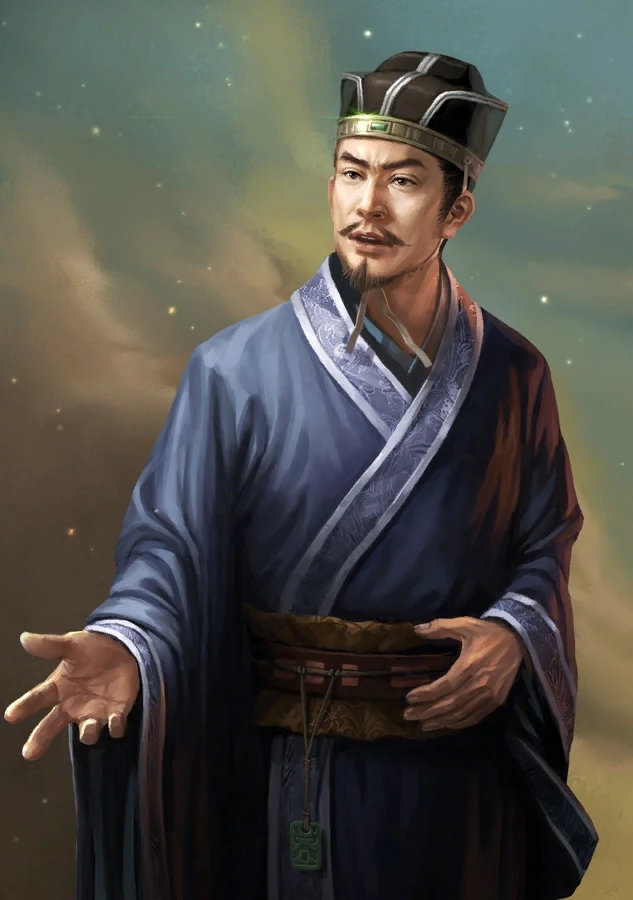
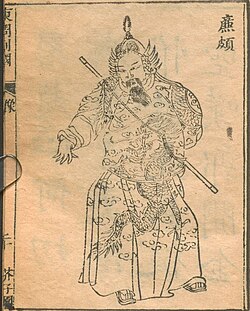
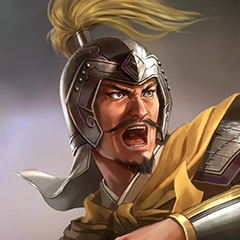
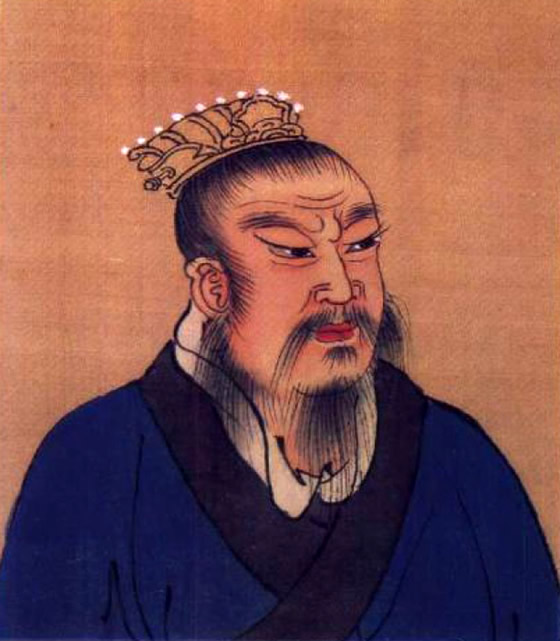
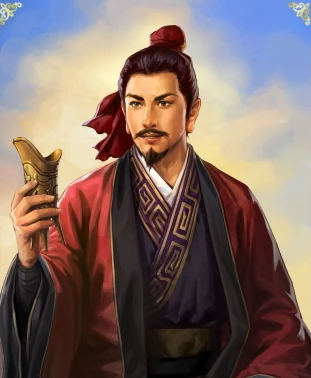
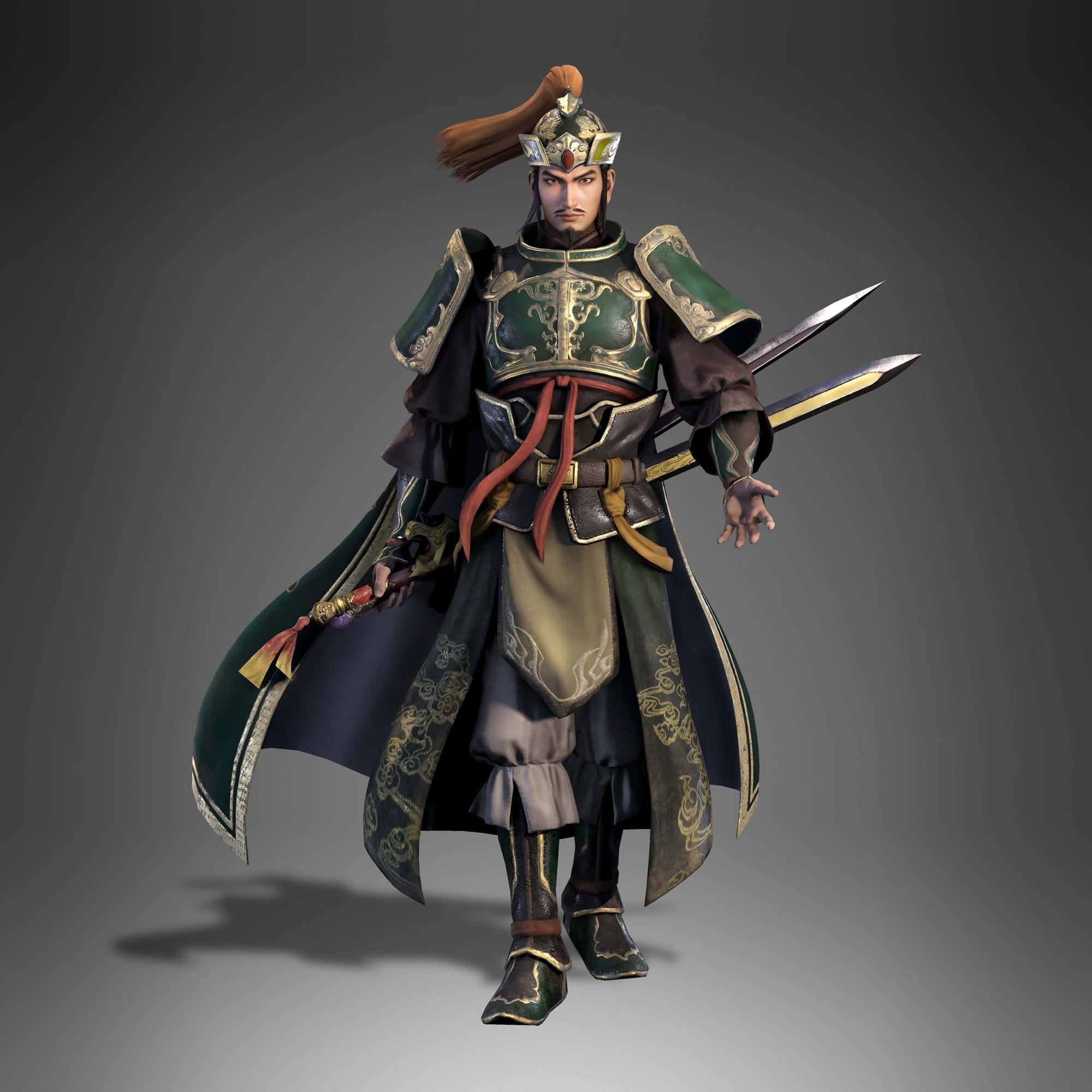
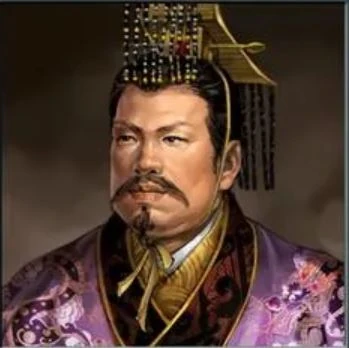
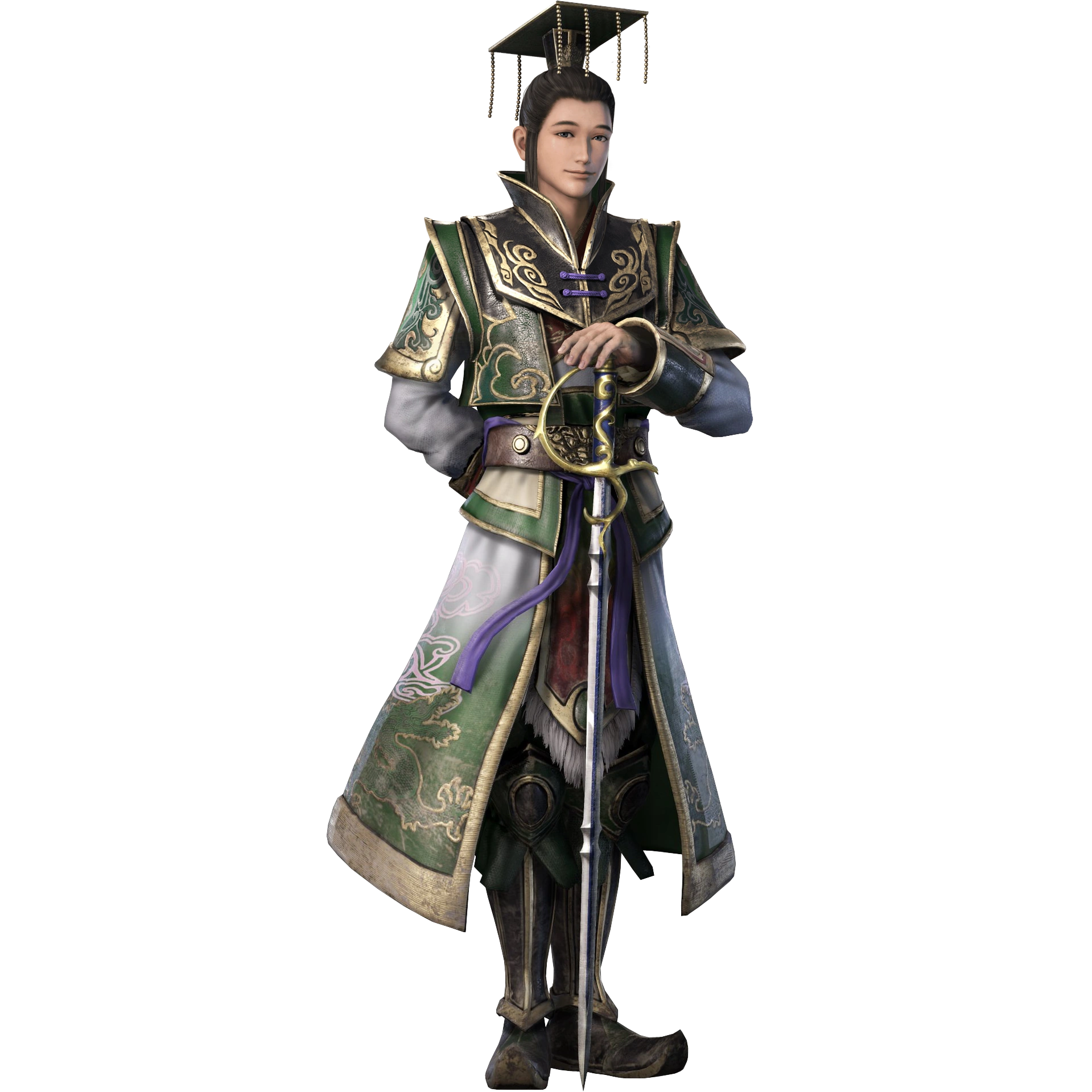
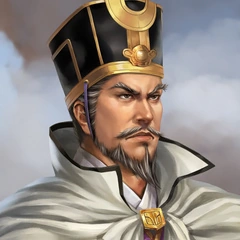
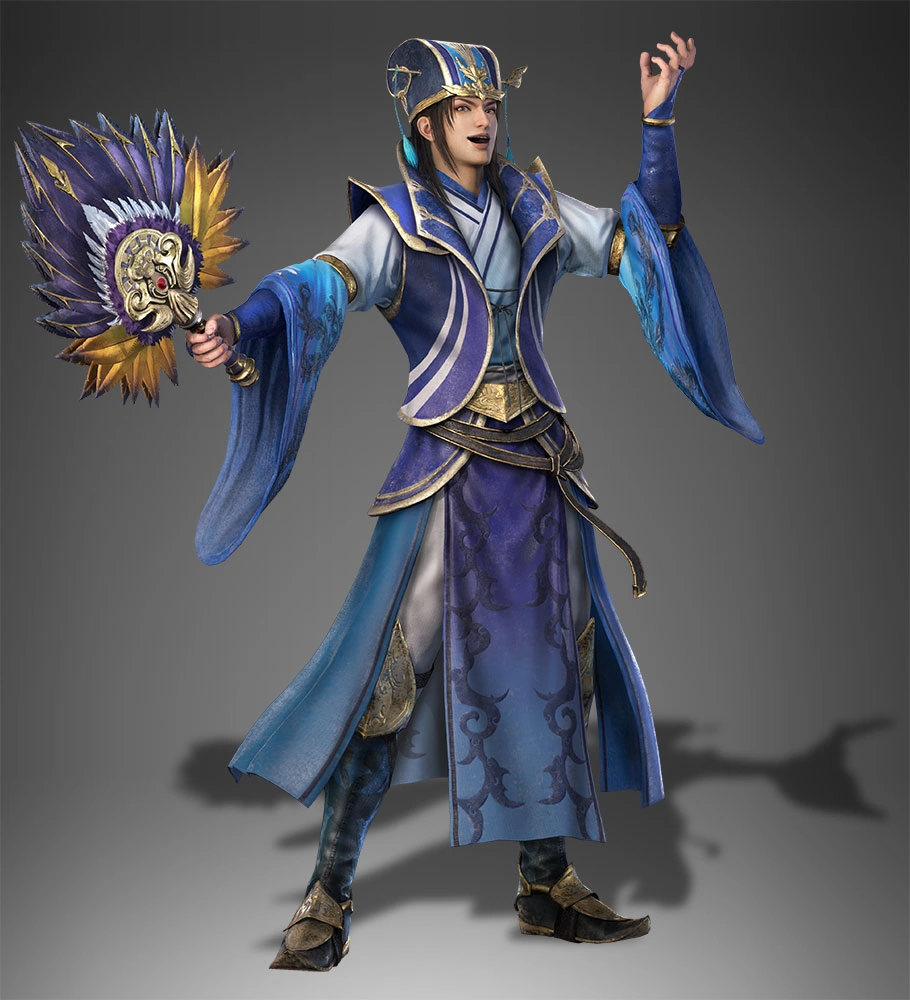
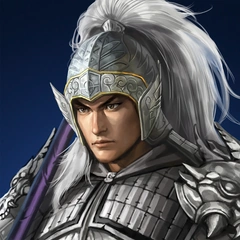
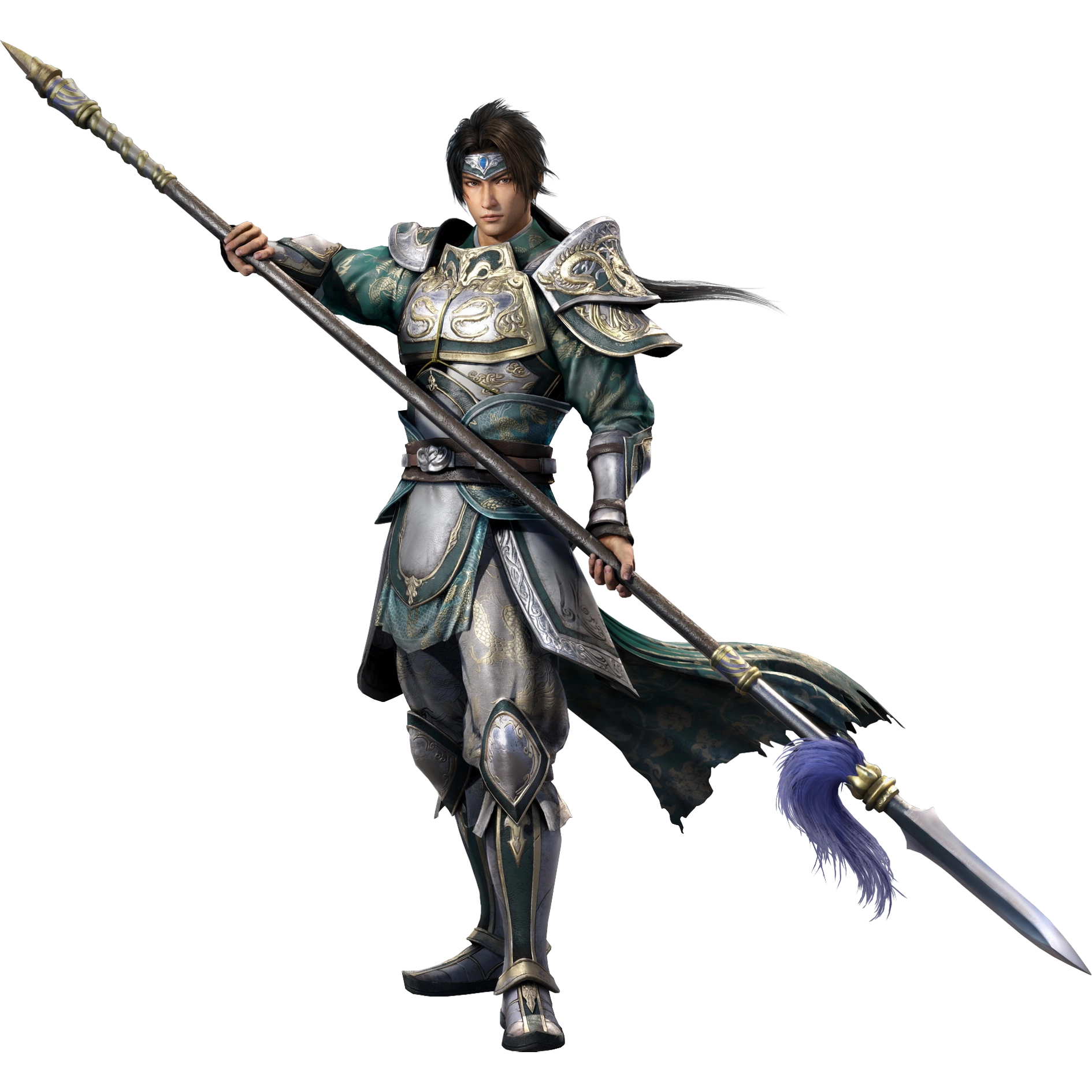
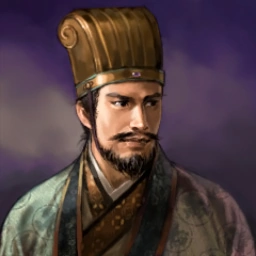
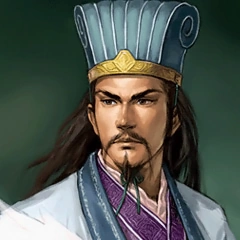
|
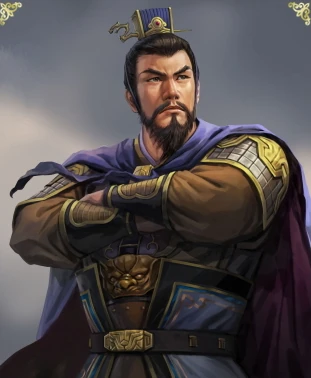
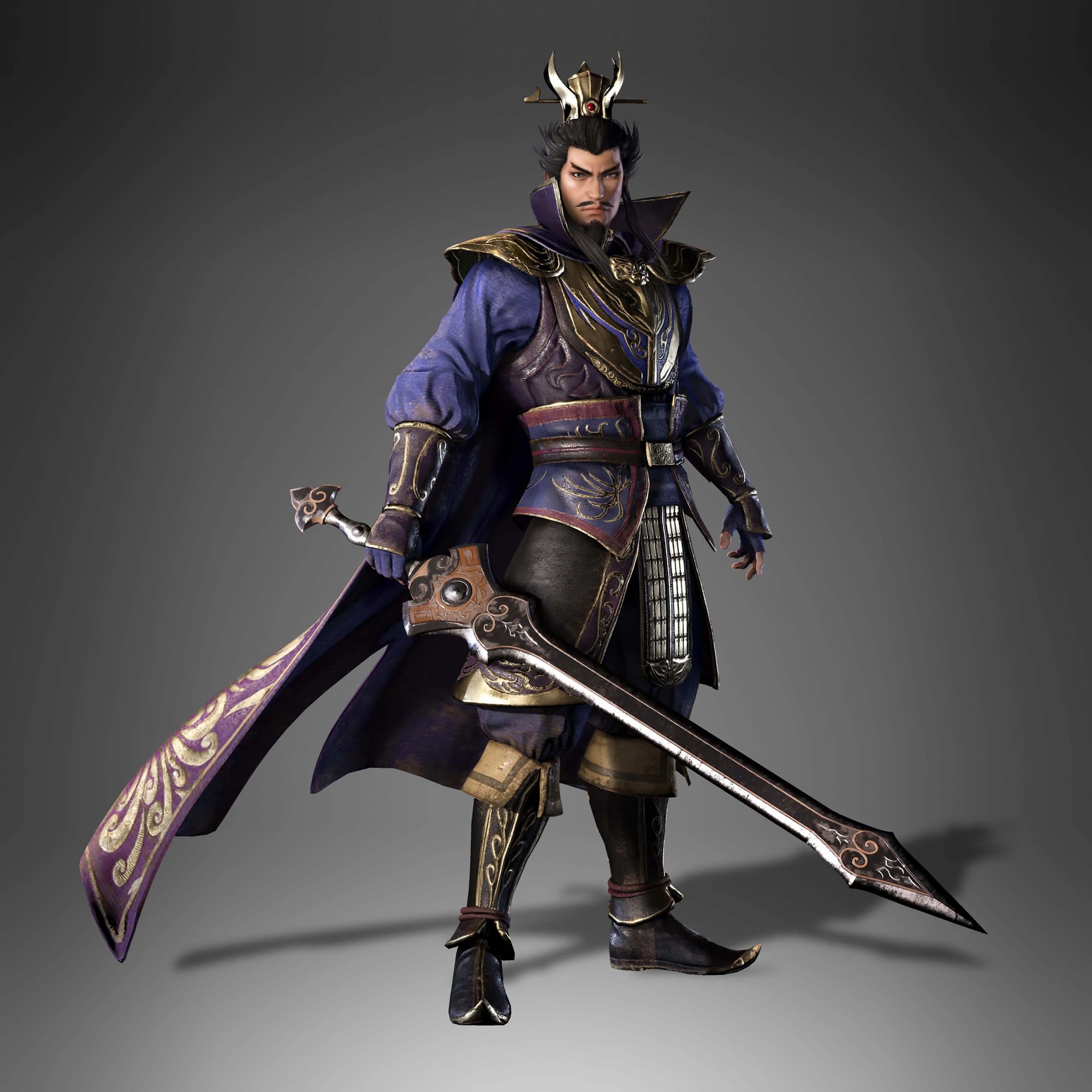
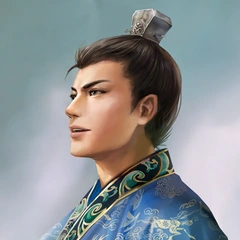
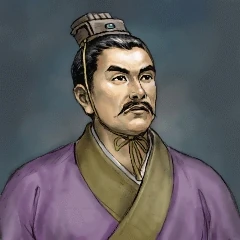
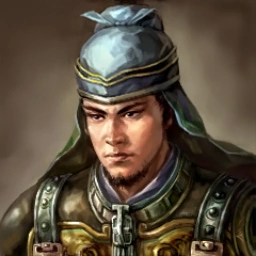
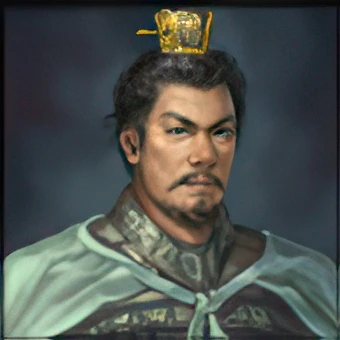
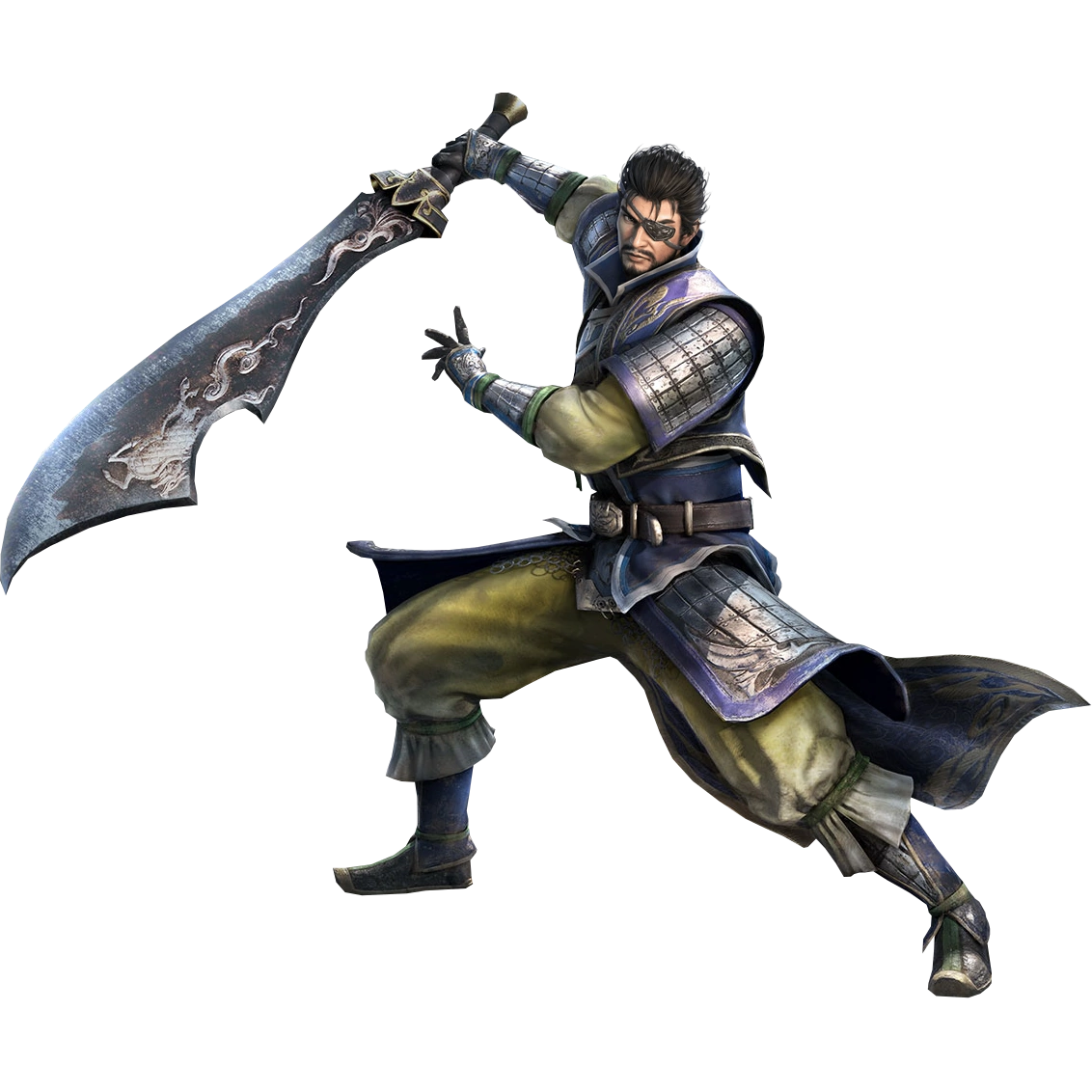
Cao Cao
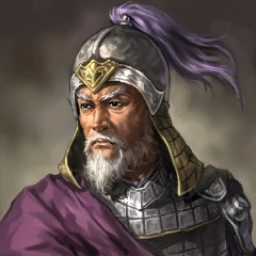
Three separate invocations, all posthumous. The forged proclamation makes him the founder who meant the empire for Cao Zhi, 'the Lord of Linzi', frustrated by calumny. Hua Xin quotes his private warning that Sima Yi was ambitious and hungry and must not hold military authority — the line that nearly gets Sima Yi killed. And it is Cao Cao who, moved by Xiahou Yuan's death, married Xiahou Mao to his daughter Princess Qinghe.
4 mentions in this chapter
2543 mentions in the book
|
|
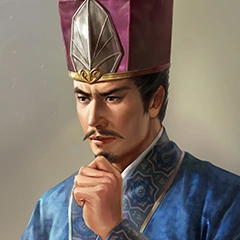
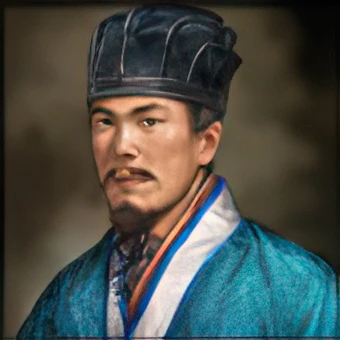
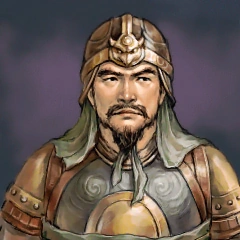
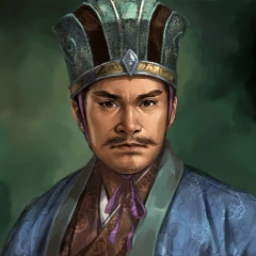
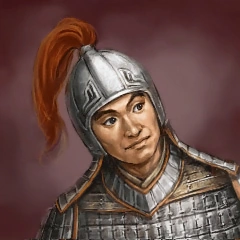
Cao Pi
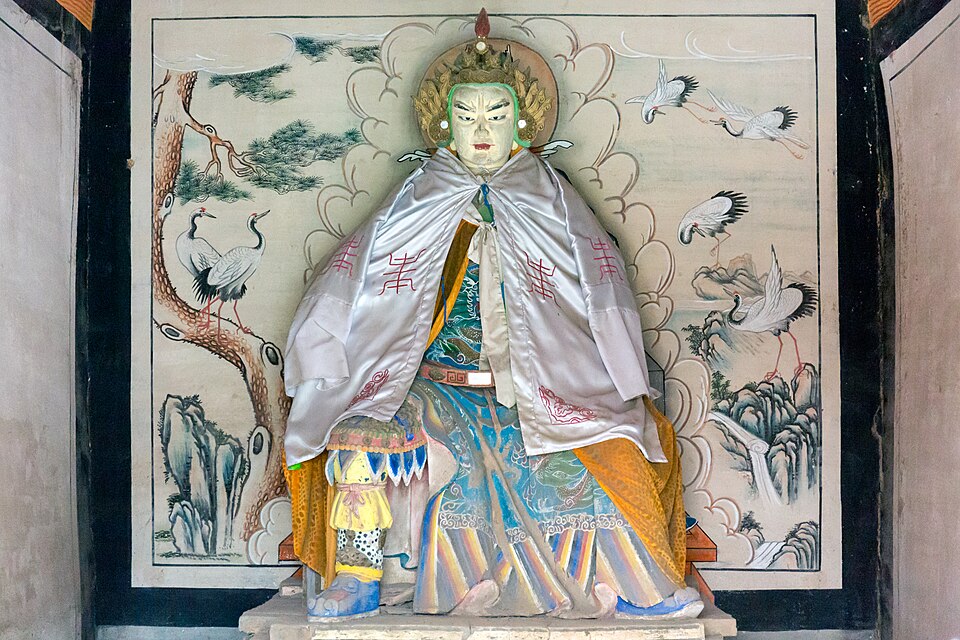
The Wei half of the chapter is his whole life in miniature. Wins Lady Zhen at the sack of Yejun — Yuan Shao's second son's widow — and she bears him Cao Rui; then takes Guo Yong's daughter as Beloved Consort, and when she wants the Empress's place he believes Zhang Tao's fabricated wooden image with his own birth-date on it and forces Lady Zhen to kill herself. Names Cao Rui heir not for ability but for pity: the boy weeps rather than shoot the fawn whose mother his father has just killed — 'My son, you would make a benevolent and virtuous ruler.' Falls ill in the fifth month, reads his own death in the collapse of the Xuchang gates, and confides his son to Cao Zhen, Chen Qun, Sima Yi and the late-arriving Cao Xiu. Dead at forty after a seven-year reign; posthumously styled Emperor Pi.
12 mentions in this chapter
171 mentions in the book
|
|
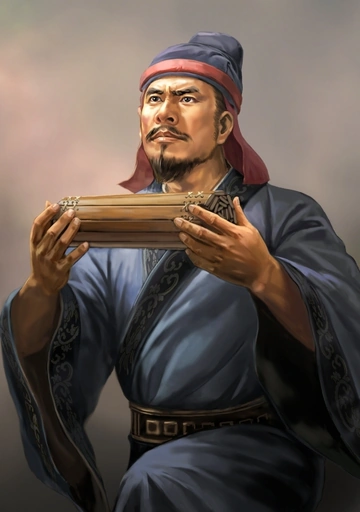
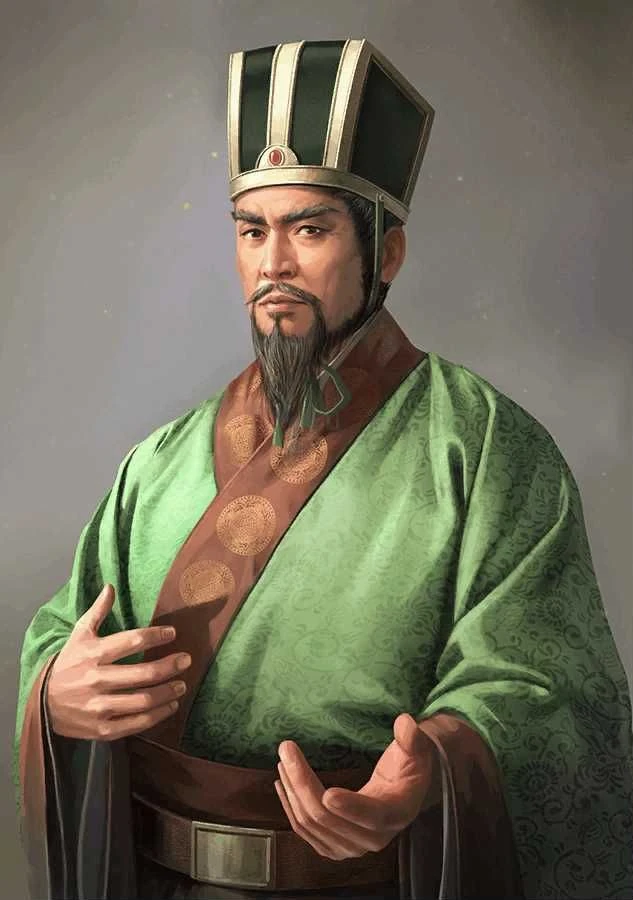
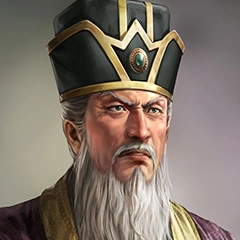
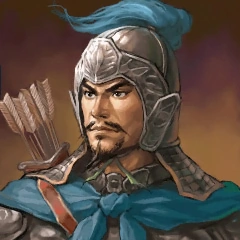
Cao Rui
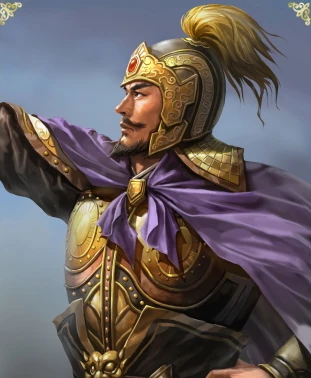
Succeeds at his father's deathbed and spends the chapter being played. The forged proclamation in Sima Yi's name — Ma Su's design — turns him pale in open court; Hua Xin and Wang Lang both urge execution, and only Cao Zhen's caution redirects him to Liu Bang's Lake Yunmeng precedent instead. Rides to Anyi with a hundred thousand guards, is unconvinced by Sima Yi's weeping protest of loyalty, and settles on Hua Xin's compromise: strip the powers, send him home. Then hands the western command to Xiahou Mao over Wang Lang's objection. Two decisions, both Zhuge Liang's gain.
20 mentions in this chapter
166 mentions in the book
|
|
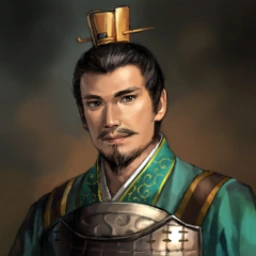
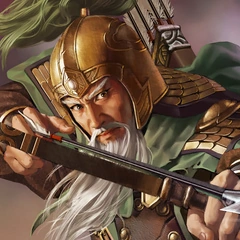
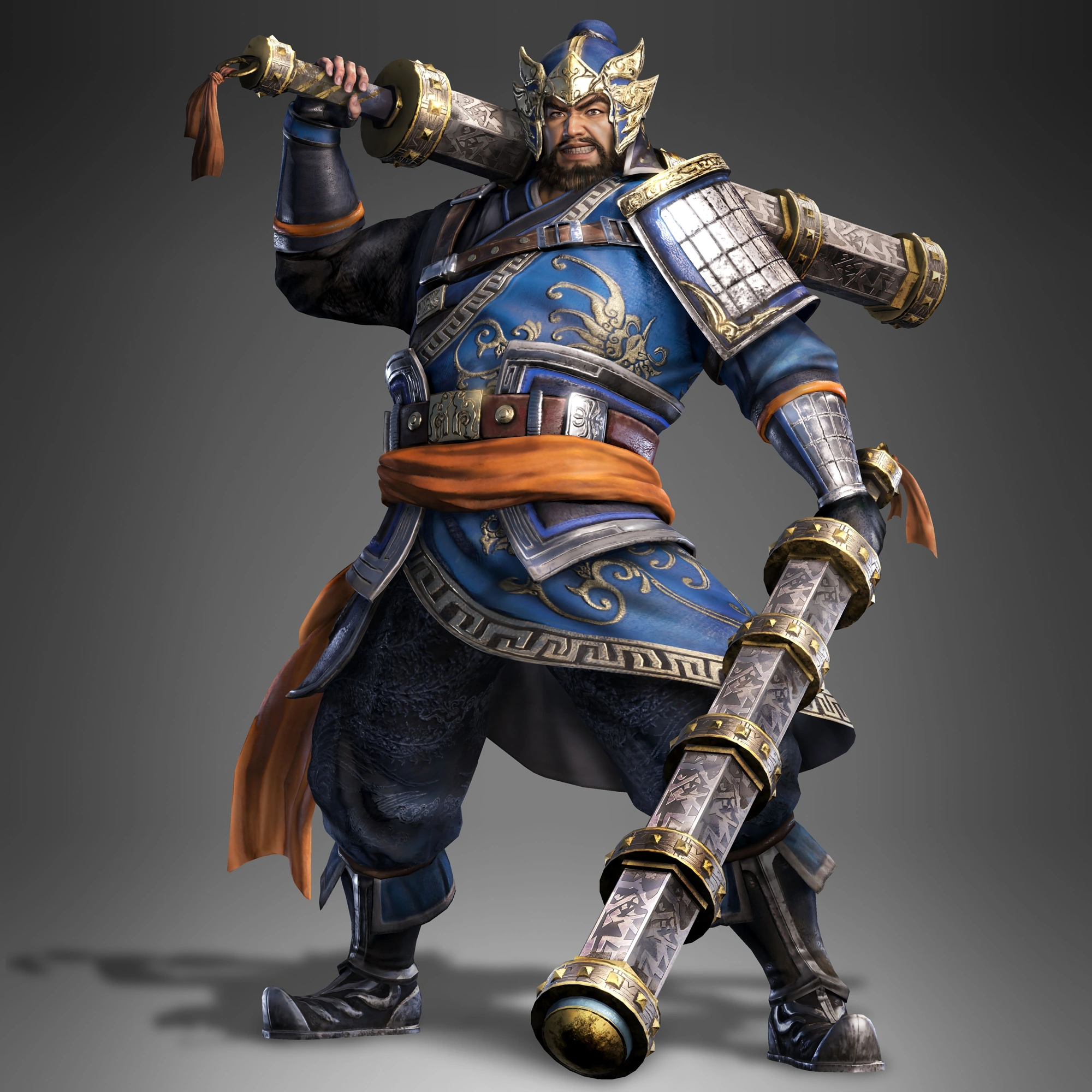
Cao Xiu
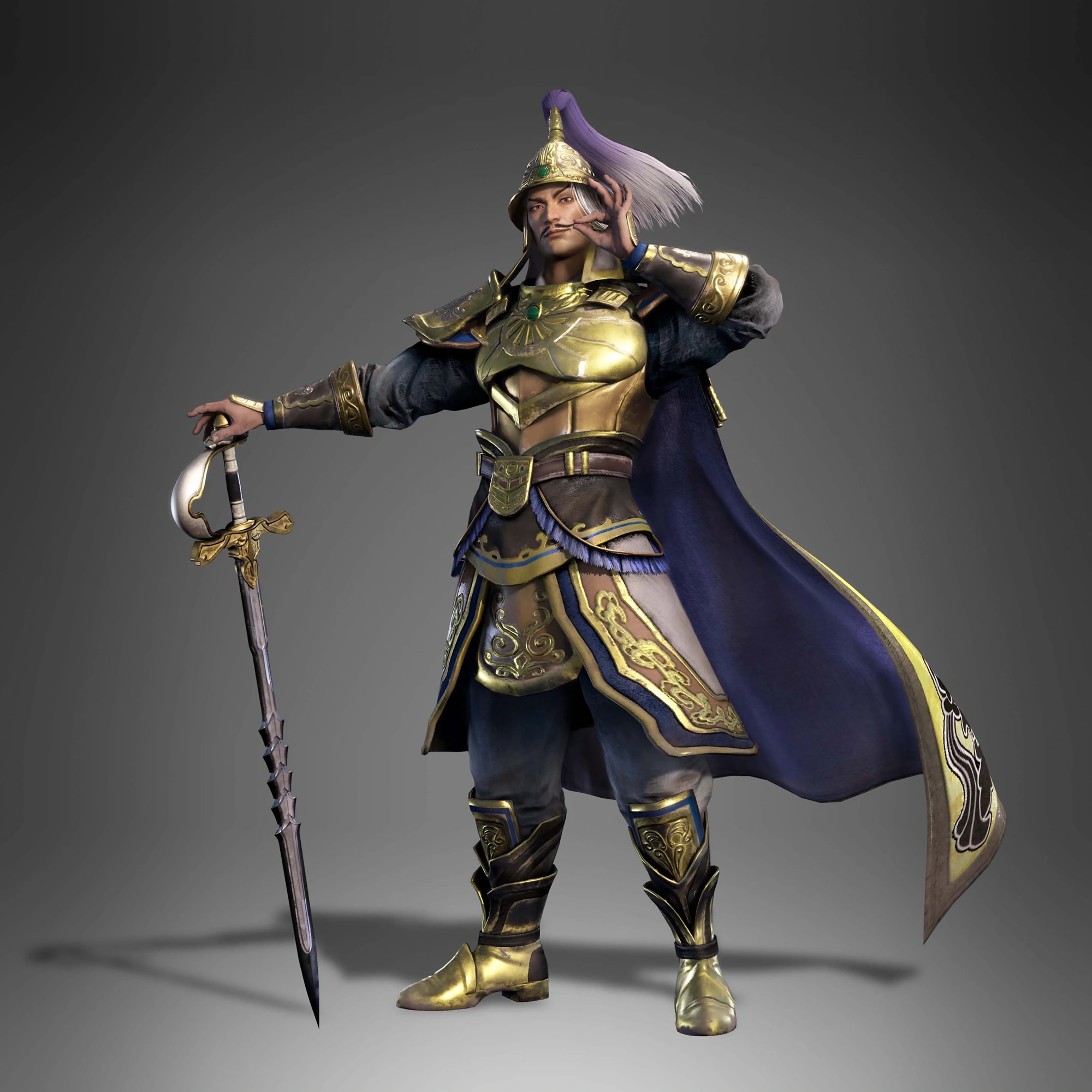
Arrives at the deathbed late, asking after the Emperor's health, and is drawn in as the fourth pillar — 'If you will only uphold my son, I can close my eyes in peace.' Made Minister of War. Sent ahead with a large force to meet Sima Yi's approach at Anyi and delivers the accusation to his face — 'Friend, His Late Majesty entrusted you with the heavy responsibility of caring for his son. Why are you in revolt?' — then succeeds to the command Sima Yi loses.
8 mentions in this chapter
63 mentions in the book
|
|
Cao Zhen
The man who saves Sima Yi's life. Summoned to Cao Pi's deathbed as Commander of the Center Army and made Regent Marshal in the new reign. When the forged proclamation has Hua Xin and Wang Lang both calling for Sima Yi's head and Cao Rui is already drafting the order, Cao Zhen alone stands out of the military rank to object: the late Emperor trusted him, nothing is actually known, and striking may make the rebellion — 'This may be but one of the base tricks of Shu or Wu to cause dissension in our midst.' He supplies the alternative too, Liu Bang's pretended trip to Lake Yunmeng, and is left to regulate the state while Cao Rui rides to Anyi.
5 mentions in this chapter
137 mentions in the book
|
|
Cao Zhi
Named in the forged proclamation as the succession that should have been: the Founder 'established himself with the design of recurring the empire to the Lord of Linzi, Cao Zhi', until calumny spread abroad and 'the Dragon Ruler could not manifest himself for many years'. The forgery's most inflammatory line — it accuses the reigning Emperor of usurping his uncle.
2 mentions in this chapter
30 mentions in the book
|
|
Chen Qun
Called to Cao Pi's deathbed as General Who Guards the West, one of the three named guardians of the heir, and made Minister of Works in the honours of the new reign. Cao Zhen cites that trust — 'His Late Majesty confided his son to the care of certain officers of state, of whom Sima Yi is one' — as the argument against killing Sima Yi.
2 mentions in this chapter
10 mentions in the book
|
|
Chen Zhen
Named in the Memorial as one of the 'incorruptible and enlightened people, honest to the death' Liu Shan should keep near and hold in confidence, and appointed Chair of the Secretariat among the hundred-odd officers left to administer Shu.
2 mentions in this chapter
22 mentions in the book
|
|
Cuan Xi
Cuan Xi; minor figure named in passing.
1 mention in this chapter
1 mention in the book
|
|
Deng Zhi
Answers Zhuge Liang's condition without a moment's hesitation — 'I will go to help the Veteran Leader!' — and goes as Zhao Zilong's colleague in the vanguard of five thousand veterans. Also listed as Right Army Marching General in the expedition roster; the border report to Cao Rui names him and Zhao Zilong as the advance guard.
4 mentions in this chapter
55 mentions in the book
|
|
Ding Xian
Ding Xian; minor figure named in passing.
1 mention in this chapter
1 mention in the book
|
|
Dong Jue
The River Lu sacrifice is his: Zhuge Liang bids him read the prayer aloud at midnight over the forty-nine mantou and the forty-nine lamps. Appointed Secretary to the expedition alongside Fan Jian.
2 mentions in this chapter
10 mentions in the book
|
|
Dong Yun
One of the three High Ministers the Memorial singles out as 'honest men, devotedly anxious to be loyal to the last degree', chosen by the First Ruler's own testament; Zhuge Liang tells Liu Shan to consult him on all Palace matters great or small before acting. Left with Guo Youzhi and Fei Yi to attend to the Palace in his absence.
3 mentions in this chapter
11 mentions in the book
|
|
Du Qi
Du Qi; minor figure named in passing.
1 mention in this chapter
1 mention in the book
|
|
Du Qiong
Du Qiong; in Liu Shan's court.
1 mention in this chapter
9 mentions in the book
|
|
Du Wei
Du Wei; minor figure named in passing.
1 mention in this chapter
1 mention in the book
|
|
Du Yi
Du Yi; minor figure named in passing.
1 mention in this chapter
1 mention in the book
|
|
Fan Jian
Appointed Secretary to the Northern Expedition with Dong Jue, and separately made a General Secretary in the Chengdu administration.
1 mention in this chapter
7 mentions in the book
|
|
Fan Qi
Fan Qi; minor figure named in passing.
1 mention in this chapter
1 mention in the book
|
|
Fei Shi
Fei Shi; in Liu Shan's court.
1 mention in this chapter
11 mentions in the book
|
|
Fei Yi
Third of the Memorial's three High Ministers, named twice — once among the honest men of the First Ruler's testament, once among those left to give Liu Shan 'a true version of the whole matter'. Stays in the Palace during the expedition.
3 mentions in this chapter
45 mentions in the book
|
|
Gao Xiang
Gao Xiang; Shu officer with the expedition.
1 mention in this chapter
20 mentions in the book
|
|
Guan Xing
Appointed Left Guard of the Northern Expedition, paired with Zhang Bao on the right.
1 mention in this chapter
127 mentions in the book
|
|
Guan Yong
Appointed one of the Center Army Right Generals for the Northern Expedition, with Gao Xiang and Liu Min.
1 mention in this chapter
1 mention in the book
|
|
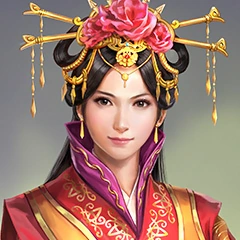
Guo Nüwang
Guo Yong's daughter from Guangzong, of such beauty her father called her 'the king among women' — the name Lady King stuck. Taken as Beloved Consort, her arrival breaks Lady Zhen's standing, and her ambition for the Empress's place drives the intrigue: she takes the minister Zhang Tao into her confidence and the wooden-image charge follows. Set up as Empress over Lady Zhen's corpse. Childless, so she raises Cao Rui as her own — but does not name him heir; his father does that, after the hunt.
3 mentions in this chapter
3 mentions in the book
|
|
Guo Yong
Appears once, as Lady Guo's father in Guangzong, and only to supply the line that names her: 'She is the king among women!'
1 mention in this chapter
1 mention in the book
|
|
Guo Youzhi
Named in the Memorial among the three honest High Ministers of the First Ruler's testament, and again as one of the men to whom Zhuge Liang delegates 'a discussion of the pros and cons' of the expedition. Ordered to attend to Palace matters while the army is north.
3 mentions in this chapter
3 mentions in the book
|
|
Han Xin
The denounced vassal in Cao Zhen's precedent — seized by Liu Bang at the feigned Lake Yunmeng outing, the manoeuvre Cao Rui copies at Anyi to test Sima Yi rather than strike him.
1 mention in this chapter
13 mentions in the book
|
|
Hu Ban
Appointed Center Army Rear General for the Northern Expedition.
1 mention in this chapter
51 mentions in the book
|
|
Hu Ji
Hu Ji; minor figure named in passing.
1 mention in this chapter
3 mentions in the book
|
|
Hua Xin
Twice the hard voice in the Wei council. On the proclamation he calls for death outright, backing it with Cao Cao's old warning that Sima Yi 'was ambitious and hungry, and should not be entrusted with military authority lest he harm the state' — and reads the Yongzhou-Liangzhou request as the proof. When Cao Rui comes back from Anyi still unconvinced, it is Hua Xin who supplies the compromise that actually lands: 'In any case withdraw his military powers and let him go into retirement.' Made Grand Commander in the accession honours.
3 mentions in this chapter
48 mentions in the book
|
|
Huang Zhong
Named once, as the man who killed Xiahou Yuan - the death that got Xiahou Mao his imperial marriage and now his army.
1 mention in this chapter
194 mentions in the book
|
|
Jiang Wan
Named in the Memorial among the incorruptible men Liu Shan should hold in confidence, and appointed Military Adviser in the administration left behind at Chengdu.
2 mentions in this chapter
25 mentions in the book
|
|
Lady Zhen
Cao Pi found her at the sack of Yejun, where she was the wife of Yuan Shao's second son, and married her; she bore him Cao Rui. Displaced when Lady Guo arrives and falls from favour, then destroyed by Zhang Tao's charge that a wooden image bearing the Emperor's birth-date had been dug up in her palace — Cao Pi in his anger forces her to commit suicide. Styled Empress Zhen posthumously at her son's accession.
8 mentions in this chapter
10 mentions in the book
|
|
Lai Min
Lai Min; minor figure named in passing.
1 mention in this chapter
1 mention in the book
|
|
Li Hui
Appointed Rear Army Commander for the Northern Expedition.
1 mention in this chapter
15 mentions in the book
|
|
Li Yan
His single line in the chapter is the appointment that keeps him off the expedition: 'Li Yan was given the task of guarding the passes against Wu from the southeast.'
1 mention in this chapter
37 mentions in the book
|
|
Li Zhuan
Li Zhuan; minor figure named in passing.
1 mention in this chapter
1 mention in the book
|
|
Lian Po
Invoked by Zhao Zilong as one of the two old generals who refused to acknowledge age — 'Old I may be, yet have I still the valor of Lian Po and the heroism of Ma Yuan.'
1 mention in this chapter
2 mentions in the book
|
|
Liao Hua
Liao Hua; with Zhuge Liang's northern expedition.
1 mention in this chapter
87 mentions in the book
|
|
Liu Ba
Liu Ba; in Liu Shan's court.
1 mention in this chapter
5 mentions in the book
|
|
Liu Bang
Cited by Cao Zhen as the precedent that saves Sima Yi from execution: the Supreme Ancestor of Han, who under pretence of a trip on Lake Yunmeng summoned his vassals and seized the denounced Han Xin. Cao Rui follows the model to Anyi.
1 mention in this chapter
21 mentions in the book
|
|
Liu Bei
Dead, and the moral centre of the chapter's second half. The Chu Shi Biao is built on him: the great task half-accomplished at his death, the three visits to the humble cot in Nanyang twenty-one years ago, the testament that chose Fei Yi and Guo Youzhi and Dong Yun, the epithet 'capable' he applied to Xiang Chong after testing him, his talk of Emperors Huan and Ling, and the charge confided on his deathbed that makes Zhuge Liang live 'a life of anxiety lest I should fail in my trust and so dim his glory'. Zhao Zilong dates his own service from the day he first joined him.
13 mentions in this chapter
1978 mentions in the book
|
|
Liu Hong
Named with Emperor Huan in the Memorial's warning about attracting worthy people and repelling mean ones — the reversal that 'ruined the Latter Hans', and a story Zhuge Liang says the First Ruler took much to heart.
1 mention in this chapter
49 mentions in the book
|
|
Liu Min
Liu Min; minor figure named in passing.
1 mention in this chapter
1 mention in the book
|
|
Liu Shan
Comes ten miles out from Chengdu in state to meet the returning army and waits at the roadside, raising Zhuge Liang from his prostration by the hand and riding back to the capital beside him. Provides for the families of the dead of the southern expedition on the memorial's proposal. Receives the Chu Shi Biao and answers it with concern rather than policy — 'My Father Minister, you have only just returned… I fear this march to the north will be almost too much even for you' — then sees the army off three miles beyond the north gate.
2 mentions in this chapter
254 mentions in the book
|
|
Liu Yan
Appointed Center Army Director for the Northern Expedition (B-T spells him 'Liu Yang').
1 mention in this chapter
5 mentions in the book
|
|
Liu Zhi
Named with Emperor Ling in the Memorial as the cautionary pair whose reigns ruined the Latter Han by promoting mean people over worthy ones — the example the First Ruler discussed often with Zhuge Liang.
1 mention in this chapter
18 mentions in the book
|
|
Lu Yin
Appointed Rear Army Marching General under Li Hui for the Northern Expedition.
1 mention in this chapter
2 mentions in the book
|
|
Lü Kai
Left at Yongchang with Wang Kang in joint command of the four southern territories — Yizhou, Yongchang, Zangge and Yuesui — the settlement that holds the south while the army turns north.
1 mention in this chapter
14 mentions in the book
|
|
Ma Chao
Dead of illness since the return from the south, and used as the argument against Zhao Zilong: 'I have lost my friend Ma Chao by illness since I returned from the Southern Expedition, and I feel as I had lost an arm.'
1 mention in this chapter
282 mentions in the book
|
|
Ma Dai
Named for the cost of the southern campaign rather than for anything he does here: more than a thousand of his soldiers drowned crossing the River Lu, and it is their unfreed souls Zhuge Liang blames himself for and sacrifices to. Appointed Left Army Commander and Chief of the Commissariat for the Northern Expedition.
2 mentions in this chapter
123 mentions in the book
|
|
Ma Su
Authors the chapter's decisive Shu action. When Zhuge Liang wants to attack Sima Yi at once, Ma Su talks him out of the march and offers the cheaper weapon: the young Emperor has no confidence in his minister, so seed reports in Luoyang and Yejun that he means to rebel and post a proclamation in his name. One notice reaches the gate of Yejun and does the rest. His first strategic proposal to carry — and it works perfectly, which is worth remembering against Jieting four chapters on.
2 mentions in this chapter
56 mentions in the book
|
|
Ma Yuan
The second of Zhao Zilong's two precedents for a veteran who would not admit old age, paired with Lian Po in his protest at being left out of the expedition.
1 mention in this chapter
8 mentions in the book
|
|
Ma Zhong
Appointed Right Army Commander for the Northern Expedition, under B-T's spelling 'Ma Zheng' — the same Shu officer who served through the whole southern campaign.
1 mention in this chapter
27 mentions in the book
|
|
Meng Guang
Meng Guang; in Liu Shan's court.
1 mention in this chapter
2 mentions in the book
|
|
Meng Huo
Leads the Mang chieftains and notables out to honour the departing army, and it is Meng Huo who explains the River Lu storm — the wild spirits, the seven sevens of human heads, the black ox and white goat — the custom Zhuge Liang then refuses and replaces. Weeps with the rest at the sacrifice. Released at Yongchang with orders to govern diligently, keep control, care for his people and promote agriculture, and takes his leave with tears rolling down his cheeks.
6 mentions in this chapter
151 mentions in the book
|
|
Princess Qinghe
Cao Cao's daughter, married to Xiahou Mao after Xiahou Yuan's death at Huang Zhong's hands — the match that makes him an Imperial Son-in-Law and buys him the deference at court that carries his claim to the western command over Wang Lang's objection.
1 mention in this chapter
1 mention in the book
|
|
Qiao Zhou
The one voice against the expedition. Steps out of the ranks to report that he has studied the stars, that 'the northern quarter is brilliant and strong', and that the scheme will not speed — then challenges the Prime Minister on his own ground: you understand the mysteries of the skies, why oppose them? Zhuge Liang answers that the stars are in infinite changes and one may rely on them too much. Qiao Zhou pleads in vain, and is left behind as Chief Secretary.
3 mentions in this chapter
25 mentions in the book
|
|
Sheng Bo
Sheng Bo; minor figure named in passing.
1 mention in this chapter
1 mention in the book
|
|
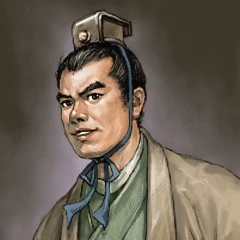
Sima Yi
Asks for the vacant Yongzhou-Liangzhou command and gets it, putting every western army under him — which is exactly what makes Zhuge Liang say he must be attacked at once. Ma Su's forged proclamation destroys him instead. Rides out to meet his Emperor at Anyi with a hundred thousand of his own men purely to show off his dignity, and the display damns him; Cao Xiu's accusation turns him pale and sweating. He grasps the mechanism immediately — 'This is a vile plot on the part of our rivals, Shu and Wu, to cause dissension' — sends his army back, goes forward alone to the chariot and begs weeping to be allowed to destroy Shu and then Wu to prove himself. Hua Xin's compromise strips his military power and sends him to his native village; Cao Xiu takes his command. The obstacle to the Northern Expedition removes itself.
26 mentions in this chapter
470 mentions in the book
|
|
Wang Kang
Left at Yongchang with Lü Kai in joint command of the four southern territories — Yizhou, Yongchang, Zangge and Yuesui — as the army passes north.
1 mention in this chapter
5 mentions in the book
|
|
Wang Lang
Made Minister of the Interior, and wrong then right within a page. Seconds Hua Xin for Sima Yi's death — 'he is ambitious and will cause mischief if he be allowed to live' — then objects, correctly, to giving the western command to Xiahou Mao, who has never seen a battle, against an opponent 'thoroughly versed in strategy'. Xiahou Mao sneers that he must have arranged to be Zhuge Liang's ally, and Wang Lang and his supporters are silenced.
4 mentions in this chapter
40 mentions in the book
|
|
Wang Ping
Appointed Front Army Marching General under Wei Yan for the Northern Expedition.
1 mention in this chapter
107 mentions in the book
|
|
Wei Yan
Reports the storm that stops the army at the River Lu, which is what sets the sacrifice in motion. Appointed Front Army Commander of the Northern Expedition.
2 mentions in this chapter
353 mentions in the book
|
|
Wu Yi
Wu Yi; with the expedition.
1 mention in this chapter
30 mentions in the book
|
|
Xi Zheng
Xi Zheng; minor figure named in passing.
1 mention in this chapter
11 mentions in the book
|
|
Xiahou Dun
Named as the man who adopted the young Xiahou Mao — his nephew by Xiahou Yuan. Long dead by this chapter.
1 mention in this chapter
142 mentions in the book
|
|
Xiahou Mao
Volunteers for the western command out of a grievance: 'My father died in Hanzhong, and to my bitter resentment his death is unavenged.' Xiahou Yuan's son, adopted young by Xiahou Dun, married to Cao Cao's daughter Princess Qinghe after his father fell to Huang Zhong — an Imperial Son-in-Law with great deference at court, a military commission, and no day ever spent with an army. Impulsive and notably miserly. Sneers Wang Lang's objection down with a boast to never see the Emperor's face again unless he takes Zhuge Liang, and leaves for Changan to gather two hundred thousand western troops. The chapter's closing couplet asks whether a lad with callow lip can play the leader.
5 mentions in this chapter
55 mentions in the book
|
|
Xiahou Yuan
Named as Xiahou Mao's father and the reason for the campaign — killed by Huang Zhong in Hanzhong, a death his son calls unavenged and uses to claim the western command. It was Cao Cao's grief at this that produced the marriage to Princess Qinghe.
2 mentions in this chapter
105 mentions in the book
|
|
Xiang Chong
The Memorial's military recommendation: 'well-balanced temperament, versed in military matters', to whom the late Emperor applied the epithet 'capable' after testing him. Zhuge Liang asks that he be made Grand Commander and consulted on all military matters great or small — and in the appointments that follow he is, taking control of military affairs in the capital.
3 mentions in this chapter
3 mentions in the book
|
|
Xu Yun
Xu Yun; minor figure named in passing.
1 mention in this chapter
1 mention in the book
|
|
Yan Yan
Appointed Inspector of the Northern Expedition — the veteran of the Yi Province campaign given the army's disciplinary oversight.
1 mention in this chapter
61 mentions in the book
|
|
Yang Hong
Yang Hong; in Liu Shan's court.
1 mention in this chapter
3 mentions in the book
|
|
Yang Yi
Yang Yi; Zhuge Liang's logistics chief; rising on the staff.
1 mention in this chapter
68 mentions in the book
|
|
Yin Mo
Yin Mo; in Liu Shan's court.
1 mention in this chapter
2 mentions in the book
|
|
Yuan Lin
Yuan Lin; minor figure named in passing.
1 mention in this chapter
1 mention in the book
|
|
Yuan Shao
Named once, for his second son — whose wife Lady Zhen was until Cao Pi took her at the sack of Yejun.
1 mention in this chapter
414 mentions in the book
|
|
Zhang Bao
Appointed Right Guard of the Northern Expedition, paired with Guan Xing on the left — the two young kinsmen of the dead Tiger Generals kept close to the Prime Minister.
1 mention in this chapter
92 mentions in the book
|
|
Zhang Ni
Appointed Left Army Marching General under Ma Dai for the Northern Expedition.
1 mention in this chapter
54 mentions in the book
|
|
Zhang Si
Named in the Memorial alongside Chen Zhen and Jiang Wan as incorruptible and honest to the death, and appointed Controller of the Prime Minister's palace for the duration of the expedition.
2 mentions in this chapter
3 mentions in the book
|
|
Zhang Tao
The court minister Lady Guo takes into her confidence. While Cao Pi is indisposed he alleges that a wooden image carrying the Emperor's own date of birth has been dug up in the Empress's palace, meant to exercise a maleficent influence — the fabrication that costs Lady Zhen her life and puts Lady Guo on the throne.
2 mentions in this chapter
2 mentions in the book
|
|
Zhang Yi
Appointed Front Army Marching General under Wei Yan for the Northern Expedition.
1 mention in this chapter
76 mentions in the book
|
|
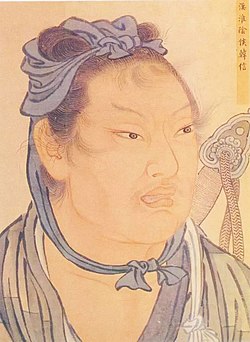
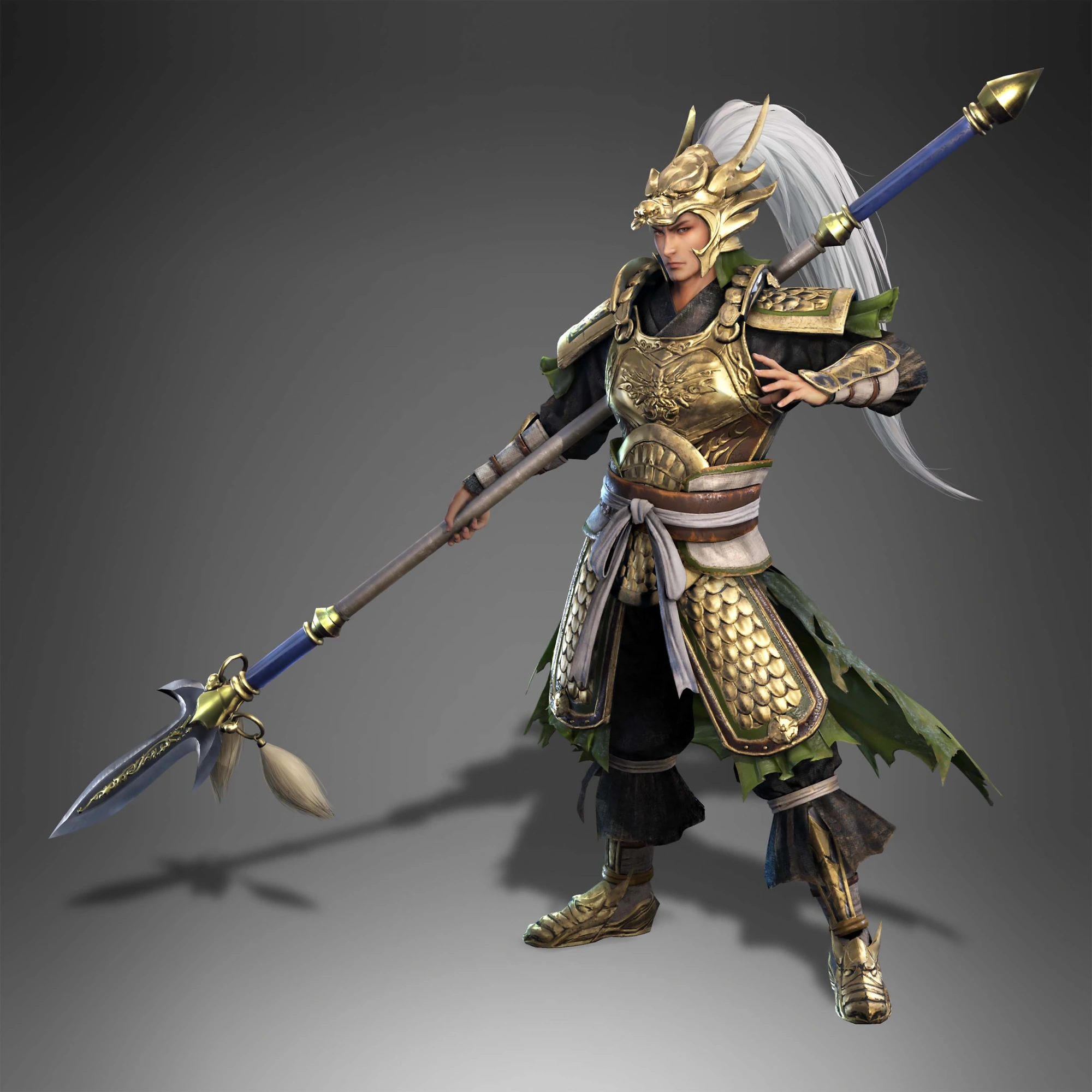
Zhao Yun
The chapter's closing set-piece. Stands forward after the whole appointment list has been read out and no duty has come to him, claiming 'the valor of Lian Po and the heroism of Ma Yuan' — the two old generals who refused to admit age. Zhuge Liang tries to retire him gently, citing Ma Chao's death and the risk to a life-long reputation; Zhao Zilong answers that he has never quailed since the day he joined the First Ruler and that dying on the frontier is a happy ending, and finally settles it by threatening to smash his head on the floor at Zhuge Liang's feet. Gets the van on condition he takes a colleague, and rides out with Deng Zhi and five thousand veterans.
5 mentions in this chapter
475 mentions in the book
|
|
Zhong Yao
Made Imperial Guardian, first-named in the honours distributed at Cao Rui's accession.
1 mention in this chapter
15 mentions in the book
|
|
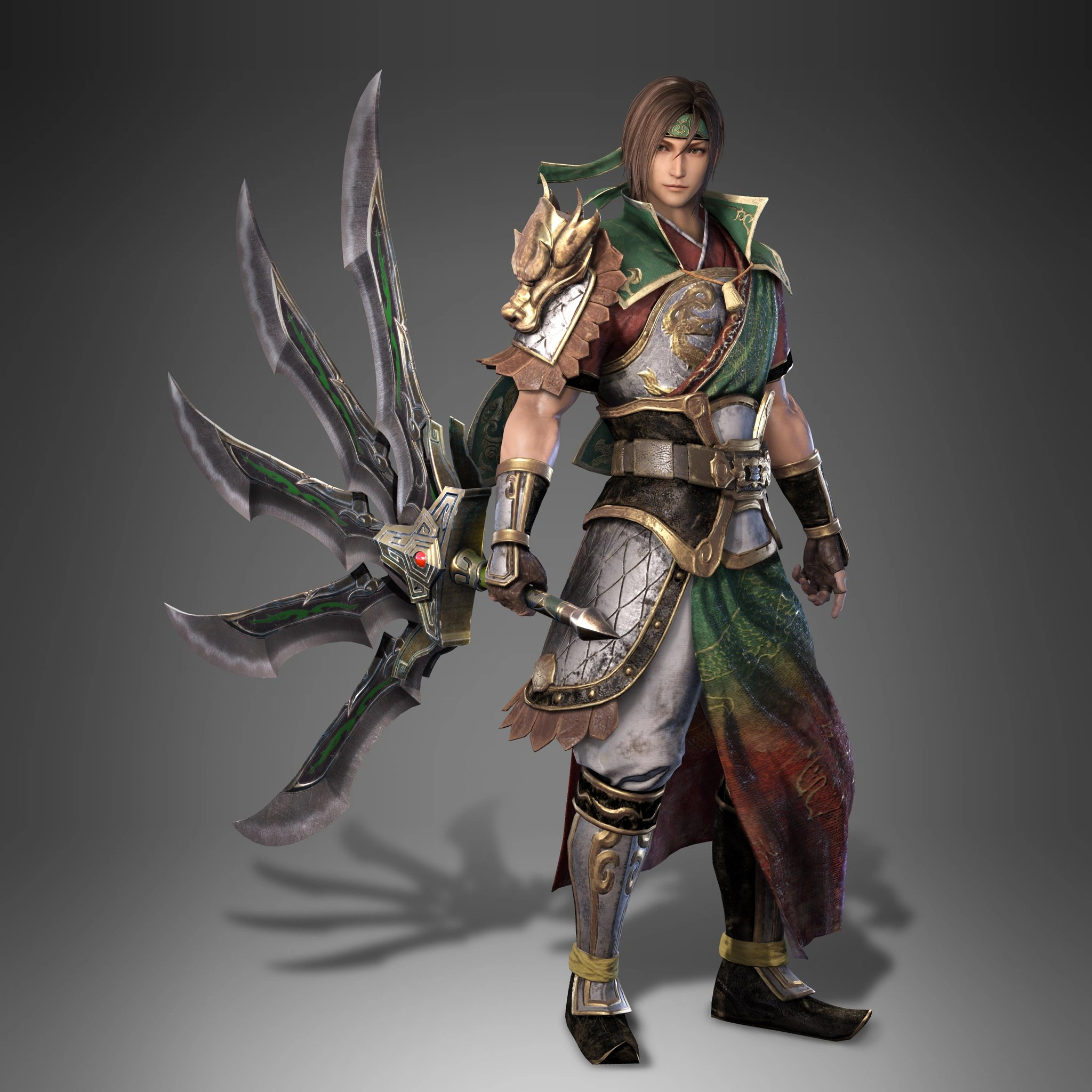
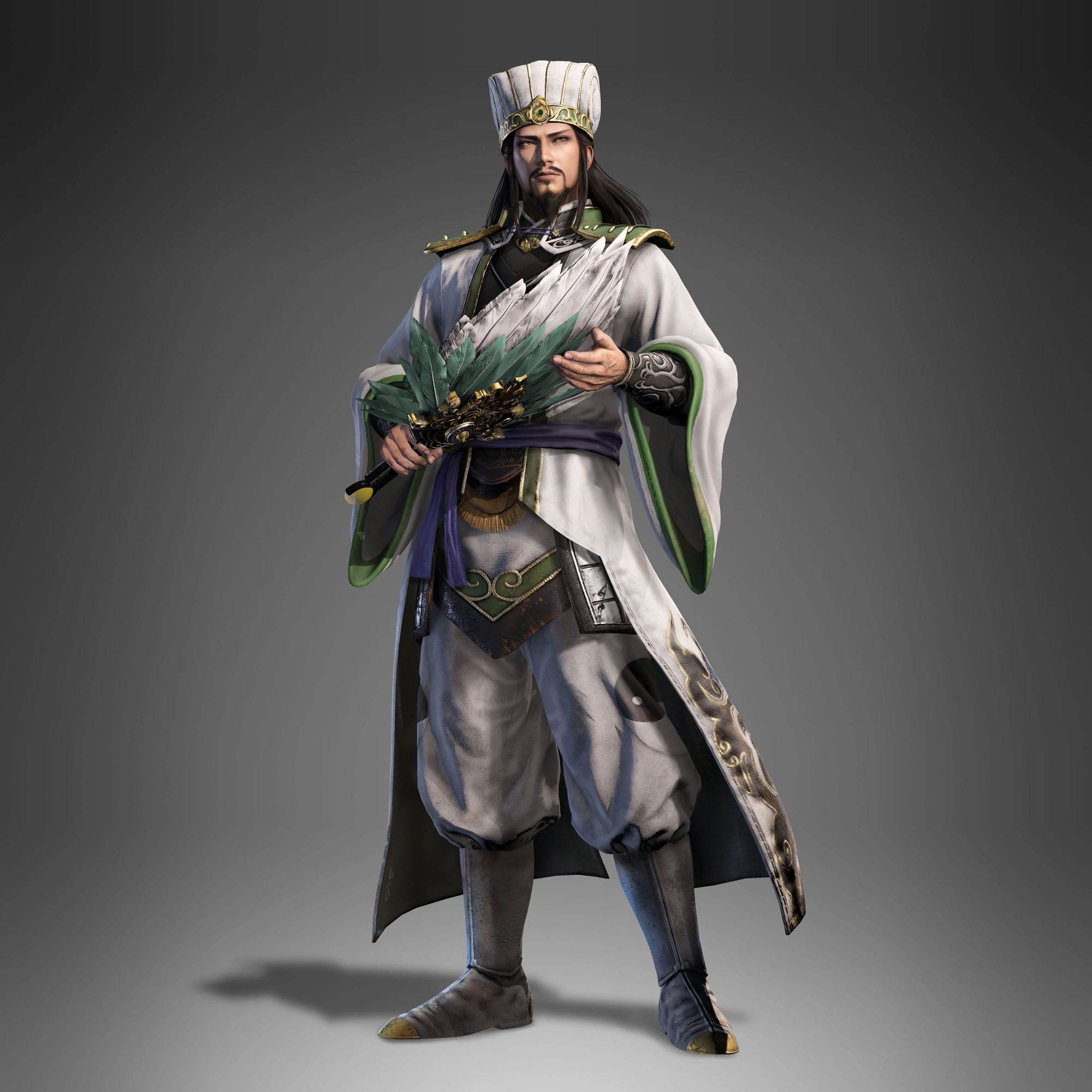
Zhuge Liang
Two halves. First the return: he refuses Meng Huo's forty-nine human heads for the River Lu crossing — 'How can I slay a single person now that fighting is done and peace has returned?' — takes the drowned on his own conscience ('The sin is mine'), and invents the mantou, flour-paste heads stuffed with ox and goat, offered at midnight in Daoist robes with Dong Jue reading the prayer. He breaks into open weeping over it and the whole army with him. Then the turn north: hearing Sima Yi has the western command he calls him the one real danger, adopts Ma Su's forged-proclamation ruse instead of marching, and on the news of his fall says the obstacle is gone. Presents the Chu Shi Biao, overrides Qiao Zhou's star-reading, yields to Zhao Zilong's demand for the van rather than let him break his head on the floor, and takes the Hanzhong road.
29 mentions in this chapter
1454 mentions in the book
|
-
Zhuge Liang's Northern Expeditions War/Campaign · c. February 228 – October 234Attackers: Shu HanDefenders: Cao Wei
-
-
-
Anyi County County(35.1803, 111.1601)
-
Chang'an County County(34.2464, 108.9070)
-
Chengdu County County(30.6661, 104.0754)
-
Guangzong County County(36.9704, 115.3571)
-
-
-
Hanzhong Commandery Commandery(33.0730, 107.0359)
-
Lake Yunmeng Lake
-
Liang Province Province(37.9267, 102.6323)
-
Linzi County
-
Luoyang County(34.7316, 112.5963)
-
-
-
Middle Land Region
-
Nanyang Commandery Commandery(33.0017, 112.5355)
-
-
-
Pingyuan Commandery(37.0649, 116.3455)
-
River Lu River
-
Shu (Three Kingdoms) Region
-
South Mang Region
-
Wei (Three Kingdoms) Region
-
Wu (Three Kingdoms) Region
-
Wuxiang County
-
Xuchang City
-
Yejun County
-
Yi Province Province(31.0466, 104.3000)
-
Yong Province Province
-
Yongchang Commandery Commandery(25.1540, 99.2534)
-
Yuesui Commandery
-
Zangge Commandery