The Ruler of Wei Hands Over The Power To Sima Yi;
Jiang Wei Is Defeated At Ox Head Hills.
Sima Yi was very pleased to hear that Cao Shuang and his party were to follow the Ruler of Wei on a visit to the tombs combined with a hunt, for it meant that the whole enemy faction left the city. Accordingly, Cao Shuang and his three brothers Cao Xi, Cao Xun, Cao Yan, and his friends He Yan, Deng Yang, Ding Mi, Bi Gui, Li Sheng, and others left the capital with the Emperor.
As soon as they left, Sima Yi entered with his authority as Imperial Guardian, gave Gao Rou, Minister of the Interior, provisional command of the army and sent him to seize the camp of Cao Shuang. A similar command was given to Wang Guan, Supervisor of the Palace, to replace Cao Xi as Commander of the Center Army and to occupy his camp.
Having secured his position thus, Sima Yi and his supporters went to the palace of the Empress Dowager.
They said to her, "Cao Shuang has betrayed the trust placed in him by the late Emperor and has ruined the government. His fault must be expiated."
Empress Guo replied, "What can be done in the absence of the Son of Heaven?"
"I have prepared plans for the destruction of these base ministers and will see to it that no trouble happens to yourself."
The Empress was much alarmed, but could only act as she was directed and agree. So two of Sima Yi's supporters, Commander Jiang Ji and High Minister Sima Fu, copied out the memorial he had prepared, and it was sent to the Ruler of Wei by the hand of an eunuch. Then the arsenals were seized.
Soon the news of the rising came to the knowledge of the family of Cao Shuang, and his wife, Lady Liu, came out from the inner apartments and summoned Pan Ju, Commander of the Gates.
She inquired, "The Master is outside, and Sima Yi is revolting: What does it mean?"
"Your Ladyship need feel no alarm. Let me go and find out the truth," said Pan Ju.
Thereupon Pan Ju, at the head of a several dozen bowmen, went up on the wall and looked around. At that moment Sima Yi was crossing the court, and Pan Ju bade his men shoot. Sima Yi could not pass.
But Sun Qiao, one of his generals, said, "You must not shoot at the Imperial Guardian; he is on public service."
Thrice Sun Qiao urged his chief not to let the men shoot, and so Pan Ju desisted. Sima Yi went across guarded by his son Sima Zhao. Then he went out of the city and camped on River Luo at the Floating Bridge.
When the revolution began, one of Cao Shuang's officers, Lu Zhu by name, took counsel with Military Adviser Xin Chang.
"Now that this revolt has begun, what should we do?"
"Let us go to the Emperor with what troops we have," replied Xin Chang.
"Perhaps the best course," replied Lu Zhu.
And Xin Chang went into the inner chamber to get ready to start. There he met his sister, Xin Xianying, who asked the meaning of all this haste.
"His Majesty is out on a hunt, and Sima Yi has closed the gates of the city. This is rebellion."
"I do not think so. He only means to slay Cao Shuang, his rival," replied she.
"What will be the outcome of this?" asked her brother.
"Cao Shuang is no match for Sima Yi," replied she.
"If Sima Yi asks us to join him, should we?" asked Xin Chang.
Xin Xianying replied, "You know what a true man should do. When a man is in danger, there is the greater need for sympathy. To be of Cao Shuang's people and desert him in an emergency is the greatest of evils."
This speech decided Xin Chang, who went with Lu Zhu. At the head of a some twenty horsemen, they forced the gate and got out of the city.
When their escape was reported to Sima Yi, he thought that Huan Fan would surely try to follow their example, so he sent to call him. However, on the advice of his son, Huan Fan did not answer the summons, but decided to flee. He got into his carriage and drove hastily to the South Gate. But the gate was barred. The Commander of the Gate, Si Fan, was an old dependant of Huan Fan.
Huan Fan pulled out from his sleeve a slip of bamboo and said, "The Empress's command: Open the gate for me."
"Let me look," said Si Fan.
"What! How dare you, an old servant of mine, behave thus?"
Si Fan let Huan Fan pass.
As soon as he had got outside, Huan Fan shouted to Si Fan, "Sima Yi has raised a revolt, and you had better follow me!"
Si Fan realized that he had made a mistake, and chase after Huan Fan, but failed to come up with him.
"So the 'Bag of Wisdom' has got away too. That is a pity, but what can we do?" said Sima Yi, when they reported the escape.
"The poor horse always hankers after the old stable and manger. Cao Shuang would not know how to use Huan Fan," replied Jiang Ji.
Then Sima Yi called to him Xu Yun and Chen Tai and said, "Go you to Cao Shuang and say that I have no other intention than to take away the military power from him and his brothers."
As soon as they had left, he called Yin Damu and ordered Jiang Ji prepare a letter to be taken to Cao Shuang by Yin Damu.
Said Sima Yi, "You are on good terms with the man and are the fittest person for this mission. Tell him that Jiang Ji and I are concerned solely with the military powers in the hands of himself and his brothers, as we have sworn pointing to River Luo."
So Yin Damu went his way.
Out in the country Cao Shuang was enjoying the hunting, flying his falcons and coursing his hounds. Suddenly came the news of the rising in the city and the memorial against him. He almost fell out of the saddle when they told him. The eunuch handed in the memorial to the Ruler of Wei in the presence of Cao Shuang, who took it and opened it. A minister in attendance was ordered to read it. It said:
"Sima Yi, General Who Conquers the West and Imperial Guardian, with bowed head and trepidation, presents this memorial. On my return from the expedition into Liaodong, His late Majesty summoned Your Majesty, Cao Shuang, myself and certain others to his bedside, took me by the arm and impressed upon us all our duty in the years to be.
"Now Cao Shuang has betrayed the trust placed in him, has disordered the kingdom, usurped power at court, and seized upon power in the regions. He has appointed Zhang Dang, Administrator of the City, to control the court and spy upon Your Majesty. He is surely lying in wait to seize the empire. He has sown dissension in the royal family and injured his own flesh and blood. The whole land is in confusion, and people's hearts are full of fear. All this is opposed to the injunctions of His Late Majesty and his commands to me.
"Stupid and worthless as I am, yet I dare not forget the words of His Late Majesty. My colleagues, Jiang Ji and Sima Fu, agree that Cao Shuang is disloyal at heart, and great military powers should not be entrusted to him or his brothers.
"I have memorialized Her Majesty and obtained her authority to act.
"All military powers have been wrested from the hands of Cao Shuang, Cao Xi, and Cao Xun, leaving them only the simple title of lordships, so that hereafter they may be unable to hinder or control Your Majesty's actions. If there be any obstruction, the matter shall be summarily dealt with.
"Although in ill health, as a precautionary measure I have camped at the Floating Bridge, whence I write this."
When they had made an end of reading, the Ruler of Wei turned to Cao Shuang and said, "In the face of such words what mean you to do?"
Cao Shuang was at a loss and turned to his younger brother, saying, "What now?"
Cao Xi replied, "I remonstrated with you, but you were obstinate and listened not. So it has come to this. Sima Yi is false and cunning beyond measure. If Zhuge Liang could not get the better of him, could we hope to do so? I see nothing but to yield that haply we may live."
Just at this moment arrived Adviser Xin Chang and Commander Lu Zhu. Cao Shuang asked what tidings they brought.
They replied, "The city is completely and closely surrounded, Sima Yi is camped on the river at the Floating Bridge, and you cannot return. You must decide how to act at once."
Then galloped up Huan Fan, who said, "This is really rebellion. Why not request His Majesty to proceed to Xuchang till regional troops can arrive and deal with Sima Yi?"
Cao Shuang replied, "How can we go to another place when all our families are in the city?"
Said Huan Fan, "Even a fool in this crisis would think only of life. You have the Son of Heaven with you here and command all the forces of the empire. None would dare disobey you, and yet you march quietly to death."
Cao Shuang could not decide to strike a blow for safety; he did nothing but snivel.
Huan Fan continued, "We can reach Xuchang tonight. The stay in Xuchang would be but brief, and there are ample supplies for years. You have forces at your call at the South Pass. You hold the seal of Minister of War, and I have brought it with me. Everything is in your favor. Act! Act at once! Delay is death."
"Do not hurry me," said Cao Shuang. "Let me think it over carefully."
Then came Xu Yun and Chen Tai, the two messengers of Sima Yi, and said, "The Imperial Guardian desires only to strip the military power of the Regent Marshal. If the Regent Marshal yields, he may return peacefully to the city."
Still Cao Shuang hesitated.
Next arrived Yin Damu, saying, "The Imperial Guardian had sworn by River Luo to the singleness of his aim. Here is letter of Minister Jiang Ji. The Regent Marshal should relinquish the military power and return to the Palace in peace."
When Cao Shuang seemed disposed to accept the assurance of Sima Yi, Huan Fan inveighed against it, saying, "You are a dead man if you listen to the voice of these people!"
Night found Cao Shuang still vacillating. As twilight faded into darkness he stood, sword in hand, sad, sighing and weeping. And morning found him still trying to make up his mind.
Huan Fan again urged him to decide upon some course.
"You have had a whole day and a whole night for reflection and must decide," said he.
"I will not fight; I will yield all; being a wealthy man is enough," said Cao Shuang, throwing down his sword.
Huan Fan left the tent wailing.
"Cao Zhen might boast of his abilities, but his sons are mere cattle," said he, weeping copiously.
The two messengers, Xu Yun and Chen Tai, bade Cao Shuang offer his seal of office to Sima Yi, and it was brought.
But First Secretary Yang Zong clung to it and would not give it up, saying, "Alas! That you, my lord, should resign your powers and make such a pitiful surrender. For surely you will not escape death in the eastern market place."
"The Imperial Guardian will surely keep faith with me," said Cao Shuang.
The seal was borne away, and Cao Shuang's generals and soldiers, thus released from the bonds of discipline, dispersed and the hosts melted away. When the Cao brothers reached the Floating Bridge, they were ordered to go to their dwellings, and they went. Their supporters were imprisoned to await the edicts of the Emperor.
Cao Shuang and his friends, so lately all-powerful, entered the city alone, without even a servant following.
As Huan Fan approached the bridge, Sima Yi, from horseback, pointed his whip disdainfully at him and said, "What brought you to this?"
Huan Fan made no reply, but with head bent followed the others.
It was decided to request the Emperor to declare the hunt at an end and order a return to the city. Cao Shuang, Cao Xi, and Cao Xun were confined in their own house, the gate whereof was fastened with a huge lock, and soldiers were set to guard it round about. They were sad and anxious, not knowing what would be their fate.
Then Cao Xi said, "We have but little food left. Let us write and ask for supplies. If Sima Yi sends us food, we may be sure he does not intend harm."
They wrote, and a hundred carts of supplies were sent.
This cheered them, and Cao Shuang said, "Our lives are safe in the hands of Sima Yi!"
Sima Yi had Zhang Dang arrested and put to the question.
Zhang Dang said. "I am not the only one who has tried to subvert the government. He Yan, Deng Yang, Li Sheng, Ding Mi, and Bi Gui are all involved in the plot."
So they were arrested and, when interrogated, confessed that a revolt had been arranged for the third month. Sima Yi had them locked in one long wooden collar.
The Commander of the Gates, Si Fan, testified: "Huan Fan has imposed upon me with a pretended command from Her Majesty and so has escaped out of the city. Beside he has said the Imperial Guardian was a rebel."
Then said Sima Yi, "When a person maligns another and is false, the punishment for such a crime as he imputes falls upon his own head."
Huan Fan and those with him were thrown into prison.
Presently Cao Shuang and his brothers, all persons connected with them, and their clans were put to death in the market place. All the treasures of their houses was sent to the public treasury.
Now there was a certain woman of the Xiahou family who had been wife to Wen Shu, a second cousin of Cao Shuang. Early left a childless widow, her father wished her to marry again. Lady Xiahou refused and cut off her ears as a pledge of constancy. However, when the Caos were all put to death, her father arranged another marriage for her; whereupon she cut off her nose. Her own people were chagrined at her obstinate determination.
"For whom are you keeping your vow?" said they. "Man is but as the light dust upon the tender grass, and what is the good of mutilating your body?"
The woman replied, weeping, "I have heard that honorable persons do not break a vow of chastity for the sake of wealth, and the hearts of righteous persons are constant unto death regardless of all losses. While the house of Cao enjoyed prosperity, I remained faithful; how much more should I be true now that it has fallen upon evil days? Can I act like a mere beast of the field?"
The story of her devotion came to the ears of Sima Yi, who praised her conduct and allowed her to adopt a son to rear as her own and so continue the family.
A poem says:
What is a man to be mindful of?
A grain of dust on a blade of grass;
Such virtue as Lady Xiahou had
Stands out sublime as the ages pass.
This fair young wife of gentle mien
Dared all to maintain her purpose high.
What people though strong in the flush of life
Have equaled her in constancy?
After Cao Shuang had suffered death, Jiang Ji said to Sima Yi, "Xin Chang and Lu Zhu and others who had been of his party had forced the gate and joined the rebels. Yang Zong had opposed the surrender of the seal of the late minister. They deserve punishment."
However, no action was taken against them.
"They are righteous people who serves their master faithfully," said Sima Yi, and he even confirmed these men in their offices.
Xin Chang sighed, "Had I not listened to the advice of my sister, I would have walked in the way of unrighteousness."
A poet has praised his sister, Xin Xianying.
"You call him lord and take his pay,
Then stand by him when danger nears."
Thus to her brother spoke Xin Xianying,
And won fair fame though endless years.
A general amnesty was extended to all Cao Shuang's partisans, and no officer was removed or dismissed for having supported the late order of things. All were left in possession of their property, and soon all was tranquillity.
However, it is to be noted that He Yan and Deng Yang met the unhappy end that Guan Lu had foretold for them.
The seer Guan Lu was deeply read
In all the lore of the ancient sages.
Thus he could see events to come
As clear as those of former ages.
And he perceived the soul of He Yan,
Already in the vale of gloom.
And knew the outer shell of Deng Yang
Was hastening to an early tomb.
After his recovery of power, Sima Yi was made Prime Minister and received the Nine Dignities. Sima Yi refused these honors, but the Ruler of Wei insisted and would take no denial. His two sons were made assistants to their father, and all state affairs fell under the control of these three.
However, Sima Yi remembered that one man, Xiahou Ba, a member of the Cao clan, still commanded at Yongzhou. In his position Xiahou Ba might be a real danger, and he must be removed. So an edict was issued calling him to Capital Luoyang to discuss affairs.
Upon receiving this call, Xiahou Ba was shocked. But instead of obeying this call, he declared himself a rebel, and he had a force of three thousand troops to support him. As soon as this was known, Guo Huai marched to suppress the malcontent. The two armies were soon face to face, and Guo Huai went to the front and began to revile his opponent.
"How could you rebel against the ruling house, you who are of the same clan as our great founder, and you who have always been treated generously?"
Xiahou Ba replied, "My forefathers served the state right well, but who is this Sima Yi that he has put to death my kinspeople and would now destroy me? What is his aim, if it be not to usurp the Throne? If I can cut him off and so frustrate his design, I shall at least be no traitor to the state."
Guo Huai rode forward to attack, and Xiahou Ba advanced to the encounter. They fought some ten bouts, and then Guo Huai turned and fled. But this was only a feint to lead on his enemy, for ere Xiahou Ba had gone far, he heard a shout behind him and turned to see Chen Tai about to attack. At the same moment Guo Huai turned again, and thus Xiahou Ba was between two fires. He could effect nothing, so he fled, losing many troops. Soon he decided that his only course was to flee to Hanzhong and to surrender to the Ruler of Shu.
Wherefore he went into Hanzhong to see if haply the Latter Ruler would accept his services. When Jiang Wei heard of his desire to surrender, he had doubts of Xiahou Ba's sincerity. However, after due inquiry Jiang Wei was satisfied and allowed the renegade from Wei to enter the city. After making his obeisance, Xiahou Ba, with many tears, told the story of his wrongs. Jiang Wei expressed sympathy.
Said Jiang Wei, "In the ancient time Wei Zi left the court of King Zhou in disgust, and this act has assured to him everlasting honor. You may be able now to assist in the restoration of the House of Han, and you will then stand no whit inferior to any person of antiquity."
A banquet was ordered, and while it was being prepared the host talked of affairs in Capital Luoyang.
Said Jiang Wei, "The Simas are now most powerful and in a position to carry out any scheme they planned. Think you that they have any intentions against Shu?"
"The old traitor has enough to do with his rebellion; he has no leisure to trouble about any outside matters. However, two other young leaders in Wei have lately come to the front, and if Sima Yi sent them against Shu and Wu, it might go ill with you both."
"And who are these two?"
"One is named Zhong Hui, a man of Changsha. He is a son of the former Imperial Guardian Zhong Yao. As a mere boy he was noted for being bold and smart. His father used to take him and his brother, Zhong Yu, to court. Zhong Hui was seven and his brother a year older. Emperor Pi noticed one day that the elder boy was sweating and asked him the reason. Zhong Yu replied, 'Whenever I am frightened, the sweat pours out.' Then Emperor Pi said to the other boy, 'You do not seem frightened.' And Zhong Hui replied, 'I am so frightened that the sweat cannot come out.' The Emperor was discerned the extraordinary ability of the boy. A little later Zhong Hui was always studying books on war and tactics, and became an able strategist, so that he won admiration from both Sima Yi and Jiang Ji. Zhong Hui is being a secretary in the Palace.
"The second man is Deng Ai from Yiyang. He was left an orphan very early, but he was ambitious and enterprising. If he saw lofty mountains or wide marshes, he always looked for those points where soldiers might be stationed or depots of provisions made or combustibles laid. People ridiculed him, but Sima Yi saw there was much to admire and employed the young man on his staff. Deng Ai had an impediment in his speech, so that he called himself 'Deng-eng-eng-Ai', and Sima Yi used to make fun of him and asked him one day how many there were of him since he called himself 'Deng-eng-eng-Ai'. Deng Ai at once replied, 'There is only one phoenix when they say 'O Phoenix! O Phoenix!'' This ready repartee shows the quickness of his intellect, and you may well be on your guard against him and the other, for they are to be feared."
"I do not think them worth even talking about," replied Jiang Wei.
Jiang Wei took Xiahou Ba to Chengdu and presented him to the Latter Ruler.
Jiang Wei said, "Sima Yi had slain Cao Shuang, and he wanted to bait Xiahou Ba, who yielded to Shu. Now the Simas, father and sons, are holding the supreme power, the young Ruler Cao Fang is a weakling, and Wei's fortune is near its end. For many years in Hanzhong, our troops have been well trained, and our stores and depots filled with ample supplies. Now I wish to lead an expedition, using Xiahou Ba as guide, to conquer the Middle Land and to reestablish the House of Han in its old capital. This is how I could show my gratitude to Your Majesty and fulfill the desire of the late Prime Minister."
But Fei Yi, Chair of the Secretariat, opposed any expedition, saying, "We have lately lost by death two trusty ministers, Jiang Wan and Dong Yun, and there is no one left fit to take care of the government. The attempt should be postponed; no hasty move should be made."
"Not so," replied Jiang Wei. "Life is short. Our days flash by as the glint of a white horse across a chink in the door. We are waiting and waiting. Are we never to try to restore Han to its old glory?"
"Remember the saying of the wise Sun Zi: 'Know thyself and know thine enemy, then is victory sure.' We are not the equals of the late Prime Minister, and where he failed, are we likely to succeed?"
Jiang Wei said, "I would enlist the aid of the Qiangs. I have lived near them in Longshang and know them well. With their help, even if we do not gain the whole empire, we can at least conquer and hold all west of Changan."
The Latter Ruler here closed the discussion, saying, "Sir, as you desire to conquer Wei, do your best. I will not damp your enthusiasm."
Thus the Latter Ruler's consent was given. Then Jiang Wei left the court and betook himself, with Xiahou Ba, into Hanzhong to prepare for a new expedition.
"We will first send an envoy to the Qiangs to make a league with them," said Jiang Wei. "Then we will march out by the Xiping Pass to Yongzhou, where we will build up two ramparts in Qushan in Qushan Mountains and garrison them. The position is a point of vantage. Then we will send supplies beyond the pass by land and waterways, and advance gradually, according to the plan devised by the late Prime Minister."
In the autumn of the year (AD 249) they sent the two Shu generals, Li Xin and Gou Ai, with fifteen thousand troops, to construct the two ramparts in Qushan in Qushan Mountains, of which Gou Ai was to hold the eastern and Li Xin the western.
When the news reached Yongzhou, the Imperial Protector, Guo Huai, sent a report to Luoyang and also dispatched Chen Tai with a force of fifty thousand troops to oppose the troops of Shu. When that army arrived, Li Xin and Gou Ai led their troops to meet it. But their armies were too weak to stand such a large force, and they once more retired into the city. Chen Tai ordered his army to lay siege and occupy the road that led to Hanzhong, so that supplies were cut off.
After some days, and when the soldiers of Shu began to feel the pinch of hunger, Guo Huai came to see what progress his general was making.
At sight of the position he rejoiced exceedingly, and when he returned to camp he said to Chen Tai, "In this high country the city must be short of water, which means that the besieged must come out for supplies. Let us cut off the streams that supply them, and they will perish of thirst."
So the Wei soldiers were set to work to divert the streams above the city, and the besieged were soon distressed. Li Xin led out a strong force to try to seize the water sources and fought stubbornly, but was at length worsted and driven back within the walls. After that Li Xin and Gou Ai joined their forces and made another attempt to go out and fight. But the Yongzhou troops surrounded them, and a melee ensured until Li Xin and Gou Ai fought their way back to the city.
Meanwhile the soldiers were parched with thirst.
Gou Ai discussed the circumstance with Li Xin, saying, "I do not understand the delay of Commander Jiang Wei's reinforcements."
Li Xin said, "Let me try to fight my way out and get help."
So the gates were opened, and Li Xin rode out with some twenty horsemen. These were opposed and had to fight every inch of the way, but eventually Li Xin won though severely wounded. All his followers had fallen.
That night a strong north wind brought a heavy fall of snow, and the besieged were thus temporarily relieved from the water famine. They melted the snow and prepared food.
Li Xin, severely wounded, made his way west along the hill paths. After two days he fell in with Jiang Wei.
He dismounted, prostrated himself, and told his story: "Qushan had been surrounded and cut off water supplies. By luck it snowed, and our soldiers were partly relieved. But the situation was very urgent."
"The delay is not due to my slackness. The Qiang allies we depended upon have not come," said Jiang Wei.
Jiang Wei sent an escort with the wounded Li Xin to conduct him to Chengdu, where his wounds could be treated.
Turning to Xiahou Ba, Jiang Wei asked, "The Qiangs do not come, and the Wei army is besieging Qushan. General, do you have any plan to propose?"
Xiahou Ba replied, "If we wait for the coming of the Qiangs, it looks as if we shall be too late to relieve Qushan. It is very probable that Yongzhou has been left undefended, wherefore I propose that you go toward Ox Head Hills and work round to the rear of Yongzhou, which will cause the Wei army to fall back to relieve Yongzhou and so relieve our force."
"The plan appears excellent," replied Jiang Wei. And he set out.
When Chen Tai knew that Li Xin had escaped, he said to his chief, "Now that this man has got out, he will tell Jiang Wei of the danger and Jiang Wei will conclude that our efforts are concentrated on the ramparts and will endeavor to attack our rear. Therefore I suggest, General, that you go to River Yao and stop the supplies of our enemies, while I go to the Ox Head Hills and smite them. They will retreat as soon as they know their supplies are threatened."
So Guo Huai marched secretly to River Yao, while Chen Tai went to the hills.
When the Shu army led by Jiang Wei came near the Ox Head Hills, they heard a great shouting in front, and the scouts came in to report that the road was barred. Jiang Wei himself rode out to look.
"So you intended to attack Yongzhou, did you?" shouted Chen Tai. "But we know it and have been watching for you a long time."
Jiang Wei rode forth to attack. Chen Tai advanced with a flourish of his sword, and they engaged. Chen Tai soon ran away. Then the soldiers of Shu came forward and fell on, driving the soldiers of Wei back to the summit of the hills. But they halted there, and Jiang Wei encamped at the foot of the hills, whence he challenged the enemy every day. But he could gain no victory.
Seeing no result after some days of this, Xiahou Ba said, "This is no place to remain in. We can get no victory and are tempting fate by remaining open to a surprise. I think we should retire till some better plan can be tried."
Just then it was reported: "The supplies road by River Yao has fallen into the hands of Guo Huai!"
Shocked with the news, Jiang Wei bade Xiahou Ba march away first, and he covered the retreat. Chen Tai pursued in five divisions along five different roads, but Jiang Wei got possession of the meeting point and held them all in check, finally forcing them back on the hills. But from this position Chen Tai ordered his troops to shoot heavy discharges of arrows and stones so that Jiang Wei was forced to abandon his position. He went to River Yao, where Guo Huai led his force out to attack. Jiang Wei went to and fro smiting where he could, but he was surrounded and only got out by a desperate effort and after suffering more than half of his force.
Jiang Wei hastened toward Yangping Pass, but fell in with another body of the enemy, at the head of which he saw a fierce, youthful leader, who at once rode out furiously to attack. This leader had a round face, long ears, and a square mouth with thick lips. Below his left eye was a large hairy mole. It was the elder son of Sima Yi. He was General of the Flying Cavalry, Sima Shi.
"Simpleton! How dare you stand in my way?" yelled Jiang Wei, as he rode forward with his spear set.
Sima Shi met the attack, and a few bouts were fought before Sima Shi fled. Jiang Wei came off victor and so was free to continue his way. Presently he reached the pass and was welcomed within its sheltering walls. Sima Shi soon followed and attacked the Pass after his arrival, but those within the ramparts replied with the multiple crossbows which threw ten bolts at each discharge. For the army of Shu had made these engines of war after the design left by Zhuge Liang.
Owing to superior weapons, Shu defeated Wei,
Wei would never recover what was lost that day.
What befell Sima Shi will be told in the next chapter.
-
Wikipedia entry Bio
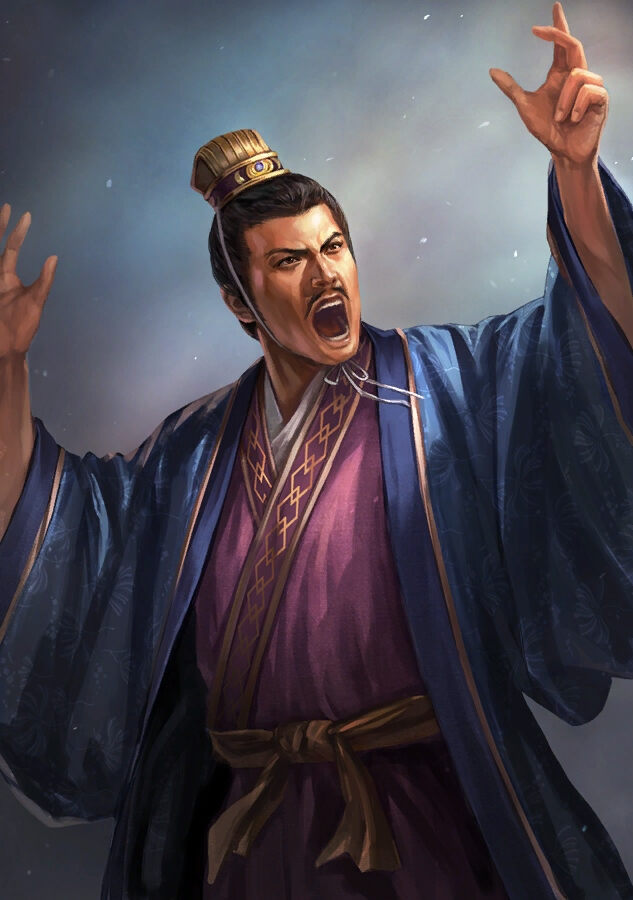
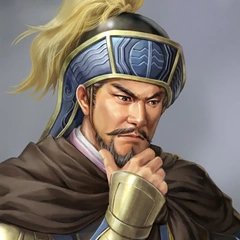
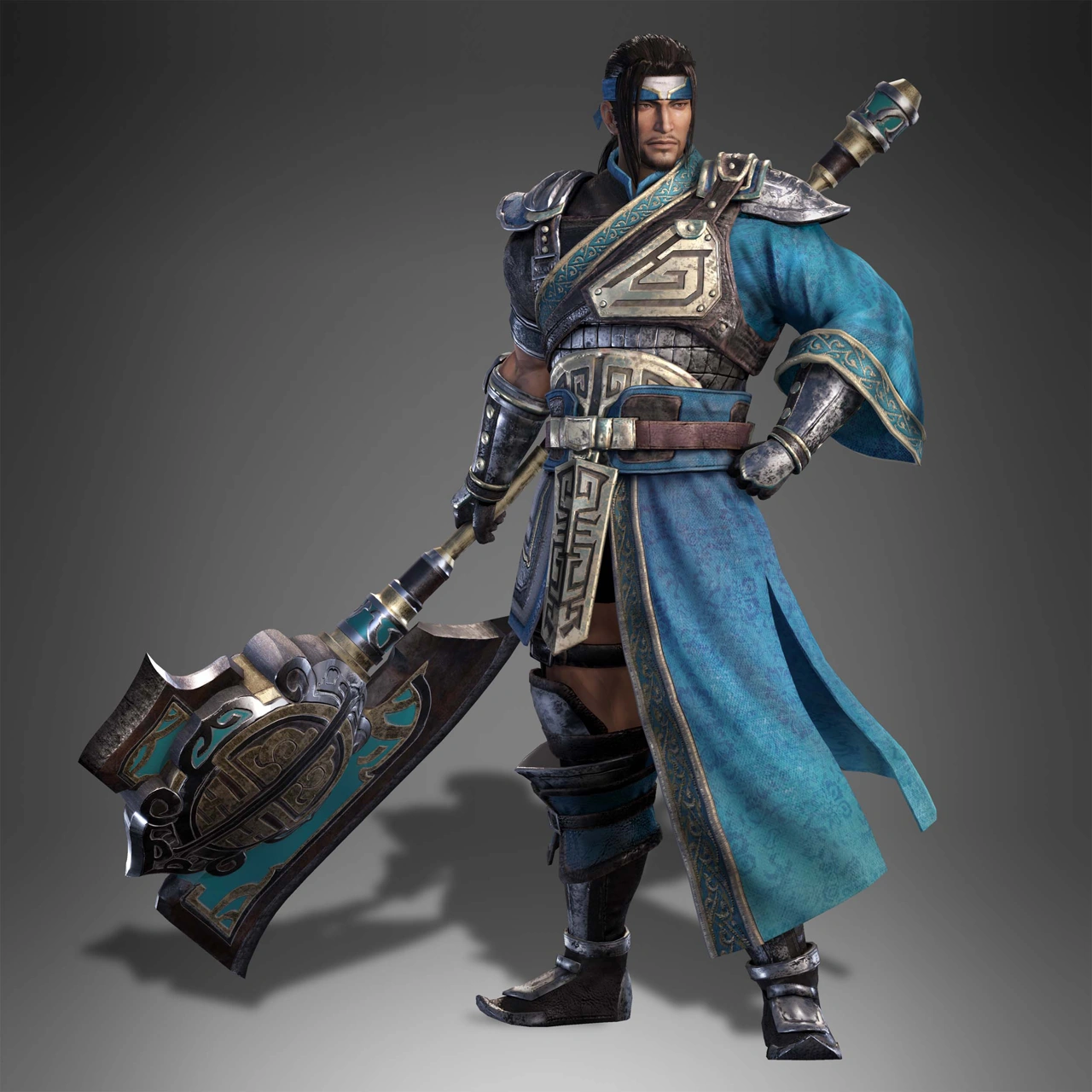
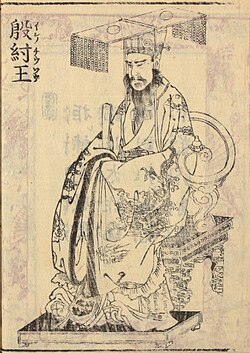
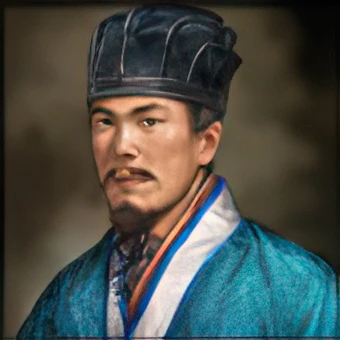
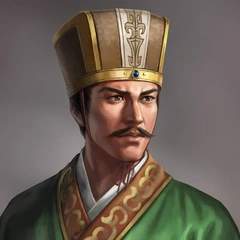
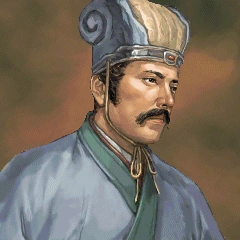
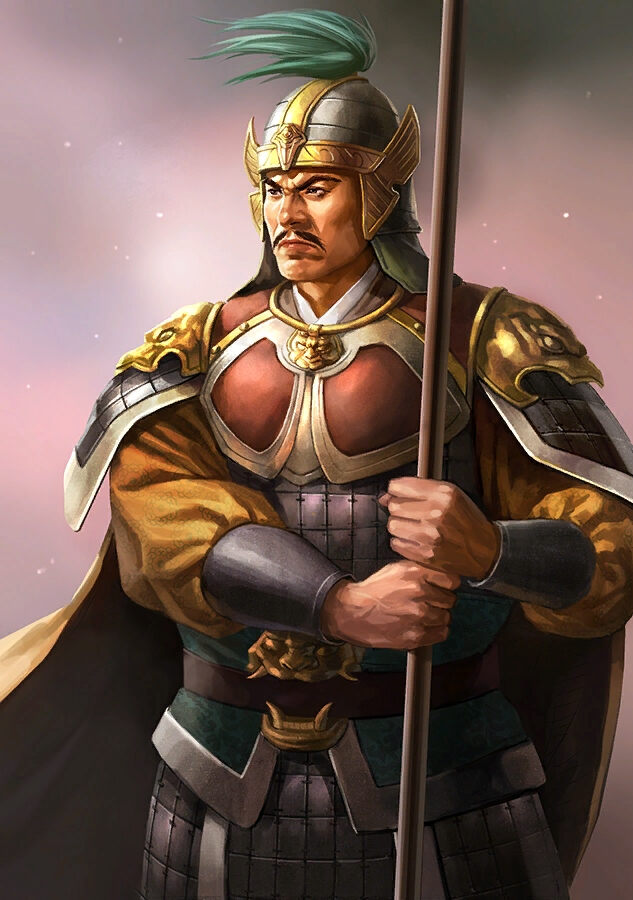
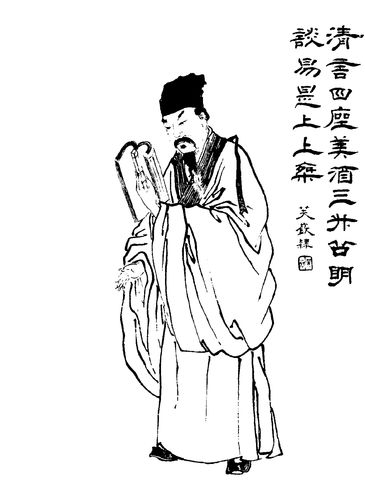
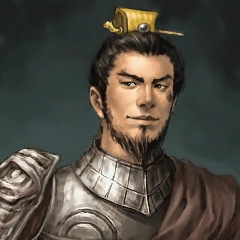
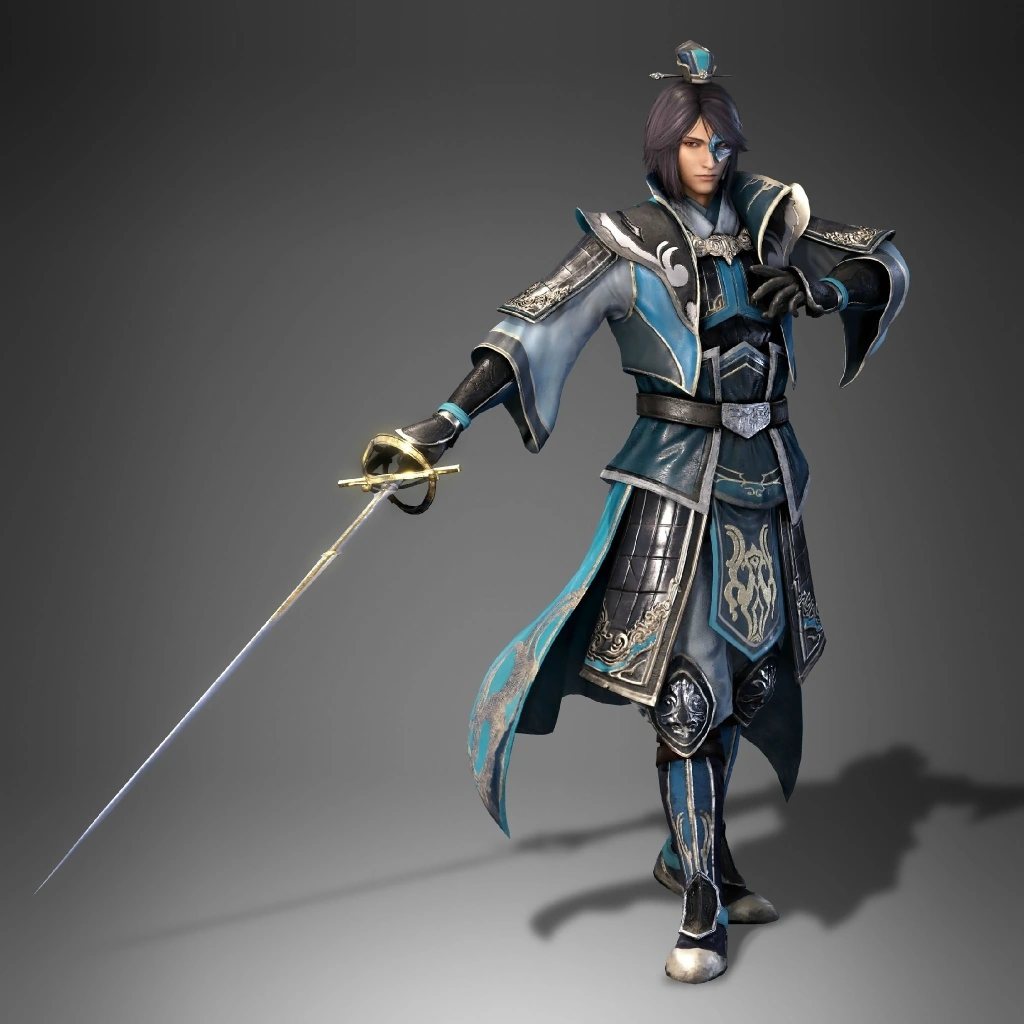
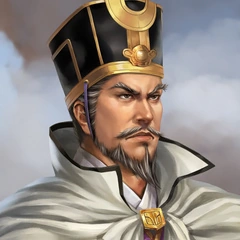
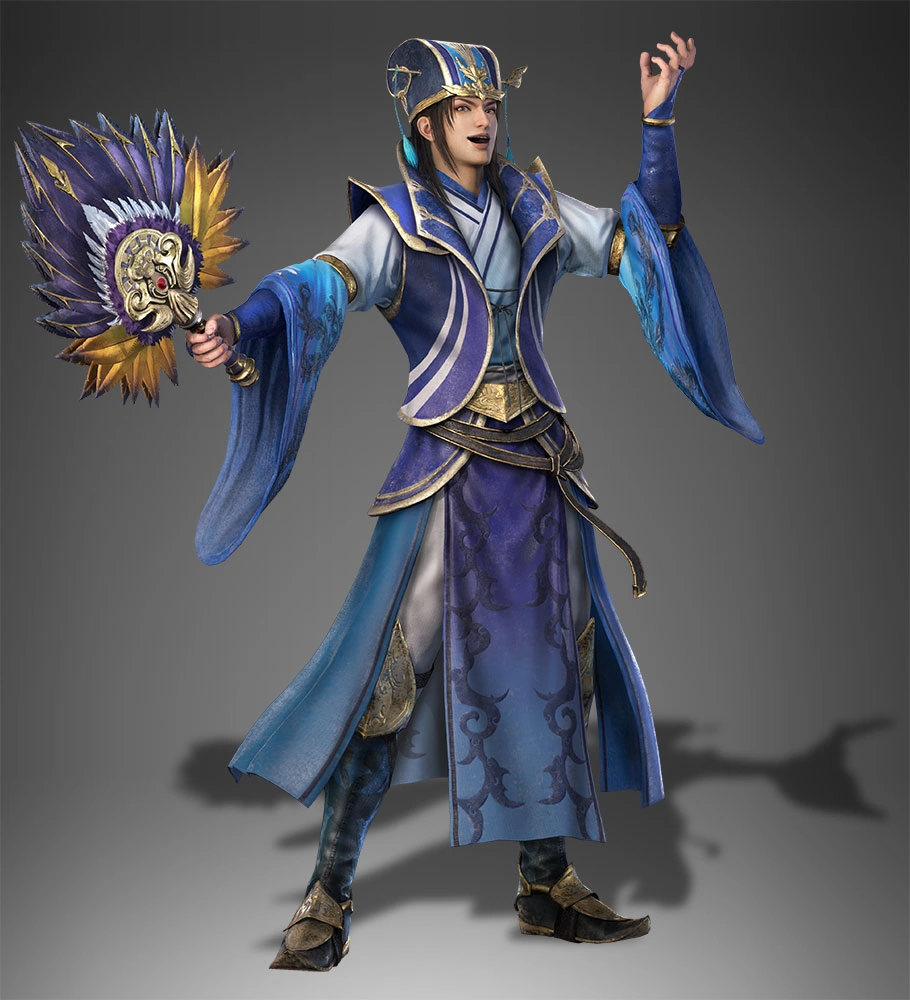
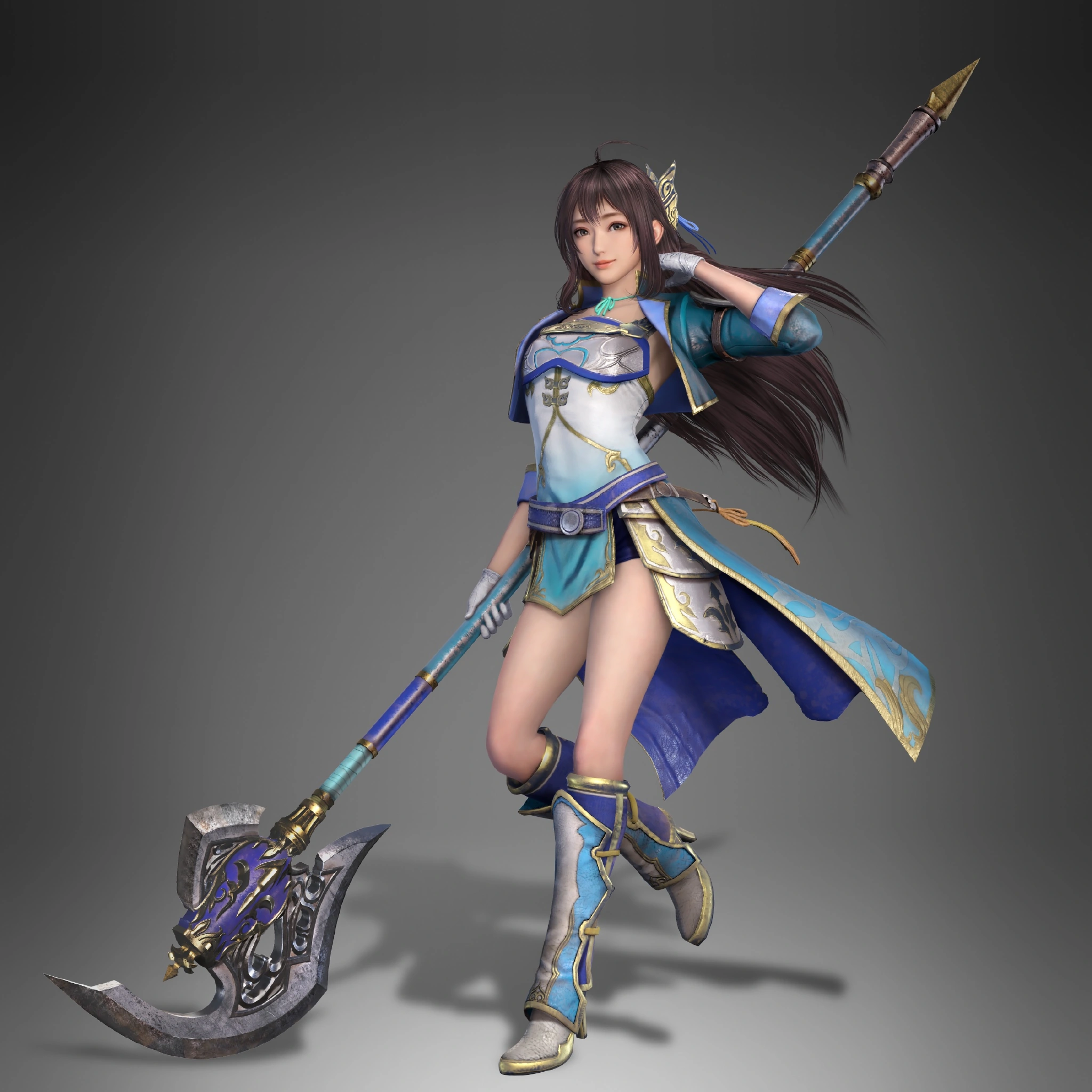
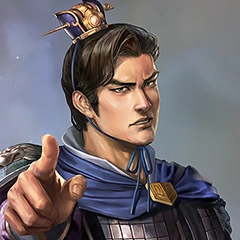
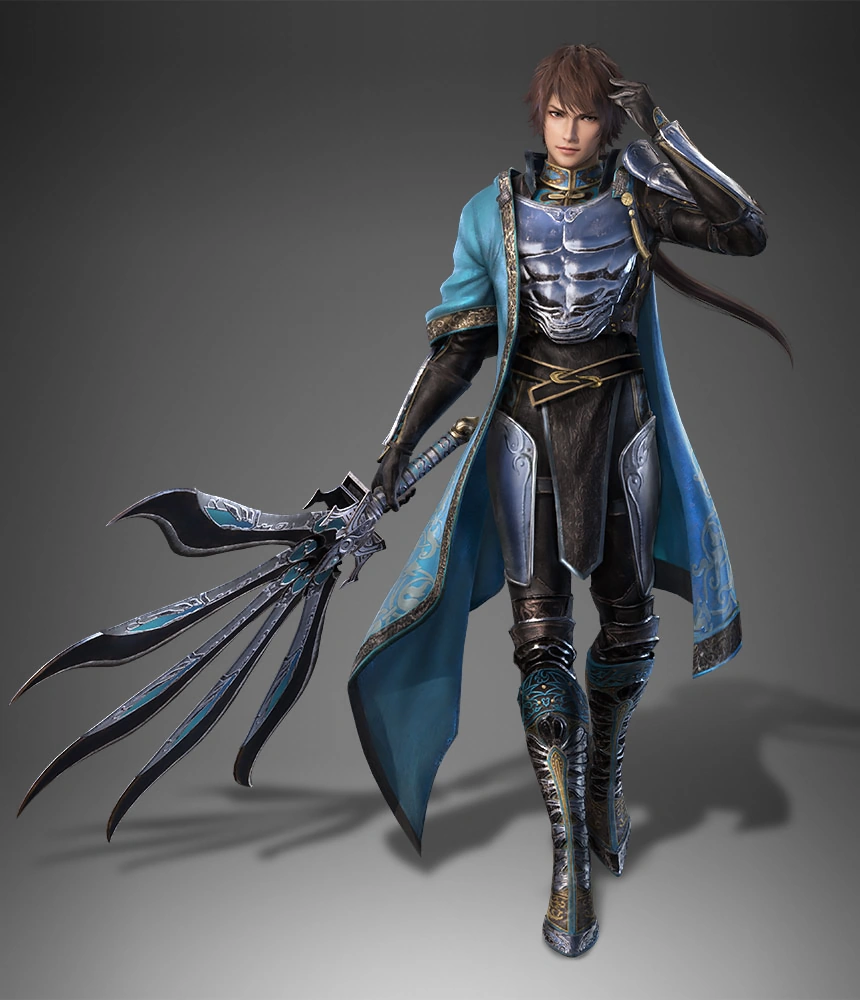
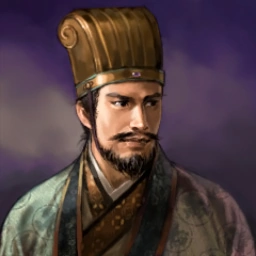
|
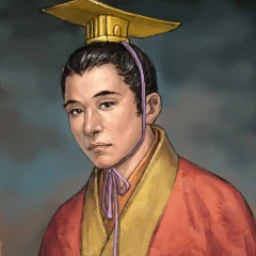
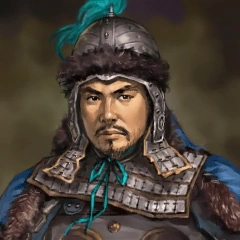
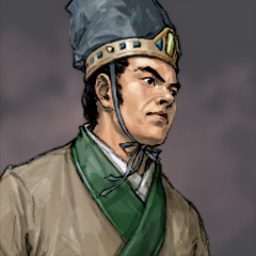
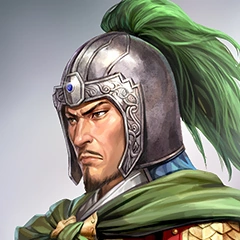
Bi Gui
Leaves the capital with Cao Shuang, is named by Zhang Dang among the conspirators, confesses to the third-month plot with the rest, and is executed.
2 mentions in this chapter
4 mentions in the book
|
|
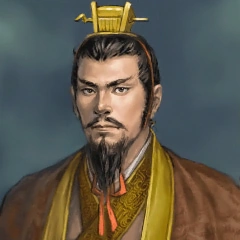
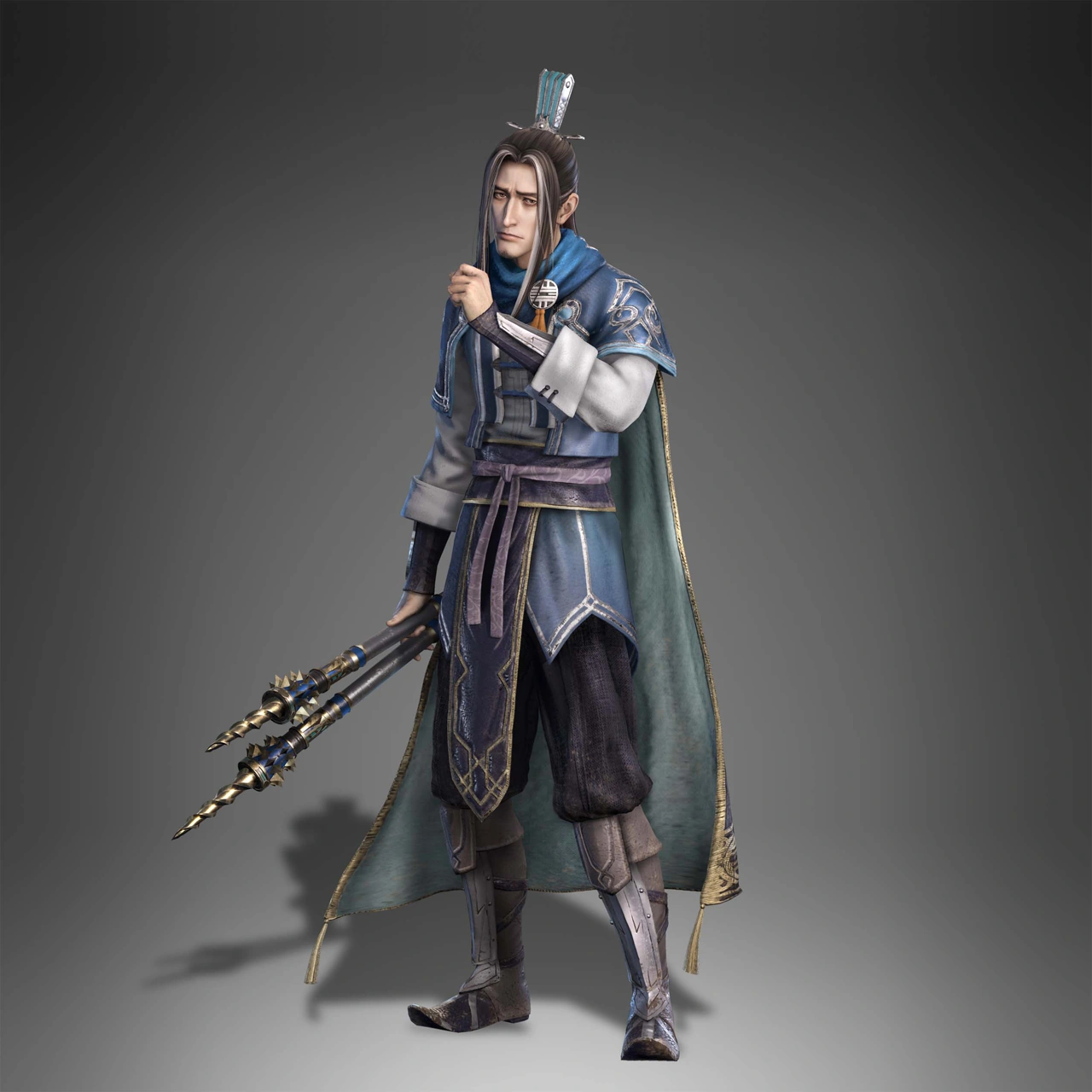
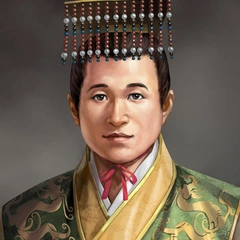
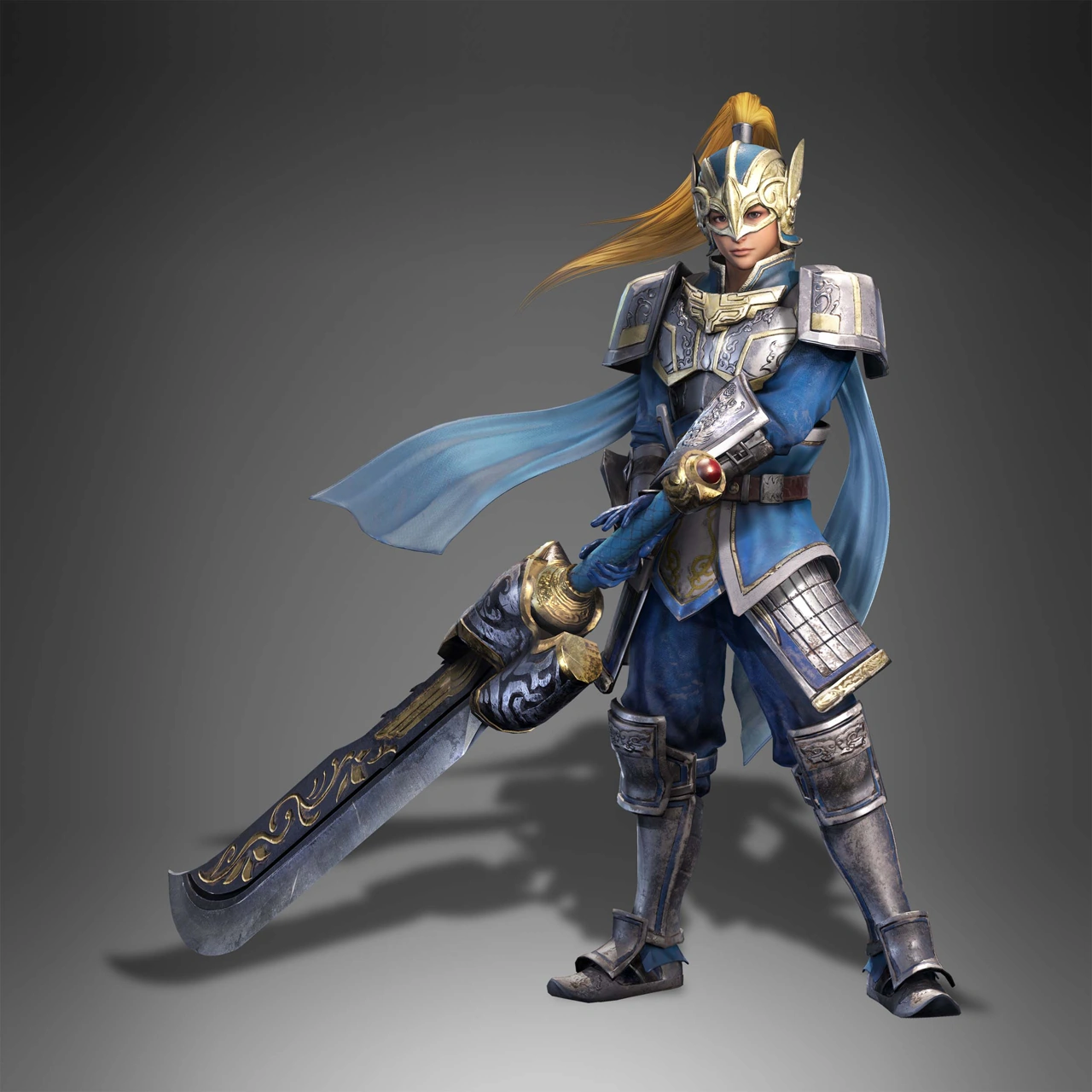
Cao Fang
Present throughout the first half and powerless in all of it. The memorial is read aloud in front of him, and his only contribution is to turn to Cao Shuang and ask 'In the face of such words what mean you to do?' He is the Son of Heaven whom Huan Fan wants taken to Xuchang and who is instead asked to declare the hunt over and go home; afterwards he insists on the Nine Dignities for Sima Yi and will take no denial.
6 mentions in this chapter
41 mentions in the book
|
|
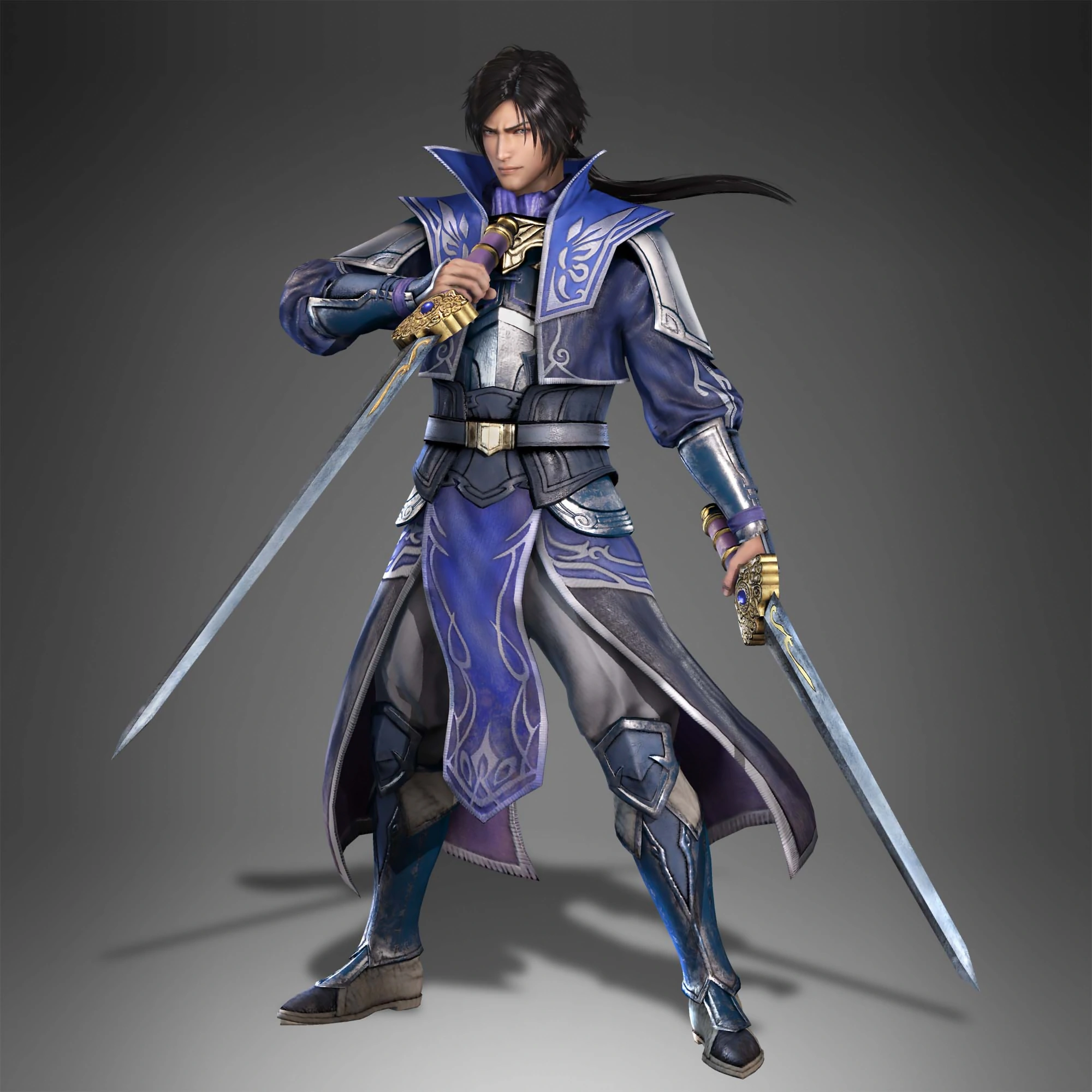
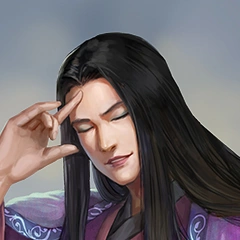
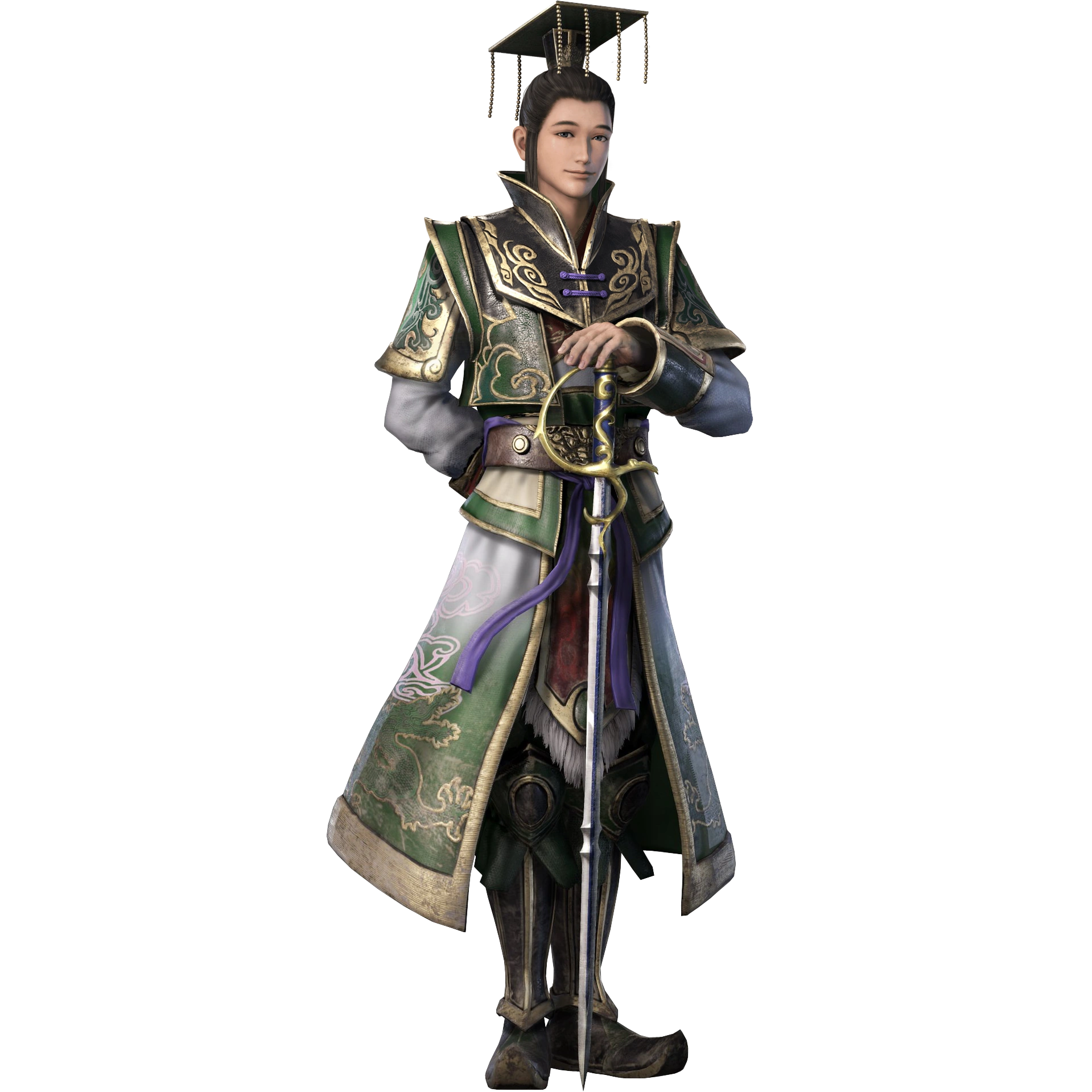
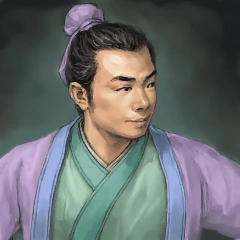
Cao Pi
Named in passing only, in the anecdote of the two sweating boys: 'Emperor Pi noticed one day that the elder boy was sweating and asked him the reason... The Emperor was discerned the extraordinary ability of the boy.' The one scene in the chapter that is thirty years old.
2 mentions in this chapter
171 mentions in the book
|
|
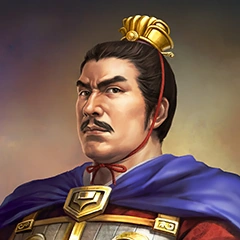
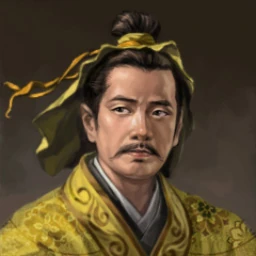
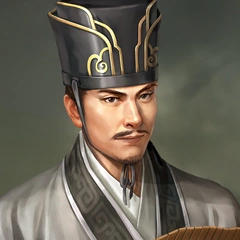
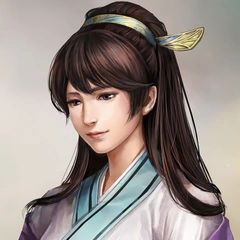
Cao Shuang
The subject of the first half of the chapter, and its tragedy is entirely his own doing. Caught out hunting when the memorial reaches him, he 'almost fell out of the saddle', and then spends a whole day and a whole night failing to decide anything — 'sad, sighing and weeping' with his sword in his hand. Huan Fan offers him Xuchang, the Son of Heaven, the seal of the Minister of War and the forces at the South Pass, and all he says is 'How can we go to another place when all our families are in the city?' and 'Do not hurry me. Let me think it over carefully.' In the morning he throws the sword down: 'I will not fight; I will yield all; being a wealthy man is enough.' Believes the River Luo oath to the last — even the hundred carts of food sent to his locked house cheer him ('Our lives are safe in the hands of Sima Yi!') — and is put to death in the market place with his brothers, his friends and all their clans.
39 mentions in this chapter
78 mentions in the book
|
|
Cao Wenshu
A second cousin of Cao Shuang and the husband of Lady Xiahou, dead before the chapter opens and childless — he exists in it only as the man whose widow twice mutilated herself rather than remarry, which is the one act of loyalty to the Caos that Sima Yi rewards.
1 mention in this chapter
1 mention in the book
|
|
Cao Xi
His are the two decisions that seal the family's fate. Asked what to do, he answers 'I remonstrated with you, but you were obstinate and listened not. So it has come to this. Sima Yi is false and cunning beyond measure. If Zhuge Liang could not get the better of him, could we hope to do so? I see nothing but to yield that haply we may live.' Then, locked in the family house, he proposes the food test — 'If Sima Yi sends us food, we may be sure he does not intend harm' — and a hundred carts arrive, which is the last thing any of them is glad about.
6 mentions in this chapter
8 mentions in the book
|
|
Cao Xun
The chapter he actually dies in. Rides out with Cao Shuang and his brothers, loses his command to the memorial, is confined with them in the family house behind a huge lock and a ring of guards, and is executed in the market place with the rest of the clan.
3 mentions in this chapter
4 mentions in the book
|
|
Cao Yan
The third brother, Commander of the Cavalry, who leaves the capital with Cao Shuang and the Emperor and so empties the last of the Palace guard commands out of the city — and dies with the rest of the family in the market place.
1 mention in this chapter
2 mentions in the book
|
|
Cao Zhen
Named in passing only, and dead since ch100, but the mention is the epitaph on his whole line. Huan Fan, walking out of the tent after Cao Shuang throws down his sword: 'Cao Zhen might boast of his abilities, but his sons are mere cattle.'
1 mention in this chapter
137 mentions in the book
|
|
Chen Tai
Does two jobs in this chapter, and the second one wins the campaign. First he rides with Xu Yun as Sima Yi's envoy to Cao Shuang and helps take the seal. Then, sent by Guo Huai with fifty thousand men against the Shu ramparts at Qushan, he besieges them, cuts the Hanzhong road, anticipates Jiang Wei's relief march ('he will tell Jiang Wei of the danger and Jiang Wei will conclude that our efforts are concentrated on the ramparts and will endeavor to attack our rear'), holds the Ox Head Hills against him, and pursues the retreat in five divisions along five roads.
14 mentions in this chapter
44 mentions in the book
|
|
Consort Guo
The authority the coup is carried out in the name of, and she is given no choice about it. 'What can be done in the absence of the Son of Heaven?' she asks, and is told that plans are already prepared and she will come to no harm. 'The Empress was much alarmed, but could only act as she was directed and agree.' Her supposed command is then forged a second time, by Huan Fan on a slip of bamboo, to get himself out of the South Gate.
4 mentions in this chapter
25 mentions in the book
|
|
Deng Ai
Described to Jiang Wei by Xiahou Ba, as the second of the two men to fear. An orphan from Yiyang, ambitious and enterprising, who could not look at a mountain or a marsh without picking out where troops could camp, where depots could go and where combustibles could be laid — which people laughed at and Sima Yi did not. He stammered, and called himself 'Deng-eng-eng-Ai'; asked by Sima Yi how many of him there were, he answered at once 'There is only one phoenix when they say "O Phoenix! O Phoenix!"'
3 mentions in this chapter
248 mentions in the book
|
|
Deng Yang
Named by Zhang Dang as one of the five, confesses to the planned third-month rising, and dies in the collar with the others — the second half of Guan Lu's ch106 prophecy: 'And knew the outer shell of Deng Yang / Was hastening to an early tomb.'
4 mentions in this chapter
10 mentions in the book
|
|
Di Xin
Cited as the tyrant whose court Wei Zi walked out of - the comparison Jiang Wei uses to make Xiahou Ba's defection respectable, which puts Sima Yi in the role of the last king of Shang.
1 mention in this chapter
2 mentions in the book
|
|
Ding Mi
One of the five Zhang Dang names under interrogation, one of the five who confess to the third-month plot, and one of the five locked into a single wooden collar before execution.
2 mentions in this chapter
4 mentions in the book
|
|
Dong Yun
Dead before the chapter opens. Named with Jiang Wan by Fei Yi as one of the two ministers recently lost, leaving 'no one left fit to take care of the government'.
1 mention in this chapter
11 mentions in the book
|
|
Fei Yi
The opposition, and he loses. Chair of the Secretariat, he argues that the government has just lost Jiang Wan and Dong Yun to death and has nobody to spare, and then quotes the textbook at Jiang Wei: 'Remember the saying of the wise Sun Zi: "Know thyself and know thine enemy, then is victory sure." We are not the equals of the late Prime Minister, and where he failed, are we likely to succeed?' The chapter's ending is the answer.
1 mention in this chapter
45 mentions in the book
|
|
Gao Rou
Minister of the Interior, given provisional command of the army the moment Cao Shuang's party is clear of the city, and sent to seize Cao Shuang's own camp - one of the two appointments that make the coup irreversible before anyone outside knows it has started.
1 mention in this chapter
1 mention in the book
|
|
Gou Ai
Holds the eastern of the two Qushan ramparts with fifteen thousand troops split between him and Li Xin, is besieged by Chen Tai, loses the water supply to Guo Huai's diversion, and is still holding when a north wind brings the snow that lets them melt water and cook. His line — 'I do not understand the delay of Commander Jiang Wei's reinforcements' — is the campaign's epitaph.
6 mentions in this chapter
17 mentions in the book
|
|
Guan Lu
Named in passing, but the chapter goes out of its way to close his account: 'it is to be noted that He Yan and Deng Yang met the unhappy end that Guan Lu had foretold for them', followed by eight lines of verse on the seer who 'could see events to come / As clear as those of former ages'. The reading itself is in ch106.
2 mentions in this chapter
52 mentions in the book
|
|
Guo Huai
Beats two enemies in one chapter. Marches against Xiahou Ba's three thousand, reviles him for rebelling against his own clan's dynasty, feints a flight of ten bouts and catches him between himself and Chen Tai. Then, against Shu, he supplies the move that breaks Qushan - 'In this high country the city must be short of water... Let us cut off the streams that supply them, and they will perish of thirst' - and afterwards takes River Yao and cuts Jiang Wei's supply road, forcing the retreat that costs Shu more than half its force.
10 mentions in this chapter
106 mentions in the book
|
|
He Yan
Leaves the city with Cao Shuang, and is named first when Zhang Dang breaks under interrogation: 'I am not the only one who has tried to subvert the government. He Yan, Deng Yang, Li Sheng, Ding Mi, and Bi Gui are all involved in the plot.' Confesses under questioning that a rising had been arranged for the third month, is locked into one long wooden collar with the other four, and is executed — which the chapter pauses to note is exactly what Guan Lu foretold: 'he perceived the soul of He Yan, / Already in the vale of gloom.'
4 mentions in this chapter
11 mentions in the book
|
|
Huan Fan
The one man in the chapter who knows what to do, and the chapter is about nobody listening to him. Refuses Sima Yi's summons on his son's advice, bluffs his way out of the barred South Gate with a slip of bamboo and 'The Empress's command: Open the gate for me', and rides to Cao Shuang with the only workable plan: the Emperor to Xuchang, the regional troops called up, years of supplies, the South Pass forces, and the seal of the Minister of War, which he has brought with him in his sleeve. 'Even a fool in this crisis would think only of life. You have the Son of Heaven with you here and command all the forces of the empire. None would dare disobey you, and yet you march quietly to death.' Leaves the tent wailing when the sword goes down — 'Cao Zhen might boast of his abilities, but his sons are mere cattle' — and is answered by Sima Yi's whip pointed at him from horseback at the bridge: 'What brought you to this?' Si Fan's testimony about the forged command is what condemns him.
18 mentions in this chapter
21 mentions in the book
|
|
Jiang Ji
One of Sima Yi's two co-signatories, and his most active civil agent. Copies out the prepared memorial with Sima Fu, writes the covering letter Yin Damu carries to Cao Shuang, and supplies the chapter's coolest assessment of the escaped Huan Fan: 'The poor horse always hankers after the old stable and manger. Cao Shuang would not know how to use Huan Fan.' Afterwards asks for Xin Chang, Lu Zhu and Yang Zong to be punished, and is overruled.
8 mentions in this chapter
10 mentions in the book
|
|
Jiang Wan
Dead before the chapter opens. Fei Yi names him and Dong Yun as the two trusty ministers Shu has 'lately lost by death', which is the ground of his argument that no expedition should be attempted now.
1 mention in this chapter
25 mentions in the book
|
|
Jiang Wei
Takes up Zhuge Liang's project and loses his first campaign with it. Vets Xiahou Ba, welcomes him with the Wei Zi comparison, and takes him to Chengdu to argue for the expedition: the Simas are absorbed at home, Cao Fang is a weakling, Hanzhong's troops are trained and its depots full. Answers Fei Yi's caution with 'Life is short. Our days flash by as the glint of a white horse across a chink in the door. We are waiting and waiting. Are we never to try to restore Han to its old glory?' and stakes the plan on a Qiang alliance he knows from living in Longshang. The Qiangs never come. Builds the two Qushan ramparts, cannot relieve them, tries the Ox Head Hills swing at Yongzhou and finds Chen Tai already there, loses River Yao and his supply road to Guo Huai, is surrounded, and gets out having 'suffered more than half of his force' - then has to cut through Sima Shi to reach Yangping Pass.
31 mentions in this chapter
443 mentions in the book
|
|
Lady Liu
Cao Shuang's wife, and the first person inside the household to act on the rising: she comes out of the inner apartments and summons Pan Ju, Commander of the Gates — 'The Master is outside, and Sima Yi is revolting: What does it mean?' — which is what puts the bowmen on the wall over Sima Yi's head.
1 mention in this chapter
1 mention in the book
|
|
Lady Xiahou
The chapter gives her its longest single digression and a poem. Widowed young and childless by Wen Shu, a second cousin of Cao Shuang, she cut off her ears when her father first pressed her to remarry; when the whole Cao house was put to death and he arranged another match, she cut off her nose. Asked for whom she was keeping a vow now that there was nothing left to keep it for — 'Man is but as the light dust upon the tender grass' — she answered 'While the house of Cao enjoyed prosperity, I remained faithful; how much more should I be true now that it has fallen upon evil days? Can I act like a mere beast of the field?' Sima Yi praised her and let her adopt a son to continue the family.
2 mentions in this chapter
2 mentions in the book
|
|
Li Sheng
The man whose report on the sickbed convinced Cao Shuang there was nothing to fear rides out of the city with him and is arrested with him; Zhang Dang names him among the five, he confesses to the third-month rising, and he dies in the collar.
2 mentions in this chapter
16 mentions in the book
|
|
Li Xin
Holds the western of the two Qushan ramparts and then saves what is left of the campaign. Besieged, cut off from water when Guo Huai diverts the streams, he leads a sortie to seize the springs and is driven back, then volunteers to break out for help and rides through with some twenty horsemen — 'These were opposed and had to fight every inch of the way, but eventually Li Xin won though severely wounded. All his followers had fallen.' Two days later he finds Jiang Wei, delivers the report, and is sent to Chengdu to have his wounds treated.
13 mentions in this chapter
13 mentions in the book
|
|
Liu Shan
Hears Jiang Wei's case and Fei Yi's objection and closes the argument without deciding the merits of either: 'Sir, as you desire to conquer Wei, do your best. I will not damp your enthusiasm.' That sentence is the whole of Shu's strategic policy for the next ten chapters.
5 mentions in this chapter
254 mentions in the book
|
|
Lu Zhu
One of Cao Shuang's officers, and the man who starts the loyalist reaction: 'Now that this revolt has begun, what should we do?' He and Xin Chang force the gate with some twenty horsemen and ride out to their master. Jiang Ji later asks for him to be punished for it; Sima Yi confirms him in office instead.
5 mentions in this chapter
5 mentions in the book
|
|
Pan Ju
Comes closer to killing Sima Yi than anyone in the chapter. Commander of the Gates, sent by Lady Liu to find out what is happening, he takes several dozen bowmen up onto the wall, sees Sima Yi crossing the court below and orders them to shoot — 'Sima Yi could not pass.' Only Sun Qiao's three refusals stop it.
5 mentions in this chapter
5 mentions in the book
|
|
Si Fan
The hinge of Huan Fan's escape and then of his destruction. Commander of the South Gate and an old dependant of Huan Fan's, he is bluffed by a slip of bamboo and a show of outrage — 'What! How dare you, an old servant of mine, behave thus?' — and lets him through, then realises and gives chase too late. Afterwards he testifies against him: 'Huan Fan has imposed upon me with a pretended command from Her Majesty and so has escaped out of the city.'
6 mentions in this chapter
6 mentions in the book
|
|
Sima Fu
High Minister, and the second name on the memorial: he and Jiang Ji copy out the document Sima Yi has prepared, and the memorial cites them both - 'My colleagues, Jiang Ji and Sima Fu, agree that Cao Shuang is disloyal at heart, and great military powers should not be entrusted to him or his brothers.'
2 mentions in this chapter
10 mentions in the book
|
|
Sima Shi
General of the Flying Cavalry, made an assistant to his father along with Sima Zhao when the Nine Dignities are conferred, and he closes the chapter in the field: a fierce, youthful leader with a round face, long ears, a square mouth with thick lips and a large hairy mole below the left eye, who blocks Jiang Wei's retreat at Yangping Pass, is called 'Simpleton!' to his face, loses a few bouts and flees, then attacks the Pass and is driven off by the ten-bolt repeating crossbows built to Zhuge Liang's design.
5 mentions in this chapter
94 mentions in the book
|
|
Sima Yi
The coup is his: with Cao Shuang and every one of his brothers out of the city, he uses his Imperial Guardian's authority to put Gao Rou over Cao Shuang's camp and Wang Guan over Cao Xi's, goes to the Empress Dowager for the warrant — 'I have prepared plans for the destruction of these base ministers and will see to it that no trouble happens to yourself' — has Jiang Ji and Sima Fu copy out his memorial, seizes the arsenals, and camps on River Luo at the Floating Bridge. Sends three separate embassies to Cao Shuang swearing by the river that he wants nothing but the military power. Then takes the seal, arrests Zhang Dang, extracts the names of the five, and puts Cao Shuang, his brothers, their friends and all their clans to death in the market place. Refuses Jiang Ji's request to punish Xin Chang, Lu Zhu and Yang Zong — 'They are righteous people who serves their master faithfully' — confirms them in office, and amnesties the rest of the faction. Finally moves against Xiahou Ba with a summons to Luoyang, and drives him into Shu. Ends the chapter alive, Prime Minister, holding the Nine Dignities and running the state with his two sons.
42 mentions in this chapter
470 mentions in the book
|
|
Sima Zhao
After the Nine Dignities 'his two sons were made assistants to their father, and all state affairs fell under the control of these three'. His one action on the page is to guard his father across the court while Pan Ju's bowmen are on the wall above them.
1 mention in this chapter
170 mentions in the book
|
|
Sun Qiao
One of Cao Shuang's own generals, and the reason Sima Yi survives the courtyard: he tells Pan Ju 'You must not shoot at the Imperial Guardian; he is on public service', and urges it three times until the bowmen stand down.
2 mentions in this chapter
2 mentions in the book
|
|
Sun Tzu
Quoted by Fei Yi against the expedition: 'Remember the saying of the wise Sun Zi: "Know thyself and know thine enemy, then is victory sure."' (The strategist row, as in ch95, ch96, ch103 and ch104.)
1 mention in this chapter
16 mentions in the book
|
|
Wang Guan
Supervisor of the Palace, appointed to replace Cao Xi as Commander of the Center Army and to occupy his camp - the other half of the seizure of the capital's garrisons that Sima Yi carries out in his first hour.
1 mention in this chapter
29 mentions in the book
|
|
Weizi of Song
Cited by Jiang Wei to Xiahou Ba as the honourable precedent for abandoning a doomed house: 'In the ancient time Wei Zi left the court of King Zhou in disgust, and this act has assured to him everlasting honor. You may be able now to assist in the restoration of the House of Han, and you will then stand no whit inferior to any person of antiquity.'
1 mention in this chapter
2 mentions in the book
|
|
Xiahou Ba
Defects in this chapter, and the defection is forced on him. Commanding at Yongzhou, he is summoned to Luoyang 'to discuss affairs' and reads it correctly: 'who is this Sima Yi that he has put to death my kinspeople and would now destroy me? What is his aim, if it be not to usurp the Throne?' Declares himself with three thousand men, is caught between Guo Huai and Chen Tai, and flees to Hanzhong. Jiang Wei doubts him, investigates, and then welcomes him with the comparison to Wei Zi leaving the court of King Zhou. His value is his briefing: the Simas are too busy at home to move on Shu yet, but two young men are coming up - Zhong Hui and Deng Ai - and 'you may well be on your guard against him and the other, for they are to be feared'. Jiang Wei answers 'I do not think them worth even talking about.' Then guides the expedition and proposes the Ox Head Hills manoeuvre.
17 mentions in this chapter
66 mentions in the book
|
|
Xin Chang
Cao Shuang's Military Adviser, and the chapter turns his decision into its moral centre. Proposes riding to the Emperor with what troops they have, then hesitates — 'If Sima Yi asks us to join him, should we?' — and is settled by his sister. Forces the gate with Lu Zhu, reaches Cao Shuang with the news that the city is closed, and is spared and confirmed in office afterwards: 'Had I not listened to the advice of my sister, I would have walked in the way of unrighteousness.'
8 mentions in this chapter
8 mentions in the book
|
|
Xin Xianying
She tells her brother to go, and her reasons are the chapter's clearest moral statement. She reads the coup correctly first — 'I do not think so. He only means to slay Cao Shuang, his rival' — and predicts the outcome — 'Cao Shuang is no match for Sima Yi.' Then, asked whether to join Sima Yi: 'You know what a true man should do. When a man is in danger, there is the greater need for sympathy. To be of Cao Shuang's people and desert him in an emergency is the greatest of evils.' A poem closes on her: 'You call him lord and take his pay, / Then stand by him when danger nears.'
4 mentions in this chapter
4 mentions in the book
|
|
Xu Yun
One of the two envoys Sima Yi sends to Cao Shuang with the assurance that he 'has no other intention than to take away the military power from him and his brothers', and one of the two who then require the seal of office to be handed over.
3 mentions in this chapter
3 mentions in the book
|
|
Yang Zong
Says the truest thing in the chapter. First Secretary, he clings to the seal of office and will not give it up: 'Alas! That you, my lord, should resign your powers and make such a pitiful surrender. For surely you will not escape death in the eastern market place.' Cao Shuang answers 'The Imperial Guardian will surely keep faith with me.' Jiang Ji later asks for him to be punished for the obstruction; Sima Yi confirms him in office instead.
2 mentions in this chapter
2 mentions in the book
|
|
Yin Damu
Carries the assurance that decides Cao Shuang. Chosen because 'You are on good terms with the man and are the fittest person for this mission', he delivers Jiang Ji's letter and the oath: 'Jiang Ji and I are concerned solely with the military powers in the hands of himself and his brothers, as we have sworn pointing to River Luo.' It is after his embassy that Cao Shuang is 'disposed to accept the assurance'.
4 mentions in this chapter
11 mentions in the book
|
|
Zhang Dang
The case against everyone else runs through him. Named in Sima Yi's memorial as 'Administrator of the City' appointed by Cao Shuang 'to control the court and spy upon Your Majesty'. Arrested first and 'put to the question', and he gives up the other five in one sentence, which is what turns a coup into a purge.
3 mentions in this chapter
4 mentions in the book
|
|
Zhong Hui
Described in absentia, by Xiahou Ba, as one of the two men Shu should fear. A man of Changsha and son of the former Imperial Guardian Zhong Yao, noted as a boy for boldness and quickness: taken to court at seven with his elder brother Zhong Yu, who was sweating and explained 'Whenever I am frightened, the sweat pours out', he answered the same question with 'I am so frightened that the sweat cannot come out.' Grew up on books of war and tactics into an able strategist admired by both Sima Yi and Jiang Ji, and is at this point a secretary in the Palace.
5 mentions in this chapter
131 mentions in the book
|
|
Zhong Yao
Named in passing only, and already dead - the former Imperial Guardian whose two sons Xiahou Ba's story is about, and whose standing got them into Cao Pi's presence in the first place.
1 mention in this chapter
15 mentions in the book
|
|
Zhong Yu
Named in passing only, in Xiahou Ba's account of his brother's childhood: the elder of the two boys taken to court, a year older than Zhong Hui, who sweated in the Emperor's presence and said so.
2 mentions in this chapter
2 mentions in the book
|
|
Zhuge Liang
Named in passing three times, and the third is the one that matters. Cao Xi invokes him to justify surrender - 'If Zhuge Liang could not get the better of him, could we hope to do so?'; Fei Yi invokes him to argue against the expedition; and at the very end the Yangping Pass garrison drives off Sima Shi with 'the multiple crossbows which threw ten bolts at each discharge. For the army of Shu had made these engines of war after the design left by Zhuge Liang' - the drawings he handed Jiang Wei on his deathbed in ch104, finally built.
2 mentions in this chapter
1454 mentions in the book
|
-
Chang'an County County(34.2464, 108.9070)
-
Changsha Commandery Commandery
-
-
-
Chengdu County County(30.6661, 104.0754)
-
Floating Bridge
-
Hanzhong Commandery Commandery(33.0730, 107.0359)
-
Liaodong Commandery Commandery
-
Longshang
-
Luoyang County(34.7316, 112.5963)
-
-
-
Middle Land Region
-
Ox Head Hills Mountains/Hills
-
Qushan
-
Qushan Mountains Mountains/Hills
-
River Luo River
-
River Yao River
-
Shu (Three Kingdoms) Region
-
South Gate
-
South Pass Pass
-
Wei (Three Kingdoms) Region
-
Wu (Three Kingdoms) Region
-
Xiping Pass Pass
-
Xuchang City
-
Yangping Pass Pass
-
Yiyang Commandery Commandery(32.1293, 114.9783)
-
Yong Province Province