A Falling Star: The Prime Minister Ascends To Heaven;
A Wooden Statue: The Commander-In-Chief Is Terrified.
The unhappy Wei Yan did not suffer the edge of the sword, for Zhuge Liang stayed the stroke, saying, "It is my fate---not his fault."
So Jiang Wei put up his sword.
Zhuge Liang spat a few mouthfuls of blood, then sank wearily upon his couch.
Said he, "Sima Yi thinks I am dead, and he sent these few troops to make sure. Go and drive them off."
Wei Yan left the tent and led out a small party to drive away the troops of Wei, who fled as they appeared. He chased them to more than seven miles and returned. Then Zhuge Liang sent Wei Yan to his own camp and bade him keep a vigilant lookout.
Presently Jiang Wei came in, went up to the sick man's couch, and asked how he felt.
Zhuge Liang replied, "My death is very near. My chief desire has been to spend myself to the utmost to restore Han to its glory and to regain the Middle Land. But Heaven decrees it otherwise. My end is not far away. I have written a book in twenty-four chapters, 104,112 words, treating the Eight Needfuls, the Seven Cautions, the Six Fears, and the Five Dreads of war. But among all those about me there is no one fit to receive it and carry on my work save you. I pray you not to despise it."
He gave the treatise to Jiang Wei, who received it sobbing.
"I have also a plan for a multiple crossbow, which I have been unable to execute. The weapon shoots ten bolts of eight inches length at every discharge. The sketches are quite ready, and the weapons can be made according to them."
Jiang Wei took the papers with a deep bow.
The dying man continued, "There is no part of Shu that causes anxiety, save the Yinping Mountains. That must be carefully guarded. It is protected naturally by its lofty precipices, but it will surely be the cause of great losses."
Next Zhuge Liang sent for Ma Dai, to whom he gave certain whispered instructions, and then said, "You are to follow out my instructions after my death."
Soon after, Yang Yi entered the tent and went to the couch. He received a silken bag containing certain secret orders.
As Zhuge Liang gave it to him, he said, "After my death, Wei Yan will turn traitor. When that happens and the army is in danger, you will find herein what to do."
Just as these arrangements were finished, Zhuge Liang fell into a swoon, from which he did not revive till late in the evening. Then he set himself to compose a memorial to the Latter Ruler.
When this reached the Latter Ruler, he was greatly alarmed and at once sent Chief Secretary Li Fu to visit and confer with the dying minister.
Li Fu traveled quickly to the Wuzhang Hills and was led to the tent of the Commander-in-Chief. He delivered the Latter Ruler's command and inquired after the sick man's welfare.
Zhuge Liang wept, and he replied, "Unhappily I am dying and leaving my task incomplete. I am injuring my country's policy and am in fault to the world. After my death you must aid the Emperor in perfect loyalty, and see that the old policy is continued, and the rules of government maintained. Do not lightly cast out the people I have employed. My plans of campaign have been confided to Jiang Wei, who can continue my policy for the service of the state. But my hour draws near, and I must write my testament."
Li Fu listened, and then took his leave.
Zhuge Liang made one final effort to carry out his duties. He rose from his couch, was helped into a small carriage, and thus made a round of inspection of all the camps and posts. But the cold autumn wind chilled him to the bone.
"I shall never again lead the army against the rebels," said he. "O Azure Heaven, when will this regret end?"
Zhuge Liang returned to his tent. He became rapidly weaker and called Yang Yi to his bedside.
Said he, "Ma Dai, Wang Ping, Liao Hua, Zhang Yi, Zhang Ni may be depended on to the death. They have fought many campaigns and borne many hardships; they should be retained in the public service. After my death let everything go on as before, but the army is to be gradually withdrawn. You know the tactics to be followed, and I need say little. My friend Jiang Wei is wise and brave; set him to guard the retreat."
Yang Yi received these orders, weeping.
Next, writing materials were brought in and the dying minister set himself to write his testament. It is here given in substance:
"Life and death are the common lot, and fate cannot be evaded. Death is at hand, and I desire to prove my loyalty to the end. I, thy servant Zhuge Liang, dull of parts, was born into a difficult age, and it fell to my lot to guide military operations. I led a northern expedition, but failed to win complete success. Now sickness has laid hold upon me and death approaches, so that I shall be unable to accomplish my task. My sorrow is inexpressible.
"I desire Your Majesty to cleanse your heart and limit your desires, to practice self-control and to love the people, to maintain a perfectly filial attitude toward your late father and to be benevolent to all the world. Seek out the recluse scholars that you may obtain the services of the wise and good; repel the wicked and depraved that your moral standard may be exalted.
"To my household belong eight hundred mulberry trees and a hundred acres of land; thus there is ample provision for my family. While I have been employed in the service of the state, my needs have been supplied from official sources, but I have not contrived to make any additions to the family estate. At my death I shall not leave any increased possessions, even an excess roll of silk, that may cause Your Majesty to suspect that I have wronged you."
Having composed this document, the dying man turned again to Yang Yi, saying, "Do not wear mourning for me, but make a large coffer and therein place my body, with seven grains of rice in my mouth. Place a lamp at my feet and let my body move with the army as I was wont to do. If you refrain from mourning, then my leadership star will not fall, for my inmost soul will ascend and hold it in place. So long as my star retains its place, Sima Yi will be fearsome and suspicious.
"Let the army retreat, beginning with the rearmost division; send it away slowly, one camp at a time. If Sima Yi pursues, array the army and offer battle, turn to meet him and beat the attack. Let him approach till he is very near and then suddenly display the wooden image of myself that I have had carved, seated in my chariot in the midst of the army, with the generals right and left as usual. And you will frighten Sima Yi away."
Yang Yi listened to these words intently. That night Zhuge Liang was carried into the open and gazed up at the sky.
"That is my star," said he, pointing to one that seemed to be losing its brilliancy and to be tottering in its place. Zhuge Liang's lips moved as if he muttered a spell. Presently he was borne into his tent and for a time was oblivious of all about him.
When the anxiety caused by this state of coma was at its height, Li Fu arrived.
He wept when he saw the condition of the great leader, crying, "I have foiled the great designs of the state!"
However, presently Zhuge Liang's eyes reopened and fell upon Li Fu standing near his couch.
"I know your mission," said Zhuge Liang.
"I came with the royal command to ask also who should control the destinies of the state for the next century," replied Li Fu. "In my agitation I forgot to ask that."
"After me, Jiang Wan is the most fitting man to deal with great matters."
"And after Jiang Wan?"
"After him, Fei Yi."
"Who is next after Fei Yi?"
No reply came, and when they looked more carefully, they perceived that the soul of the Prime Minister had passed.
Thus died Zhuge Liang, on the twenty-third day of the eighth month in the twelfth year of Beginning Prosperity, at the age of fifty and four (AD 234).
The poet Du Fu wrote some verses on his death.
A bright star last night falling from the sky,
This message gave, "The Master is no more."
No more in camps shall bold men tramp at his command;
At court no statesman ever will fill the place he held;
At home, his clients miss their patron kind;
Sad for the army, who were lonely in this world.
In the green wood stones and creeks are crying,
No more of his lute, birds have hushed singing.
And Bai Juyi also wrote a poem:
Within the forest dim the Master lived obscure,
Till, thrice returning, there the prince his mentor met.
As when a fish the ocean gains, desire was filled
Wholly the dragon freed could soar aloft at will.
As king's son's guardian none more zealous was;
As minister, most loyally he wrought at court.
His war memorials still to us are left,
And, reading them, the tears unconscious fall.
Now in past days, Commander Liao Li in Changshui had a high opinion of his own abilities and thought himself perfectly fitted to be Zhuge Liang's second. So he neglected the duties of his proper post, showed discontent and indiscipline, and was constantly slandering the minister. Thereupon Zhuge Liang degraded him and transferred him to Minshan.
When Liao Li heard of Zhuge Liang's death, he shed tears and said, "Then, after all, I shall remain a barbarian!"
Li Yan also grieved deeply at the sad tidings, for he had always hoped that Zhuge Liang would restore him to office and so give him the opportunity of repairing his former faults. After Zhuge Liang had died, he thought there was no hope of reemployment, and so he died.
Another poet, Yuan Weizhi, also wrote in praise of the great adviser.
He fought disorder, helped a weak king;
Most zealously he kept his master's son.
In state-craft he excelled Guan Zhong, Yue Yi,
In war-craft he overpassed Wu Qi, Sun Zi.
With awe the court his war memorials heard,
With majesty his Eight Arrays were planned.
Virtue and wisdom both filled in his heart,
For thousand autumns, his fame would still stay.
Heaven grieved and earth mourned on the night of Zhuge Liang's death. Even the moon was dimmed, as Zhuge Liang's soul returned to Heaven.
As the late commander had directed, Jiang Wei and Yang Yi forbade the mourning of his death. His body was placed in the coffer as he had wished, and three hundred of his trusted leaders and soldiers were appointed to watch it.
Secret orders were given to Wei Yan to command the rearguard, and then, one by one, the camps were broken up and the army began its homeward march.
Sima Yi watched the skies. One night a large red star with bright rays passed from the northeast to the southwest and dropped over the camps of Shu. It dipped thrice and rose again. Sima Yi heard also a low rumbling in the distance.
He was pleased and excited, and said to those about him, "Zhuge Liang is dead!"
At once he ordered pursuit with a strong force. But just as he passed his camp gates, doubts filled his mind and he gave up the plan.
"Zhuge Liang is a master of mysteries: He can get aids from the Deities of the Six Layers. It may be that this is but a ruse to get us to take the field. We may fall victims to his guile."
So he halted. But he sent Xiahou Ba with a few dozen scouts to reconnoiter the enemy's camps.
One night as Wei Yan lay asleep in his tent, he dreamed a dream. In his vision two horns grew out of his head. When he awoke he was much perplexed to explain his dream.
Marching General Zhao Zhi came to see him, and Wei Yan said, "You are versed in the Book of Changes. I have dreamed that two horns grew upon my head, and would trouble you to expound the dream and tell me its portent."
Zhao Zhi thought a moment and replied, "It is an auspicious dream. Dragon and Jilin both have horns on the head. It augurs transformation into an ascending creature."
Wei Yan, much pleased, said, "If the dream proves true as you said, I will thank you with very generous gifts."
Zhao Zhi left and presently met Fei Yi, who asked whence he came.
"From the camp of our friend Wei Yan. He dreamed that he grew horns upon his head, and I have given him an auspicious interpretation. But really it is inauspicious. However, I did not wish to annoy him."
"How do you know it is inauspicious?"
"The word for horn is composed of two parts, 'knife' above and 'use' below, and so means that there is a knife upon his head. It is a terrible omen."
"Keep it secret," said Fei Yi.
Then Fei Yi went to the camp of Wei Yan, and when they were alone, he said, "The Prime Minister died last night in the third watch. He left certain final orders, and among them, that you are to command the rearguard to keep Sima Yi at bay while the army retreats. No mourning is to be worn. Here is your authority, so you can march forthwith."
"Who is acting in place of the late minister?" asked Wei.
"The chief command has been delegated to Yang Yi, but the secret plans of campaign have been entrusted to Jiang Wei. This authority was issued from Yang Yi."
Wei Yan replied, "Though the Prime Minister is dead, I am yet alive. Counselor Yang Yi is only a civil officer and unequal to this post. He ought to conduct the coffin home while I lead the army against Sima Yi. I shall achieve success, and it is wrong to abandon a whole plan of campaign because of the death of one man, even if that be the Prime Minister."
"The Prime Minister's orders were to retire, and these orders are to be obeyed."
"If the Prime Minister had listened to me, we should now have been at Changan. I am the Van Leader, General Who Conquers the West, and Lord of Nanzheng. I am not going to act as rearguard for any civil official," said Wei Yan, angry.
"It may be as you say, General, but you must not do anything to make us ridiculous. Let me go back to Yang Yi and explain, and I may be able to persuade him to pass on to you the supreme military authority he holds."
Wei Yan agreed, and Fei Yi went back to the main camp and told Yang Yi what had passed.
Yang Yi replied, "When near death the Prime Minister confided to me that Wei Yan would turn traitor. I sent him the authority to test him, and now he has discovered himself as the Prime Minister foretold. So I will direct Jiang Wei to command the rearguard."
The coffer containing the remains of Zhuge Liang was sent on in advance, and Jiang Wei took up his post to cover the retreat.
Meanwhile Wei Yan sat in his tent waiting for the return of Fei Yi and was perplexed at the delay. When the suspense became unbearable, he sent Ma Dai to find out the reason.
Ma Dai returned and told him: "Jiang Wei is covering the retreat, and that most of the army has already gone."
Wei Yan was furious.
"How dare he play with me, the pedantic blockhead?" cried he. "But he shall die for this!"
Turning to Ma Dai, Wei Yan said, "Will you help me?"
Ma Dai replied, "I have long hated Yang Yi; certainly I am ready to attack him."
So Wei Yan broke camp and marched southward.
By the time Xiahou Ba had reached the Shu camps, they were all empty, and he hastened back with this news.
"Then Zhuge Liang is really dead! Let us pursue," said Sima Yi, much irritated at being misled.
"Be cautious," said Xiahou Ba. "Send an subordinate leader first."
"No, I must go myself this time."
So Sima Yi and his two sons hastened to the Wuzhang Hills. With shouts and waving flags, they rushed into the camps, only to find them quite deserted.
Sima Yi said to his sons, "You are to bring up the remaining force with all speed, whereas I will lead the vanguard."
Sima Yi hastened in the wake of the retreating army. Coming to some hills, he saw them in the distance and pressed on still harder. Then suddenly a bomb exploded, a great shout broke the stillness, and the retiring army turned about and came toward him, ready for battle. In their midst fluttered a great banner bearing the words, Prime Minister of Han, Lord of Wuxiang, Zhuge Liang.
Sima Yi stopped, pale with fear. Then out from the army came some score of generals of rank, and they were escorting a small carriage, in which sat Zhuge Liang as he had always appeared, in his hand the feather fan.
"Then Zhuge Liang is still alive!" gasped Sima Yi. "And I have rashly placed myself in his power."
As he pulled round his horse to flee, Jiang Wei shouted, "Do not try to run away, O rebel! You have fallen into one of the Prime Minister's traps and had better stay!"
The soldiers, seized with panic, fled, throwing off all their gear. They trampled each other down, and many perished. Their leader galloped fifteen miles without pulling rein. When at last two of his generals came up with him, and had stopped his flying steed by catching at the bridle, Sima Yi clapped his hand to his head, crying, "Have I still a head?"
"Do not fear, Commander, the soldiers of Shu are now far away," they replied.
But he still panted with fear, and only after some time did he recognize that his two companions were Xiahou Ba and Xiahou Hui. The three found their way by by-roads to their own camp, whence scouts were sent out in all directions.
In a few days the natives brought news: "The Shu army had really gone, and as soon as the retiring army entered the valley, they raised a wailing for the dead and hoisted white flags. Zhuge Liang was really dead, and Jiang Wei's rearguard consisted of only one thousand troops. The figure in the carriage was only a wooden image of the Prime Minister."
"While he lived, I could guess what he would do; dead, I was helpless!" said Sima Yi.
The people had a saying that "A dead Zhuge Liang can scare off a live Sima Yi."
In the depth of night a brilliant star
Fell from the northern sky;
Doubts stayed Sima Yi
When he would pursue
His dead, but fearsome enemy.
And even now the western people,
With scornful smile, will say
"Oh, is my head on my shoulder still?
It was nearly lost today."
Now indeed Sima Yi knew that his rival was no more, so he retook the pursuit. But when he reached the Red Hills, the Shu army had marched too far away.
As he took the homeward road, he said to his officers, "We can now sleep in comfort."
As they marched back, they saw the camps of their enemies, and were amazed at their skillful arrangement.
"Truly a wonderful genius!" sighed Sima Yi.
The armies of Wei returned to Changan. Leaving officers to guard the various strategic points, Sima Yi himself went on to Luoyang to see the audience.
Yang Yi and Jiang Wei retired slowly and in good order till they neared the Plank Trail, when they donned mourning garb and began to wail for their dead. The soldiers threw themselves on the ground and wailed in sorrow. Some even wailed themselves to death.
But as the leading companies entered upon the Plank Trail, they saw a great blaze in front, and, with a great shout, a cohort came out barring the way. The leaders of the retreating army were taken aback and sent to inform Yang Yi.
The regiments of Wei are nowhere near,
Then who are these soldiers that now appear?
The next chapter will tell who they were.
-
Wikipedia entry Bio
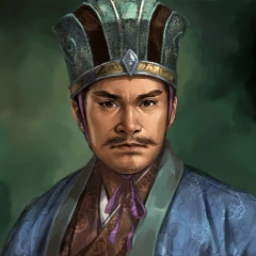
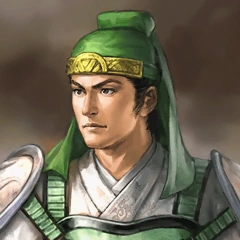
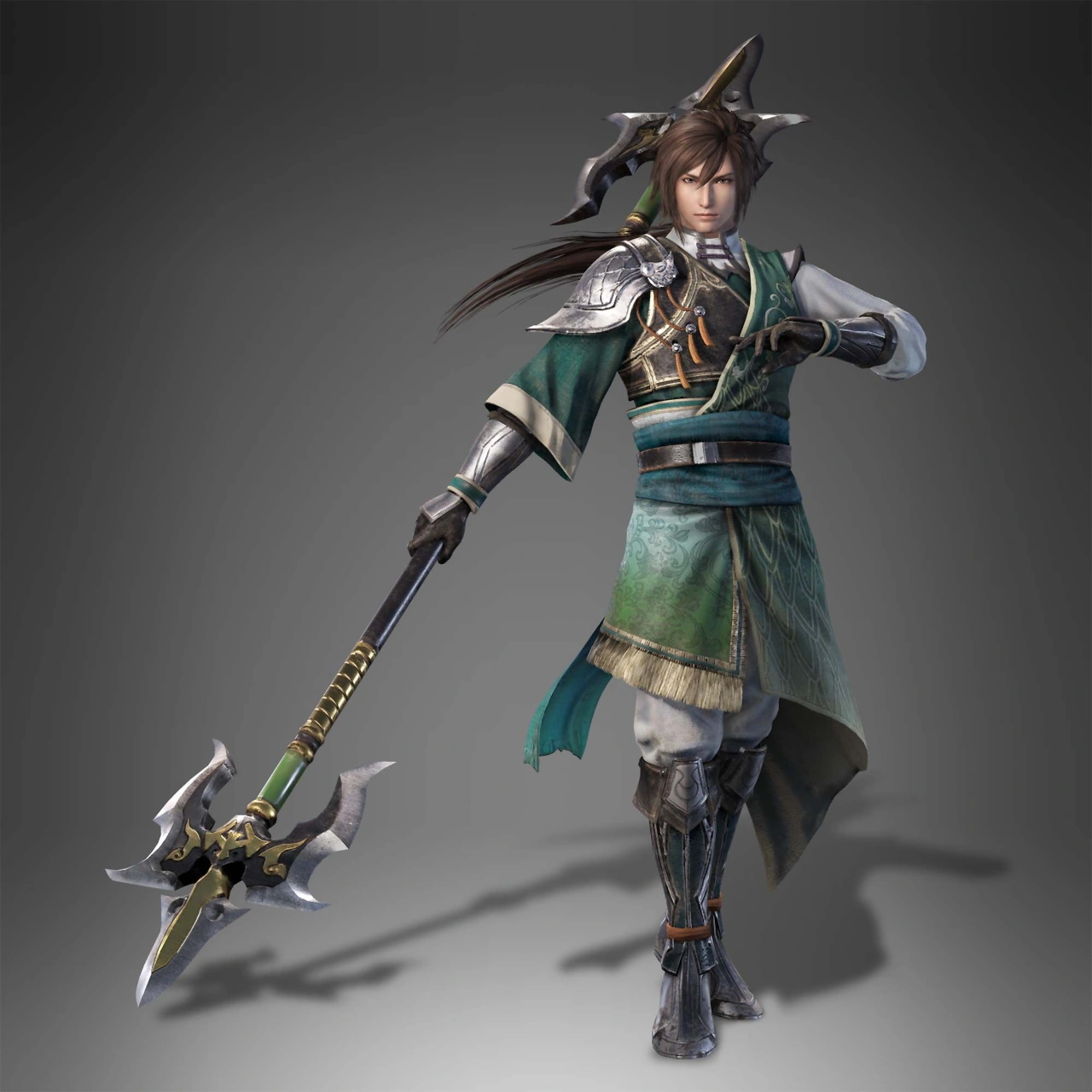
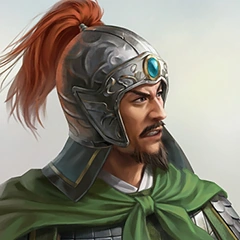
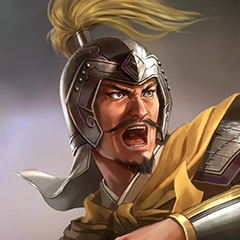
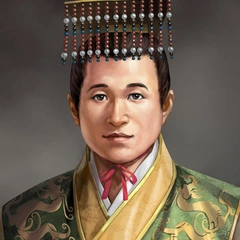
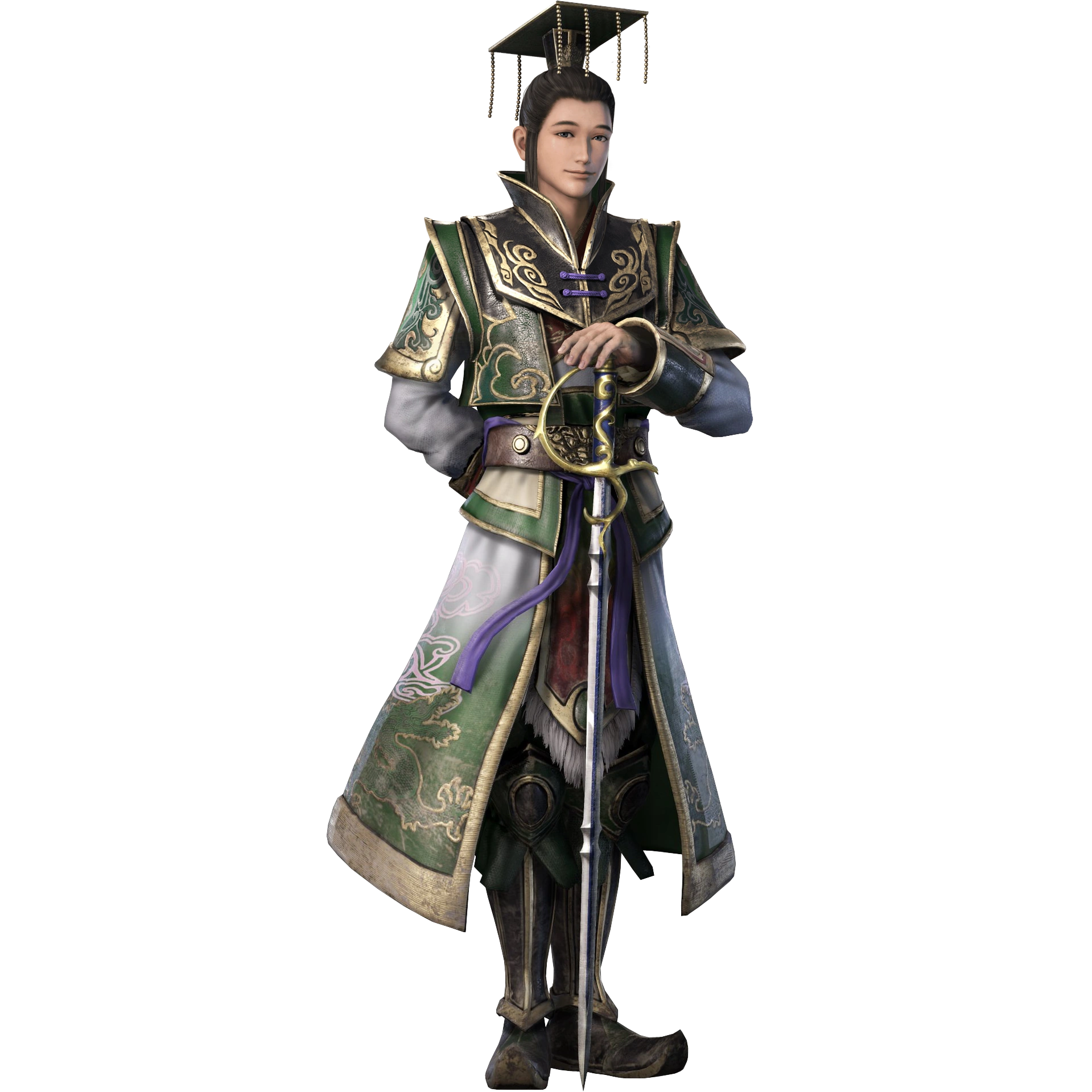
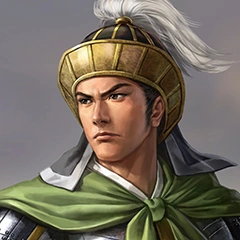
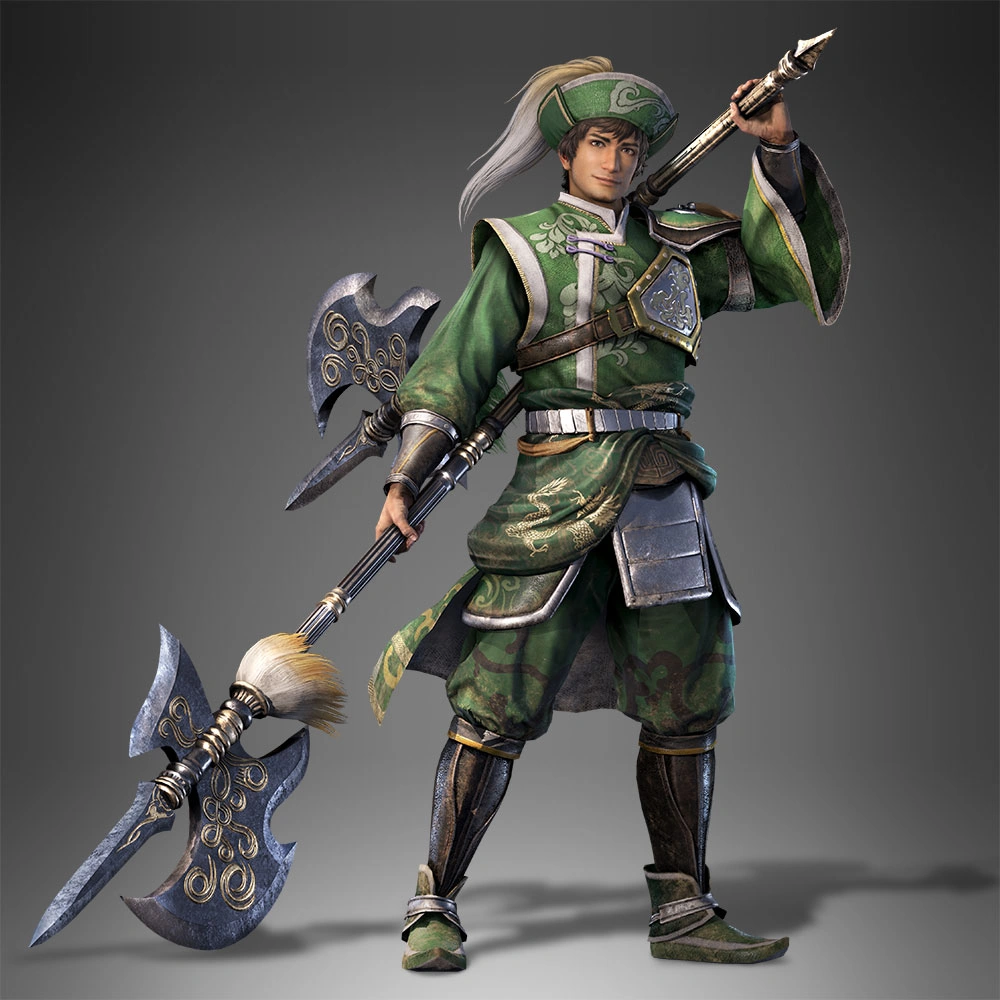
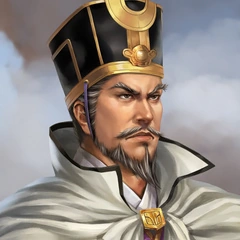
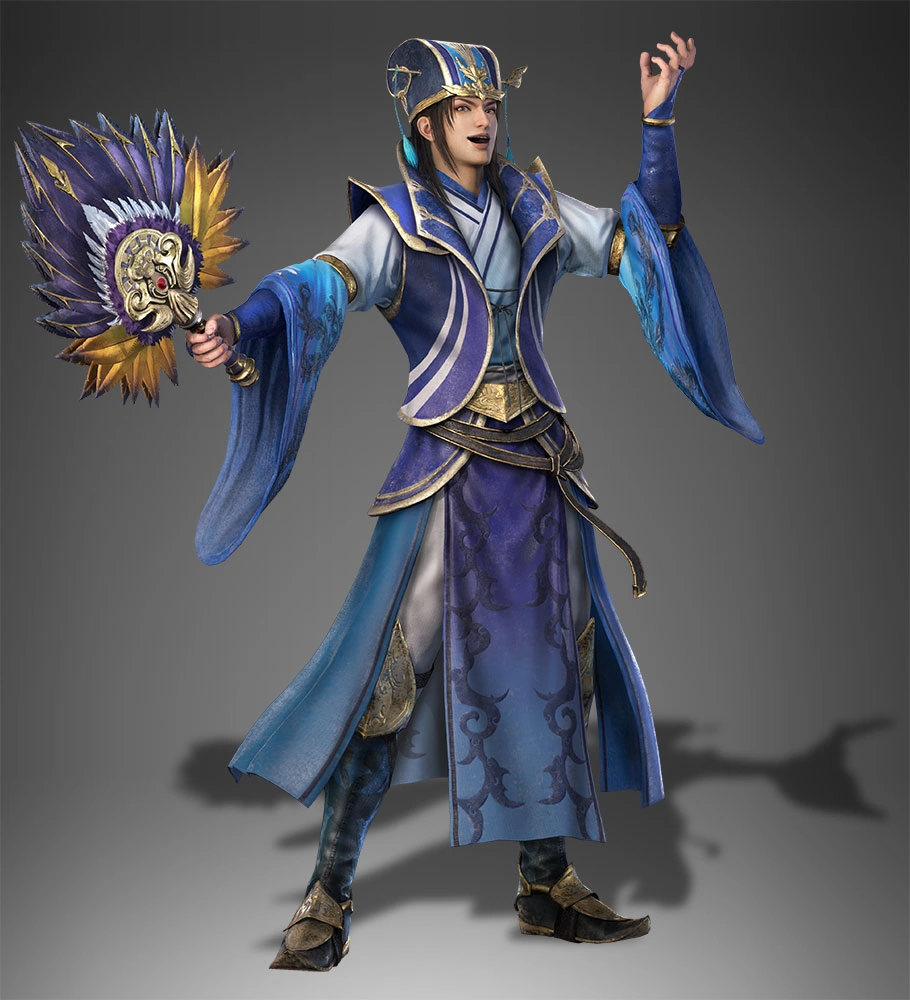
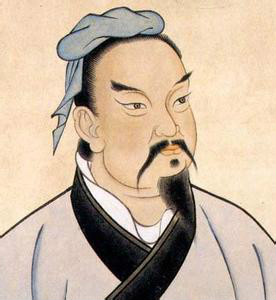
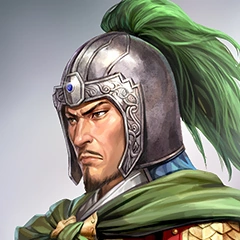
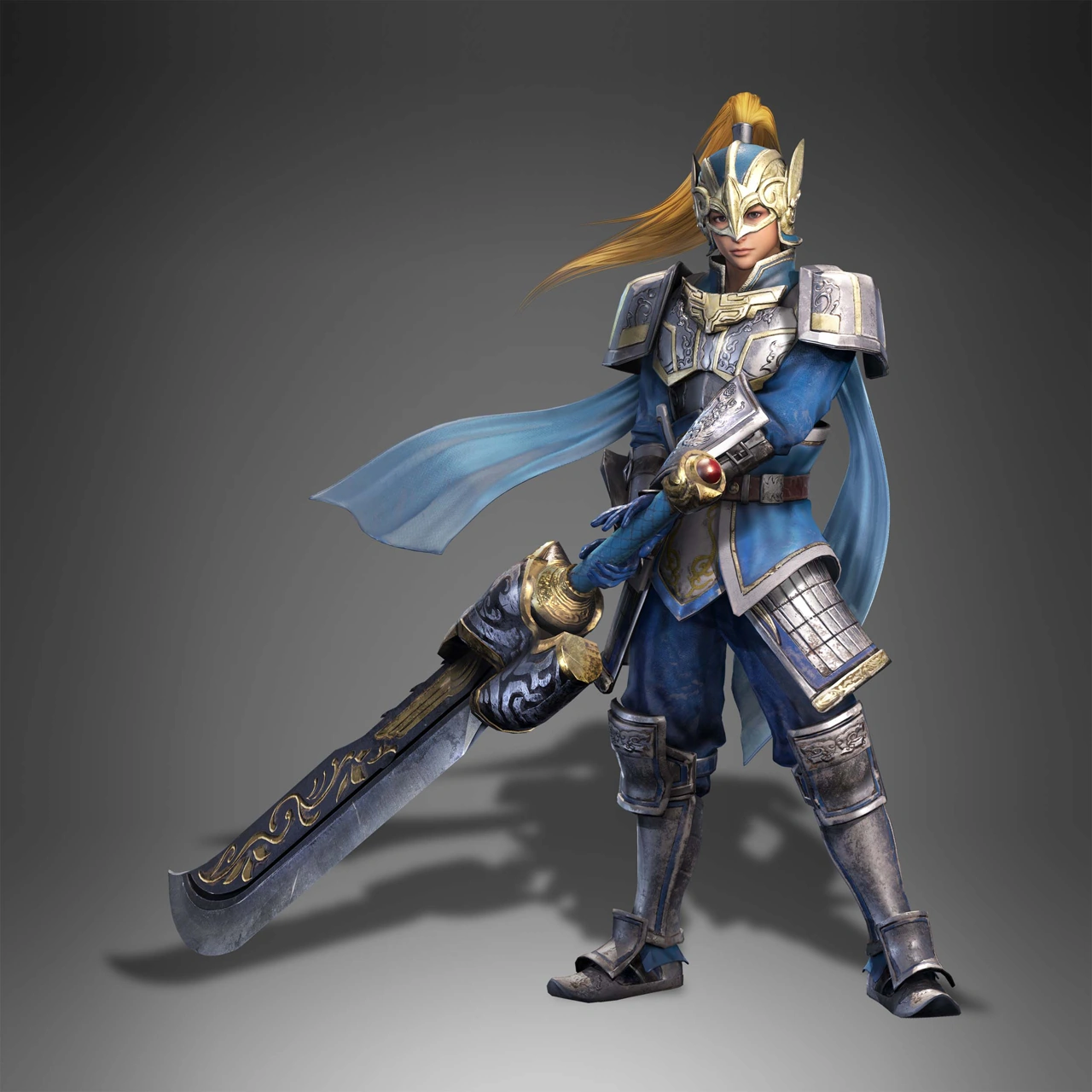
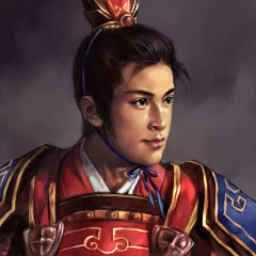
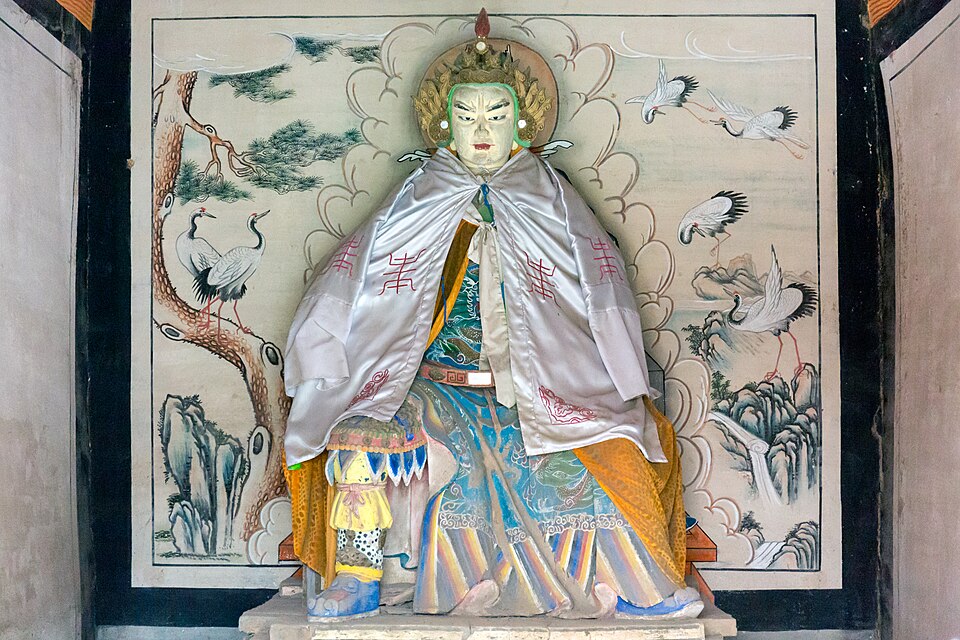
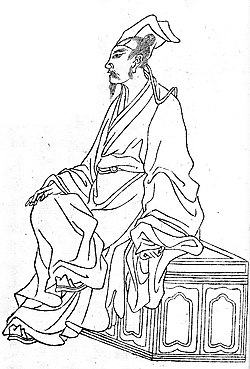
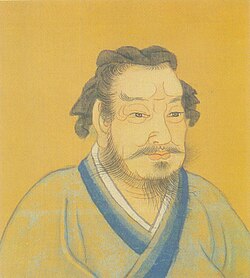
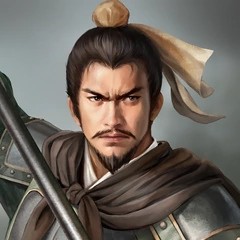
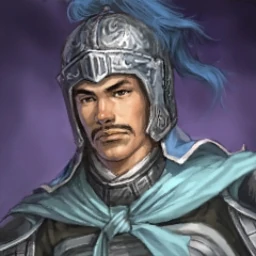
|
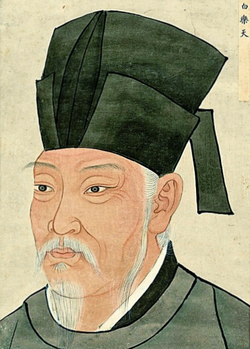
Bai Juyi
Named as the author of the second elegy, the one that goes back to the thatched cottage: 'Within the forest dim the Master lived obscure, / Till, thrice returning, there the prince his mentor met... His war memorials still to us are left, / And, reading them, the tears unconscious fall.' A Tang poet, quoted by the narrator.
1 mention in this chapter
1 mention in the book
|
|
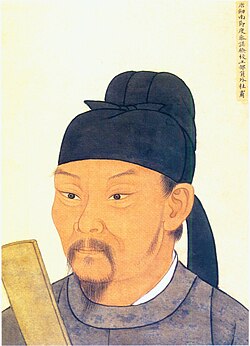
Du Fu
Named as the author of the first of the three poems on Zhuge Liang's death - 'A bright star last night falling from the sky, / This message gave, "The Master is no more."' A Tang poet quoted by the narrator, five centuries after the events.
1 mention in this chapter
4 mentions in the book
|
|
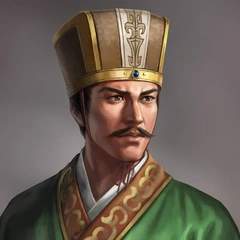
Fei Yi
Named second in the succession ('And after Jiang Wan?' 'After him, Fei Yi'), and then does the chapter's most delicate errand. Meets Zhao Zhi coming away from Wei Yan's camp and is told the true reading of the horns dream - 'The word for horn is composed of two parts, "knife" above and "use" below, and so means that there is a knife upon his head. It is a terrible omen' - and answers only 'Keep it secret.' Carries the rearguard order to Wei Yan, takes the refusal without arguing it, and buys time with an offer to go back and talk Yang Yi into handing over the command. He does not come back, and that is the point.
7 mentions in this chapter
45 mentions in the book
|
|
Guan Zhong
Alluded to in Yuan Weizhi's elegy as one of the two statesmen Zhuge Liang is said to have surpassed: 'In state-craft he excelled Guan Zhong, Yue Yi.' The same pair Zhuge Liang compared himself to in ch35, closing the arc.
1 mention in this chapter
11 mentions in the book
|
|
Jiang Wan
Named first in the succession that Li Fu comes back to ask for: 'After me, Jiang Wan is the most fitting man to deal with great matters.' He is not present in the chapter; the naming is the whole of his part in it, and it settles the government of Shu for the next decade.
2 mentions in this chapter
25 mentions in the book
|
|
Jiang Wei
Puts up his sword at the dying man's word in the first line, and inherits everything that matters: the twenty-four-chapter treatise, the repeating-crossbow drawings, and the warning about the Yinping Mountains that will be made good in ch117. Named in the death orders as the man to guard the retreat - 'My friend Jiang Wei is wise and brave' - and takes the rearguard when Wei Yan refuses it. It is Jiang Wei who turns the retreating column round on Sima Yi, shows the wooden image under the Lord of Wuxiang banner, and shouts 'Do not try to run away, O rebel! You have fallen into one of the Prime Minister's traps and had better stay!'
14 mentions in this chapter
443 mentions in the book
|
|
Li Fu
Makes the journey twice. Sent by the Latter Ruler to the Wuzhang Hills to ask after the dying minister, he takes the instructions about continuing the old policy and not casting out the men Zhuge Liang employed - and leaves without asking the question he was actually sent for. Comes back to find him comatose and cries 'I have foiled the great designs of the state!' Gets his answer at the very end: Jiang Wan first, then Fei Yi - and when he asks who comes after Fei Yi, 'no reply came, and when they looked more carefully, they perceived that the soul of the Prime Minister had passed.'
6 mentions in this chapter
8 mentions in the book
|
|
Li Yan
Dies of the same news, and for the same reason as Liao Li. The text is precise about the mechanism: he 'had always hoped that Zhuge Liang would restore him to office and so give him the opportunity of repairing his former faults. After Zhuge Liang had died, he thought there was no hope of reemployment, and so he died.' (The demotion to Zitong is ch101.)
1 mention in this chapter
37 mentions in the book
|
|
Liao Hua
One of the five veterans Zhuge Liang names on his deathbed as dependable to the death and asks Yang Yi to keep in the public service, and part of the column that withdraws in order to the Plank Trail.
1 mention in this chapter
87 mentions in the book
|
|
Liao Li
Gets a short biography and the chapter's bitterest line. Commander at Changshui, he 'had a high opinion of his own abilities and thought himself perfectly fitted to be Zhuge Liang's second', neglected his post, and slandered the minister until Zhuge Liang degraded him and transferred him to Minshan. On the news of the death he sheds tears and says 'Then, after all, I shall remain a barbarian!' — the man who hated him understanding that he was also the only one who might have recalled him.
2 mentions in this chapter
2 mentions in the book
|
|
Liu Shan
Greatly alarmed by the memorial from Wuzhang, he sends Li Fu at once to ask after the Prime Minister and - though Li Fu forgets it the first time - to ask who should govern after him. He is the addressee of the testament, which asks him to cleanse his heart, limit his desires, practise self-control, love the people, keep a filial attitude toward his late father, seek out the recluse scholars and repel the wicked; and which accounts for the eight hundred mulberry trees so that he can never suspect he was wronged.
4 mentions in this chapter
254 mentions in the book
|
|
Ma Dai
What Zhuge Liang gives him is 'certain whispered instructions' and 'You are to follow out my instructions after my death'; the reader is not told what they are until ch105. What he does on the page here is the other half of it: sent by Wei Yan to find out why Fei Yi has not returned, he brings back the news that Jiang Wei has the rearguard and the army has gone — and when Wei Yan asks 'Will you help me?', he answers 'I have long hated Yang Yi; certainly I am ready to attack him.' The whispered orders are already running.
6 mentions in this chapter
123 mentions in the book
|
|
Sima Yi
Reads the death correctly off a large red star that passes from the northeast to the southwest, dips three times and drops over the Shu camps - 'Zhuge Liang is dead!' - orders the pursuit, and talks himself out of it at his own camp gates. Sends Xiahou Ba to check instead, finds the camps empty, and this time goes himself with both sons. Then the banner of the Prime Minister of Han, Lord of Wuxiang, and the small carriage with the feather fan: 'Then Zhuge Liang is still alive! And I have rashly placed myself in his power.' Gallops fifteen miles without pulling rein and has to be stopped by two generals catching at his bridle, and the first thing he says when they do is 'Have I still a head?' The verdict, once the natives bring him the truth about the wooden image: 'While he lived, I could guess what he would do; dead, I was helpless!' Resumes the pursuit to the Red Hills, finds the enemy long gone, and rides home past their abandoned camps admiring the layout - 'Truly a wonderful genius!'
21 mentions in this chapter
470 mentions in the book
|
|
Sun Tzu
Alluded to in Yuan Weizhi's elegy, paired with Wu Qi, as the standard of generalship Zhuge Liang is said to have exceeded. (The strategist row, as in ch95, ch96 and ch103.)
1 mention in this chapter
16 mentions in the book
|
|
Wang Ping
Named on the deathbed among the five who 'may be depended on to the death. They have fought many campaigns and borne many hardships; they should be retained in the public service' - Zhuge Liang's last act of patronage for the men who carried the six expeditions.
1 mention in this chapter
107 mentions in the book
|
|
Wei Yan
Spared for the lamp in the first sentence. Then he drives Sima Yi's probing party seven miles and is sent back to his own camp. Dreams two horns growing out of his head and gets a flattering reading from Zhao Zhi that is the opposite of the true one. And when Fei Yi brings him the rearguard order, the refusal is the whole of ch105 in embryo: 'Though the Prime Minister is dead, I am yet alive. Counselor Yang Yi is only a civil officer and unequal to this post… If the Prime Minister had listened to me, we should now have been at Changan. I am the Van Leader, General Who Conquers the West, and Lord of Nanzheng. I am not going to act as rearguard for any civil official.' Sends Ma Dai to find out why Fei Yi has not come back, learns the army has gone without him — 'How dare he play with me, the pedantic blockhead?' — and marches south.
18 mentions in this chapter
353 mentions in the book
|
|
Wu Qi
Alluded to in Yuan Weizhi's elegy as one of the two strategists Zhuge Liang is said to have overpassed: 'In war-craft he overpassed Wu Qi, Sun Zi.'
1 mention in this chapter
9 mentions in the book
|
|
Xiahou Ba
Sent with a few dozen scouts to reconnoitre the Shu camps when Sima Yi's nerve fails at his own gate, and reports them empty. Urges caution a second time - 'Be cautious. Send a subordinate leader first' - and is overruled. Then one of the two generals who catch Sima Yi's bridle after fifteen miles of flight and have to convince him his head is still on.
4 mentions in this chapter
66 mentions in the book
|
|
Xiahou Hui
With Xiahou Ba, rides down the fleeing Sima Yi and stops his horse - and it takes some time before the Commander-in-Chief is collected enough to recognise which of his own officers they are. The three find their way back by by-roads.
1 mention in this chapter
5 mentions in the book
|
|
Yang Yi
Receives the silken bag at the couch with the warning that goes with it: 'After my death, Wei Yan will turn traitor. When that happens and the army is in danger, you will find herein what to do.' Then given the working orders - keep the veterans (Ma Dai, Wang Ping, Liao Hua, Zhang Yi, Zhang Ni) in the service, withdraw gradually, set Jiang Wei to guard the retreat - and receives them weeping. Tests Wei Yan deliberately by sending him the rearguard authority ('I sent him the authority to test him, and now he has discovered himself as the Prime Minister foretold'), gives the rearguard to Jiang Wei instead, and brings the army back to the Plank Trail before letting anyone put on mourning.
15 mentions in this chapter
68 mentions in the book
|
|
Yuan Zhen
Named as the author of the third elegy, the one that measures him against the ancients: 'In state-craft he excelled Guan Zhong, Yue Yi, / In war-craft he overpassed Wu Qi, Sun Zi.' A Tang poet, quoted by the narrator.
1 mention in this chapter
1 mention in the book
|
|
Yue Yi
Alluded to in Yuan Weizhi's elegy, paired with Guan Zhong, as the measure of statecraft Zhuge Liang is said to have exceeded - and the other half of the comparison he made for himself back in the thatched cottage.
1 mention in this chapter
13 mentions in the book
|
|
Zhang Ni
One of the five named on the deathbed as dependable to the death, and with the army on the withdrawal.
1 mention in this chapter
54 mentions in the book
|
|
Zhang Yi
One of the five named on the deathbed as dependable to the death, and with the army on the ordered withdrawal from the Wuzhang Hills.
1 mention in this chapter
76 mentions in the book
|
|
Zhao Zhi
Carries the chapter's omen. Marching General and a reader of the Book of Changes, asked by Wei Yan to expound a dream of two horns growing from his head, he gives an auspicious answer to his face — 'Dragon and Jilin both have horns on the head. It augurs transformation into an ascending creature' — and the true one to Fei Yi the moment he is outside: the character for horn is a knife above and use below, 'so means that there is a knife upon his head. It is a terrible omen.' He lied, he says, because he did not wish to annoy him.
3 mentions in this chapter
3 mentions in the book
|
|
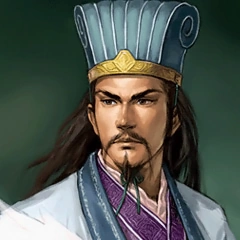
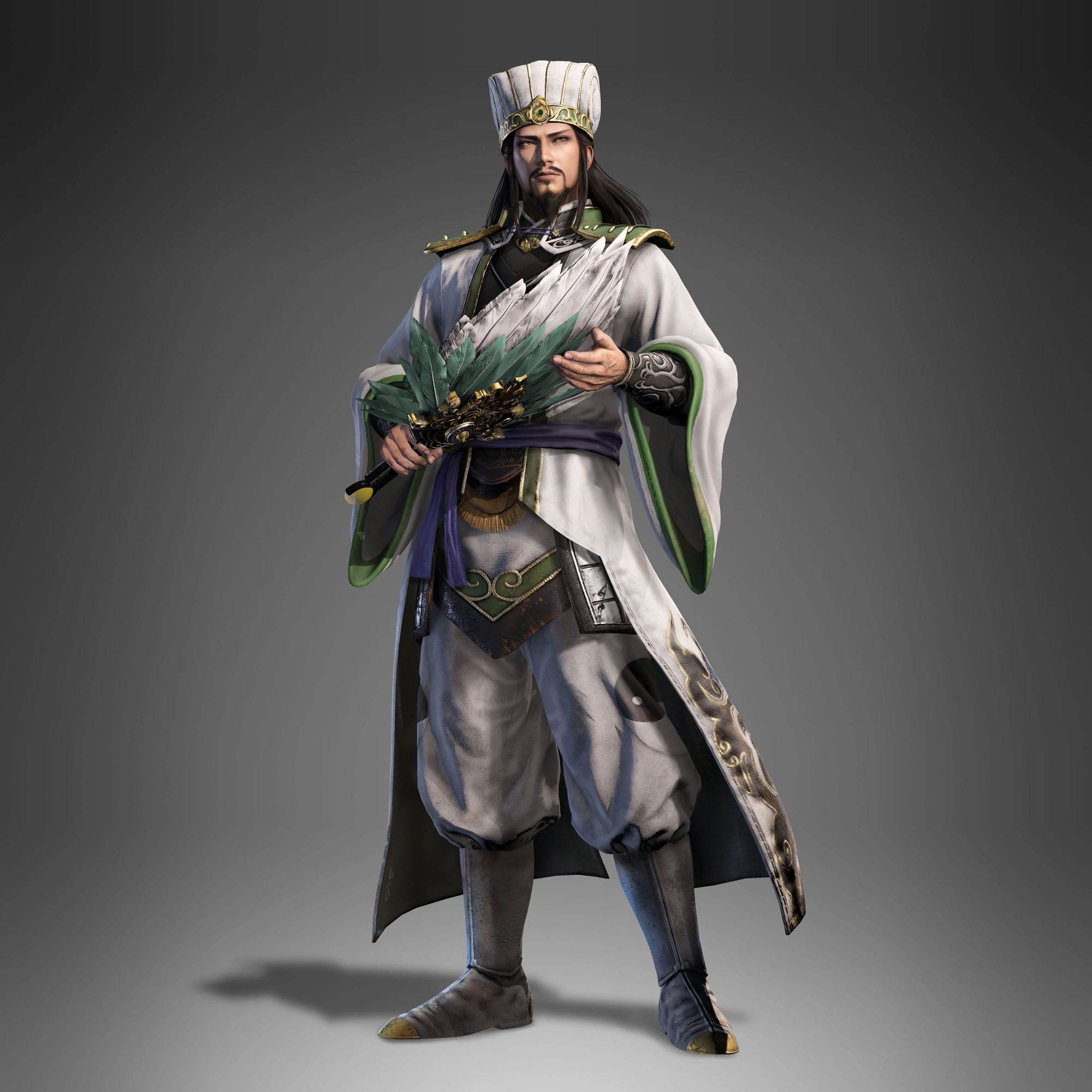
Zhuge Liang
Opens with the lamp already out, stopping Jiang Wei's sword: 'It is my fate---not his fault.' To Jiang Wei he gives a treatise in twenty-four chapters and 104,112 words on the Eight Needfuls, the Seven Cautions, the Six Fears and the Five Dreads of war; the sketches for a repeating crossbow that 'shoots ten bolts of eight inches length at every discharge'; and the warning that shapes the last fifteen chapters of the book — 'There is no part of Shu that causes anxiety, save the Yinping Mountains. That must be carefully guarded… it will surely be the cause of great losses.' To Yang Yi, a silken bag against Wei Yan's treason; to Ma Dai, whispered instructions. His testament asks Liu Shan to cleanse his heart, limit his desires and seek out the recluse scholars, and accounts for his own estate down to the item: 'To my household belong eight hundred mulberry trees and a hundred acres of land… At my death I shall not leave any increased possessions, even an excess roll of silk, that may cause Your Majesty to suspect that I have wronged you.' His funeral instructions are the campaign's last stratagem: no mourning, seven grains of rice in his mouth, a lamp at his feet, the body carried with the army so his leadership star will not fall, and the carved wooden image of himself to be shown if Sima Yi comes too close. He makes a final inspection of every camp in a small carriage — 'I shall never again lead the army against the rebels. O Azure Heaven, when will this regret end?' — names Jiang Wan and then Fei Yi as his successors, and dies mid-question on the twenty-third day of the eighth month of the twelfth year of Beginning Prosperity, aged fifty-four (AD 234).
32 mentions in this chapter
1454 mentions in the book
|
-
Chang'an County County(34.2464, 108.9070)
-
Changshui
-
Luoyang County(34.7316, 112.5963)
-
-
-
Middle Land Region
-
Minshan
-
Nanzheng County
-
Plank Trail Landmark
-
Red Hills Mountains/Hills
-
Shu (Three Kingdoms) Region
-
Wei (Three Kingdoms) Region
-
Wuxiang County
-
Wuzhang Hills Mountains/Hills
-
Yinping Mountains Mountains/Hills