Tang of Shang
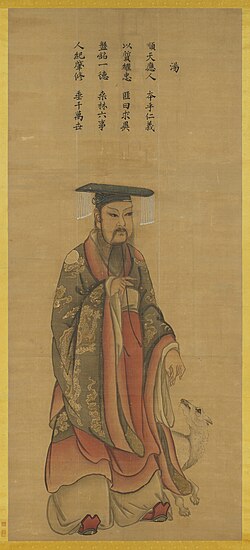
Source:
wikipedia.com
- Born
- c. 1670 BC
- Died
- c. 1587 BC
- Also known as
- Zi Lü King Tang Tai Yi Da Yi Cheng Tang
- Book mentions
- 6
Roles:
king
Factions:
Shang dynasty
(primary)
Links:
-
Wikipedia entry Bio
Appears in 5 chapters:
-
Chapter 60
— Zhang Song Turns The Table On Yang Xiu; Pang Tong Proposes The Occupation Of Shu.
King Tang of Shang — the other half of Pang Tong's 'Kings Tang and Wu' precedent for righteous conquest.
-
Chapter 80
— Cao Pi Deposes The Emperor, Taking Away The Fortunes of Han; Liu Bei Assumes The Throne, Continuing The Heritage.
Named with King Yu in the deputation's flattery of Wei's unexcelled virtue.
-
Chapter 98
— Pursuing The Shu Army, Wang Shuang Meets His Death; Raiding Chencang, Zhuge Liang Scores A Victory.
Alluded to in Zhang Zhao's memorial as a standard of virtue, paired with Yu the Great: 'your virtue matches that of Kings Yu and Tang.' One mention, and bare 'Tang' matches nothing else in the chapter.
-
Chapter 105
— The Lord of Wuxiang Leaves A Plan In The Silken Bag; The Ruler of Wei Removes The Bronze Statue With The Dew Bowl.
Named in Yang Fu's roll of the four sage rulers - 'Kings Yao, Yu, Shun, and Tang' - the frugal half of the memorial's argument.
-
Chapter 112
— Rescuing Shouchun, Yu Quan Dies Nobly; Attacking Changcheng, Jiang Wei Mobilizes.
Named in the closing image of Qiao Zhou's essay - once destiny and the moment are right, 'the consummation will follow forthwith, as the armies of Kings Tang and Wu fought but one battle'.